Inspiration
Project Story: Smart Home Control Panel
About the Project
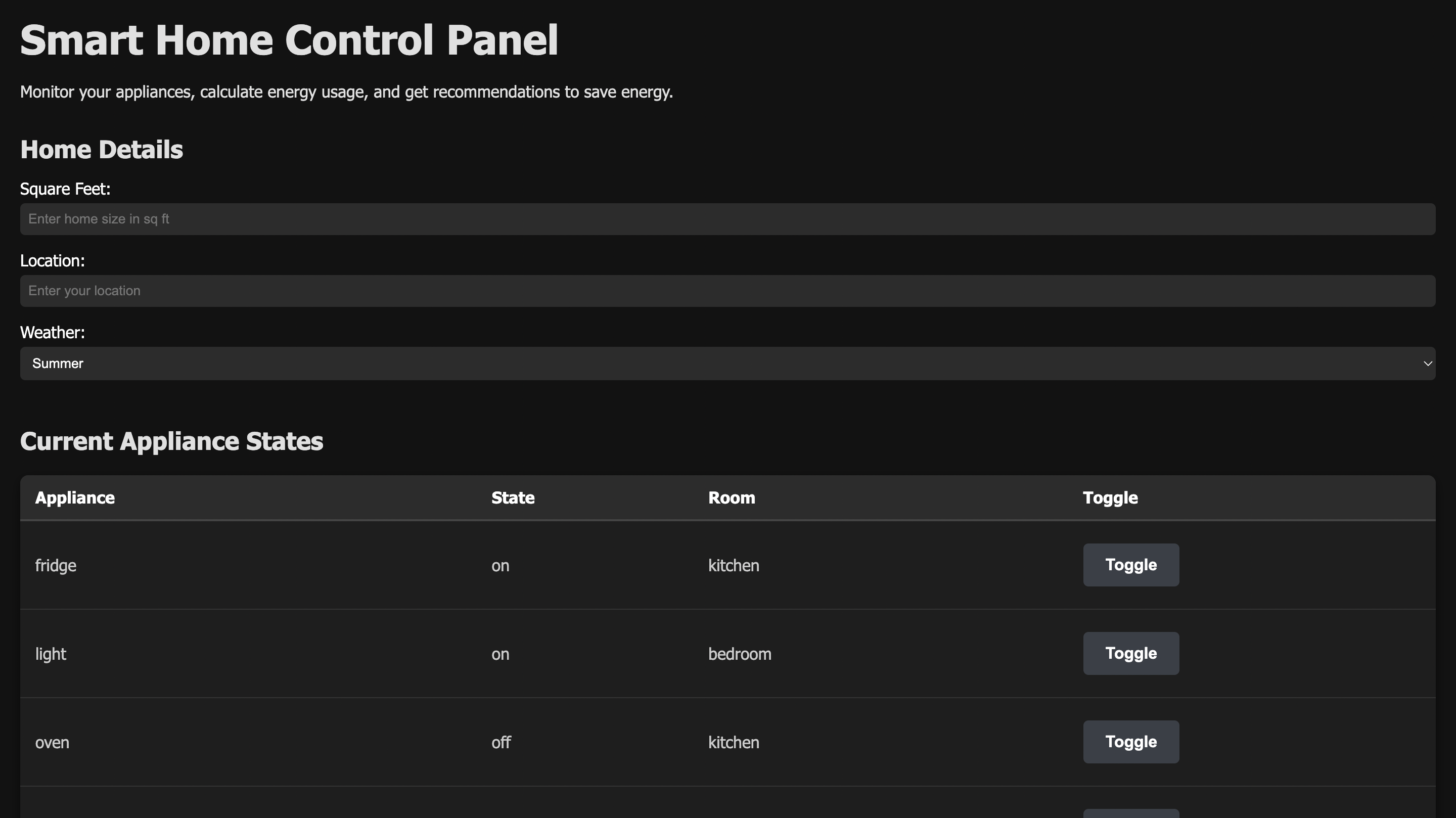
The Smart Home Control Panel was inspired by the desire to create a centralized, user-friendly platform for managing and monitoring household appliances. With the increasing popularity of smart homes, I wanted to design a system that not only controls appliances but also calculates energy usage and provides actionable energy-saving recommendations. This project was driven by my interest in energy efficiency and sustainable living.
What I Learned
Working on this project taught me a lot about full-stack development, particularly:
- Frontend Design: I learned how to design a clean and intuitive user interface using HTML, CSS, and JavaScript. Styling elements for responsiveness and accessibility was a significant focus.
- Backend Integration: I deepened my understanding of server-side programming, setting up APIs to fetch and process data dynamically.
- Energy Usage Logic: Developing the logic to calculate energy usage based on user input and appliance states required a mix of mathematical modeling and real-world assumptions.
- SCASP System: Implementing the Smart Control and Appliance State Processing (SCASP) system was a pivotal part of the project. SCASP fetches real-time data on appliance states and manages user interactions to toggle appliance states seamlessly.
How I Built the Project
Frontend Development:
- Created a visually appealing user interface using HTML and CSS.
- Incorporated JavaScript for dynamic interactions, such as fetching appliance states and updating energy usage results.
SCASP System:
- Designed a backend API to handle requests for appliance states, toggling appliances, and calculating energy usage.
- Built the appliance state table to display real-time data fetched from the server.
Energy Usage Calculator:
- Developed a function to calculate energy consumption based on user-provided home size, location, and weather conditions.
- Integrated this logic into the backend API to process and return results dynamically.
Recommendations Engine:
- Implemented an endpoint to fetch energy-saving tips and display them in the UI based on calculated usage.
Error Handling:
- Added robust error handling for network issues and empty input fields to improve the user experience.
Challenges Faced
- Dynamic UI Updates: Ensuring that the appliance states table updated dynamically without reloading the page required careful event handling and API design.
- Data Modeling: Creating accurate energy usage calculations involved researching real-world appliance energy consumption rates and weather-related adjustments.
- Asynchronous Operations: Managing asynchronous API calls and ensuring the UI remained responsive during data fetching was challenging.
- CORS Issues: During development, I encountered Cross-Origin Resource Sharing (CORS) issues that required setting up proper headers on the server.
Conclusion
The Smart Home Control Panel is a robust and user-friendly system that simplifies managing household appliances and encourages energy efficiency. Building this project was an enriching experience, and I look forward to adding more features, such as predictive maintenance alerts and deeper energy analytics, in the future.
Still in progress, will be making updates and changes!!
Built With
- css
- html
- javascript
- prolog
- swiprolog

Log in or sign up for Devpost to join the conversation.