-
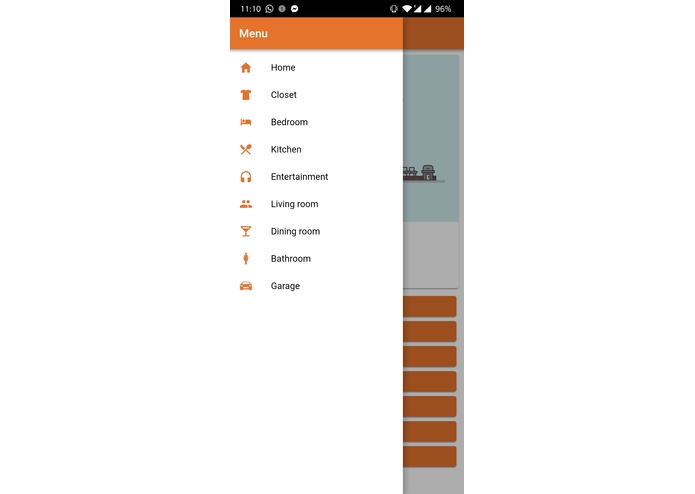
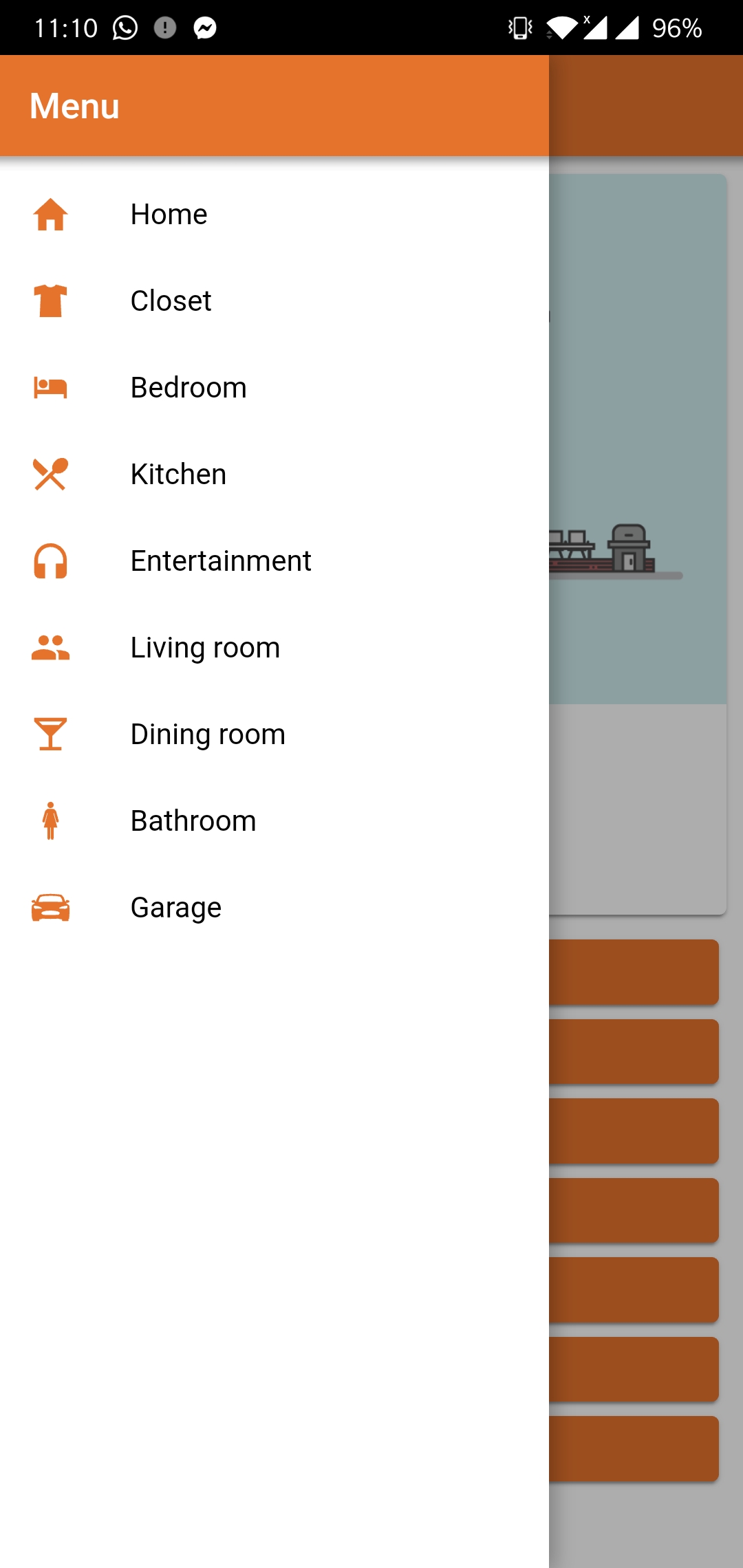
Side menu of the app
-
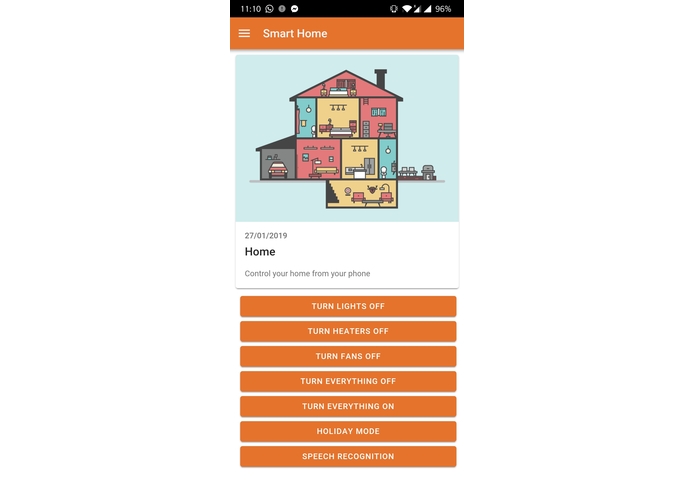
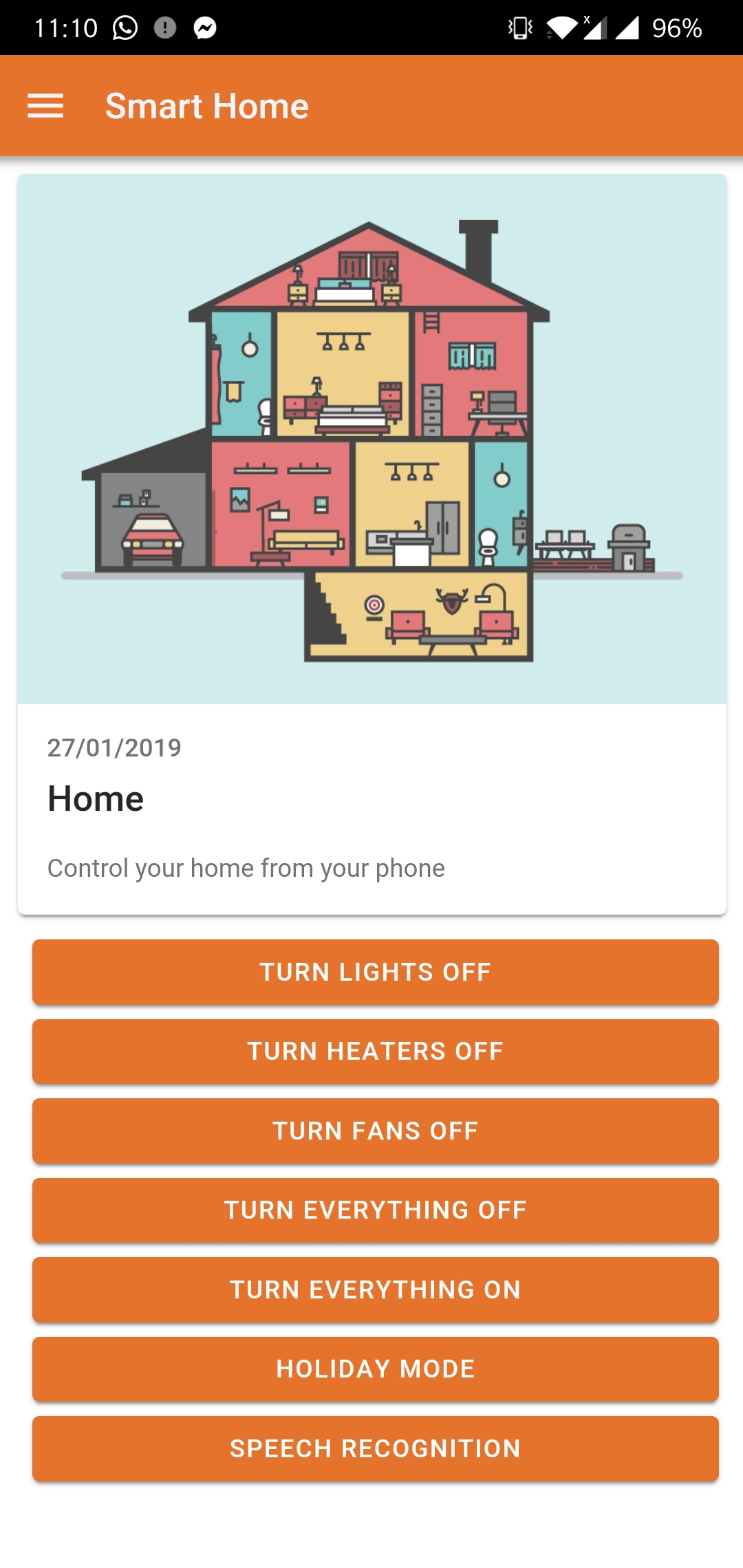
Home page of the web app
-
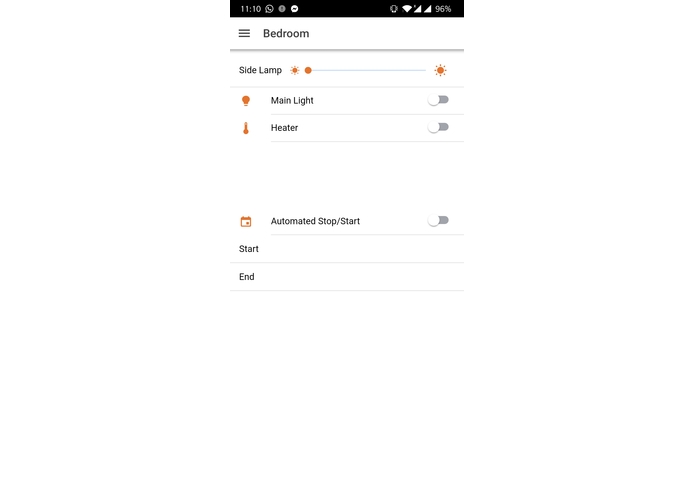
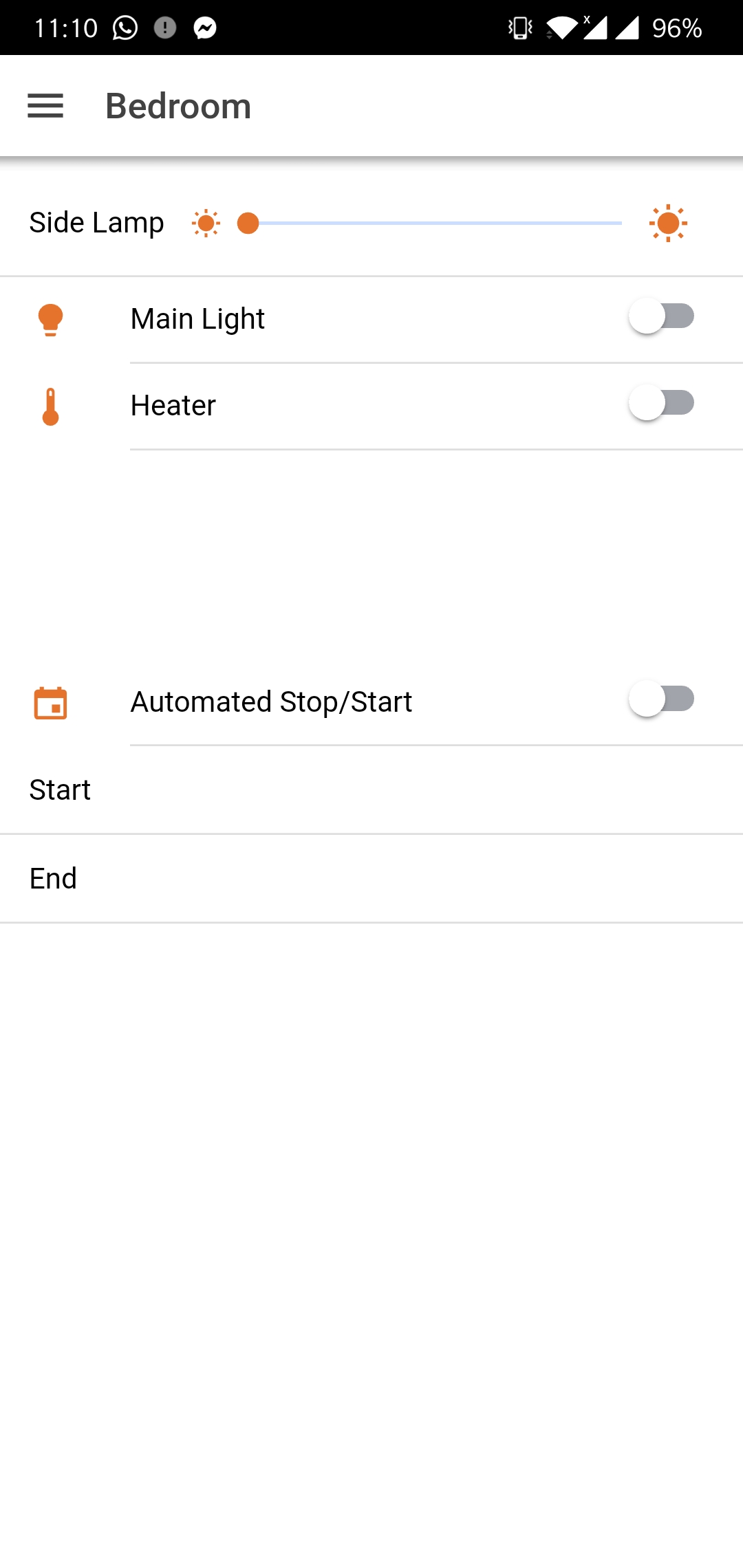
The options per room
-
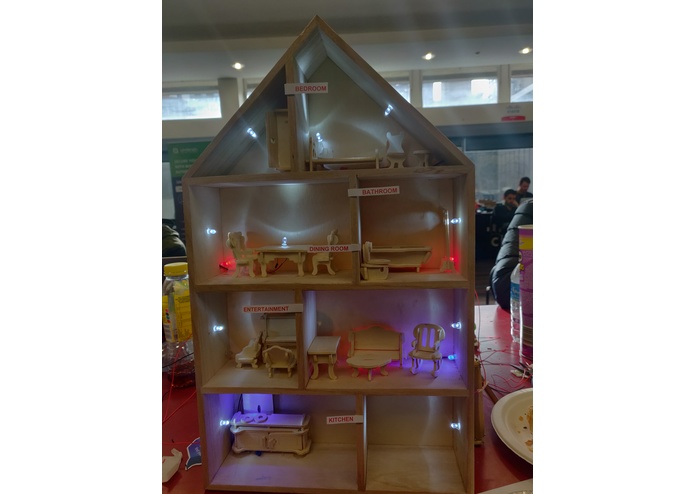
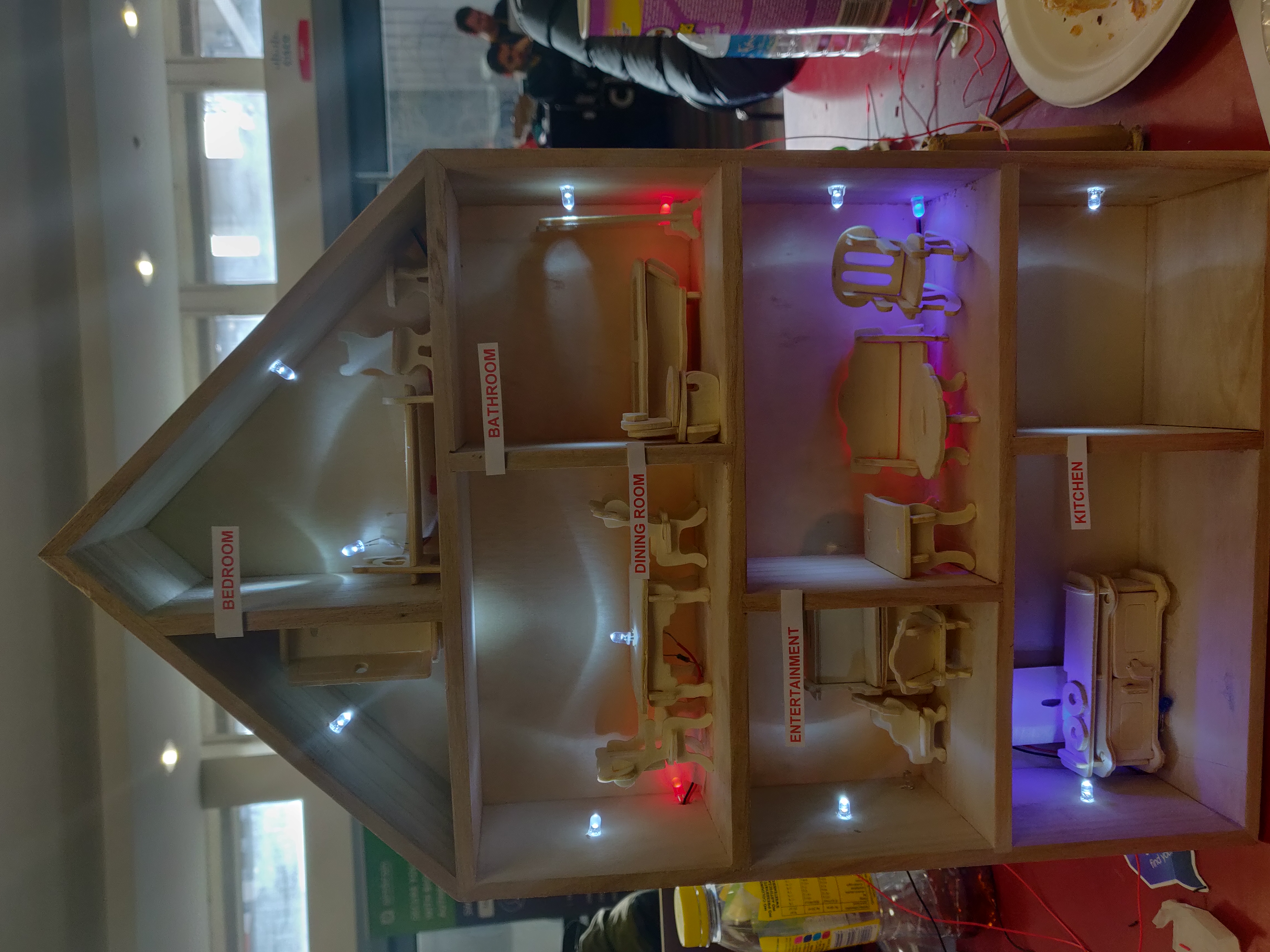
Our house
Inspiration
Cisco is a leading company in the Internet of Things, and we wanted to see if it is possible to replicate a smart-home-like system at a smaller scale.
What it does
The application can control lights, fans, and heaters in your home from anywhere in the world! In addition to manually controlling your house, we have developed several modes. Firstly, there is a "holiday" mode, which replicates the effect of the house being lived in by switching the lights on and off randomly in short periods of time. In addition, we have a "Turn Everything off" option, for when one vacates the house, as a friend to the environment. Furthermore, while remaining environmentally friendly, one can turn on the heaters or fans when coming back from a busy day to a comfortable home. Finally, home is to be relaxed in, so take a seat and let our speech recognition take care of it!
How we built it
We started off by coding the python web server which would communicate with our web app using web sockets. Then, we connected the Arduino to our server (using a USB) for serial communication. The Arduino was wired up to all the different colored LEDs, which were soldered with resistors. We then added the LEDs to the house frame; finally, we worked on the UI of the app to provide an easy way to control the LEDs. Initially, we wanted the LEDs to simply be toggled, but we were able to dim some lights using a slider on the app.
Challenges we ran into
Most of our team did not have much experience in most aspects of this project so our main challenge was learning how to code in different languages and working with different systems. Furthermore, the hardware part of this project
We encountered some issues when drawing current.
Accomplishments that we're proud of
Dimming the lights. Speech recognition. Very small latency between the app and the LEDs.
What we learned
We did not have previous knowledge in building web apps, using arduinos and raspberry pi's and coding in languages such as Angular (and TypeScript), the arduino language and python. Almost all of us has no experience with TypeScript so we ended up learning a lot. It was also the first time people used a solder, a part that was important to the building of the smart home. We all collaborated and managed to make this app work.
What's next for Smart Home
We would like to impelement several eco-friendly features such as showing your average copmsumption of electricity per week, food waste. Another big area we wanted to do was further automation, where we could use geolocation to automatically heat up the heaters on the way home when in a 10 mile radius from home, and also having sensors in the house to communicate with the same app to provide a feedback on the environment in the house. Improving speech recognition using Amazon Alexa would also be a next path for Smart Home


Log in or sign up for Devpost to join the conversation.