Inspiration
Advanced home automation from MNCs. but there is a drawback of compulsory internet. we overcome it with no internet home automation and low cost.
What it does
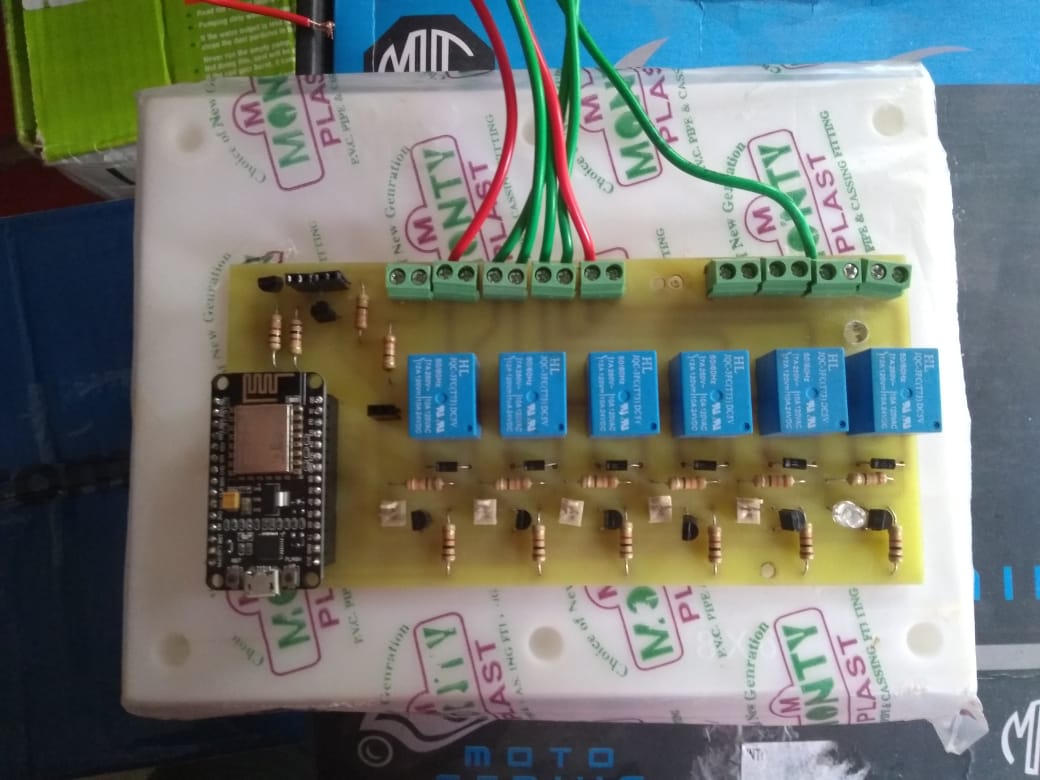
In this project, we have created home automation without using the internet where the home appliances like fans, lights, etc... are controlled remotely with our local hotspot. We have created a personalized HTML page for controlling our appliances. The network is established between Wi-Fi modules, modems, and smartphones or laptops, where the smartphone and laptops can give commands without any kind of internet source. All the home appliances are connected to a microcontroller through a 5v adapter. The GPIO pins in nodeMCU are 5,14,0,15,16 for the respective relays. The microcontroller along with the Wi-Fi module assigned a static IP address. The web page for the assigned IP address is programmed in the microcontroller. Whoever is in the same network using their smartphone can access the IP address and its corresponding webpage. We have also implemented a timer operator controller to turn off home appliances according to their desired timings.
How we built it
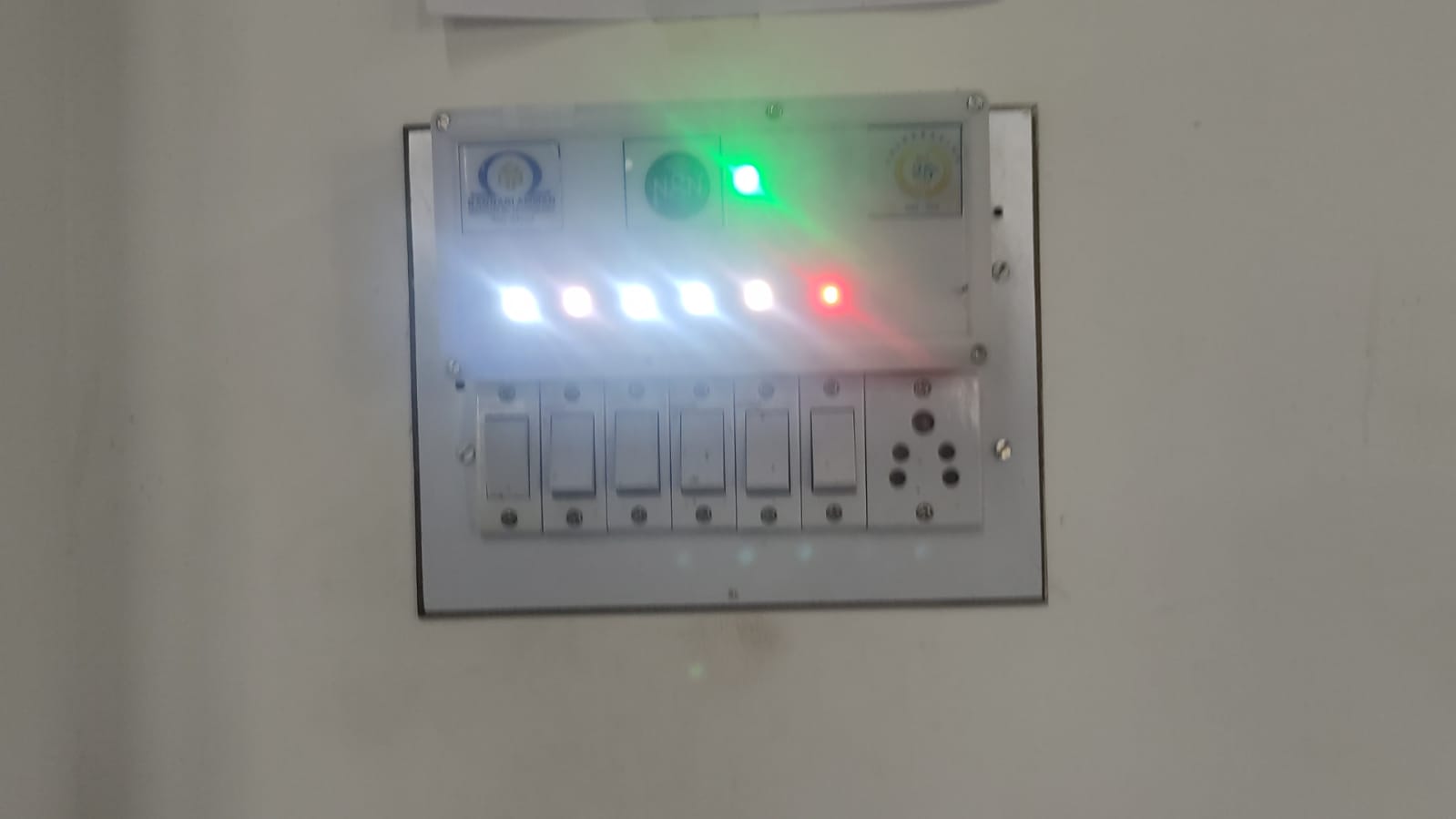
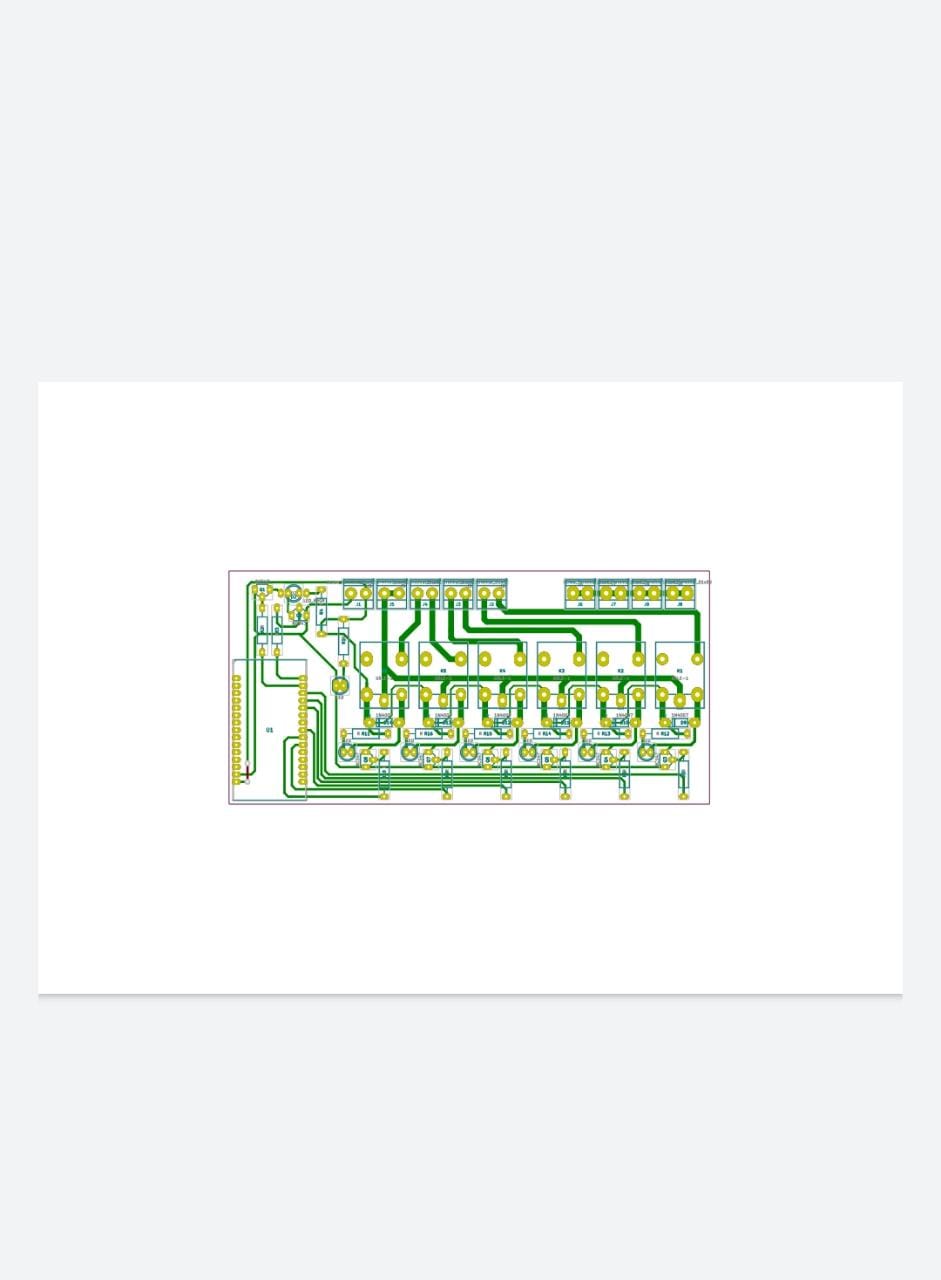
Home automation is building automation for a home, called a smart home. A home automation system will monitor or control home attributes such as lighting, climate, entertainment systems, and appliances. It may also include home security such as access control and alarm systems. In our project, we design and fabricate a PCB board in view of developing a smart home. our project "customized home automation using ESP8266 Wi-Fi module " is designed using KiCad software and it is fabricated by MITS 11, PCB prototype machine and assembled, soldered, and tested. We have used two relay modules and ESP8266 WIFI module. The two relays connected with two loads namely load 1(with timer) and load 2 (without timer) which is controlled by a smartphone using an HTML page designed by us. This page can be accessed without the internet. The HTML page consists of an ON/OFF switch. when switch 1 is ON, load 1(with timer) will be ON as per the time which, we have given on the HTML page. When switch 2 is ON, load 2 (without timer) will be ON and it performs like a switch. It can be ON/OFF anytime. The WIFI MODULE works with a 5V power supply and loads work with 230V AC power.
Challenges we ran into
we have faced problems in PCB design ii) creating in HTML page iii) creating timer operator controller iv) creating slider switch in HTML page v) creating a static IP address
Accomplishments that we're proud of
we also developed IR-based remote control home automation. these two projects are economically friendly, we developed these technologies at a lower cost.
What we learned
1) static IP creation 2) networking 3) web firmware creation
What's next for SMART HOME AUTOMATION
collecting information on the frequency of turning ON/OFF of home appliances. using this information in deep learning algorithms recommends to ON/OFF of appliances through notifications
Built With
- board
- c
- embedded
- mobile
- modem
- nodemcu
- pcb
- phone
- relay
- server
- systems


Log in or sign up for Devpost to join the conversation.