-

Logo
-
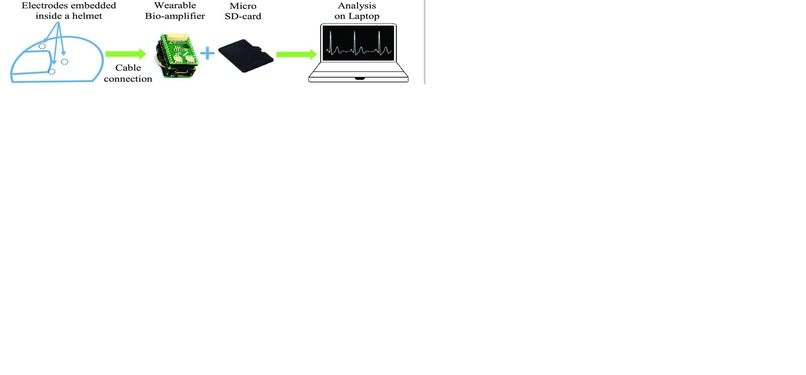
Electrodes in a Smart Helmet using EEG and Analysis
-
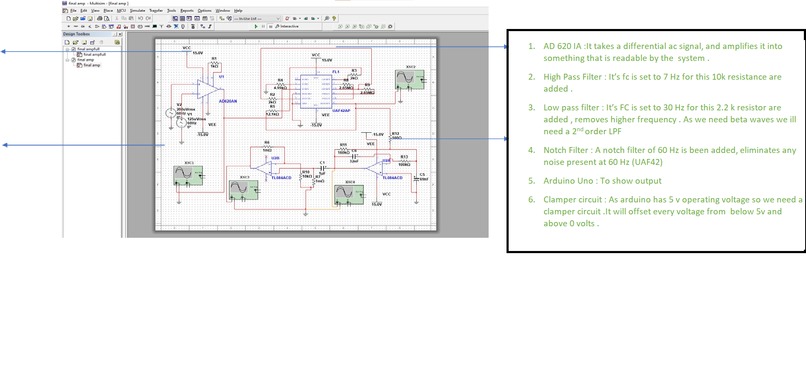
Circuit Diagram and Component Explantion
-
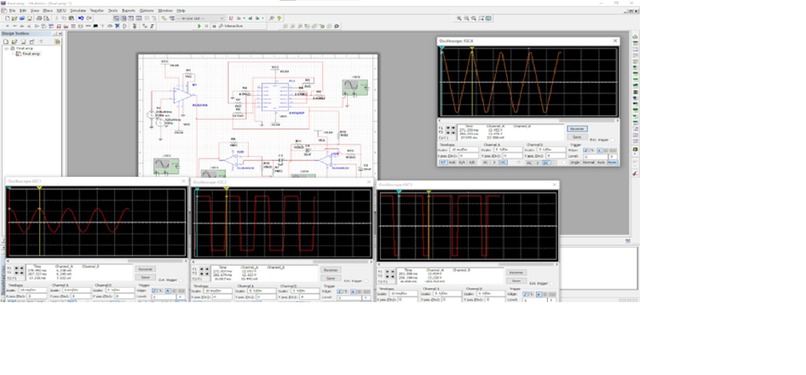
Results and Outcomes of the Experiment

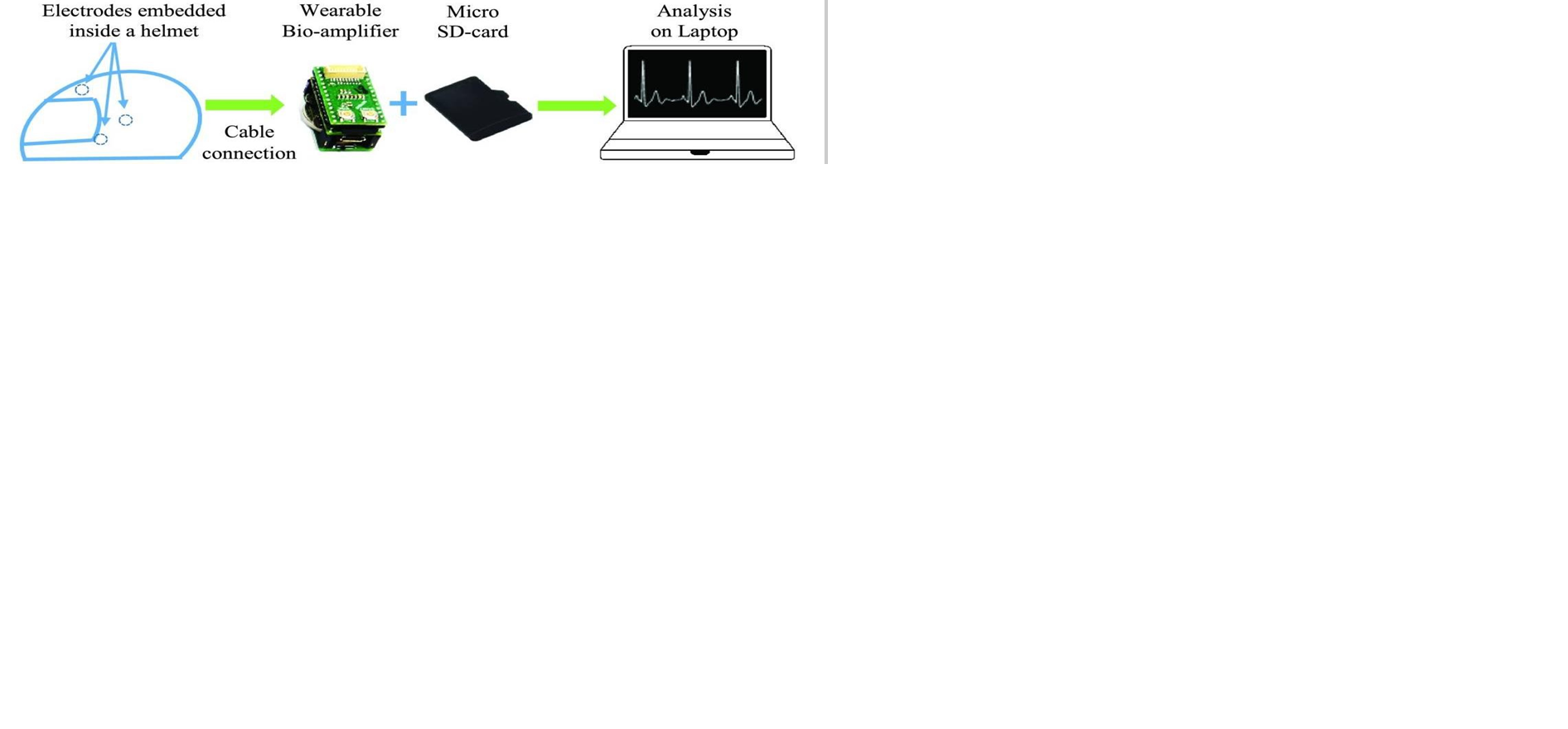

Inspiration
The Project idea came from necessity is the mother of Invention . As per neurological researchers, envision workers in hazardous environments controlling machinery hands-free, individuals with severe motor impairments regaining a measure of control over their surroundings, or even gamers experiencing truly immersive interaction. Existing BCIs were often cumbersome, requiring dedicated setups. EEG, while complex, offered a non-invasive window into neural activity. The "Smart Helmet" concept provided the perfect platform – a familiar form factor capable of housing sensors, processors, and potentially other smart features, making the BCI portable and practical.
What it does
Project conception of feasibleness for electroencephalogram and cardiogram recordings from inside a helmet, and seek advice from this device because the good helmet. All the sensing element values watching and compare to human customary tolerance level through ARDUINO UNO microcontroller. If any accidents or abnormal sensing element values, current GPS location and emergency alert message sent recovery team. Driver can push the emergency button whereas emergency state of affairs message sent caretaker and further the project can be extended and enhanced to wide range of usecases and plethora of applications particularly to once the state of body and mind, like somnolence, stress, anxiety and illness, of drivers. Prevents them from concentrating on the road and Cater of critical injuries occur in athletics, bike and automotive racing, horseriding, rugby and cricket
How we built it
EEG refers to the non-invasive recording of human brain cortical electrical activities, typically recorded by placing EEG sensors at the scalp. EEG sensors reliably measure voltage fluctuations that result from ionic current flows within the neurons of the brain. These voltage fluctuations can be classified according to their spectral content. In this regard, as specific brain lobes are responsible for certain activities, cognitive loads and engagement can be classified from spatially collected EEG data. For example, the frontal lobe is more responsible for problem solving, mental flexibility, judgment and creativity. EEG signals are typically classified as delta (0.1-3.5 Hz), theta (4-7.5 Hz),alpha (8-13 Hz), beta (14-30 Hz), and gamma (>30 Hz) rhythms. EEG rhythmscan be analyzed to assess the mental states and neuronal activities of subjects
Human beings natural form of communication or control requires peripheral nerves and muscles.
A BCI (Brain computer interface )offers an alternative to natural communication and control .
A BCI is an artificial system that bypasses the body’s normal efferent pathways, which are the neuromuscular output channels.
The project built in 4 phases as stated below with detailing information
Phase 1: The first challenge was foundational: capturing clear, usable EEG signals within the confines of a helmet. The team, a blend of neuroscientists, engineers, and designers, wrestled with electrode placement. Standard EEG caps were clinically effective but impractical for a helmet. They experimented with dry-contact sensors, battling signal noise generated by movement, hair, and even the helmet's own electronics. Countless hours were spent refining filtering algorithms, employing machine learning to sift the faint, intentional neural patterns – the "command signals" – from the constant background chatter of the brain. Late nights were fueled by coffee and the frustrating, then exhilarating, flicker of meaningful data emerging from the static.
Phase 2: Simultaneously, the hardware team worked on miniaturization. Bulky amplifiers and processors needed to shrink, becoming low-power components embeddable within the helmet shell without adding excessive weight or heat. They designed a custom System-on-Chip (SoC) solution, integrating the EEG acquisition, signal processing, and wireless communication capabilities. Power management became a critical hurdle – the helmet needed a practical battery life.
Phase 3: The design team focused on human factors. The helmet had to be comfortable, balanced, and intuitive. They iterated through 3D-printed mockups, carefully mapping internal channels for wiring and sensor integration, ensuring ventilation, and creating a design that looked advanced yet approachable. User feedback on fit and comfort was integrated relentlessly. It wasn't just about packing technology in; it was about creating a wearable device people could and would use.
Phase 4:The crux was integration and translation. The software team developed the core BCI algorithms, focusing initially on simple, distinct mental commands – imagining directional movement, focusing attention, or a specific mental "push." They built a training interface, allowing users to teach the system their unique neural signatures for these commands. The breakthrough moment wasn't a single eureka, but a series of small victories: the first time a cursor moved reliably across a screen controlled purely by thought; the first time a simple smart light toggled on and off in response to focused intent, mediated through the prototype helmet.
Challenges we ran into
Physiological signals recorded in real world tend to be notoriously weak and with a Signal to noise ratio (SNR).To the current finish, Associate in Nursing amplifier with a high common mode rejection quantitative relation needed thanks to the numerous leads and electrodes required, such devices are fitted to clinical environments, wherever patients are usually stationary (except e.g. for viscus stress tests), so the amplitude is comparatively low. Hence we proposed planned the conception of feasibleness for electroencephalogram and cardiogram recordings from inside a helmet, and seek advice from this device because the good helmet. All the sensing element values watching and compare to human customary tolerance level through.
Accomplishments that we're proud of
An embedded system is thus vital in today’s automation because it has been wide employed in all quite industries and automation. Trendywearable technologies have enabled continuous recording of significant signs, however, for activities like athletics, motor-racing or military engagement,a helmet with embedded sensors would supply most convenience and therefore the chance to observe each the very important signs and the graphical record observation of physiological signals exploitation wearable devices progressively changing into a necessity for the assessment of the state of body and mind in natural environments. Sensible helmet consists of embedded detectors like EEG and Respiration sensor. All detector values monitored sporadically, if any abnormal scenario emergency alert message sent by recovery authorities. This has been expedited by small-scale analogue and digital microcircuit technology, along with on chip process. A variety of wearable graph devices exist, however, most are used for measure heart activity or calorie consumption in sports and may solely work out an estimate of the center rate. These are so not appropriate for real-world activities wherever it's essential to record and monitor very important signs in unsure or dangerous things. One example are traffic accidents, further the project can be extended and enhanced to wide range of usecases and plethora of applications particularly to once the state of body and mind, like somnolence, stress, anxiety and illness, of drivers. Prevents them from concentrating on the road and Cater of critical injuries occur in athletics, bike and automotive racing, horseriding, rugby and cricket
What we learned
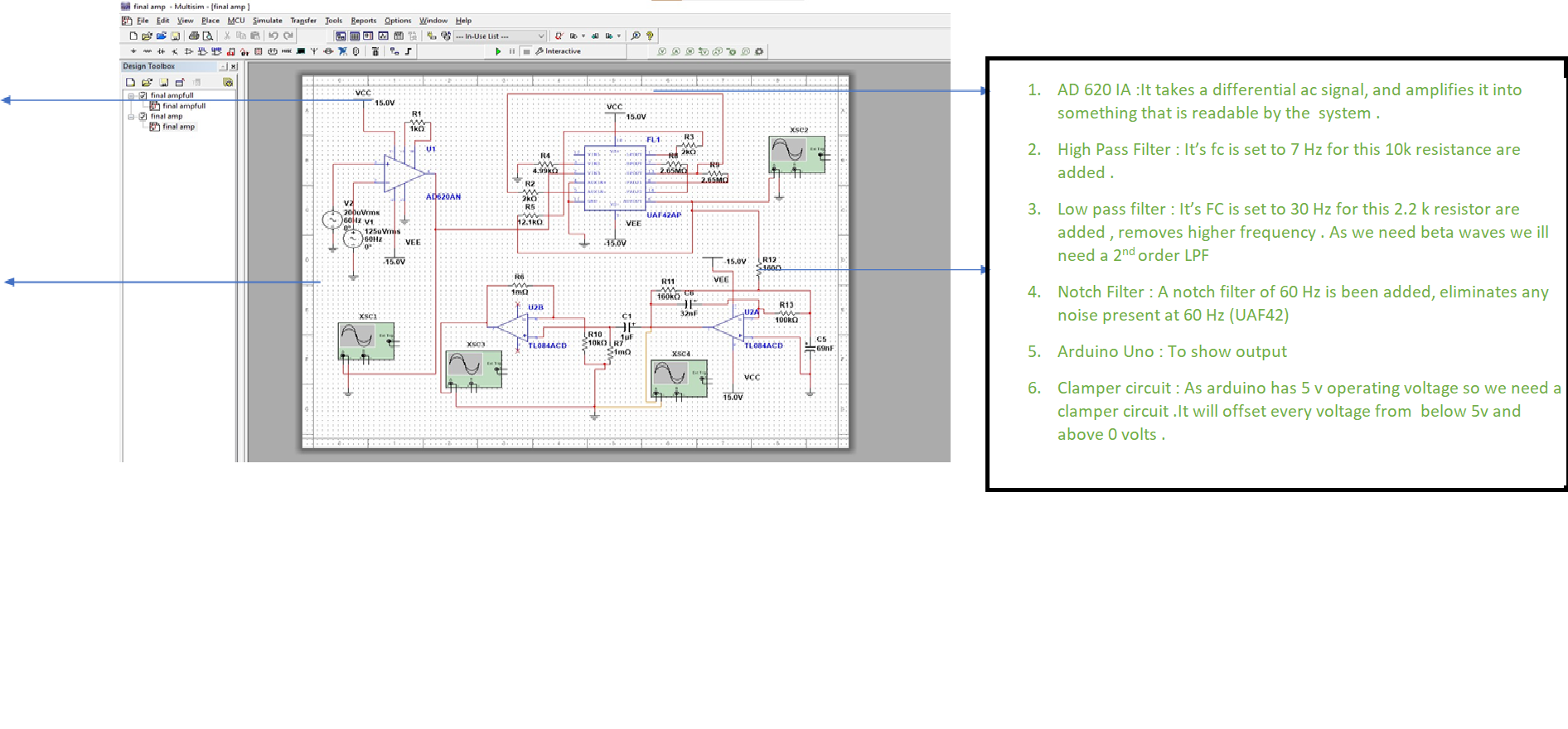
Project built with circuit over NI Multisim14.2 for EEG System over this month (approx) but due to time factor and fund factor can’t create it completely over hardware but certainly innovation like smart EEG helmets will be the Future Of Cricket . With inclusion of Brain Computer Interface in cricket the game is gonna really raise the standards of sports .
Due to these High tech gadgets we can improve players mentally as well as physically .
What's next for SMART HELMET BRAIN COMPUTER INTERFACE USING EEG TECHNIQUE
Smart Helmet with EEG innovative techniques can also measure the amount of tension a player is going through during an intense match . Smart helmets might be future in cricket world .

Log in or sign up for Devpost to join the conversation.