-
-
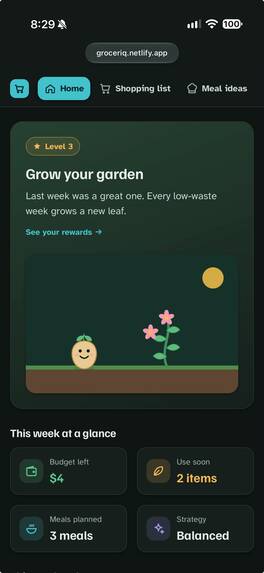
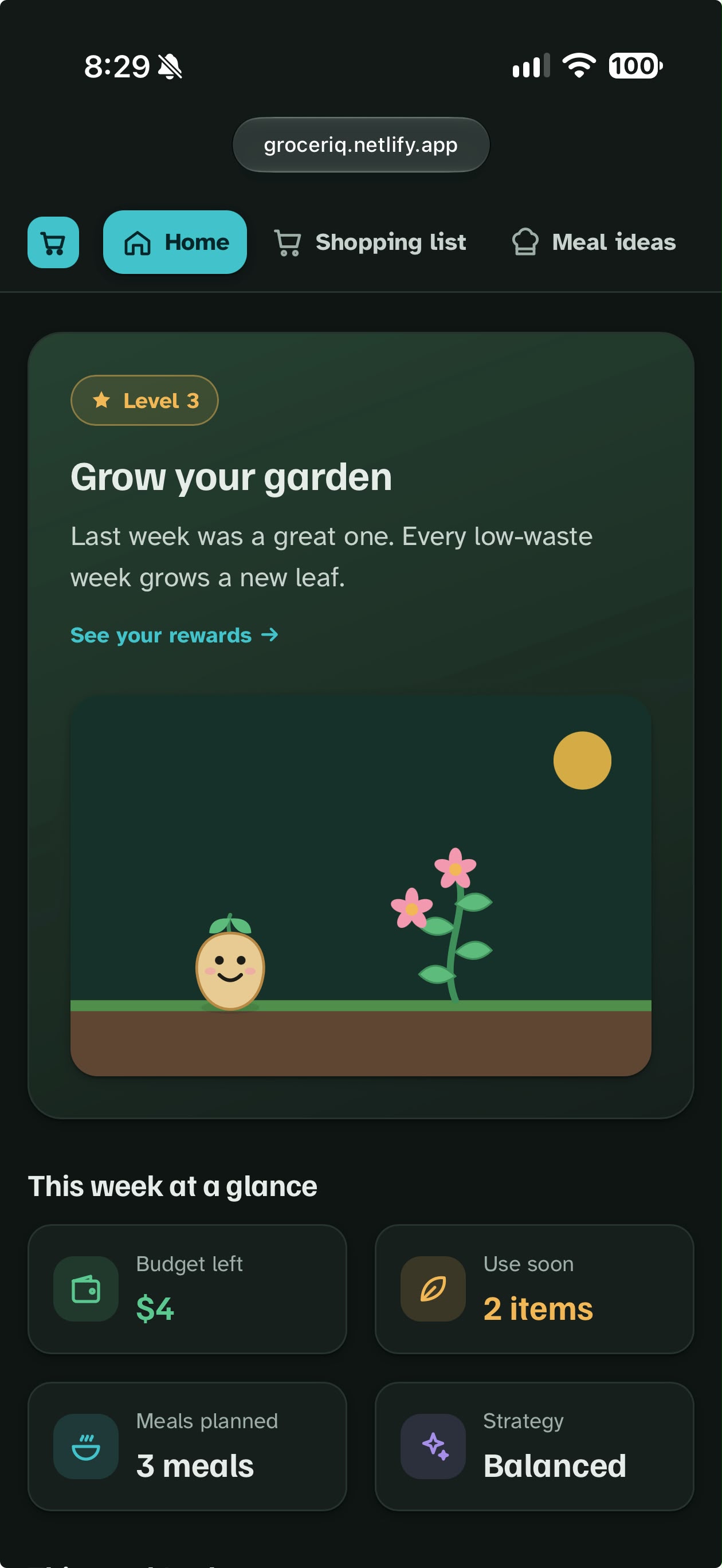
Main Page
-
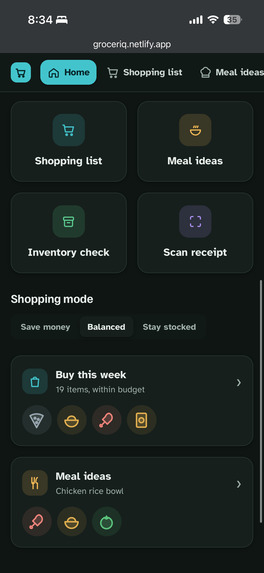
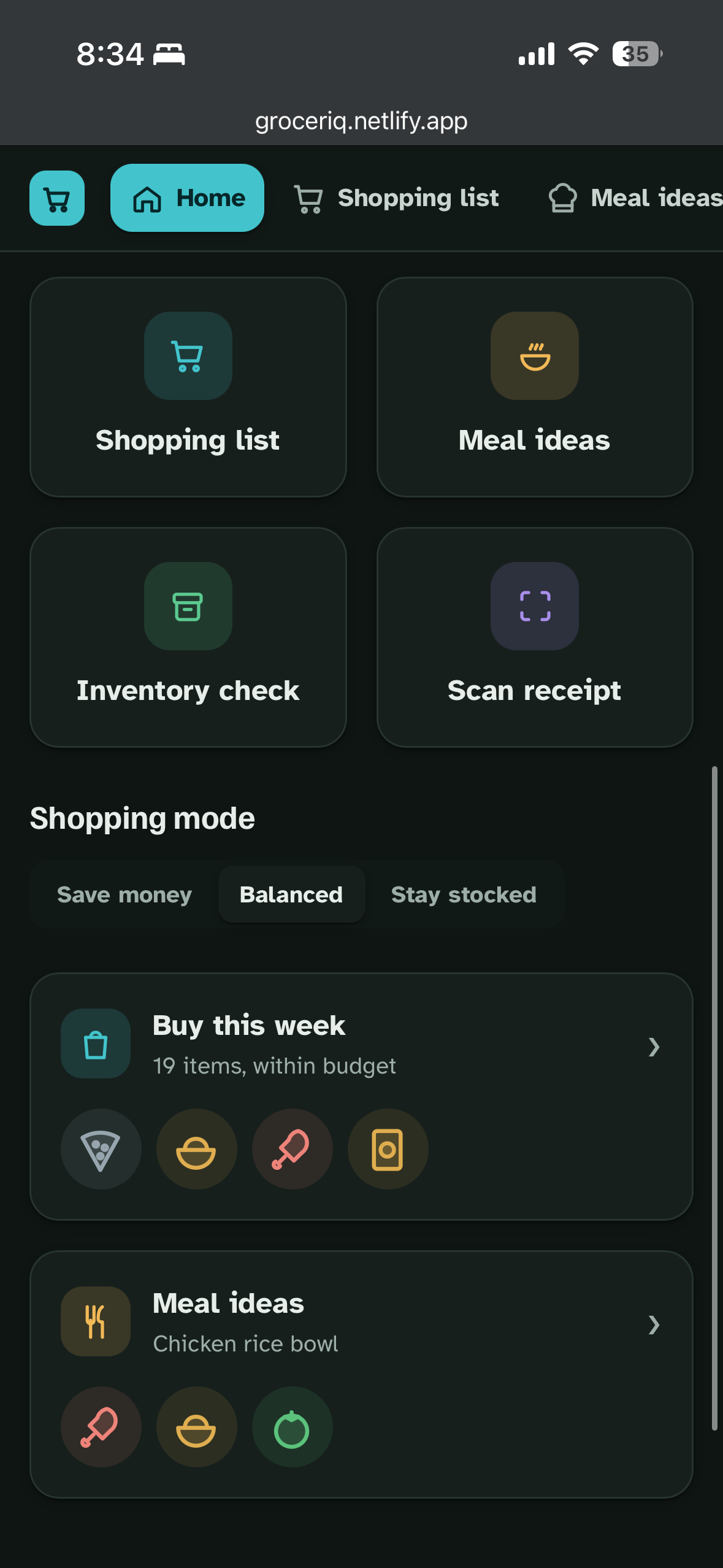
Options for organizing digital pantry
-
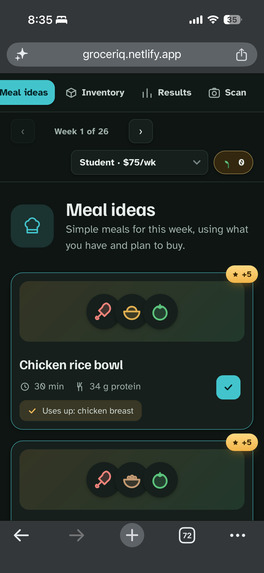
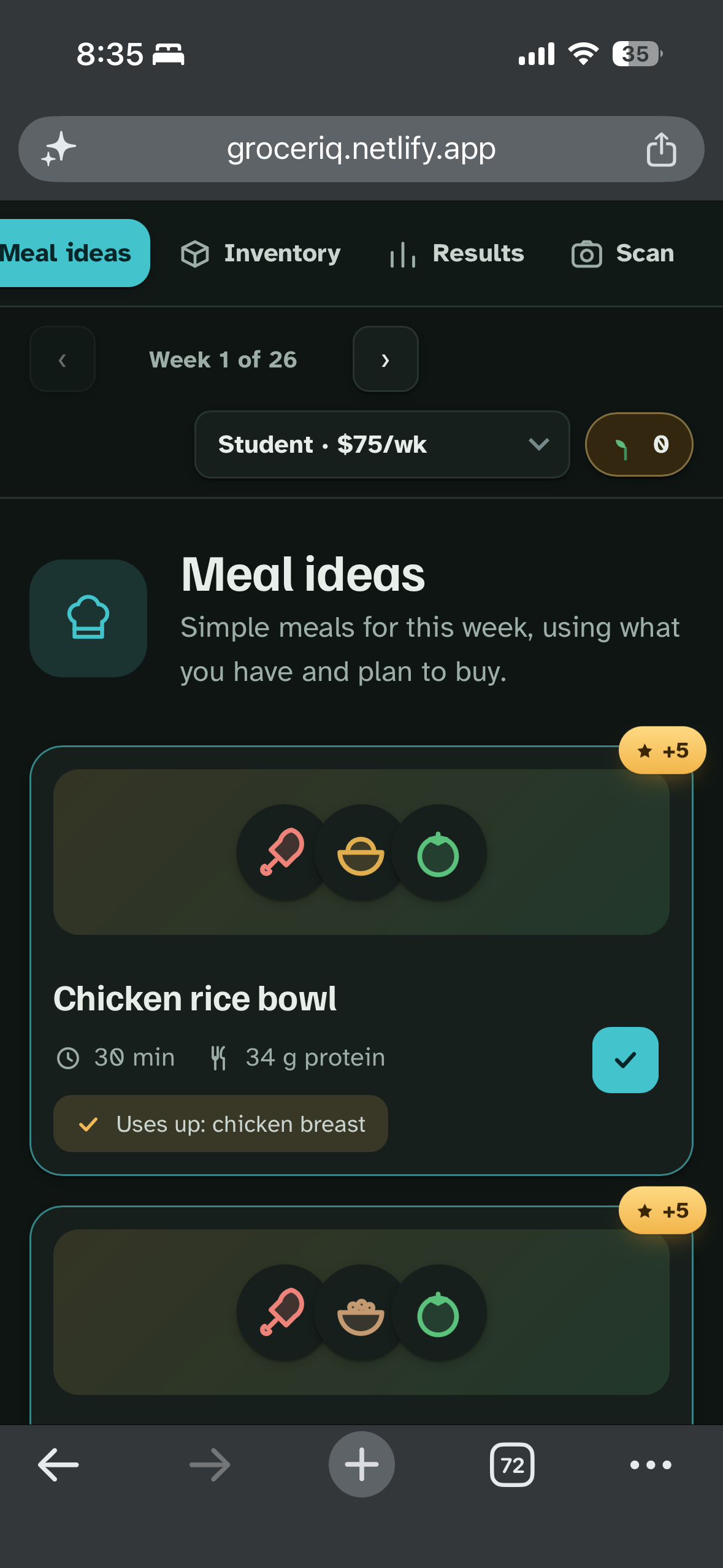
Meals ideas
-
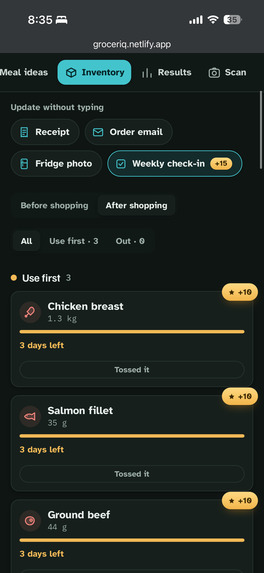
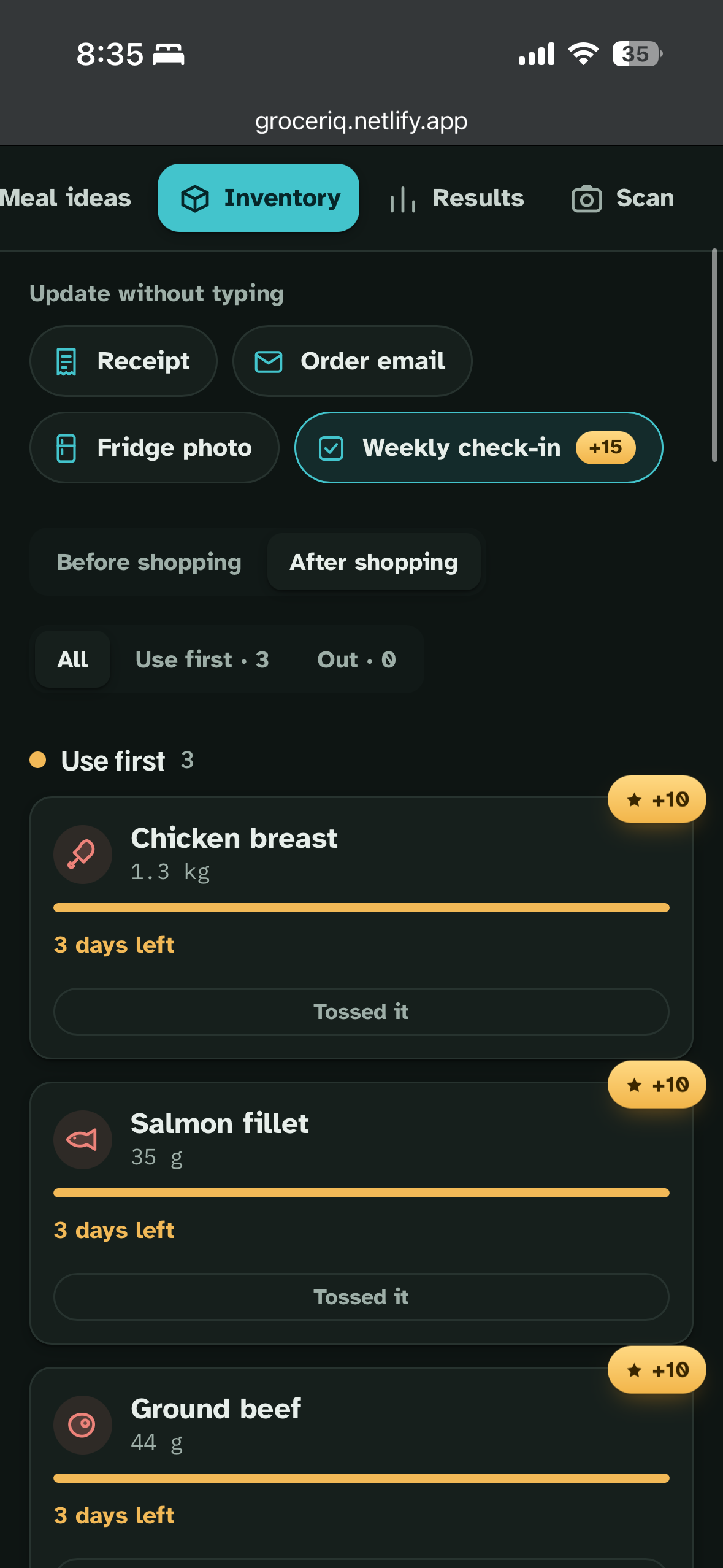
Available food inventory
-
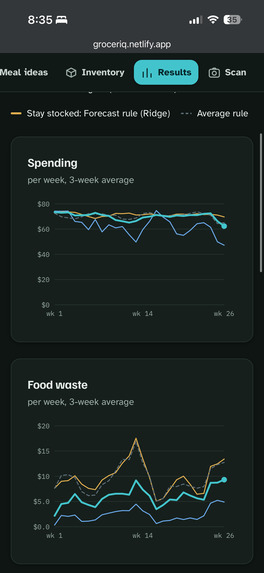
Spending tracker with graphs
-
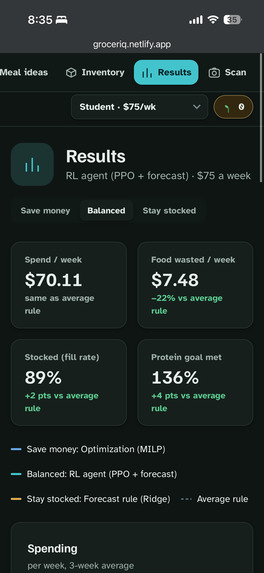
Weekly results summarized
-
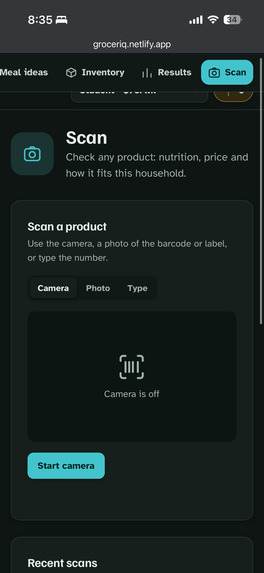
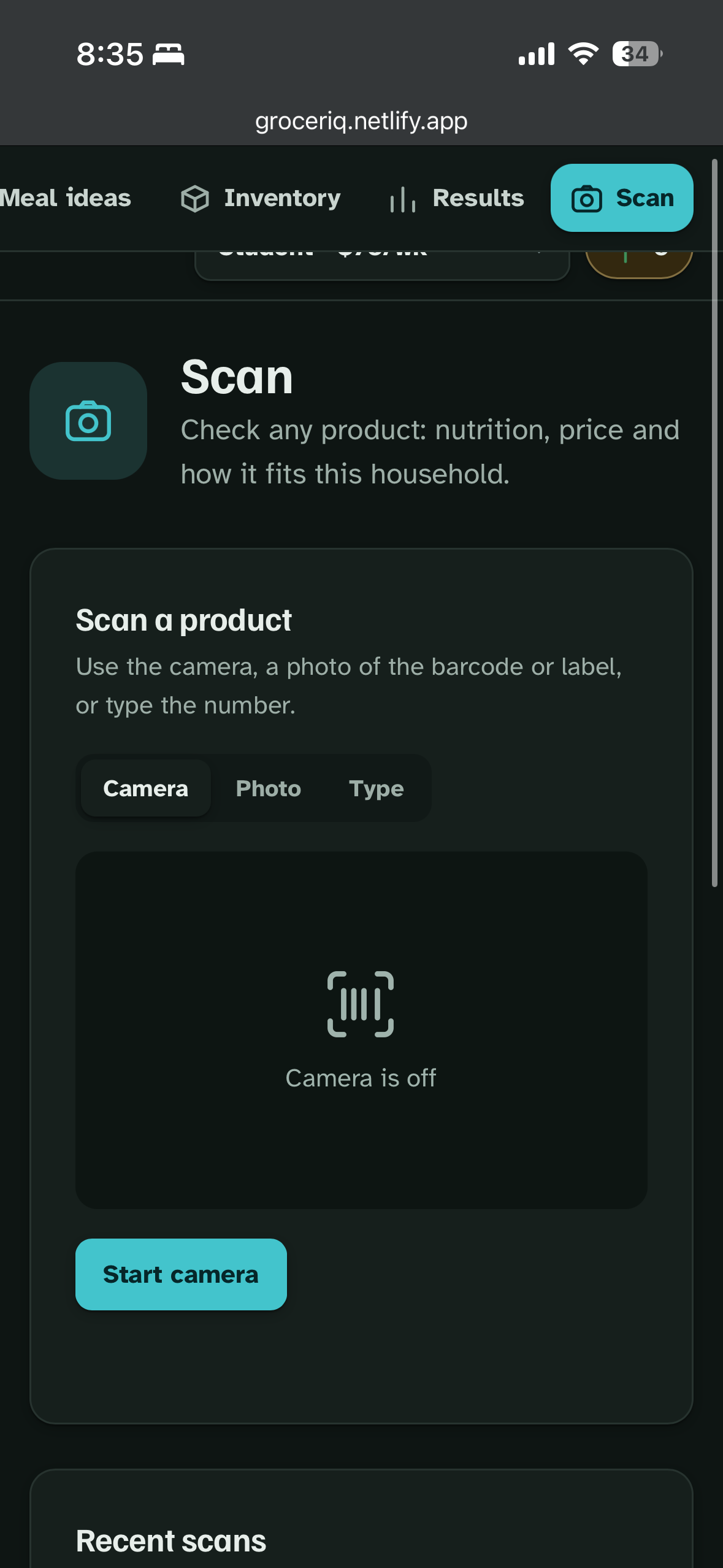
Product label scanner (for health tracking)
-
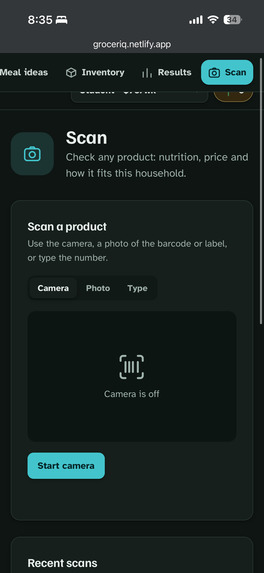
Scanner for receipts
Inspiration Grocery prices keep rising, yet a typical U.S. household throws away about $1,820 of food a year (EPA, 2025), and one in three pounds of food in the U.S. is never eaten. That waste costs families money and costs the planet the water, land and emissions it took to grow it. We wanted to fix the problem at its source: the moment you decide what to buy.
What it does Smart Grocery Coach helps families and individuals buy only what they'll actually eat and cook what they already have. It: • Tracks your kitchen from a receipt, order email or fridge photo, plus a quick weekly check-in ("Did you finish the oranges?") • Forecasts how much food your household will use next week • Plans a shopping list that stays on budget, using an optimizer or a reinforcement-learning agent • Suggests meals that use up food before it expires • Rewards less waste with Pip, a seed whose garden grows as you go Unlike apps that track food after it spoils, we prevent waste before you buy.
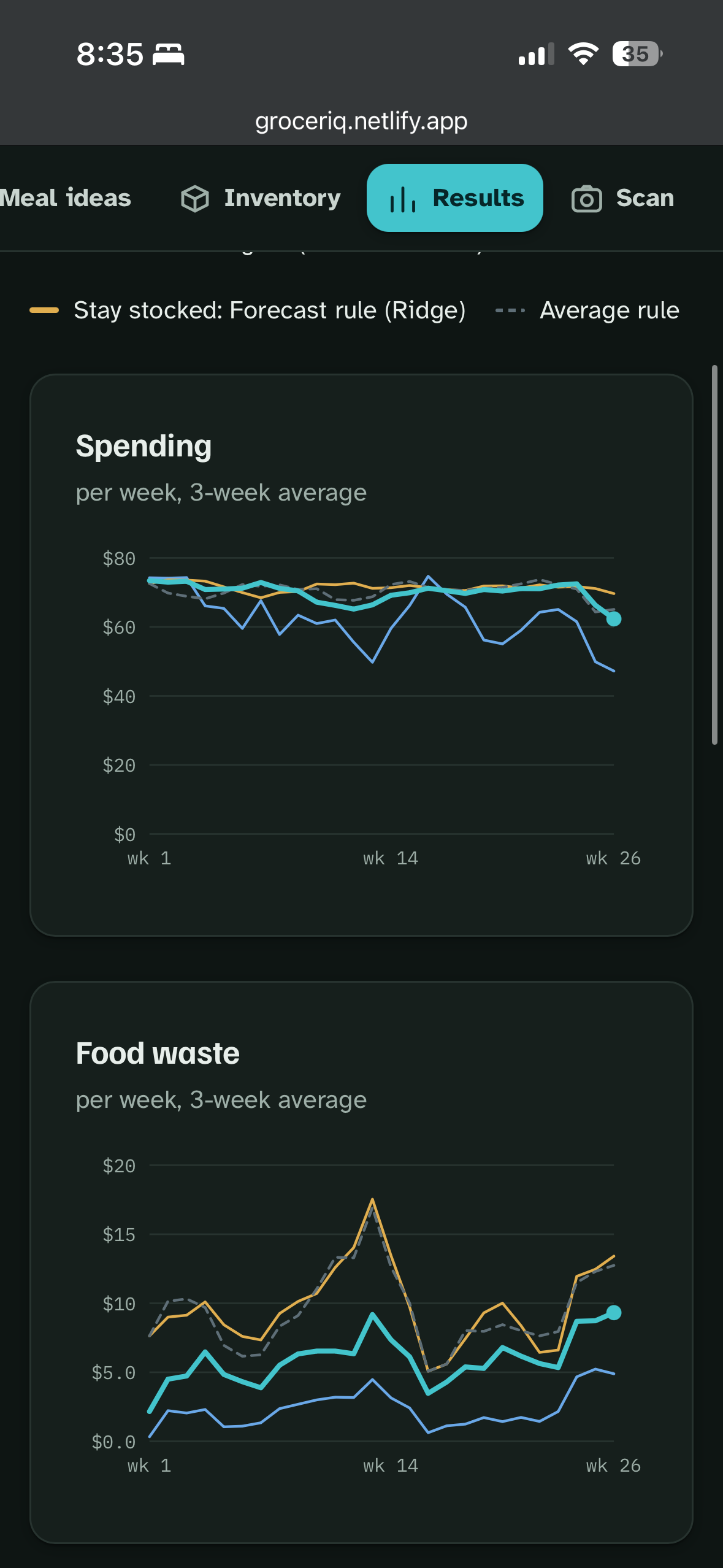
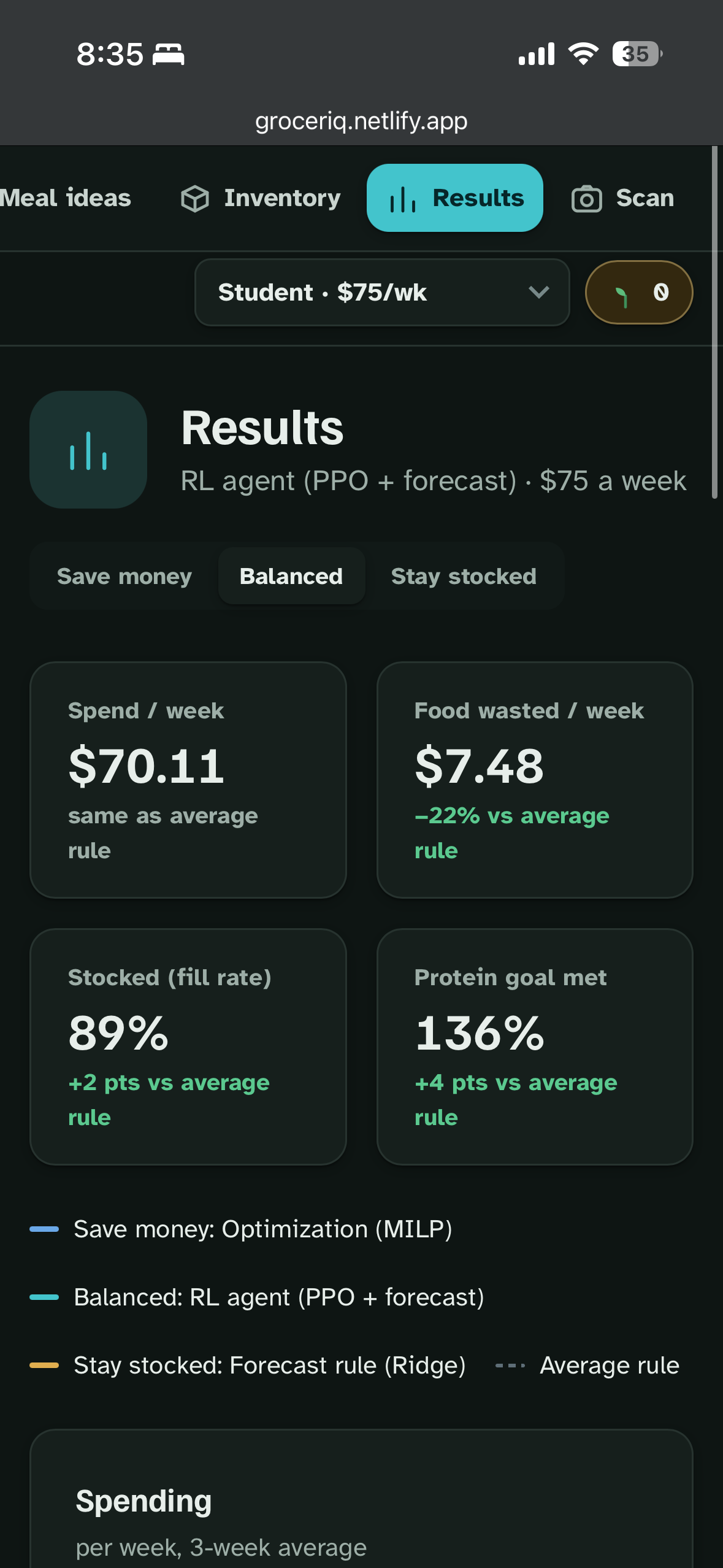
How we built it We built the app with Claude as our coding partner, versioned it on GitHub, and deployed it on Netlify (groceriq.netlify.app). Under the hood: • A Ridge regression forecast predicts weekly food needs • An optimization model (MILP) plans the cheapest shop that still meets the household's needs • A reinforcement-learning agent (PPO) learns how much to buy in a shopping simulator where overbuying spoils and underbuying runs out • A 26-week household simulator tests every strategy on the same budget and meals
Challenges we ran into Differentiating ourselves with an honest value proposition. Meal planners, pantry trackers and grocery apps each solve part of the problem, so we had to show clearly what only we do: decide how much to buy, then learn from what actually got eaten. We also had to balance competing goals, since the cheapest plan tends to run out of food more often. That's why we offer both a "Save money" plan and a "Balanced" RL agent.
Accomplishments that we're proud of We built something that genuinely makes families and the environment better off. In 26 simulated weeks for a student household on $75 a week, our Save money plan cut food waste by 75% and spending by 13% compared with typical shopping habits. Our forecast was 15% more accurate than a simple 4-week average.
What we learned • Small, accurate decisions add up: buying the right amount every week matters more than any single big change. • No single algorithm wins everything. The optimizer saves the most money, while the RL agent keeps households best stocked, so letting people choose their priority made the product better. • Honesty sells. Naming our limits (simulated households, manual check-ins) made our results more believable. • An AI coding partner let a four-person team ship a working forecaster, optimizer, RL agent and app in one weekend.
What's next for Smart Grocery Coach
- Partner with Food Lion. We want to work with Food Lion to: ◦ distribute the app in stores and through its loyalty program ◦ send shopping lists straight to a Food Lion online cart in one tap ◦ give Food Lion anonymized demand and waste insights to help it stock smarter
- Run a 50-household pilot in Durham to measure real waste and spending against our simulated results.
- Make logging effortless with automatic receipt scanning and order-email import.
- Raise a $400K pre-seed round to fund the pilot and the Food Lion integration. Our model shows the business turning profitable in Year 4.
Built With
- canva
- chatgpt
- claude
- excel
- github
- powerpoint
- python

