-
-
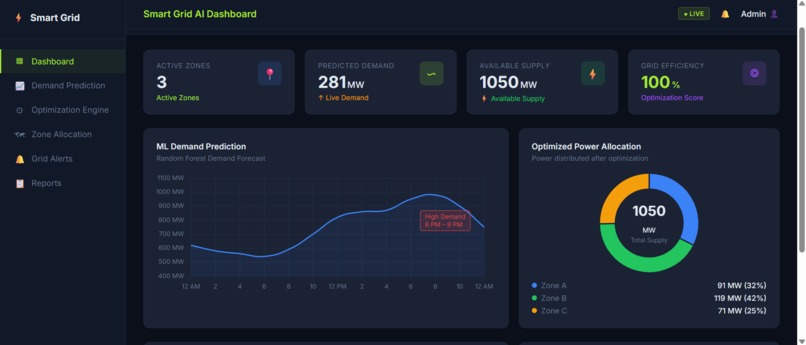
Optimised grid efficiency
-
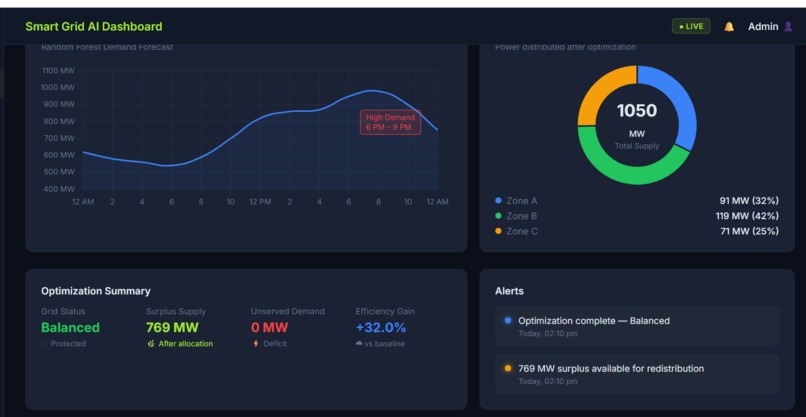
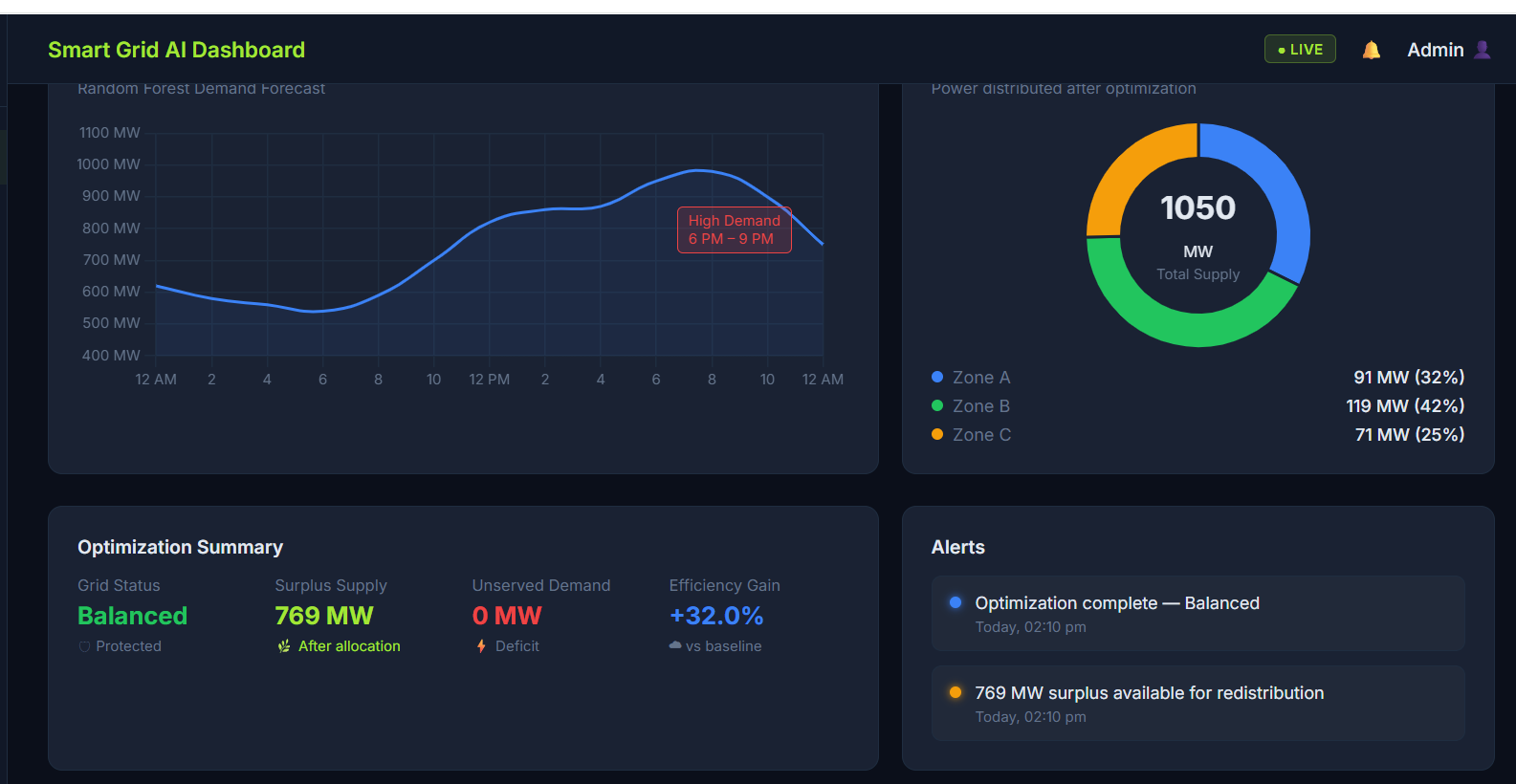
demand vs supply graph and efficency metrics
Inspiration
Every time the lights flicker during a storm, someone somewhere is making a split-second decision about where to send power — and who goes without it. We're IT students who spent a semester learning about smart grids in theory. Demand curves. Zone distribution. Load balancing. It all made sense on paper. But when we asked "how does this actually work in real time?" — the honest answer was: most grids still rely on human judgment and reactive fixes. We wanted to change that. Not for a power utility. For a hackathon. To prove that a couple of engineering students with Python and a weekend could build something that thinks faster than the problem.
What it does
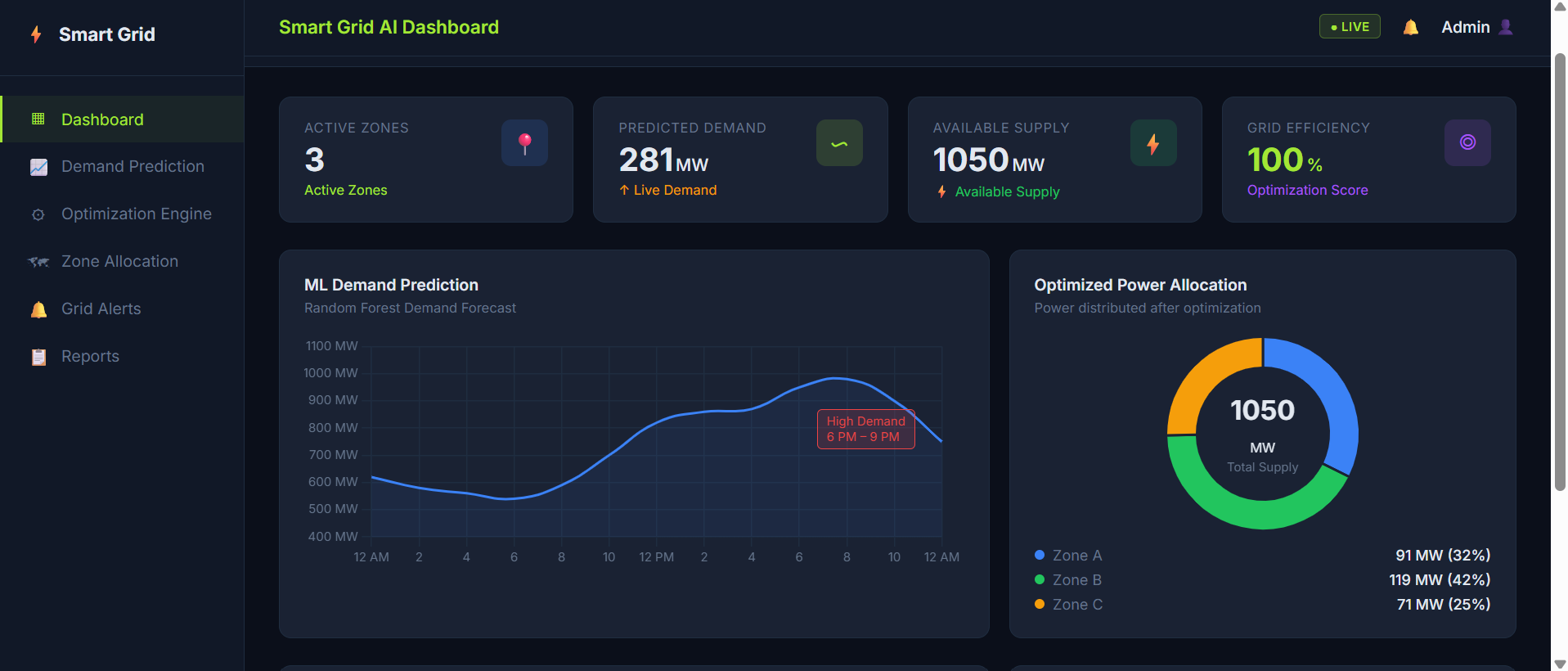
Smart Grid AI doesn't just monitor electricity — it predicts and optimizes before things go wrong. Feed it grid data across three zones and it tells you: Zone C is heading toward a critical overload in the next cycle. Zone B has headroom. Here's how to redistribute before anyone loses power. It combines a Random Forest ML model for demand forecasting with a rule-based optimization engine that makes allocation decisions in real time — flagging zones as Stable, Warning, or Critical before an overload cascades into a failure. Think of it as an early warning system for the power grid. Built by students. Ready to scale.
The system provides:
- Demand forecasting
- Zone-wise energy distribution analysis
- Overload risk detection
- Optimization recommendations
- Interactive dashboard visualizations
The goal is to improve energy efficiency, reduce overload risks, and support smarter decision-making for future energy infrastructure.
How we built it
We developed the project as a prototype consisting of:
- Frontend dashboard for visualization and user interaction
- Backend APIs for processing grid data
- Machine learning models for demand prediction
- Optimization logic for power allocation
- Data visualization components for analytics and reporting
The system uses simulated grid data to demonstrate how demand forecasting and intelligent distribution can work in a real-world smart grid environment.
Challenges we ran into
Some of the major challenges included:
The hardest part wasn't the ML model — it was making the whole system feel real with simulated data.Real smart grids have decades of sensor data. We had a weekend. So we built a synthetic dataset that mimics actual load variation patterns — peak hours, off-peak dips, zone-specific demand spikes — realistic enough that our Random Forest model could actually learn from it.Getting the optimization logic right was the other battle. It's easy to say "redistribute load when demand exceeds supply." It's harder to do it in a way that's fair, stable, and doesn't just shift the overload from one zone to another. We went through several rule iterations before the three-zone balancing felt genuinely intelligent rather than just reactive.
Accomplishments that we're proud of
We turned a classroom concept into a working system — end to end — in a hackathon window. The ML model predicts demand with meaningful accuracy. The optimization engine makes real allocation decisions. The dashboard shows you the grid's health in real time. None of it is mocked. None of it is stubbed. It runs. For students who started this as a semester curiosity, shipping something that actually works feels like the accomplishment worth talking about.
What we learned
What we learned We learned that the gap between theory and implementation is where the real engineering lives. Load balancing sounds simple until you're debugging why Zone A keeps hitting warning state even when total supply is sufficient. Demand forecasting sounds straightforward until your model overfits on synthetic peak data and you have to rethink your feature set at midnight. We came in knowing smart grid concepts. We left knowing how to build one.
We also developed a deeper understanding of how technology can support sustainable and efficient energy infrastructure.
What's next for Smart Grid Optimization System
Future enhancements may include:
- Real-time IoT smart meter integration
- Advanced AI forecasting models
- Renewable energy balancing
- Digital twin simulation capabilities
- Smart city deployment scenarios
- Integration with large-scale utility management systems
Our long-term vision is to evolve the prototype into a more comprehensive intelligent energy management platform that supports efficient and sustainable power distribution.


Log in or sign up for Devpost to join the conversation.