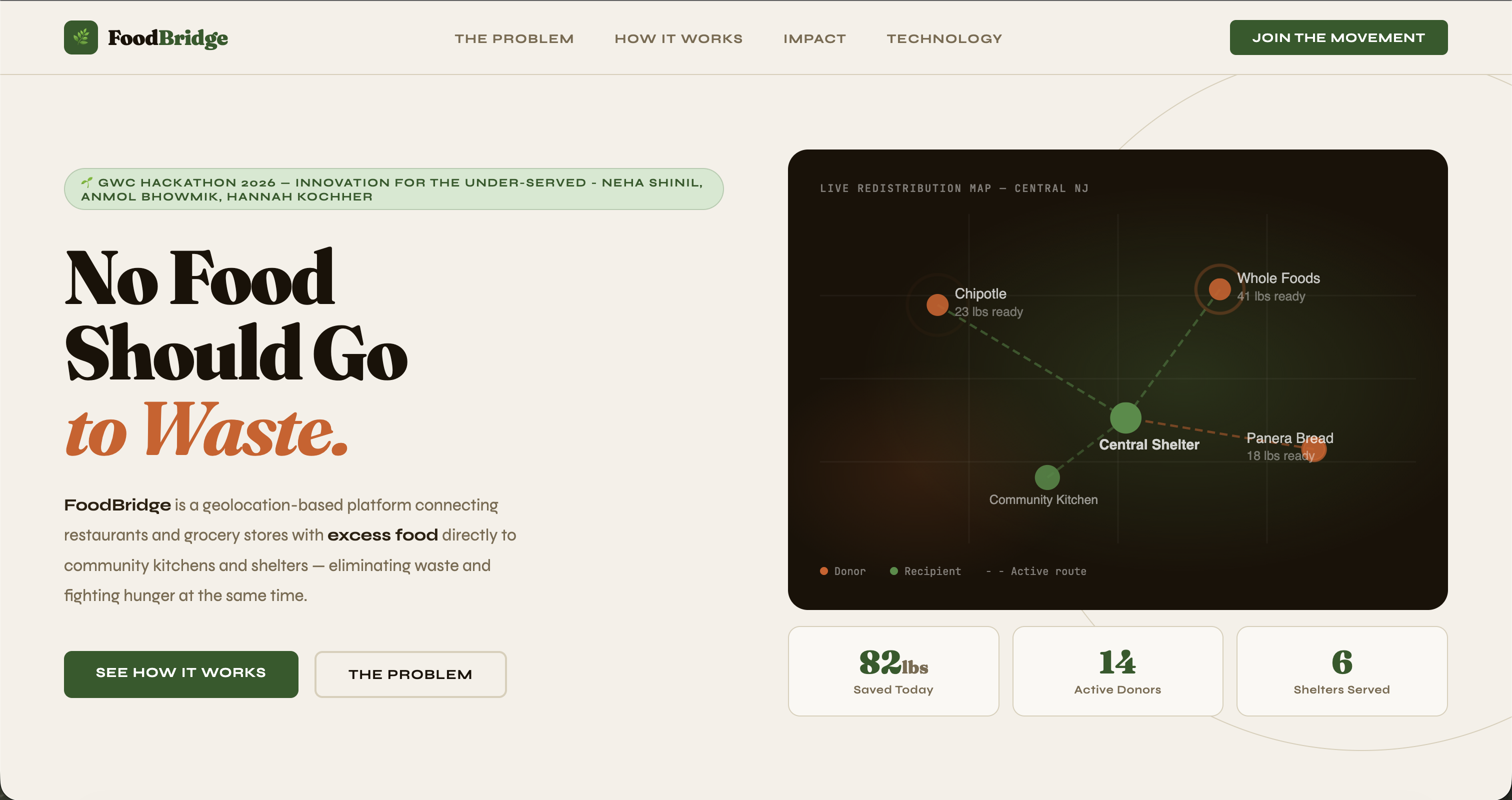
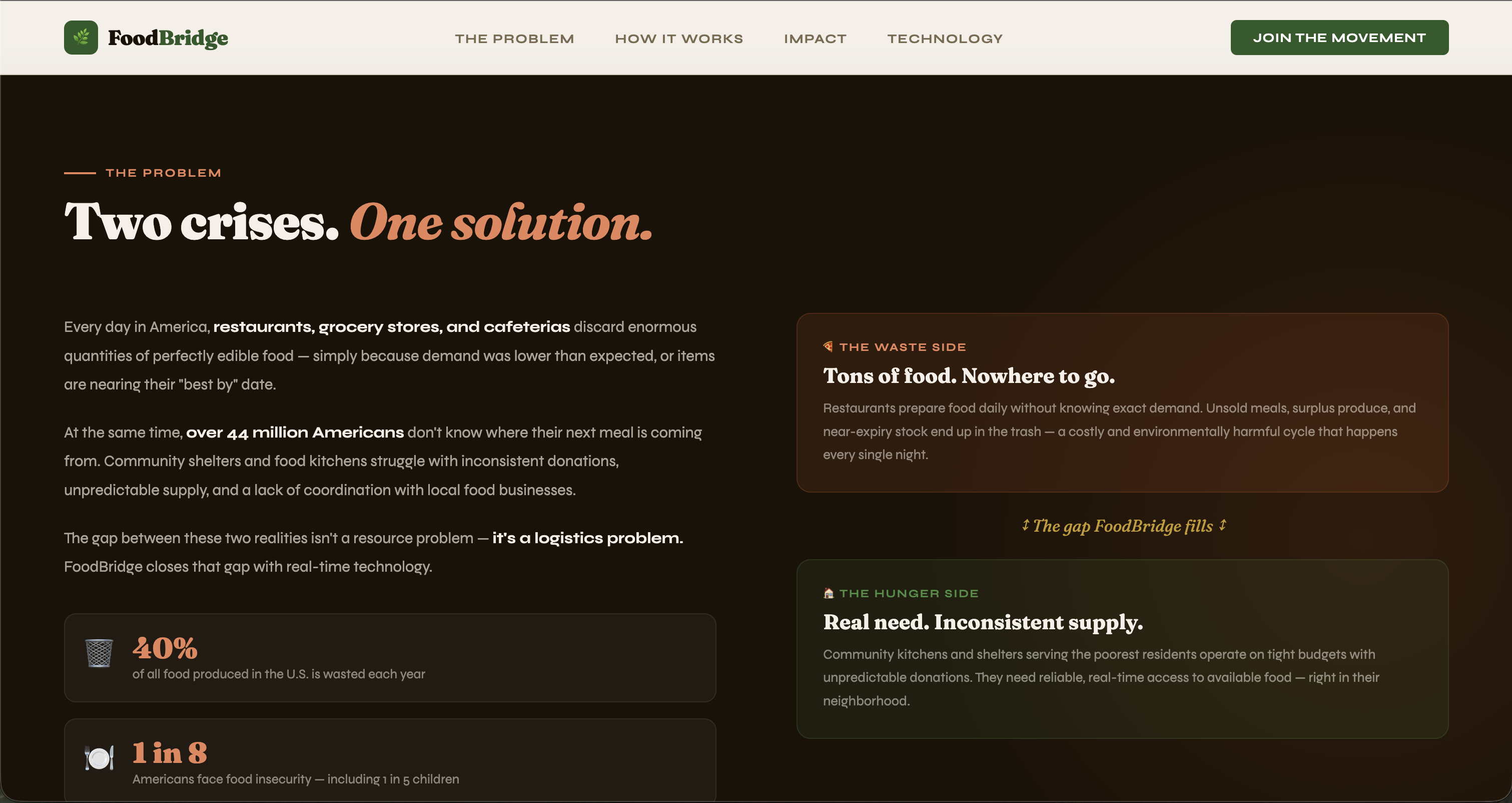
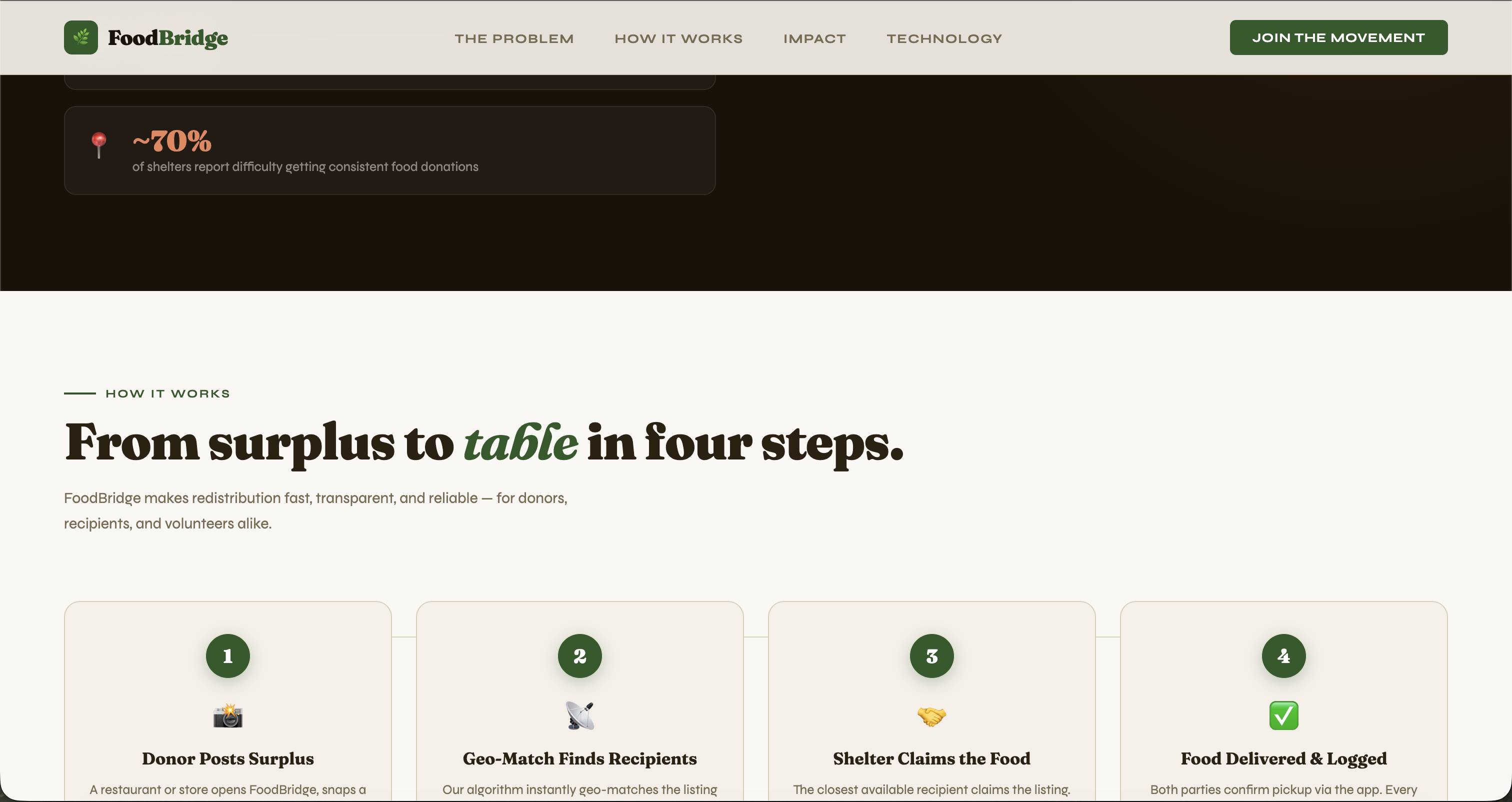
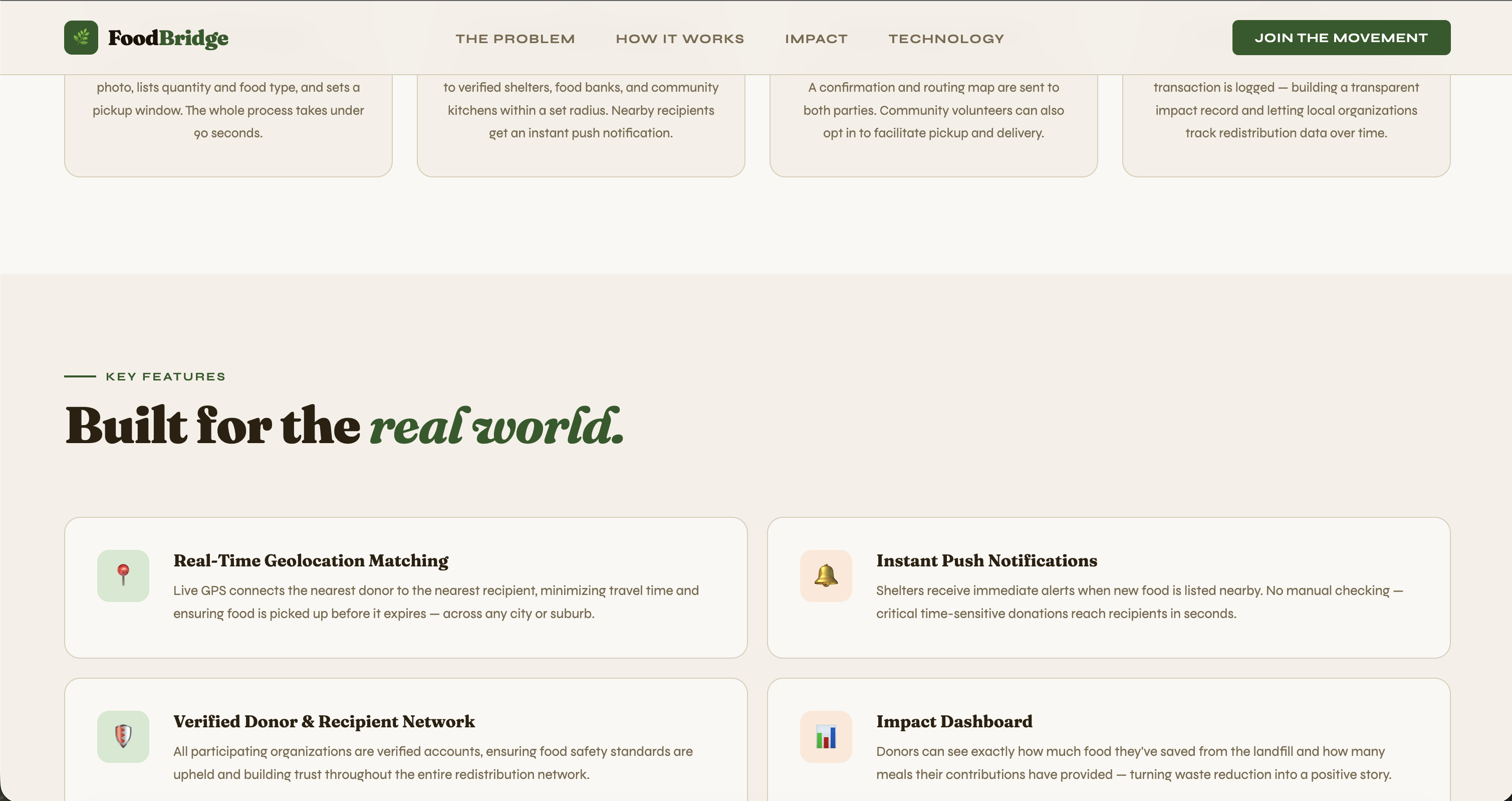
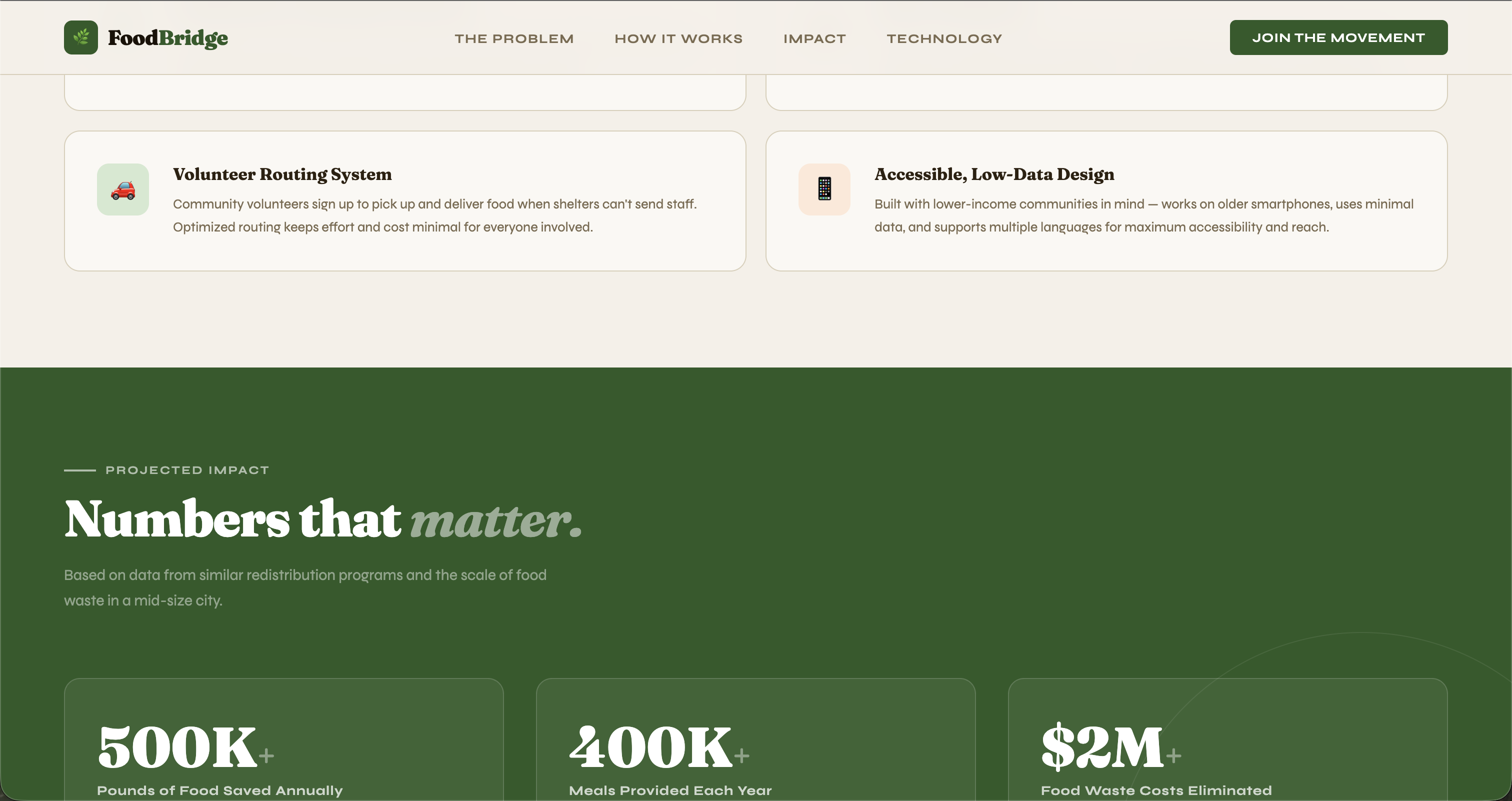
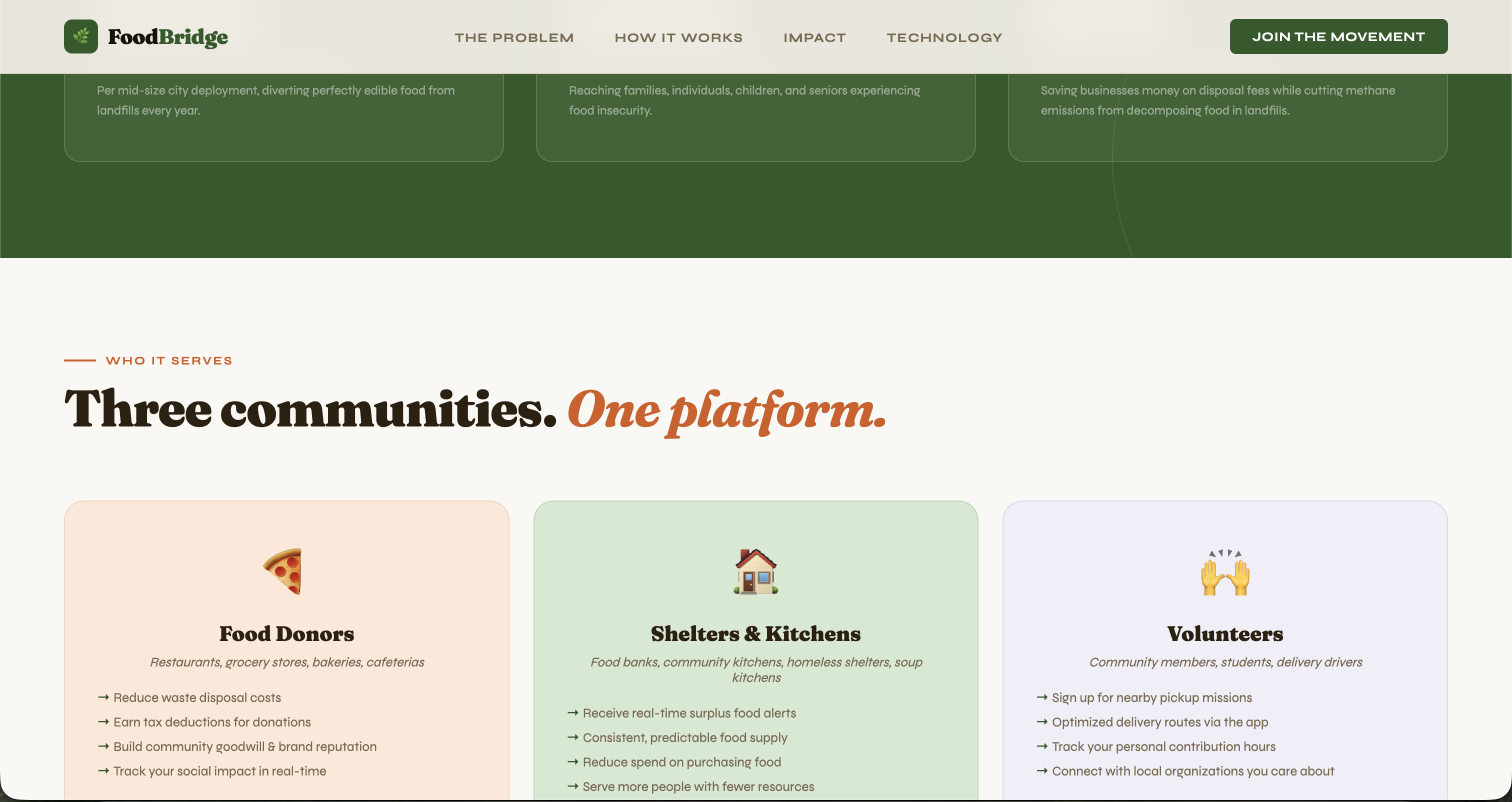
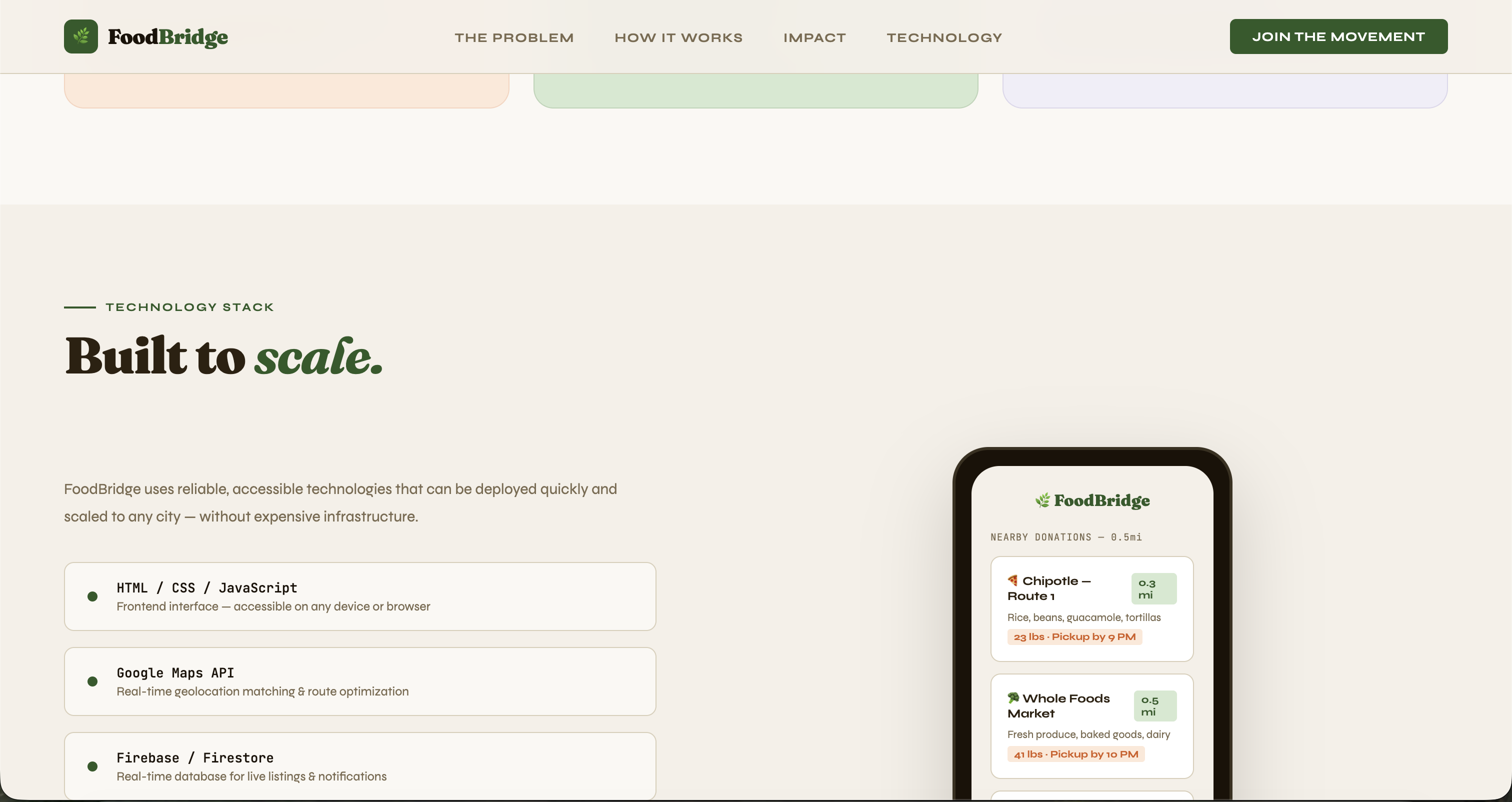
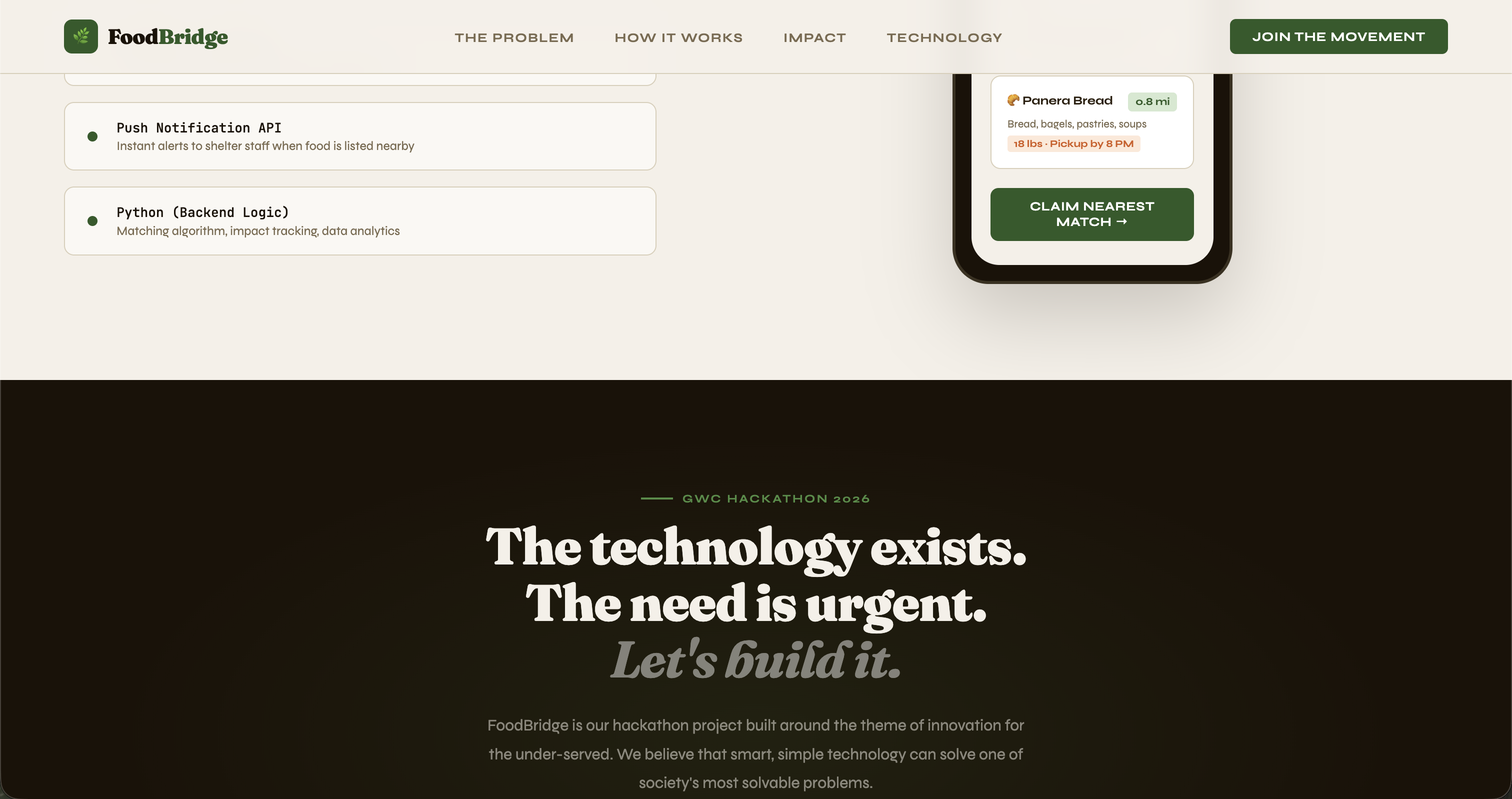
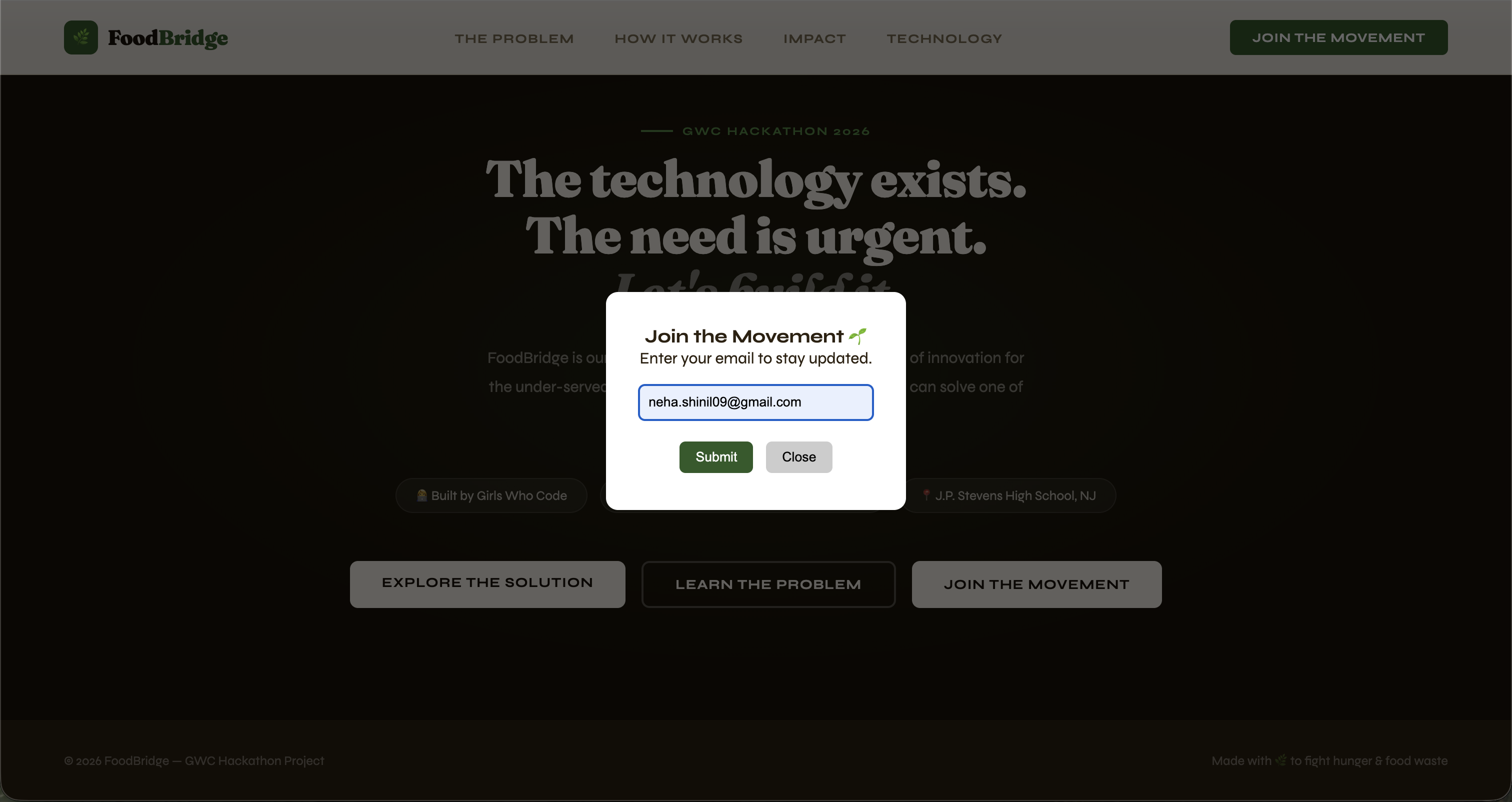
FoodBridge was inspired by the problem of food waste happening alongside food insecurity. While thinking about ideas for the hackathon theme, Innovation for the Under-Served, we wanted to create something practical that could help connect unused food with people who actually need it. That led to the idea for FoodBridge, a web-based system that would allow restaurants, grocery stores, and cafeterias with surplus food to quickly connect with nearby shelters, food banks, and community kitchens. Through this project, we learned that solving a social issue is not just about having a good idea, but also about designing something that is realistic and useful for the people involved. We learned more about how technology can support communities when it is focused on accessibility, simplicity, and trust. We also saw how data and math can help show the real impact of a project. For example, one part of our thinking involved estimating meals created from redistributed food using the equation M = W(redistributed)/1.2, where food weight could be converted into the approximate number of meals provided. Looking at the numbers made the project feel more meaningful and showed how even a local system could have a large effect. To build the project, we created a single-page website using HTML and CSS for the layout and styling. We also used SVG visuals and CSS animations to represent the geolocation and matching process in a simple way. The goal was to show how a donor could post extra food, how a nearby organization could claim it, and how the pickup process could be tracked. While the current version was more of a prototype than a fully working app, we also planned how a real version could eventually include tools like Google Maps API, Firebase, notifications, and backend logic to support live matching. One of the biggest challenges was designing for two very different groups of users at the same time. Restaurants would need something fast and efficient, while shelters or food banks would need something clear and reliable. Another challenge was simulating a real-time system without having a full backend. We had to find creative ways to make the website feel interactive and realistic using only front-end tools. It was also difficult to keep the project focused, since food insecurity is such a large issue and there were many directions we could have taken. Overall, this project taught us a lot about balancing technical design with real human needs.
Smart Food Redistribution System
FoodBridge uses geolocation to connect restaurants and stores with excess food directly to nearby shelters and food banks - turning today's waste into tomorrow's meal, one match at a time.
Updates

Leave feedback in the comments!
Log in or sign up for Devpost to join the conversation.