

What it does
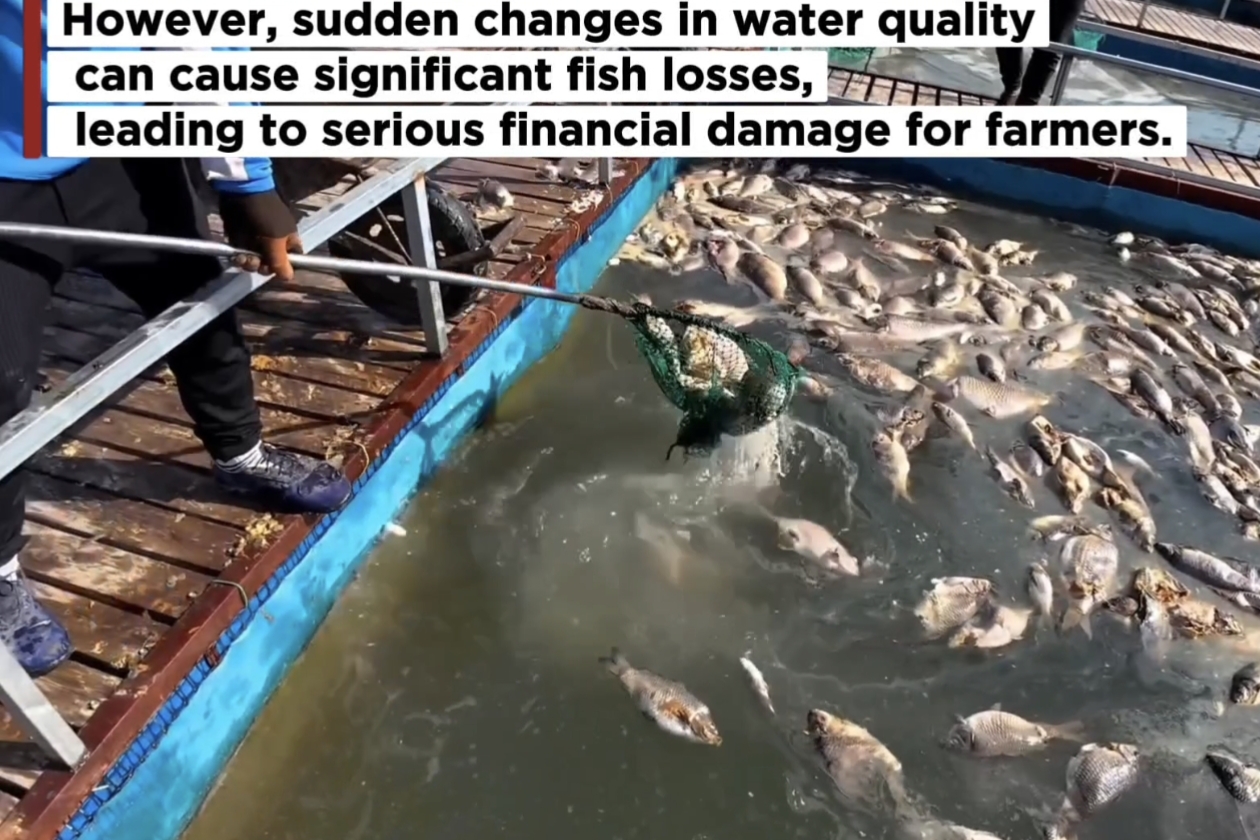
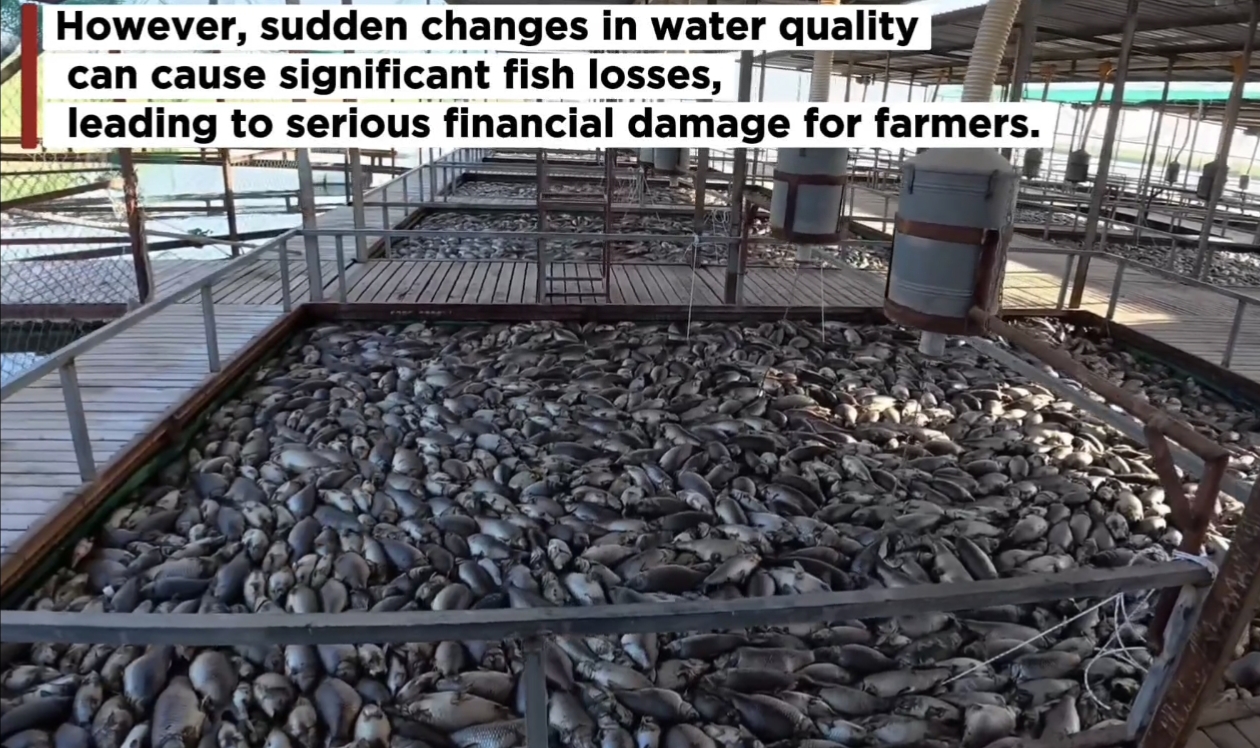
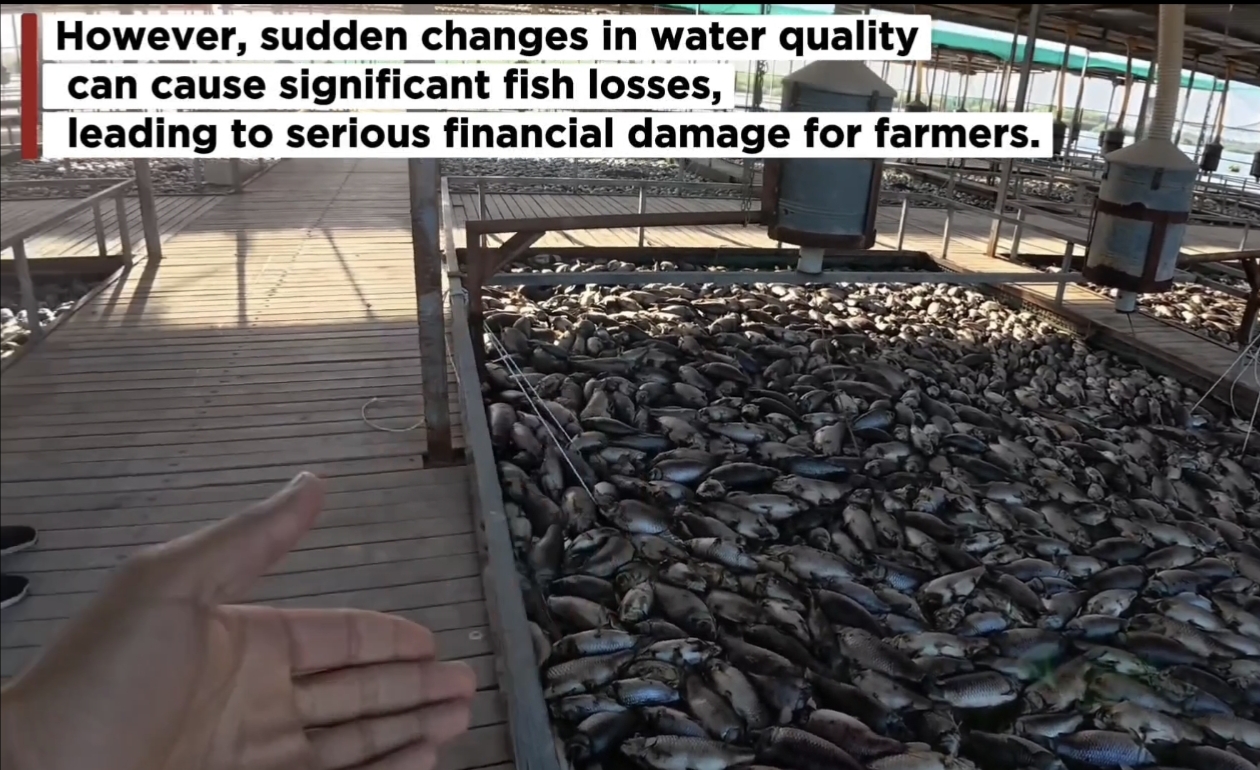
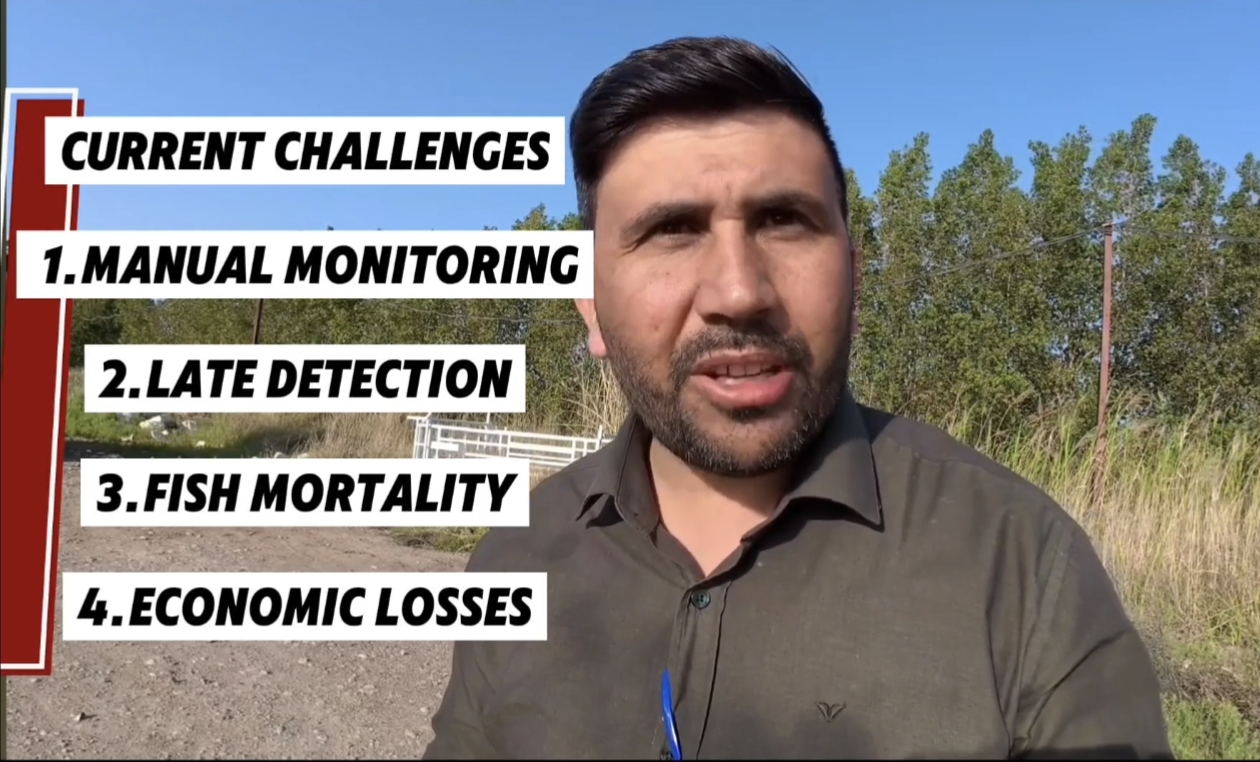
In Iraq, fish farms can be affected by sudden deterioration in river water quality, sometimes leading to large-scale fish deaths and significant economic losses. One of the problems is that farmers may not detect dangerous changes in water conditions until it is too late.
This inspired me to build Smart Fish Farm Protection, an IoT-based prototype that continuously monitors water conditions and automatically responds when unsafe changes are detected.
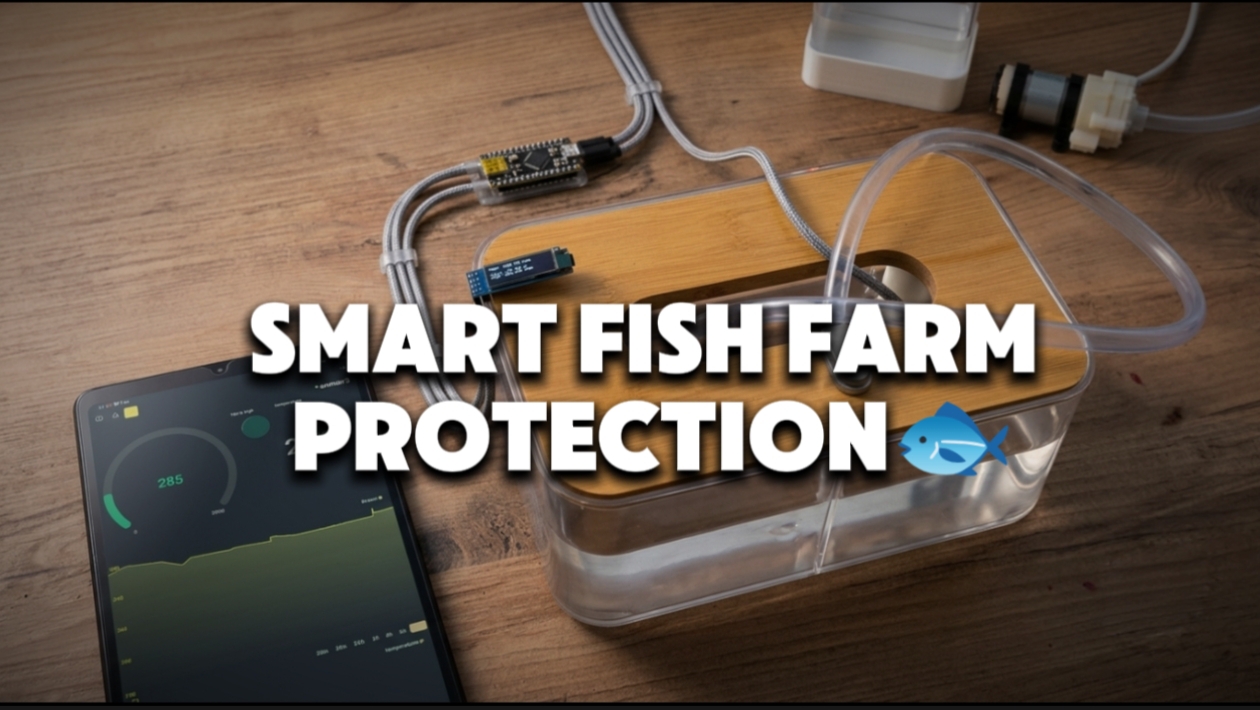
The system monitors water quality using a TDS sensor and temperature using a DS18B20 sensor. Readings are displayed on an OLED screen and sent to a Blynk dashboard for remote monitoring. When the water quality reaches an unsafe threshold, the system activates a water-exchange pump and provides an alert.
How I built it
I built the prototype around an ESP32, connected to:
- TDS sensor for water-quality monitoring
- DS18B20 sensor for temperature
- OLED display for local readings
- Relay-controlled water-exchange pump
- Blynk for remote monitoring and alerts
The ESP32 continuously reads the sensors, compares the measurements with predefined thresholds, and triggers the appropriate response when an unsafe condition is detected.
Challenges I ran into
One of the main challenges was integrating multiple sensors and hardware components while keeping the system reliable.
I also had to determine suitable thresholds for detecting potentially unsafe water conditions and make sure the system could respond automatically rather than simply display measurements.
Another challenge was recognizing the limitations of a small prototype: sensor readings and thresholds would require more extensive calibration and testing before being used in a real fish farm.
Accomplishments that I'm proud of
I built a working proof of concept that combines embedded systems, IoT, sensing, and automation into one system.
Instead of only monitoring water conditions, my prototype can also take an automated action by activating the water-exchange pump and sending an alert when an unsafe condition is detected.
What I learned
This project helped me understand how sensor data can be connected to automated decision-making and remote monitoring.
I also learned that building a real-world system requires more than making the hardware work. Sensor calibration, reliable thresholds, environmental conditions, and extensive testing are all important for dependable deployment.
What's next for Smart Fish Farm Protection
My next step would be to test the system in real fish-farming environments and collect data over longer periods.
Future improvements could include more water-quality sensors, better calibration, data logging and analysis, adaptive thresholds, and more reliable automated water-management strategies.
The current project is a prototype, but my goal is to develop it further into a more robust system that can help detect water-quality problems earlier and support faster responses in fish farms.
Built With
- arduino
- blynk
- c/c++
- ds18b20
- embedded
- esp32
- iot
- oled
- sensor
- systems
- tds


Log in or sign up for Devpost to join the conversation.