-
-
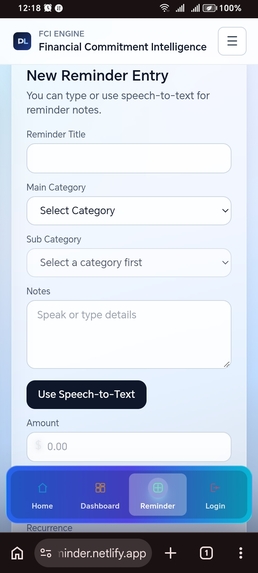
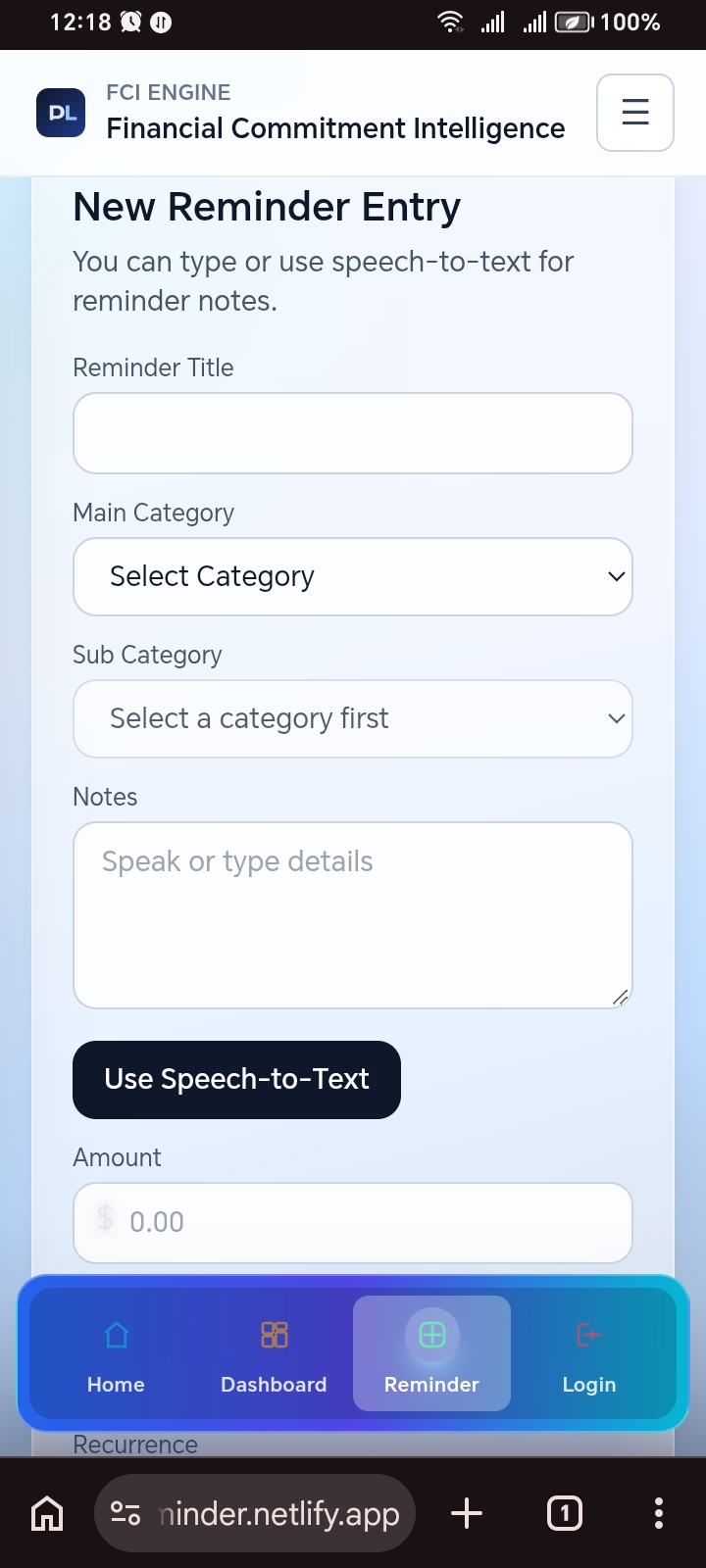
Reminder Setup Page
-
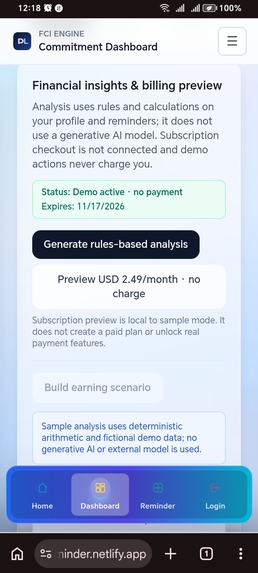
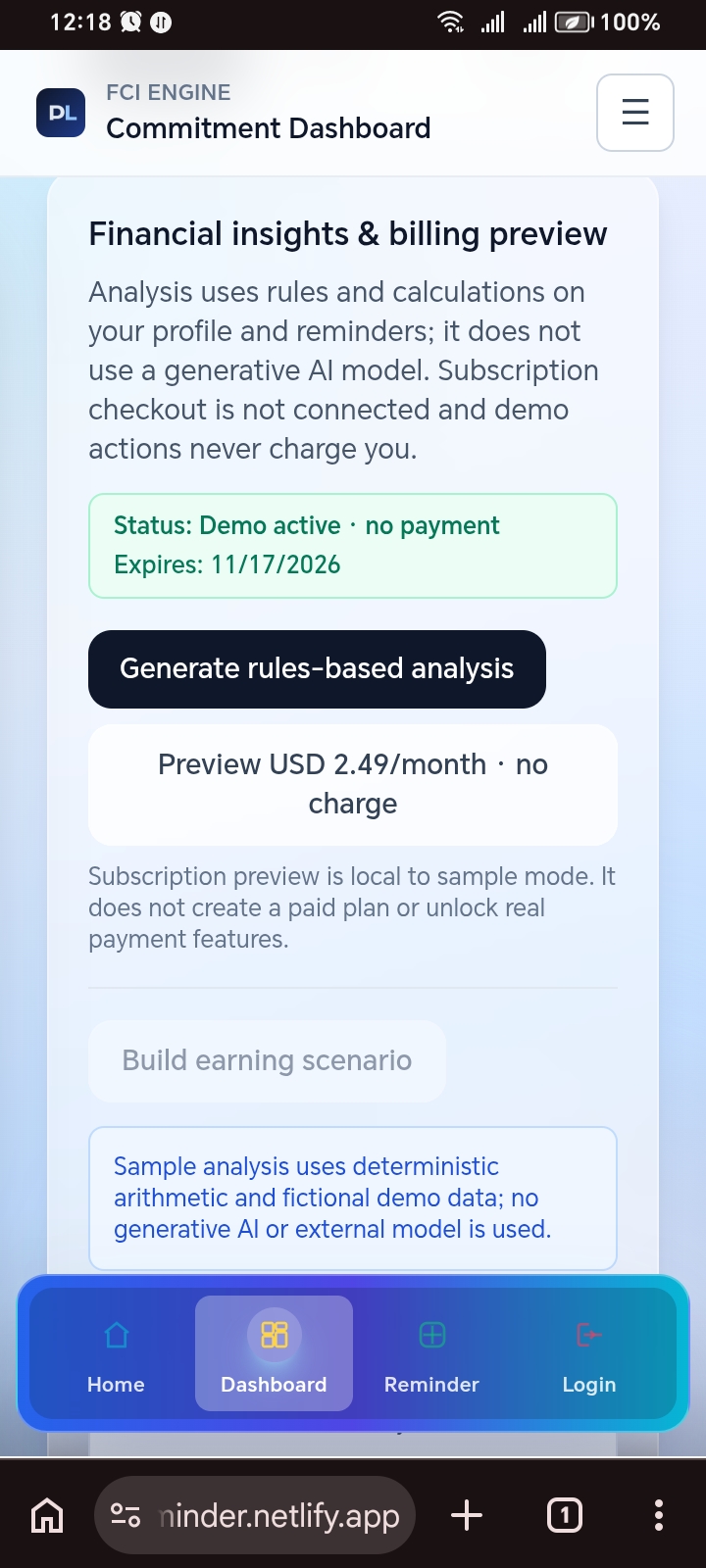
AI Analysis Section
-
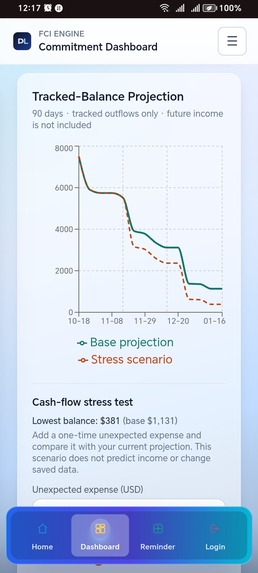
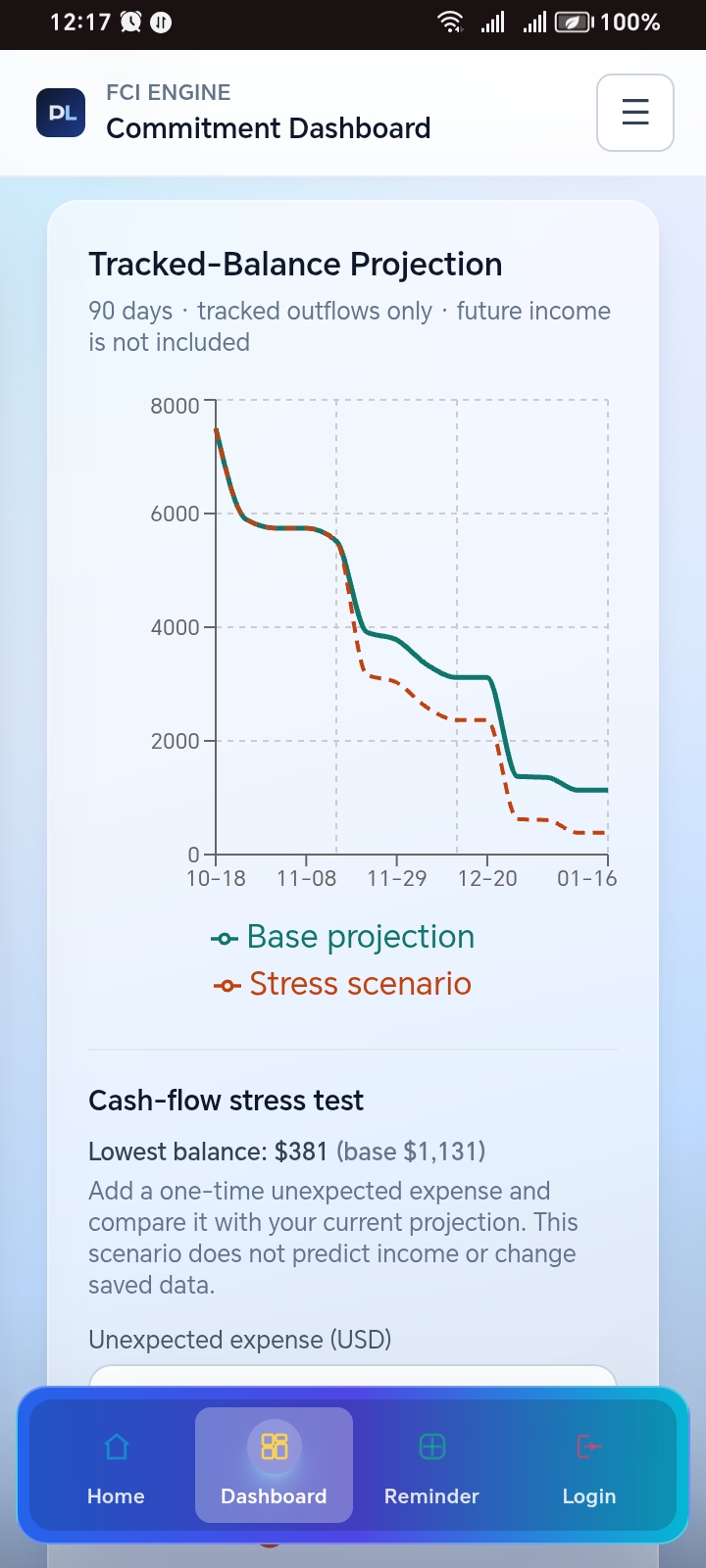
Tracked-Balance Projection
-
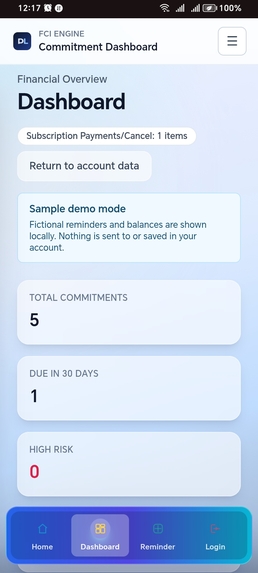
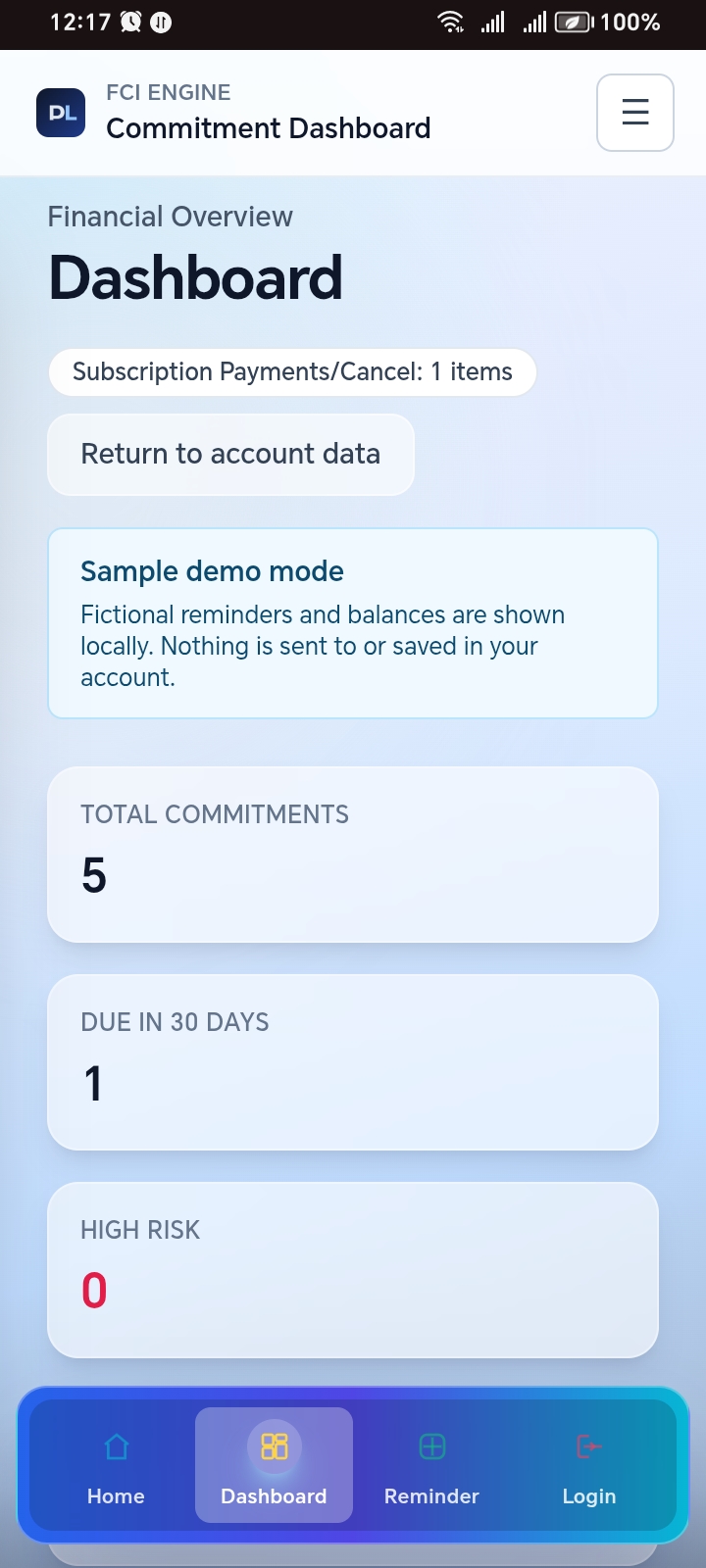
Dashboard
-
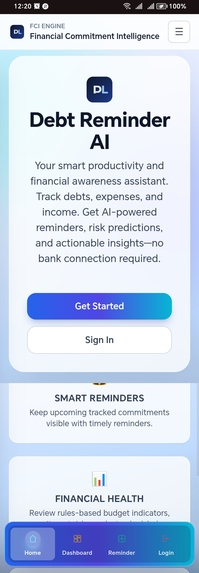
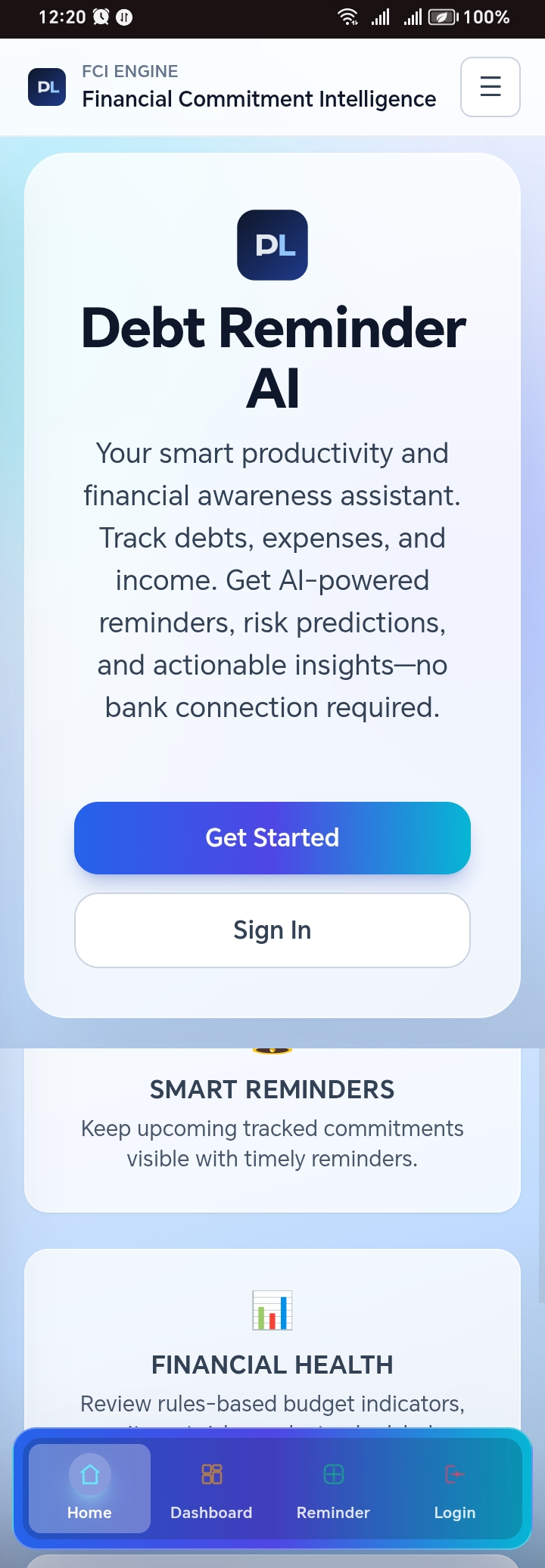
Home Page
Inspiration
Bills, subscriptions, and other financial commitments are easy to lose track of when they’re scattered across calendars, emails, and notes. We wanted to make it easier to see what’s coming and understand how planned expenses could affect a person’s balance, without requiring access to their bank account.
What it does
Smart Financial Reminder lets people manually track upcoming and recurring financial commitments in one dashboard. It includes:
A 90-day balance projection based on tracked outflows Upcoming-commitment lists and risk alerts Category filtering to focus on relevant commitments An interactive stress test for comparing an unexpected expense against the current projection
A sample demo mode using fictional data The forecast makes its limits clear: it uses tracked outflows and does not include future income. Optional AI analysis and earning-potential scenarios are separate from the core tracking experience; earning scenarios require a separate opt-in.
How we built it
The frontend is built with Next.js, React, TypeScript, Tailwind CSS, Zustand, and Recharts. A FastAPI backend provides authentication and application APIs, while deterministic logic handles recurrence, projections, and risk scoring. The app is designed around manually entered information and does not connect to banks or request banking credentials.
Challenges we ran into
Financial forecasts can look more certain than they are. We worked to keep the projection’s assumptions visible and distinguish tracked outflows from future income. We also needed the dashboard to present several kinds of information—commitments, alerts, projections, and scenario controls—without making the planning flow difficult to scan.
Accomplishments that we’re proud of
We brought commitment tracking, risk alerts, a 90-day projection, and an interactive “what if?” expense scenario into one experience. We’re also proud that people can explore the dashboard with fictional sample data, and that the core product works without requiring bank access.
What we learned
Useful financial interfaces need to communicate uncertainty and data boundaries, not just display numbers. We also learned that privacy choices should be part of the product flow: manual entry, transparent forecast assumptions, and separate opt-in for additional earning scenarios help users understand what the app does with their information.
What’s next for Smart Financial Reminder
We’d like to improve reminder delivery and make projections more informative while keeping assumptions clear. We also plan to refine the mobile experience, expand accessibility testing, and continue improving how users can review and manage their commitments.
Built With
- backend
- fastapi
- frontend
- next.js
- react
- risklogic
- typescript
