-
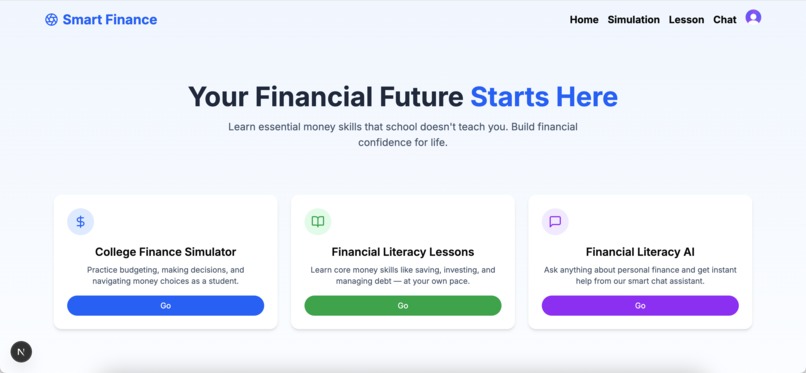
Home page
-
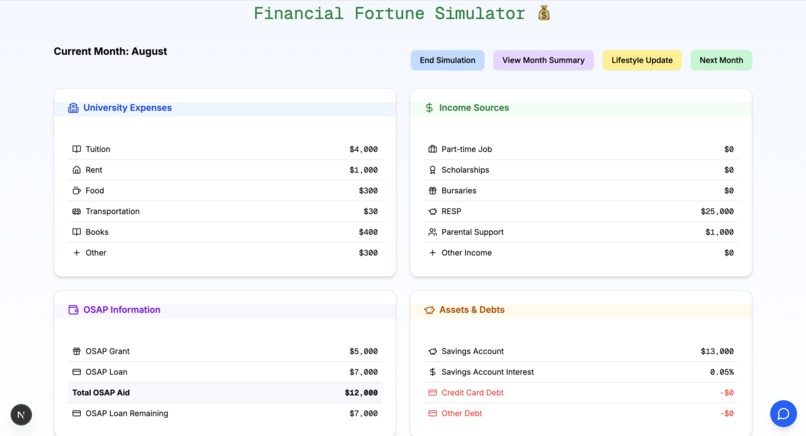
College Finance Simulator
-
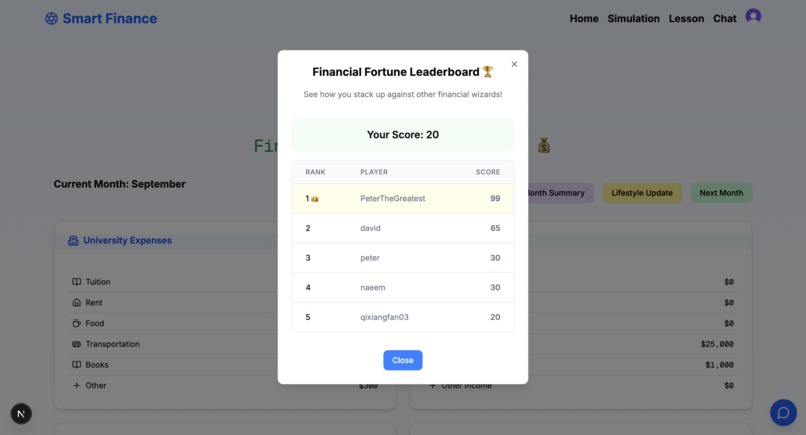
Simulation Leader Board
-
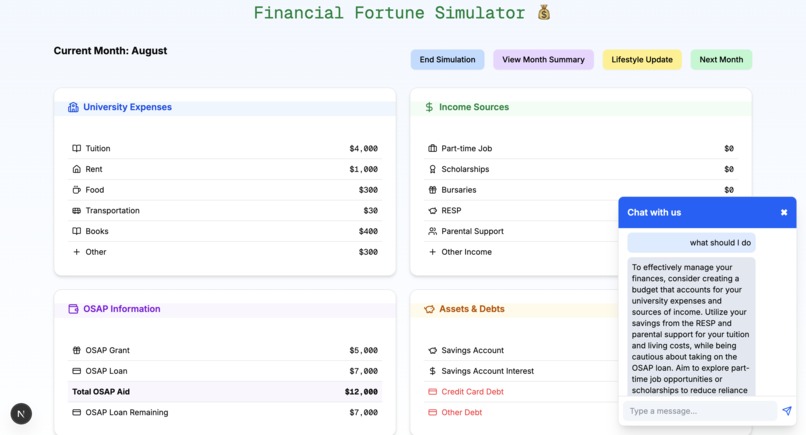
Personalized AI Assistance
-
Learning Modules
-
Lesson Demo
-
AI Chatbox


Inspiration
Financial literacy is a critical life skill that many students don't learn in school. According to a 2022 OECD survey, only 33% of young adults in Canada feel confident in their financial knowledge. This gap in education leaves many students unprepared for managing student loans, budgeting, and making sound financial decisions during and after college.
Our team members experienced this firsthand when entering university. We struggled with understanding OSAP (Ontario Student Assistance Program), budgeting for living expenses, and planning for the future. We realized that many of our peers faced similar challenges, often leading to unnecessary debt and financial stress. Existing solutions like financial literacy courses are often too theoretical or disconnected from the real-life scenarios students face. Mobile apps typically focus on budgeting or investing separately, without providing a comprehensive educational experience. We wanted to create something that combines practical simulation, targeted education, and personalized guidance in one accessible platform.
What it does
College Finance Simulator
Our interactive simulator allows students to practice real-world financial decision-making in a risk-free environment. Users can:
- Set up their financial profile with tuition costs, living expenses, income sources, and OSAP details
- Simulate month-by-month financial scenarios over a school year
- Experience random financial events (unexpected expenses, income opportunities)
- Make lifestyle adjustments (taking on part-time work, changing living arrangements)
- Track their savings, debt, and overall financial health
- Compete on a leaderboard to encourage engagement
The simulator helps students understand the consequences of their financial decisions without real-world risk, building confidence and practical knowledge.
Financial Literacy Lessons
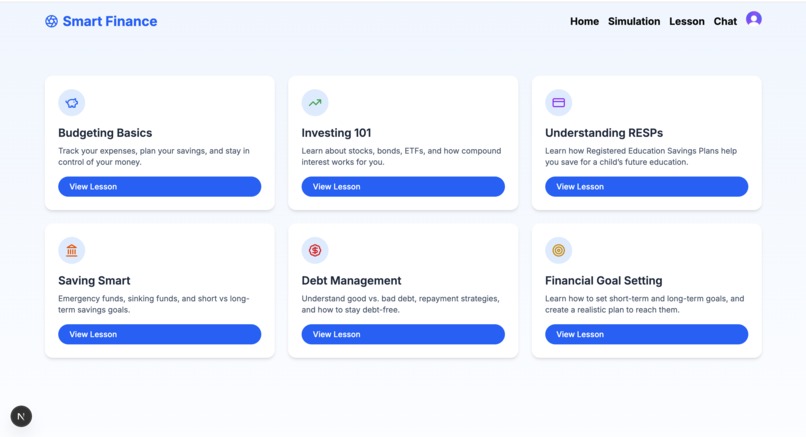
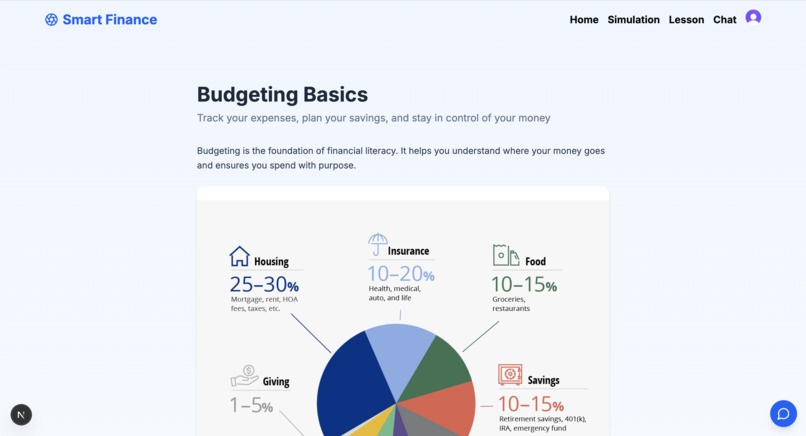
Our platform offers structured lessons on key financial topics relevant to students. Each lesson provides practical, actionable information in an engaging format with real-world examples tailored to student experiences.
Financial Literacy AI Assistant
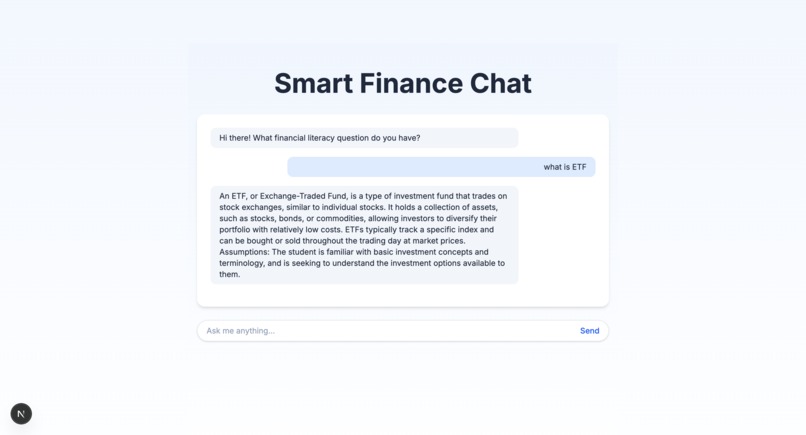
Our AI-powered chat assistant allows students to ask specific financial questions and receive personalized guidance. The assistant is:
- Trained on financial literacy concepts relevant to Ontario students
- Able to provide context-aware advice based on simulation results
- Available throughout the platform to offer just-in-time learning
How do we built it
We built SmartFinance using a modern tech stack focused on performance, accessibility, and scalability:
Framework
Next.js
Frontend:
- React: For building interactive UI components
- Tailwind CSS: For responsive design and consistent styling
- Shadcn UI: For accessible, reusable UI components
Backend:
- Next.js API Routes: For serverless backend functionality
- Prisma: For database management and type-safe queries
- Clerk: For user authentication and management
AI Integration
- OpenAI API: Powering our financial literacy assistant with GPT-4o-mini
- Custom prompting to ensure accurate, educational responses tailored to Ontario students
Development Process
- Conducted user research to identify key financial challenges students face
- Created wireframes and user flows for the three main components
- Developed the simulation engine with realistic financial calculations
- Built lesson content based on Ontario financial education standards
- Integrated the AI assistant with custom context handling
- Conducted user testing with university students to refine the experience
Challenges We Faced
Technical Challenges
Complex Financial Calculations
Implementing accurate calculations for interest, debt repayment, and financial projections required careful modeling and validation.State Management
Managing the complex state of the simulation across multiple months and random events was challenging.AI Response Quality
Ensuring the AI assistant provided accurate, educational responses without misleading information required extensive prompt engineering.Responsive Design
Creating an interface that worked well across devices while displaying complex financial information.
Content Challenges
Educational Balance
Finding the right balance between educational depth and accessibility.Ontario-Specific Information
Ensuring all content accurately reflected Ontario's financial systems, particularly OSAP details.Scenario Realism
Creating realistic financial scenarios that students could relate to while maintaining educational value.
How We Addressed Them
We overcame most challenges through iterative development and user testing, though we still see room for improvement in:
- The AI’s contextual understanding
- The complexity and scalability of the simulation model
Accomplishments/Learnings
Comprehensive Platform
Successfully integrated three distinct educational approaches — simulation, lessons, and AI — into a cohesive learning experience.Realistic Simulation
Created a financial simulator that accurately models student financial scenarios, including OSAP, part-time work, and unexpected expenses.Educational Impact
Developed content that demonstrably improves financial confidence and knowledge.User Experience
Built an intuitive, engaging interface that makes learning about finance accessible and even enjoyable.AI Integration
Implemented a context-aware AI assistant that provides personalized guidance based on user scenarios.What's Next?
Short-term Improvements
Enhanced Simulation Complexity
Add more variables like investment options, tax considerations, and long-term planning.Expanded Lesson Library
Develop additional lessons on topics like credit scores, taxes, and insurance.Improved AI Context
Enhance the AI's ability to reference specific user scenarios and simulation results.Mobile App
Develop a dedicated mobile application for improved accessibility.Personalized Learning Paths
Create adaptive learning experiences based on user knowledge and goals.
Long-term Vision
School Integration
Partner with Ontario high schools to incorporate SmartFinance into the curriculum.Community Features
Add peer support and discussion forums for shared learning.Financial Institution Partnerships
Collaborate with banks and credit unions to provide real-world financial tools and resources.Expanded Regional Support
Adapt the platform for different provinces and their specific financial aid systems.Gamification Expansion
Develop more game-like elements to increase engagement and retention.
By focusing on these improvements, we believe SmartFinance can become an essential tool for financial education across Canada — helping students build the confidence and skills they need for lifelong financial success.
Built With
- ai
- clerk
- cloudinary
- javascript
- next.js
- node.js
- prisma
- shadcn
- sqlite
- typescript

Log in or sign up for Devpost to join the conversation.