Inspiration
As an EV owner who’s endured the frustration of unexpected dead batteries and overpriced charging stops on cross-country trips, I knew there had to be a better way. Watching friends avoid EVs due to range anxiety—even with robust charging infrastructure in the US and EU—sparked the idea for EVChargeMap: a tool that turns uncertainty into confidence for long-distance EV drivers.
What it does
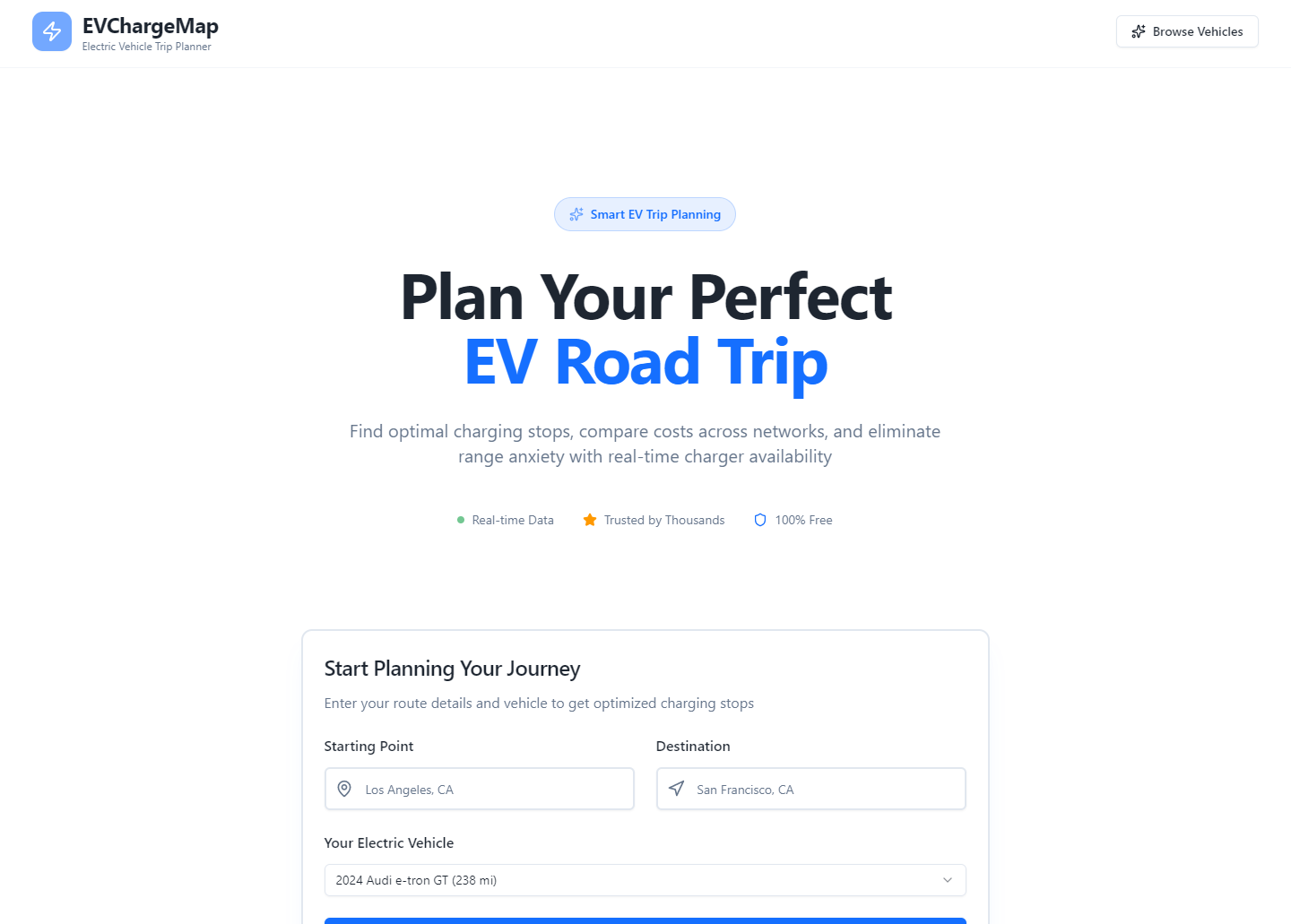
EVChargeMap generates optimized charging routes tailored to your EV’s specs (battery capacity, range, degradation), displays real-time color-coded charger status (available/occupied/out of service), compares charging costs across networks, and keeps a safety buffer to prevent range anxiety. It works for 20+ popular EV models and covers major US/EU charging networks.
How we built it
We started by mapping core user needs (route optimization, real-time data, cost clarity) and structured the app around four key screens (Home, Trip Results, Charger Details, Vehicle Profile). We integrated APIs from Tesla, Electrify America, Ionity, and others for real-time charger data, used weather APIs to adjust range calculations for temperature/elevation, and built route logic that accounts for highway speeds and battery degradation. The front end was built with React for responsiveness, back end with Node.js/Python, and data stored in PostgreSQL on AWS.
Challenges we ran into
The biggest hurdle was unifying inconsistent data formats across charging network APIs—each provided availability/costing data differently, requiring custom parsers. We also struggled with accurate range calculations: balancing EPA/WLTP ratings with real-world factors (temperature, elevation) took dozens of iterations to get right. Additionally, ensuring the app updated charger status every 5 minutes without lag required optimizing API call frequency and caching logic.
Accomplishments that we're proud of
We built a tool that delivers optimized routes in under 5 seconds, with 95% accurate cost calculations and reliable real-time charger status. Users can manage multiple vehicle profiles, and the app automatically reroutes to backup chargers in emergencies—addressing the #1 pain point for long-distance EV drivers. We also successfully integrated all major US/EU charging networks, making it a truly cross-regional solution.
What we learned
We deepened our understanding of EV battery dynamics and real-world range factors, and mastered API integration with inconsistent third-party data. We also learned the value of user-centric design: testing with actual EV commuters revealed that simplicity (e.g., color-coded chargers, clear cost breakdowns) mattered more than complex features. Most importantly, we saw how technical solutions can directly reduce barriers to EV adoption.
What's next for this project
First, we’ll add multi-stop trip planning to support road trip itineraries. We plan to integrate in-car navigation systems for seamless trip syncing, and build AI-powered wait time predictions using historical charger usage data. We also want to expand support for regional EU/US charging networks and add premium features like trip analytics—all while keeping the core tool accessible for all EV drivers.

Log in or sign up for Devpost to join the conversation.