-
-
Overdue summary
-
AI agent for analytics.
Inspiration
As a data engineer, I often saw how inefficient it was when business teams needed data. Typically, a request would go to data analysts, who then had to extract, analyze, and finally deliver the results. This process took time and slowed decision-making. I was inspired to create a self-service solution that would empower users to access insights on their own, improving efficiency and reducing bottlenecks.
What it does
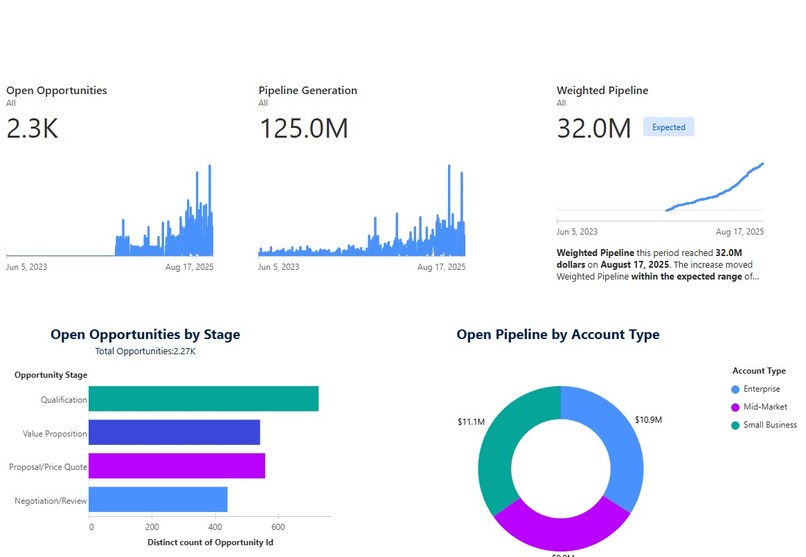
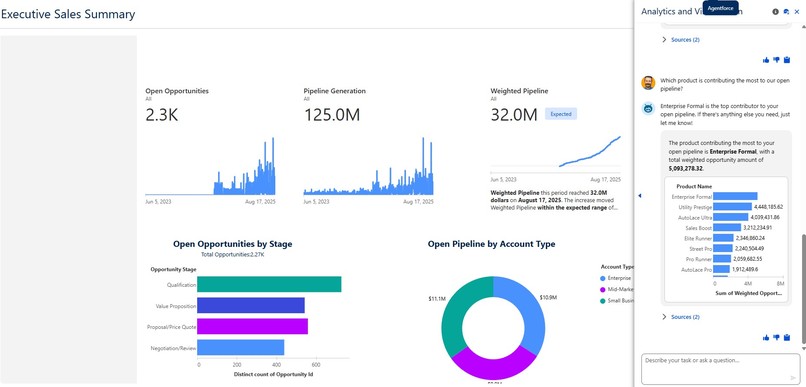
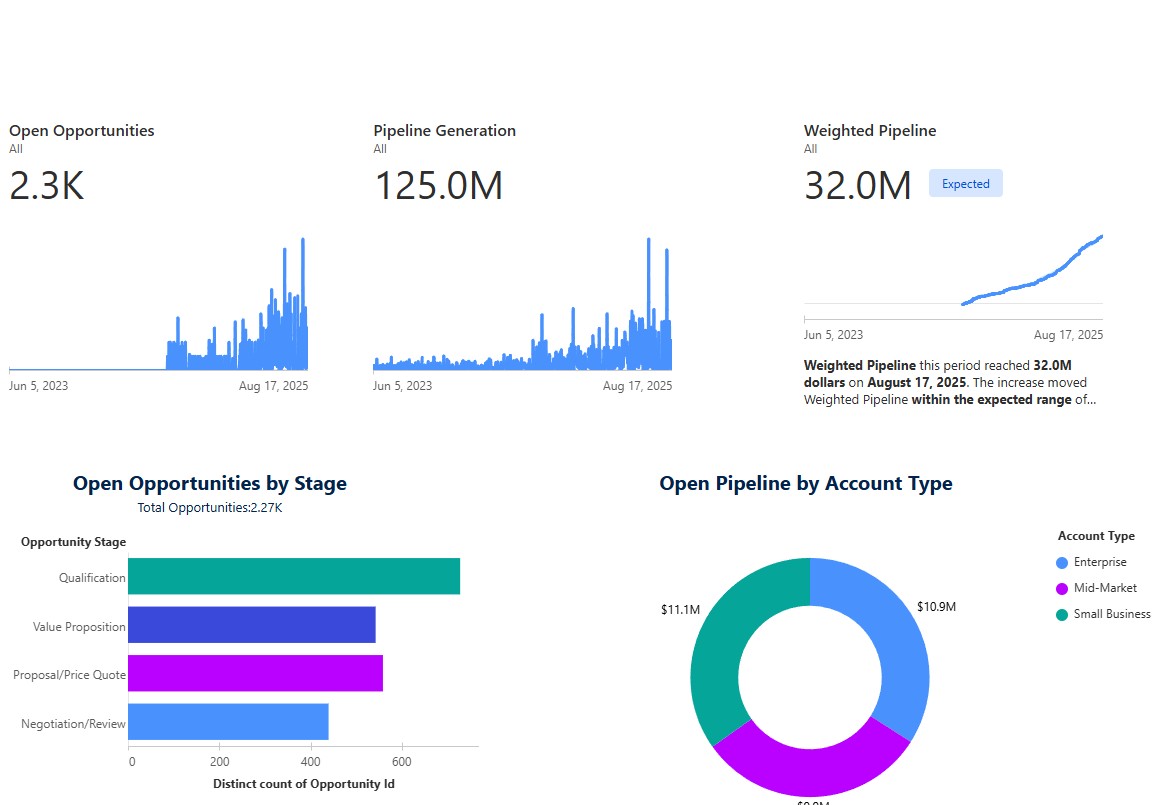
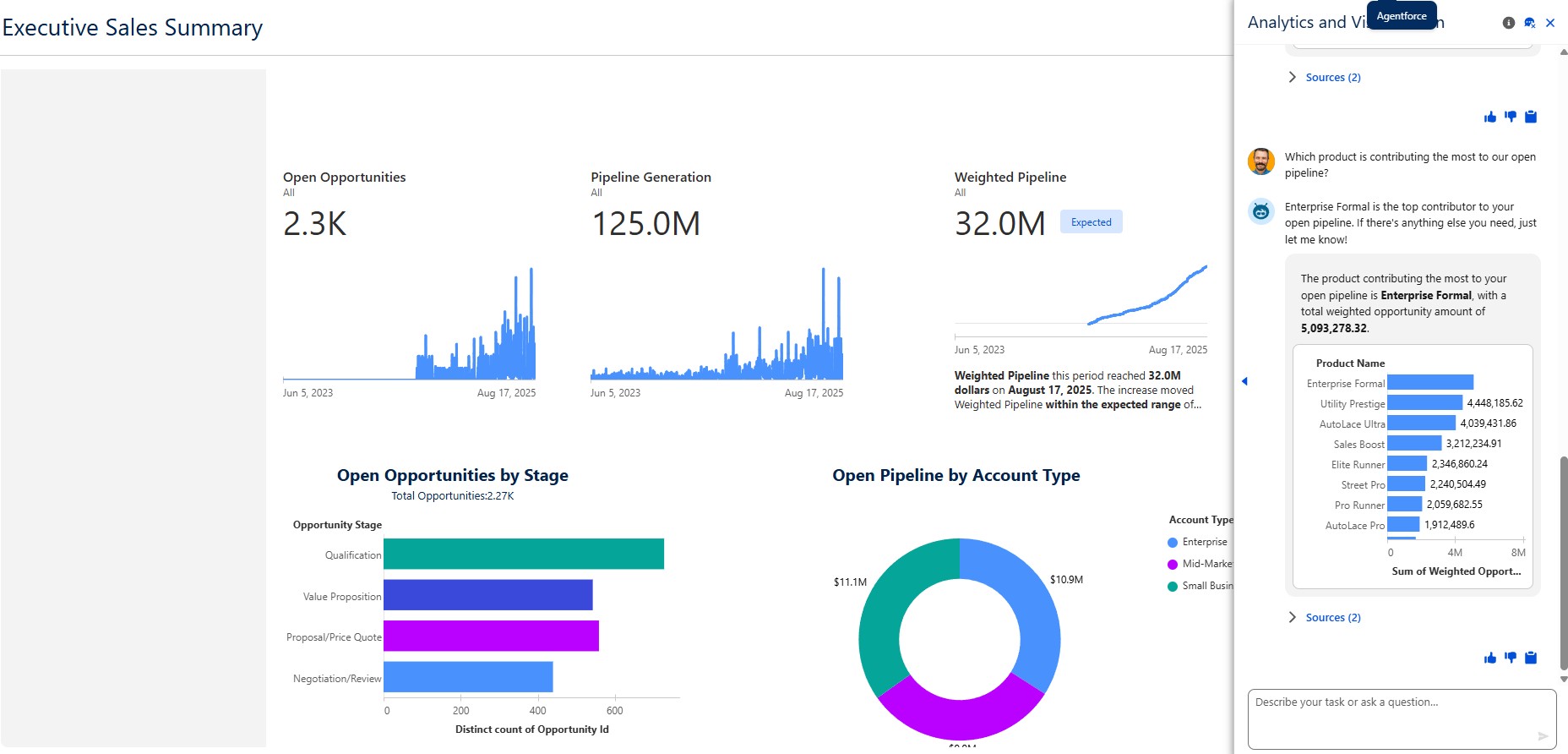
The Smart Energy Platform provides users with self-service access to energy usage insights. Instead of waiting for analysts, business users can directly explore consumption patterns, detect unusual behaviors, and identify opportunities for optimization. With Agentforce integration, the platform allows natural-language interaction, making it even easier for non-technical users to get the data they need.
How we built it
We built the platform on Salesforce as the foundation, using Tableau for visualization and Agentforce to enable conversational queries. The system connects smart meter data with customer subscription and pricing information, allowing flexible analysis and interactive dashboards. Even though I had no prior Salesforce experience, I was able to design the workflows and dashboards from scratch and integrate them into a seamless solution.
Challenges we ran into
The biggest challenge was configuring Agentforce to correctly interpret and process user questions. Fine-tuning the model and connecting it to the right data sources required time and experimentation. Another challenge was my lack of prior Salesforce experience, which initially made development intimidating. However, once I got familiar with the platform, the process became smoother.
Accomplishments that we're proud of
- Building the platform fully on Salesforce without prior experience.
- Successfully integrating Tableau dashboards with smart meter data.
- Enabling self-service data access, reducing dependency on analysts.
- Configuring Agentforce to interpret queries and deliver accurate insights.
What we learned
I learned how to work with Salesforce and Agentforce, and how powerful they can be for data-driven organizations. I also learned that self-service analytics is not just about technology—it’s about reducing friction for users and enabling faster decision-making. From a technical perspective, I gained confidence in integrating multiple tools into a single platform.
What's next for Smart Energy Platform
Next, I want to expand the platform by:
- Adding predictive analytics (e.g., forecasting energy usage).
- Incorporating EV detection logic to identify potential electric vehicle owners from smart meter data.
- Enhancing real-time data streaming for up-to-the-minute insights.
- Scaling the platform so other departments can use it for their own analytics needs.


Log in or sign up for Devpost to join the conversation.