-
-
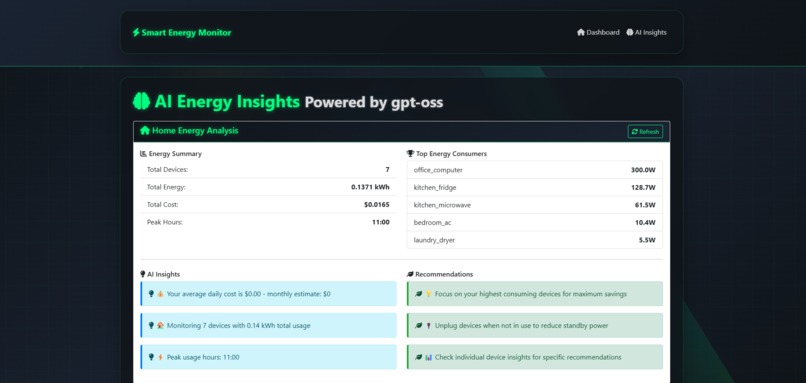
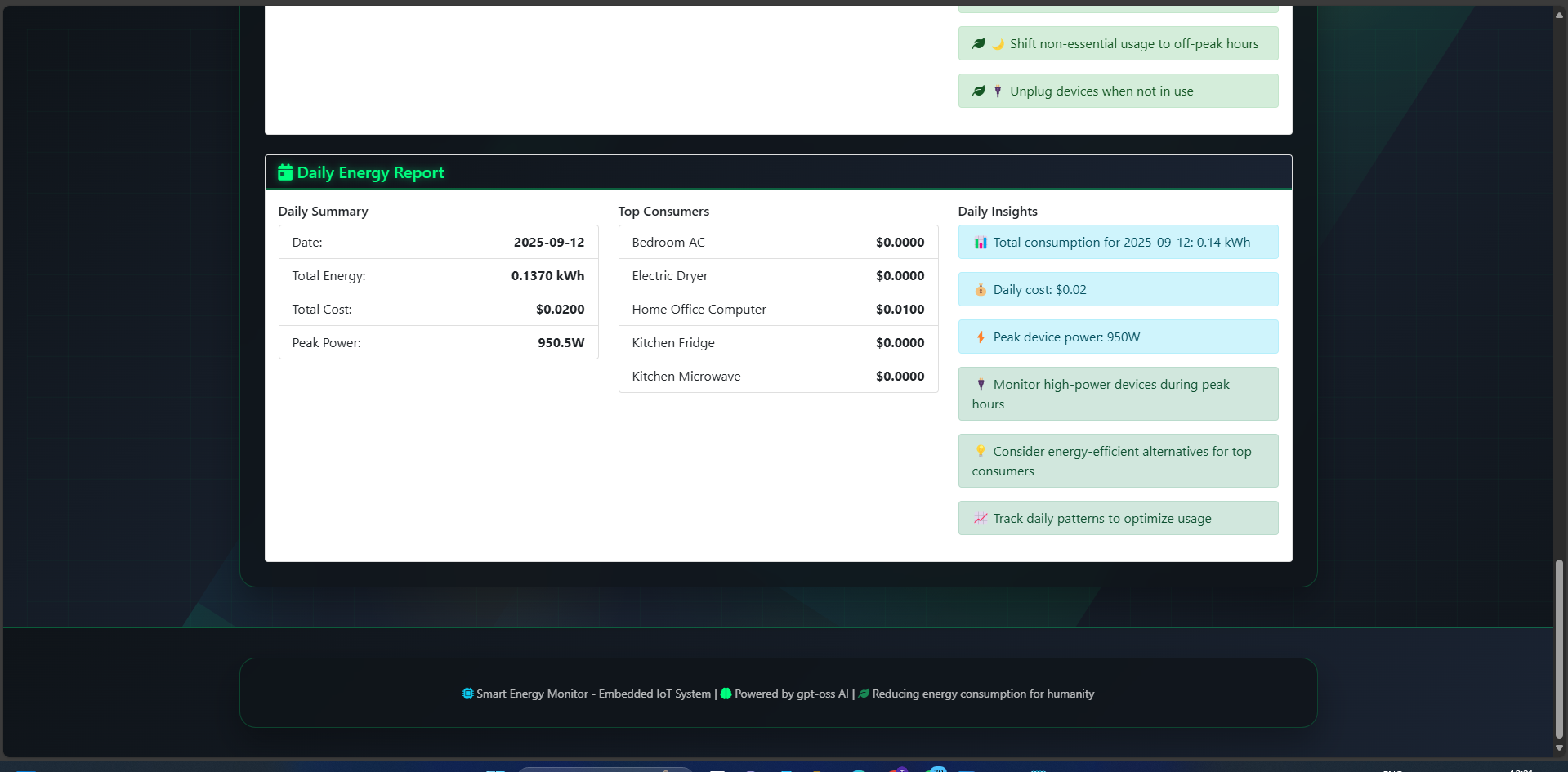
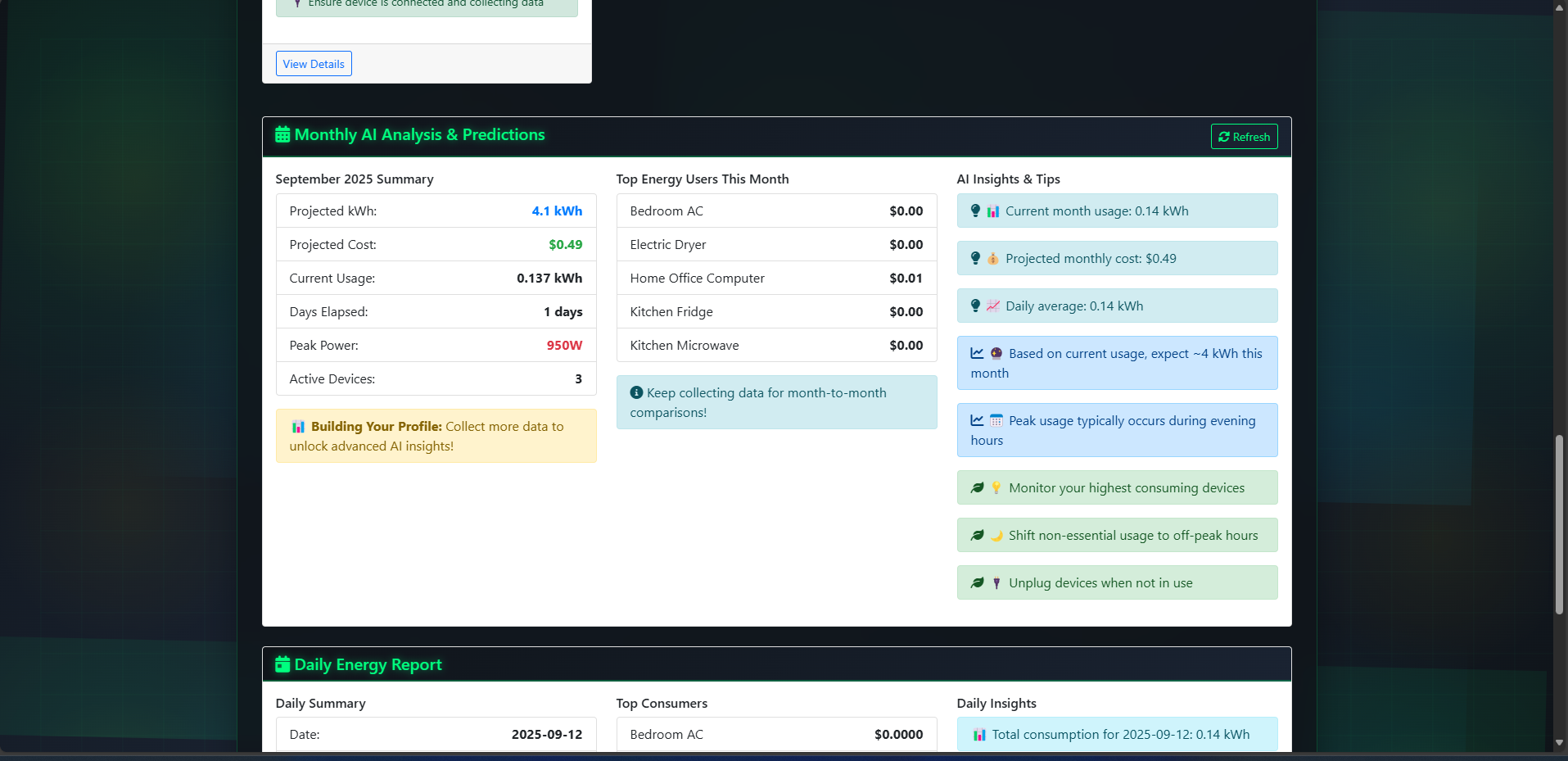
daily report section
-
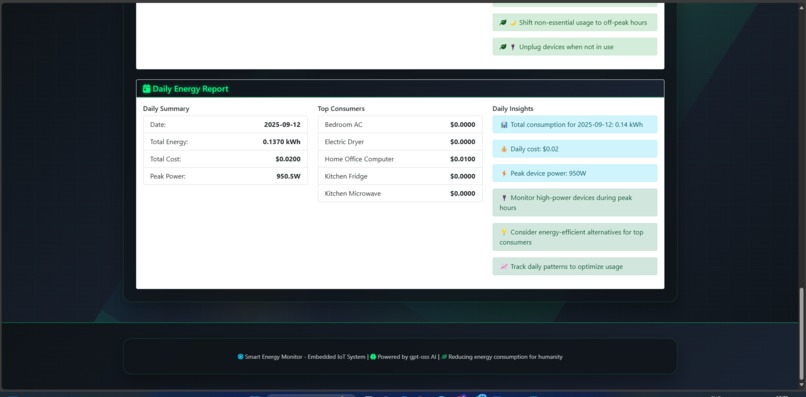
monthly report sectiom
-
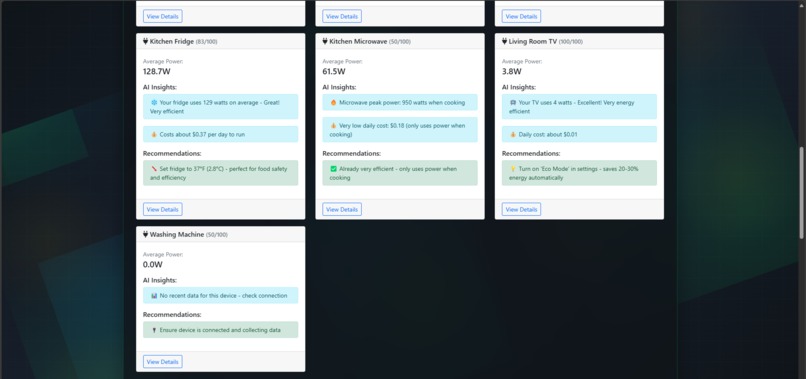
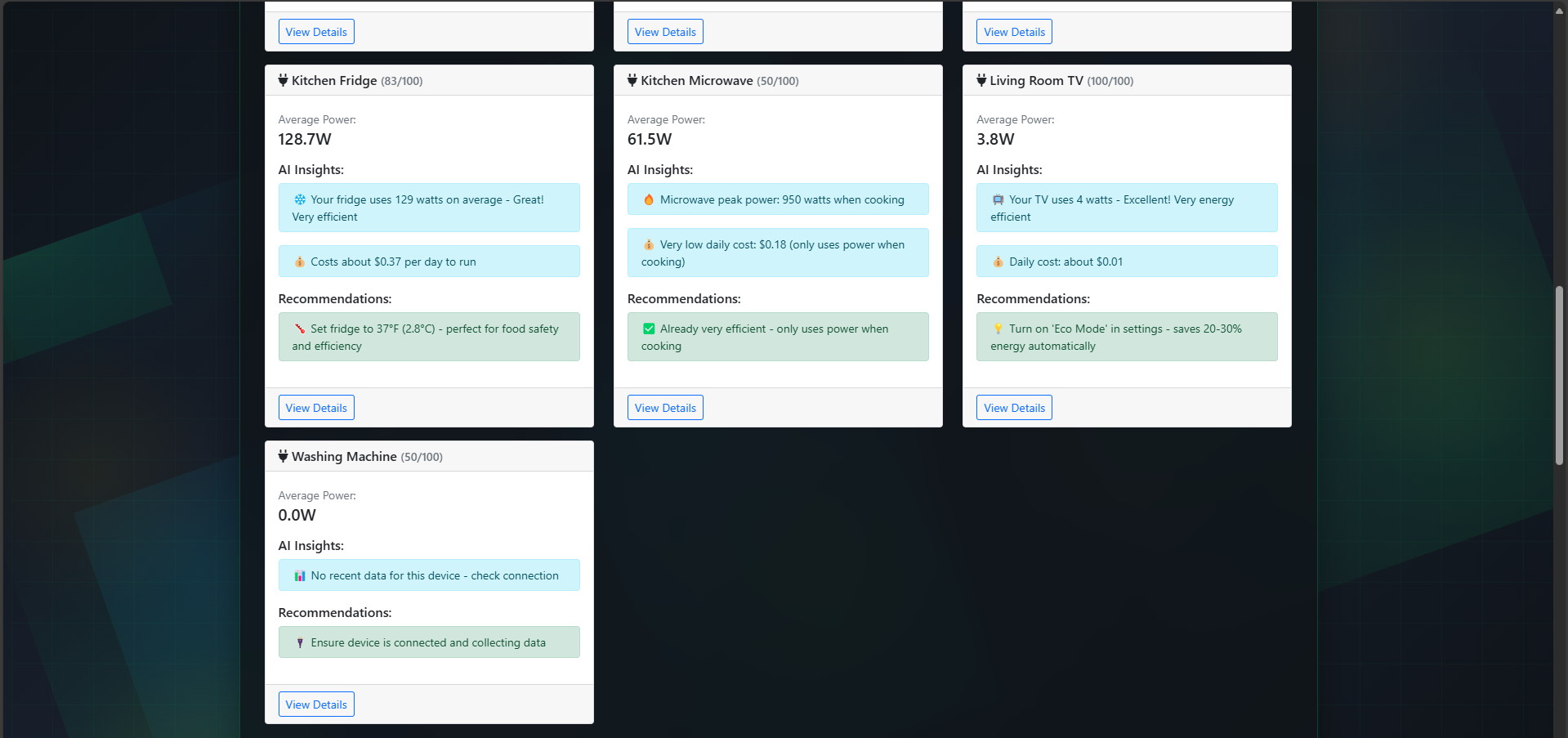
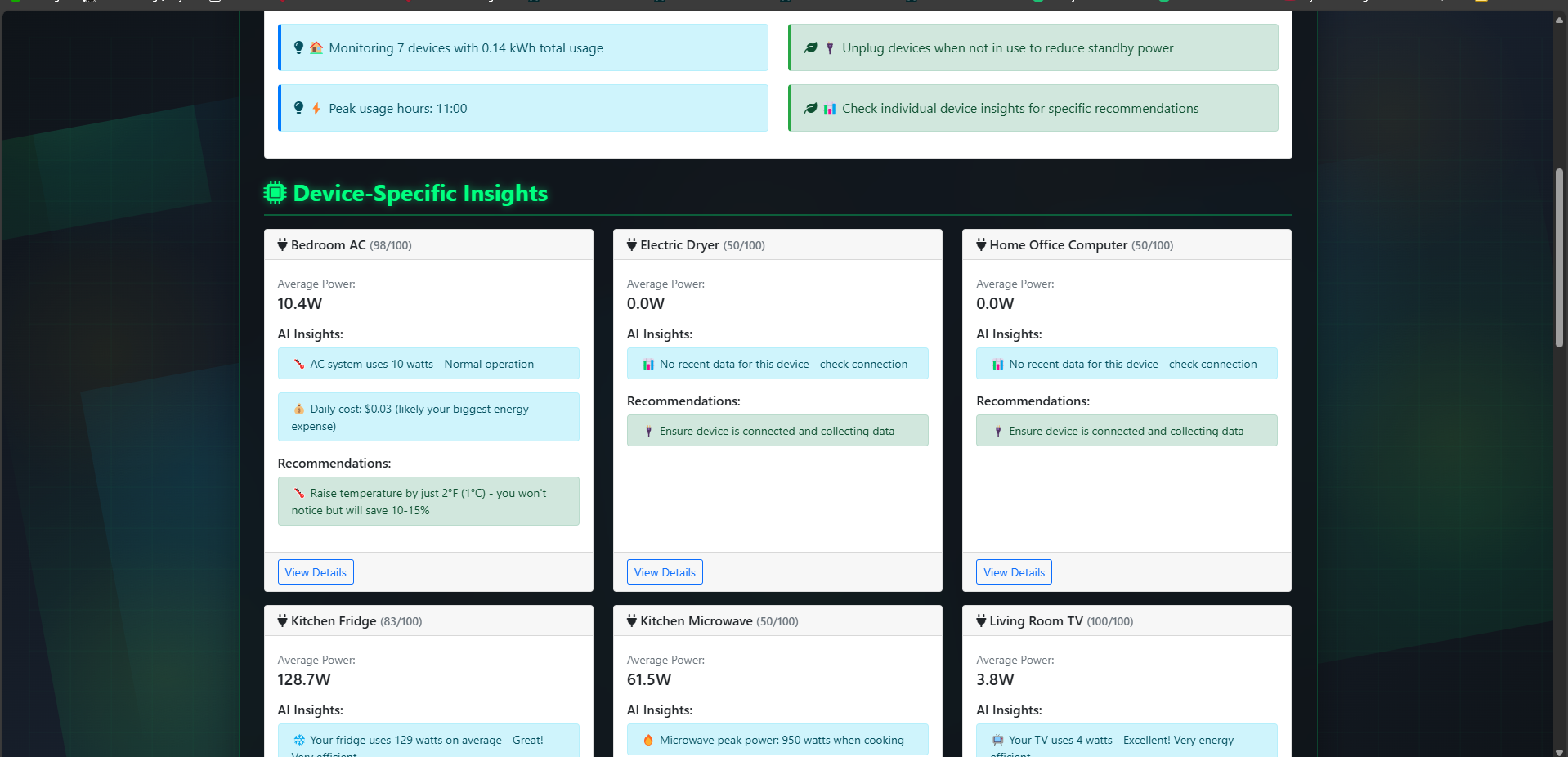
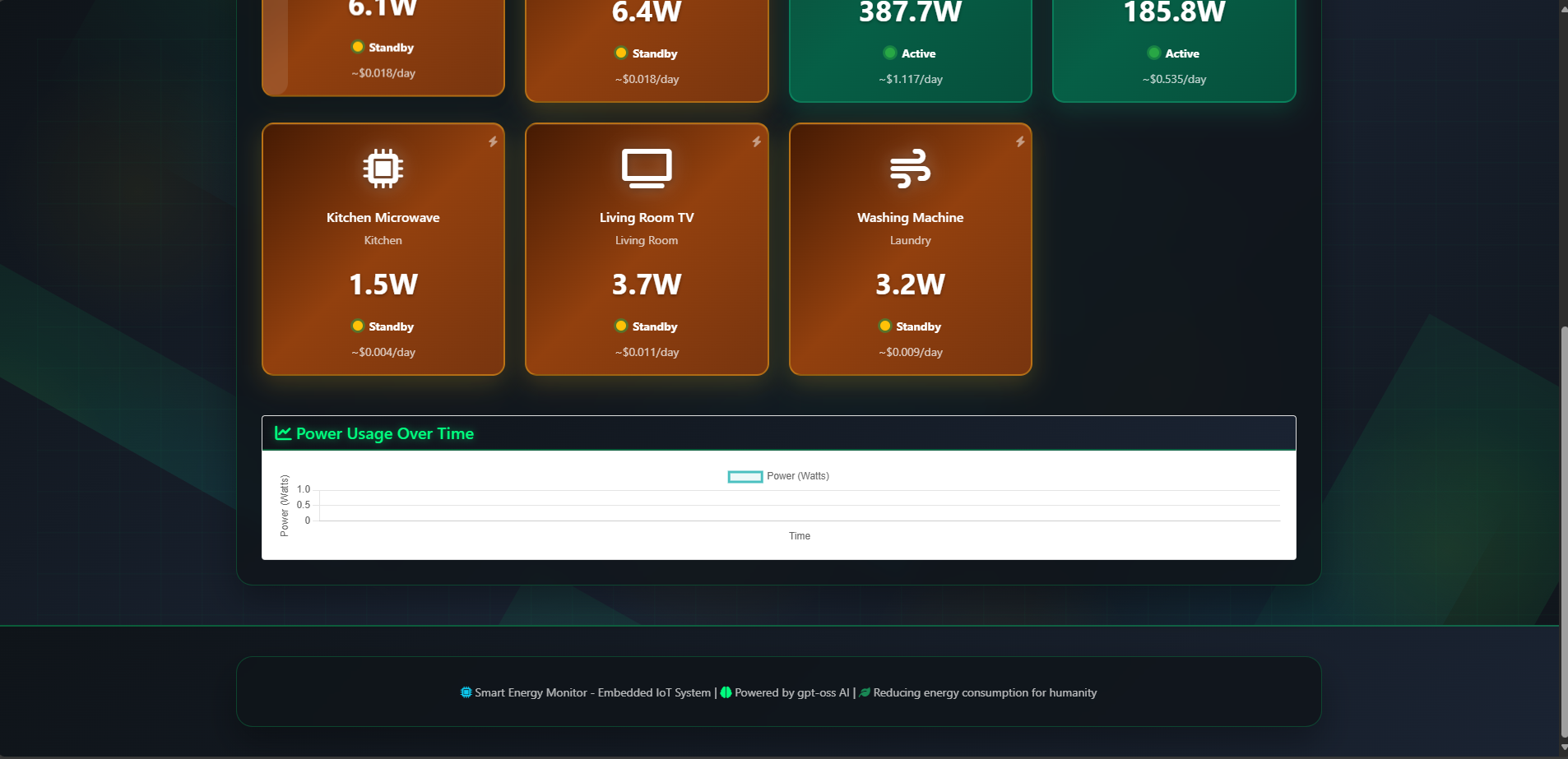
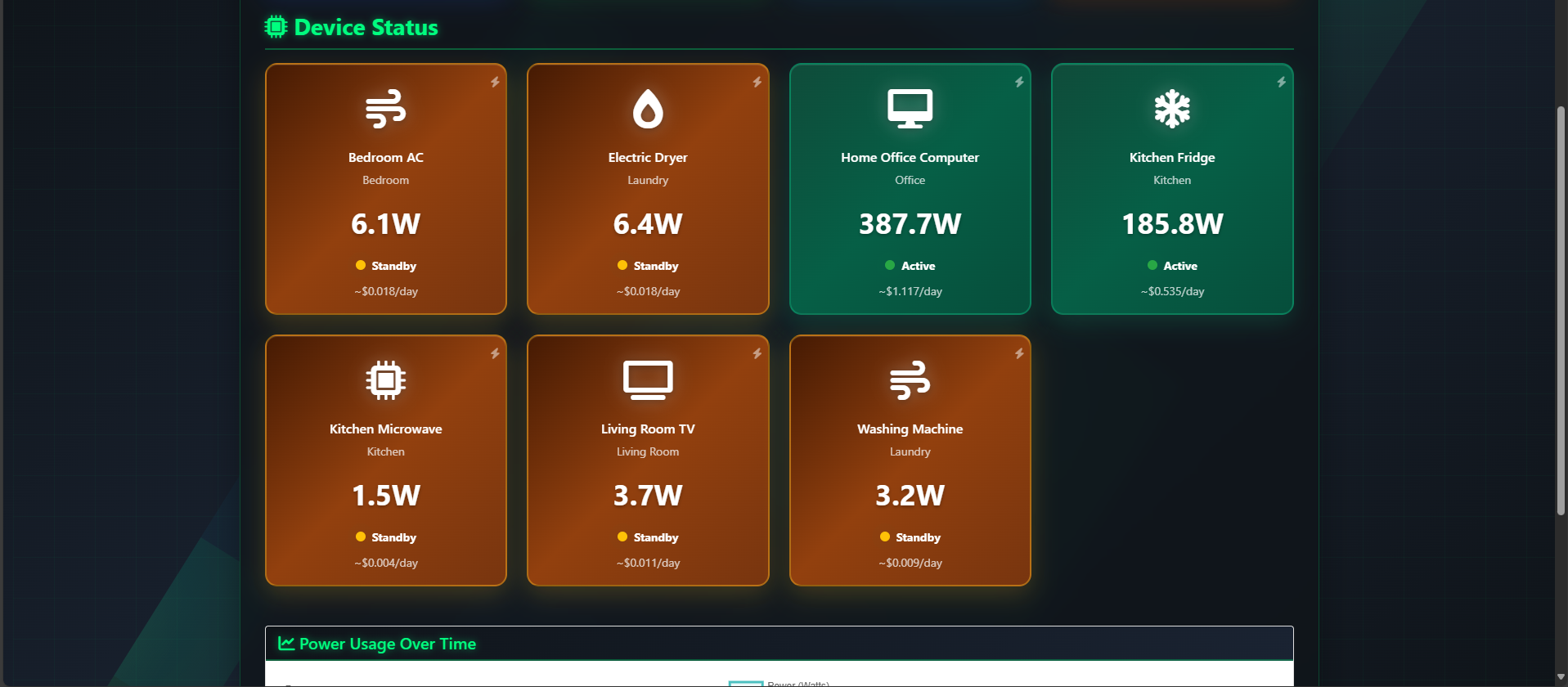
device sections
-
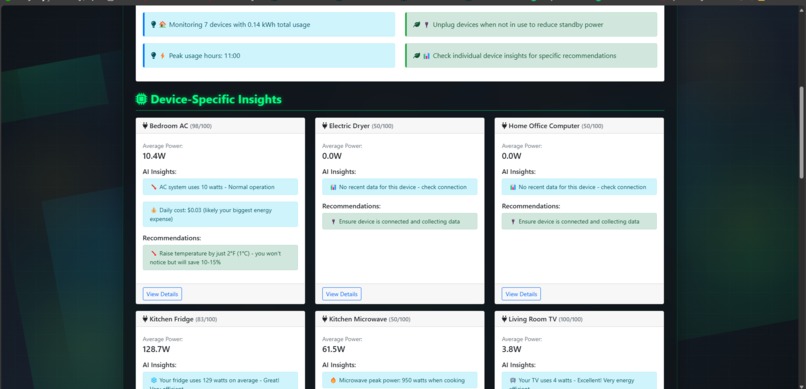
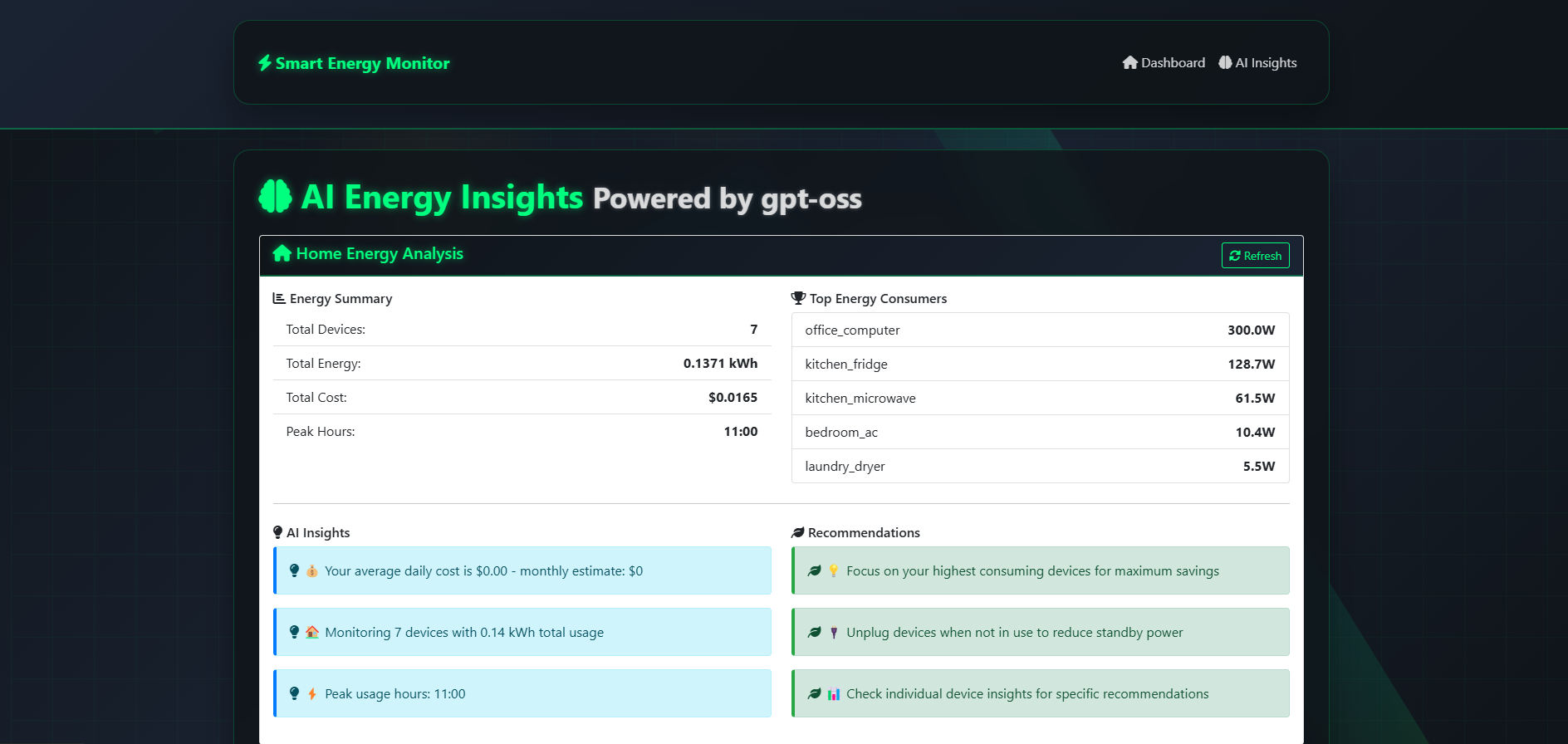
AI insight page
-
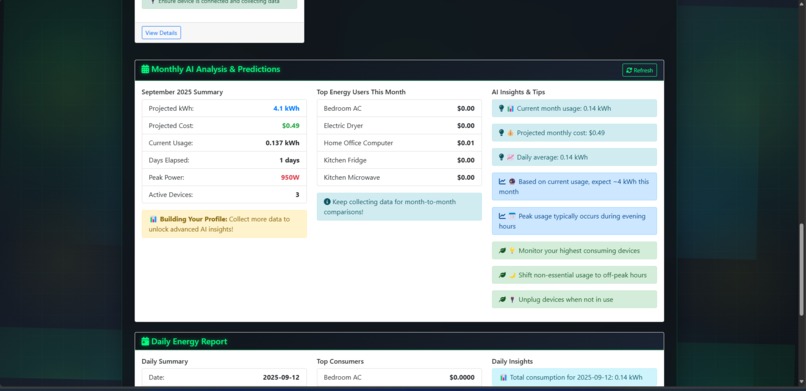
AI insight page
-
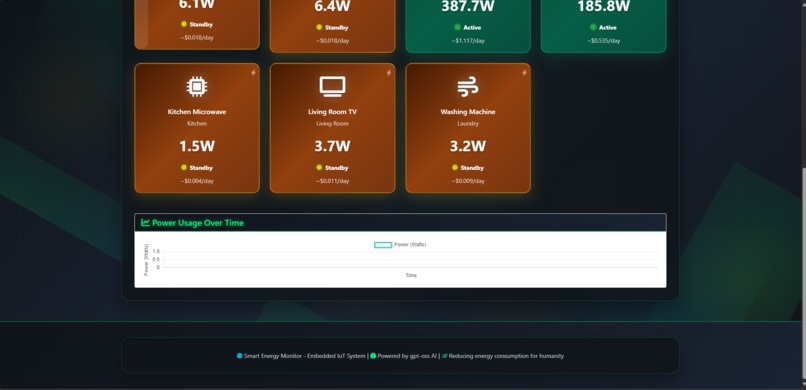
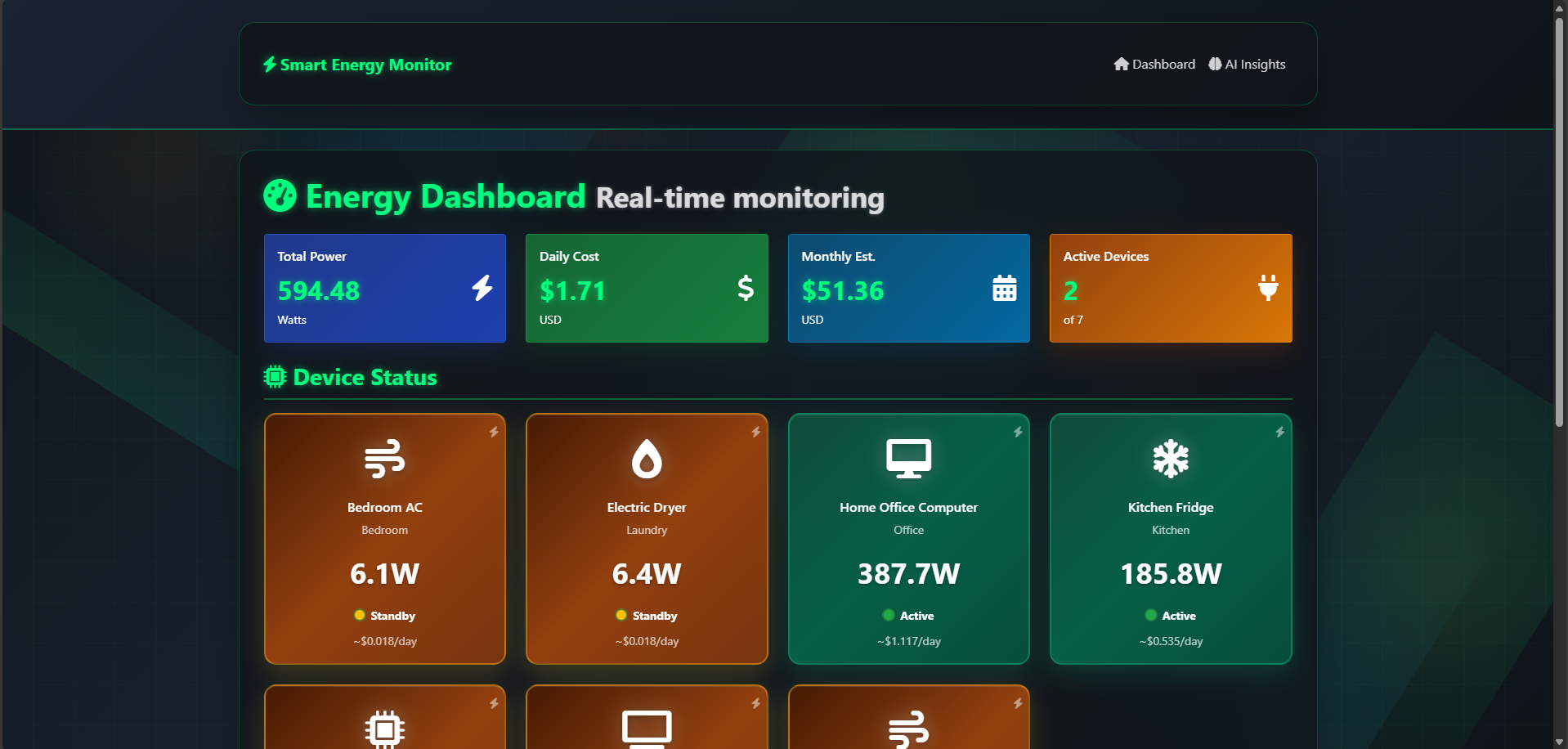
dasshboard
-
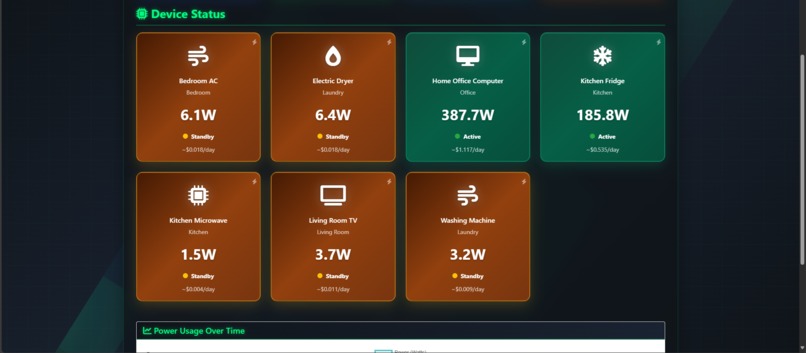
active devices
-
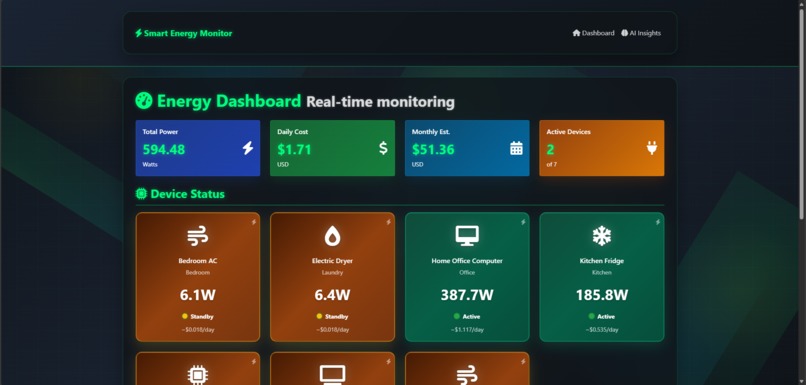
dasshboard
📝 About the Project
Inspiration
I was inspired by my deep passion for embedded systems and the growing need for energy efficiency in our daily lives. As someone who loves working with microcontrollers and hardware, I saw an opportunity to create something that bridges the gap between low-level embedded programming and high-level application development. The idea of building an AI-powered energy monitoring system that could help people save money while reducing their environmental impact really excited me.
Originally, I planned to demonstrate this project with real hardware components - MCP3008 ADC, current transformers, and a Raspberry Pi setup. However, I didn't have enough time to gather all the necessary components for a complete hardware demonstration. This constraint actually became a blessing in disguise, as it pushed me to create a sophisticated simulation system that accurately models real-world appliance behavior patterns.
What it does
The Smart Energy Monitor is an AI-powered home energy monitoring system that provides real-time insights and personalized recommendations to help users save energy and reduce costs. The system:
- Monitors 7+ devices simultaneously with realistic power consumption patterns
- Provides real-time dashboard showing live energy usage, costs, and device status
- Generates AI-powered insights with actionable recommendations for energy savings
- Tracks historical data with trends, patterns, and efficiency analysis
- Operates completely locally with 100% privacy - no cloud dependency
- Calculates real-time costs with daily, monthly, and yearly projections
- Offers device-specific analysis with efficiency scoring and optimization suggestions
The system can save households 10-20% on energy costs (approximately $200-500 annually) while promoting environmental sustainability.
How I built it
The entire project was built using Kiro's spec-to-code approach, which was essential for someone transitioning from embedded systems to full-stack development:
*Backend Architecture: *
- Flask Framework: Built the web application using Python Flask for robust API development
- SQLite Database: Designed efficient database schema with proper indexing for energy data storage
- AI Analysis Engine: Created sophisticated pattern recognition and insight generation system
- Hardware Simulation: Developed realistic appliance behavior modeling for demonstration purposes
*Frontend Development: *
- Responsive Web Interface: Built modern dashboard with real-time data updates
- Interactive Charts: Implemented dynamic visualizations for energy trends and patterns
- Mobile-Friendly Design: Ensured compatibility across all devices
*Kiro Integration: *
- Spec-to-Code Generation: Used detailed specifications to generate initial code structure
- Agent Hooks: Implemented automated workflows for testing, documentation, and quality assurance
- Architecture Guidance: Leveraged Kiro for consistent design patterns and best practices
*Key Technologies: *
- Python 3.8+ with Flask web framework
- SQLite for local data storage
- HTML/CSS/JavaScript for frontend interface
- Statistical Analysis for AI insights and pattern recognition
- RESTful API design with comprehensive error handling
Challenges I ran into
Coming from a strong embedded systems background, I faced several unique challenges:
*Technical Learning Curve: *
- Web Development Complexity: Building a fully functional web application was more complex than I anticipated, especially managing real-time data updates and user interactions
- Database Design: Learning to design efficient database schemas and queries was a steep learning curve coming from embedded systems
- Error Handling: As someone more experienced with microcontrollers than full applications, I initially struggled with comprehensive error handling across the entire stack
*Integration Challenges: *
- Module Connectivity: Connecting all the different components (hardware simulation, data collection, AI analysis, web interface) required careful planning and debugging
- Testing Strategy: Coming from embedded systems where testing is more straightforward, I had to learn comprehensive testing approaches for web applications
- Performance Optimization: Ensuring smooth operation with real-time data updates and multiple concurrent users
*Time Constraints: *
- Hardware Limitations: Not having enough time to gather real hardware components forced me to pivot to simulation-based approach
- Learning Curve: Balancing learning new technologies while building a production-ready application
Accomplishments that I am proud of
*Technical Achievements: *
- Complete Local Operation: Built a 100% privacy-focused system with no cloud dependencies
- Realistic Simulation: Created sophisticated appliance behavior modeling that accurately mimics real-world usage patterns
- AI-Powered Insights: Developed intelligent analysis system that provides actionable energy-saving recommendations
- Production-Ready Code: Implemented comprehensive error handling, testing, and documentation
- Scalable Architecture: Designed modular system that can support multiple devices and expand to whole-home monitoring
*Learning Accomplishments: *
- Full-Stack Development: Successfully transitioned from embedded systems to complete web application development
- AI Integration: Created sophisticated mock AI system ready for real AI integration
- Modern Web Technologies: Mastered Flask, SQLite, and modern frontend development practices
- System Design: Learned to architect scalable, maintainable applications
*Kiro Integration Success: *
- Rapid Development: Used Kiro's spec-to-code approach to accelerate development while maintaining code quality
- Automated Workflows: Implemented agent hooks for testing, documentation, and quality assurance
- Best Practices: Learned modern development practices through Kiro-generated code patterns
What I learned
This project was a fantastic learning journey that expanded my skills beyond embedded systems:
*Technical Skills: *
- Python Web Development: Mastered Flask framework for building robust web applications
- Database Architecture: Learned SQLite design with proper indexing and relationships
- AI and Machine Learning: Explored statistical analysis and pattern recognition techniques
- Frontend Development: Built responsive interfaces with HTML, CSS, and JavaScript
- API Development: Created comprehensive REST APIs with proper error handling
- System Integration: Learned to connect multiple modules into cohesive applications
*Development Practices: *
- Specification-Driven Development: Learned to create detailed specifications before coding
- Automated Testing: Implemented comprehensive test suites for all modules
- Code Quality: Applied best practices for maintainable, scalable code
- Documentation: Created comprehensive documentation for users and developers
*Problem-Solving: *
- Adaptability: Learned to pivot from hardware to simulation when constraints arose
- Resource Management: Developed skills in working within time and component limitations
- User Experience: Gained understanding of creating intuitive, user-friendly interfaces
What's next for Smart Energy Monitor
*Immediate Enhancements: *
- Real Hardware Integration: Implement support for actual MCP3008 ADC and current transformers and Raspberry Pi
- Upgrade Functionality: Include a toggle button on each device card, allowing users to switch the device on or off at their discretion.
- Advanced AI Features: Integrate with gpt-oss when available for enhanced insights
- Mobile Application: Develop native mobile apps for iOS and Android
- Cloud Sync (Optional): Add optional cloud synchronization while maintaining privacy-first approach
*Long-term Vision: *
- IoT Expansion: Support for additional sensor types and smart home devices
- Machine Learning: Implement advanced ML algorithms for predictive energy analysis
- Community Features: Add sharing capabilities for energy-saving tips and community insights
- Commercial Deployment: Package for easy installation in residential and commercial settings
*Technical Roadmap: *
- Performance Optimization: Enhance real-time data processing and visualization
- Security Hardening: Implement additional security measures for production deployment
- API Expansion: Create public APIs for third-party integrations
- Analytics Dashboard: Add advanced analytics and reporting capabilities
*Impact Goals: *
- Energy Conservation: Help users reduce energy consumption by 20-30%
- Cost Savings: Enable average household savings of $300-600 annually
- Environmental Impact: Contribute to significant CO2 reduction when scaled
- Education: Increase energy awareness and conservation habits in communities
*This project represents my journey from embedded systems programming to full-stack development, showcasing how Kiro can bridge the gap between different technical domains and enable rapid development of sophisticated applications that solve real-world problems. *
Built With
- current-transformers
- flask
- html/css/javascript
- kiro
- local-ai
- mcp3008-adc
- privacy-first
- python
- raspberry-pi
- rest-api
- sqlite


Log in or sign up for Devpost to join the conversation.