-
-
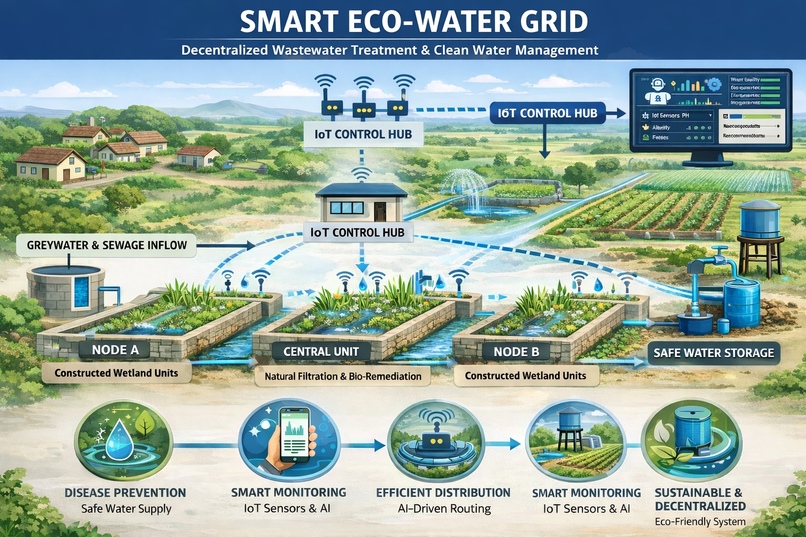
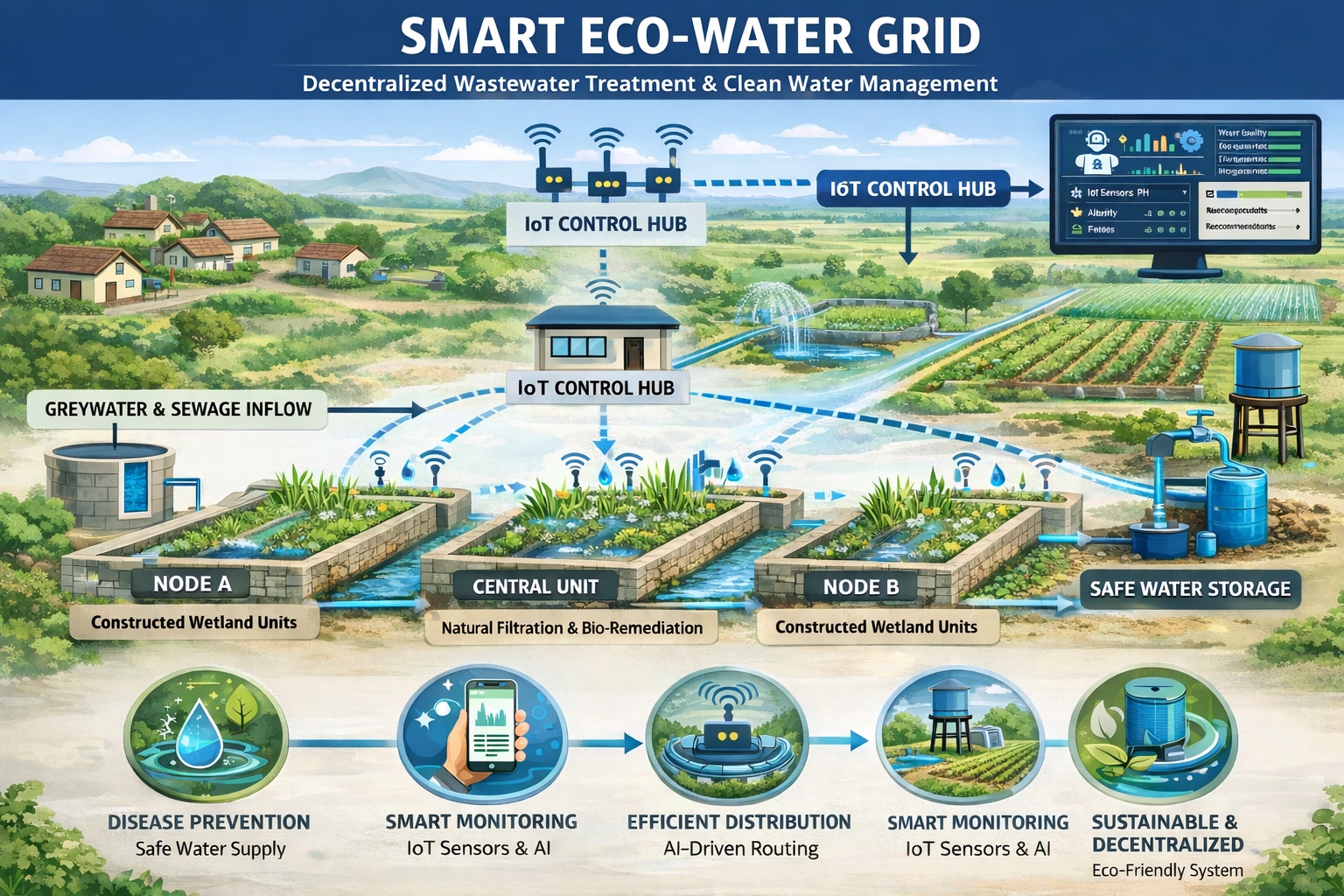
complete system
-
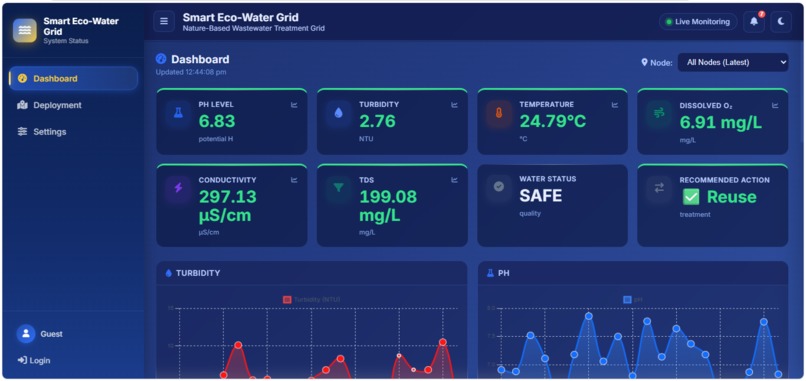
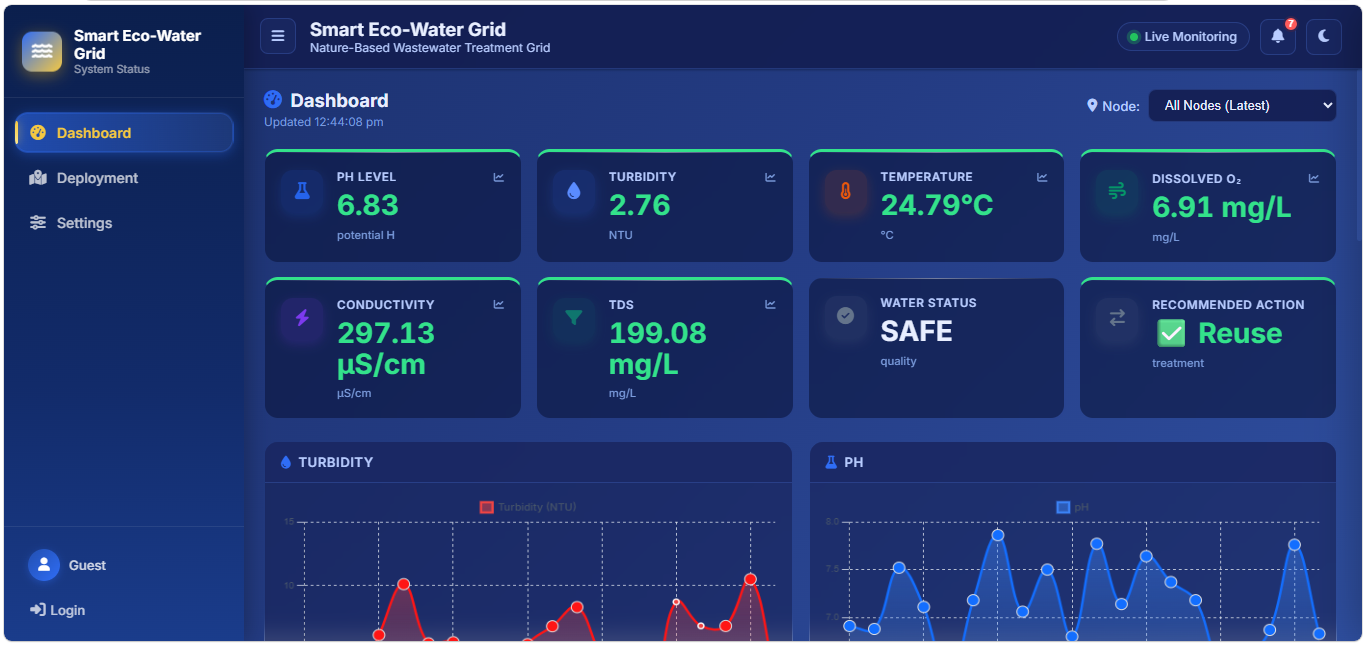
Dashboard
-
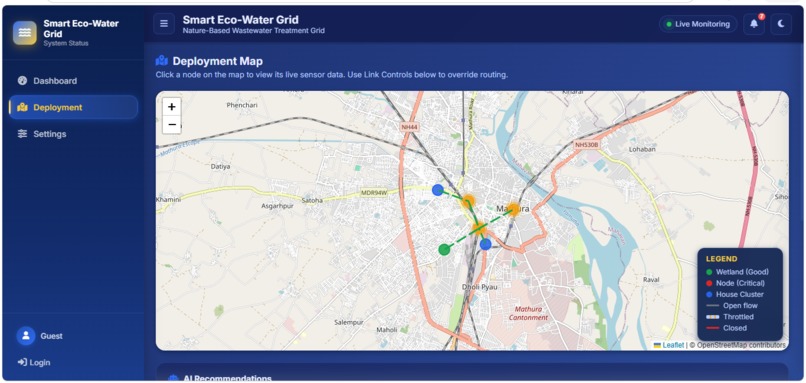
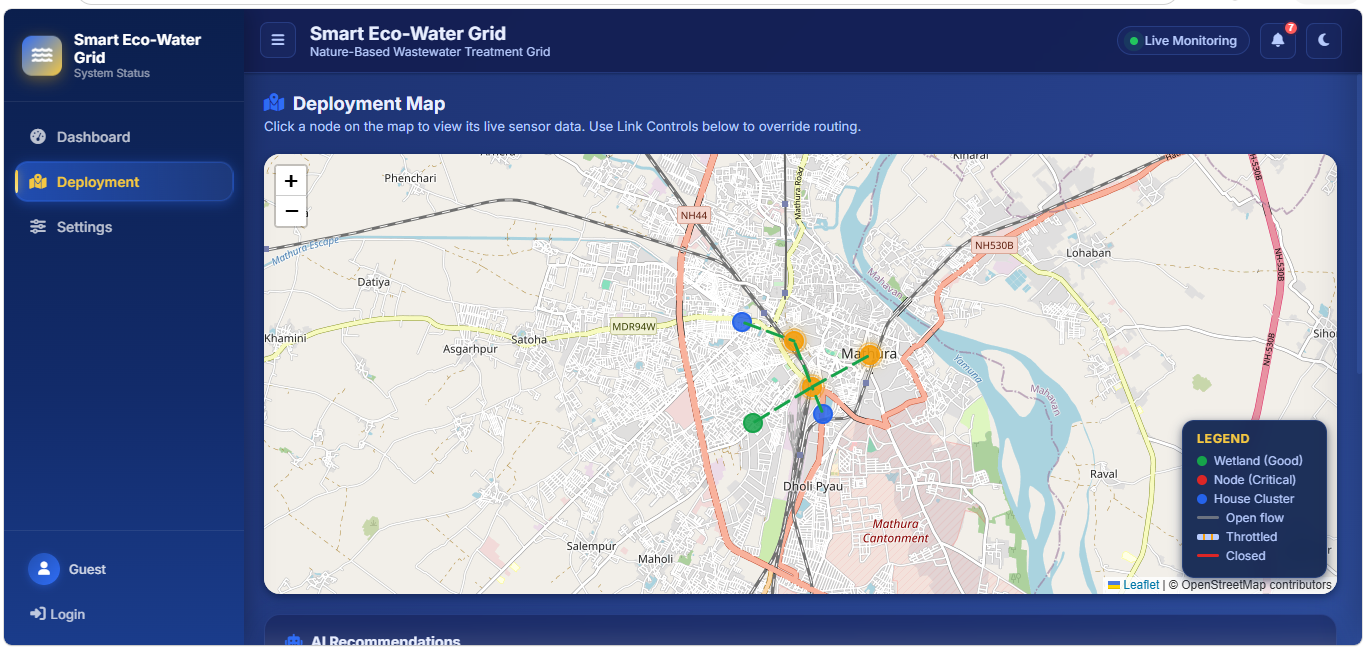
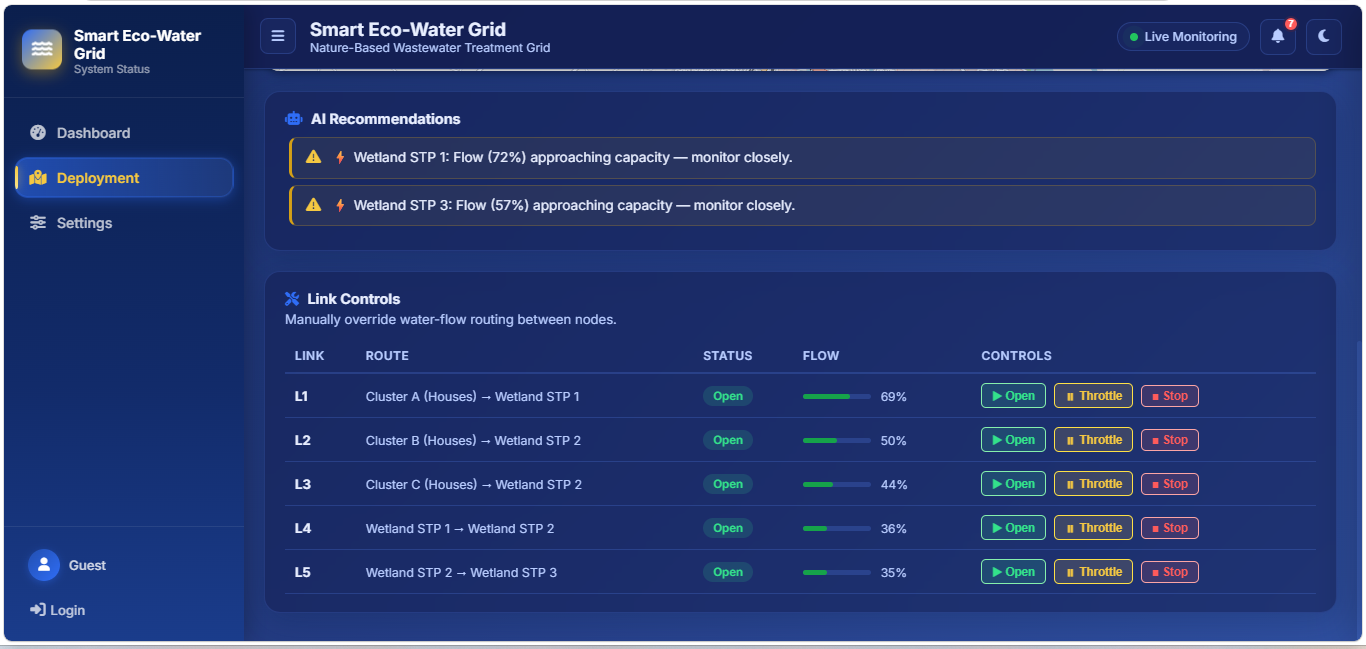
Deployment
-
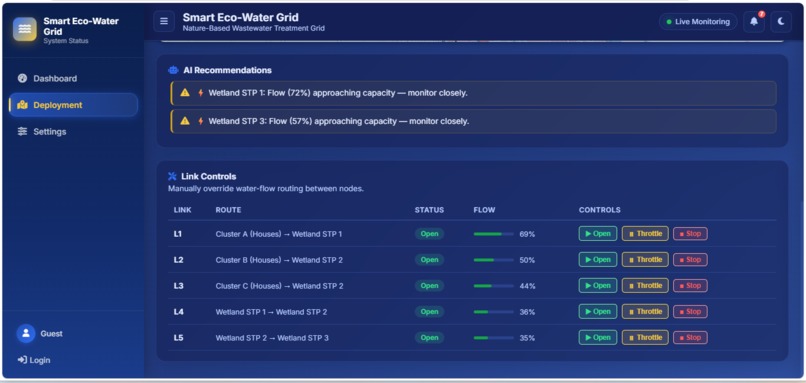
Controls
-
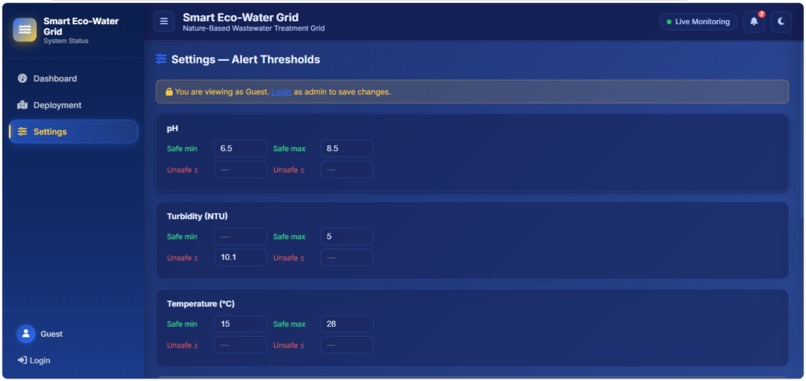
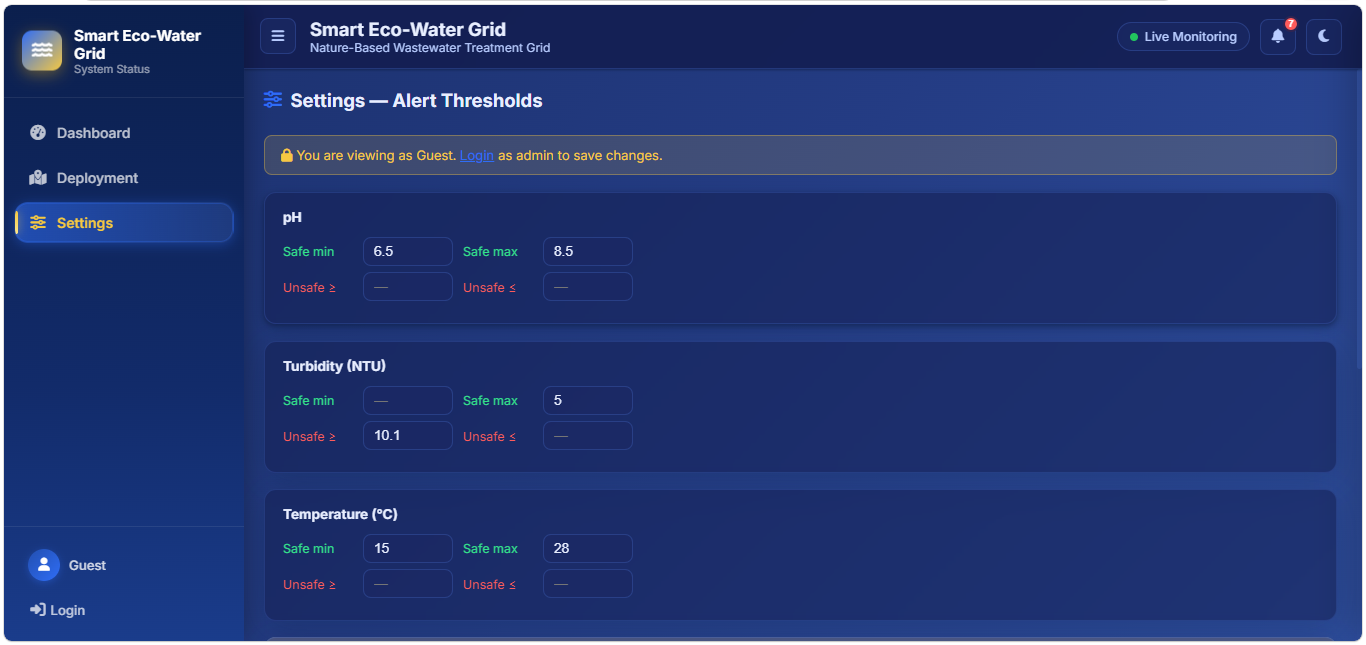
Settings
🌊 Smart Eco-Water Grid
AI-Powered Decentralized Water Management System
📘 About the Project
Smart Eco-Water Grid is an AI-powered decentralized water management system that I built to transform wastewater into a reusable and intelligently managed resource.
Instead of relying on traditional centralized sewage treatment plants, I designed a system that uses a network of smart wetland nodes. These nodes work together using real-time data, AI-based decision-making, and adaptive routing.
The system integrates:
- 🌿 Nature-based filtration (constructed wetlands)
- 📡 IoT-based sensing and monitoring
- 🧠 AI-driven classification and decision-making
- 🔄 Intelligent routing across a distributed network
👉 In simple words:
Instead of one big plant, I created many small smart systems that work together like a network.
🎯 Theme Alignment
Climate Technology & Sustainability
I built this project keeping sustainability at its core. It contributes to:
- Reducing water pollution
- Promoting reuse of wastewater
- Using natural, low-energy treatment systems
- Enabling decentralized infrastructure
This makes it highly relevant for climate-focused innovation.
Inspiration
Access to clean water remains a major challenge, especially in rural and decentralized regions. Traditional sewage treatment plants are expensive, energy-intensive, and difficult to scale.
I wanted to create a solution that is:
- Affordable
- Scalable
- Environment-friendly
- Smart and adaptive
This led me to build Smart Eco-Water Grid — a system that combines nature and technology to solve water problems.
❗ Problem
Millions of people suffer due to unsafe water caused by:
- Lack of real-time monitoring
- High infrastructure cost
- No intelligent water routing
- Waterborne diseases like cholera and typhoid
Existing systems are centralized and fail in rural or distributed environments.
Technical View
The system needs to:
$$ \text{Maximize Water Safety and Reuse} $$
Subject to:
$$ 6.5 \leq pH \leq 8.5 $$
$$ Turbidity \leq 10 $$
💡 Solution
Smart Eco-Water Grid is an AI-powered decentralized water management system.
Instead of one large treatment plant, I designed a network of smart wetland nodes that:
- Treat water naturally
- Monitor quality using sensors
- Use AI to decide water usage
- Route water intelligently across the network
Simple Explanation
I designed the system like a smart traffic system:
- Pipes = roads
- Water = vehicles
- AI = traffic controller
⚙️ How It Works
- IoT sensors collect water data (pH, turbidity)
- Data is sent to backend APIs
- AI analyzes water quality
- The system classifies water:
- Safe → reuse/storage
- Moderate → irrigation
- Unsafe → re-treatment
- Safe → reuse/storage
- A dashboard shows real-time data and alerts
🧠 Key Innovation
- 🌿 Nature-based treatment (constructed wetlands)
- 📡 Real-time IoT monitoring
- 🧠 AI-based decision engine
- 🔄 Smart routing across nodes
- ⚡ Low-cost & energy-efficient system
Additional Innovation
- Self-healing system (auto rerouting)
- Load balancing between nodes
- Intelligent recommendations
🔌 API Endpoints
I designed and implemented the following endpoints:
---
POST /sensor-data        // I use this to receive sensor data
GET /latest-data         // I use this to fetch current data
GET /history             // I use this to retrieve past data
GET /deployment-status   // I use this to simulate system intelligence
---
🛠️ How I Built It
- I built the backend using Node.js + Express
- Created API endpoints for sensor data and monitoring
- Implemented AI logic using rule-based classification
- Built a frontend dashboard using HTML, CSS, JavaScript
- Simulated IoT data for real-time behavior
🌍 Impact
Through Smart Eco-Water Grid, I aim to create strong real-world impact across multiple dimensions:
Health Impact
- I help reduce waterborne diseases like cholera and typhoid
- I improve sanitation and access to safe water
Environmental Impact
- I promote water reuse and recycling
- I reduce pollution discharge into natural water bodies
- I use nature-based systems instead of energy-heavy infrastructure
Economic Impact
- I provide a much lower-cost alternative compared to traditional sewage treatment plants
- I design the system to have low maintenance and operational costs
- I make it suitable for rural and low-resource regions
System-Level Impact
- I enable decentralized infrastructure
- I improve system resilience through distributed design
- I make the solution scalable from villages to smart cities
🎯 SDGs Aligned
Through this project, I contribute to key United Nations Sustainable Development Goals (SDGs):
🌊 SDG 6: Clean Water & Sanitation
I aim to ensure availability and sustainable management of water🏥 SDG 3: Good Health & Well-being
I help reduce diseases caused by unsafe water🌱 SDG 11: Sustainable Cities & Communities
I support the development of smart and sustainable infrastructure
🏁 Conclusion
Through Smart Eco-Water Grid, I demonstrate how AI, IoT, and nature-based systems can work together to solve one of the world’s most critical problems — water management.
Instead of relying on expensive and centralized infrastructure, I introduce a smart decentralized network that is:
- Scalable
- Affordable
- Sustainable
- Intelligent
I aim to change the perspective of wastewater:
❌ Waste to be discarded
➡️
✅ Resource to be managed and reused
This project represents my step toward building future-ready, climate-resilient water infrastructure.
Built With
- ai
- apis
- css
- data
- express.js
- github
- html
- iot
- javascript
- node.js
- processing
- quality
- real-time
- rest
- simulation
- water


Log in or sign up for Devpost to join the conversation.