-
-
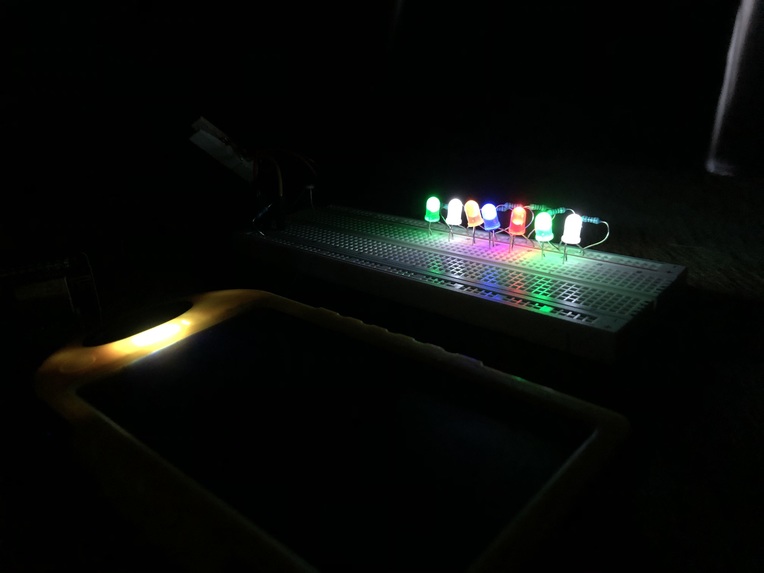
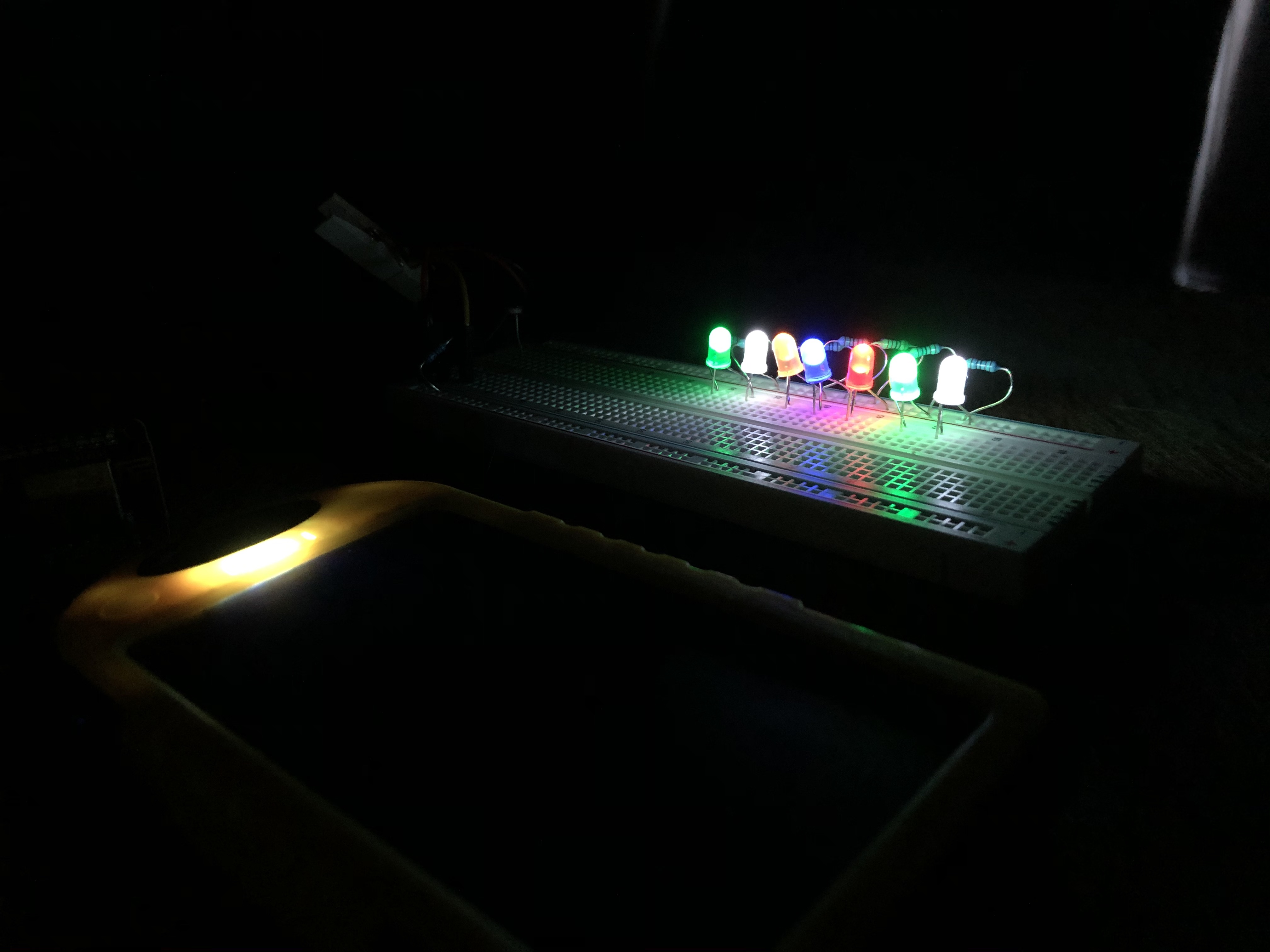
In action at night.
-
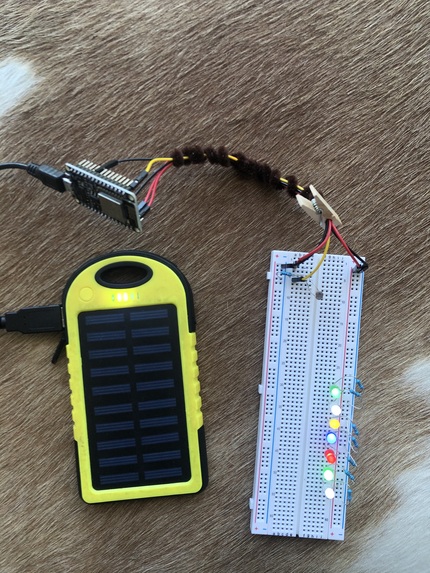
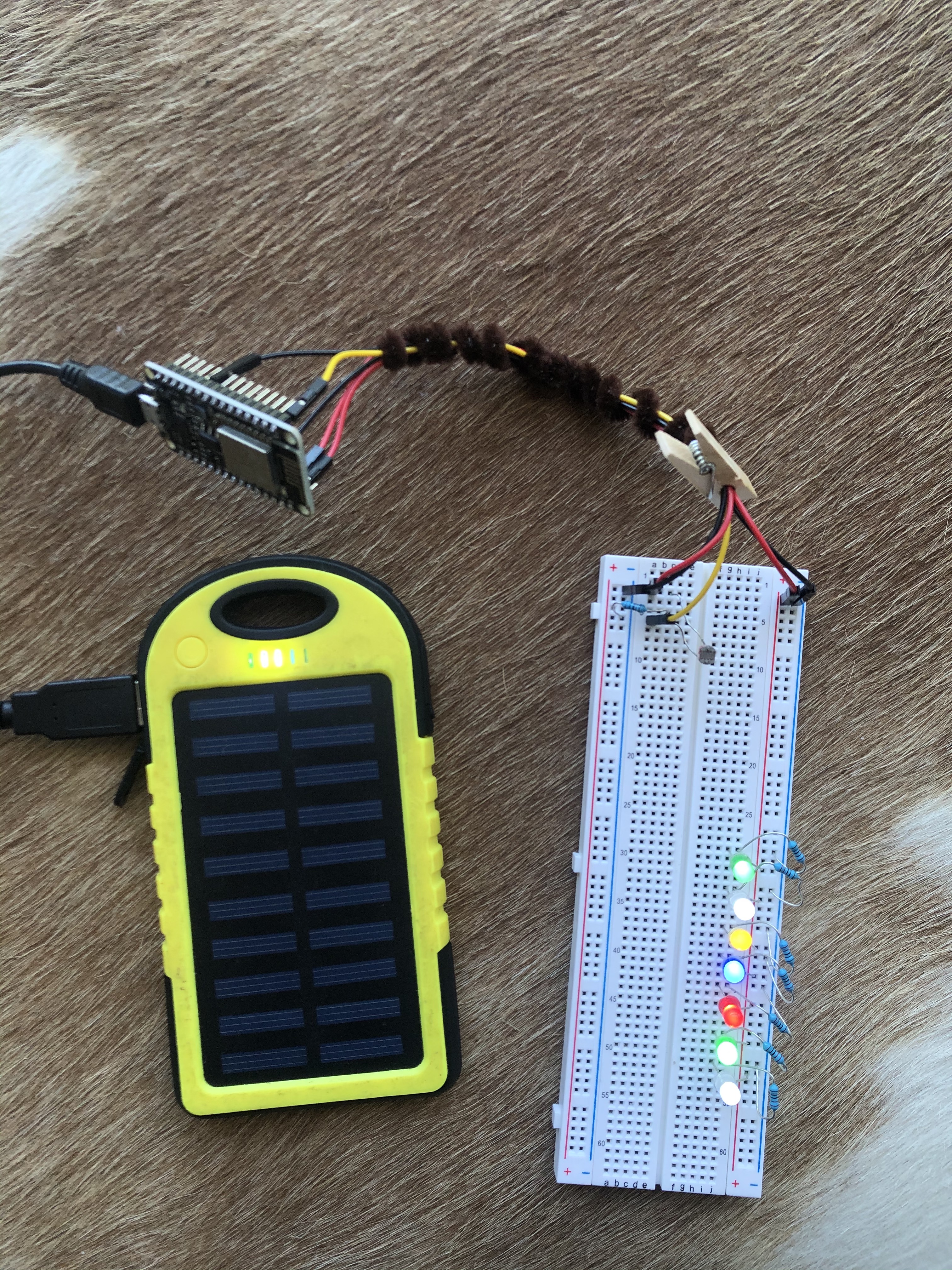
Complete product.
-
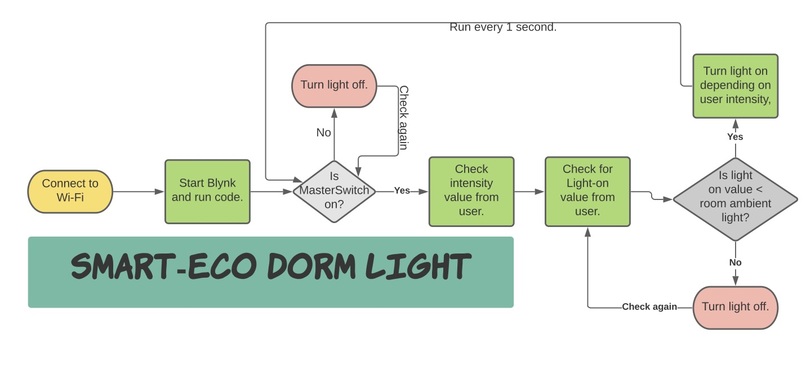
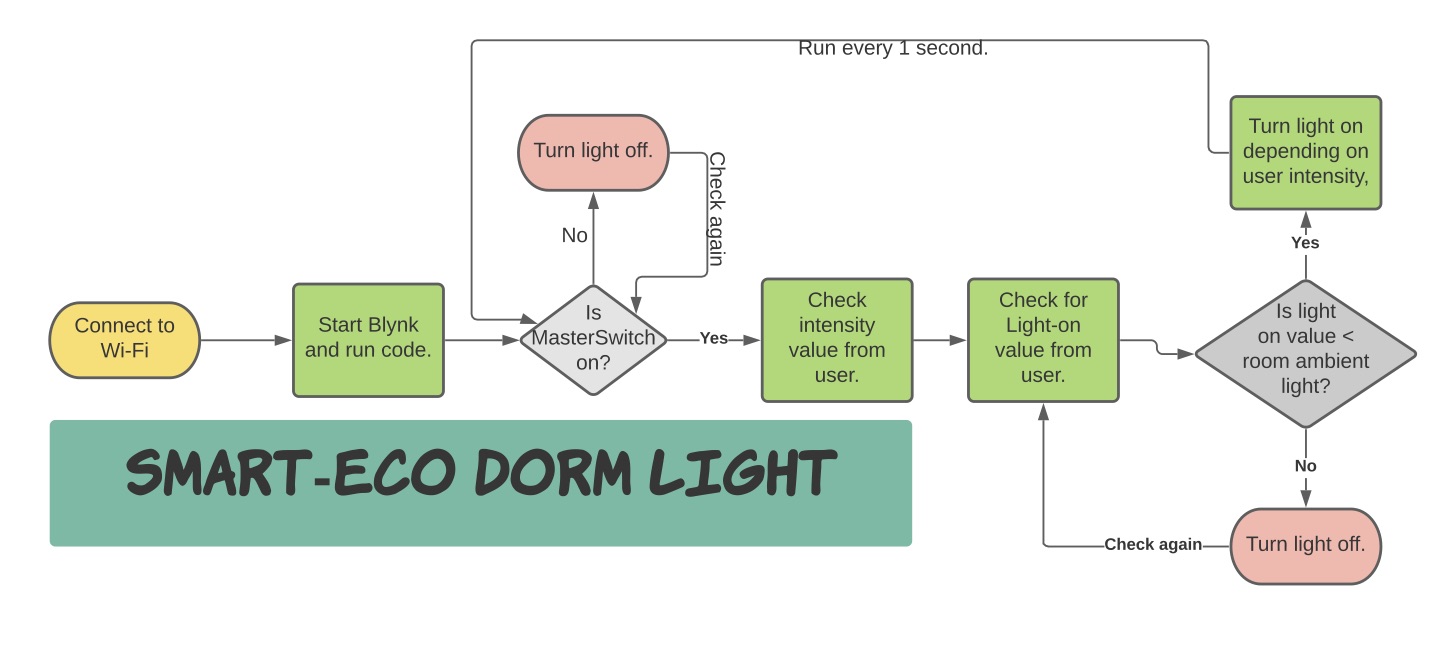
Code Flowchart!!!
-
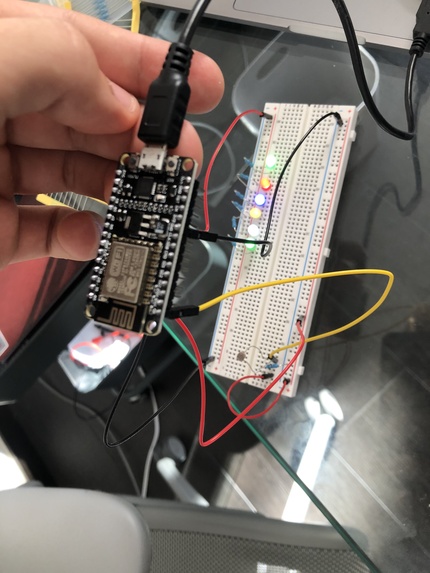
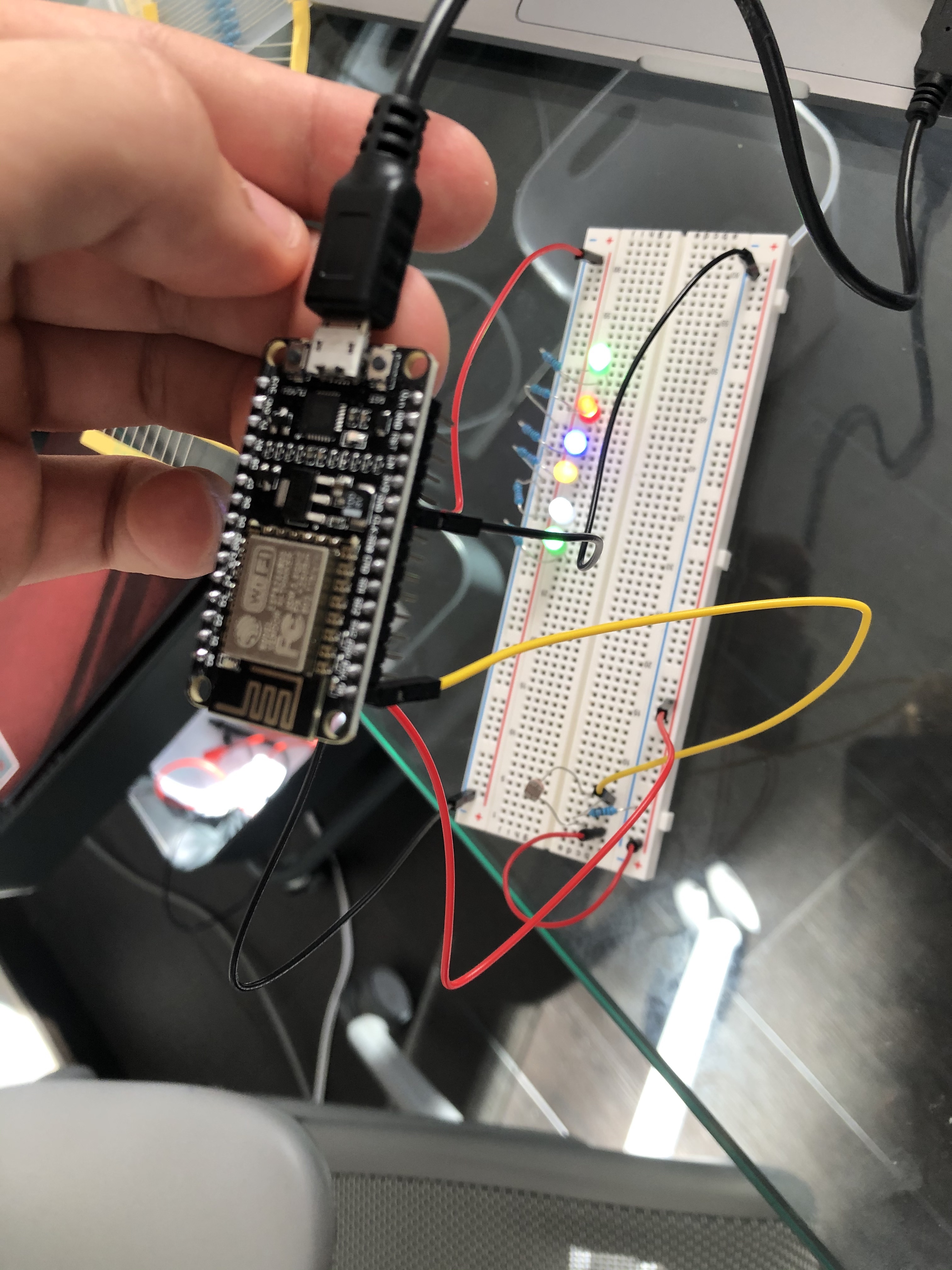
Building hardware!
-
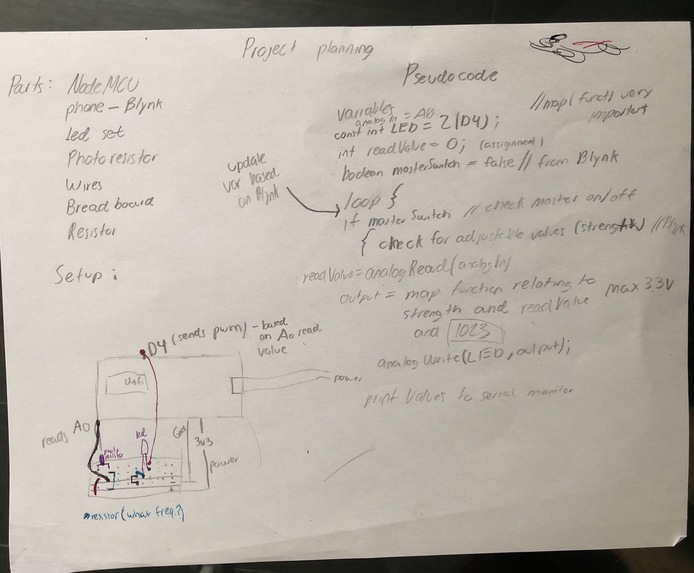
How it all started...
-
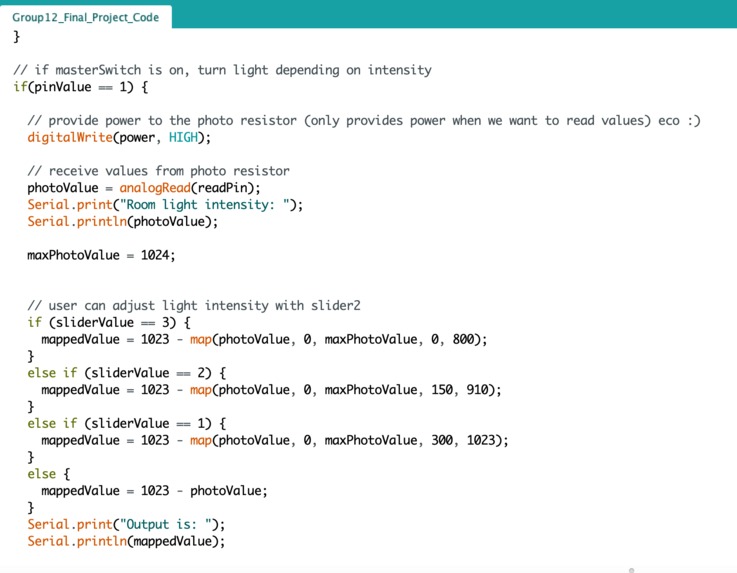
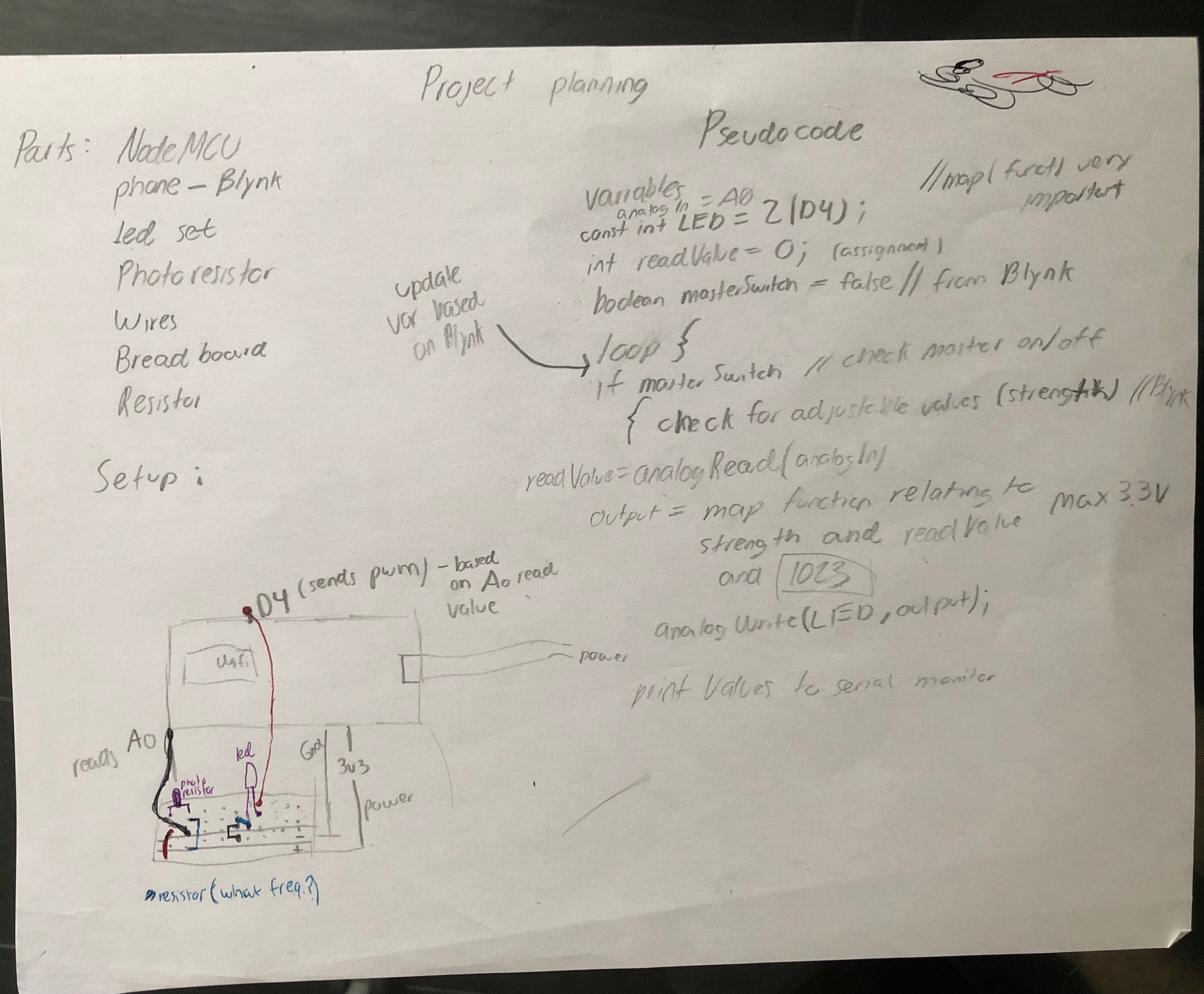
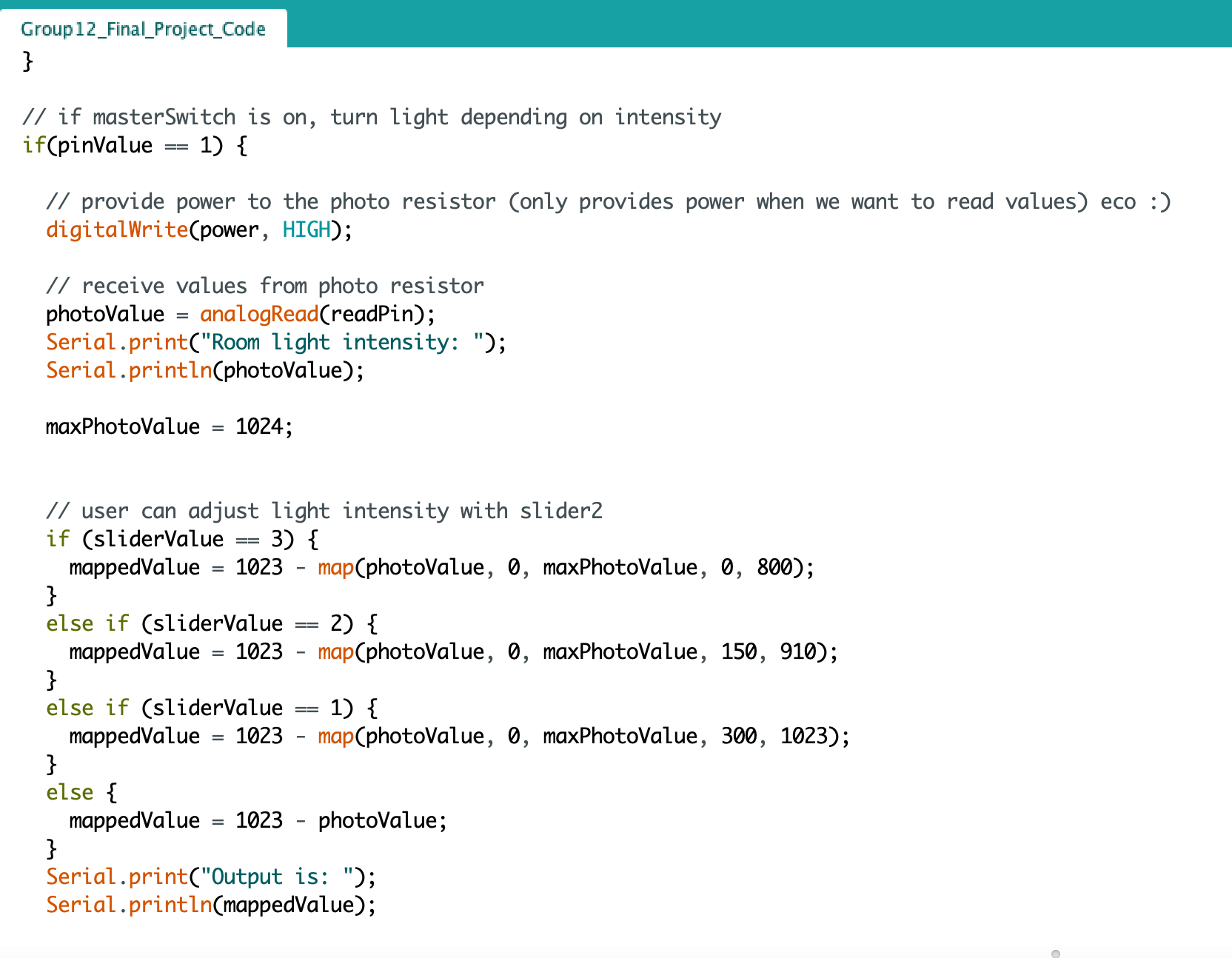
A preview of our code ;)
-
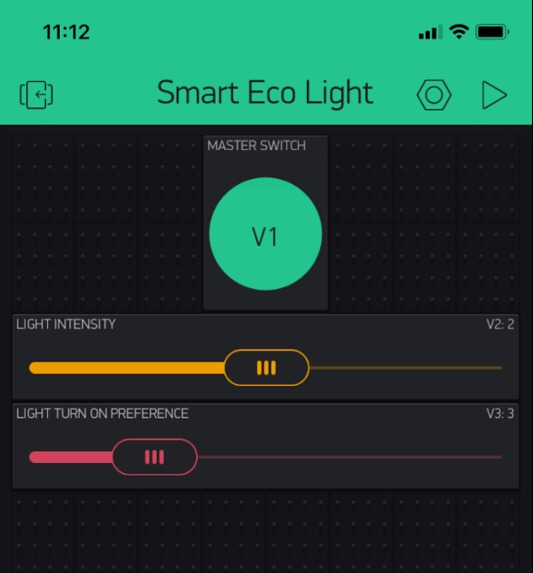
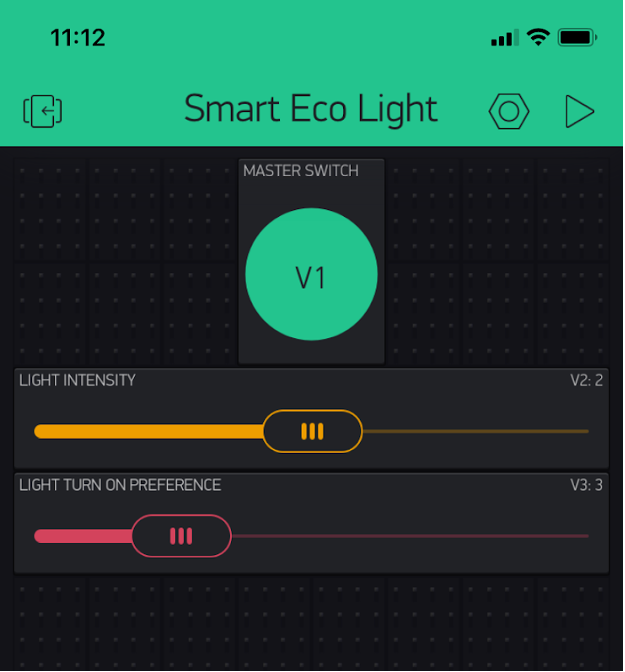
Blynk dashboard
Inspiration
After leaving our room lights on when in a rush, or simply because we had forgotten, we came up with the idea of creating a room light that can be managed through the internet to save electricity (and thus, the world :) The knowledge we acquired during class (using NodeMCU and Arduino) also inspired us to add many other features to our smart-eco light, like an automatic turn on/off preference based on ambient lightning, a light intensity that not only adjusts to the rooms ambient light but also to a user's preference, and a solar charger that powers the LED's up.
What it does
For this dorm light, we will use a photoresistor as a sensor, and some LEDs as our actuators. During our life, we have many times left our room light on and consuming a lot of energy. This is why we came up with the idea of a Eco light that saves a lot of electricity. Our dorm light will turn on just when there is the need to and will "glow" according to the ambient light. The strength vs. ambient light parameter will be adjustable by us and we will choose how strong we want the light to glow. By having just an "eco" light, we were probably going to consume a lot of electricity, so we are going to implement a wifi component to it: a master switch. This master switch will allow the user to turn off the light whenever they want. For example, if the user left to a party and remembers that they left the light on on the uber on the way to the party, they will be able to turn the light off using Blynk and the NodeMCU.
What we used
We used a NodeMCU with wires and a breadboard to light up a Parallel circuit of LEDs on a breadboard. The NodeMCU connected to Blynk via Wi-Fi and was supplied power by a solar energy battery!
Challenges
The COVID-19 pandemic has affected all of us. For this project, it was no different. Being in different countries, we the group members had trouble collaborating on specific things like building the hardware and debugging, as we were not physically present. Although video-conferencing was of great help, we still needed to do some physical hardware building, so the pandemic posed a great challenge. Another challenge was not being able to be at the university, where we would have had better resources for building our project (bigger LEDs). Nevertheless, we overcame the challenges and were able to build not only one, but two, Smart Eco Lights!!!
What's next
We want the Smart-Eco Dorm Light to be fully operational! This includes adding a notification and energy consumption feature to Blynk and getting actual desk/room lights to connect to our actual hardware!
What we learned
No matter the challenges, everything can be worked out. It is important to be patient, but it is more important to enjoy the opportunities to build projects like these with the great resources provided! Creating the project was an extremely rewarding experience that taught us a lot of lessons! (Like why the NodeMCU can't connect to a Wi-Fi 6 router and how your group-mate can "hack" into your Wi-Fi to fix it :))
Work
Alexandra and Sebastian worked on most parts of the project together. But, specifically: -Alexandra: designed presentation, came up with idea (functionalities) and design, created sketch for hardware. -Sebastian: designed pseudocode and wrote the code, designed hardware.
Thank you
To the professors and the TAs of the University of Pennsylvania for helping us out in every step, supplying us with the necessary resources, and teaching us so much about Arduino! Special shoutout to our advisor, Christy, who was of great help at all moments :))
Built With
- arduino
- led
- nodemcu

Log in or sign up for Devpost to join the conversation.