-
-
EMP
-
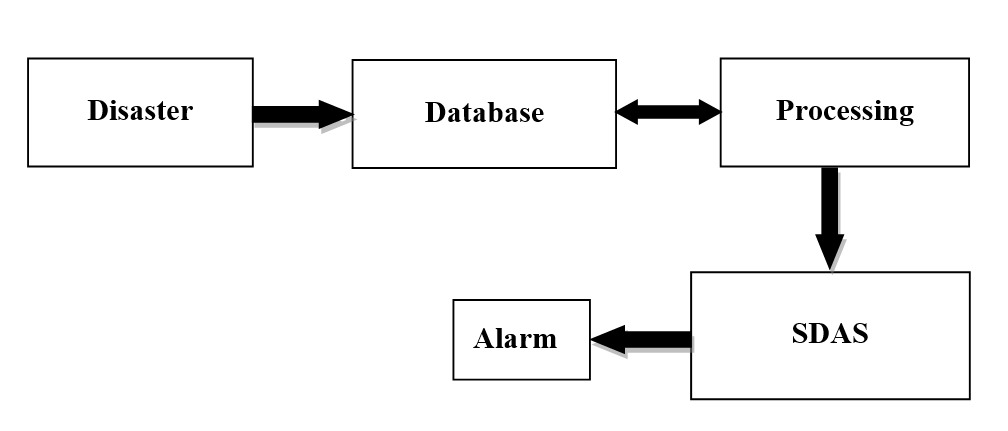
FLOWCHART
-
CHRISBIN JAEDON ID
-
CHRISBIN LIANA ID
-
JOHAN DANIEO ID
Inspiration
Every monsoon season, floods devastate millions — destroying homes, disrupting lives, and taking lives that could have been saved with timely alerts. During Pakistan’s 2022 floods, many families were caught unaware at night — warning messages either didn’t reach them or weren’t clear enough. This inspired the creation of SDAS – Smart Disaster Alert System, a life-saving solution ensuring timely, localized, and easy-to-understand flood alerts, empowering communities to prepare, respond, and recover faster. SDG Alignment • SDG 3 – Good Health & Well-being: Prevents injuries and fatalities from disasters. • SDG 9 – Industry, Innovation & Infrastructure: Builds digital infrastructure for national disaster management. • SDG 11 – Sustainable Cities & Communities: Strengthens flood resilience and urban safety. • SDG 13 – Climate Action: Improves adaptive capacity to climate-related disasters.
What It Does
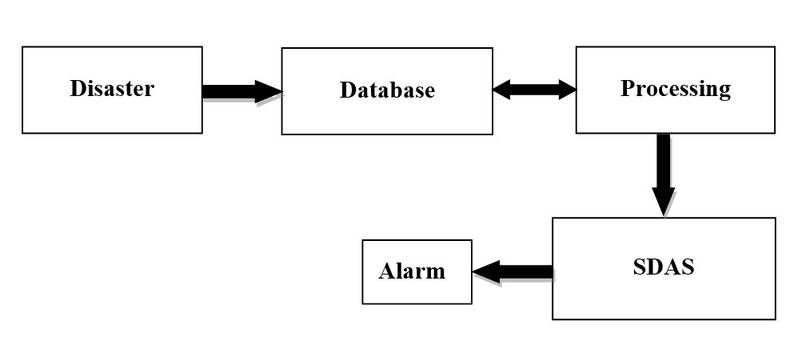
SDAS is an AI-integrated mobile and IoT-based flood alert and response system that ensures no one is left unaware — even in low-signal or night-time conditions. Readiness • Integrates real-time data from NDMA’s SACHET and Pakistan Meteorological Department. • Provides hyper-local flood forecasts and risk maps using AI prediction models. • Sends community awareness alerts in local languages through SMS, voice, and app notifications. Response • Uses multi-level audio-visual alerts: o 🔊 Yellow (Caution): Minor flood risk – voice message. o 📢 Orange (Serious): Rising flood levels – warning beep. o 🚨 Red (Critical): Evacuate immediately – siren sound + vibration alert. • Functions 24x7 in background, even during power or network loss using Bluetooth mesh. • Connects users to nearest relief shelters, rescue teams, and volunteers. Recovery • Post-disaster updates on safe routes, waterborne disease alerts, and rehabilitation centers. • Links communities to recovery resources (aid, food, healthcare, livelihood support). • Enables data collection for impact analysis, improving future readiness.
How We Built It
• Collected and trained flood forecast datasets from NDMA, satellite data, and open-source APIs. • Developed an AI-based risk detection and classification engine for flood zones. • Built an Android/iOS app with regional language support (Urdu, English, Sindhi, Punjabi). • Integrated audio alerts + SMS redundancy for areas with poor internet access. • Tested through simulated flood scenarios for speed, accuracy, and clarity.
Challenges We Faced
• Maintaining continuous operation with low battery usage. • Designing universal alert tones recognizable even during sleep or panic. • Integrating multiple communication channels with minimal delay. • Making the app lightweight and rural-accessible for low-end phones. Accomplishments • Built a working prototype that can deliver NDMA-linked alerts in seconds. • Designed distinct sound signals for different flood risk levels. • Created a community-tested interface that prioritizes clarity over complexity. • Closed a critical night-time communication gap — saving crucial minutes in flood warnings.
What We Learned
• Human-centered design matters most: alerts must be intuitive, multilingual, and inclusive. • Collaboration with government disaster data improves trust and reach. • Small, community-driven tech can bridge national resilience gaps. • True innovation lies in connecting technology to empathy.
What’s Next for SDAS
• Regional expansion: Partner with Pakistan’s NDMA and provincial disaster agencies. • AI + Satellite fusion: Predict flood paths in real time for hyper-local alerts. • Offline resilience: Add LoRa/Bluetooth mesh for full operation without mobile networks. • Community dashboard: For tracking relief efforts and safe zone mapping. • Global scale-up: Adapt for flood-prone regions across South Asia.
Built With
- api


Log in or sign up for Devpost to join the conversation.