-
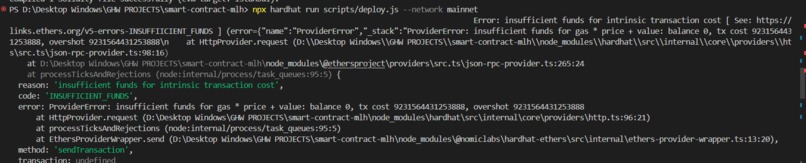
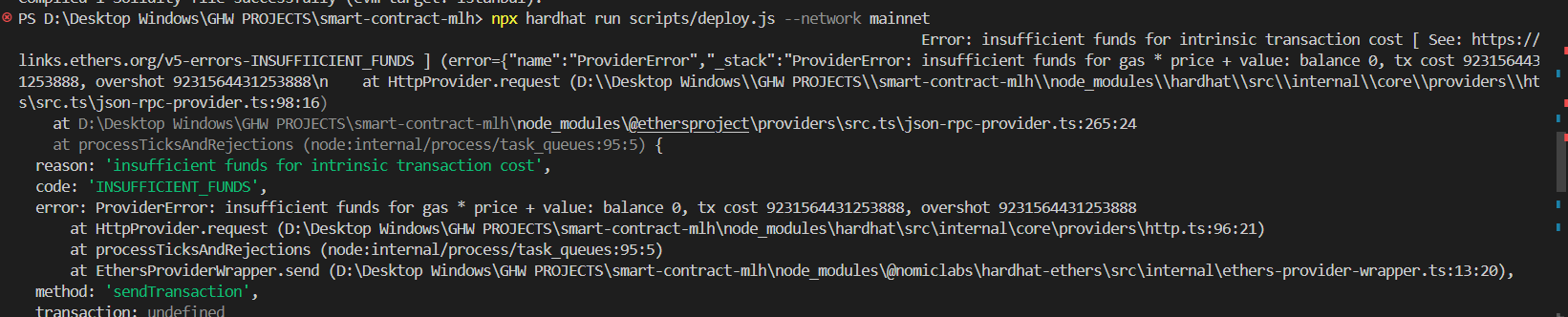
This is Vc code Terminal it shows Insufficient balance because i am poor
First Smart Contract
Inspiration
The inspiration for this project came from the growing interest in blockchain technology and its potential to revolutionize various industries. We wanted to explore the practical applications of smart contracts and understand how they can be utilized to create secure, transparent, and efficient solutions. Additionally, participating in Global Hack Week provided the perfect opportunity to dive into this innovative technology and challenge ourselves to build something impactful. Our goal was to develop a foundational smart contract that could serve as a learning tool and a stepping stone for more complex blockchain projects.
What it does
This project implements a basic smart contract written in Solidity. The contract allows users to perform the following actions:
- Create a new contract instance: Users can deploy their own instance of the smart contract on the blockchain.
- Store data: Users can store information securely on the blockchain.
- Retrieve data: Users can retrieve the stored information whenever needed.
- Transfer ownership: The contract includes functionality to transfer ownership from one user to another, ensuring that control can be passed securely.
How we built it
The smart contract was built using the following tools and technologies:
- Solidity: The contract is written in Solidity, the most popular programming language for developing smart contracts on the Ethereum blockchain.
- Remix IDE: We used Remix, an online integrated development environment, for writing, testing, and debugging the smart contract.
- Ethereum Network: The contract was deployed on the Ethereum test network (Ropsten) to allow for development and testing without incurring real-world costs.
- Truffle Suite: Truffle was used for development, compiling, deploying, and testing the smart contract.
- MetaMask: MetaMask was used as the Ethereum wallet to interact with the deployed contract.
Challenges we ran into
During the development of this project, we encountered several challenges:
- Understanding Solidity syntax: Learning the intricacies of Solidity and its unique features took some time.
- Smart contract security: Ensuring the contract was secure and free from vulnerabilities was a major concern. We had to learn about and implement best practices for security.
- Gas optimization: Writing efficient code to minimize gas consumption was a challenge, as inefficient code can lead to higher transaction costs.
- Deployment issues: Deploying the contract on the test network and ensuring it functioned correctly required troubleshooting and debugging.
Accomplishments that we're proud of
We are particularly proud of the following accomplishments:
- Successful deployment: We successfully deployed the smart contract on the Ethereum test network.
- Secure contract: We implemented security best practices to ensure the contract is resistant to common vulnerabilities.
- Learning curve: We overcame the learning curve associated with blockchain development and gained a solid understanding of Solidity and Ethereum.
- Functionality: We implemented and tested all planned features, ensuring they work as intended.
What we learned
Throughout this project, we gained valuable insights into:
- Smart contract development: We learned the fundamentals of developing smart contracts using Solidity.
- Blockchain mechanics: We gained a deeper understanding of how blockchain networks operate, including transaction validation and gas fees.
- Security best practices: We learned how to identify and mitigate common security vulnerabilities in smart contracts.
- Development tools: We became proficient in using tools like Remix, Truffle, and MetaMask for blockchain development.
What's next for smart contract
In the future, we plan to:
- Enhance features: Add more functionality to the smart contract, such as more complex data storage options and additional user interactions.
- Conduct audits: Perform thorough security audits to ensure the contract is robust and secure.
- Mainnet deployment: Deploy the smart contract on the Ethereum mainnet to allow real-world usage.
- Integration: Explore integrating the smart contract with other decentralized applications (DApps) to expand its utility.
- Community feedback: Gather feedback from the community to identify areas for improvement and new feature requests.
Reference
this is my first time with it so most of the things will be copied from nefual projects https://github.com/Neufal777/smart-contract-mlh
Built With
- alchemyapi
- entherium
- node.js
- solidity

Log in or sign up for Devpost to join the conversation.