-
-
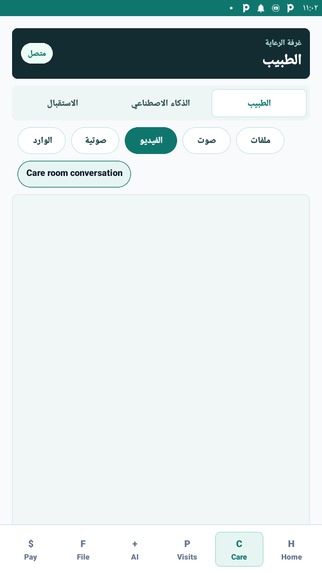
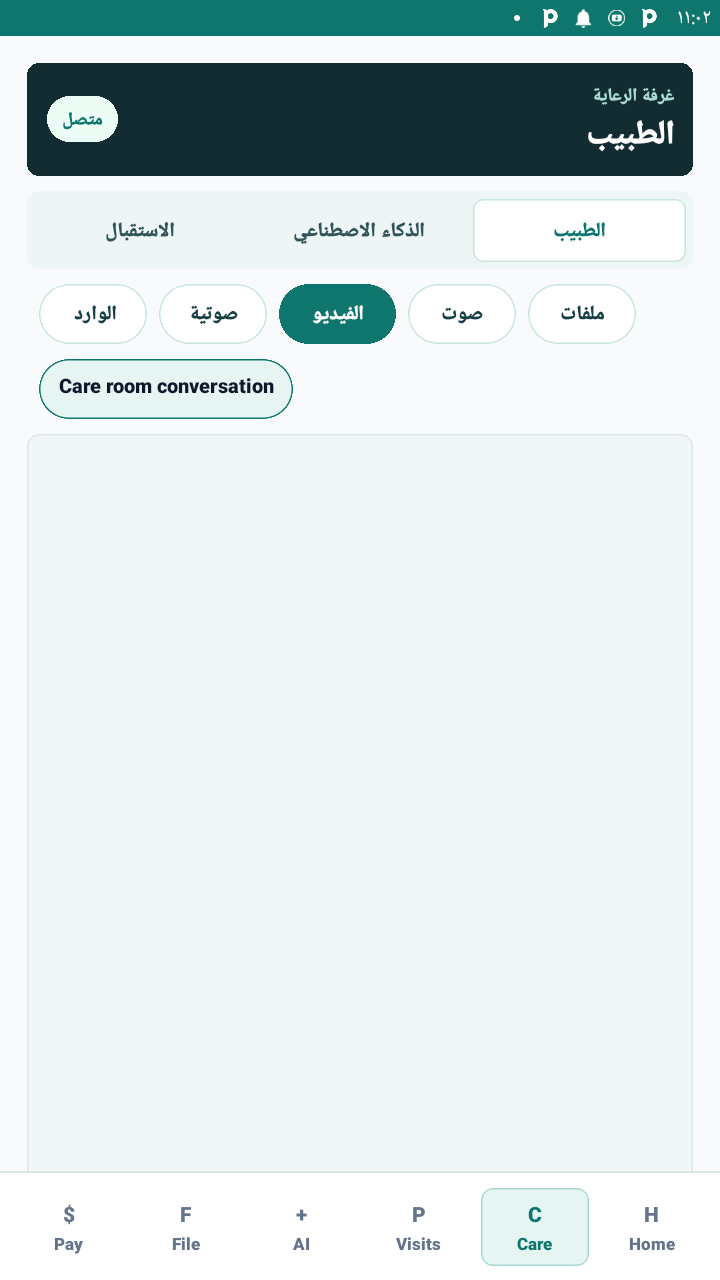
Secure care room supporting files, voice, video, and patient-doctor communication.
-
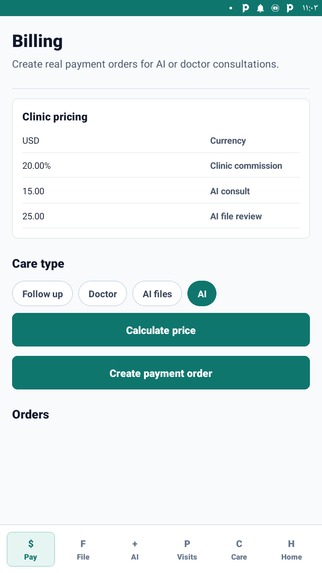
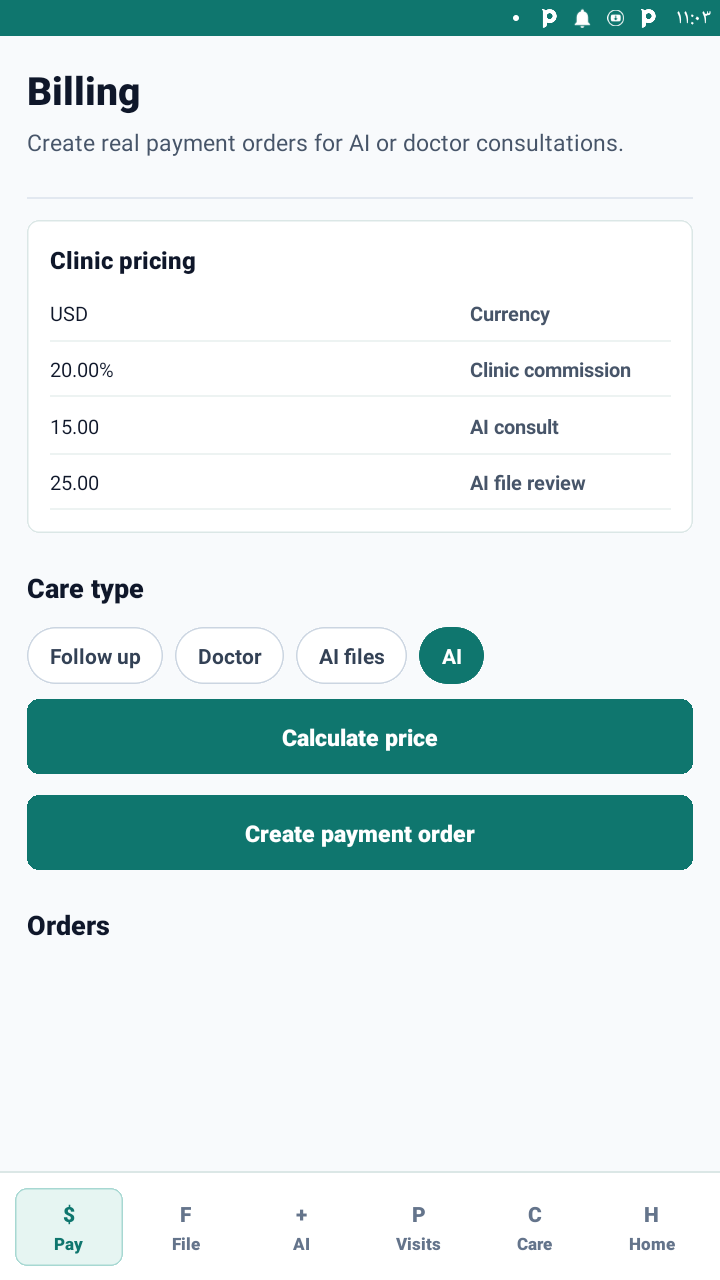
Transparent pricing and payment-order workflow for AI and doctor consultations.
-
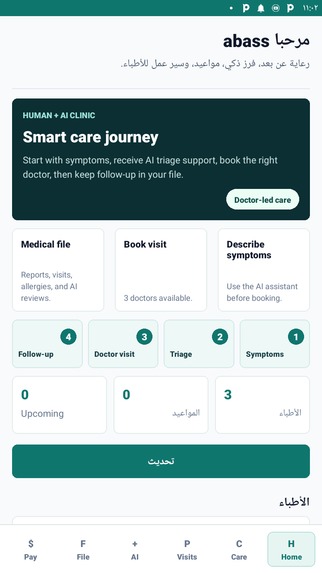
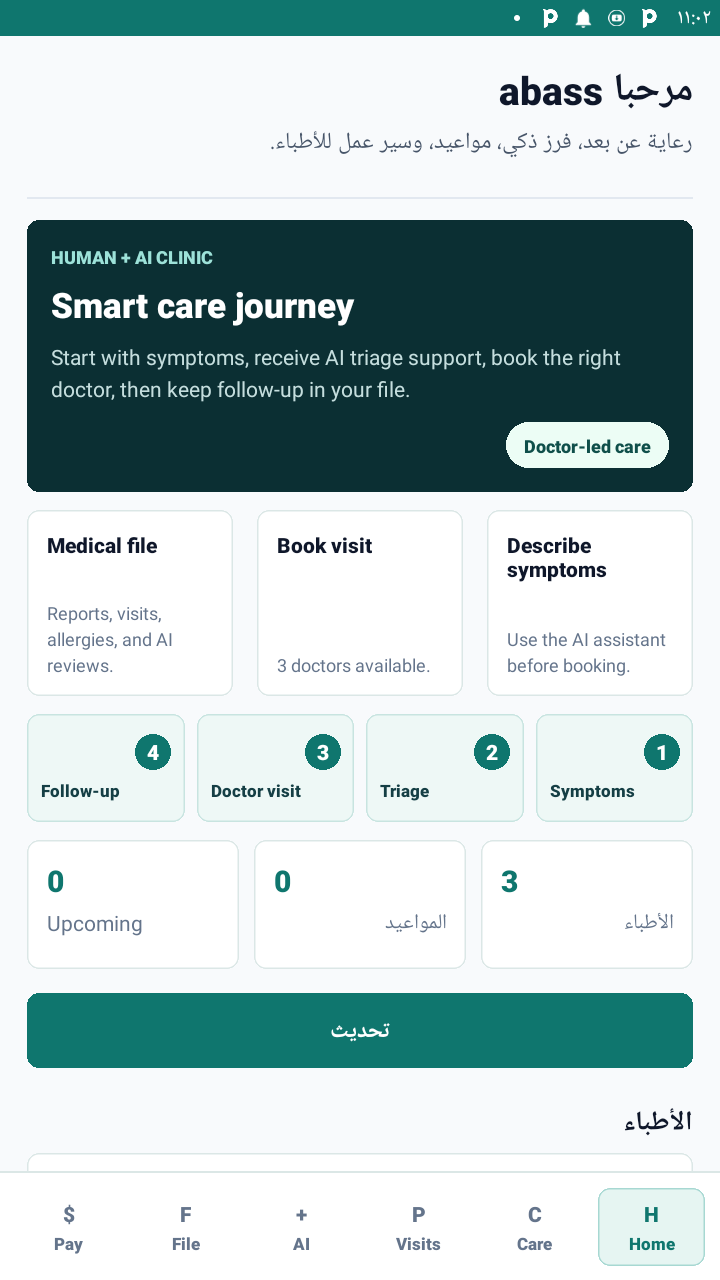
Smart care journey connecting symptom intake, AI triage, doctor booking, and follow-up.
-
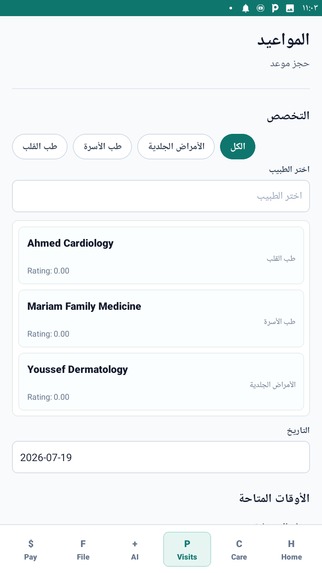
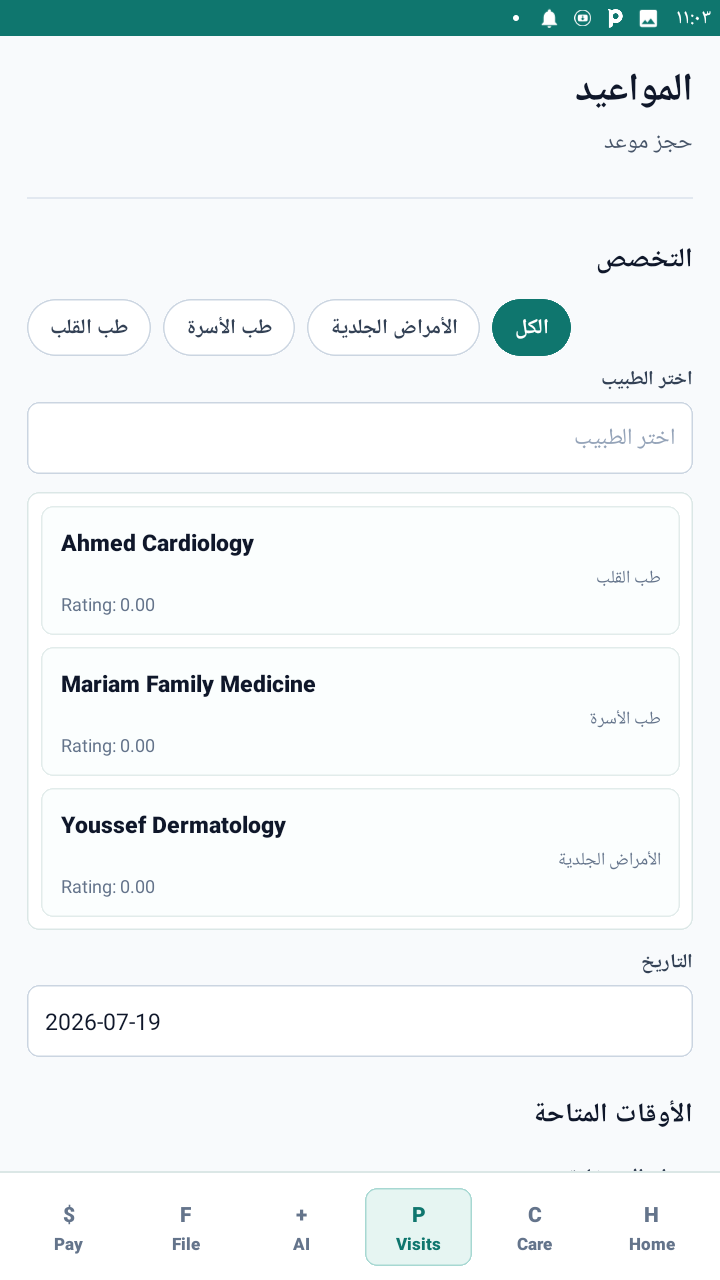
Doctor discovery and appointment booking by medical specialty and availability.
-
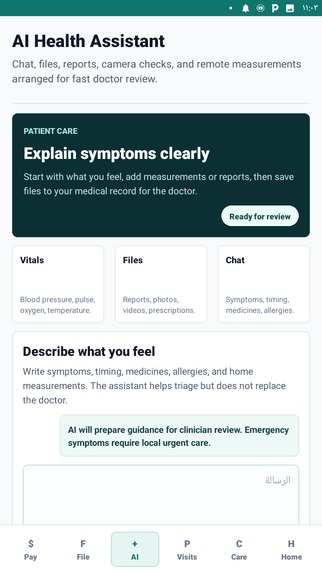
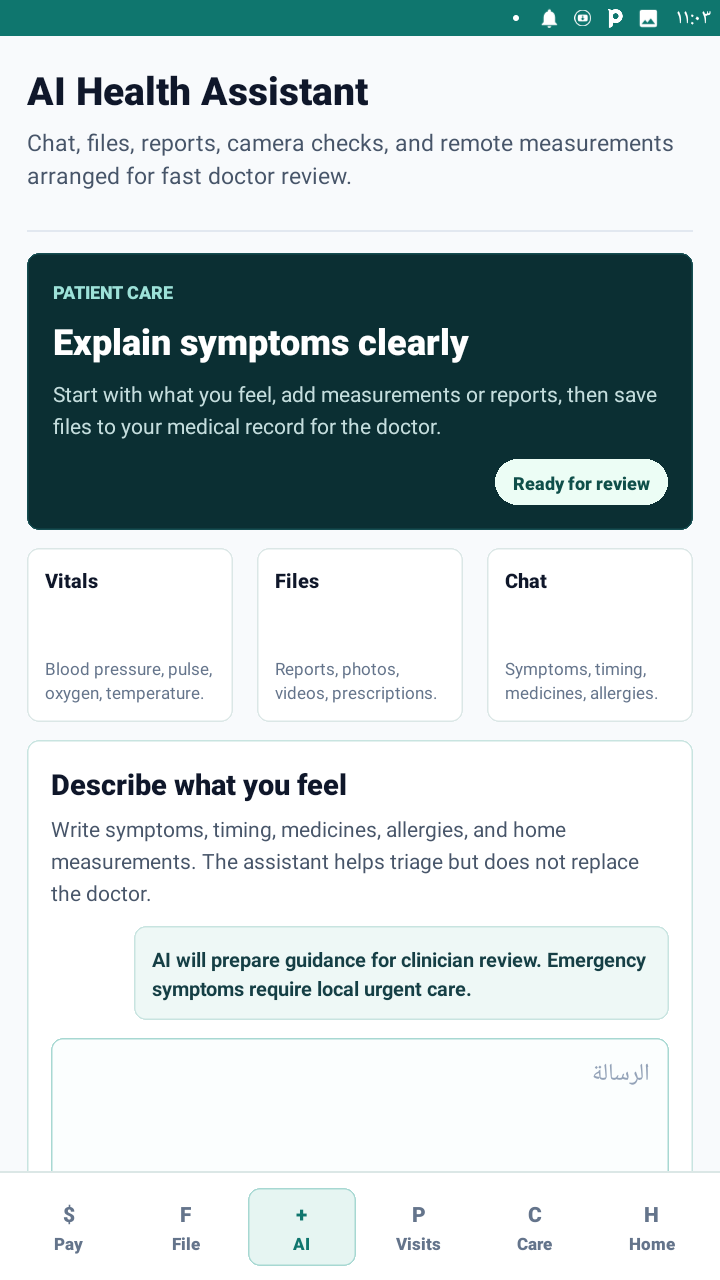
AI-assisted symptom intake with vital signs, files, safety guidance, and clinician review.
-
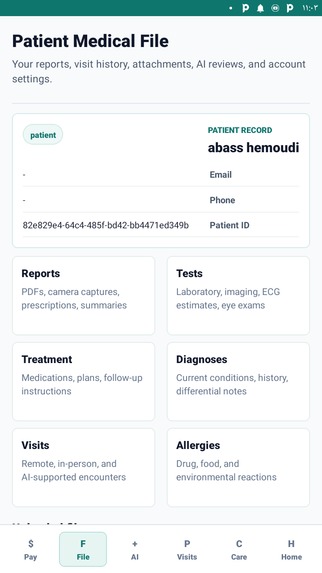
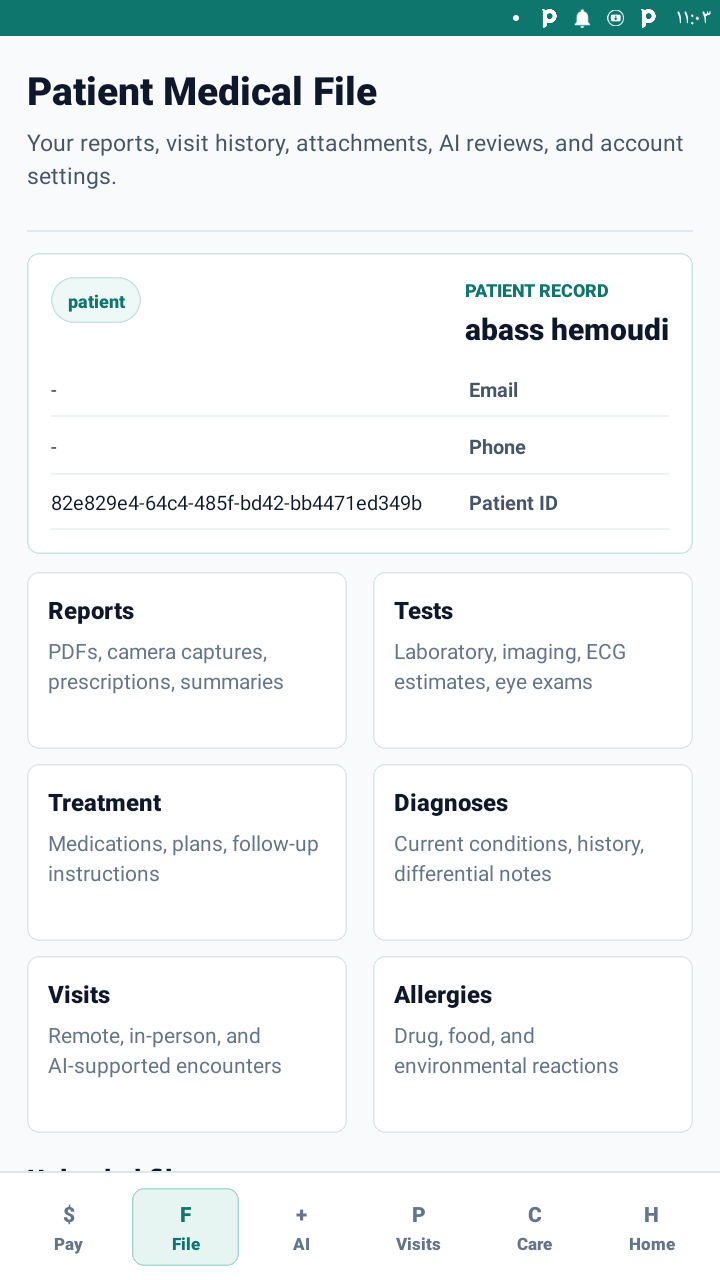
Structured patient medical file for reports, tests, diagnoses, treatment, visits, and allergies.
## Inspiration
Many patients, especially in underserved regions, struggle to access qualified medical expertise quickly. Medical information is often fragmented across conversations, paper records, test results, and disconnected systems.
Smart Clinic AI was inspired by the need for a safer digital healthcare workflow where artificial intelligence helps organize information, while qualified healthcare professionals remain responsible for final medical decisions.
What it does
Smart Clinic AI is an AI-assisted healthcare platform designed to support communication and clinical workflows between patients and qualified doctors.
The platform helps organize:
- Patient information
- Symptoms and medical history
- Vital signs
- Medical records
- Clinical notes
- AI-assisted case summaries
- Doctor review
- Patient-doctor communication
- Voice and video consultation workflows
Smart Clinic AI is designed as a clinical decision-support system. It does not replace licensed physicians, emergency services, diagnosis, or direct medical care.
How we built it
Smart Clinic AI was built as a full-stack web platform with a Django and Django REST Framework backend and a React frontend powered by Vite and Tailwind CSS.
The backend manages authentication, patient intake, clinical records, local vital-sign safety rules, AI-assisted summaries, clinician workflows, APIs, notifications, and real-time communication through Django Channels.
The platform supports SQLite for local demonstrations, with PostgreSQL, Redis, Docker, and Nginx available for production-oriented deployment.
How we used Codex
Codex was used as an engineering partner throughout the development process.
It helped us:
- Inspect and understand the codebase
- Debug Django, React, Vite, and WebSocket issues
- Review API and authentication flows
- Improve patient and clinician workflows
- Review safety messaging
- Validate production configuration
- Refactor code
- Improve testing
- Identify deployment risks
- Support end-to-end implementation decisions
GPT-5.6 was used through Codex to review the Smart Clinic codebase, analyze clinical workflows, improve safety boundaries, validate backend and frontend integration, and support production-readiness checks.
Codex was used not only to generate isolated code snippets, but also to analyze complete workflows, verify changes, and support iterative engineering decisions.
Challenges we ran into
The main challenge was designing an AI-assisted healthcare system that remains useful without replacing human medical judgment.
Other challenges included:
- Organizing medical information safely
- Protecting patient privacy
- Designing clear clinician-review workflows
- Supporting real-time communication
- Managing frontend and backend integration
- Handling production environment settings
- Writing clear safety warnings
- Keeping the system understandable for both patients and clinicians
Accomplishments that we're proud of
We created a working foundation for a digital health platform that combines structured patient information, clinician oversight, communication, and AI-assisted workflows.
We are especially proud of:
- Human-in-the-loop clinical review
- Structured patient and medical-record workflows
- Real-time communication
- Frontend and backend integration
- Clear safety messaging
- Production-oriented validation
- Using Codex across the development lifecycle
What we learned
We learned that responsible medical AI requires more than technical accuracy.
It also requires privacy, clear safety boundaries, human oversight, reliable communication, structured data, and careful language that does not overstate the role of artificial intelligence.
We also learned that Codex is most valuable when used as a persistent engineering collaborator that can inspect context, reason across multiple files, validate implementation choices, and help resolve complete development tasks.
What's next for Smart Clinic AI
The next stages include:
- Improving clinician dashboards
- Expanding patient-history workflows
- Strengthening privacy and access controls
- Improving AI-assisted summaries
- Adding more medical-document support
- Expanding multilingual capabilities
- Improving low-bandwidth and underserved-region workflows
- Completing production deployment
- Adding more testing and clinical-safety validation
Smart Clinic AI is under active development and is intended to support qualified healthcare professionals, not replace them.
Built With
- clinical-decision-support
- codex
- css
- django
- django-channels
- django-rest-framework
- docker
- git
- github
- healthcare
- html
- javascript
- nginx
- openai-api
- postgresql
- python
- react
- redis
- rest-api
- sqlite
- tailwind-css
- telemedicine
- vite
- websockets


Log in or sign up for Devpost to join the conversation.