-
-
-
-
-
-
-
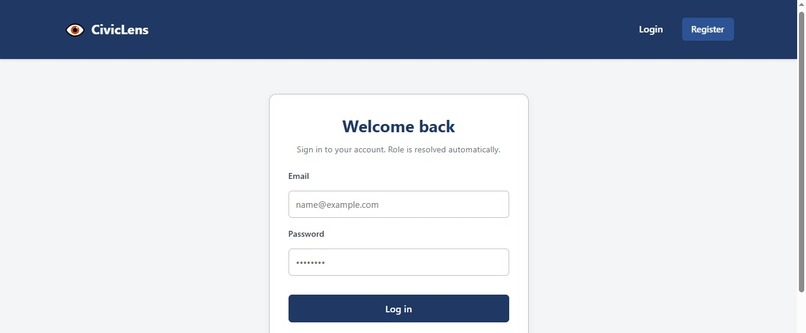
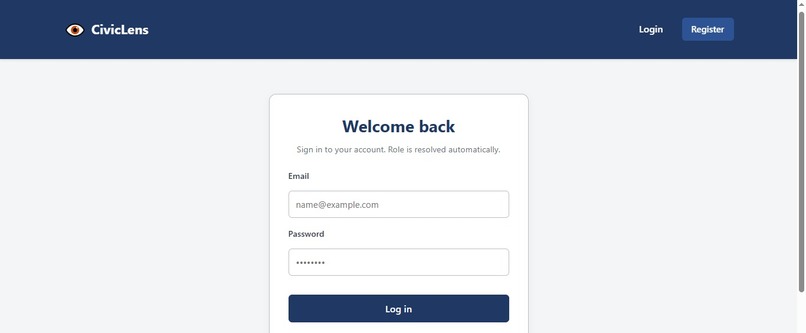
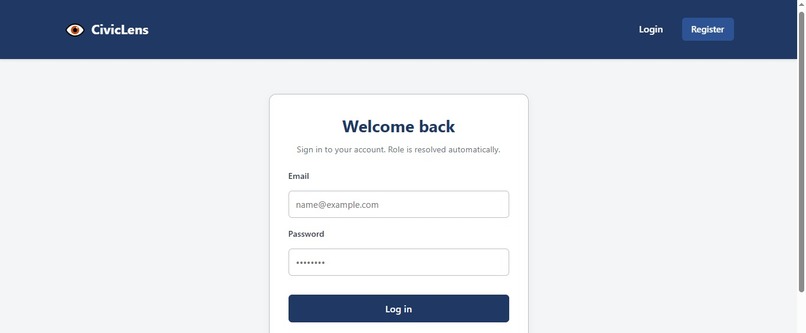
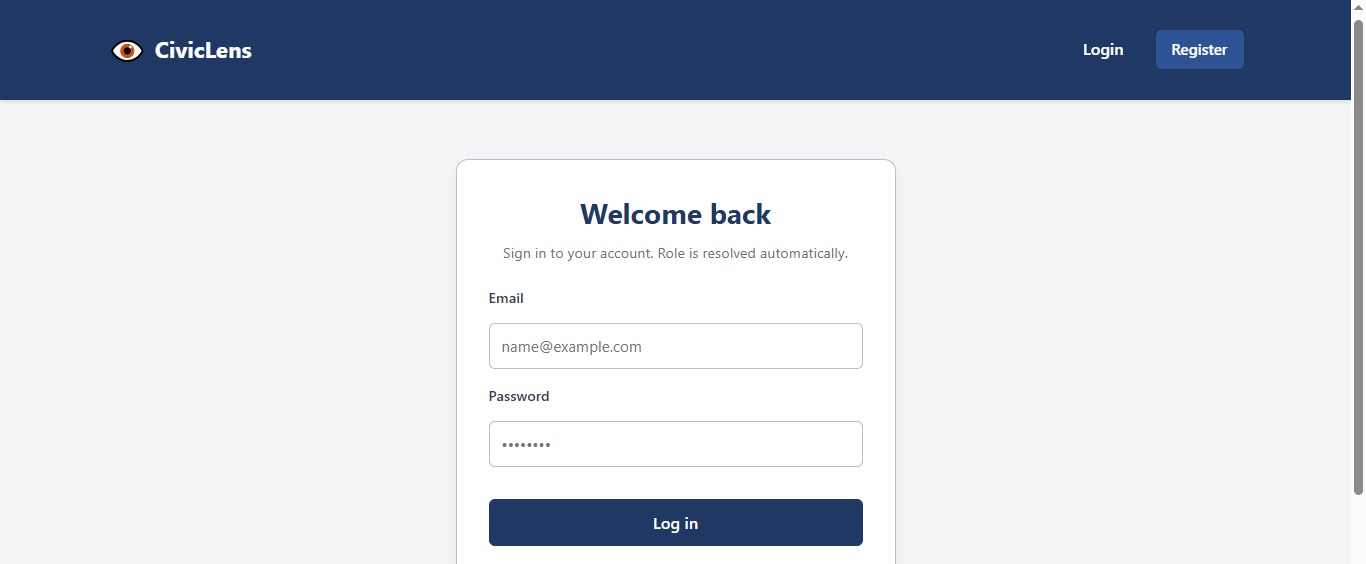
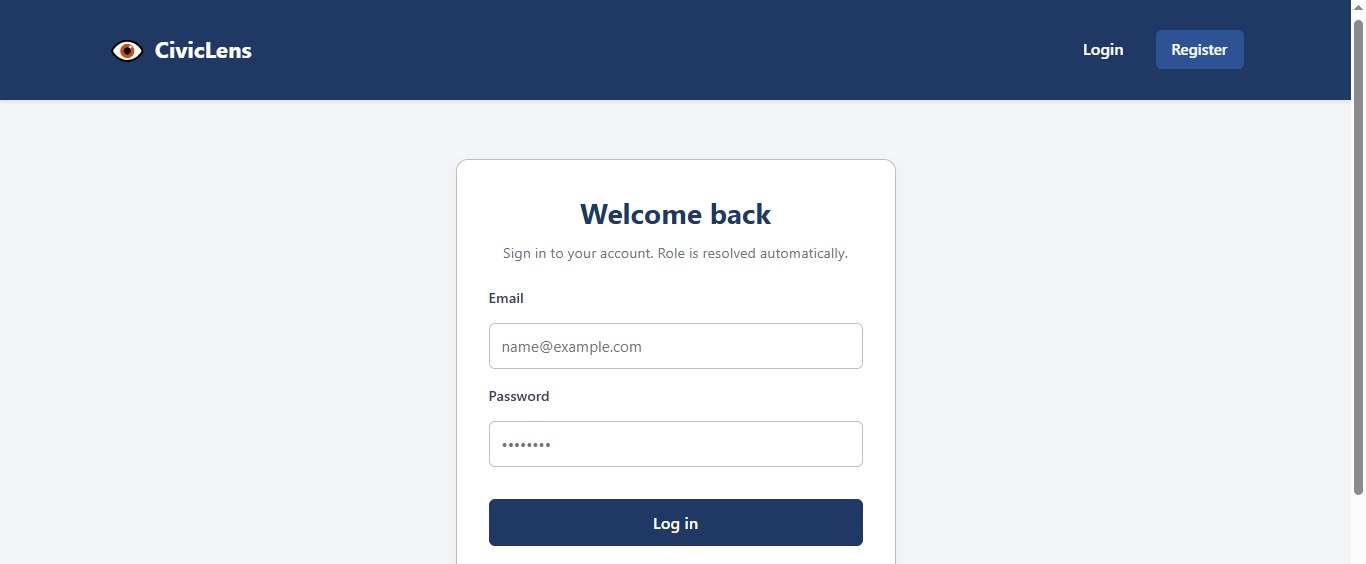
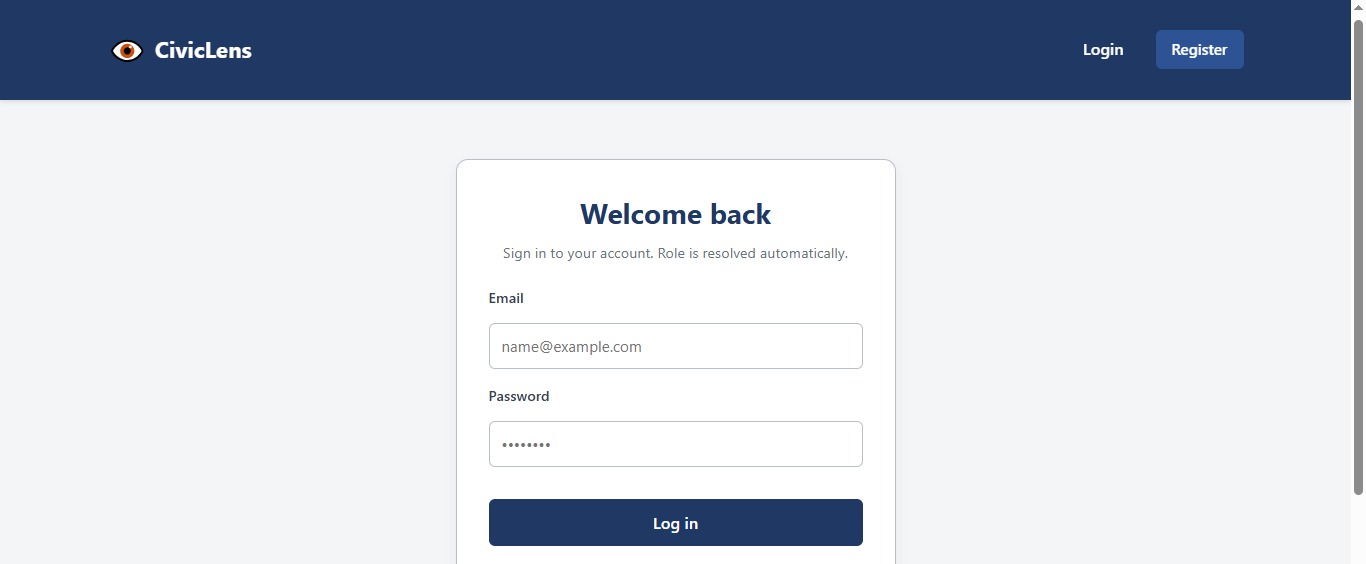
Login & Registration Page “Your City, Your Voice — Secure Access to Smarter Civic Governance.”
-
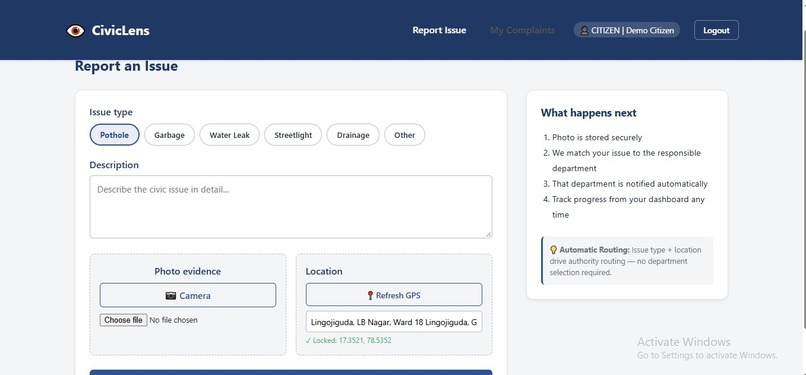
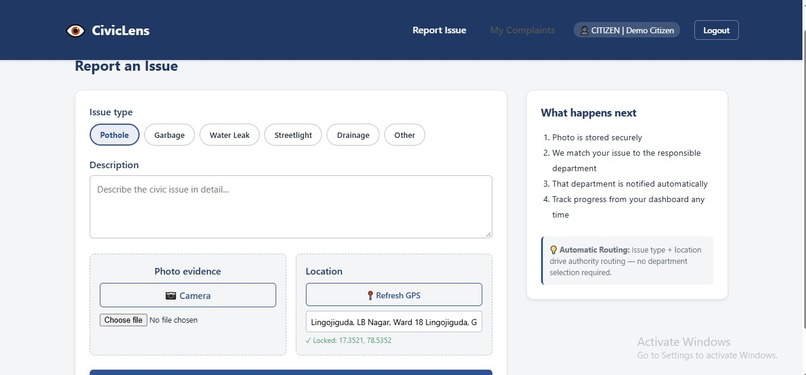
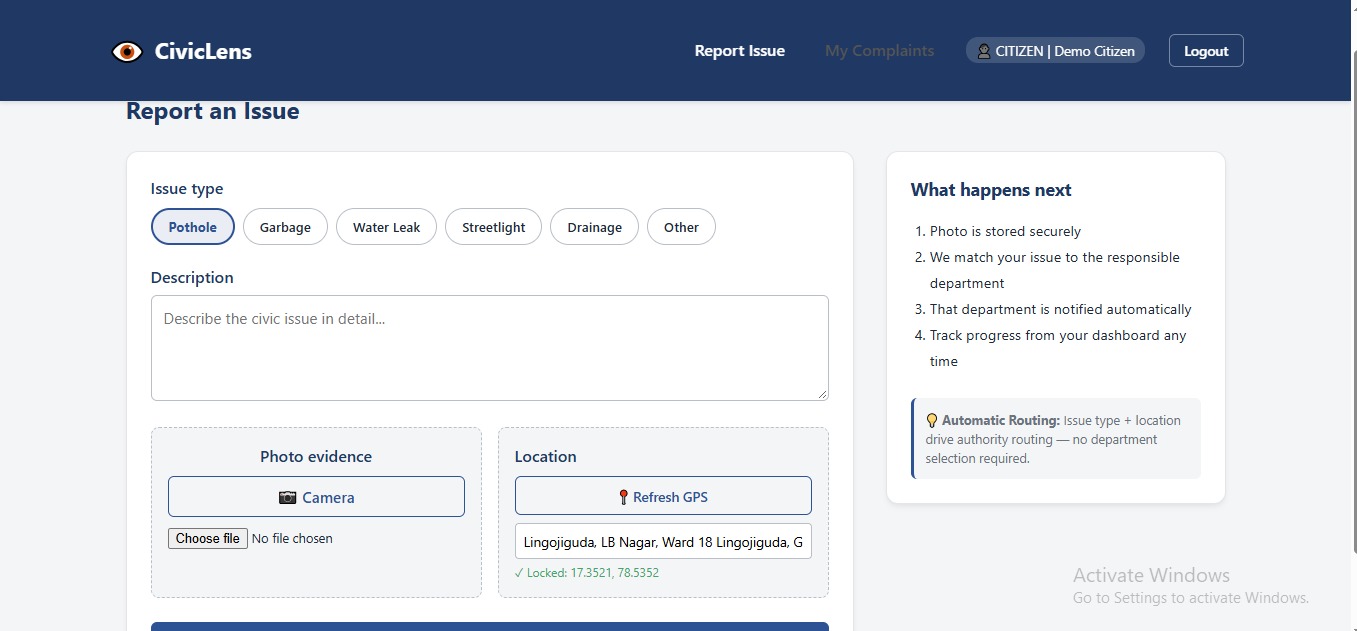
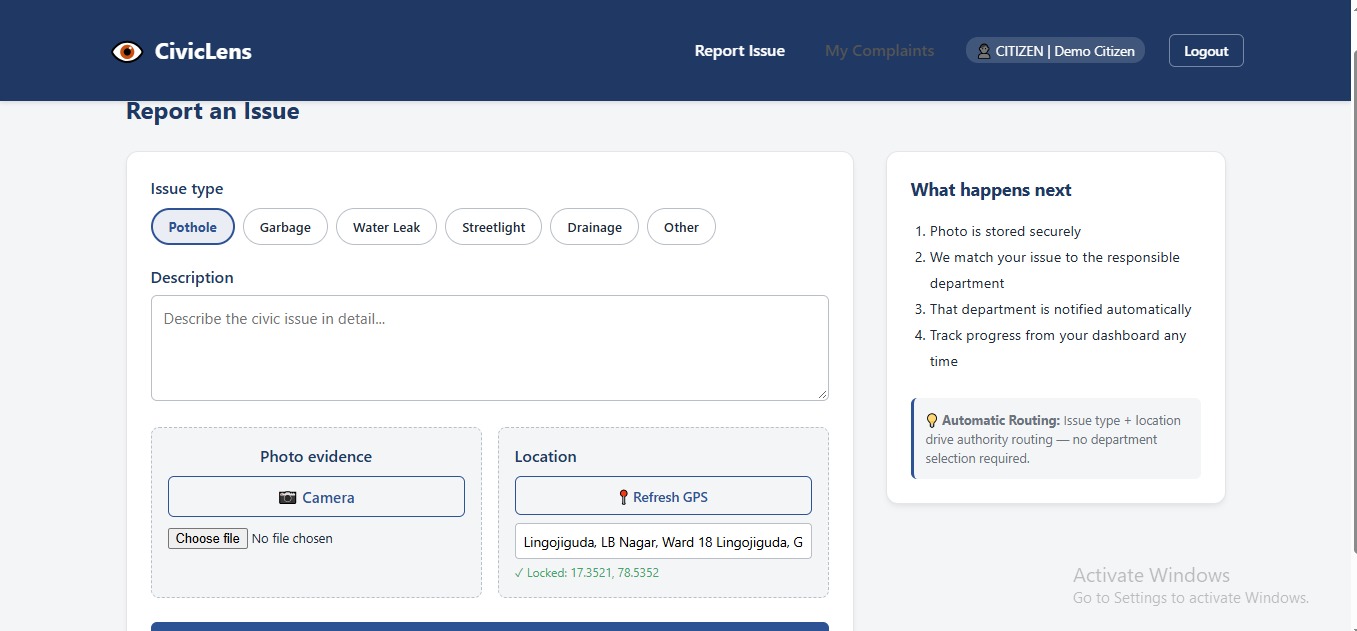
Report an Issue — Citizen Reporting Portal “Spot It. Snap It. Report It. Let’s Make Our Streets Better.”
-
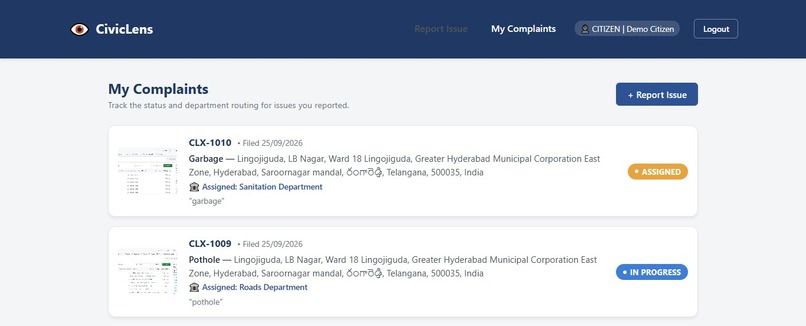
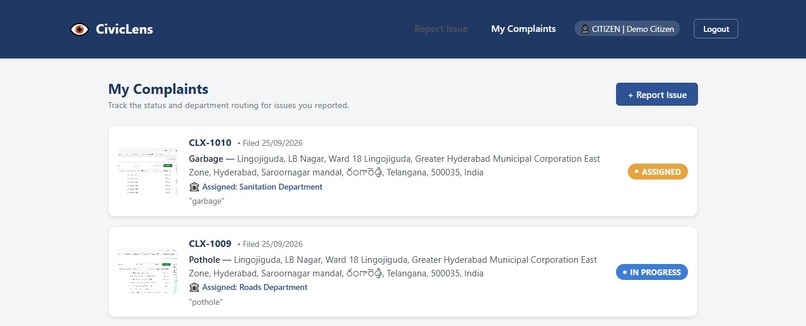
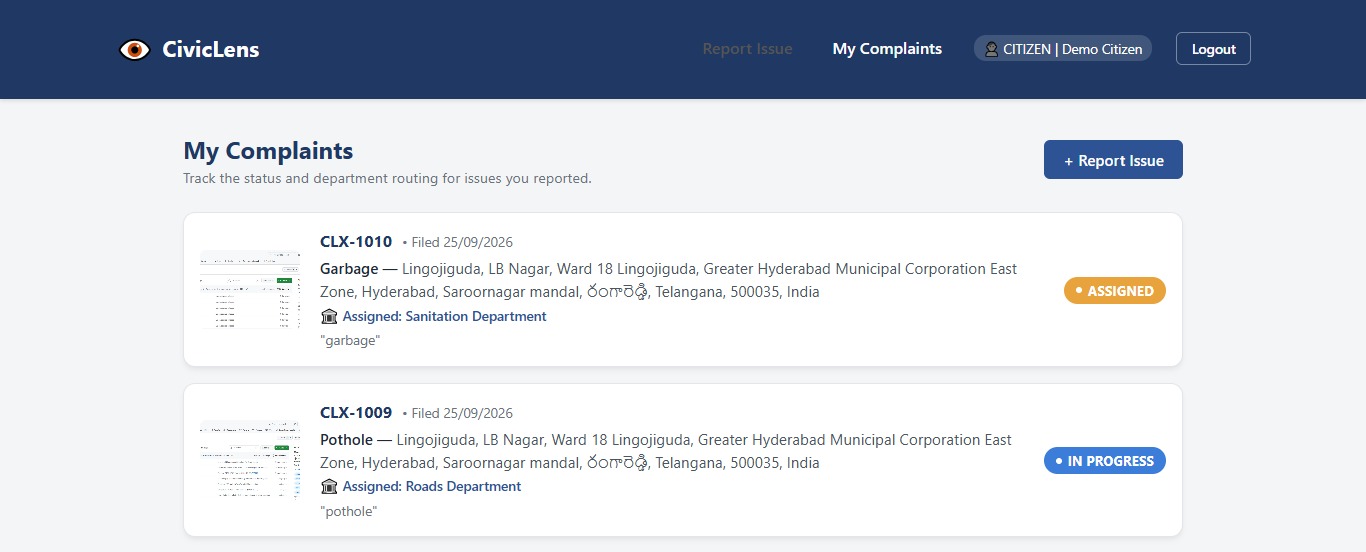
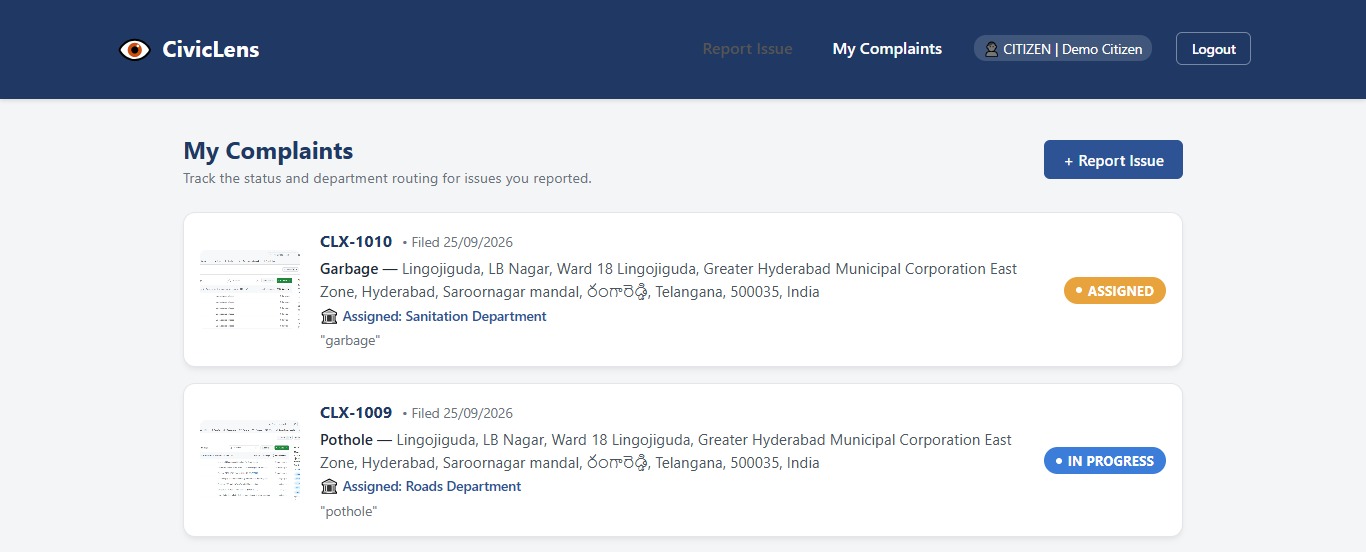
My Complaints — Citizen Dashboard “Every Complaint Counts. Every Update Matters. Track Change in Real Time.”
-
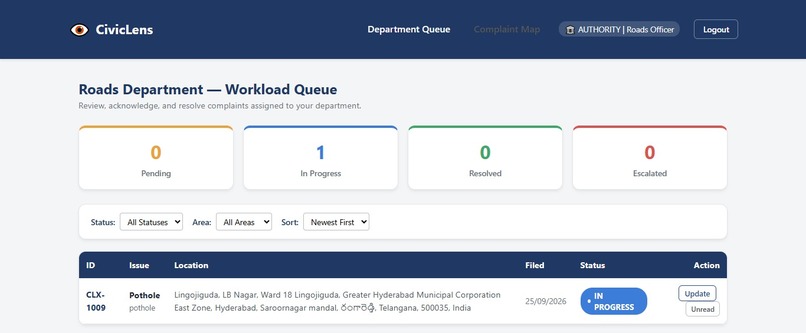
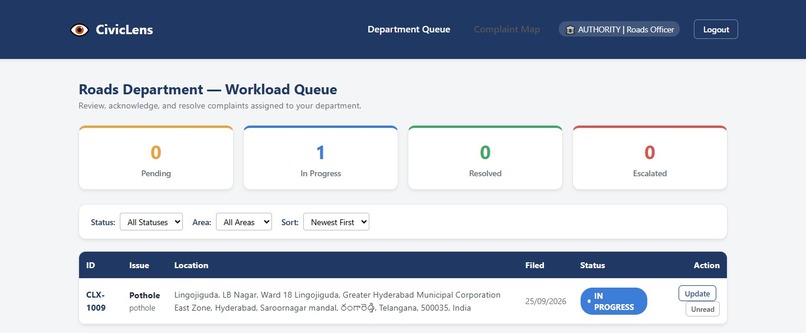
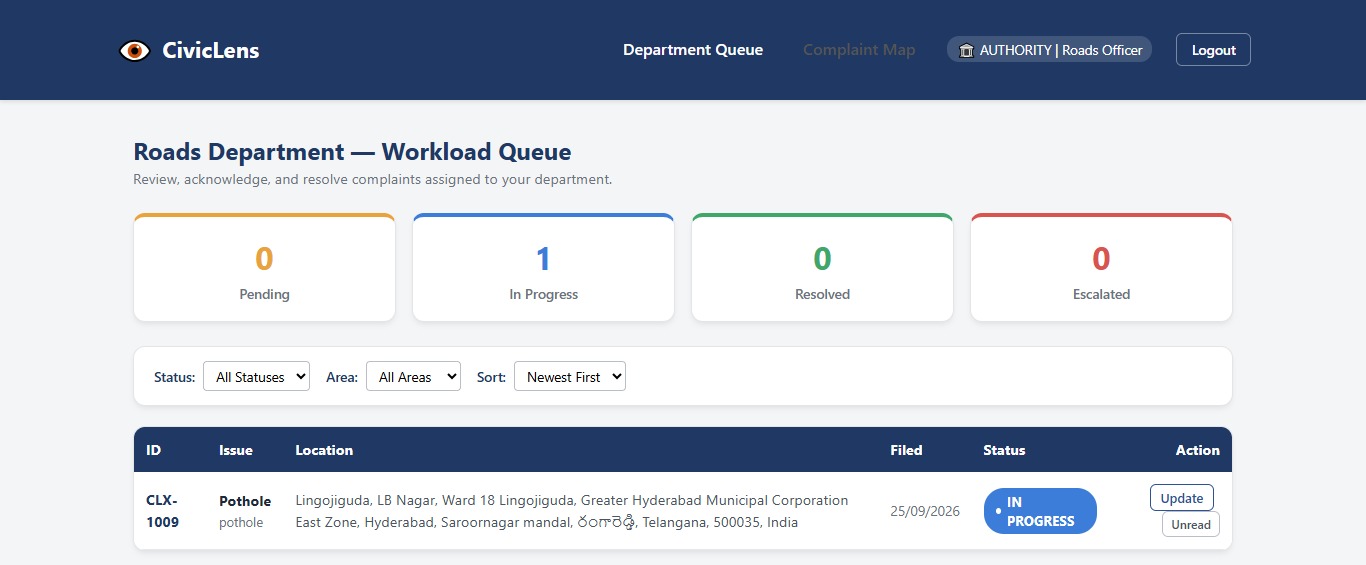
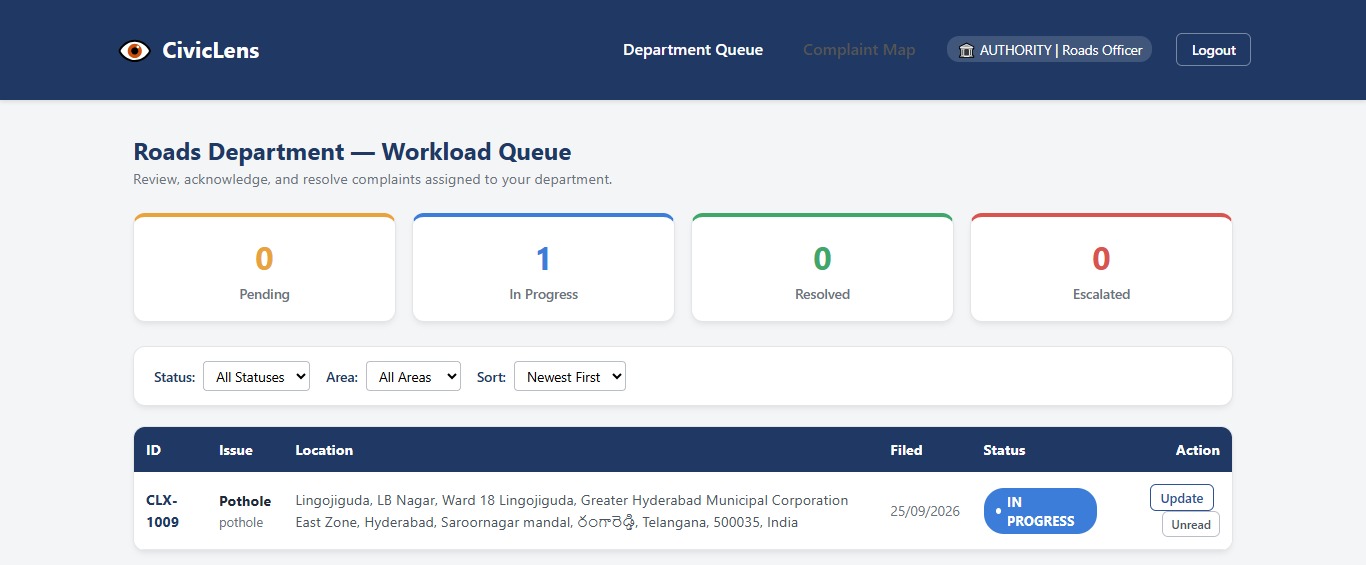
Department Queue — Authority Dashboard “From Complaints to Action — Empowering Departments for Faster Resolutions.”
-
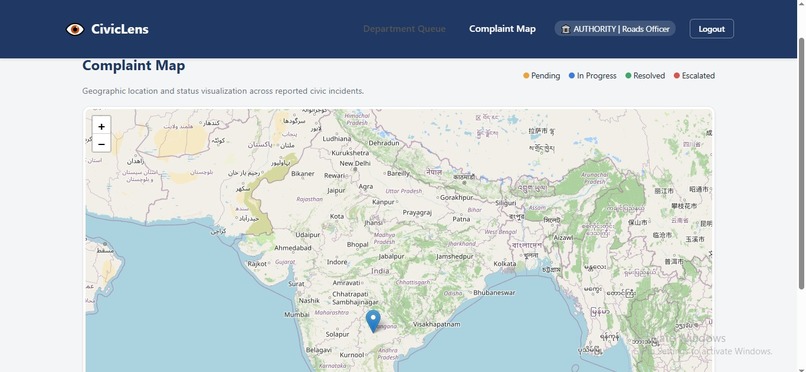
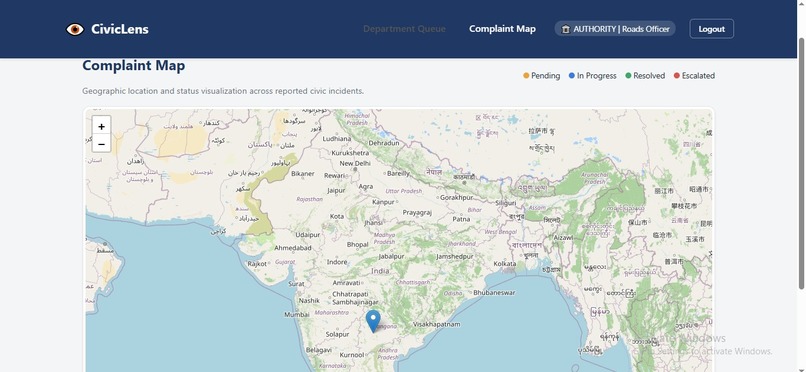
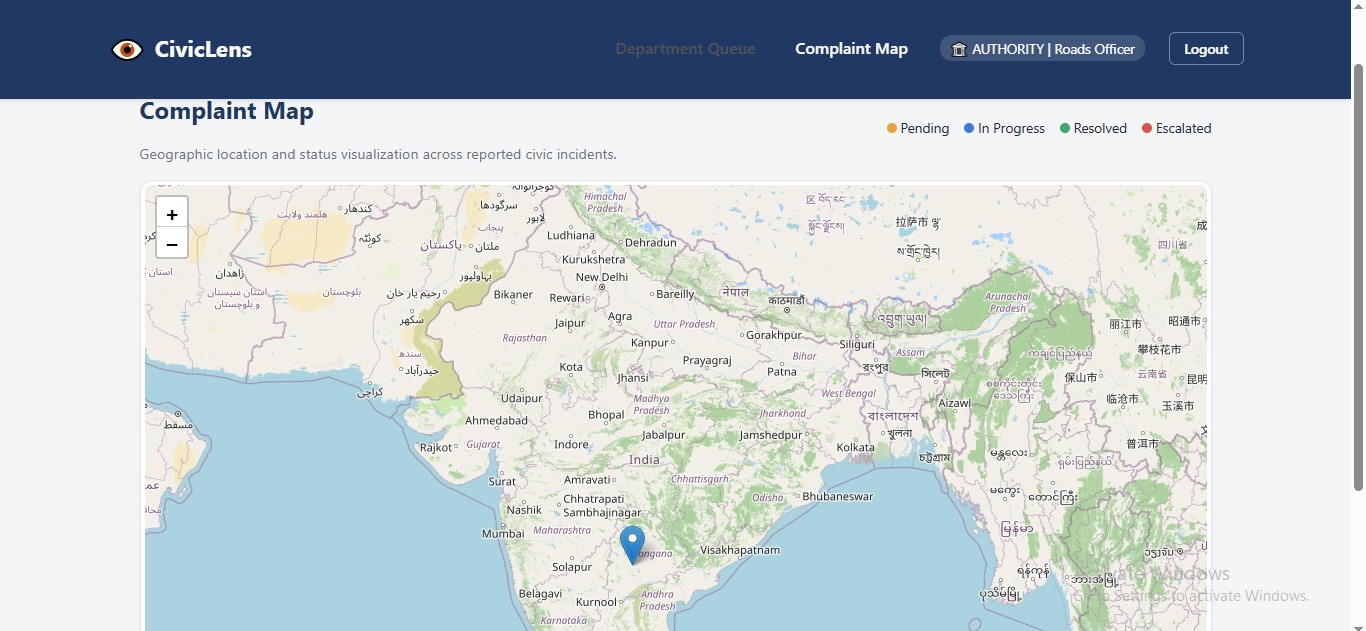
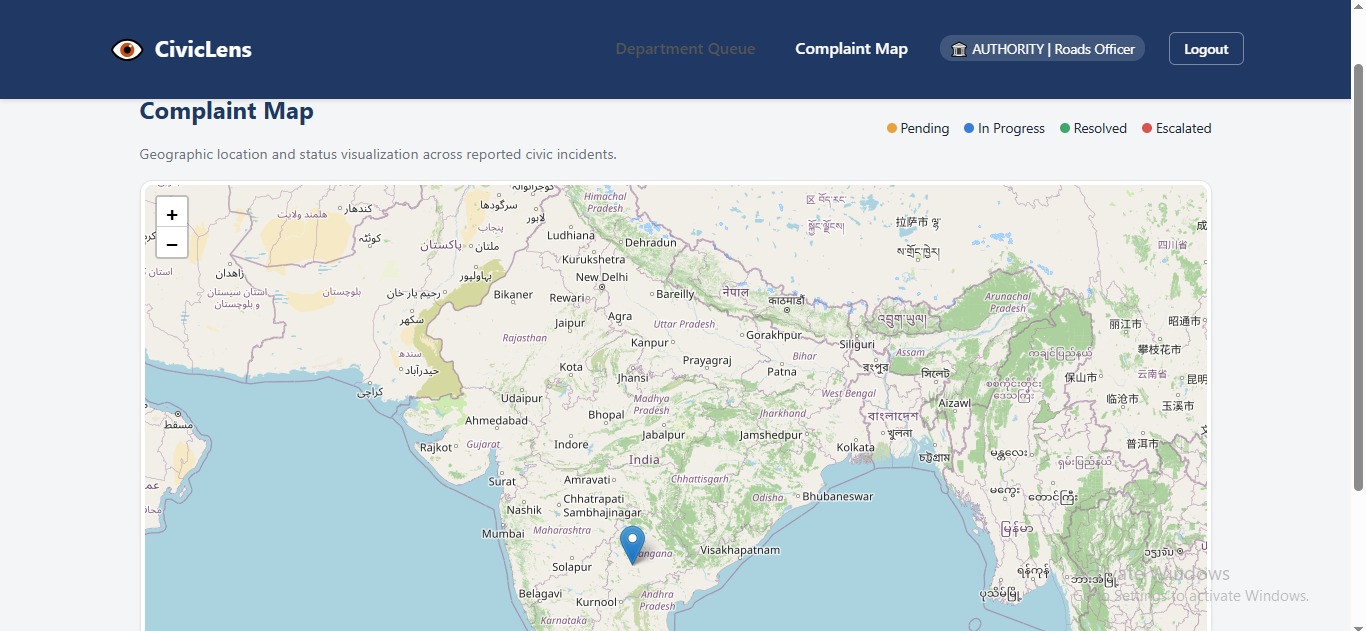
Complaint Map — Live Civic Issue Visualization “See the Issues. Map the Impact. Build a Better City.”
-
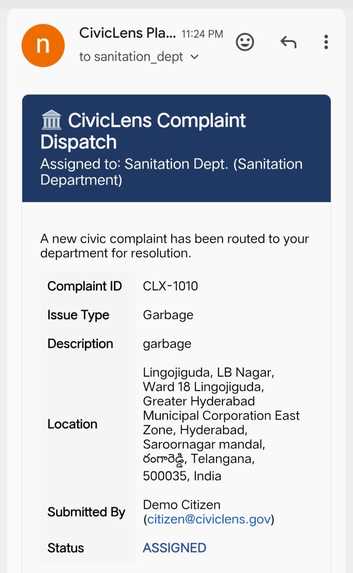
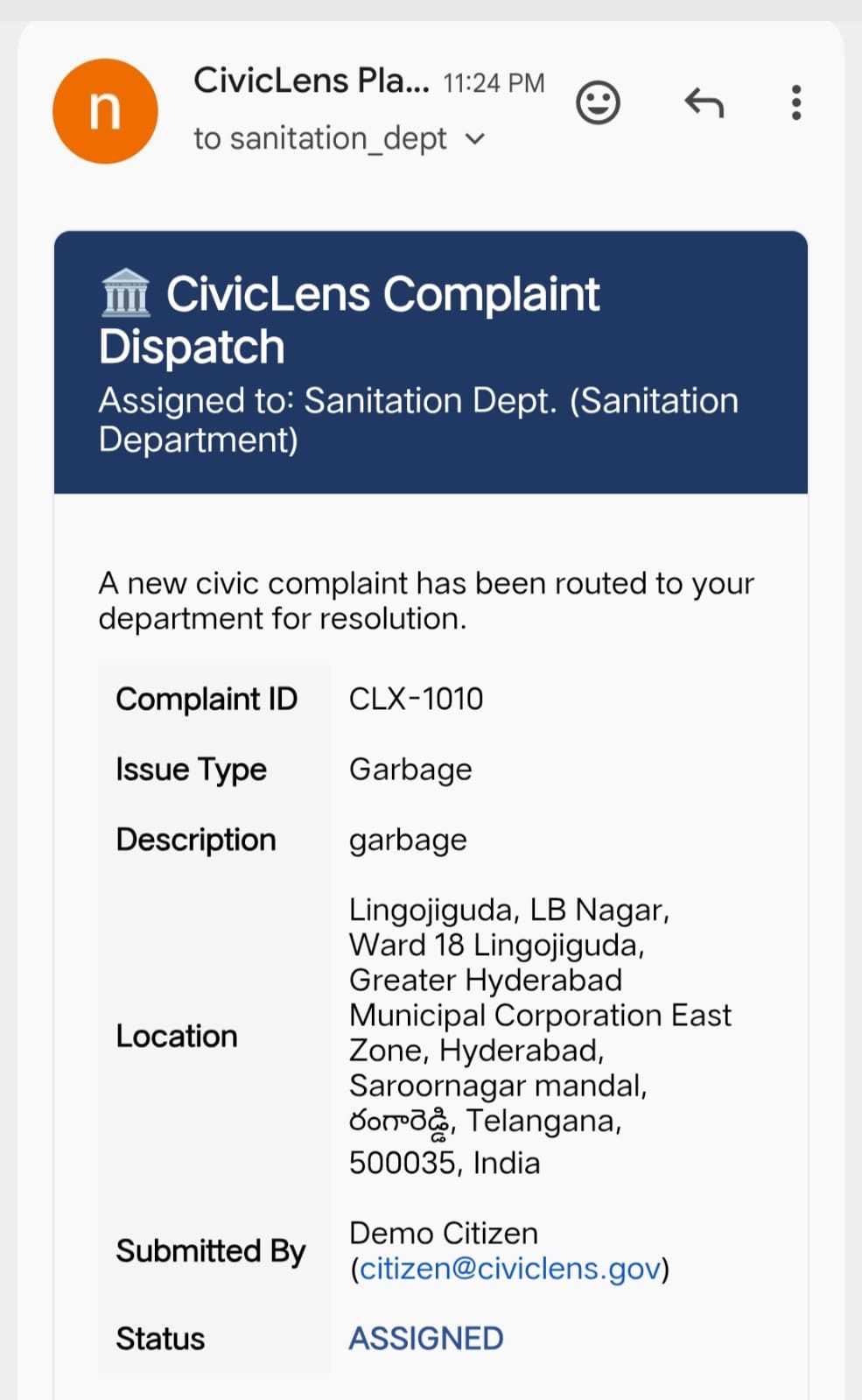
Automated Department Notification — Real-Time Complaint AssignmentAutomated Department Notification — Real-Time Complaint Assignment
Inspiration# CivicLens – Smart Civic Sense Issue Reporting System
1. Inspiration
CivicLens was inspired by the everyday civic problems that citizens face, such as potholes, damaged roads, overflowing garbage, waterlogging, broken streetlights, faulty traffic signals, and unsafe public spaces. Although these problems affect thousands of people, reporting them to the appropriate government authorities is often complicated, time-consuming, and lacks transparency.
We envisioned a smarter, more connected city where every citizen could become an active participant in improving their surroundings. Our goal was to bridge the communication gap between citizens and government authorities through AI-assisted technology, location-based reporting, and transparent issue tracking.
2. What it does
CivicLens is a smart civic issue reporting and management platform that connects citizens, traffic police, municipal corporations, and government authorities.
Smart Issue Reporting: Citizens can report civic problems with descriptions, photographs, and precise geographical locations.
AI-Assisted Analysis: The platform is designed to use AI to analyze submitted reports, categorize civic issues, and help identify duplicate or potentially false reports.
Live Issue Tracking: Citizens can monitor the progress of their complaints through statuses such as Pending, Under Review, In Progress, and Resolved.
Interactive Civic Map: Displays reported issues geographically, helping citizens and authorities identify problem areas.
Government Dashboard: Provides authorities with a centralized interface to verify complaints, assign actions, update statuses, and manage reported issues.
Analytics and Hotspot Detection: Helps identify recurring problem areas and supports data-driven infrastructure planning and resource allocation.
CivicLens transforms individual citizen complaints into structured, actionable civic intelligence.
3. How we built it
We designed CivicLens as a web-based platform with separate interfaces for citizens and government authorities, supported by a centralized backend and database.
Frontend: HTML, CSS, JavaScript, and responsive UI components for an accessible citizen reporting experience and administrative dashboards.
Backend: PHP for handling authentication, issue submissions, report management, status updates, and communication between the frontend and database.
Database: MySQL for storing user accounts, civic complaints, geographical coordinates, report statuses, and administrative records.
Mapping and Visualization: Map integration for location-based reporting and visualization, with analytics dashboards and hotspot identification.
AI-Assisted Development: IBM Bob 2.0 was used to support development workflows, accelerate implementation, assist with code generation and debugging, and help turn our project concept into a functional prototype.
The system follows a modular approach, allowing reporting, verification, analytics, and administration to work together while supporting future AI integrations.
4. Challenges we ran into
Designing a simple reporting experience while collecting enough information for authorities to take meaningful action.
Ensuring that reports contain accurate locations, valid descriptions, and relevant photographic evidence.
Preventing duplicate, misleading, or potentially fraudulent complaints from affecting the reliability of civic data.
Connecting citizen-facing reporting features with government dashboards and maintaining consistent complaint statuses.
Making the platform responsive and accessible across different devices and user groups.
Integrating AI-assisted development into the workflow while ensuring that generated code was reviewed, tested, and aligned with the project requirements.
5. Accomplishments that we're proud of
Conceptualized a practical civic technology solution that addresses real-world urban and community problems.
Developed a unified platform connecting citizens with government authorities through a structured reporting and tracking workflow.
Designed a location-based reporting system that converts individual complaints into geographically organized civic data.
Created a government-oriented dashboard concept that supports complaint verification, issue management, and infrastructure analytics.
Used AI-assisted development to accelerate prototyping and explore how modern AI tools can help build useful, real-world applications.
We are proud that CivicLens focuses not just on reporting problems, but also on improving transparency, accountability, and collaboration between citizens and public institutions.
6. What we learned
Building CivicLens helped us understand how to translate a real-world social problem into a practical technology solution. We learned the importance of designing user-friendly interfaces, integrating frontend and backend components, structuring databases, and managing location-based information.
We also explored how AI-assisted software development can accelerate coding, debugging, and prototyping while reinforcing the importance of human verification, testing, and responsible AI usage.
Most importantly, we learned that effective civic technology requires more than a reporting interface: it needs reliable data, transparent workflows, responsible handling of citizen information, and meaningful coordination between citizens and authorities.
7. What's next for CivicLens
Our vision is to evolve CivicLens from a prototype into a scalable smart-city platform that can support municipal corporations, traffic police, and government departments.
Advanced AI Integration: Introduce AI-powered image recognition, automatic issue classification, duplicate detection, and report prioritization.
Predictive Civic Analytics: Use historical and location-based data to identify recurring hazards and anticipate areas that may require preventive maintenance.
Government Integration: Explore integrations with official municipal complaint systems and public service platforms to enable smoother complaint routing and resolution.
Multilingual Voice Reporting: Enable citizens to submit complaints through voice input and regional languages, making the platform more accessible.
Real-Time Notifications: Provide updates to citizens when complaints are verified, assigned, or resolved.
Scalable Deployment: Expand from pilot communities to multiple cities, with appropriate data protection, security, and administrative controls.
Our long-term goal is to make CivicLens a citizen-driven civic intelligence platform that helps communities report issues, enables authorities to respond efficiently, and supports safer, cleaner, and smarter cities.

Log in or sign up for Devpost to join the conversation.