-
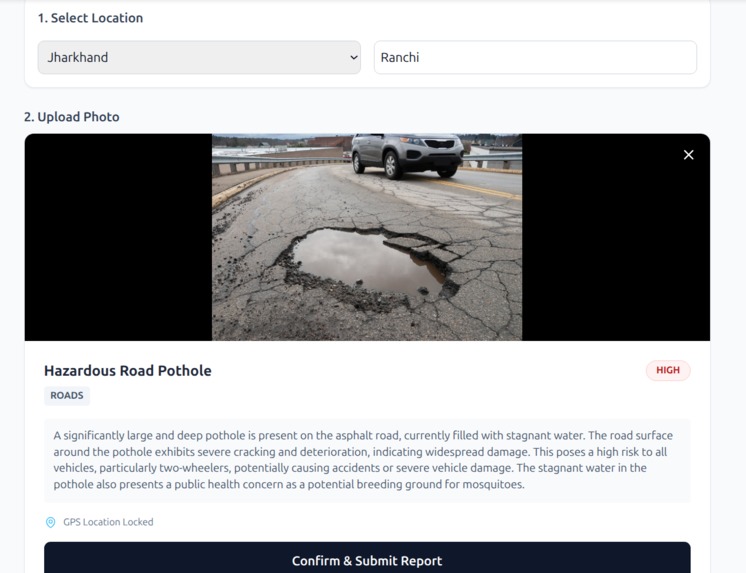
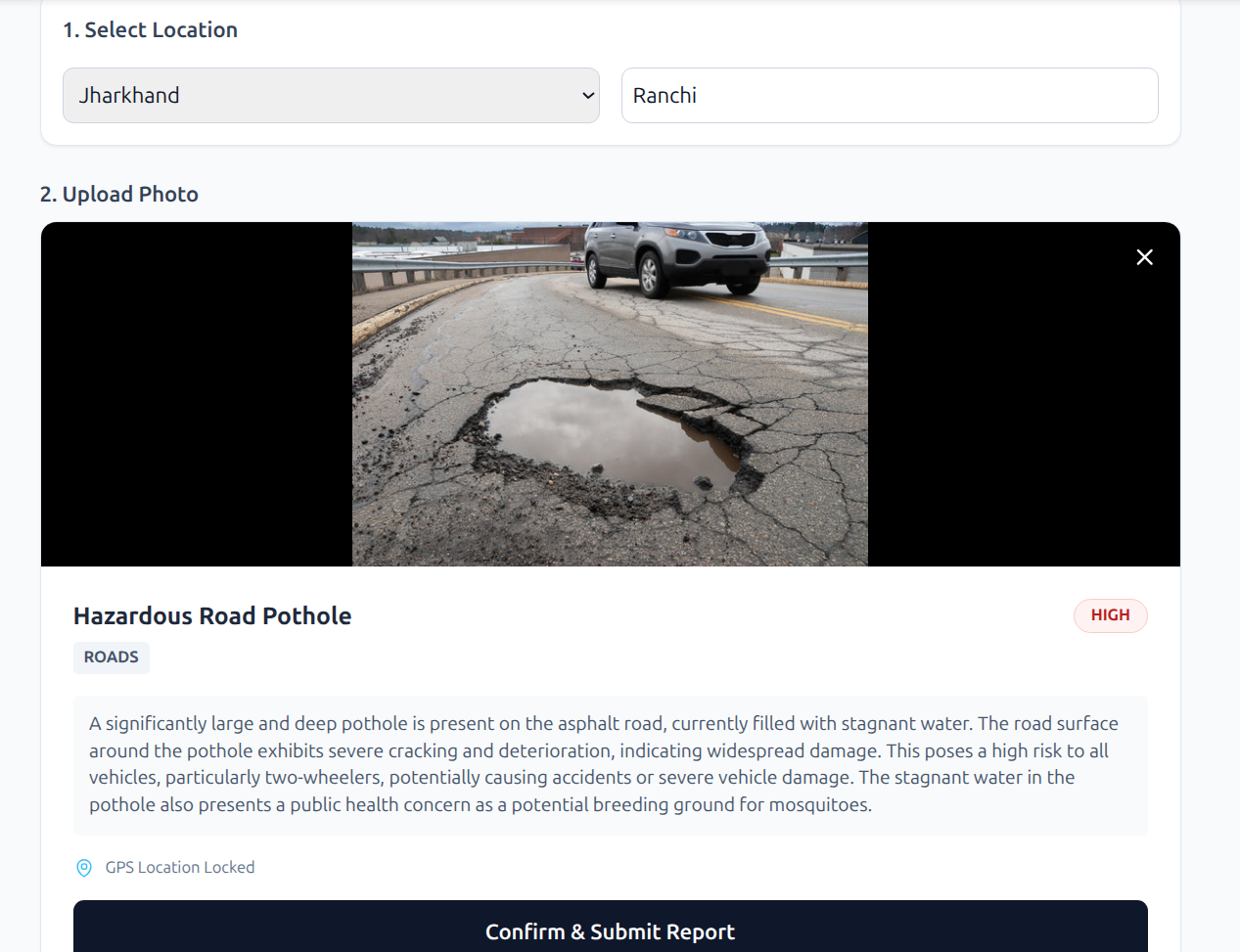
Process of submission
-
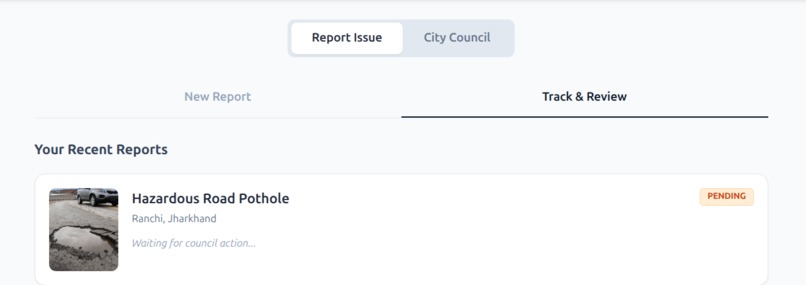
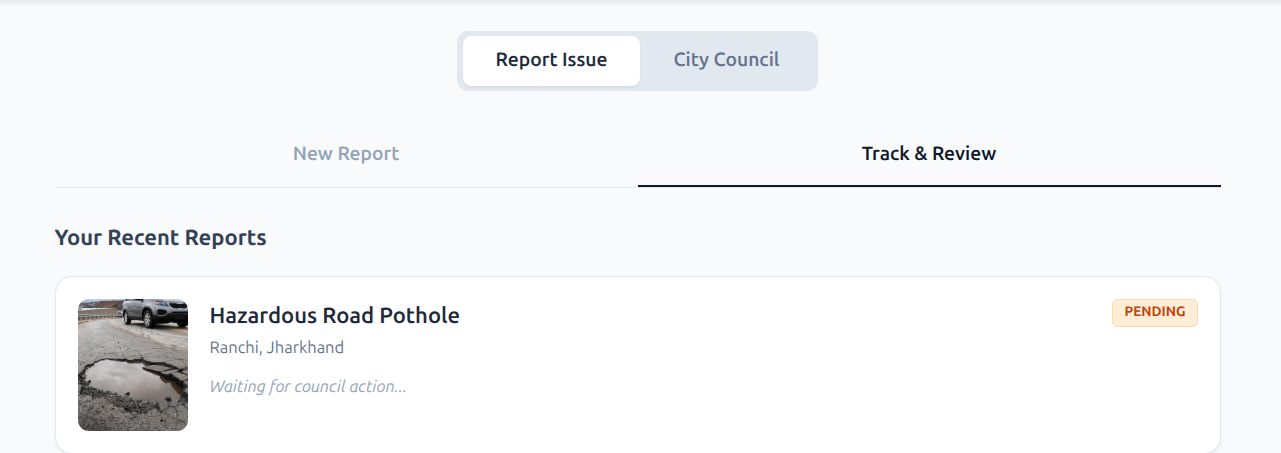
Track and Review reports
-
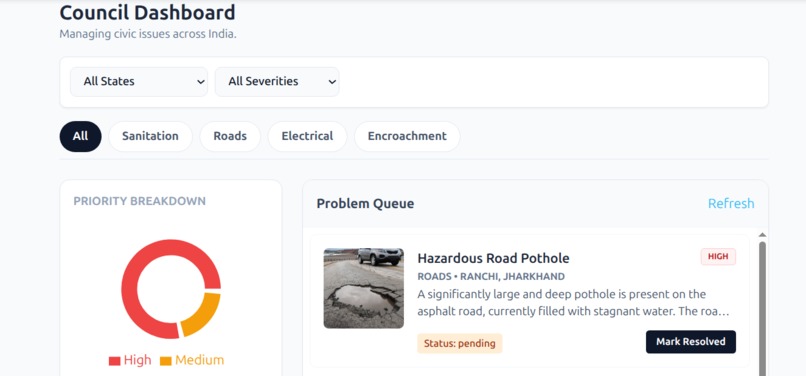
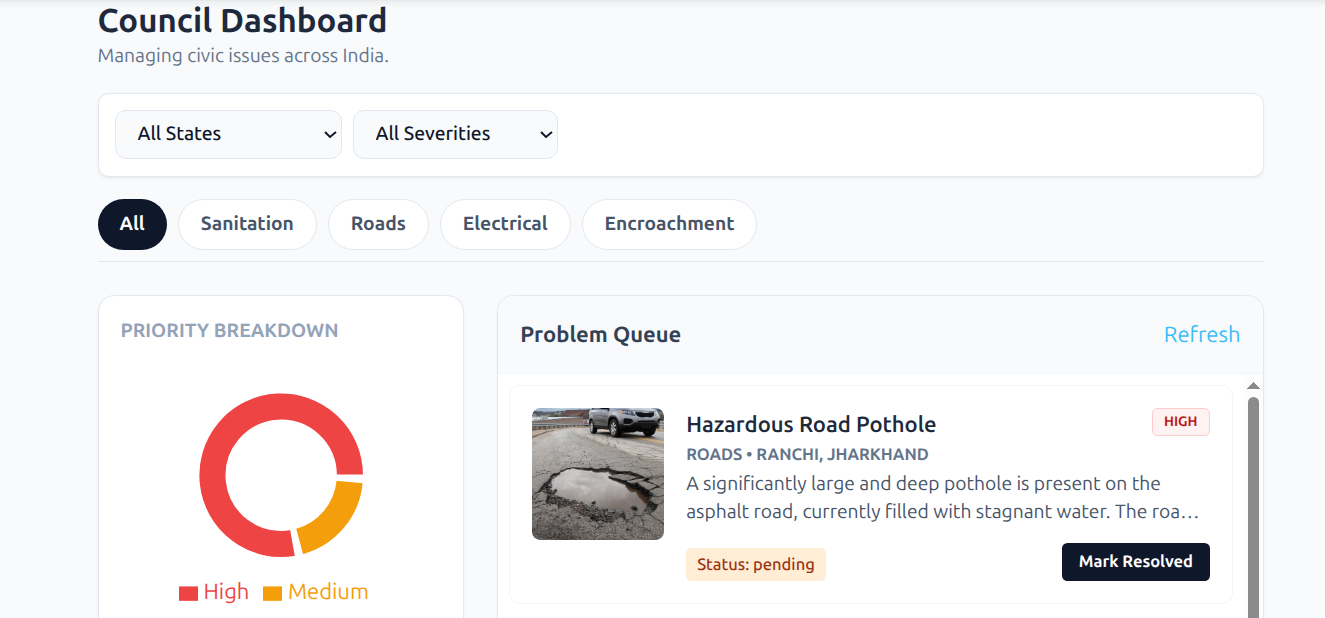
Council dashboard
Inspiration
City councils and municipal departments are overwhelmed with citizen reports like “broken light” or “road issue” that lack photos, locations, or urgency. This leads to slow response times, misallocated resources, and frustrated citizens. We were inspired to bridge the gap between citizens and city services by using AI to add clarity, structure, and priority to everyday civic complaints.
What it does
- Citizens snap a photo of an issue (pothole, broken streetlight, damaged sign).
- AI validates the issue and classifies it.
- Severity is automatically estimated (High / Medium / Low).
- Location data is extracted and normalized.
- City officials can instantly query and visualize problems on a map.
How we built it
- Using Gemini tools and API.
Challenges we ran into
- Image ambiguity: Differentiating between real infrastructure damage and false positives (e.g., shadows, puddles).
- Severity estimation: Translating visual damage into meaningful urgency levels.
Accomplishments that we're proud of
- Built an end-to-end AI-powered civic reporting pipeline.
- Reduced vague reports into structured, actionable data without extra effort from citizens.
What we learned
- AI works best as a triage assistant, not a replacement for human judgment.
- Structured data dramatically improves decision-making for public services.
- Even small UX improvements (photo + AI) can massively reduce operational friction.
What's next for Smart City "Citizen Reporter"
- Multi-issue detection: Identify multiple problems in a single image.
- Citizen feedback loop: Notify users when issues are resolved.
- Priority-based dispatching: Auto-route high-severity issues to the right department.
- Analytics & forecasting: Predict problem hotspots before they escalate.
- City integrations: Connect directly with existing municipal ticketing systems.
- Accessibility & multilingual support for broader civic participation.


Log in or sign up for Devpost to join the conversation.