-
-
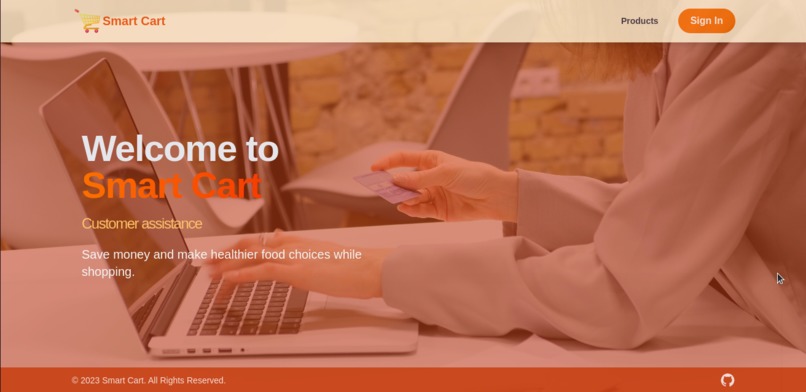
Landing Page
-
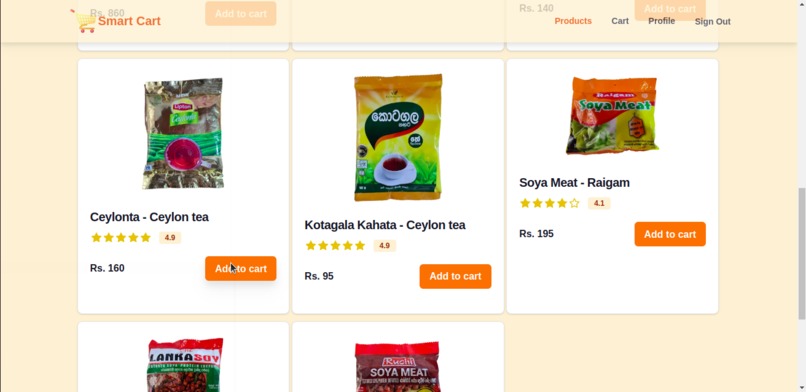
Products Page
-
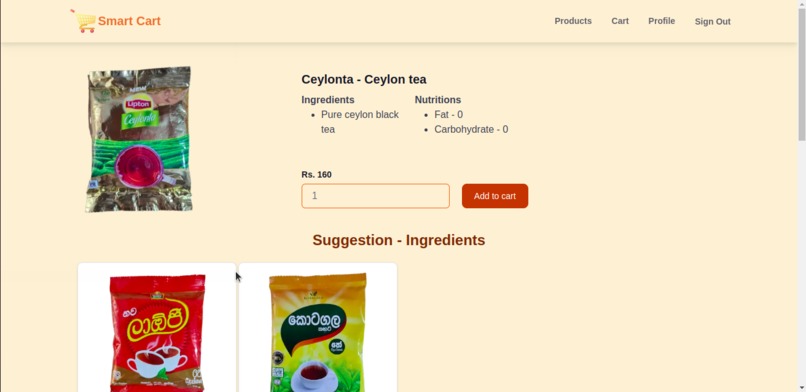
Products Detail Page
-
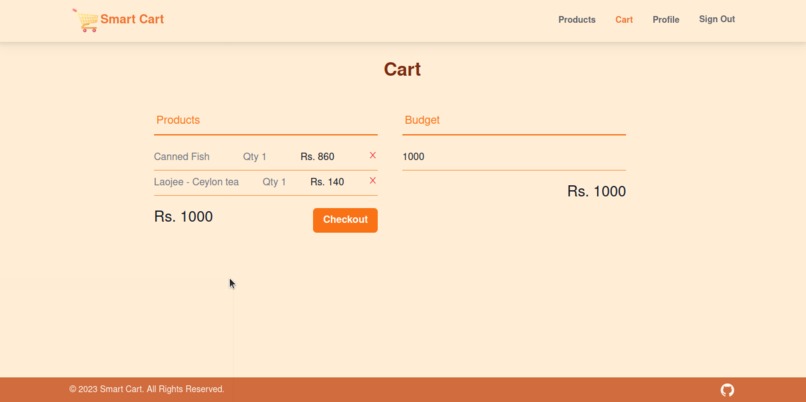
Cart Page
-
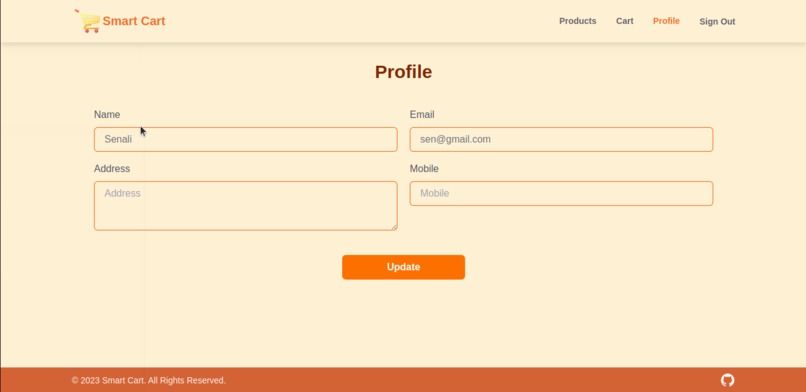
Profile Page
-
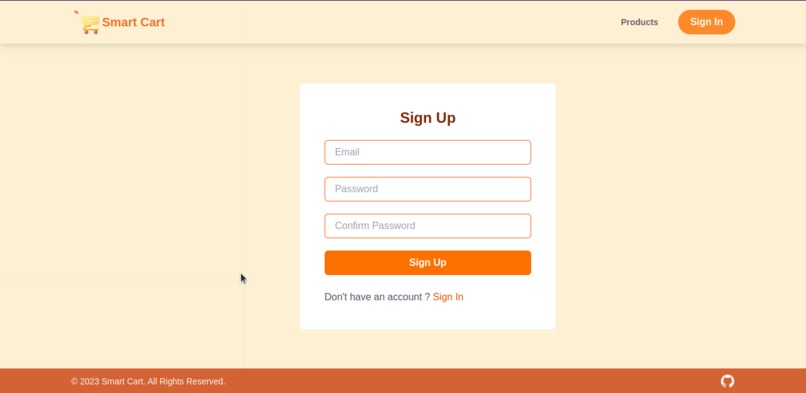
Signup Page


Inspiration
Many individuals may have struggled with staying within a budget while grocery shopping or finding healthy options. Studies have also shown that consumers often have a hard time making healthy choices while grocery shopping and may be more influenced by marketing and packaging than by nutritional information. A smart shopping cart app can serve as a solution to these problems by providing shoppers with easy access to relevant information and personalized suggestions while shopping.
What it does
A smart shopping cart application would essentially function as a personal shopping assistant that helps shoppers make better-informed decisions while they are shopping. The app would use use a database of products to show the nutritional information, ingredients, and prices of the products. The smart shopping cart application would provide shoppers with an easy way to access relevant information and personalized suggestions while shopping, helping them to make better-informed decisions about the products buy.
How we built it
We created this application using NextJS, Tailwind CSS, and Chakra-UI. We've incorporated a products and product details feature to showcase assist healthy and quality products. Cart feature assist customer in budgeting. On the technical side, we've used nextjs feamework and mongodb store data. We've designed Smart Cart in such a way that it helps shoppers to make better-informed decisions while they are grocery shopping.
Challenges we ran into
Building a smart shopping cart application would likely involve several challenges such as data collection, product information display, suggestions and recommendations, budget and , user interface design, and testing. Data collection involves gathering and organizing accurate and up-to-date product information, nutritional information, ingredients, and prices, into a database which can be difficult and time-consuming.
Accomplishments that we're proud of
Overall, I would likely be proud of several accomplishments such as creating a solution that addresses a real problem in the market, developing reliable and accurate features, designing a user-friendly interface, creating personalized suggestions, tracking budgets and efficiently storing and retrieving data, thoroughly testing the application, and successfully deploying it to the desired platform. Also be proud of the positive impact of the solution can have on the environment.
What we learned
During the development of a smart shopping cart application, I would likely learn several things such as the importance of collecting and organizing accurate product information, the technical aspects of developing a reliable features, the challenges and considerations involved in creating personalized suggestions, the importance of testing and user research throughout the development process, and the impact of technology on the way we shop and the importance of creating sustainable solutions.
What's next for Smart Cart
Once a smart shopping cart application is developed and deployed, there are several things that can be done to continue improving and expanding the application. These include integrating the app with other platforms, adding more products to the database, incorporating machine learning algorithms to personalize suggestions, providing a way for users to share their shopping list, adding more features such as recipe suggestions. Overall, the goal would be to continue gathering feedback from users and using that feedback to improve and expand the application, making it more useful, convenient, and valuable for shoppers.
Built With
- chakraui
- mongodb
- nextjs
- react
- tailwind
- typescript

Log in or sign up for Devpost to join the conversation.