-
-
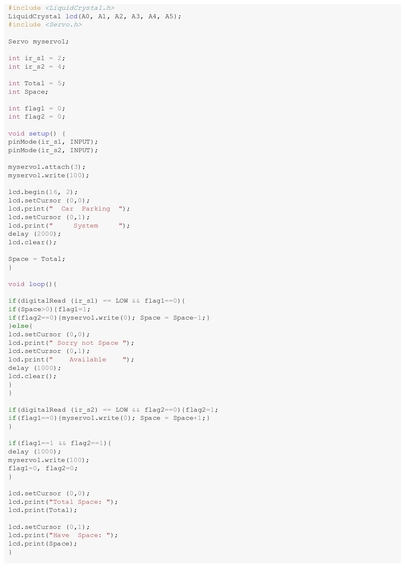
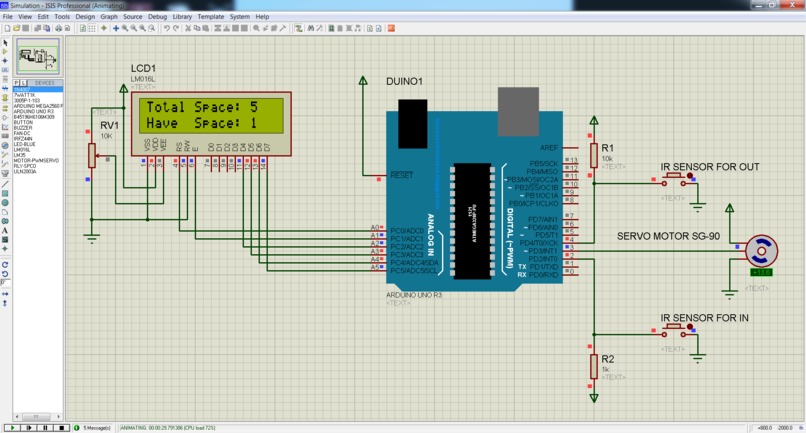
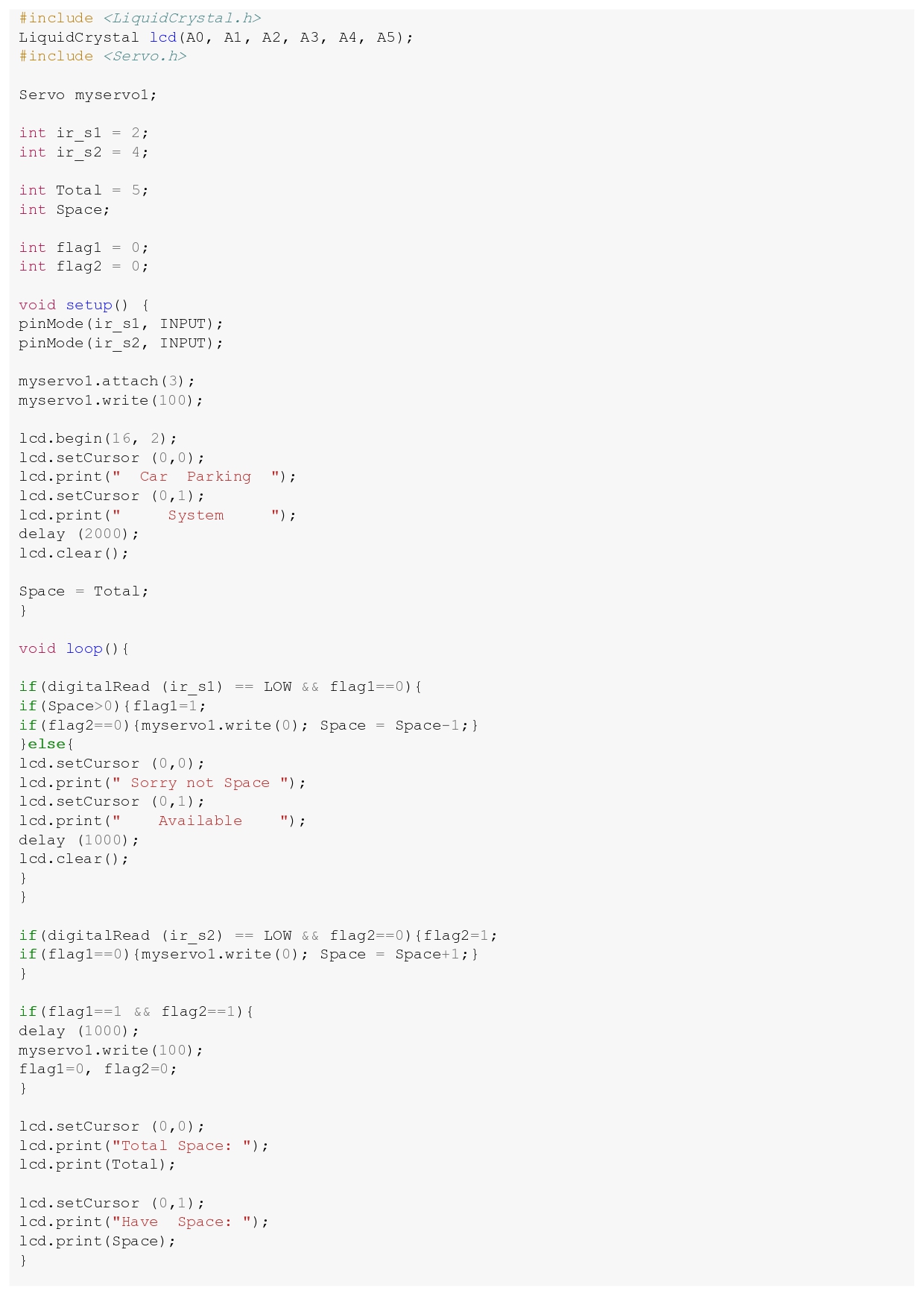
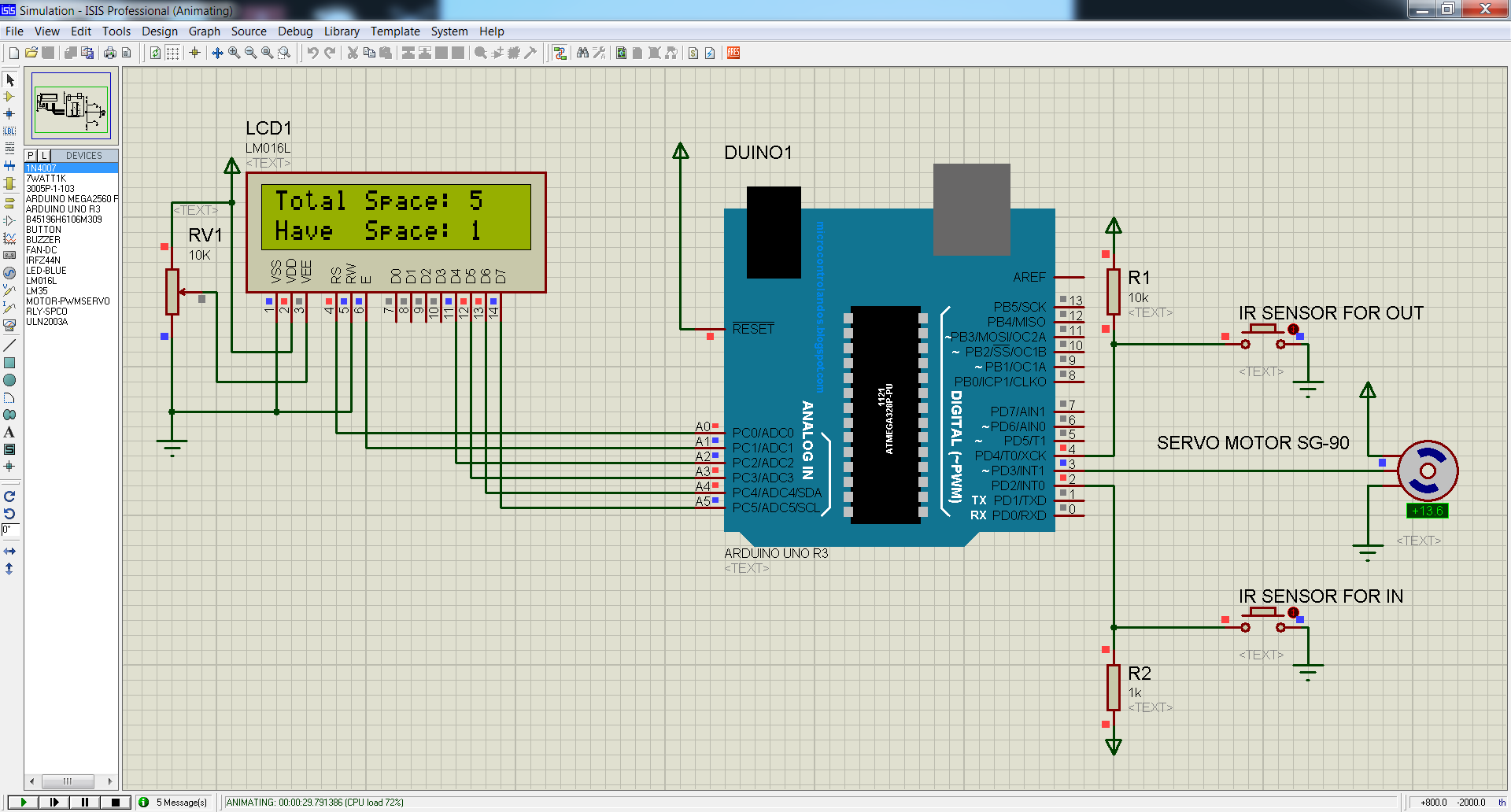
executed code for smart car parking system using iot
-
Inspiration
The inspiration for developing a smart car parking system came from witnessing the daily frustration and inefficiency faced by drivers in urban areas. The endless circling in search of a parking spot contributes to traffic congestion, environmental pollution, and unnecessary stress. Recognizing the potential of IoT to transform this scenario, we were motivated to design a solution that could simplify parking, save time, and reduce urban traffic issues.
What it does
A Smart Car Parking System using IoT optimizes urban parking by providing real-time space availability, navigation assistance, and reservation capabilities through an app, reducing search times and congestion.
How we built it
Planning and Research: We began with thorough research on existing parking solutions and the latest IoT technologies. We identified the key features our system needed, such as real-time space availability, mobile app integration, and secure payments. Hardware Development: We selected IoT sensors (e.g., ultrasonic, infrared) to detect vehicle presence and microcontrollers for data transmission. These sensors were installed in parking spaces to gather real-time data. Software Development: We developed a cloud-based platform to process and store data from the sensors. A mobile application was built to provide users with real-time parking information, reservation capabilities, and payment options. Integration: The hardware and software components were integrated to ensure seamless communication between sensors, the cloud platform, and the mobile app. Testing and Deployment: The system was tested in controlled environments before being deployed in a real-world setting. We gathered user feedback to refine the system further.
Challenges we ran into
Sensor Accuracy and Placement: Ensuring accurate vehicle detection and choosing optimal sensor placement were initial hurdles. We had to fine-tune sensor calibration and experiment with different installation angles. Data Management: Handling large volumes of data and ensuring real-time processing without delays posed significant technical challenges. We optimized our data processing algorithms and cloud infrastructure to address this. Connectivity Issues: Maintaining consistent and reliable connectivity between sensors and the cloud was difficult, especially in areas with poor network coverage. We implemented fallback mechanisms and optimized our communication protocols.
What we learned
The development of the Smart Car Parking System using IoT was a transformative project that taught us the intricacies of IoT integration, real-time data processing, and user-focused design. Despite the challenges, the satisfaction of creating a solution that addresses a common urban problem made the journey incredibly rewarding.


Log in or sign up for Devpost to join the conversation.