-
-
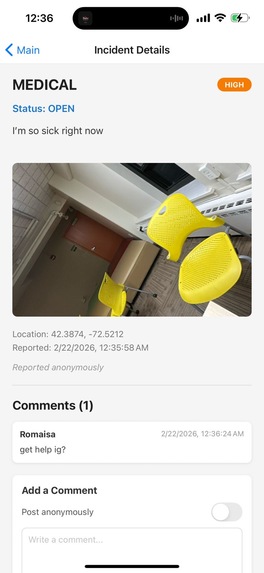
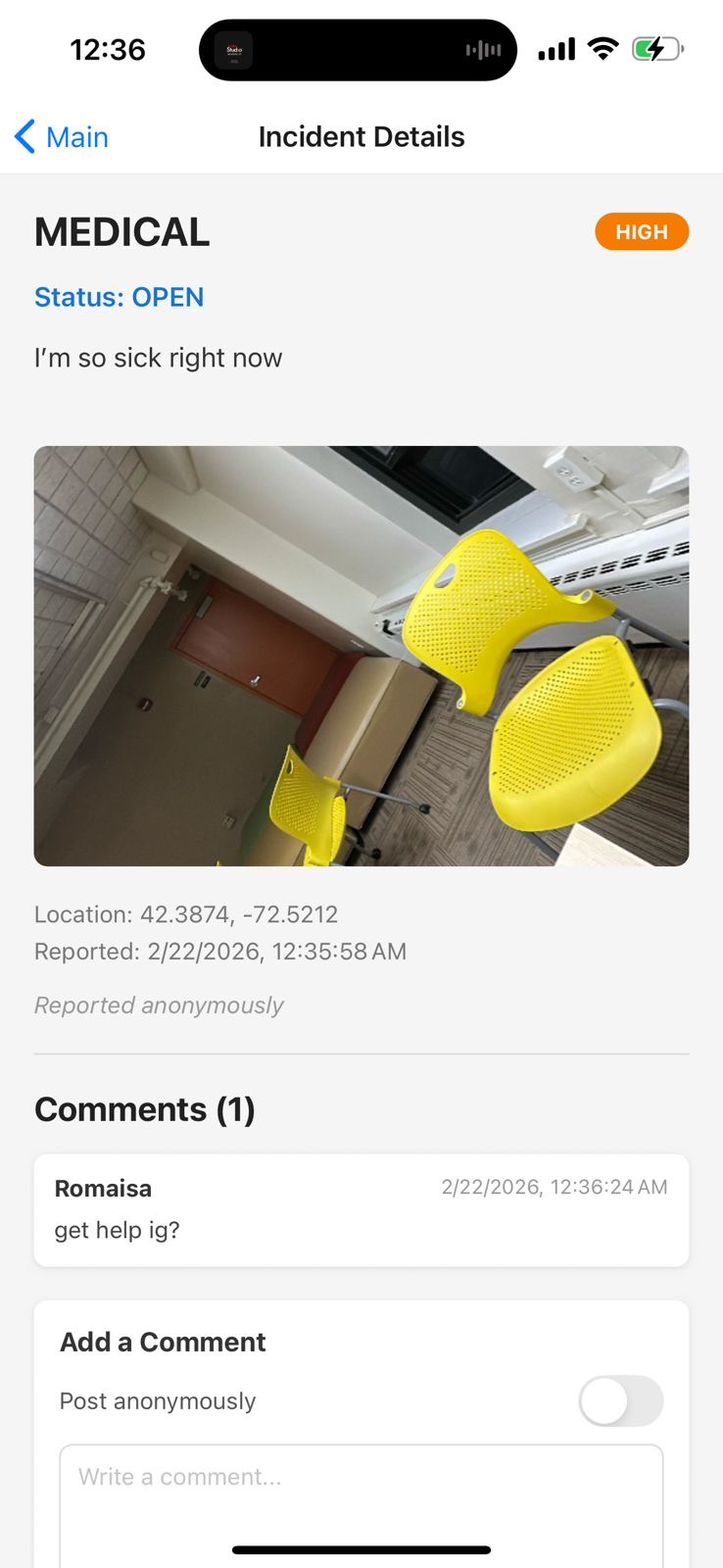
Report incident
-
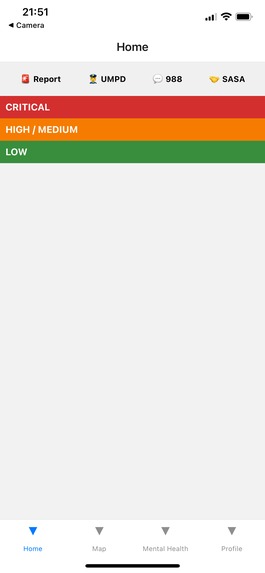
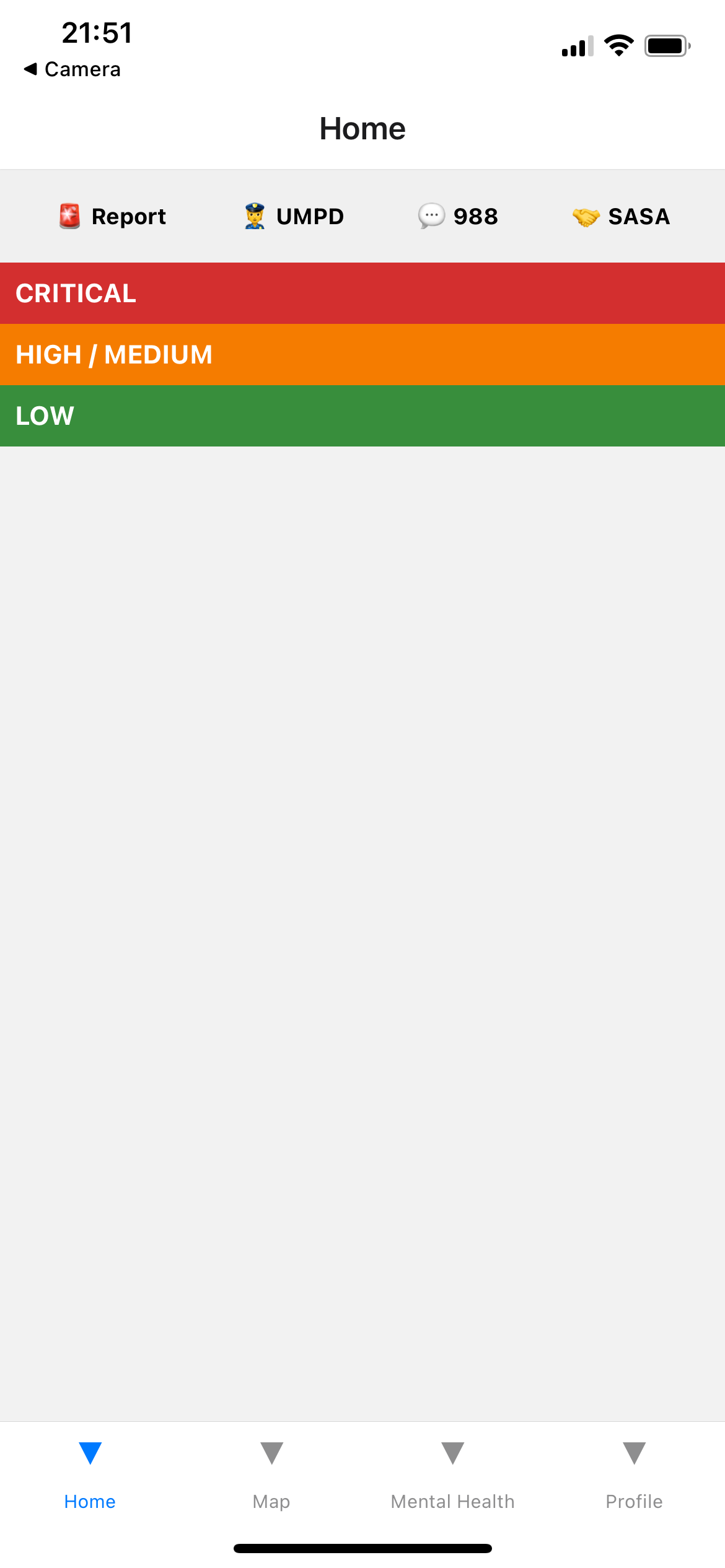
Report main page
-
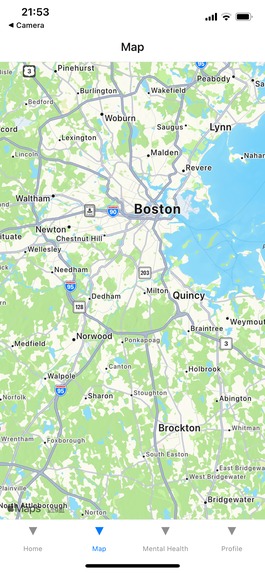
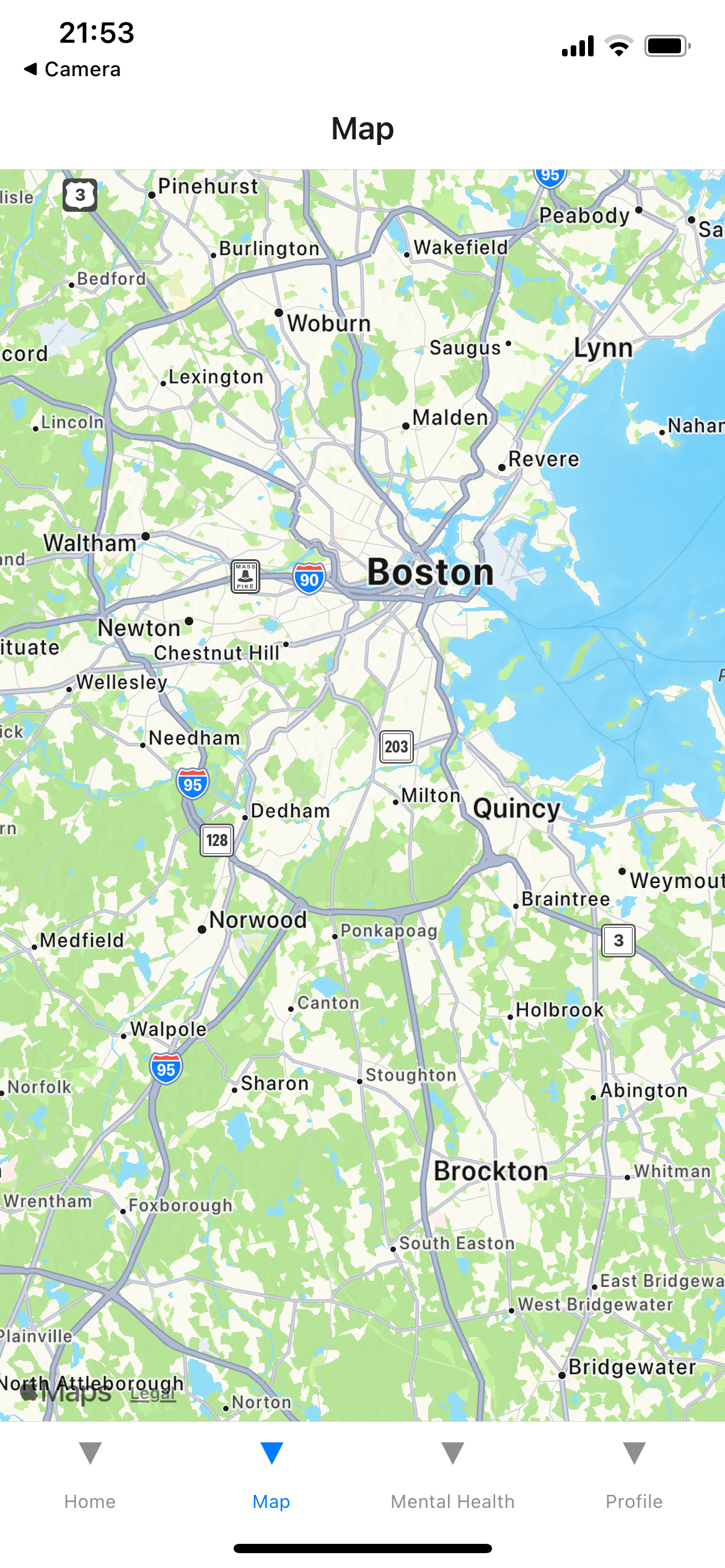
Maps
-
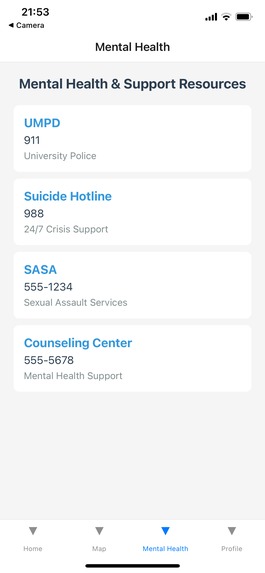
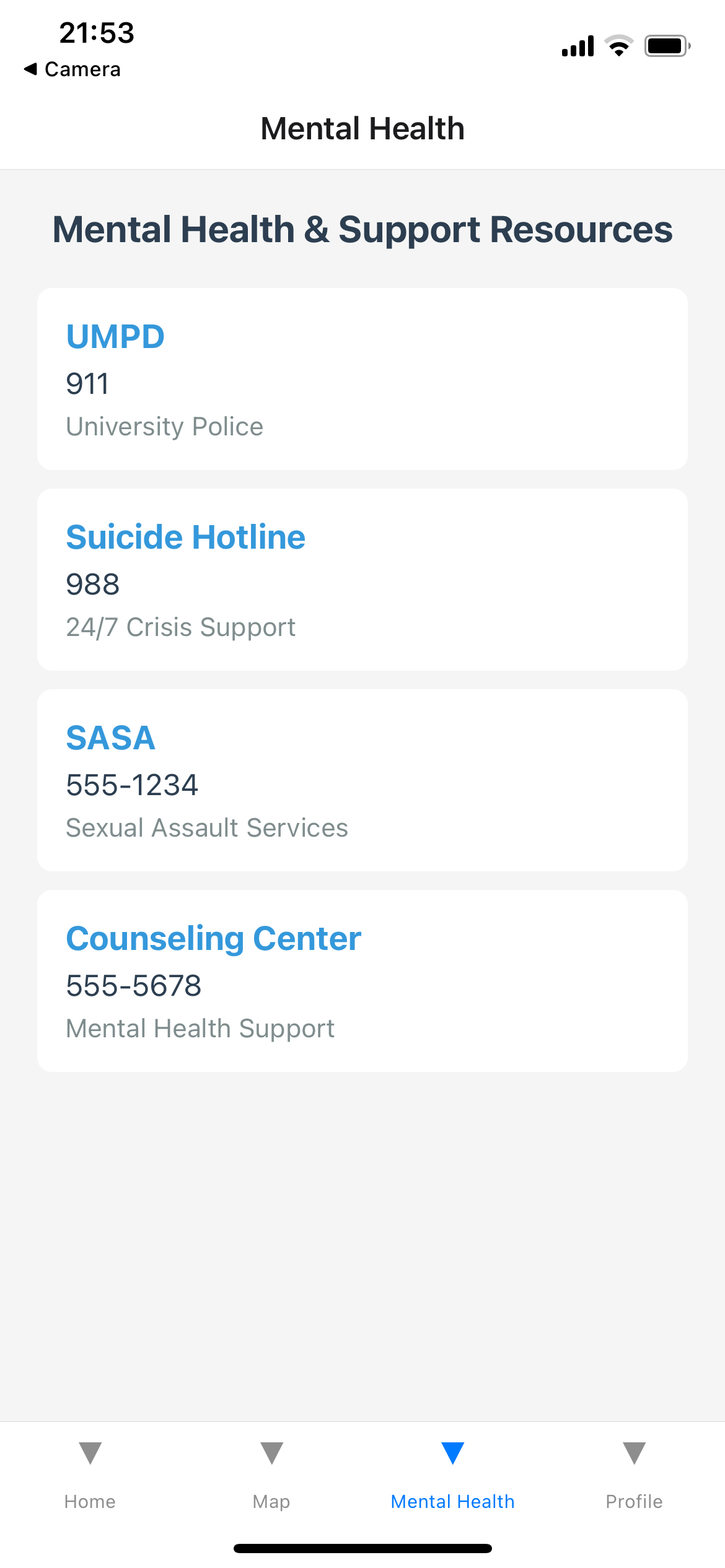
Mental Health and Support Resources
Inspiration
We wanted to improve campus safety by making emergency reporting fast, accessible, and secure. Many students hesitate to report incidents due to fear or lack of anonymity. Our goal was to build a real-time system that encourages responsible reporting while protecting users.
What it does
Smart Campus is a mobile emergency response app where students can report incidents anonymously or with their ID, capture live photos (camera-only), and automatically share their location.
Critical events like ICE, Shooting, and Fire trigger instant push notifications and real-time alerts. The app also includes a live map, urgency-based news feed, and a mental health support corner with one-tap emergency calling.
How we built it
Backend: Spring Boot, PostgreSQL, JWT authentication, WebSockets, Expo Push API
Frontend: React Native (Expo), React Navigation, Maps, Axios, STOMP WebSocket
We built it as a full-stack system with real-time communication and role-based access control.
Challenges we ran into
- Implementing reliable WebSocket real-time updates
- Managing secure push notifications
- Enforcing live camera-only image capture
- Protecting reporter identity while allowing authority access
Accomplishments that we're proud of
- Built a real-time full-stack emergency platform
- Integrated WebSockets and push notifications
- Delivered cross-platform support (iOS & Android)
- Designed scalable backend architecture
What we learned
- API-first design improves team efficiency
- Real-time systems enhance user responsiveness
- Security and privacy must be designed from the beginning
What's next for Smart Campus Emergency Response App
- AI-based severity prediction
- Predictive risk heatmaps
- Admin analytics dashboard
- University SSO integration
- Multi-campus deployment
Built With
- expo-push-notifications
- heroku
- java
- jwt
- postgresql
- react-native-(expo)
- render
- spring-boot
- websockets


Log in or sign up for Devpost to join the conversation.