Smart Campus App
Inspiration
University students rely on multiple disconnected platforms to manage their academic lives—LMS portals, email, messaging apps, calendars, and social media. While each tool serves a purpose, the overall experience is fragmented, forcing students to spend more time managing information than actually learning.
Our goal was to rethink the student experience by designing a single intelligent ecosystem where academics, campus services, productivity, and opportunities work together seamlessly. Rather than adding another platform, we wanted to reduce cognitive load through thoughtful UX and AI-powered assistance.
What it does
Smart Campus App is an AI-powered student ecosystem that centralizes the entire campus experience.
Students can:
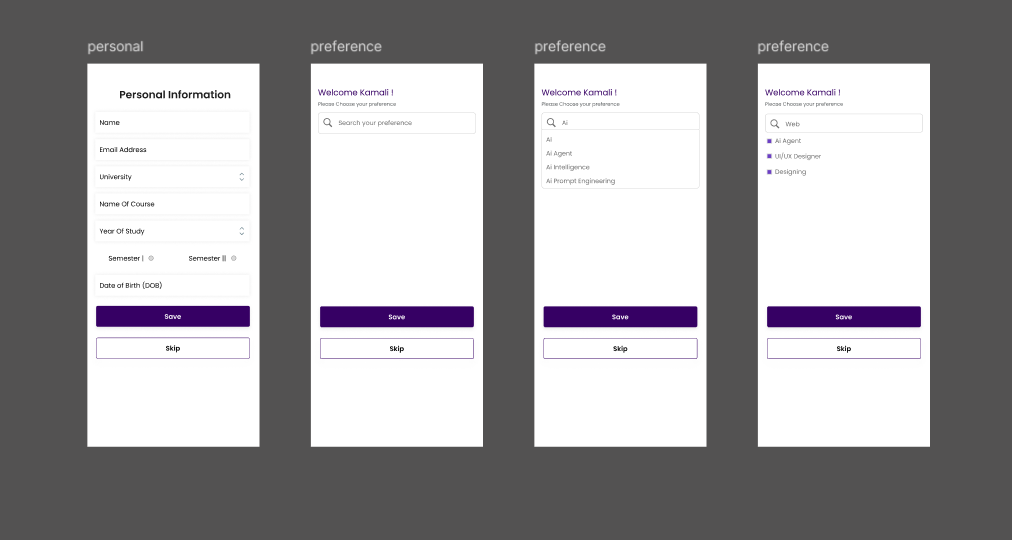
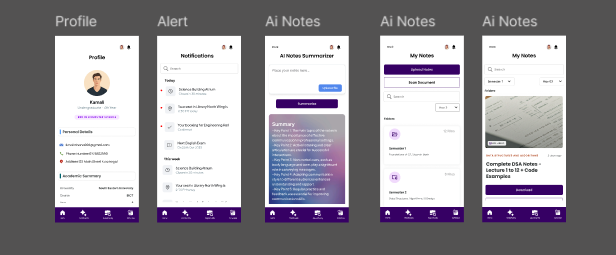
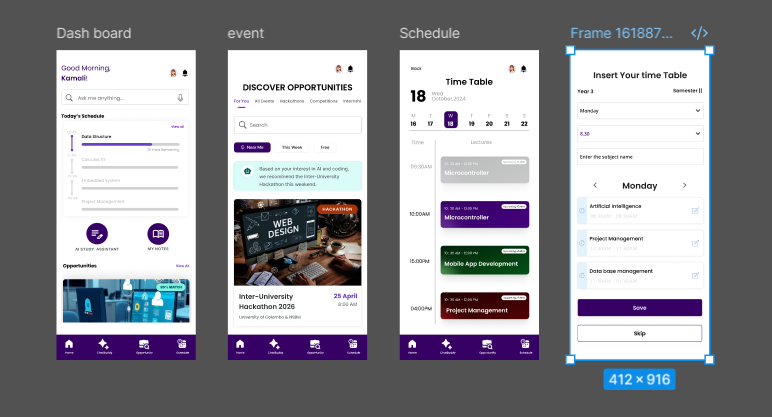
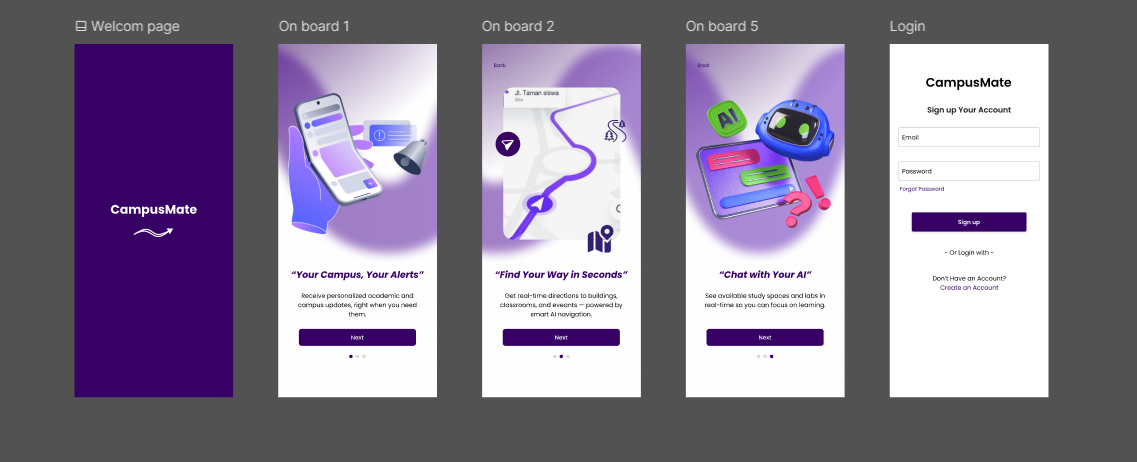
- Access personalized academic updates and notifications
- Navigate the campus with an interactive smart map
- Find available study spaces and campus facilities
- Organize schedules with an intelligent planner
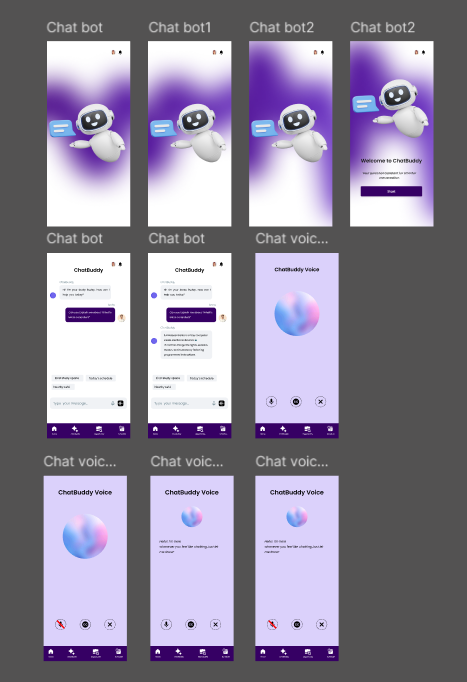
- Chat with an AI academic assistant for study support
- Ask questions directly from lecture PDFs using AI-powered document Q&A
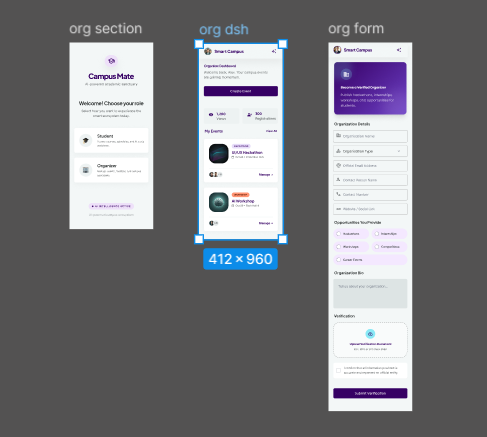
- Discover internships, competitions, workshops, and campus opportunities tailored to their interests
- Store academic resources securely in the cloud
Instead of searching across multiple platforms, students receive the right information at the right time.
How we built it
The project began with UX research to understand the daily challenges students face throughout their academic journey.
Our design process included:
- User interviews and student surveys
- Journey mapping and pain point analysis
- Information architecture and feature prioritization
- Wireframing and rapid prototyping
- High-fidelity interface design in Figma
- AI interaction design for conversational academic support and personalized recommendations
Rather than designing around features, we designed around student workflows, ensuring every interaction feels contextual and effortless.
Challenges we ran into
The biggest challenge wasn't deciding what features to build—it was deciding what not to build.
Students consistently reported feeling overwhelmed by existing platforms, so introducing more functionality risked increasing complexity instead of reducing it.
Other key challenges included:
- Prioritizing features that deliver real value
- Designing AI interactions that feel helpful rather than intrusive
- Balancing personalization with privacy
- Creating an interface that remains simple despite supporting multiple use cases
These challenges pushed us to embrace a context-first design philosophy, where relevant information appears only when users need it.
Accomplishments we're proud of
- Designed a unified AI-powered student ecosystem instead of another campus management app
- Created a clean, scalable user experience that reduces information overload
- Integrated AI in meaningful ways to support learning, planning, and opportunity discovery
- Built a solution that addresses real student pain points through research-driven design
What we learned
This project reinforced that great UX isn't about adding more features—it's about reducing friction.
Through research and iterative design, we learned:
- Simplicity drives engagement
- Personalization increases relevance
- AI should reduce effort, not create additional complexity
- Understanding user behavior is more valuable than assuming user needs
Most importantly, we learned that students don't have an information problem—they have a fragmentation problem.
What's next
Our next step is transforming the concept into a fully functional product by integrating real university systems.
Future plans include:
- AI-powered study recommendations and academic planning
- Predictive insights for assignment deadlines and workload management
- Real-time integration with LMS, library, cafeteria, and campus services
- Personalized opportunity recommendations using machine learning
- Pilot testing with university students to validate usability and measure impact
Our long-term vision is to build an intelligent student ecosystem that helps students spend less time managing systems and more time learning.
Built With
- campus
- figma
- uiux


Log in or sign up for Devpost to join the conversation.