Inspiration
Our inspiration came from a tiny spark of an elaborate idea during a long car ride to LA. We were clueless about what to make and when we decided to start listing ideas even though they were considered basic or impossible. One of the ideas we generated was a smart garbage bin, which originally had one feature of weighing mass, but later decided we should implement AI to make humans' lives easier!! Our idea was born from that, now this idea was not just useful for those who are lazy and don't want to take the extra effort to recycle, but also to collect data for the entire institute and try and reduce waste and increase awareness.
What it does
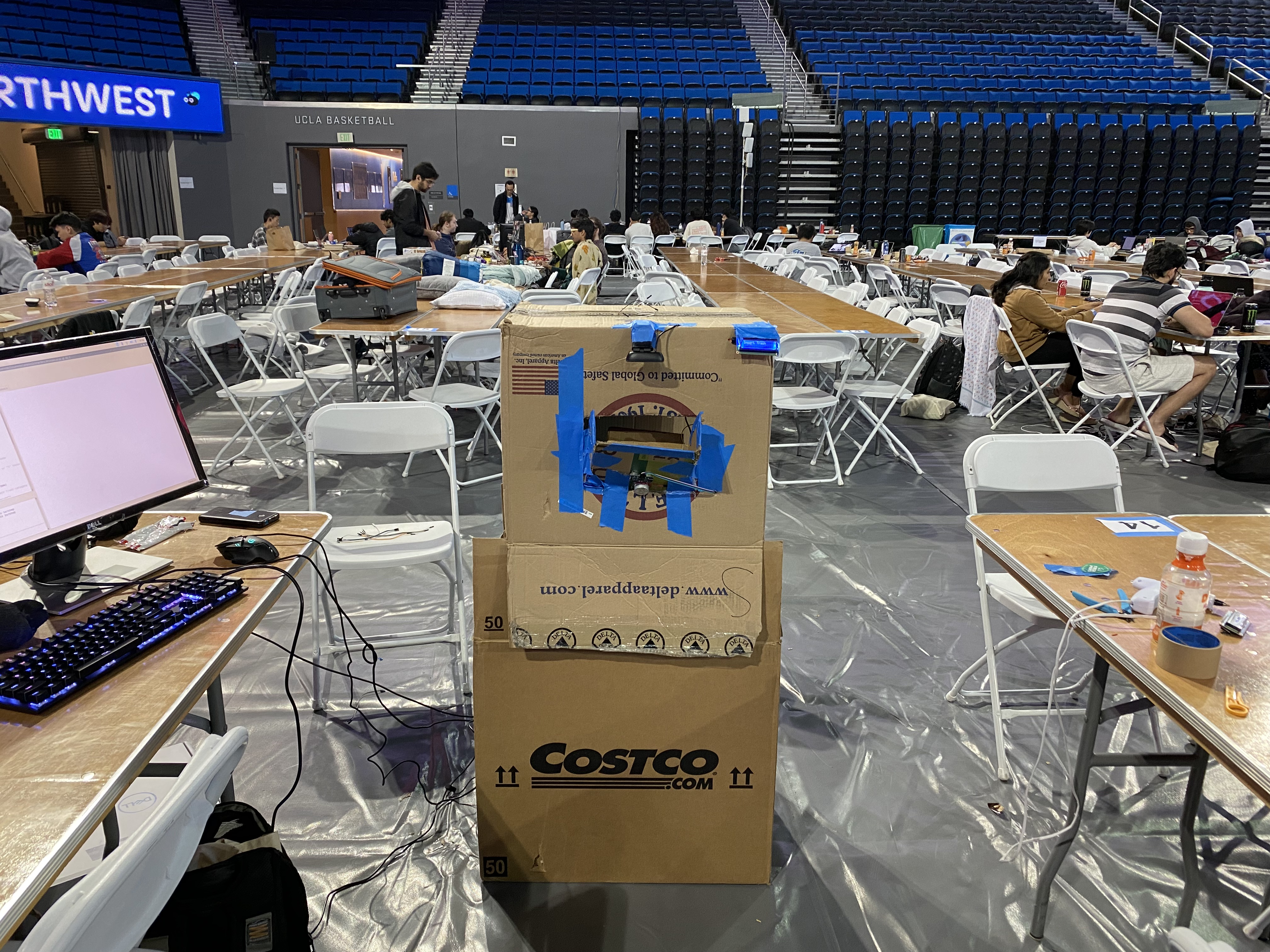
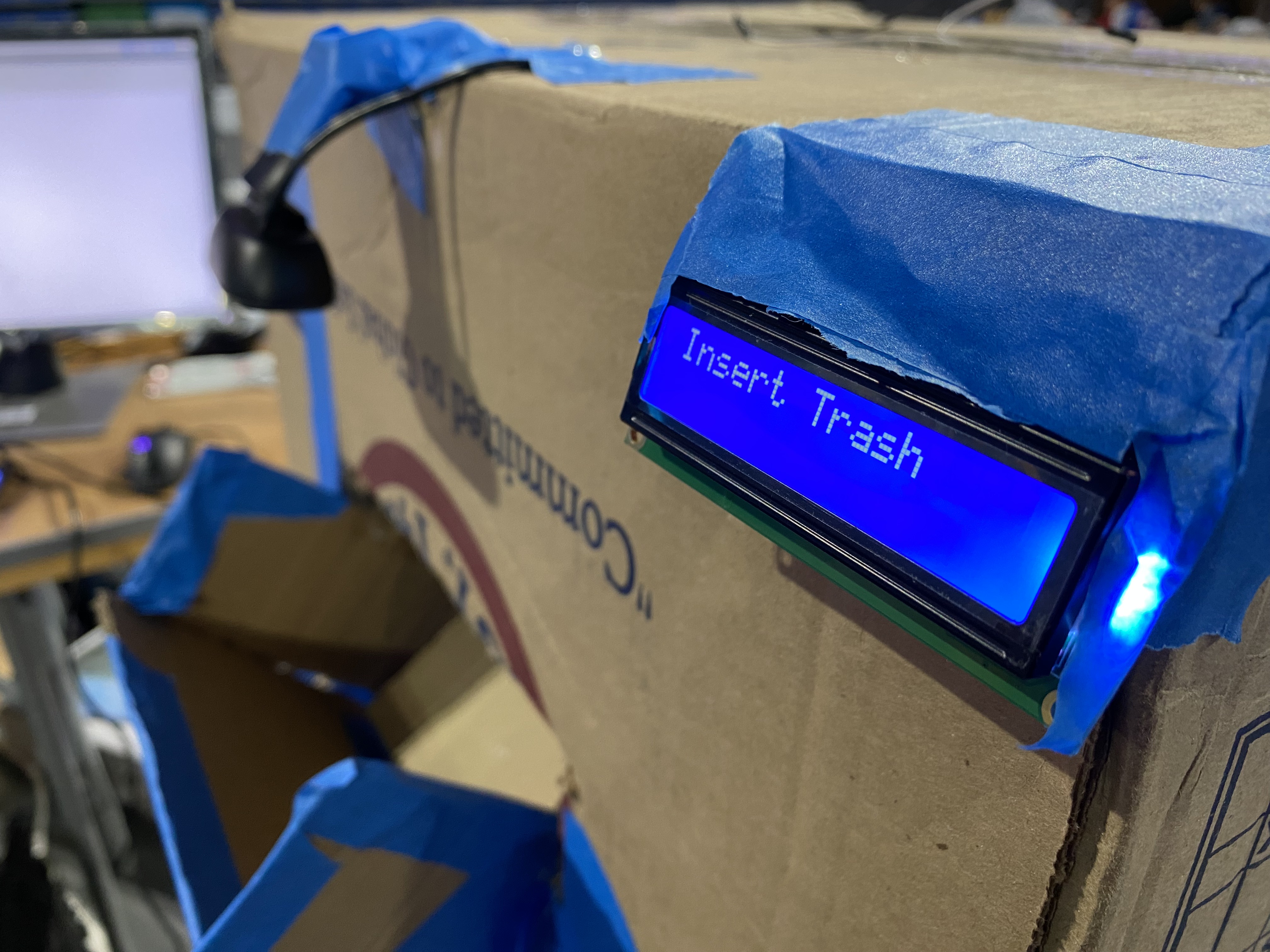
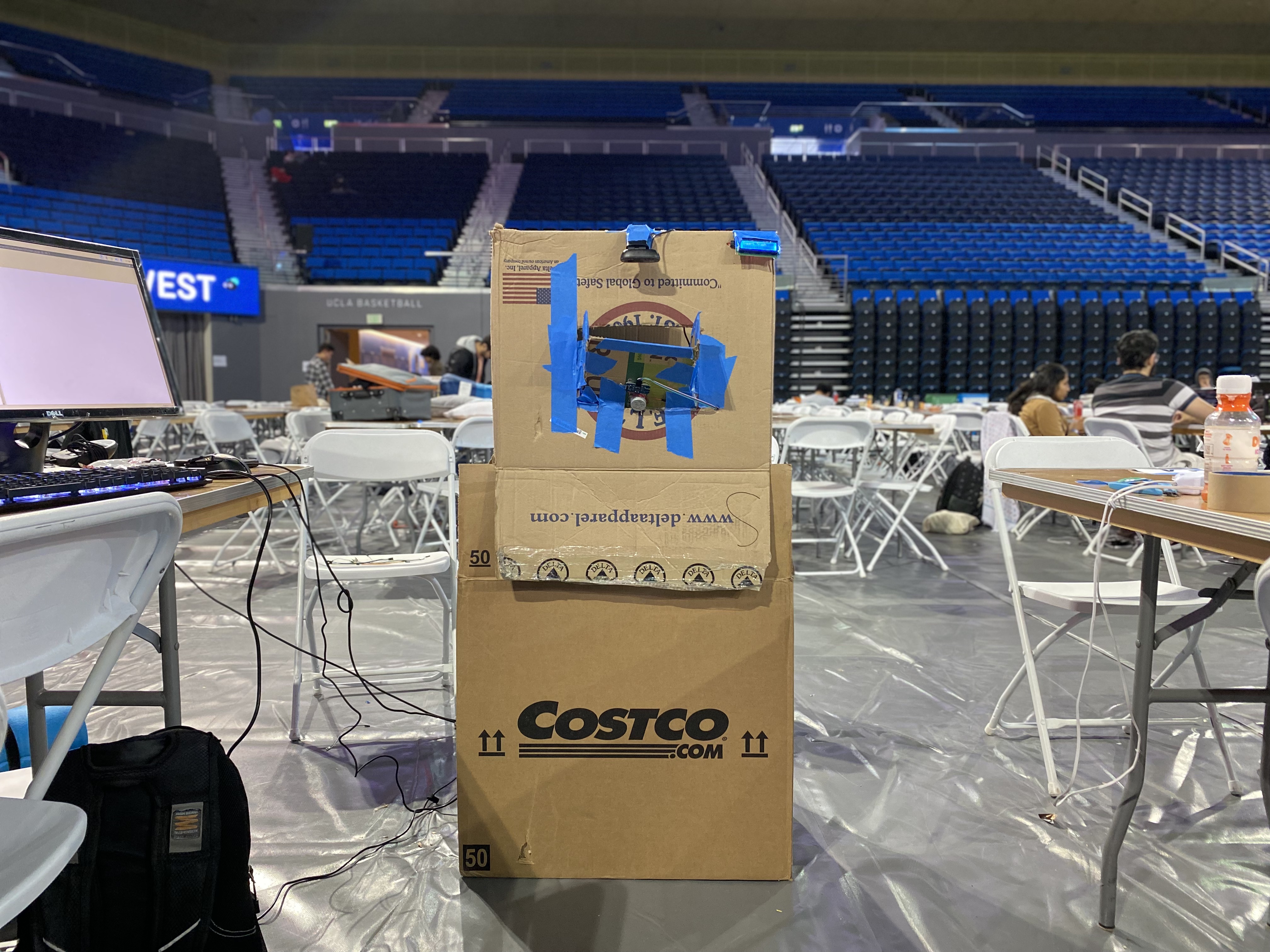
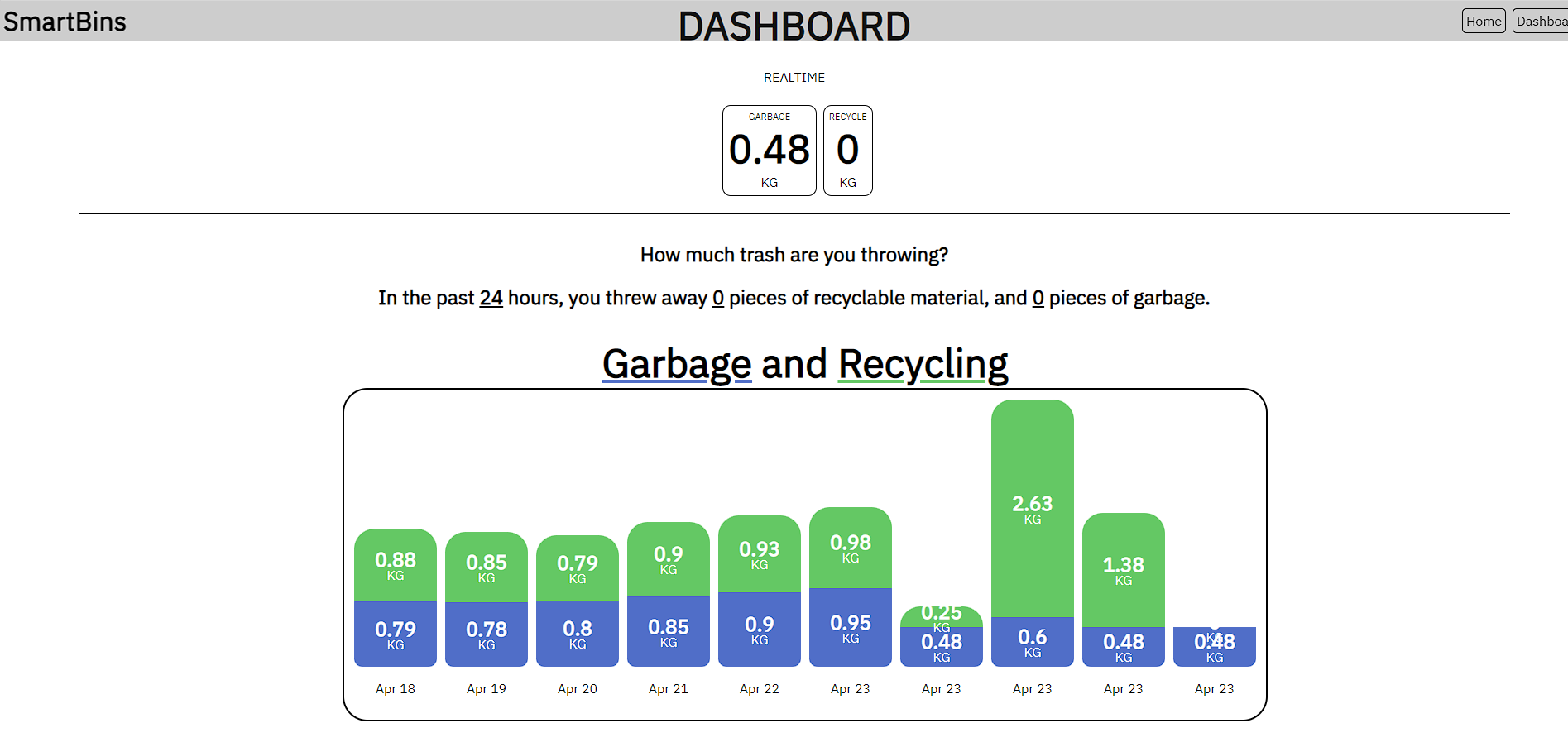
This product can use the webcam and waste identifying technology to identify if any object is "Garbage" or "Recycled". The corresponding trash type will go in its corresponding smart bin later to be weighted and analyzed. The third part of this project lies between the packaging and the wiring!
How we built it
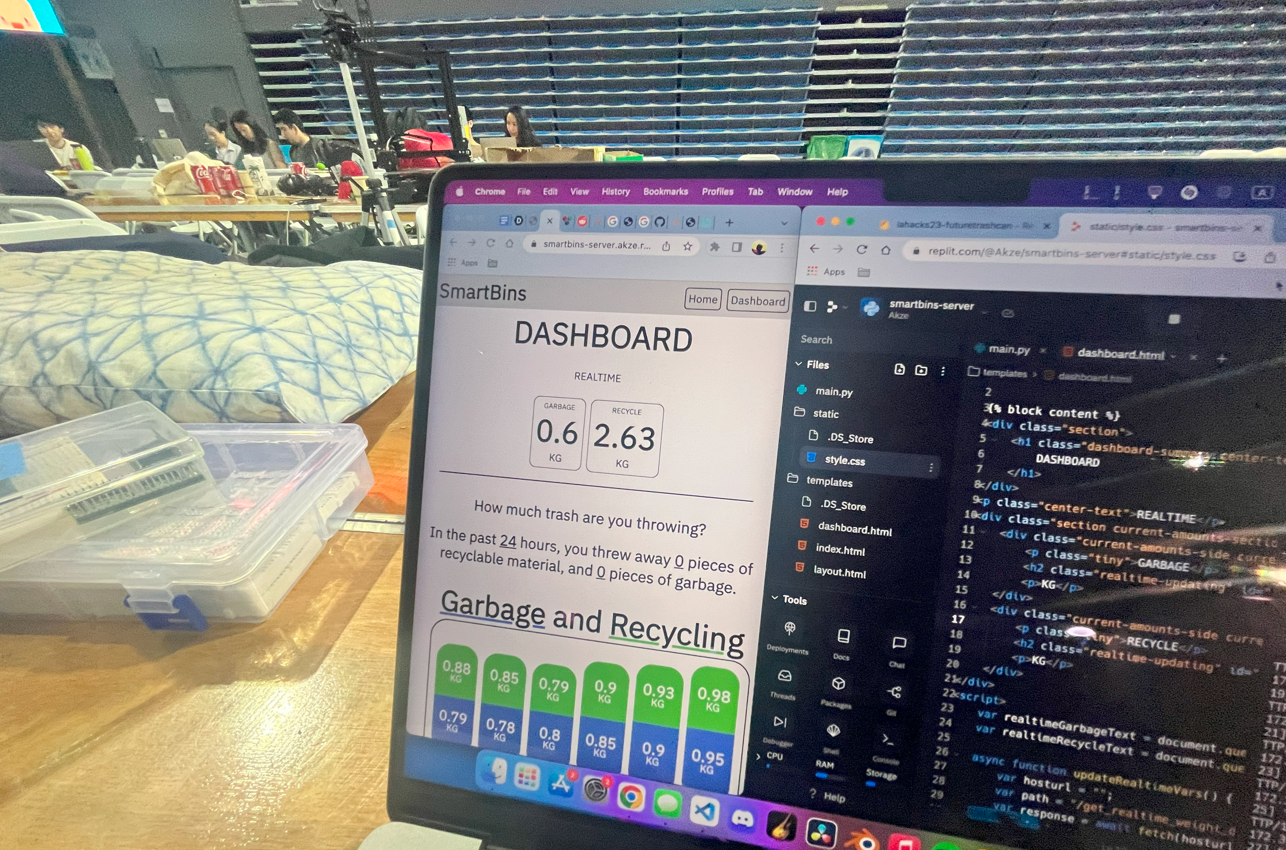
We divided the roles to make sure everyone played a part, while also doing what they were best at. The four groups were AI Identification, Hardware, Modelling & Building, and Web Design/Backend. This helped increase collaboration and also encouraged more ideas to be shared while also staying on task with finishing the assigned work. AI Identification is base of our project and it starts off by being trained for millions of test cases and analyzed based on certain similarities present. It is then classified as its corresponding trash type and dumped into the bin. Our hardware plays a major role in how our project was made and without it, our project would not have been the same. The first part of the hardware was a weighing scale, but since we didn't have a scale or sensor for it, we used physics laws like Hooke's law to calculate mass based on the elasticity. The second part of the hardware is the connection of the Raspberry Pi and the Arduino's numerous sensors within the SmartBins. Each function has a sensor linked to make it as efficient as possible and as eco-friendly as possible. The Modeling/Building was the feel of the project, which helped build a designated product and example. Some of the parts were the base, the box that holds the smart bins, a ramp for the trash to slide down, a flap to restrict it from going into the wrong hole, and a cover.
Challenges we ran into
We ran into many challenges over the past two days. At the start of the hackathon, finding ideas that met most of the requirements was very hard to do. Then, picking the criteria for our product became a challenge. Implementing that criterion is much harder, as the criteria tend to get very vague. Once those obstacles were overcome, the Raspberry Pi was being very inefficient and took too much work. Moving away from that was hard and with the time constraint, it was even harder. 5 hours before the deadline, we connected the last piece to the puzzle which was the AI.
Accomplishments that we're proud of
Hackathons are always about learning new topics, and ideas and working around problems. From learning how to experiment with Serial Communication to using AI, we each had a different struggle and a different accomplishment. From the Serial Communication not being connecting to connecting until you cannot forget. From the many models with many inaccuracies to a model that got trained using machine learning to achieve a 98% accuracy. From not going to the in-person hackathon to having first-hand experience and knowledge of everything you need to know in a hackathon. All of us have our accomplishments throughout the competition, but we all share one accomplishment, and that was making this project after many troubles and hardships.
What we learned
We learned quite a bit from this hackathon. We learned how to work with Serial Communication devices and interconnect them. We learned how to make a really accurate model to identify whether a piece of garbage is recyclable. We learned how to go through a hackathon together without a disaster. We learned how to connect the real world to AI. We learned skills that we will never forget as a team, accounting for everyone inside the team, too.
What's next for Smart Bins
We will bring in a better interface by manufacturing a steel prototype. Our plan is to roll this product out to any institutes that are looking their make their campus a greener & smarter place.


Log in or sign up for Devpost to join the conversation.