-
-
first
-
second
-
third
Inspiration
In today’s world, data is everywhere, but turning that data into meaningful action is a challenge. My inspiration came from observing small business owners who have sales data but lack the expertise to analyze it. I wanted to use Google Gemini to create a digital "Business Partner" that doesn't just show graphs but actually explains what the numbers mean and suggests how to grow the business.
What it does
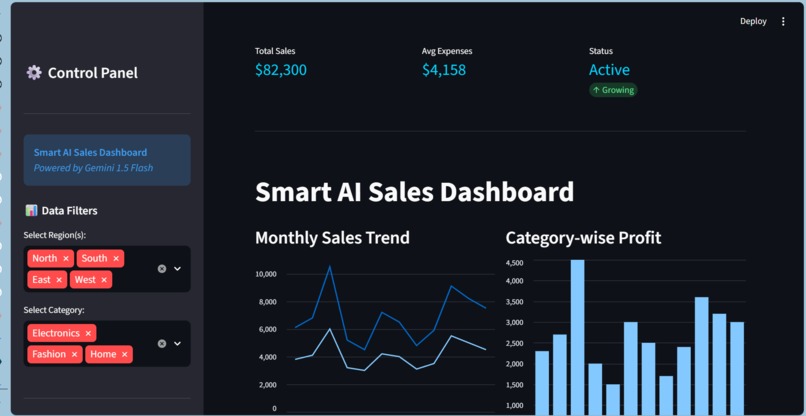
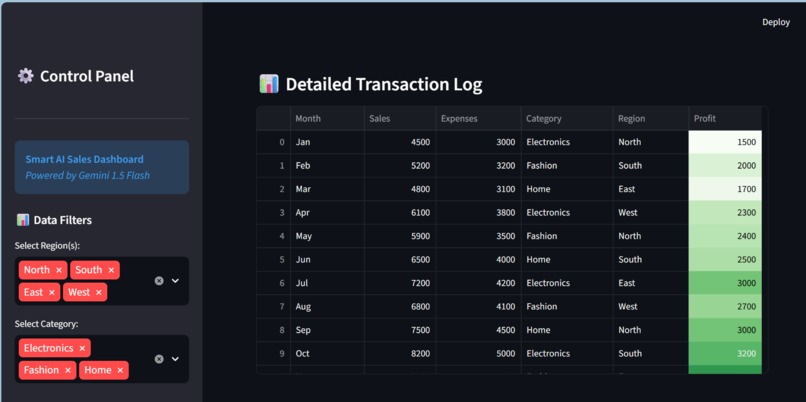
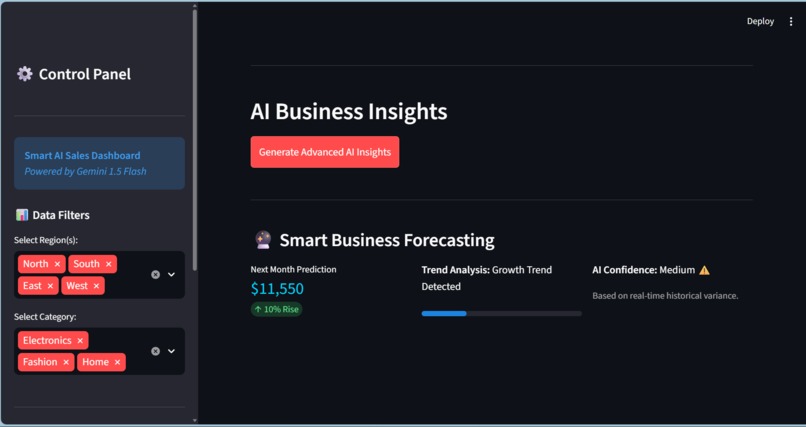
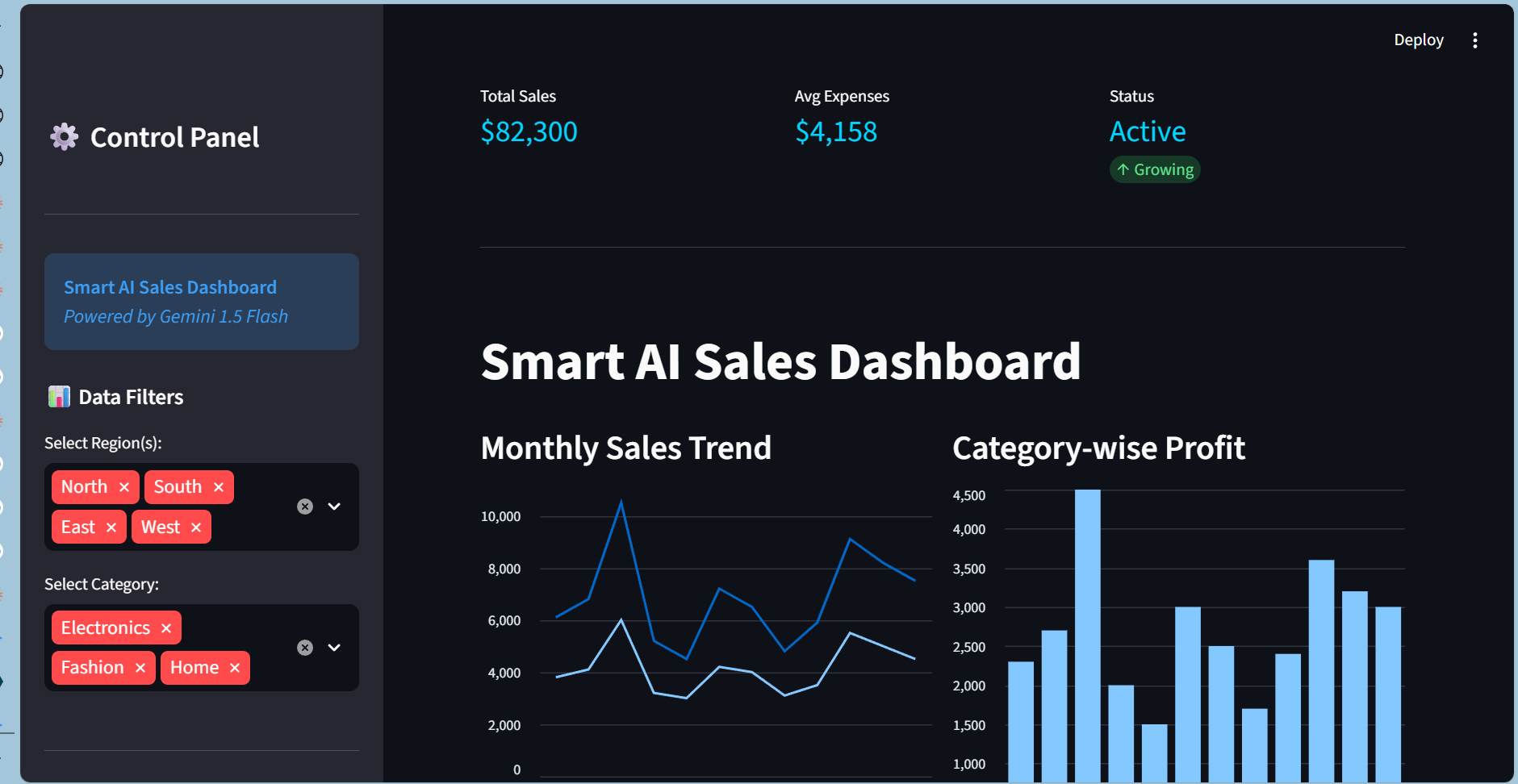
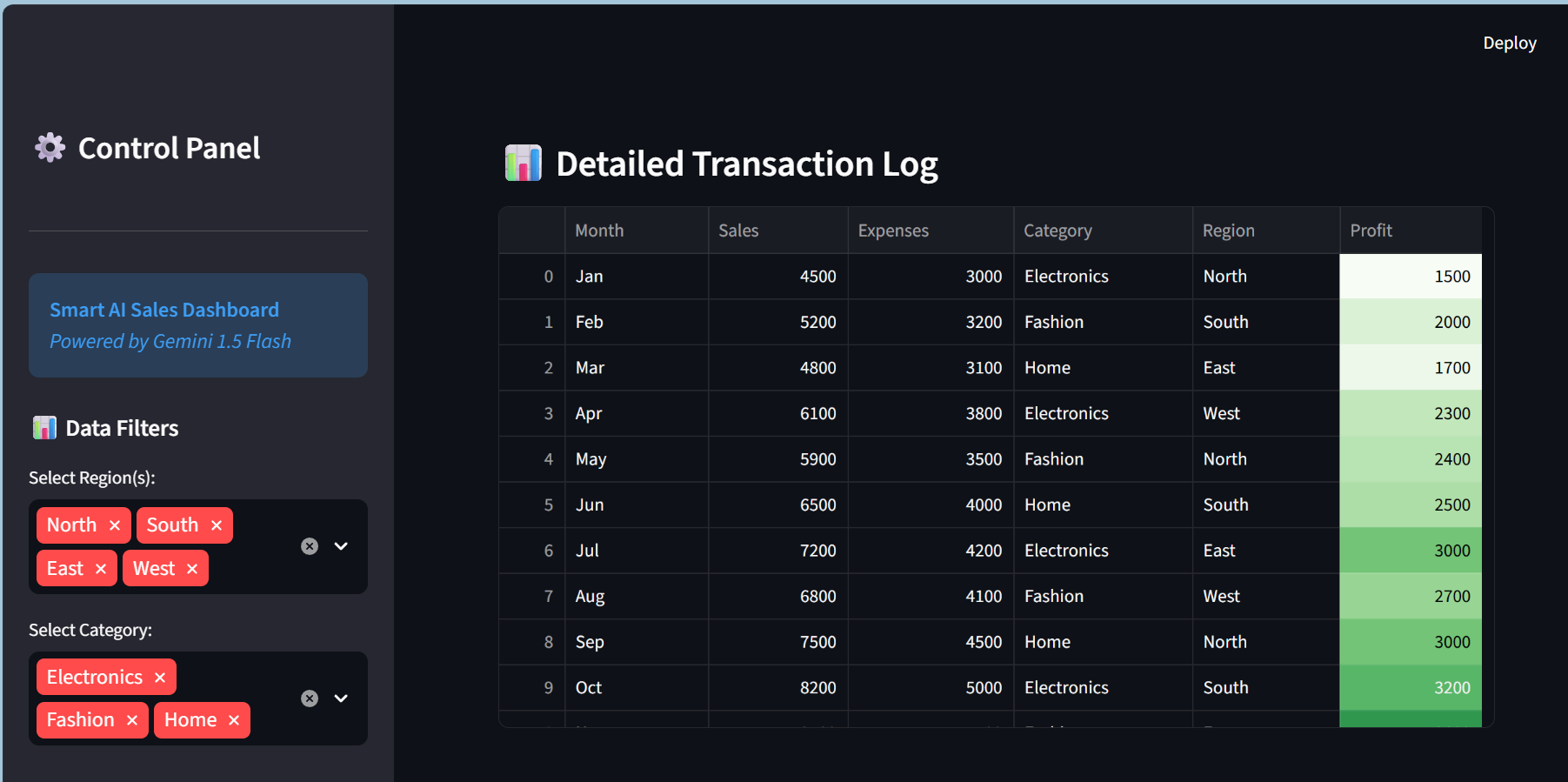
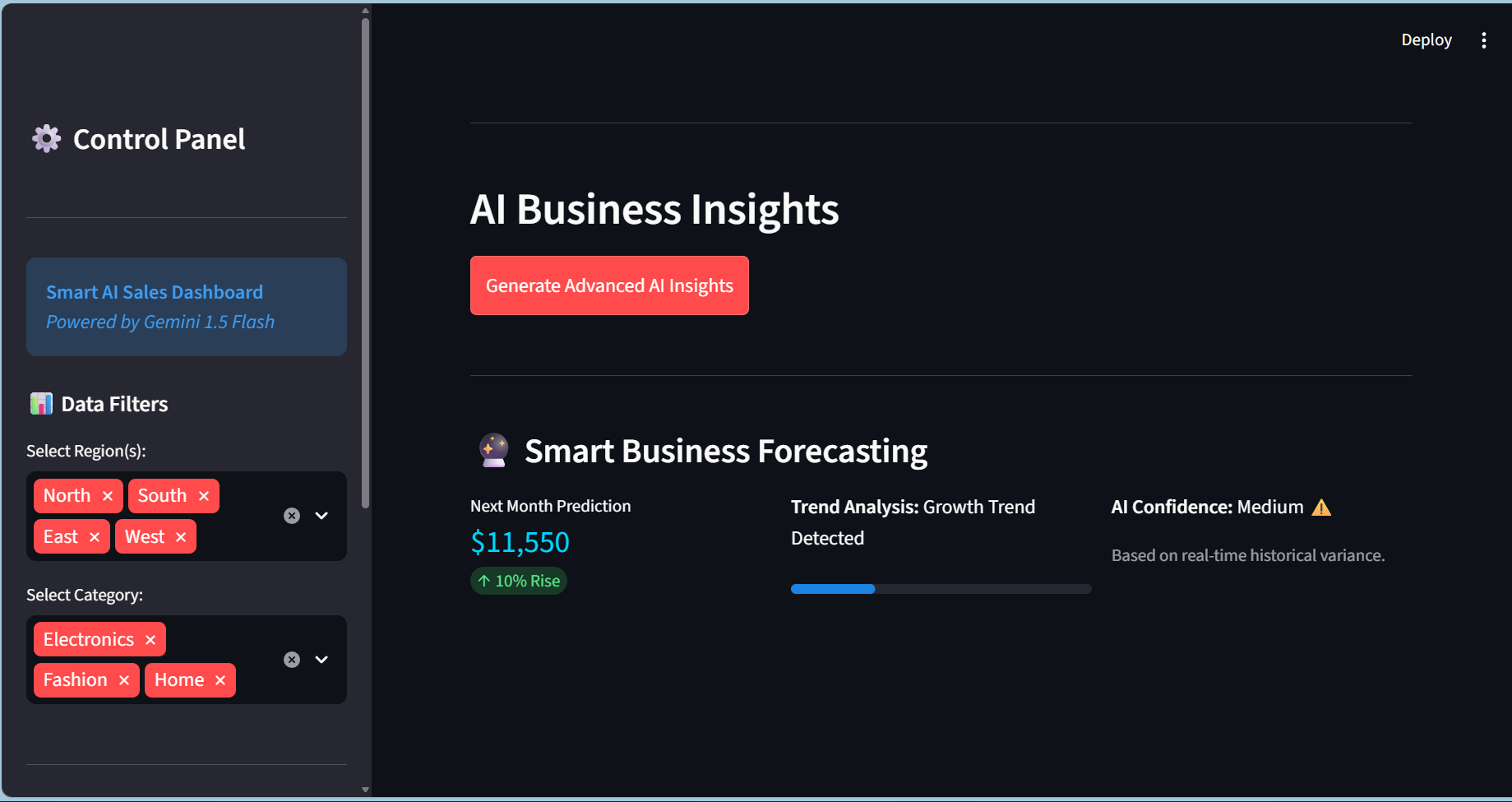
This dashboard processes sales data (CSV/Excel) and converts it into interactive visual charts. Its standout feature is the AI-Powered Insights engine. Powered by Gemini 1.5 Flash, it identifies hidden patterns in sales, analyzes the relationship between profit and expenses, and provides "Actionable Steps" for future growth.
How we built it
I built this project using the Python ecosystem:
Frontend: Developed using Streamlit for a clean, interactive user interface.
Data Processing: Utilized Pandas and Numpy for data cleaning and mathematical computations.
AI Engine: Integrated the Google Gemini API to generate intelligent, context-aware business insights.
Security: Implemented Python-dotenv and .env files to ensure API keys are managed securely and never hardcoded.
Challenges we ran into
The biggest challenge was Security Management. Early in development, my API keys were accidentally exposed on GitHub, which was quickly detected by security tools. I had to learn how to purge Git history and properly use .gitignore. Additionally, fine-tuning the AI prompts to provide accurate, business-focused insights required significant trial and error.
Accomplishments that we're proud of
I am proud of building a Smart AI Dashboard that doesn't just display data—it "speaks" it. As a student, successfully integrating a state-of-the-art Large Language Model (LLM) like Gemini into a functional application while learning the complexities of API security and environment management is a major milestone for me.
What we learned
This journey provided invaluable lessons:
API Security: The critical importance of .gitignore and environment variables in professional development.
Prompt Engineering: How to structure queries to get precise, professional responses from an AI.
Technical Troubleshooting: Managing Python virtual environments and resolving dependency conflicts.
What's next for "Smart AI Sales Dashboard"
My goal is to evolve this into a high-level, real-world application. The roadmap includes:
Multi-user Authentication: To allow different businesses to have private accounts.
Predictive Forecasting: Using machine learning to predict future sales trends.
Direct Database Integration: Connecting the dashboard directly to SQL databases for live, automated updates.

Log in or sign up for Devpost to join the conversation.