-
-
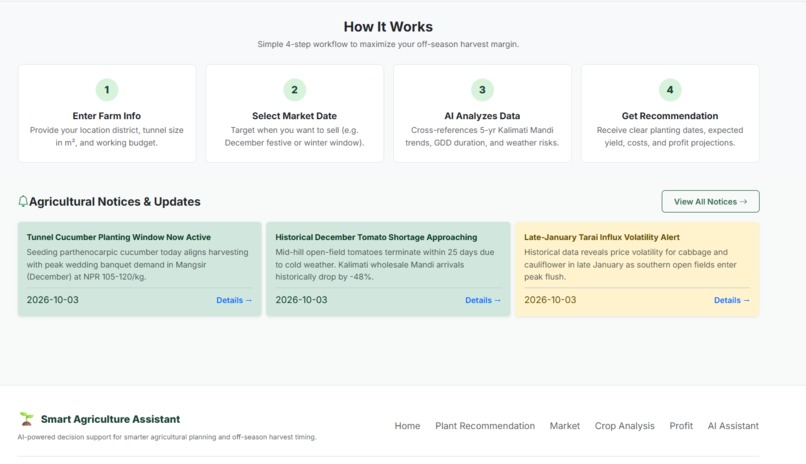
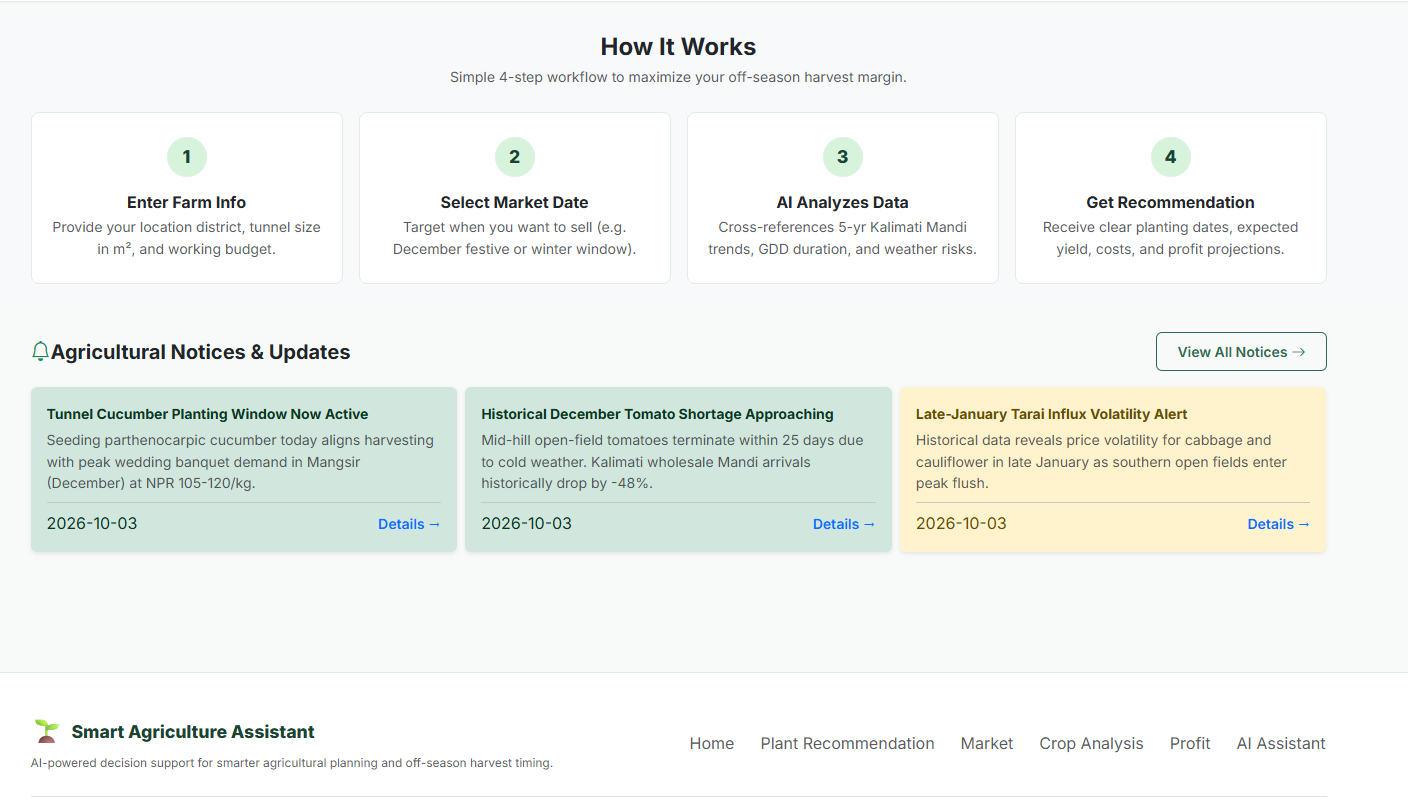
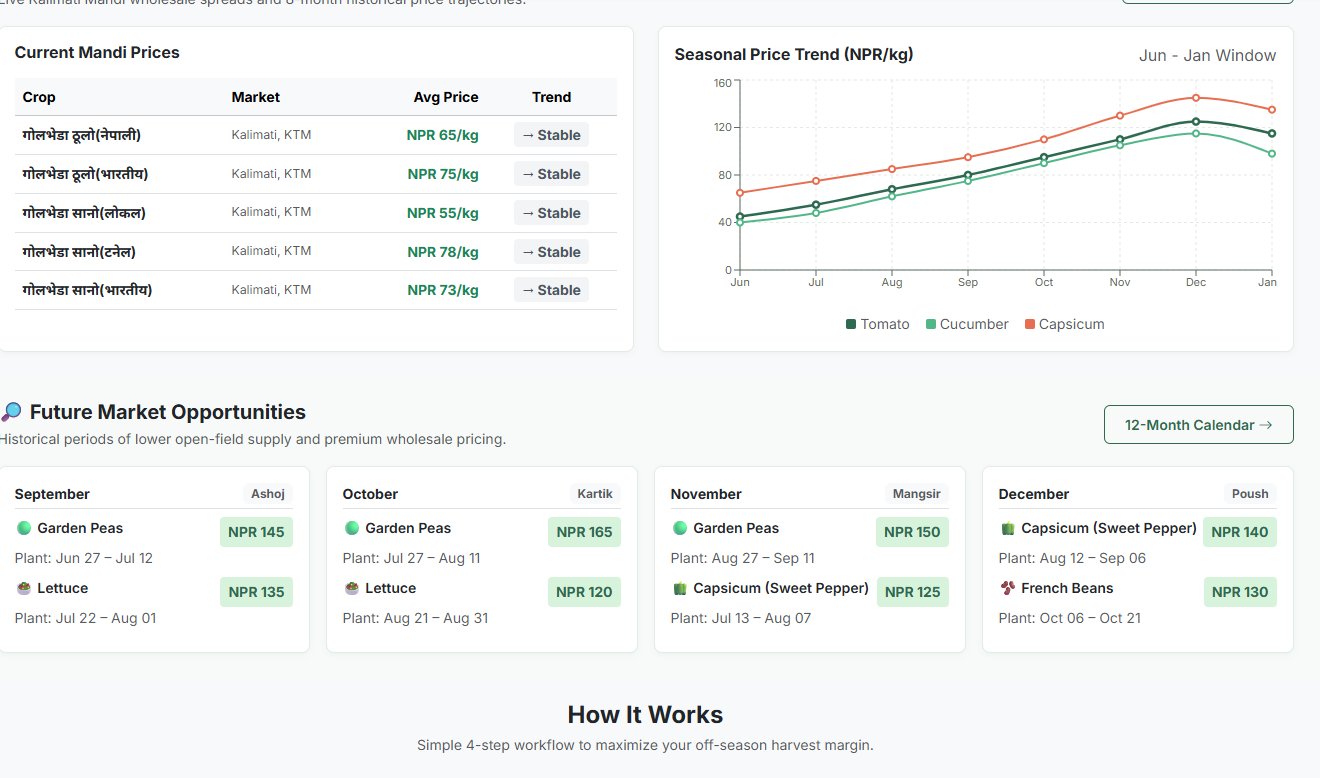
Explain how this website works.
-
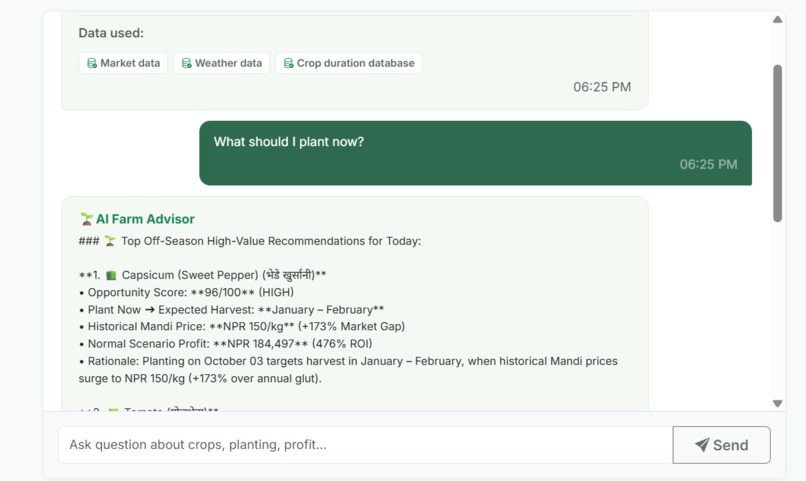
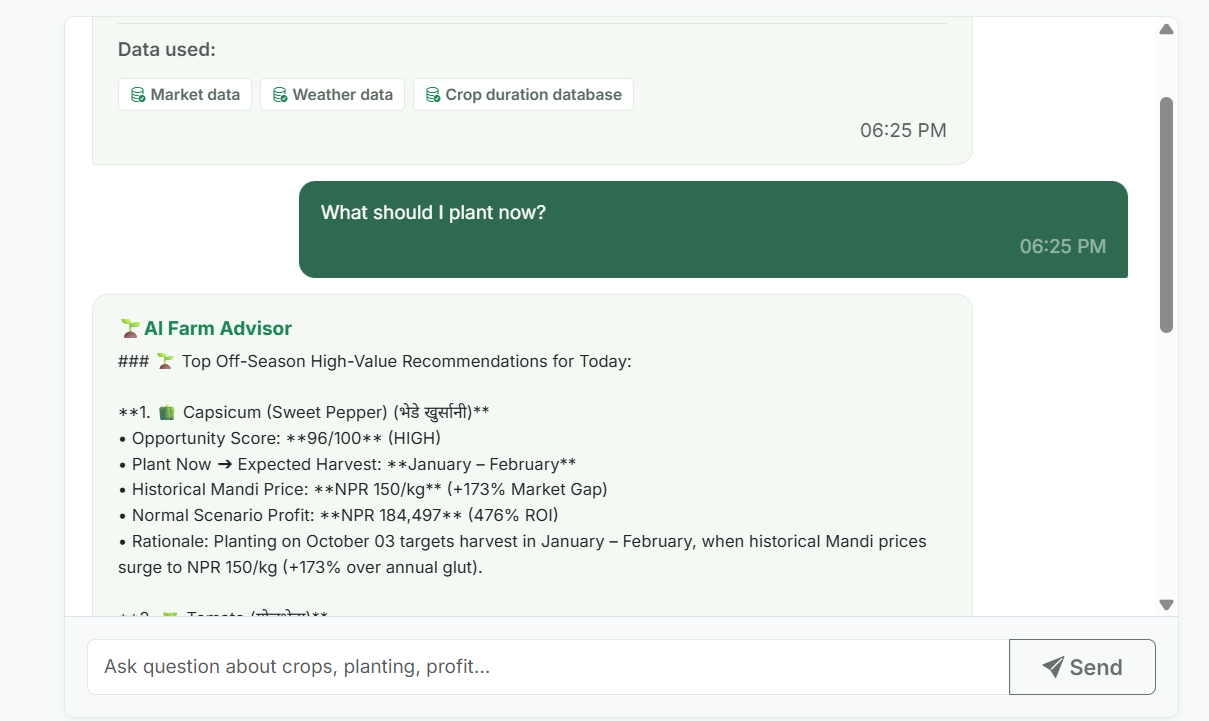
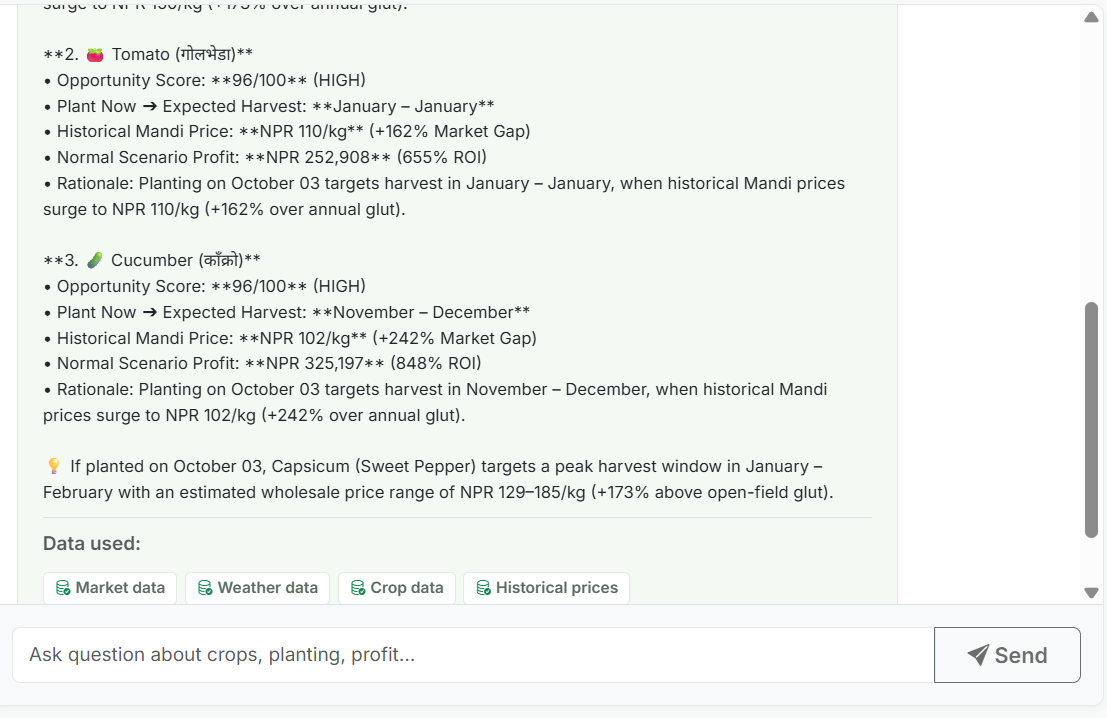
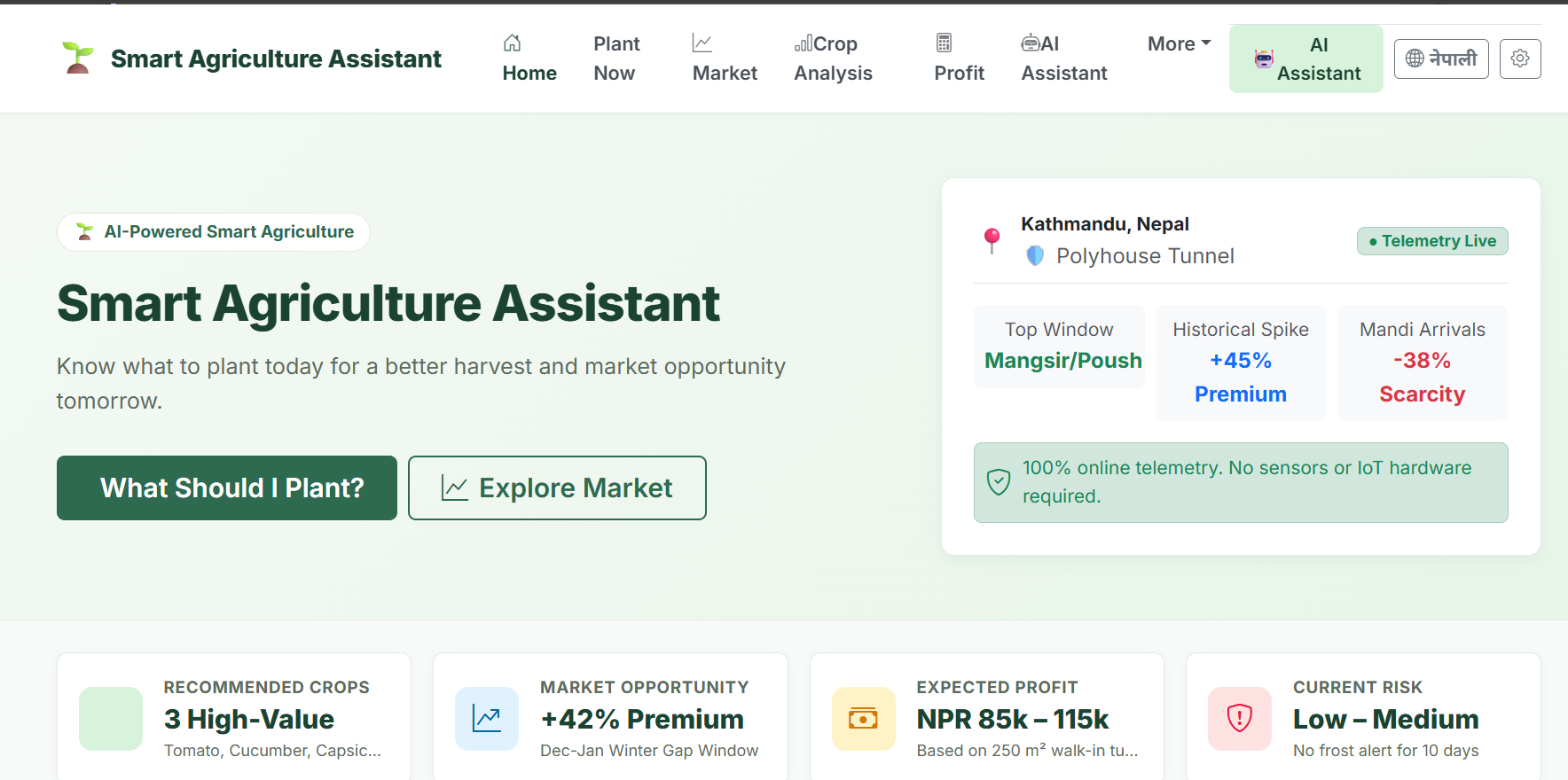
AI Assistant for farmer about what to plant this season.
-
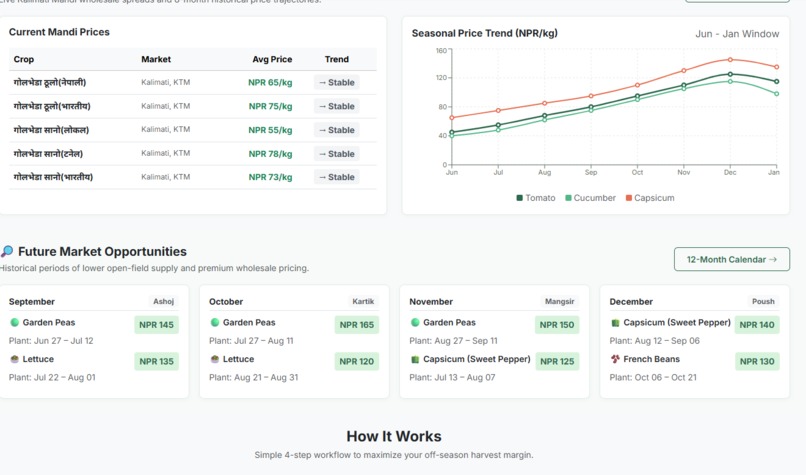
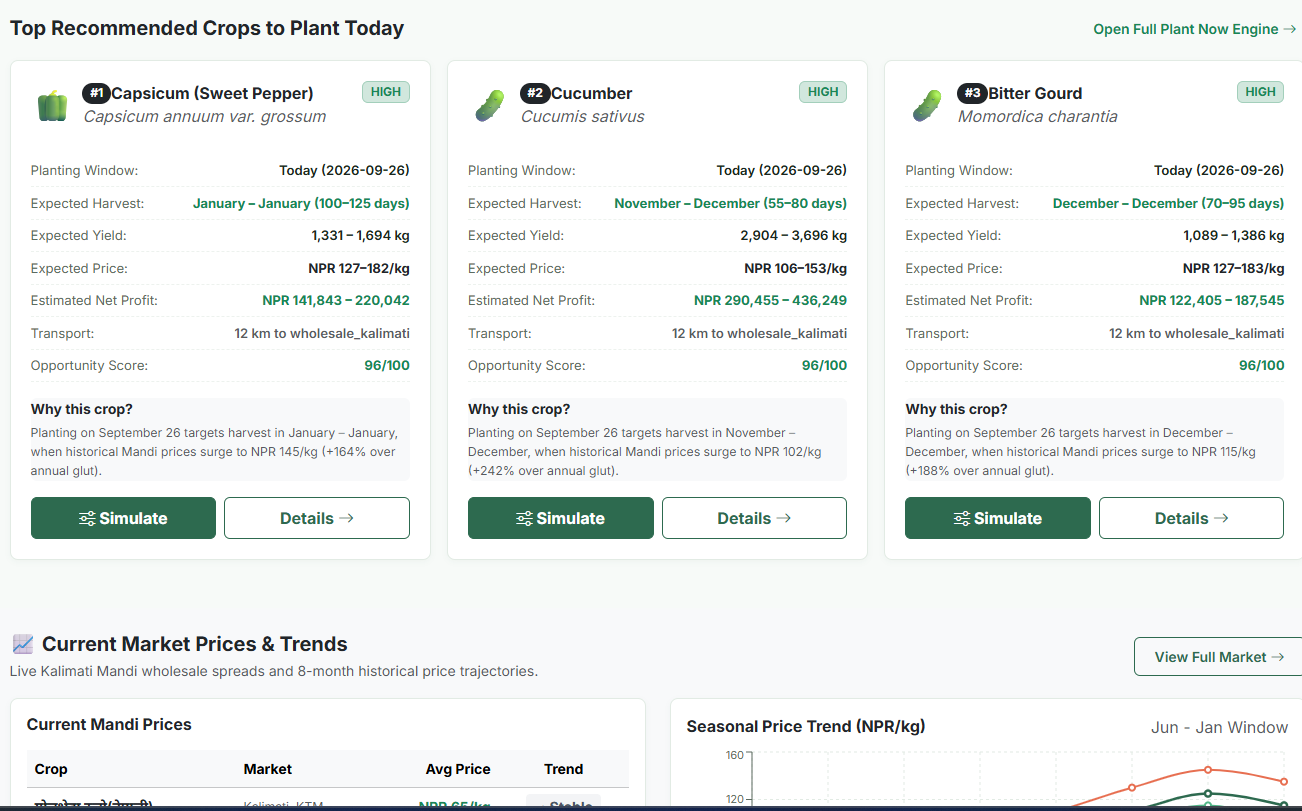
Different vegetables analysis using todays data.
-
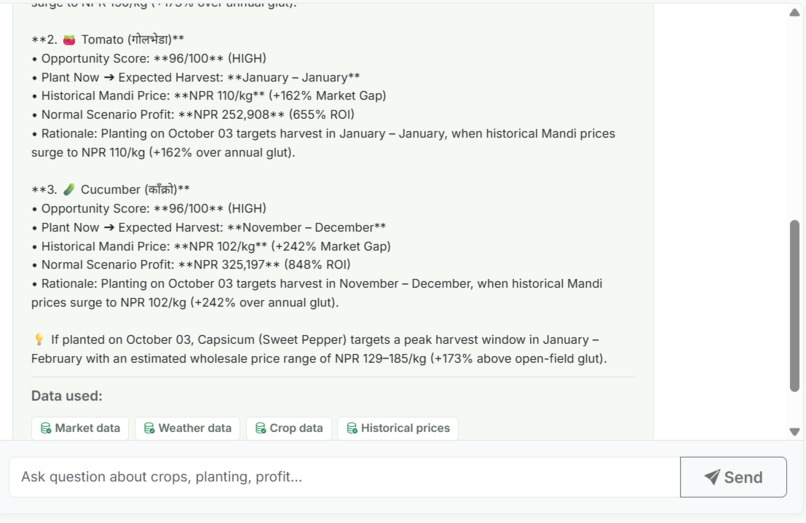
This is also Assistant reply.
-
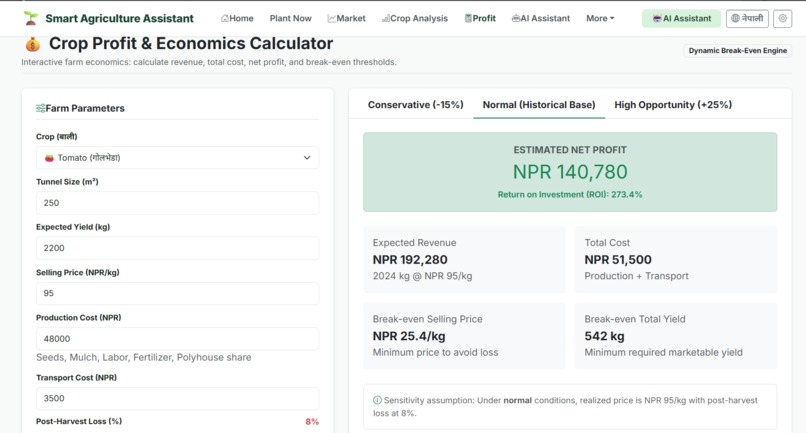
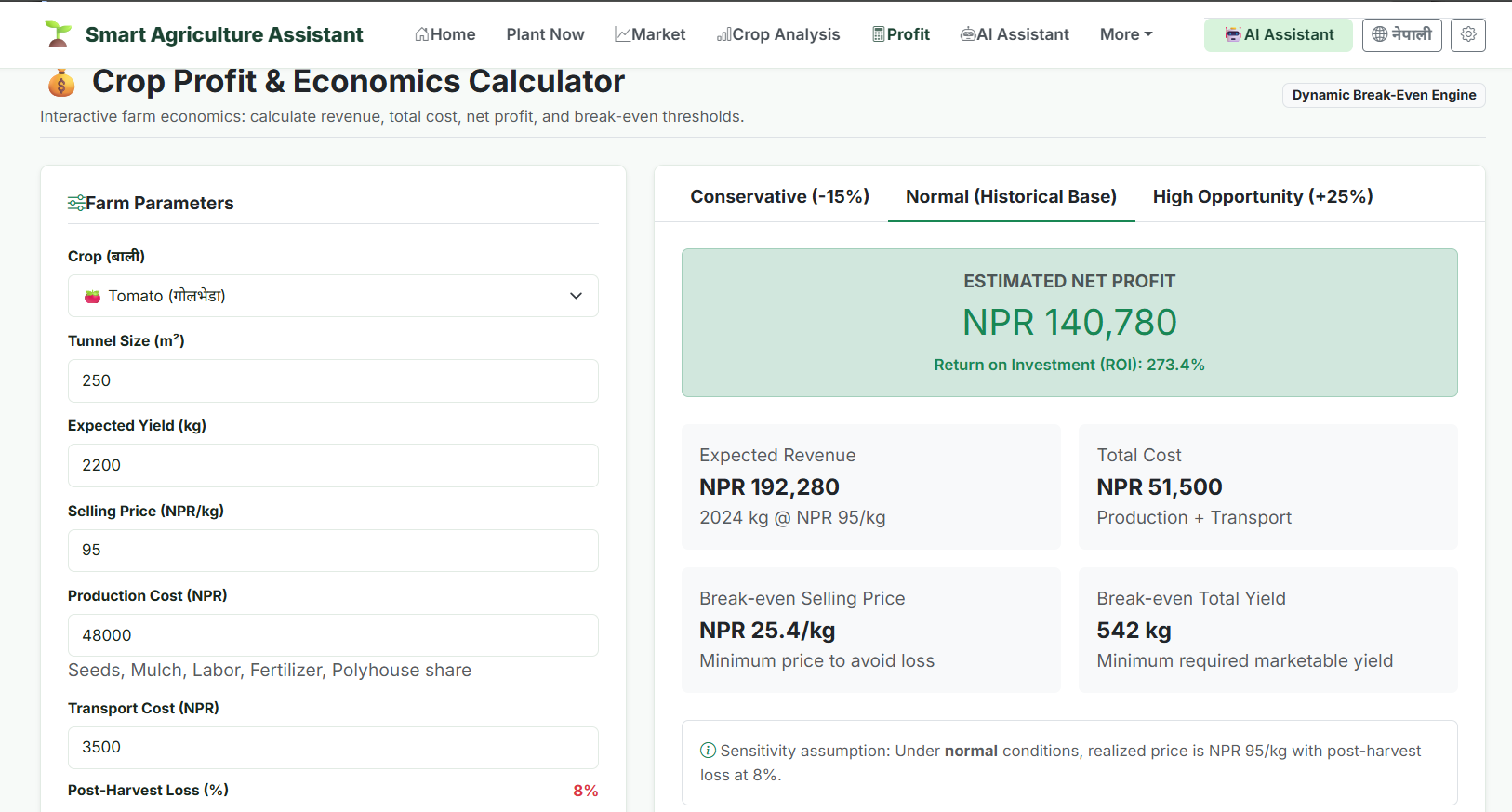
This is the total profit of tomato in days nepal.
-
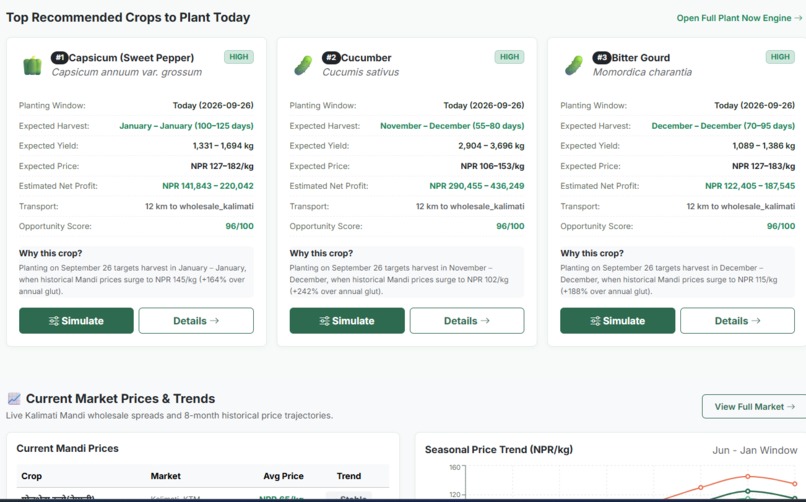
Vegetable Recommendation to plant today.
-
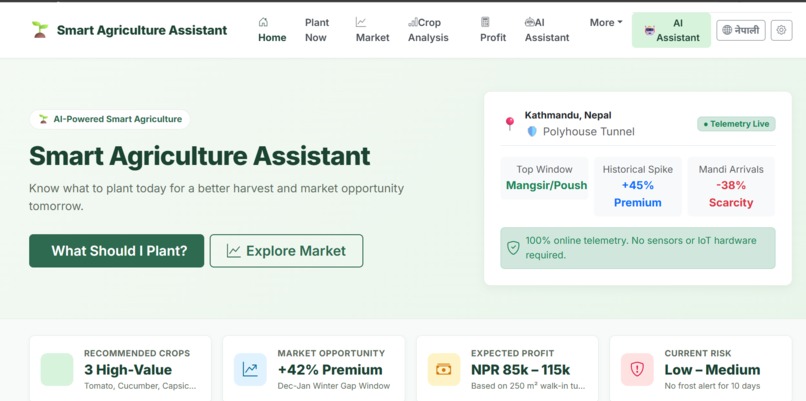
Dashboard/Home
Inspiration
Farmers often make crop and selling decisions without having access to timely information about weather, soil conditions, crop suitability, disease risks, and market prices. This can lead to poor crop selection, unexpected losses, and difficulty planning the right time to sell.
We built Smart Agriculture Assistant to bring these decisions together in one simple platform. Our goal is to help farmers make more informed, data-driven decisions from planting to harvest and selling.
What it does
Smart Agriculture Assistant is an AI-powered agriculture decision-support platform designed for farmers.
It helps users:
- Get crop recommendations based on location, season, soil, and environmental conditions.
- Check weather conditions and receive farming-related alerts.
- Estimate future crop prices using market data and historical trends.
- Predict potential revenue, production costs, and profit.
- Detect crop diseases from uploaded plant images.
- Get fertilizer and crop-care recommendations.
- Track important farming activities through a smart farming calendar.
- Compare crops based on expected yield, market value, cost, and risk.
- Ask agriculture-related questions through an AI assistant.
The platform focuses on one important question: What should I grow, when should I grow it, and when should I sell it?
How we built it
We built Smart Agriculture Assistant as a full-stack AI-powered web platform.
The system combines:
- Frontend: React
- Backend: Python / FastAPI
- Database: PostgreSQL
- Machine Learning: Python, Scikit-learn
- Computer Vision: OpenCV and deep learning
- AI Assistant: LLM-based agriculture assistant
- Data Processing: Pandas and NumPy
- Charts and Analytics: interactive data visualizations
- Weather API: real-time weather information
- Market Data: crop price and historical market information
Machine-learning models process agricultural and market data to generate crop recommendations, price estimates, and farming insights. The system combines these predictions with real-world information such as weather and market conditions to provide practical recommendations.
Challenges we ran into
One of our biggest challenges was combining different types of information into a single useful workflow. Weather, soil, crop, disease, yield, and market-price data all have different formats and characteristics.
We also faced challenges in making machine-learning predictions understandable to farmers rather than simply showing technical model outputs.
Another challenge was designing the system to remain simple enough for everyday users while still providing advanced AI-powered analysis.
Accomplishments that we're proud of
We are proud of building an end-to-end agriculture decision-support platform instead of creating a single-purpose prediction model.
Our system connects crop recommendation, weather intelligence, disease detection, market-price analysis, harvest forecasting, and profit estimation into one workflow.
We are especially proud of the concept of connecting the planting decision with the future selling decision, helping farmers think about both agricultural suitability and economic potential.
What we learned
We learned that building a useful AI system is not only about training a machine-learning model. Data quality, real-world context, usability, explainability, and integration are equally important.
We also learned how different AI technologies can work together, including machine learning, computer vision, large language models, APIs, databases, and data visualization.
Most importantly, we learned that technology should present complex predictions in a simple and actionable way for the people who actually use it.
What's next for Smart Agriculture Assistant
Our next goal is to make Smart Agriculture Assistant more practical for farmers across Nepal.
Future improvements include:
- Integration with more reliable local agricultural and market datasets.
- More accurate location-specific crop and price predictions.
- Support for additional crops and diseases.
- Nepali voice-based interaction for farmers.
- Offline/low-connectivity support.
- IoT sensors for soil moisture, temperature, and other field conditions.
- Personalized farm monitoring and alerts.
- Connections with agricultural experts, cooperatives, and local markets.
Our long-term vision is to develop Smart Agriculture Assistant into a comprehensive digital agriculture platform that helps farmers make better decisions from soil preparation to harvest and market sale.
Built With
- artificial-intelligence
- datavisualization
- fastapi
- llm
- machine-learning
- numpy
- opencv
- pandas
- postgresql
- python
- react
- restapi
- scikit-learn
- vite
- weatherapi

Log in or sign up for Devpost to join the conversation.