-
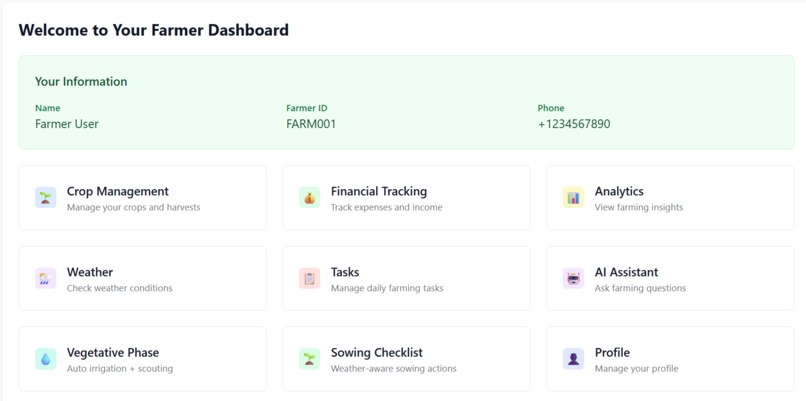
Personal _Assistant
-
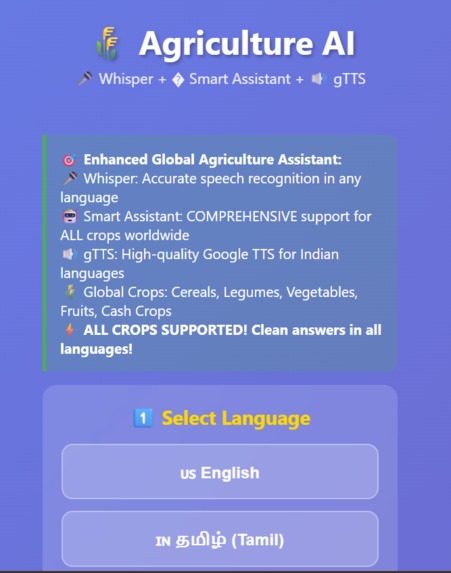
query_engine
-
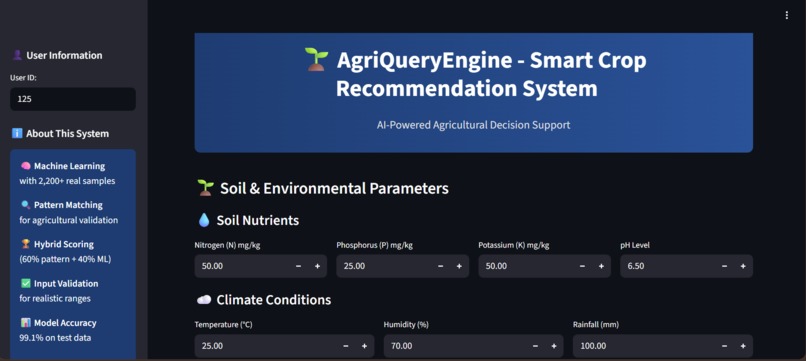
Crop_recommendation_model
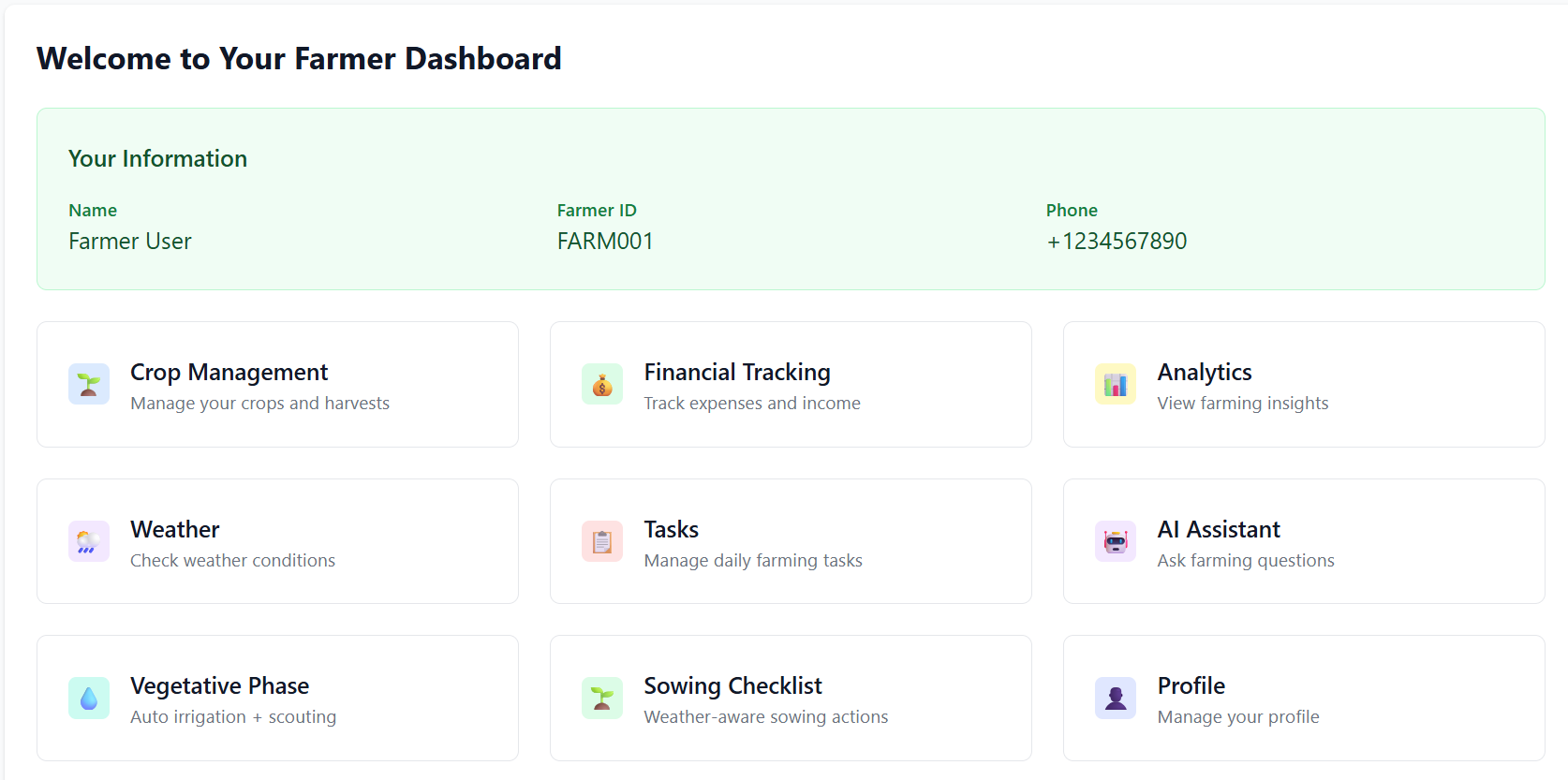
Smart Agriculture (AI - Powered Personal Farming Assistant)
About the Project
Our project, the AI-Powered Personal Farming Assistant, is a comprehensive digital platform designed to guide farmers through every stage of their agricultural journey. It acts as a hyper-personalized companion that leverages real-time data from soil sensors, satellite imagery, and weather forecasts, combined with historical crop data and market trends. Our goal is to empower farmers to make smarter, data-driven decisions that increase yield, reduce risk, and simplify access to government schemes, ultimately making farming more profitable and sustainable.
What Inspired Us
The inspiration for this project comes from witnessing the immense, often solitary, struggles of farmers. They battle unpredictable weather, devastating pest outbreaks, fluctuating market prices, and the bureaucratic maze of government subsidies. We saw a critical gap between the availability of advanced technology and its practical application on the ground. We were driven to create a solution that doesn't just present data, but translates it into trusted, timely, and actionable advice, delivered in the farmer's own language and adapted to their unique context.
What We Learned
- Trust is Paramount: For technology to be adopted in agriculture, it must be transparent. We prioritized Explainable AI (XAI), ensuring every recommendation comes with a clear "why."
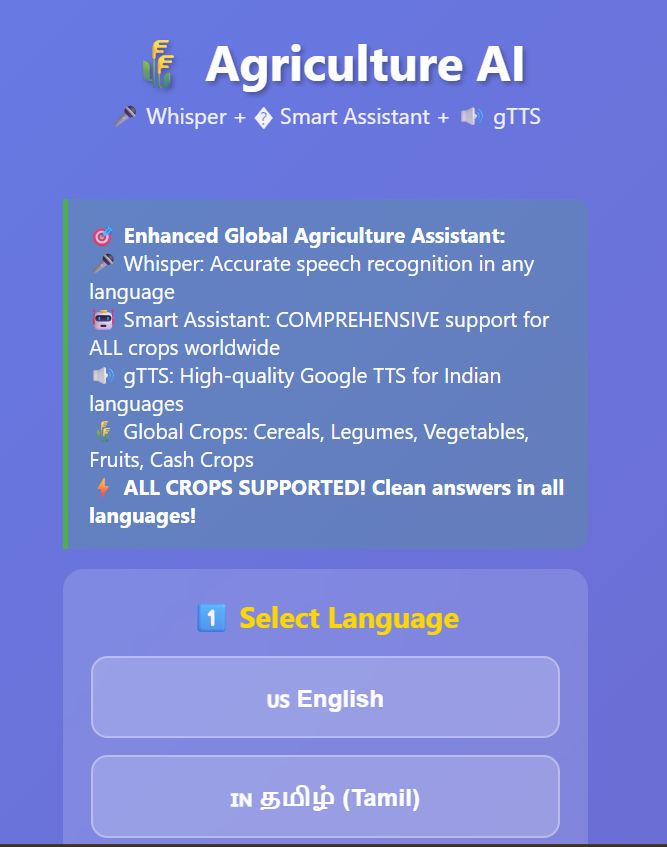
- Inclusivity is Non-Negotiable: We designed for all users, including those with low literacy or basic feature phones, by building a voice-first, multilingual system with IVR and SMS support.
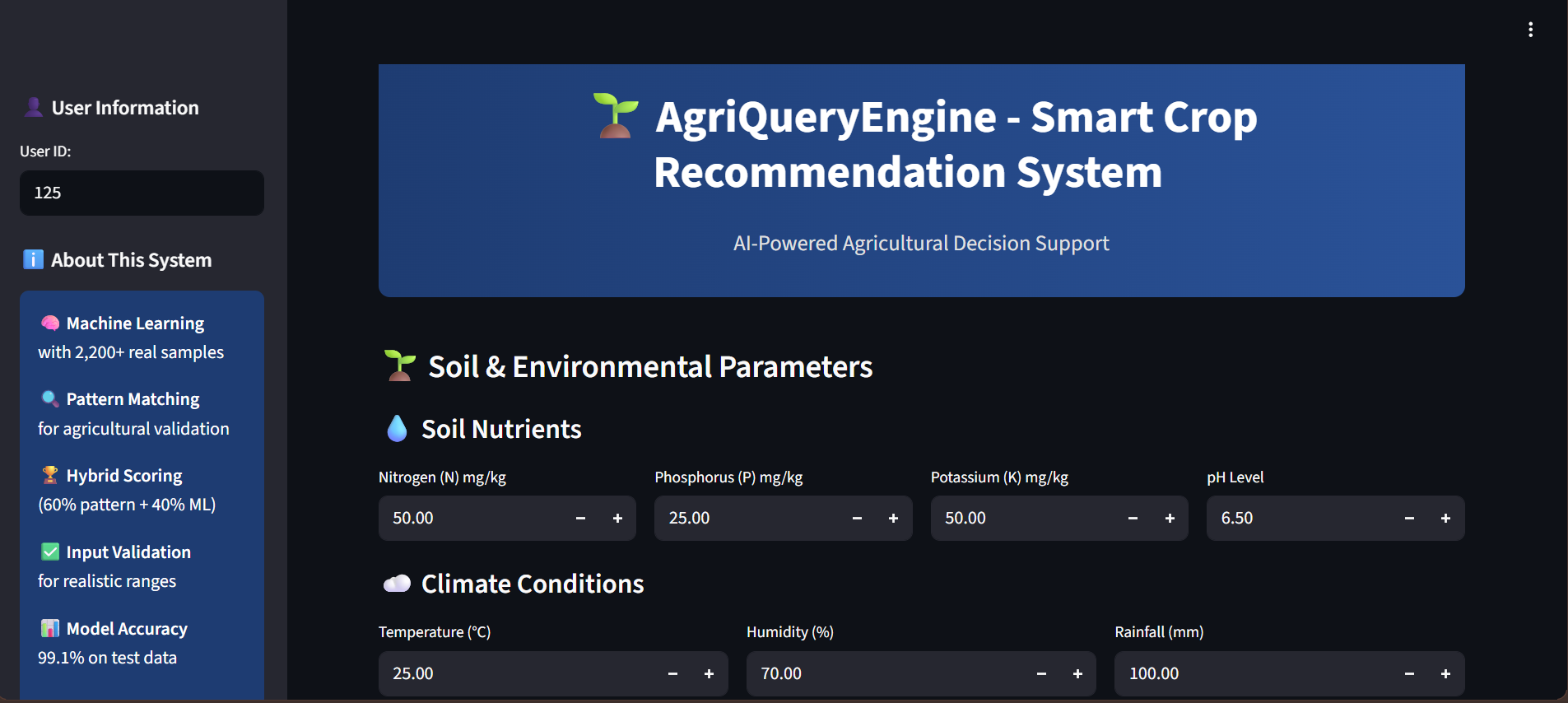
- Data Fusion is Key: The true power of AI in agriculture is unlocked by fusing diverse, real-time data streams—from the soil (NPK, pH) to the sky (satellite imagery, weather).
- Impact is Holistic: Solving only one problem isn't enough. Our solution addresses the entire agri-lifecycle, from crop selection and phase-wise guidance to market linkage and seamless government compliance.
How We Built It
We engineered a robust, scalable, and modular platform using a modern tech stack. Our intelligence engine employs a hybrid algorithmic approach:
Core Algorithms and Tech Stack
Our yield prediction model can be represented as:
[ Y_{pred} = f\left(\sum_{i=1}^{n} w_i \cdot CNN(I_i), \sum_{j=1}^{m} v_j \cdot LSTM(T_j), \sum_{k=1}^{p} u_k \cdot RF(S_k)\right) ]
Where (I) is image data, (T) is time-series data, and (S) is structured data (e.g., soil tests), with (w, v, u) being learned weights.
- Divide & Conquer: Segment large farm areas and complex crop cycles for parallel and faster analysis.
- Dynamic Programming: Optimize sequential decisions like irrigation and fertilizer over time.
- Ensemble Learning: CNNs for imagery (disease/canopy analysis), LSTMs for time-series (weather/soil), Random Forest for risk and feature analysis.
- Platform: FastAPI (Python), Docker, TensorFlow, scikit-learn, Pandas.
- Mobile: Flutter (single cross-platform app for voice-first and offline-first).
- Web: Next.js dashboard for officers and analytics.
AI Services
- Behavioral AI: Learns how and when each farmer prefers to get alerts.
- Conversational AI: Dialogflow, LangChain, Pinecone for context-aware answers via text, image or voice.
Challenges We Faced
- Data Heterogeneity and Fusion: Integrating live, unstructured satellite and IoT data with traditional sources.
- Low-Connectivity: Offline-first architecture with seamless sync was critical.
- Explainability: Delivering model outputs (LSTM, CNN) in clear, farmer-friendly terms.
- Performance and Scale: Designed for millions of users with sub-second response time for critical alerts.
- Seamless Government Integration: Combined legacy and modern APIs into a unified compliance system.
Built With
- cnn
- dialogflow
- docker
- fastapi
- flutter
- langchain
- lstm
- next.js
- pandas
- random-forest
- scikit-learn
- tensorflow


Log in or sign up for Devpost to join the conversation.