-
-
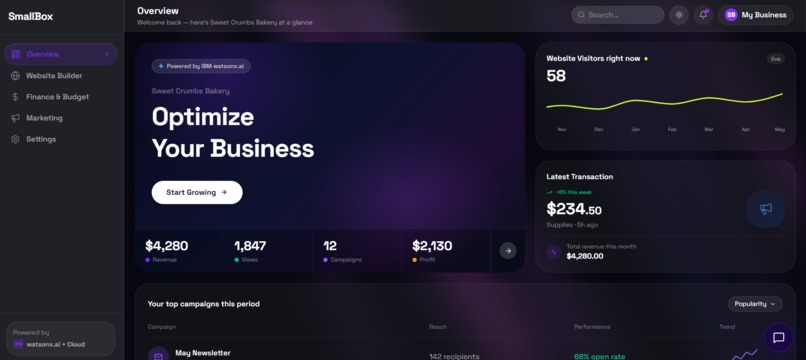
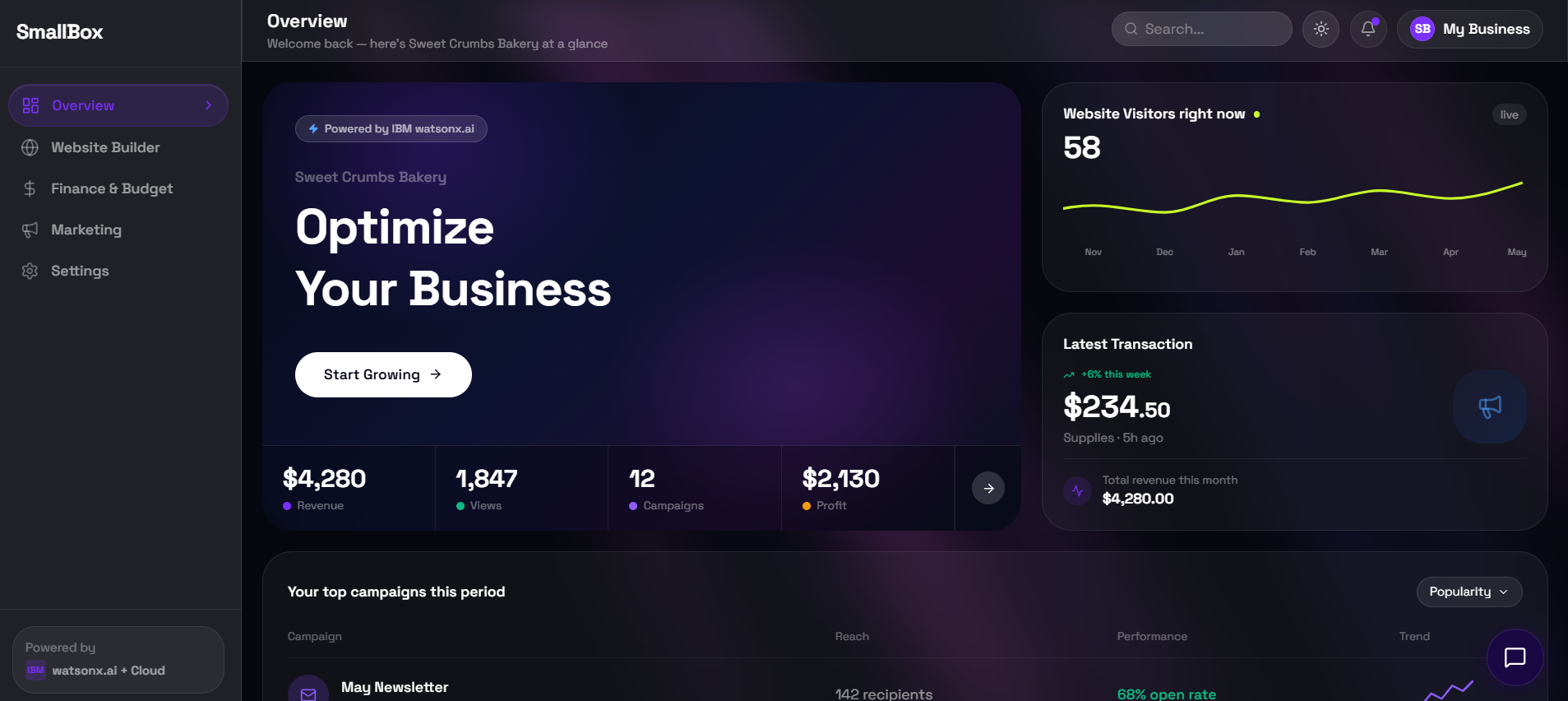
Dashboard
-
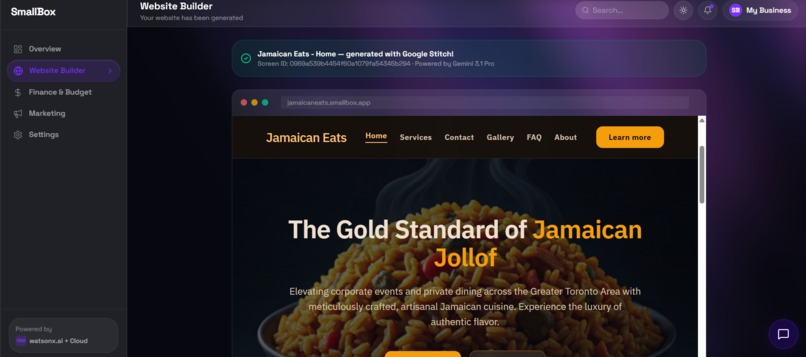
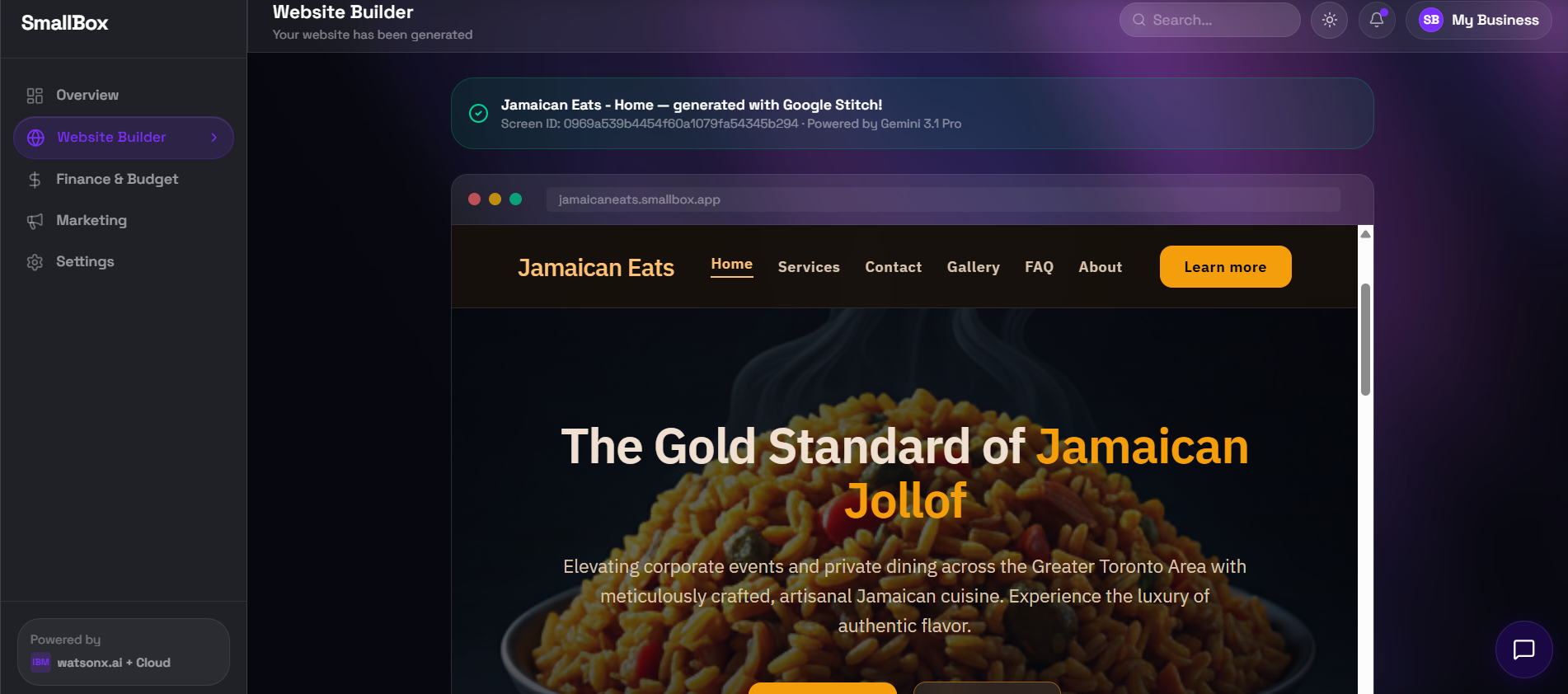
Website Builder
-
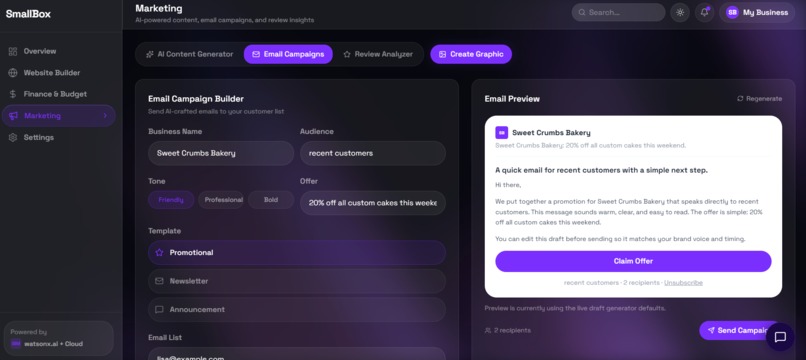
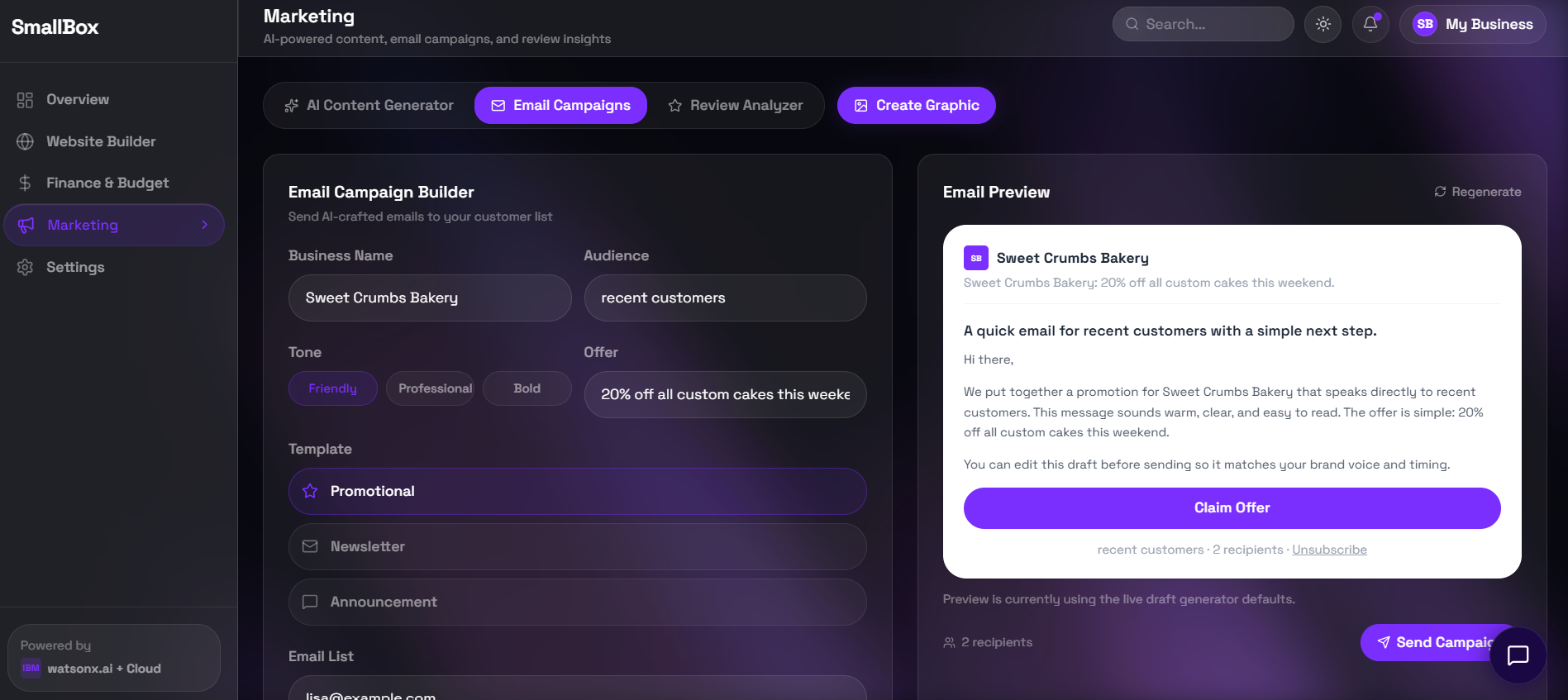
Marketing
-
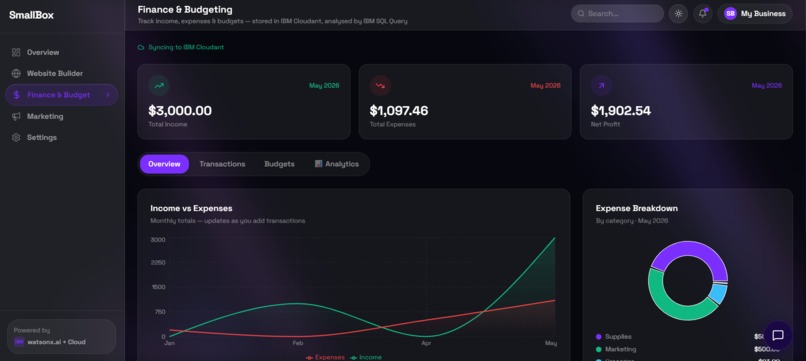
Finances
-
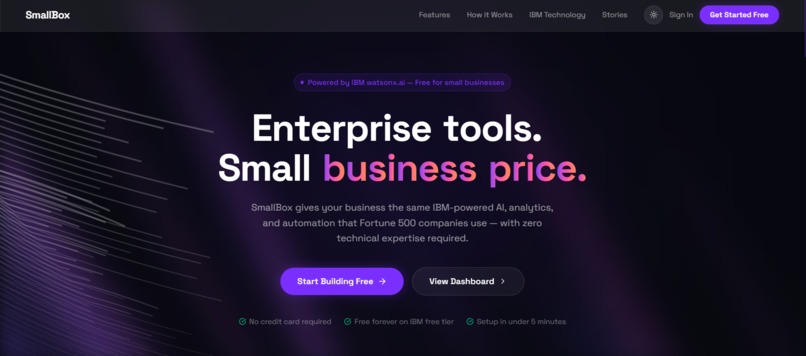
Landing Page
What inspired this
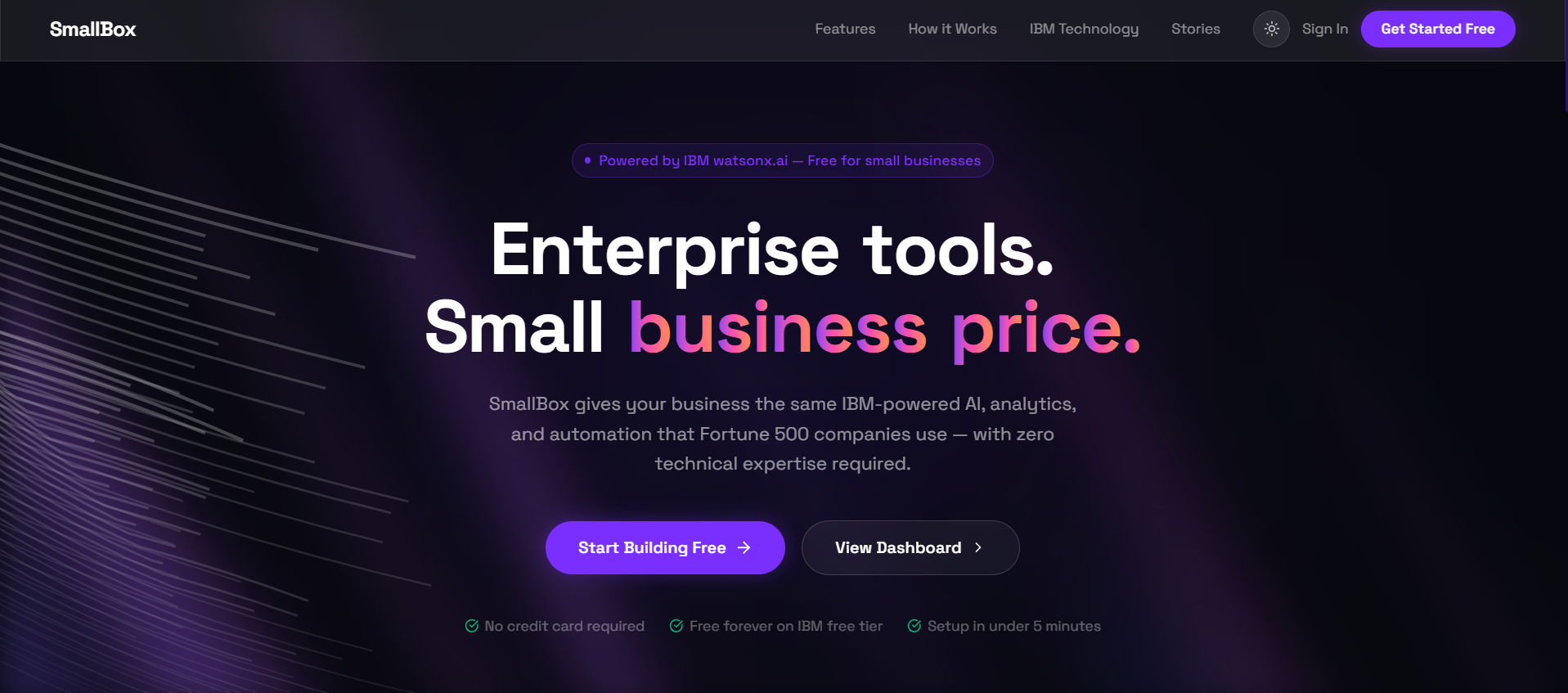
A bakery owner in Mississauga shouldn't need an IBM specialist to get a website. A freelance consultant in Lagos shouldn't need a cloud architect to track their monthly expenses. But that's the reality for 400 million small businesses worldwide, not because IBM-grade tools aren't powerful enough, but because they were designed for enterprise teams that small businesses will never have. SmallBox exists to close that gap.
What it does:
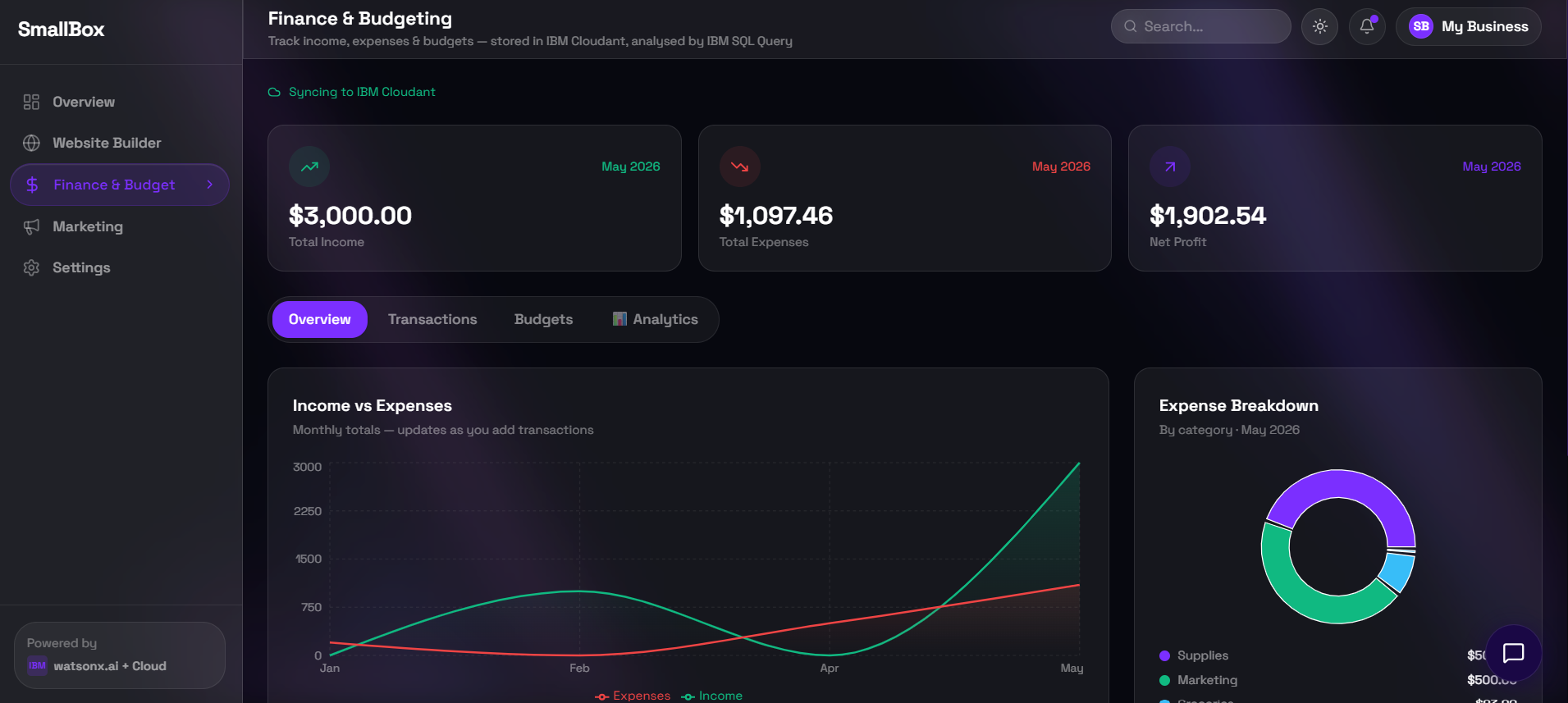
SmallBox is a self-serve business operating system built on IBM's free-tier ecosystem. After an AI onboarding conversation that builds your business profile and generates a Business Health Score, three tools unlock: a Website Builder that generates a full site from plain-English answers and deploys it via IBM Cloud Continuous Delivery; a Finance & Budgeting tracker with AI-powered receipt categorization and budget alerts; and a Marketing Suite that generates Instagram captions, email campaigns, and analyzes customer sentiment using Watson NLU. Every tool shares a single business profile stored in IBM Cloudant, so your data works together, not in silos.
SmallBox directly addresses SDG 8 (decent work and economic growth), SDG 9 (inclusive industrialization and innovation), and SDG 10 (reducing inequalities), giving small businesses access to the same infrastructure tier that previously required a dedicated IBM technical team.
How we built it?
Next.js + Tailwind CSS frontend, Node.js serverless API routes, IBM Cloudant as the central NoSQL database. watsonx.ai handles onboarding, website copy generation, receipt categorization, Business Health Score calculation, and marketing content. Watson NLU runs sentiment extraction and keyword analysis on customer reviews. IBM Verify manages authentication with SSO and MFA. IBM Cloud Continuous Delivery builds and deploys generated websites to IBM Cloud.
Challenges
The hardest architectural challenge was making six IBM services share a single business profile without data divergence, watsonx.ai, Cloudant, and the CI/CD pipeline all needed to read from the same source of truth, not maintain their own copies. We also spent significant time on the onboarding UX: a one-question-at-a-time conversational flow that makes the product feel approachable to someone who has never opened a cloud dashboard. And scope discipline, cutting features we'd built and liked, was the call that made the rest of the product shippable.
Built With
- brevo
- google-stitch
- ibm
- ibm-bob
- ibm-cloud
- ibm-nlu
- ibm-watson
- pollination-ai
- tesseract


Log in or sign up for Devpost to join the conversation.