Inspiration
During our spring break, we found it hard to plan out trips with the number of options available to us. We had no way of predicting the exact cost of each possible location. So, we ended up choosing a location at first and trying to make the trip cheap for us, but we exceeded our budget at the end of it. For students, budget is a more important factor than location, and we're open to exploring.
That got us wondering...
What if travel planning began with the budget and surprised us with a location?
What It Does
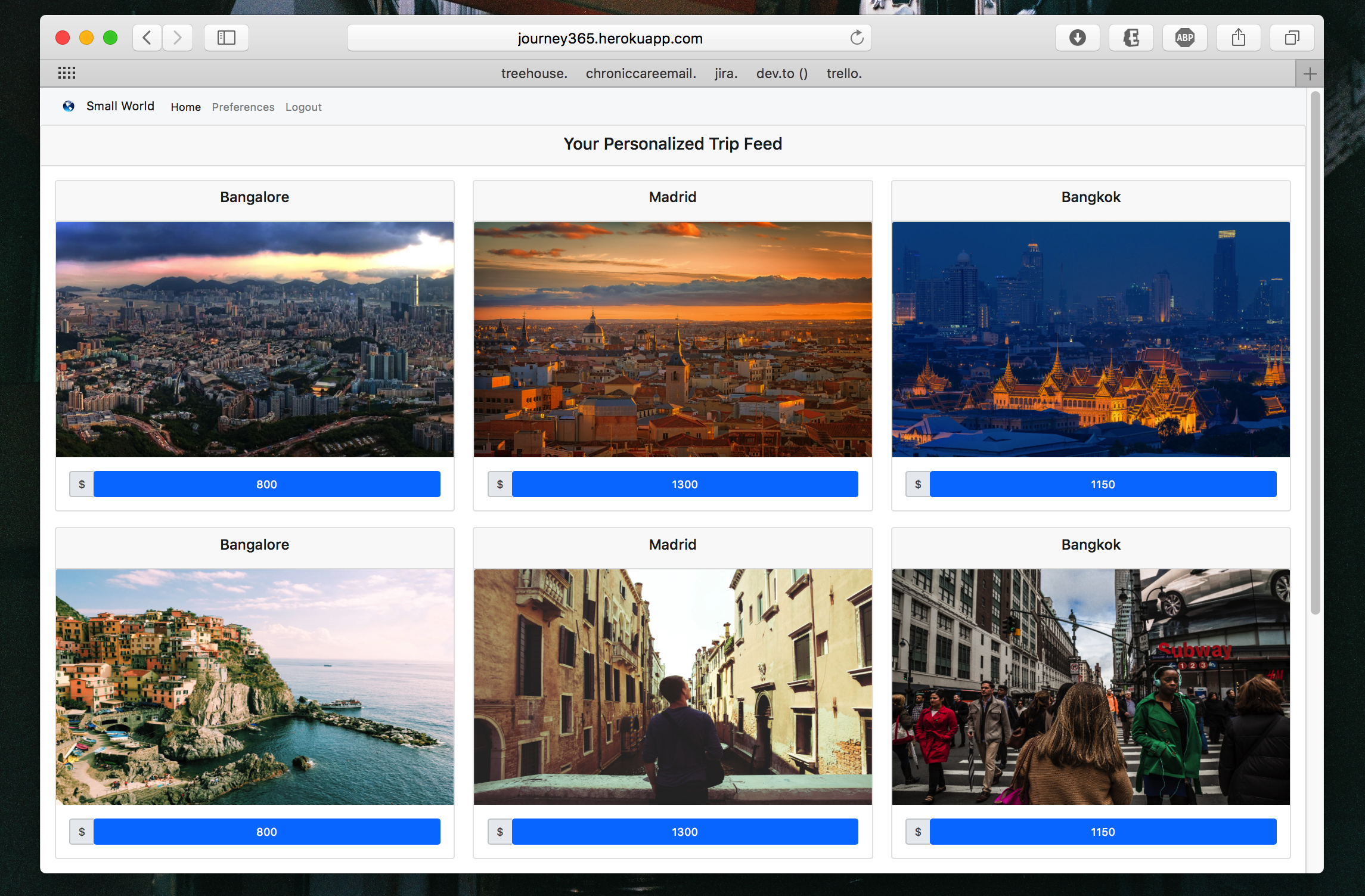
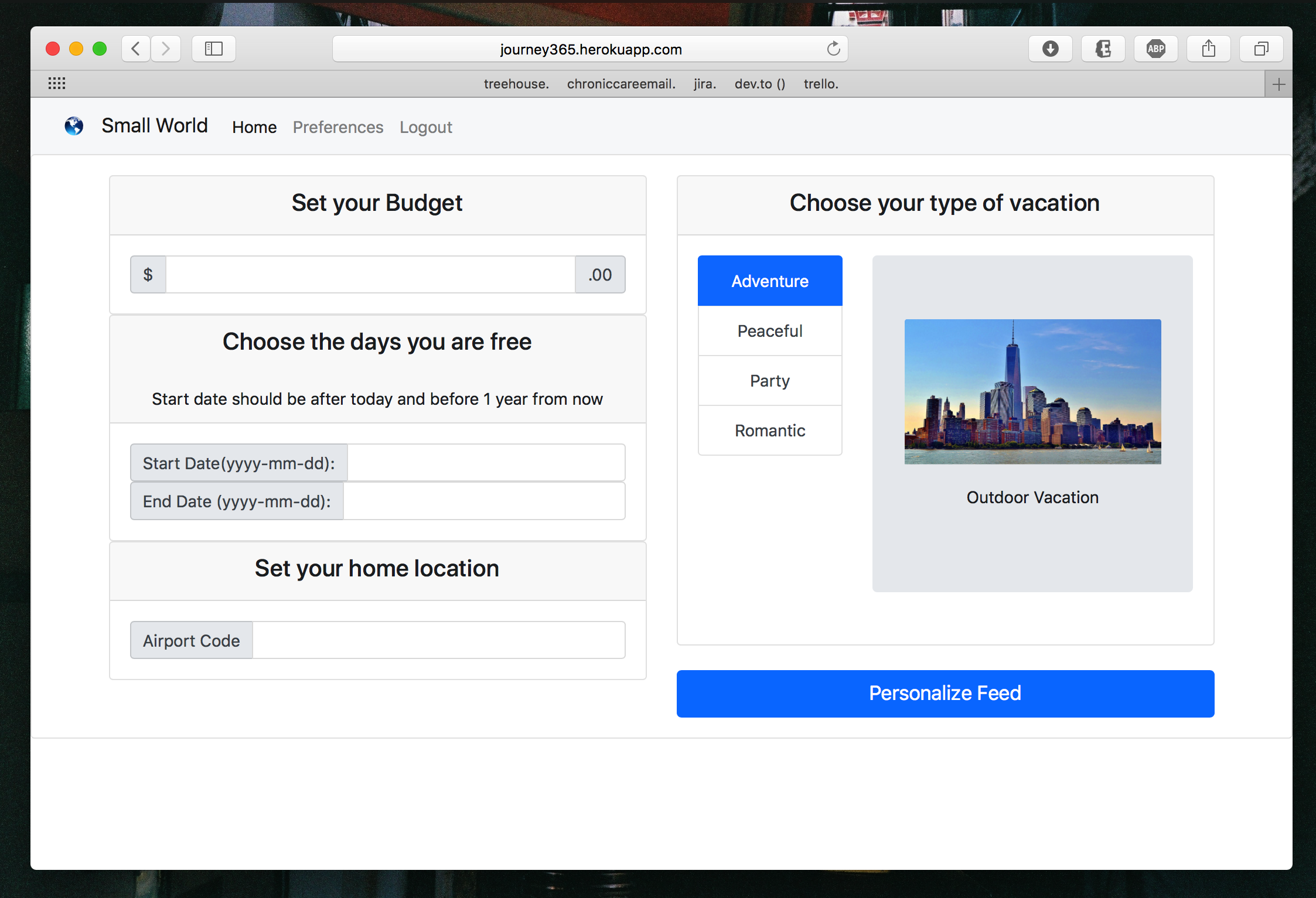
Our app collects data for flights and hotels from a particular location and generates a list of trips tailored to the users budget and calendar.
How We Built It
Small World is built with a lot of love & lack of sleep. Oh, and some pretty neat technology!
We built a backend server with node.js (hosted on heroku). Our database is hosted by mlab. Our frontend is built with the help of bootstrap and JQuery for API calls. We got our flight and hotel data from Amadeus Sandbox API.
Challenges
Handling asynchronous functions on node.js with promises.
Handling and formatting Slick. It's basically a responsive carousel jQuery plugin that supports multiple breakpoints, CSS3 transitions. It was very difficult when it came to formatting it to our up and running bootstrap framework.
Coordinating the front-end was challenging and trying to implement our different ideas into one concise project. Communicating with the back-end took us forever to figure it out, but we finally did.
Accomplishments
- Built a fully functional app
- Built a comprehensive Rest API
- Focused on User Experience
Things Learned
- Building an API with node.js
- Using bootstrap efficiently
- Handling api requests with jQuery 4.Storing data in MongoDB
What's next for Small World!
More work on making it more user friendly and beautiful!

Log in or sign up for Devpost to join the conversation.