🐌 SlugMeditate
Transforming calm thoughts into immersive VR journeys.
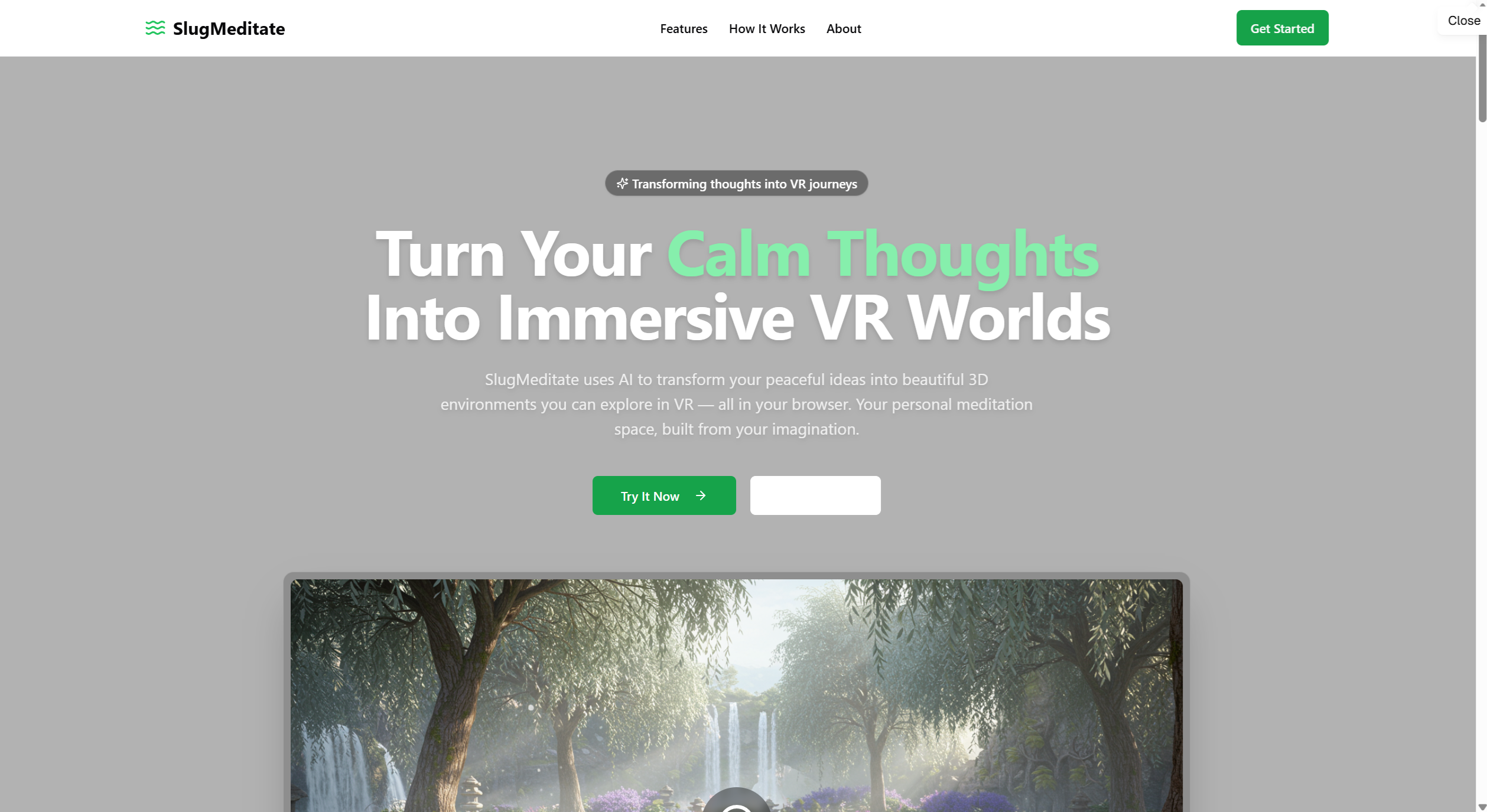
SlugMeditate is a calming VR experience that turns your thoughts into immersive worlds. Just type in a peaceful idea, and we use AI to generate visuals, turn them into video, and transform it into a 3D scene you can explore in virtual reality — all in your browser. It’s like a personalized meditation space, built from your own imagination.
🌟 Inspiration
We wanted to explore how emerging generative AI and VR technologies could support mindfulness and mental well-being. Many college students deal with stress and burnout — what if we could turn a simple reflection or intention into a deeply personal, calming VR experience?
Thus, SlugMeditate was born: a pipeline that transforms your thoughts into a 3D ambient escape.
✨ What It Does
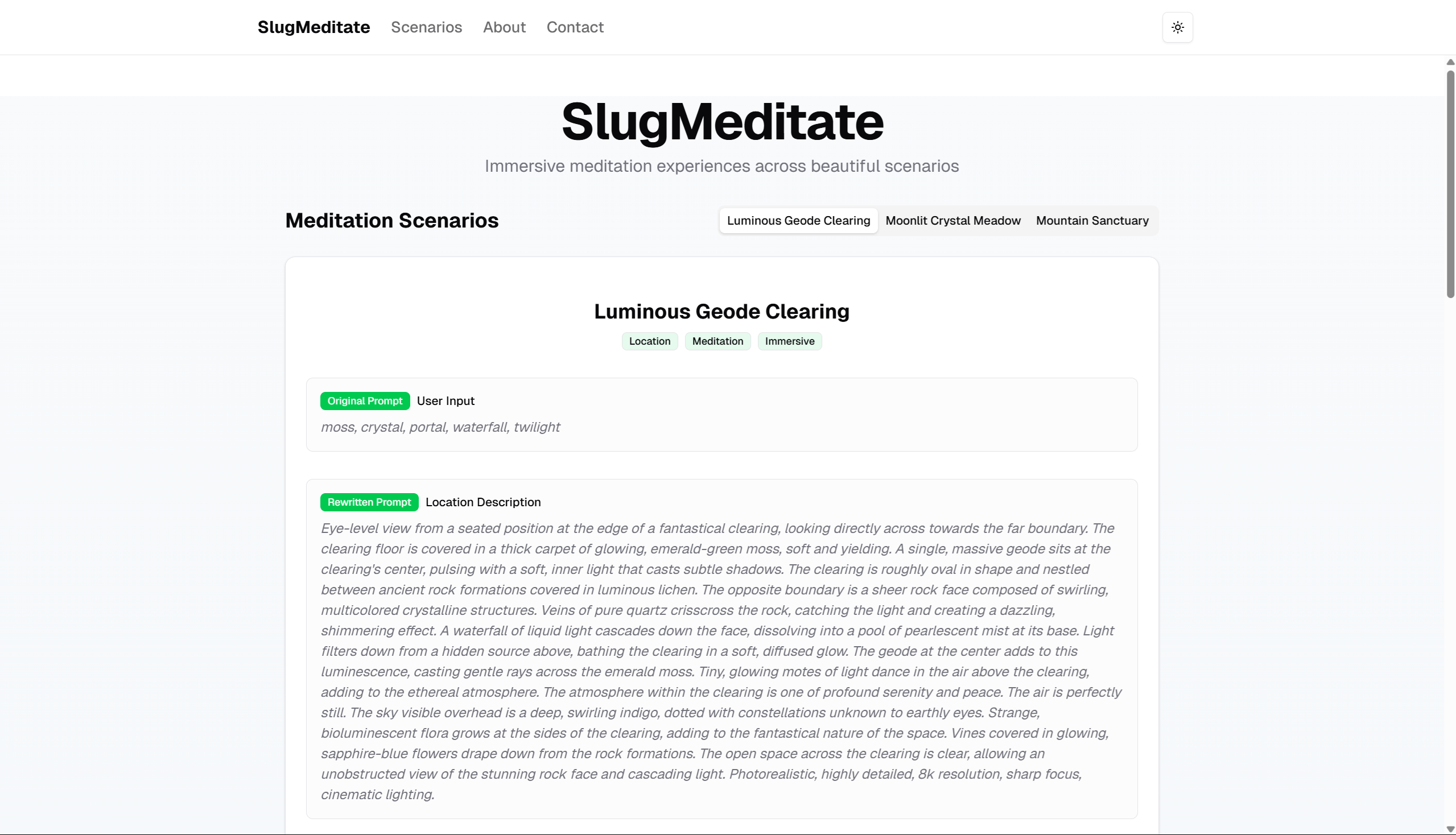
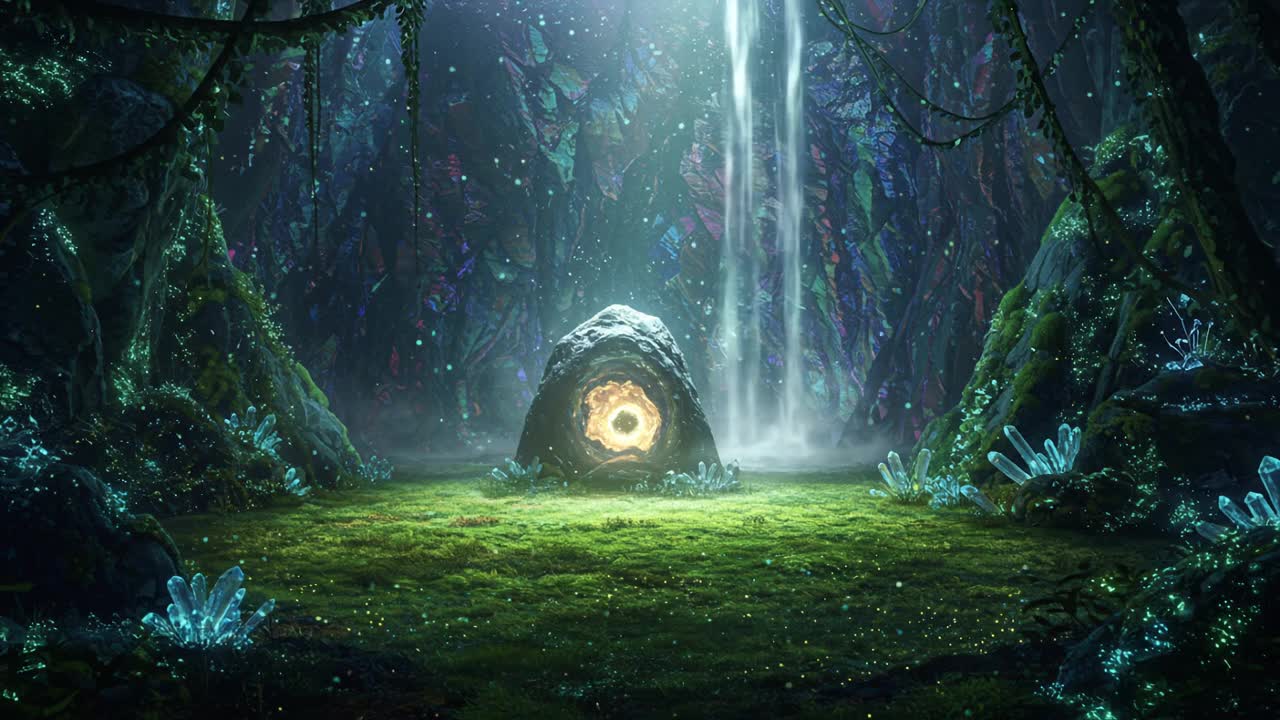
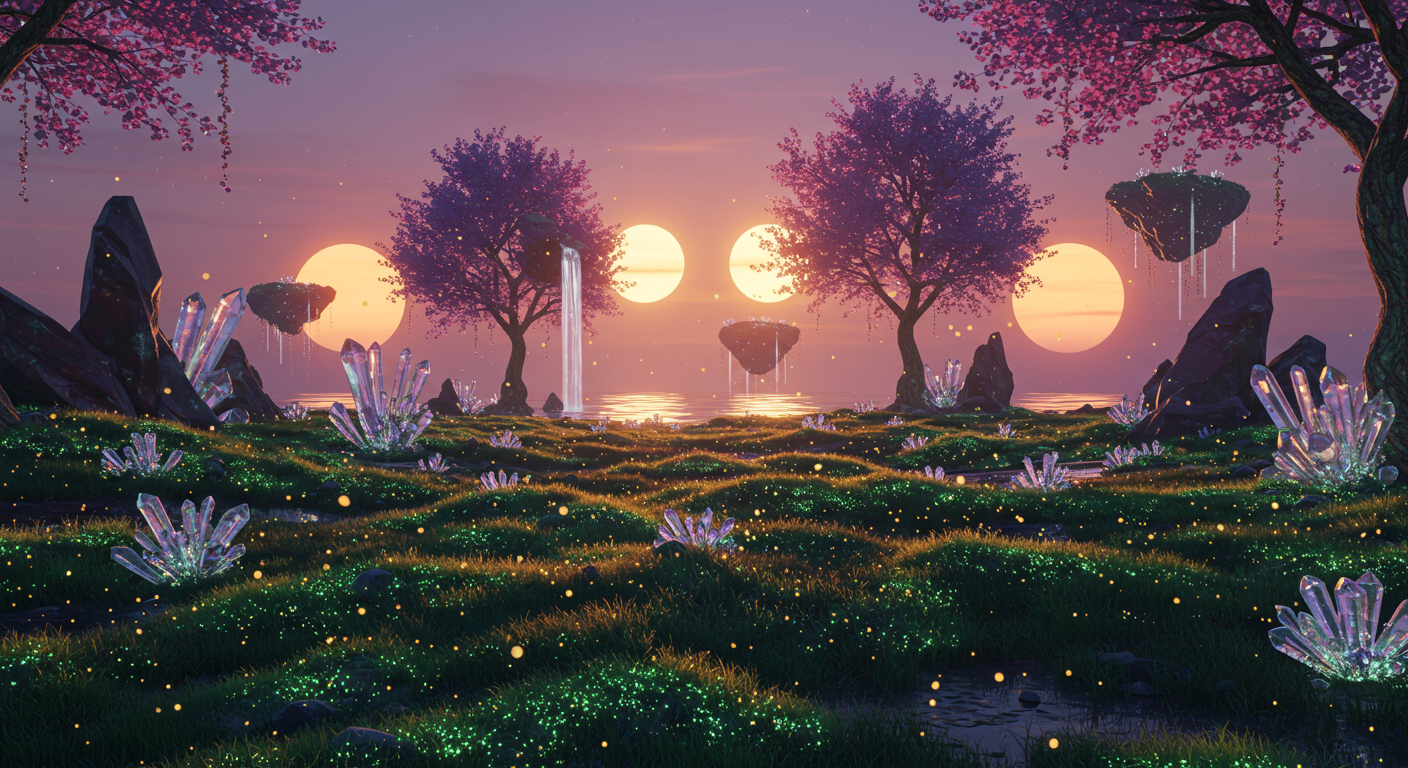
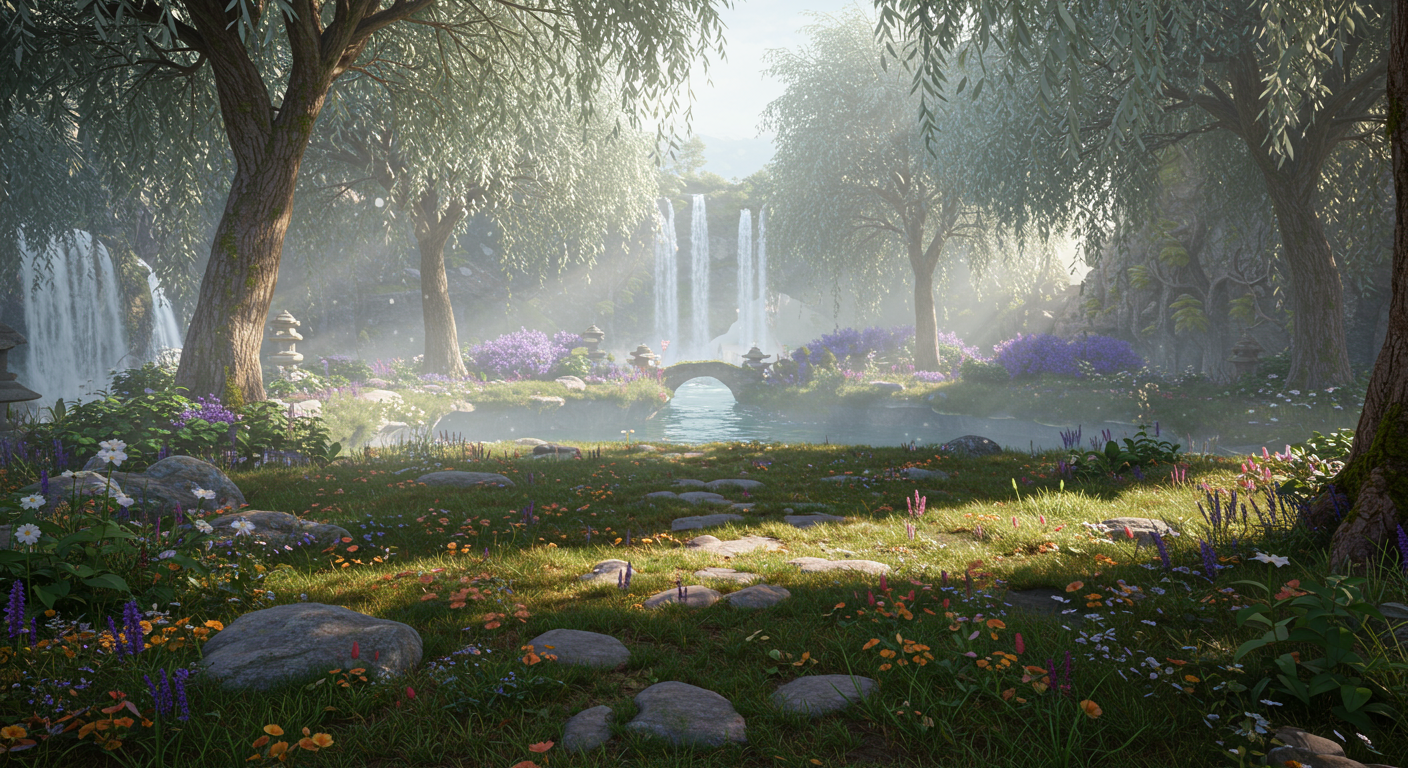
SlugMeditate takes a text input (like "a peaceful forest at dusk") and transforms it into:
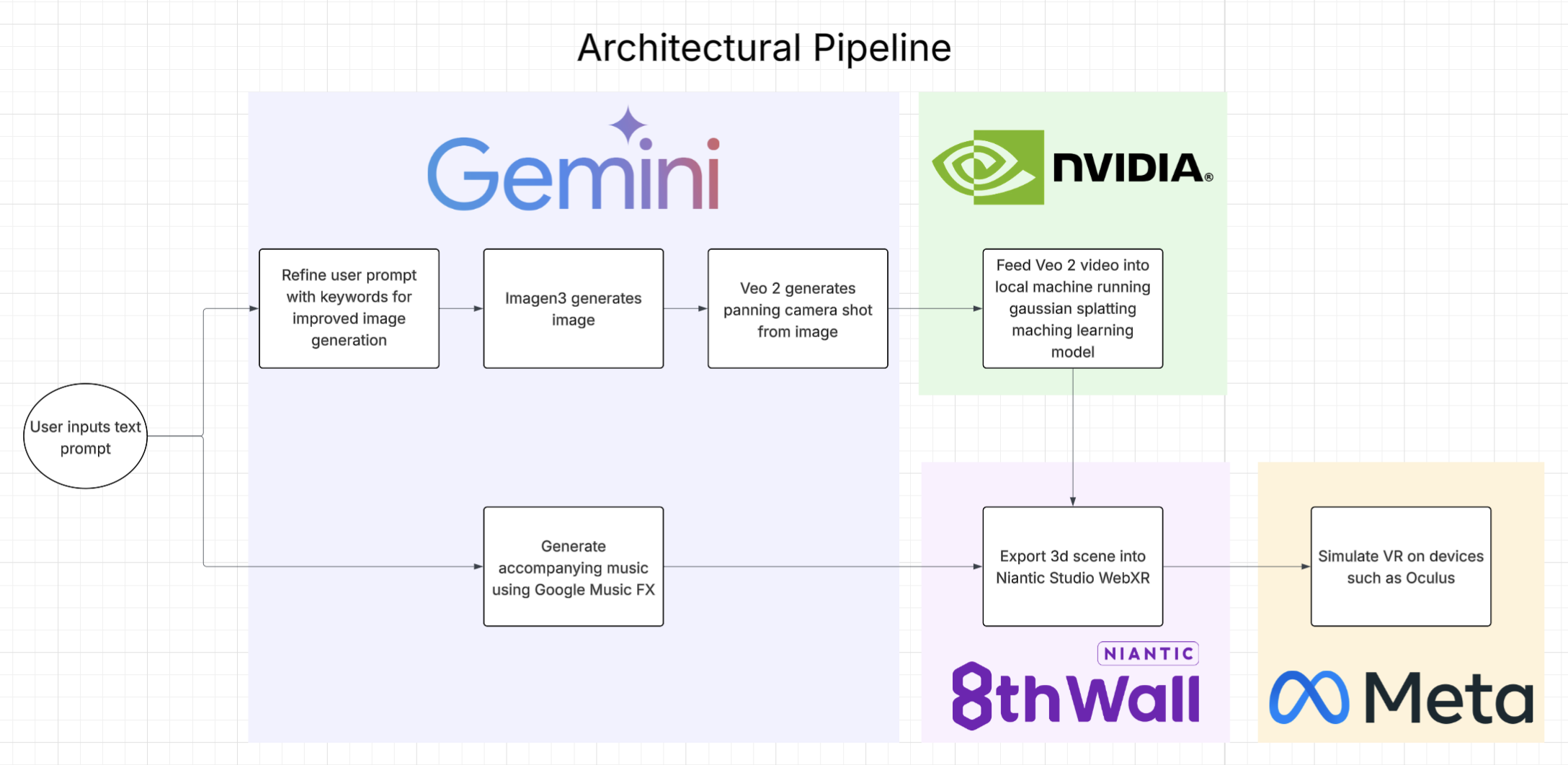
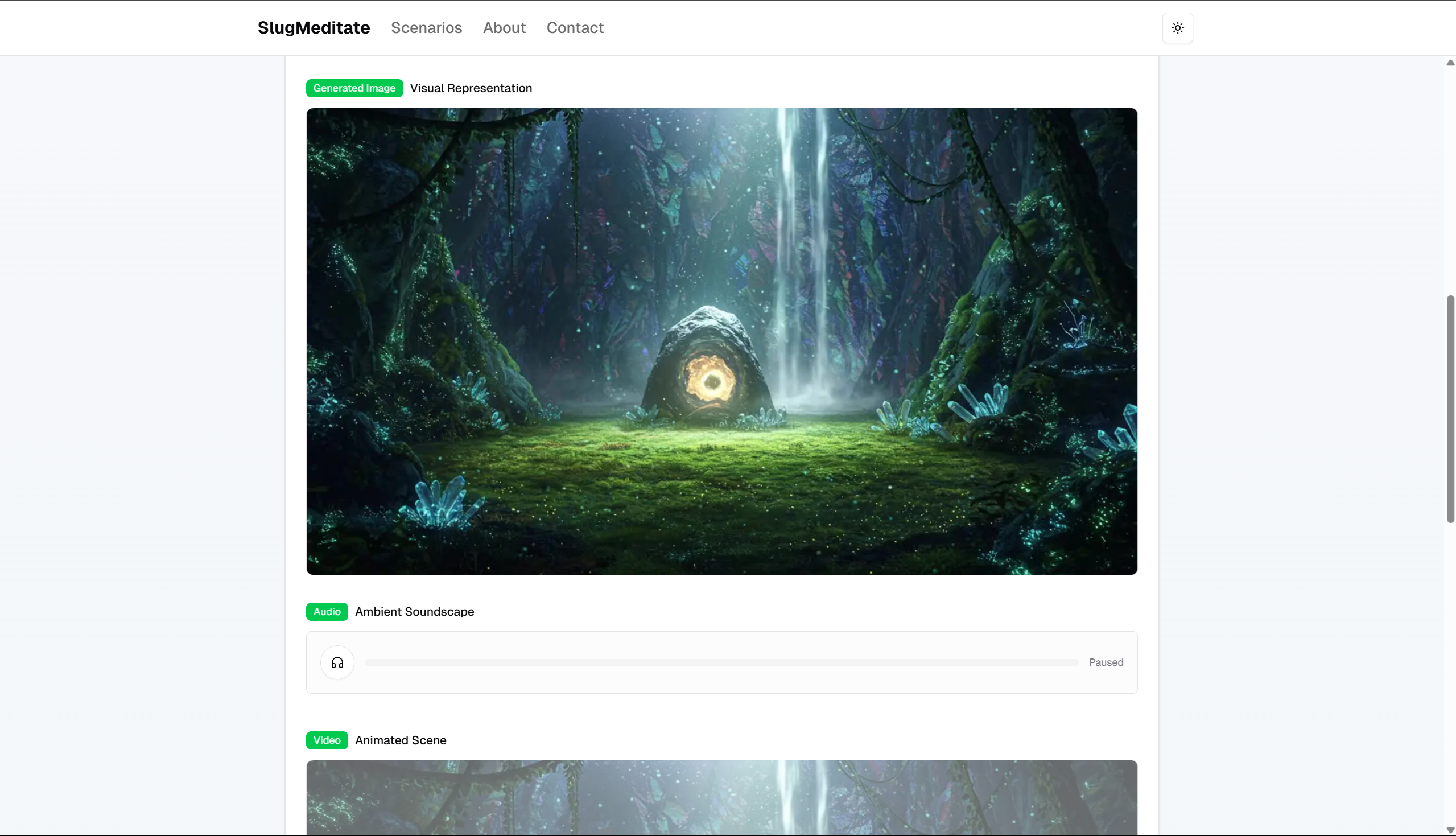
- Image Generation – Using Google Imagen 3, powered by Google AI Gemini, we generate visually rich and vivid images from the user’s prompt.
- Video Creation – These images are animated into smooth, cinematic video loops using Google AI Gemini Veo 2.
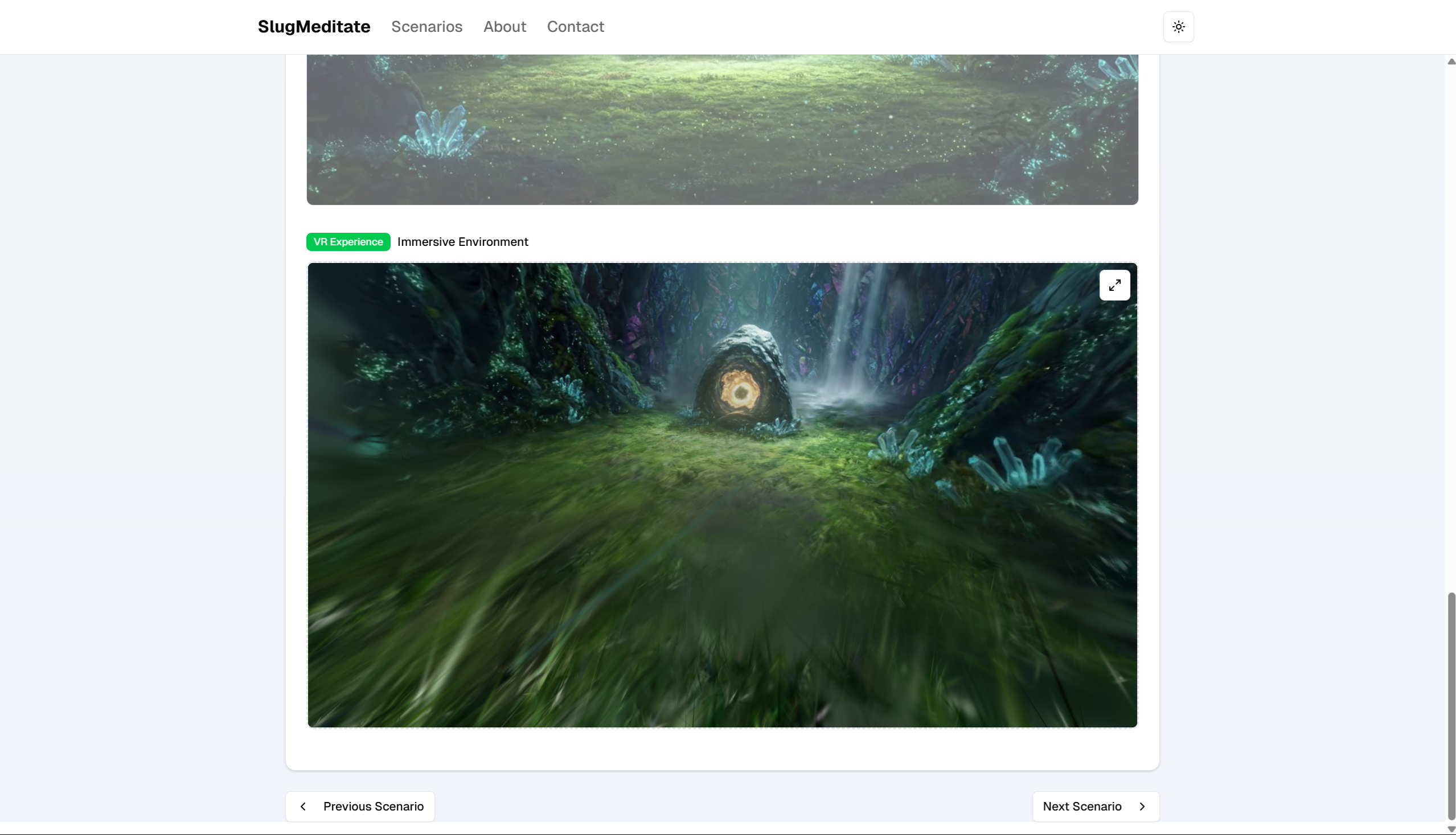
- 3D Scene Mapping – The generated video is converted into a volumetric 3D scene using Gaussian Splatting.
- VR Immersion – We render the 3D environment in-browser using Niantic Studio WebXR, paired with ambient music for a fully immersive and relaxing VR experience.
- Ambient Music Generation – Using Google MusicFX, we generate peaceful background music tailored to your prompt, completing the meditative vibe.
🧠 How We Built It
- Text-to-Image: Generated with Imagen 3, part of Google AI Gemini's generative capabilities.
- Image-to-Video: Animated using Gemini AI Veo 2 for cinematic smoothness and style.
- 3D Reconstruction: Used Gaussian Splatting to map video into a navigable 3D environment.
- VR Deployment: Built and displayed the immersive world using Niantic Studio WebXR.
- Sound Design: Integrated calming ambient tracks to enhance the meditative experience.

🧗 Challenges We Ran Into
- A lot of the API documentation for Google tools (like Imagen 3 and Veo 2) was either outdated or didn’t work as expected, so we had to piece things together from multiple sources and experiment through trial and error.
- We tried multiple methods of Gaussian Splatting, but hit limitations due to hardware constraints and time.
- It was tricky to get the image-to-video prompting just right. If the camera motion didn’t pan correctly or stayed too static, the 3D reconstruction would break or look flat.
- We were all new to Niantic Studio WebXR, so learning the ecosystem and figuring out how to display our 3D scene in a browser-based VR environment took some digging.
- CruzHacks had unreliable Wi-Fi, which made working with cloud-based AI tools extra tough — we had to sync and generate assets whenever the connection let us.
🏆 Accomplishments We're Proud Of
- Built a complete text-to-VR pipeline using cutting-edge generative AI in under 48 hours.
- Successfully integrated Google AI Gemini tools with VR rendering frameworks.
- Created an emotionally resonant experience combining creativity, tech, and wellness.
- Learned and operationalized advanced tools like Imagen 3, Veo 2, and Gaussian Splatting quickly.
📚 What We Learned
- Practical use of Google AI Gemini for generative media workflows.
- How to bridge AI media generation with 3D spatial computing and VR rendering.
- Rapid prototyping, team collaboration, and problem-solving under pressure.
🔮 What's Next
- Interactive environments – Let users explore within the VR space.
- Customization – Personalize music, ambient sounds, or guided meditations.
- Performance tuning – Reduce generation and render time for real-time feedback.
- Community gallery – Share and explore others' meditative scenes.
Built with love, curiosity, and caffeine by the SlugMeditate team at CruzHacks 2025
Powered by Google AI Gemini, Niantic Studio WebXR, and Gaussian Splatting.


