-
-
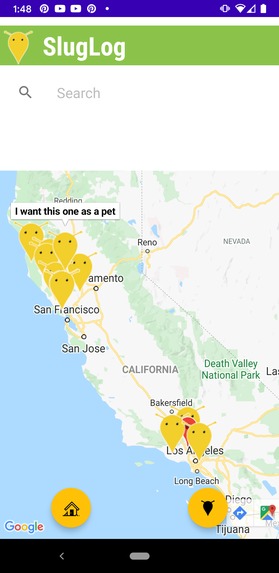
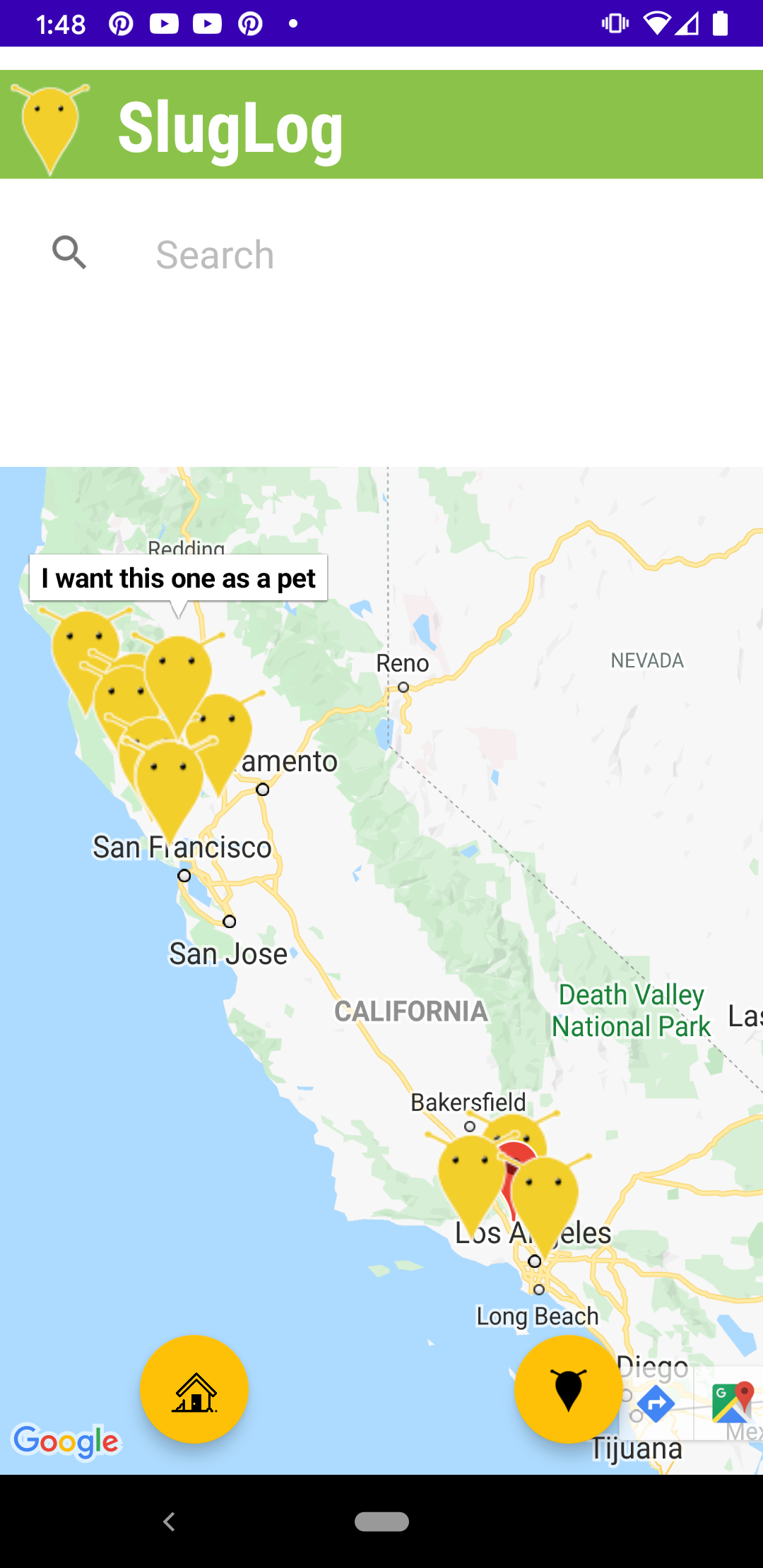
A display of slug markers placed down by users!
-
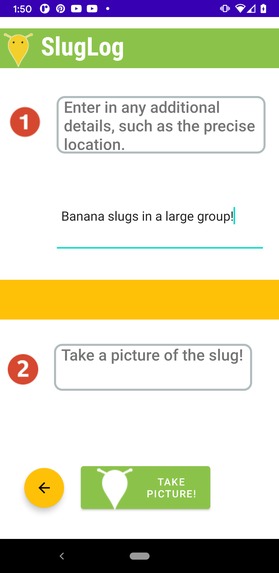
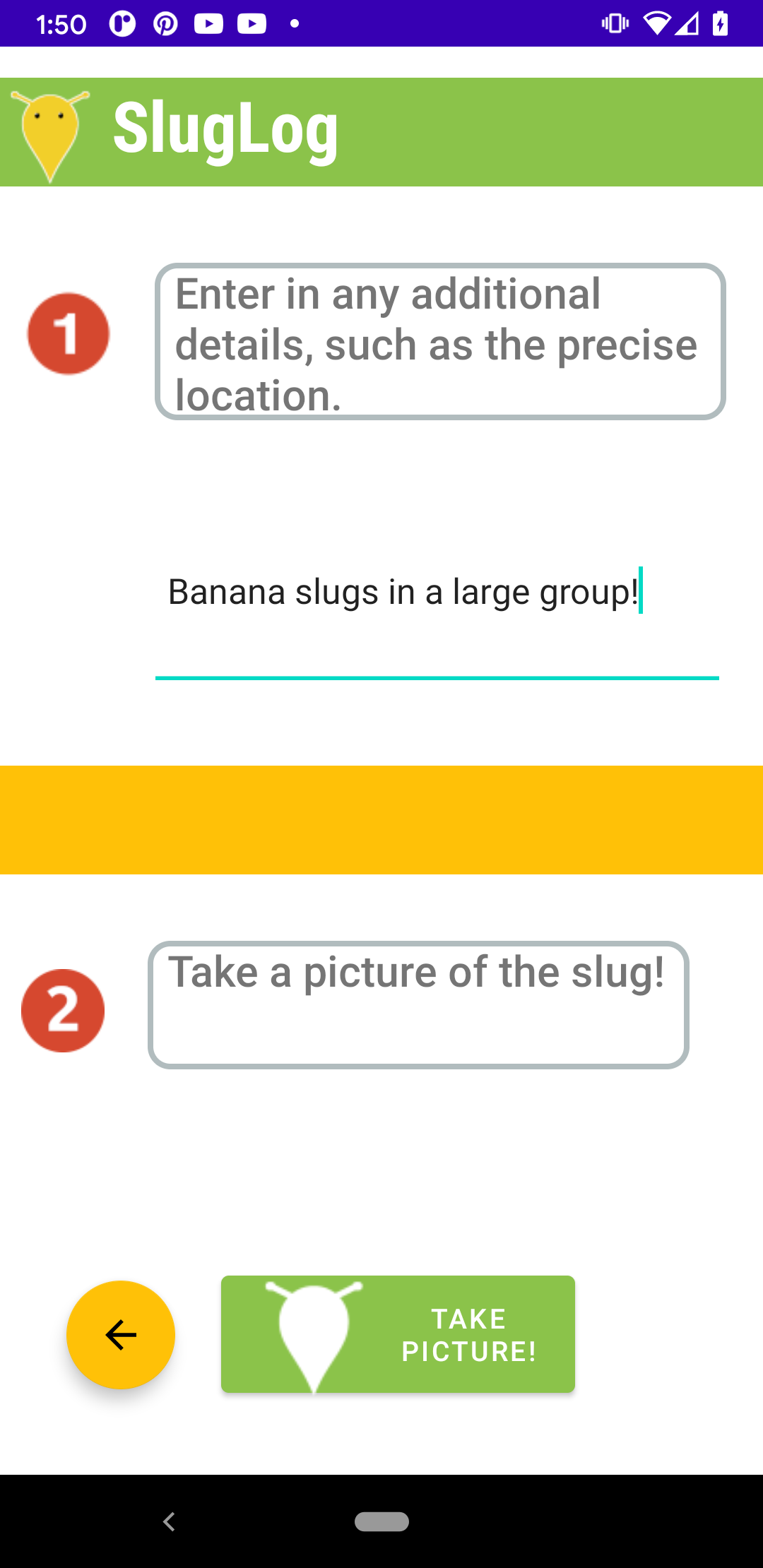
The form screen where users enter in additional information.
-
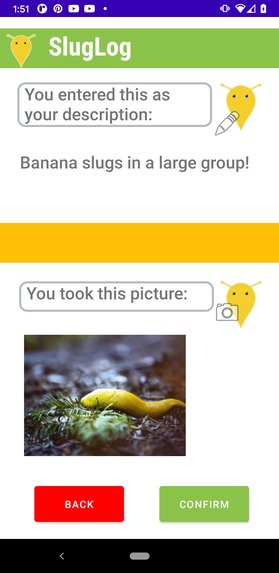
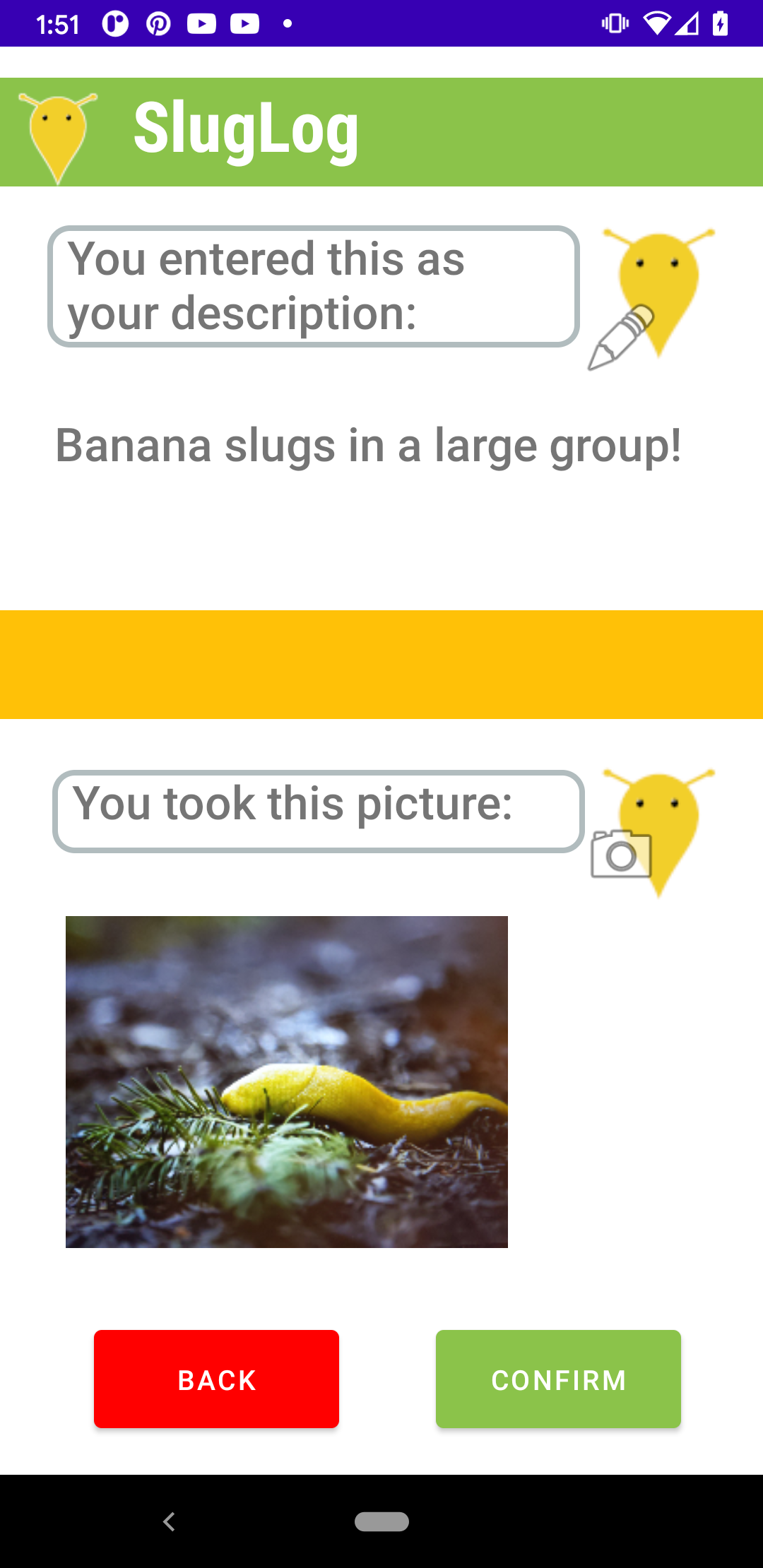
A confirmation screen where users can review details before officially marking down the pin.
-
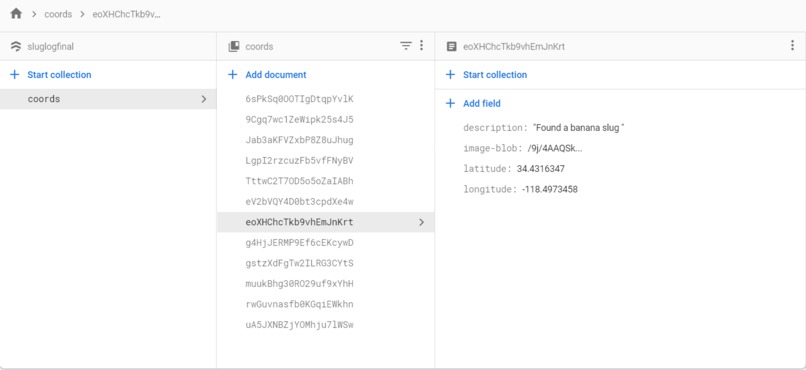
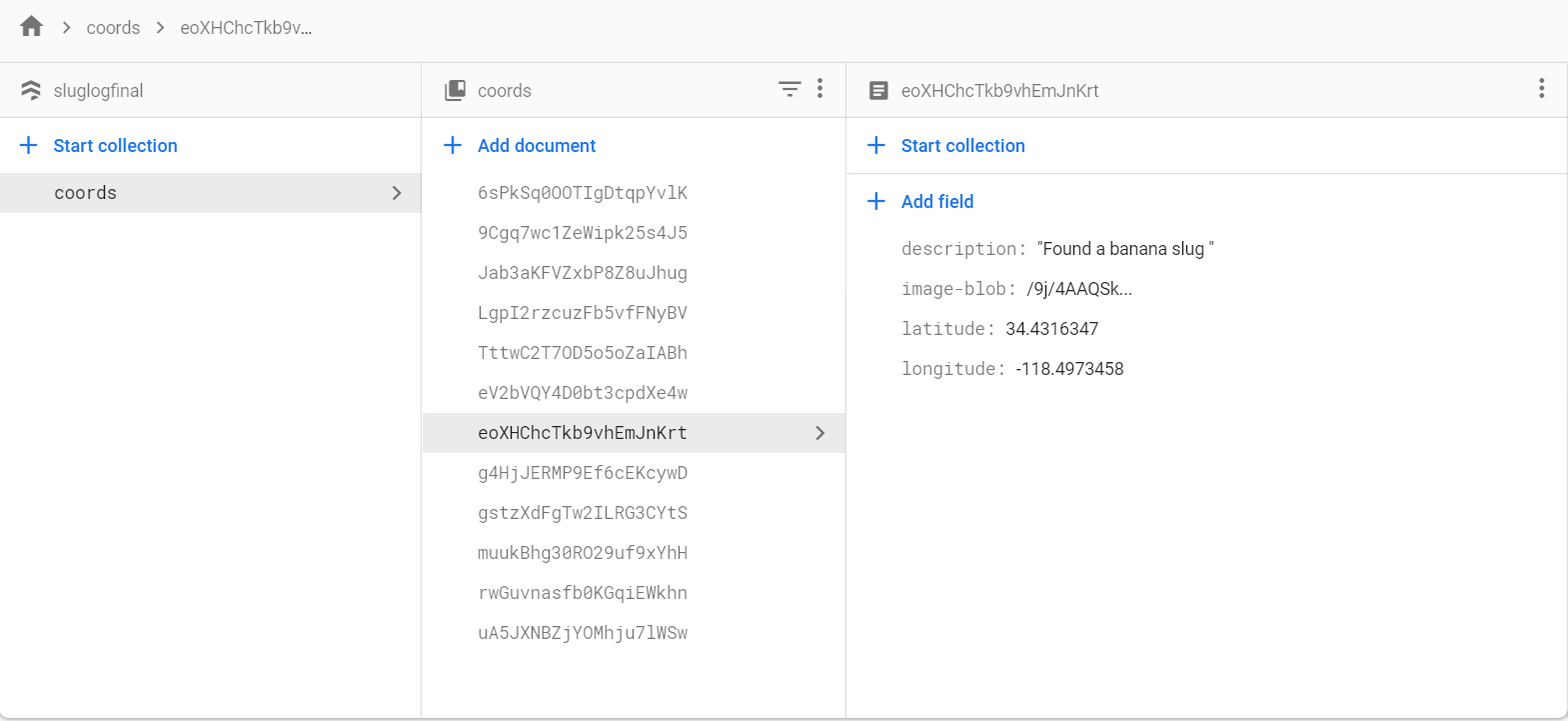
Our Firestore database with a document for each pin and with a field for latitude, longitude, description, and the Blob value of the image.
Inspiration
We wanted an application that could grow a sense of community at UCSC and foster a stronger appreciation for banana slugs. This application would also be helpful for monitoring the habitats and livelihood of banana slugs all over the world.
What it does
The app allows a user to capture a picture of a banana slug and pin it on google maps based on their current location. As a result, users of the app can see the locations of the different sightings of banana slugs on campus (and even around the world) and check them out for themselves. Users will be able to see pins that other users place, and they can see the description and picture associated with it as well.
How I built it
We have deployed an android app integrating the Google Maps API and the Firebase frameworks.
Challenges I ran into
Some of the challenges we encountered were connecting data(the latitude & longitude) from the backed to the frontend and displaying a marker with the description that the user input, but through hard work and caffeine we managed to code it in. We faced more issues when it came to our more lofty goals such as the problem of revealing images on the front end for the user due to the conversion of a bitmap to a bitmap array. Similarly, we could not figure out how to attach an image to marker. We also tried to implement machine learning into our project in order to check if the pictures taken by the user was indeed a banana slug, but we unfortunately could not implement it in time.
Accomplishments that I'm proud of
Things we are proud of is creating an app in such short amount of time in android studio, a framework we have never worked with. In addition, we had to learn the Firebase framework and Machine Learning. Some skills that I'm proud that we developed was working in a team, helping each other, and supporting each other through difficult barriers in our project.
What I learned
We learned how to use Java and how to apply it into Android Studio. None of us have had any prior experience to Android Studio or developing any mobile apps in general, so it was initially quite difficult to familiarize ourselves with it. Additionally, we learned about Firebase and how that could be used to store the data points of all the pins, as well as how to read from the database to print the points down. Although we did not ultimately manage to implement it into our program, we also learned about machine learning and vision AI. Lastly, many of us do not have much experience working in a team so this experience helped us learn more about how to make our code more clear and how to take advantage of GitHub more effectively.
What's next for SlugLog
We want to clean up the UI, add more features such as voice control, as well as implement image recognition through what we learned from machine learning and vision AI.

Log in or sign up for Devpost to join the conversation.