Inspiration
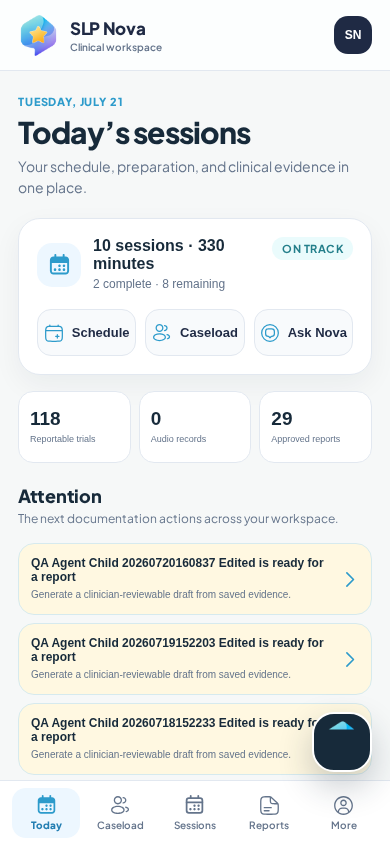
Speech-language pathologists often move between schedules, client goals, activity materials, trial notes, audio, and documentation during a single session. SLP Nova already addressed these needs on the web. For Build Week, we asked whether that infrastructure could become a focused mobile workflow supporting preparation, therapy, evidence review, and follow-up.
What it does
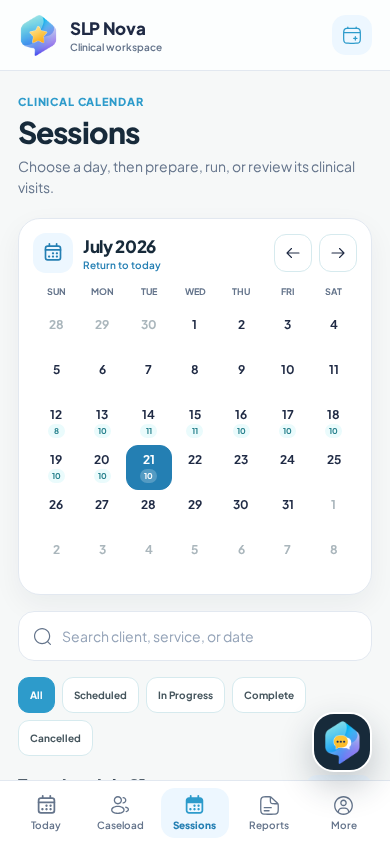
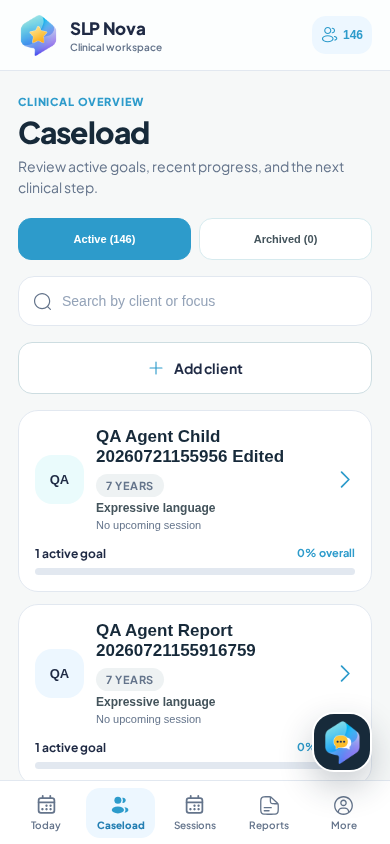
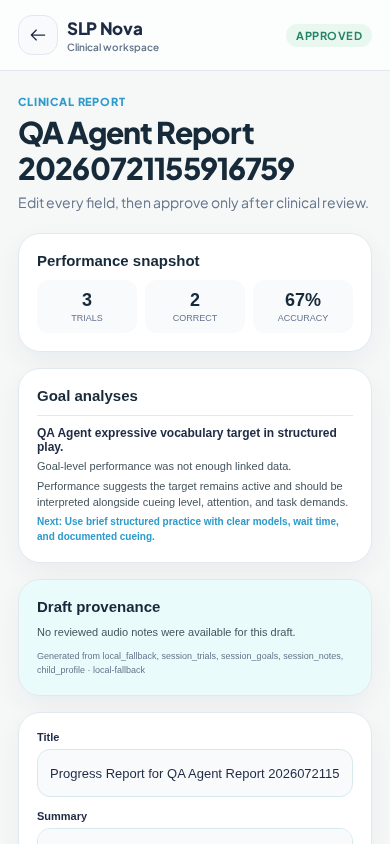
SLP Nova Mobile connects to the clinician’s existing authenticated workspace. An SLP can manage a caseload, schedule individual or group sessions, carry goals and materials forward, ask Nova for source-linked preparation support, run goal-based activities, record clinician-scored trials, capture consented audio, review transcripts and speaker labels, complete structured session close-out, and generate and approve reports.
The application includes all seven current website activity types and five legacy formats as clinician-paced mobile activities. It does not claim to score speech automatically. Trial interpretation, transcript attribution, and report approval remain under the SLP’s control.
How we built it
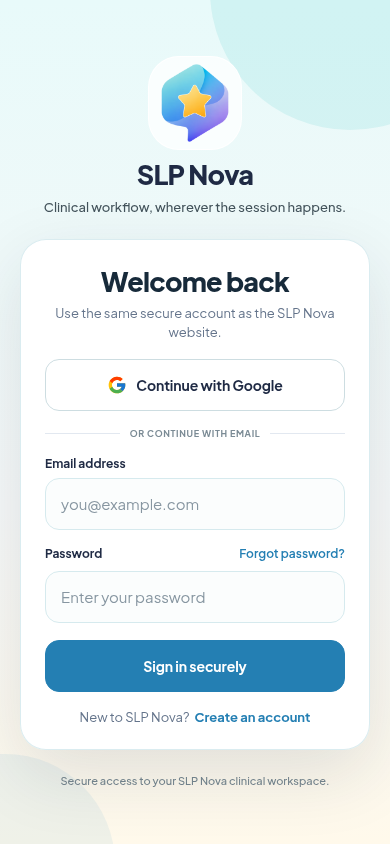
We created a new Expo SDK 57 and React Native application instead of wrapping the website in a WebView. Expo Router provides native navigation across iOS, Android, and responsive web. Supabase handles authentication, while native tokens are protected using SecureStore. The application retains the official SLP Nova branding and Plus Jakarta Sans typography used by the website.
The existing Next.js platform received a deliberately limited mobile API boundary: verified bearer-user sessions, owner-scoped workspace bootstrap, invite-only OAuth enforcement, and batch retrieval of session evidence. Existing ownership, legal, entitlement, rate-limit, audit, private-storage, AI, speech, and reporting rules remain enforced server-side.
Production services run on Azure App Service, Azure Database for PostgreSQL, private Azure Blob Storage, Key Vault references, and Azure monitoring, while Supabase remains responsible for authentication. This is a privacy-aligned architecture—not a claim of HIPAA compliance. Workflows involving PHI/ePHI or requiring a BAA remain gated pending contractual and legal approval.
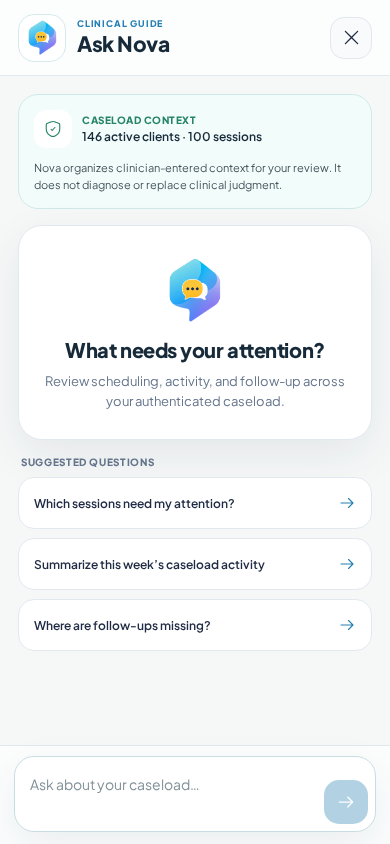
Ask Nova communicates with protected SLP Nova assistant endpoints. Sources, warnings, and provider or fallback status remain visible to the clinician, while provider credentials never enter the mobile bundle.
Codex with GPT-5.6 was the primary engineering environment for auditing the existing platform, implementing the Expo application and mobile API boundary, debugging authentication and CORS, generating tests and documentation, and validating native exports.
Challenges we ran into
The hardest challenge was preserving the trust boundary of an existing clinical platform. Mobile authentication could not bypass invite-only access. Audio needed to remain private and consent-gated. Speaker labels could not become attributed report evidence until reviewed by a clinician. Trial writes also needed to preserve their goal and material identity while avoiding race conditions.
Browser authentication exposed another platform-specific problem: API preflight requests contain no bearer token, so authentication middleware redirected them before the actual request could run. We implemented an exact-origin CORS boundary without enabling wildcard access or cross-origin cookies.
Accomplishments that we’re proud of
- A genuine React Native mobile counterpart—not a WebView or static mock-up
- Shared authenticated data and server-side security with the existing platform
- A complete preparation → activity → evidence → report workflow
- Real caseload, workspace, preparation, and reporting AI surfaces
- Twelve goal-linked mobile activity formats with explicit prompt and evidence states
- Consent-aware audio, transcription, speaker review, retention, and deletion
- Clinician-reviewed reports with visible provenance and approval-gated sharing
- Passing strict TypeScript, lint, automated tests, Expo Doctor, and iOS/Android exports
- Clear commit-level separation between the existing platform and Build Week development
What we learned
The valuable mobile product is not simply a smaller website. It is a continuous clinical workflow with fewer context switches.
AI is more credible when its scope, limitations, and sources are visible—and when the clinician retains final control. Reusing a mature server contract required more security work than building a disconnected prototype, but it made the result meaningfully testable as a real product.
What’s next for SLP Nova
Next steps include broader physical-device acceptance testing, signed OAuth validation, App Store and Play Store privacy and signing work, interface localization, and evaluating whether clinics require an encrypted offline write queue.
The first release will keep billing as a secure website handoff until App Store and Play Store policies have been fully reviewed.
Built With
- azure
- azure-app-service
- azure-blob-storage
- azure-key-vault
- expo-router
- expo.io
- github-actions
- gpt-5.6
- next.js
- openai-codex
- postgresql
- react-native
- supabase-auth
- typescript

Log in or sign up for Devpost to join the conversation.