-
-
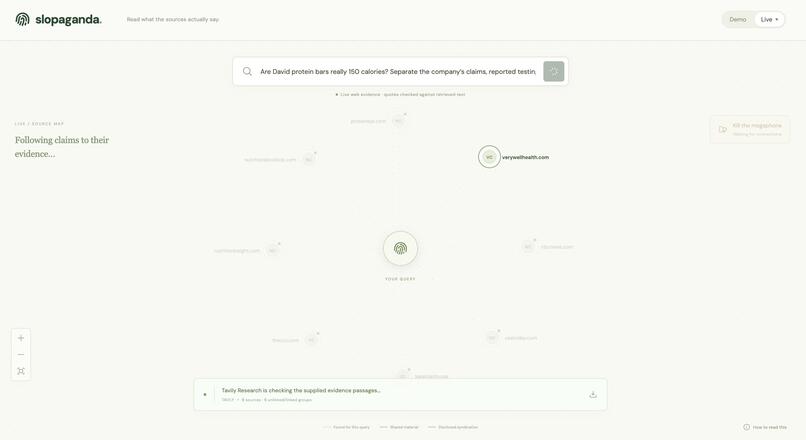
Inspect evidence
-
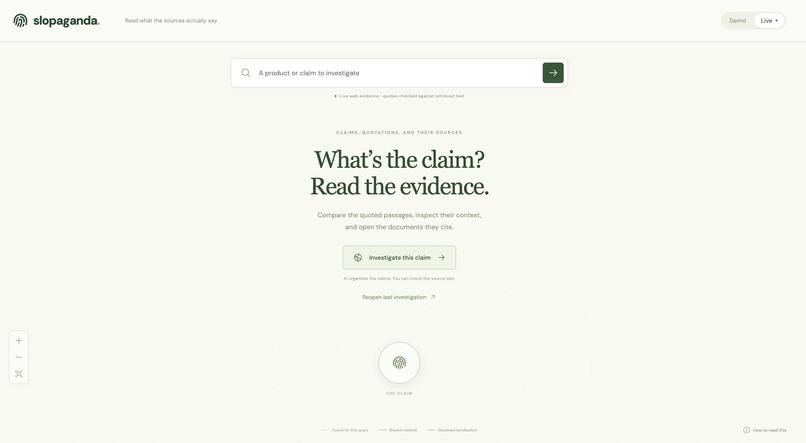
Landing
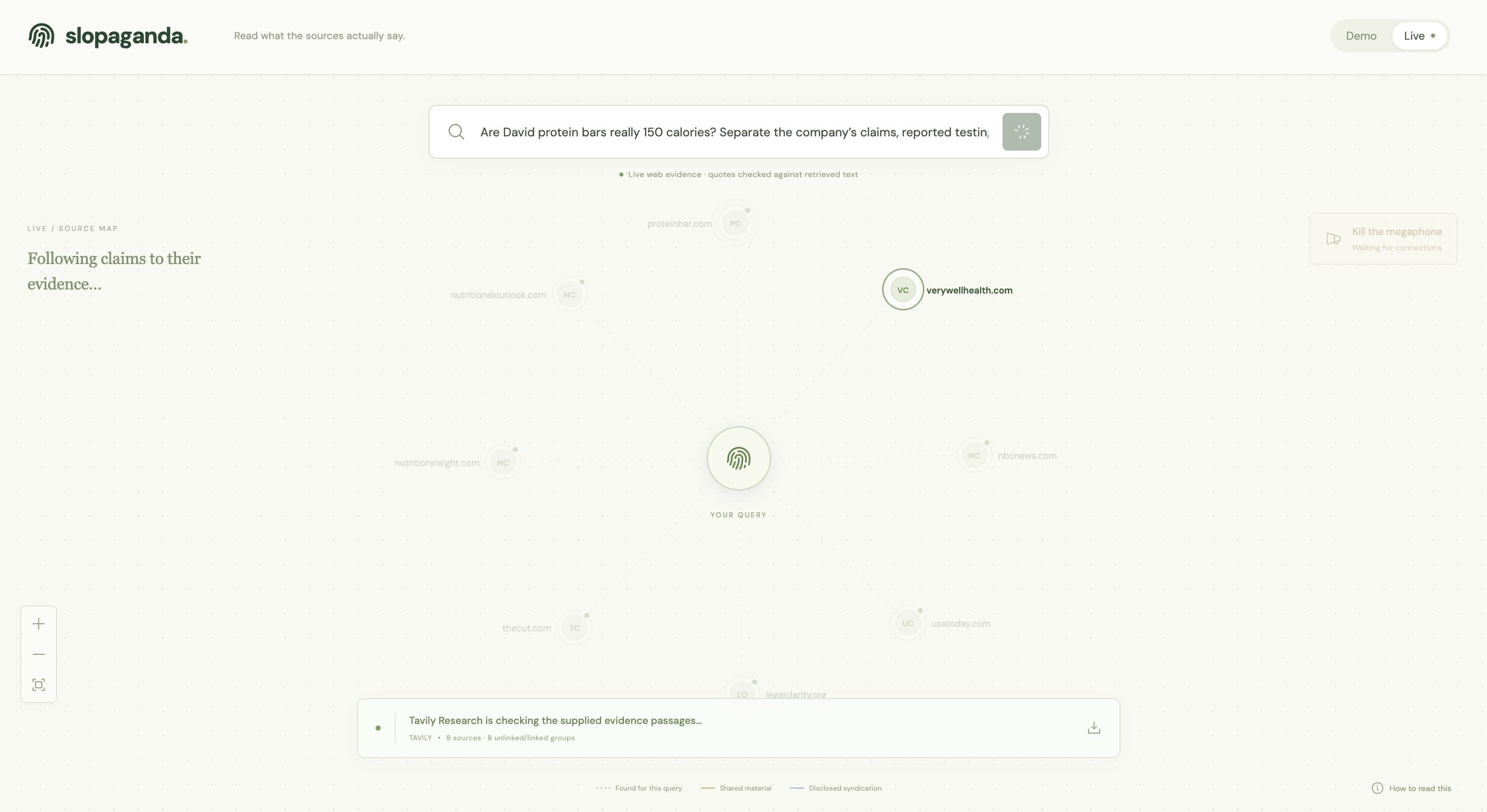
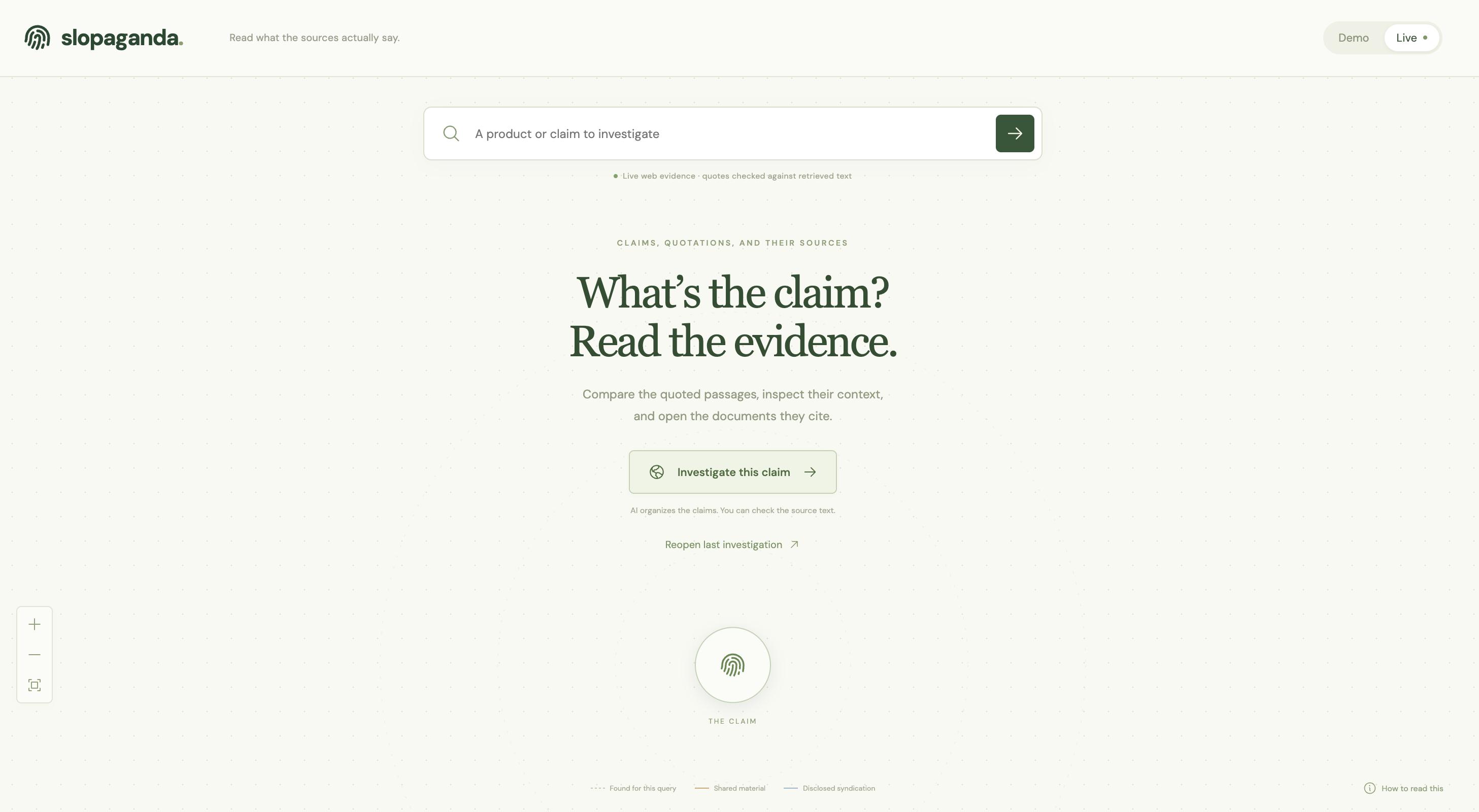
Inspiration
Twenty websites saying something doesn’t mean twenty people checked it.
Product research mixes company statements, reviews, personal experiences, and articles repeating someone else’s findings. Checking what each source contributes means opening pages, locating passages, and following references.
We built Slopaganda to make that process easier.
What it does
Slopaganda turns a product question into an interactive evidence workspace.
Users can:
- Select a claim and read the exact passages associated with it.
- Expand quotations to inspect their surrounding context.
- See which pages link to the same reference.
- Open cited documents and search their wording.
- Exclude sources and see which passages remain.
- Explore the evidence graph, reopen investigations, and export their findings.
ChatGPT can research the same question. Slopaganda packages the checking process into controls that work on the same saved evidence, so users can inspect references and change source selections without requesting another answer.
How we built it
Telem handles search across Exa and Brave. Our Node.js server combines the results and removes duplicate URLs.
Tavily Extract retrieves page text. Tavily Research organizes that material into claims, associates evidence passages, and proposes follow-up searches. Our pipeline can execute up to two proposed searches and reconsider the evidence.
Before accepting a quotation, the server checks that it appears in the extracted text. Accepted passages retain their position and a fingerprint of the saved source text.
We built the interface with React and Vite, including the reading view, graph, source controls, and cited-document viewer. Credentials and cached investigations stay on the server.
Challenges we ran into
A page reporting a test is different from the original test. A shared reference does not establish copied reporting, and a nearby hyperlink may not support the claim.
We addressed this by exposing the actual passages and links. Quote matching is checked mechanically; claim grouping, source roles, and support/challenge labels remain AI interpretations that users can inspect.
Accomplishments that we're proud of
We connected both sponsor products into a working research and evidence-inspection flow.
In a recorded VPN investigation, three pages linked to the same Surfshark audit announcement. Slopaganda exposed that shared reference and retrieved the announcement for inspection, making the distinction between several articles and their common reference visible.
What we learned
Finding a quotation does not establish that it is true. Counting pages does not establish independent confirmation.
The useful result is evidence people can inspect, question, and revisit.
What's next for Slopaganda
Automatically follow relevant citations further, show where inspection stops, and compare how a claim’s wording changes between an article and its cited evidence.
Built With
- html
- javascript
- node.js
- react
- tavily
- telem-ai
- vite
