-
-
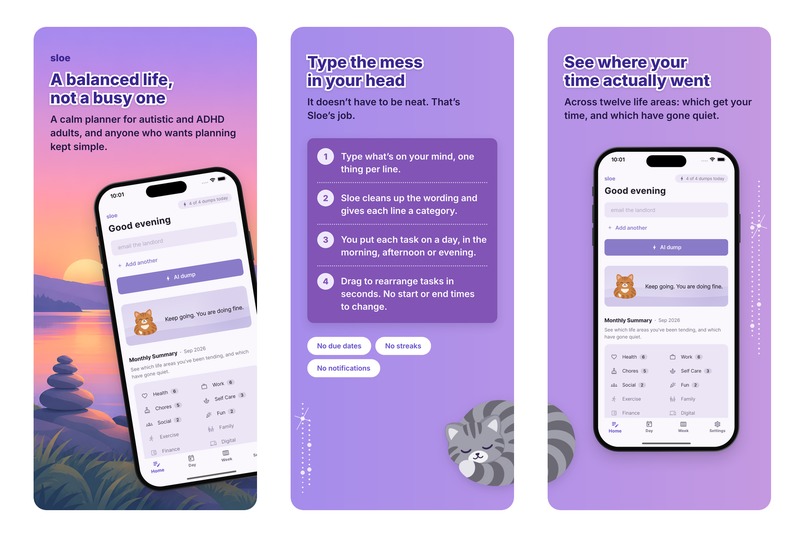
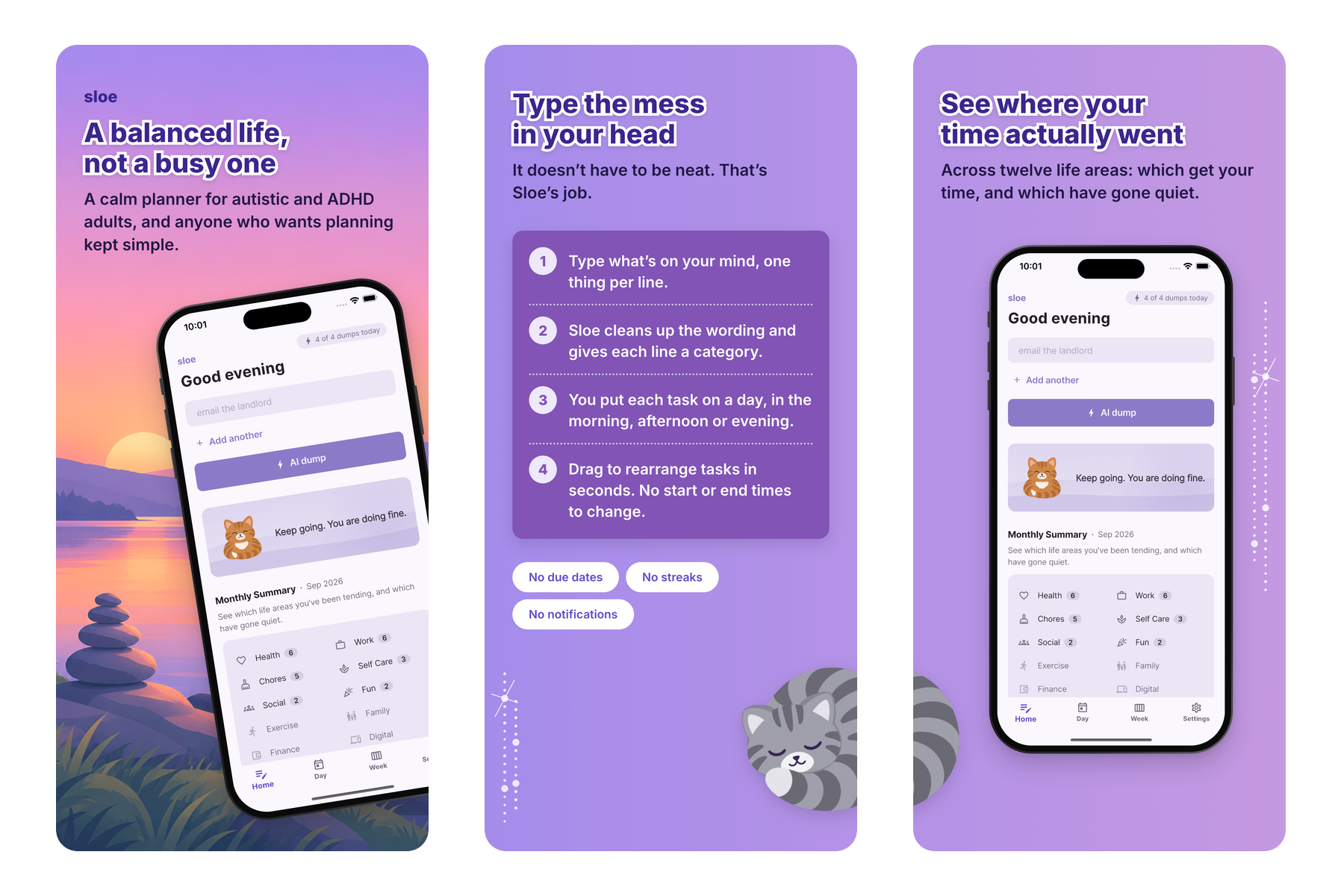
A balanced life, not a busy one. Type the mess in your head, and see where your time went across twelve life areas.
-
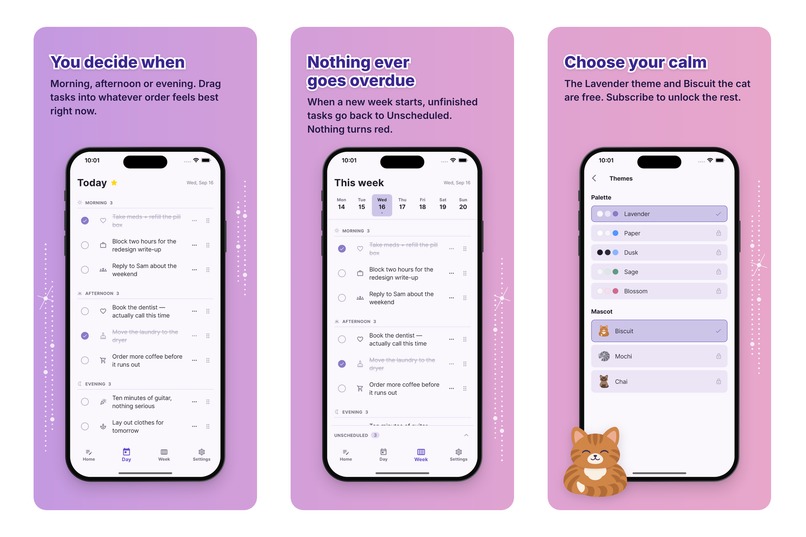
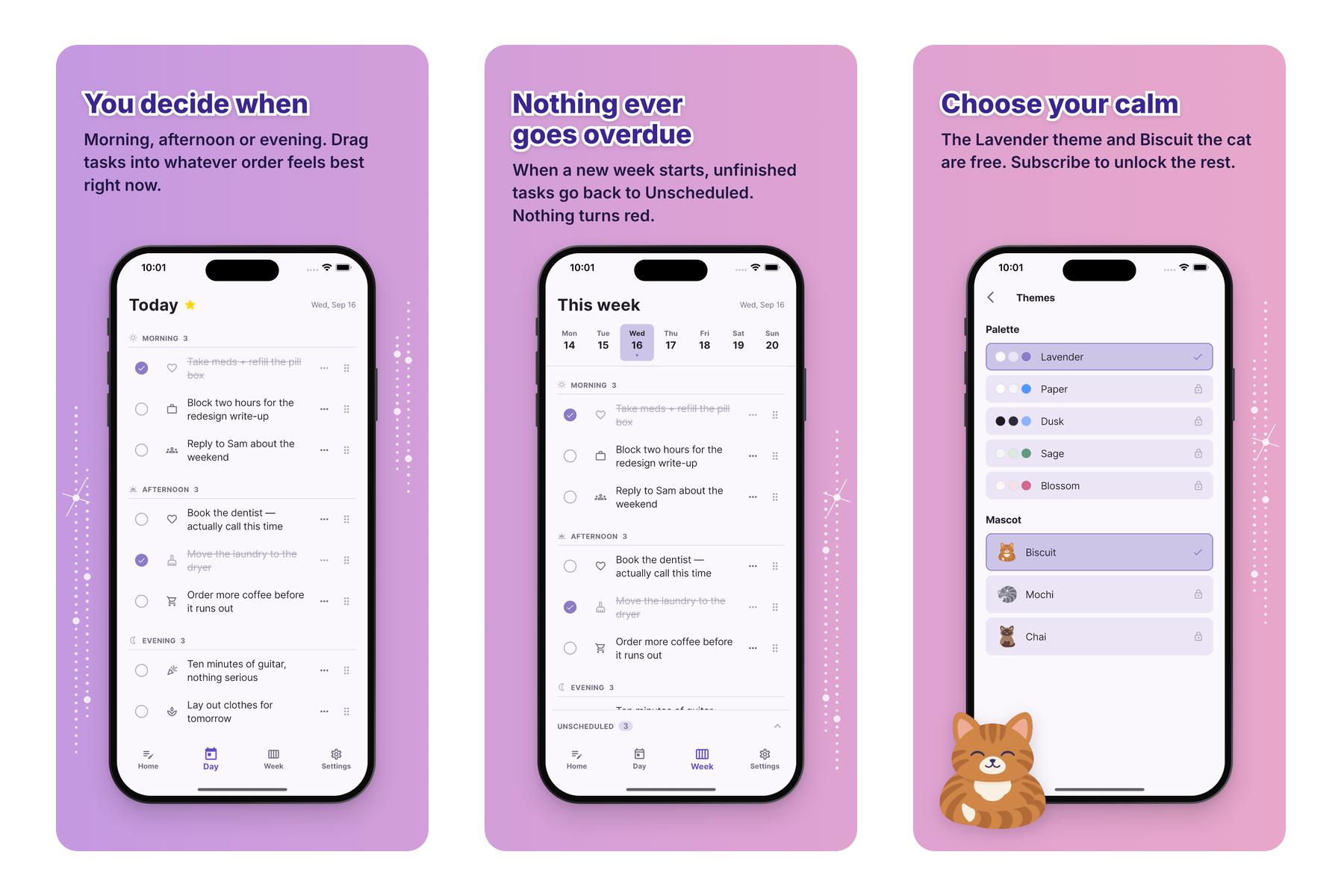
You decide when. Nothing ever goes overdue. Choose your calm.
-
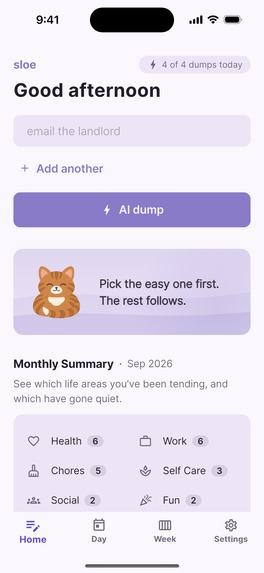
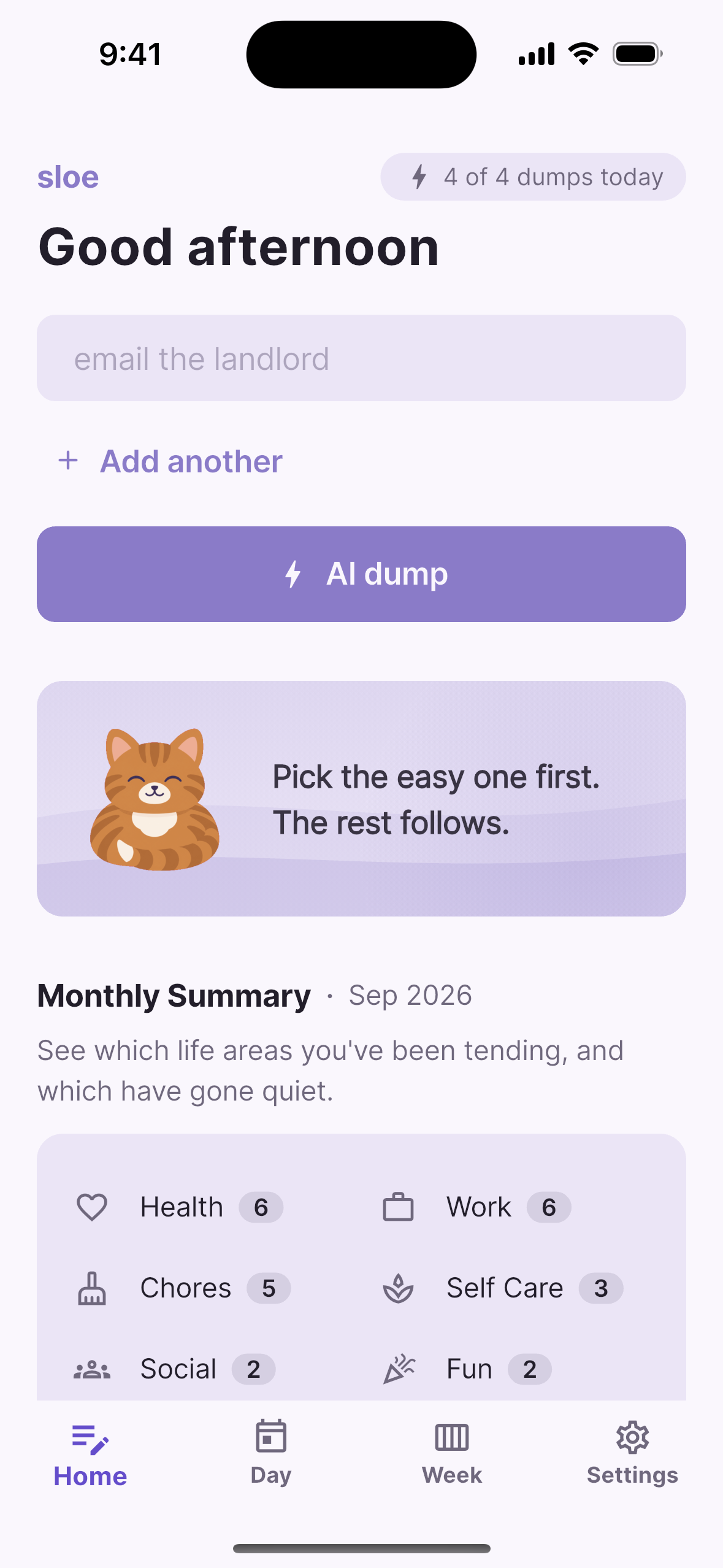
Home: brain dump, and the Monthly Summary across twelve life areas (1179 x 2556, frameless)
-
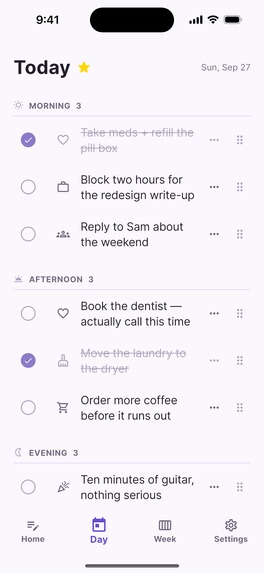
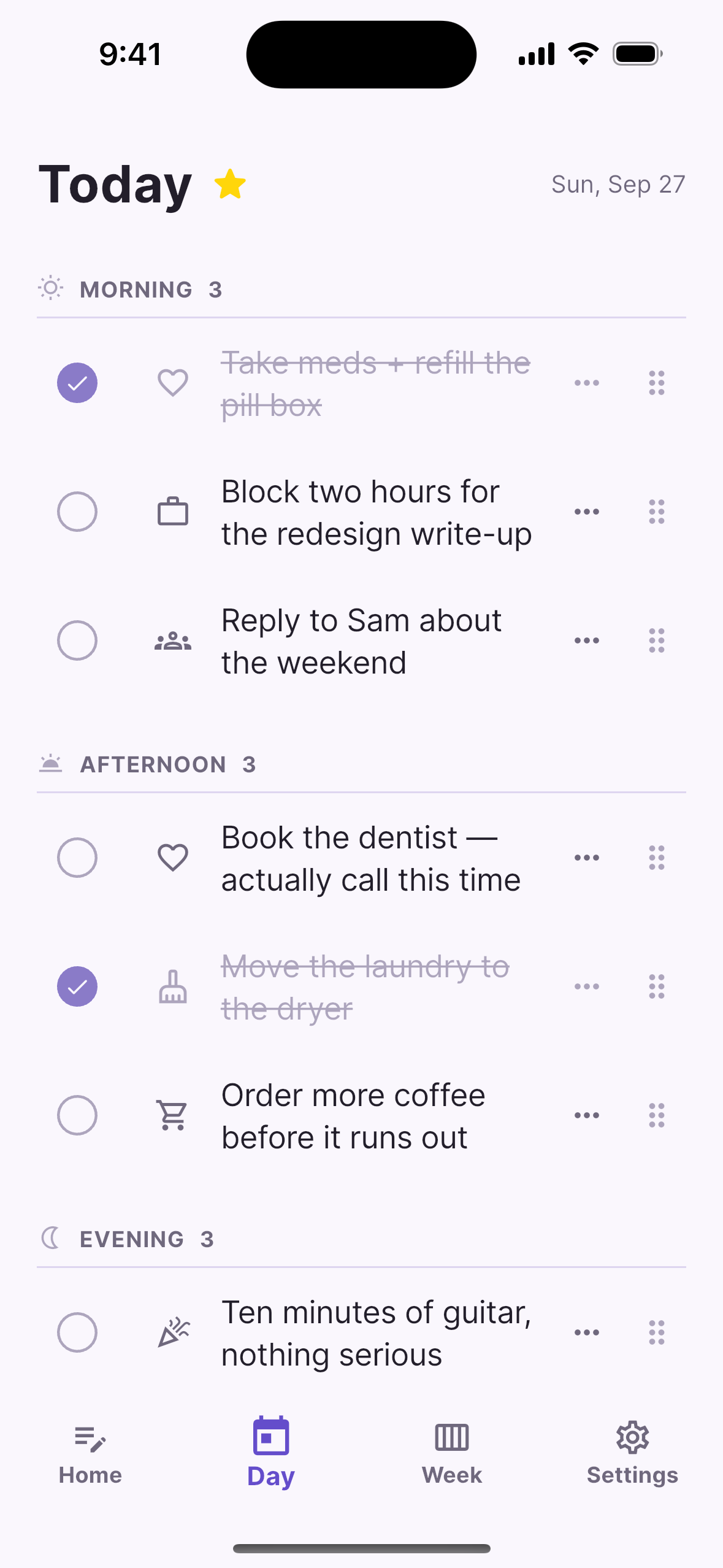
Day: morning, afternoon and evening, with no start or end times
-
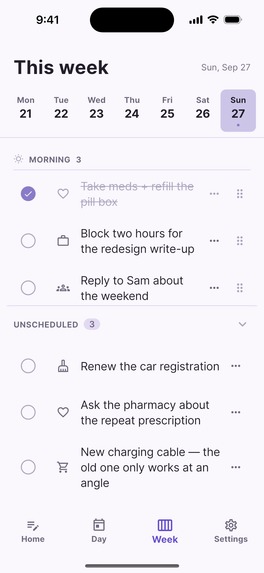
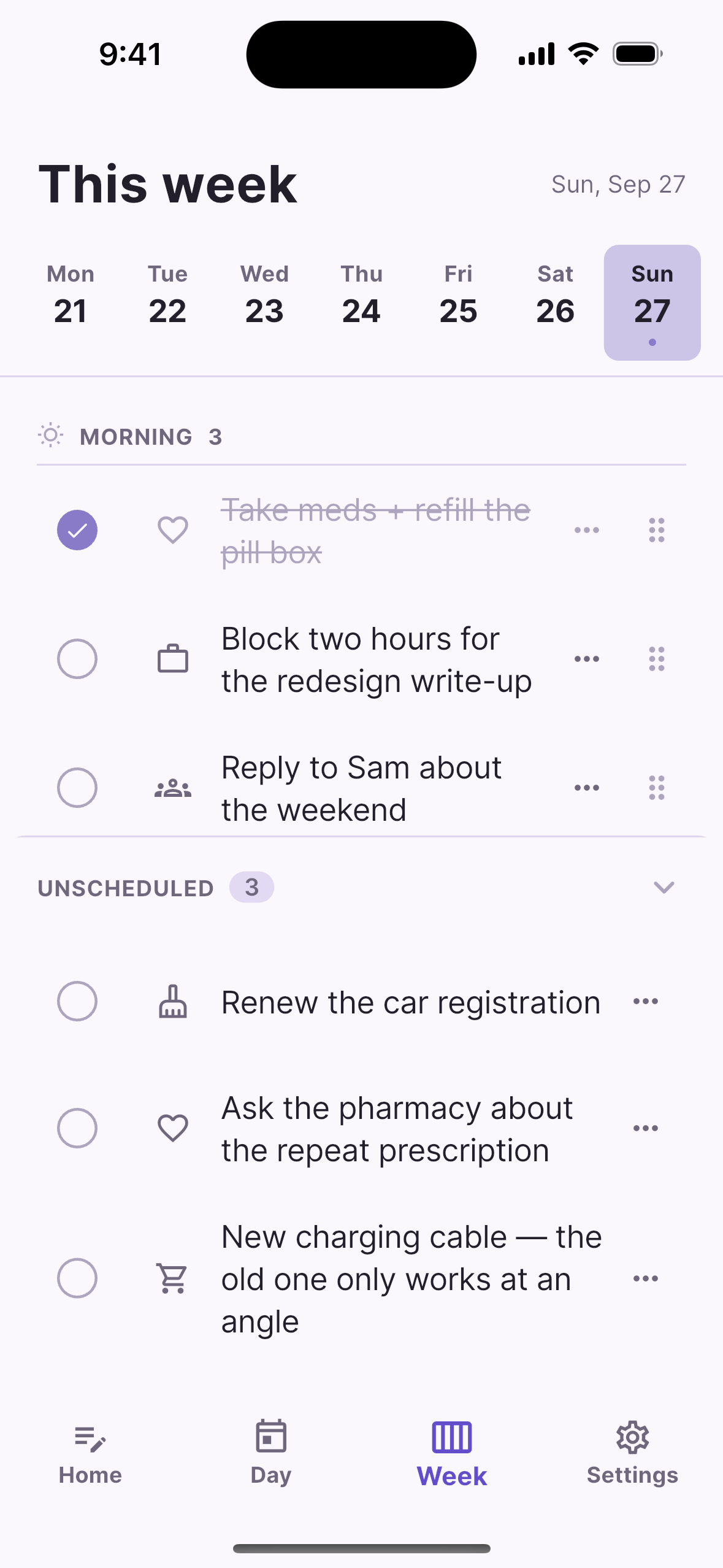
Week: tap a day to see its tasks. Tasks not on a day yet wait in Unscheduled.
-
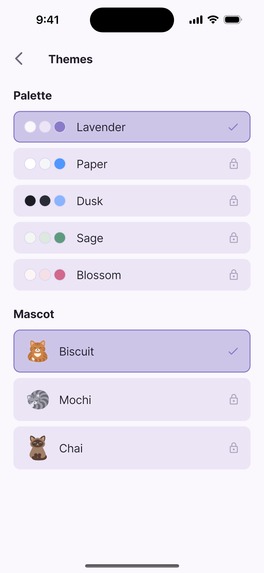
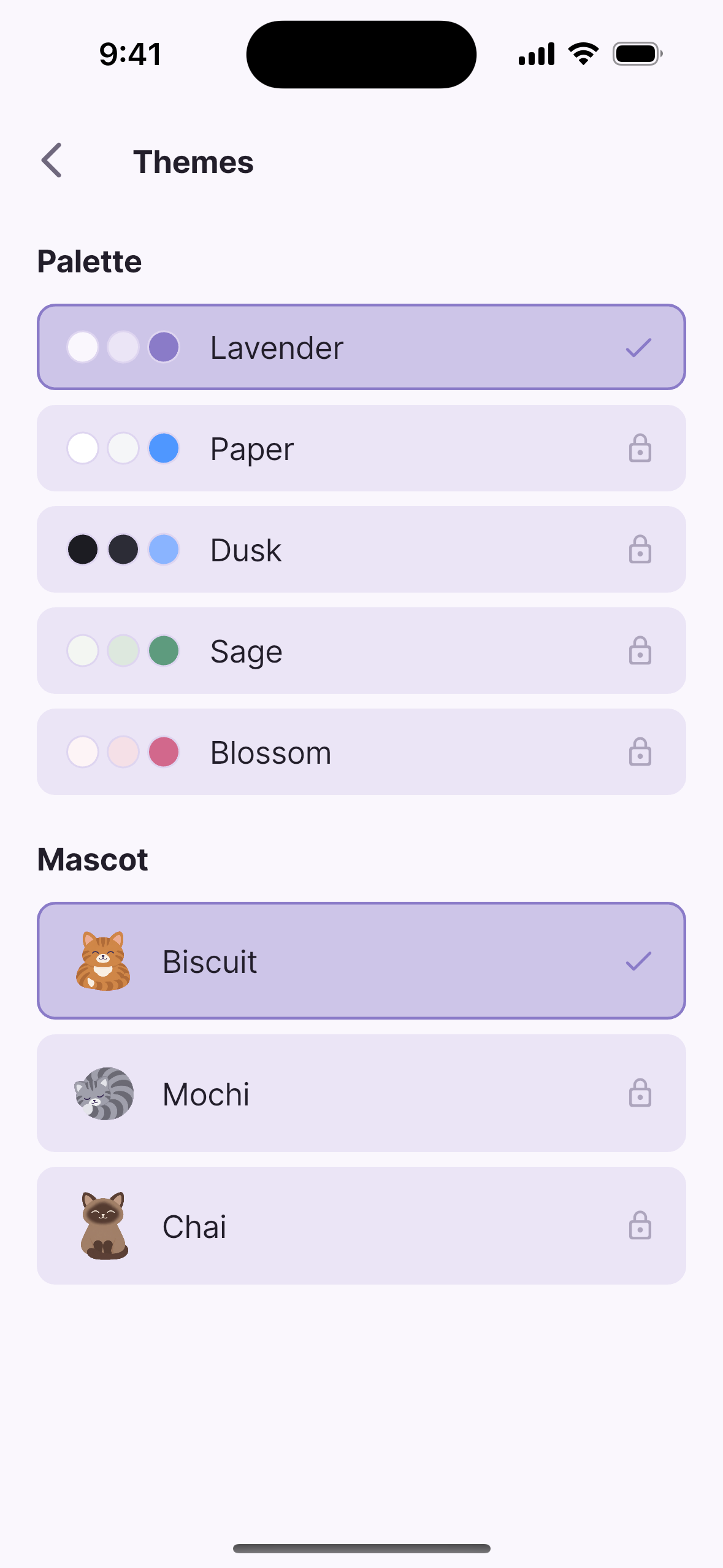
Themes: Lavender and Biscuit are free, and a subscription unlocks the rest
-
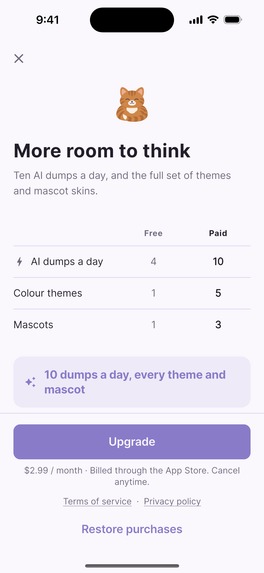
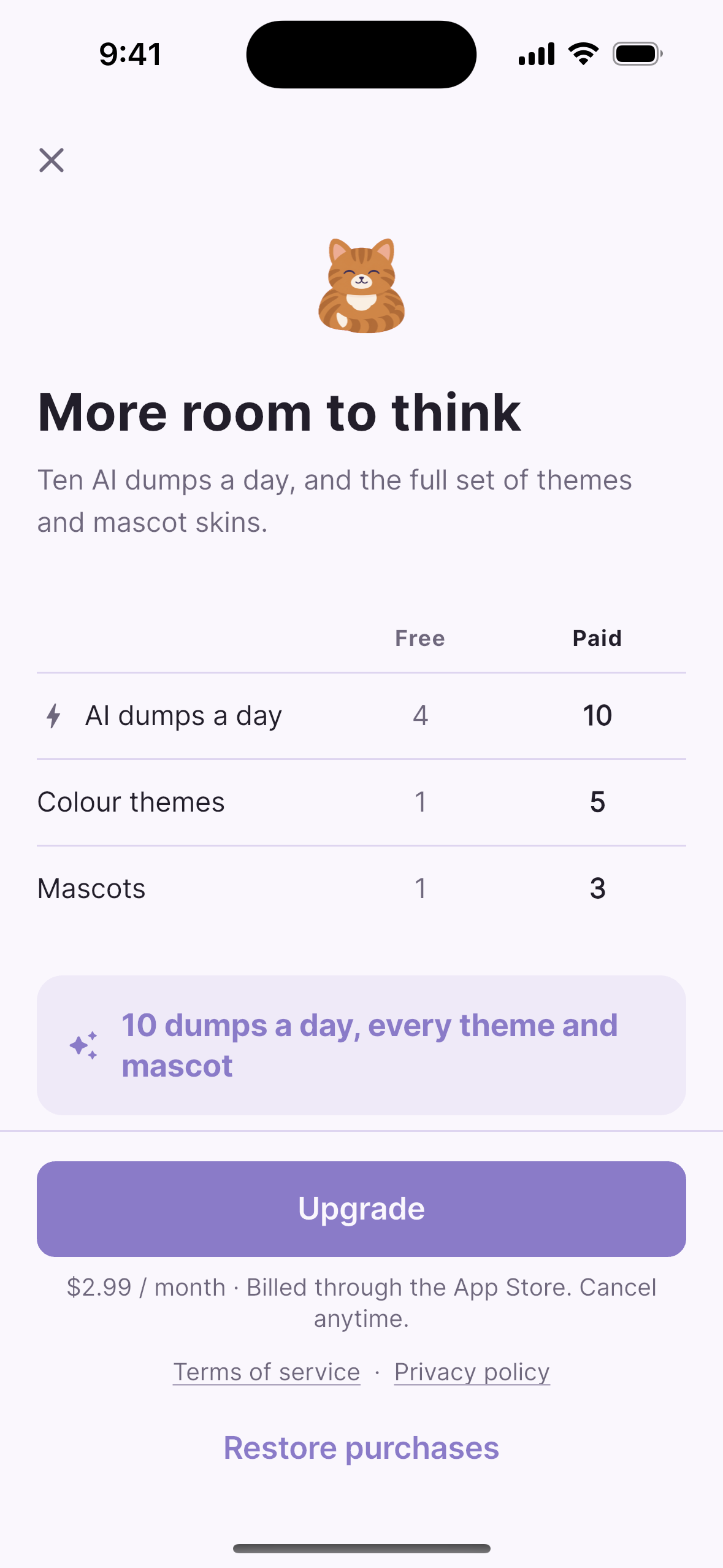
The paywall: one monthly subscription
-
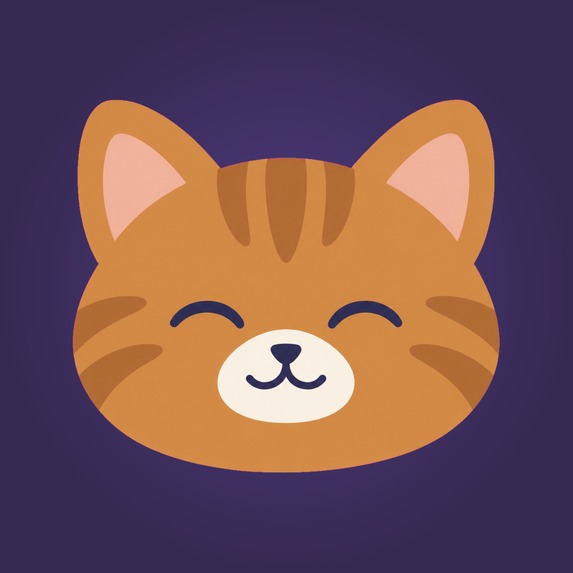
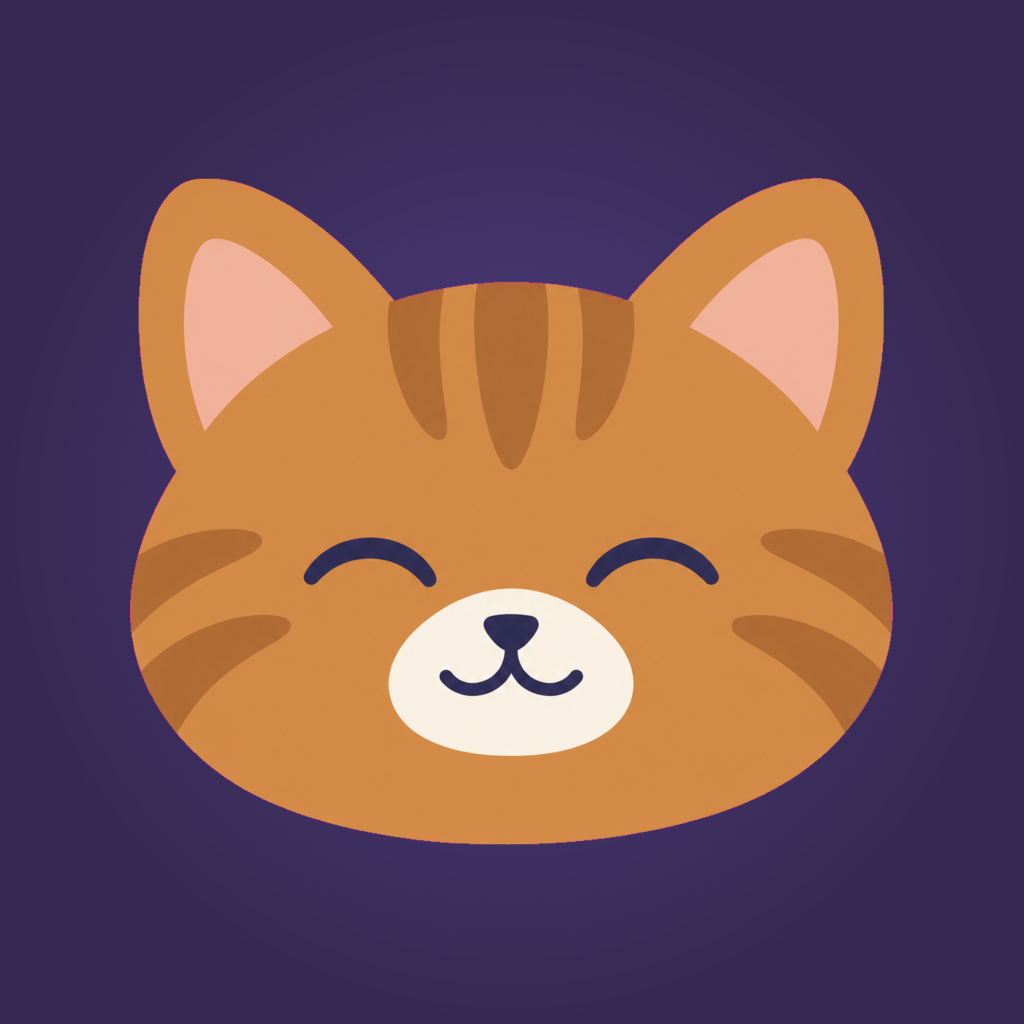
Sloe app icon (1024 x 1024)
Inspiration
Among neurodivergent people around me, and many more I've seen sharing their experiences online, I kept noticing the same pattern: focus tends to go to one or two areas of life, like work or a special interest, while others such as health, friends or rest quietly slip out of view. By the time they notice, the imbalance has already grown, and it can affect their physical and mental health, and their quality of life.
Most planners didn't help with this. They measure productivity: how many tasks you finished, how long your streak is, what's overdue. Nobody was asking the question that mattered: where is my time actually going, and what have I stopped making time for?
I wanted a planner built around balance instead: a balanced life, not a busy one. The name comes from the same idea: Sloe sounds like "slow", a gentle reminder that there's no need to rush. Sloe was shaped by autistic lived experience at every step, from the words on each screen to what the app deliberately leaves out.
What it does
Sloe is a calm planner for autistic and ADHD adults, and anyone who wants planning kept simple.
- Brain dump. Type what's on your mind, one thing per line. It doesn't have to be neat: Sloe cleans up the wording and gives each line one of twelve fixed categories.
- You decide when. Put each task on a day, in the morning, afternoon or evening. There are no start or end times, so when plans change, because you're tired, something came up, or you just feel like a different order, you drag tasks around in seconds.
- Nothing ever goes overdue. When a new week starts, unfinished tasks go back to Unscheduled. No due dates, no streaks, no notifications. Nothing turns red.
- Monthly Summary. Home shows which of twelve life areas got your time this month, and which have gone quiet, so you can act before the imbalance grows.
- Calm by design. Soft themes and a mascot with something kind to say. No account, and your tasks stay on your device.
How it makes money: a free tier with a set number of AI brain dumps a day, one theme and one mascot. One monthly subscription, through RevenueCat, raises the daily limit and unlocks every theme and mascot.
How I built it
I built Sloe in about a week, including the App Store screenshots, the demo video and the Whisker Wonder Labs website.
- Tools: Claude Code, first to plan the project scope and features, then as my coding assistant in VS Code. ChatGPT and Adobe Firefly for images, and ffmpeg for the demo video.
- App: built with Flutter, available on iPhone and iPad. It uses BLoC for state management and a local SQLite database (Drift), so tasks are saved on the device.
- AI: the app never holds an API key. A small Cloudflare Worker receives the brain dump and asks OpenAI (gpt-5-nano) to tidy each line and choose a category, using a strict response format. It never splits or merges lines, and requests are rate-limited.
- Offline fallback: if the network or the model fails, Sloe still splits the text into tasks on the device, without categories, so nothing you typed is lost.
- Safety: before anything is sent, an on-device check looks for crisis phrases. If one matches, nothing leaves the device, and a helpline directory is shown instead. It's a simple phrase list in nine languages, so it can miss unusual wording or other languages: a safety net rather than a guarantee. Sloe is not a crisis service.
- Payments: RevenueCat handles the subscription, entitlements and restoring purchases.
Challenges I ran into
- Starting from zero on the App Store. It was my first time setting up an App Store developer account from scratch, and my first time setting up in-app subscriptions and payments. Getting through App Review took several rounds: an information request on the first submission, and later a missing Terms of Use link on the store page.
- Store screenshots that tell a story. I'd never designed App Store screenshots beyond plain captures. Designing six panels with captions, a consistent look and an illustrated first panel, with the help of an AI assistant, was new.
- My first demo video, made with the help of an AI assistant, from screen recordings to captions, music and timing.
- Telling the why, not just the what. The hardest part of the screenshots, description and video wasn't the design, it was the point of view. The first versions only showed what Sloe does. Most people, including most judges, don't live with the problem, so I reworked them to explain why Sloe exists: focus can go to one or two life areas while the rest goes quiet, and the goal is a happier, more balanced life. I went through every line with the help of an AI assistant, but every choice was mine: plain words for non-native readers, no guilt-inducing language ("gone quiet", never "neglected"), and no promises the app can't keep.
Accomplishments that I'm proud of
- Publishing my own app on the App Store for the first time.
- My first designed App Store screenshots and my first demo video.
- Wording that is honest, kind and easy to understand: in the app, the App Store screenshots and description, and the demo video.
- Most of all, building something that can help autistic and ADHD adults live a more balanced life.
What I learned
- How app subscriptions work end to end: App Store Connect, RevenueCat, offer codes and restoring purchases.
- Setting up an App Store developer account and getting an app through App Review.
- Making a demo video and designed App Store screenshots, with an AI assistant as a collaborator.
What's next for Sloe - Brain Dump to Tasks
- Android. Sloe is built with Flutter, so the app already runs on Android (I've tested it on my own phone). What's left is the Play Store listing, and setting up the subscription for Google Play in RevenueCat.
- Looking back at previous months' summaries, not just the current month.
- Optional sync between your devices, for people who want it. Sloe will always work without an account.
- More themes and mascots.
- Updating the subscription instantly after redeeming a code, without reopening the app.
- Ongoing improvements to the design and experience, shaped by user feedback.

Log in or sign up for Devpost to join the conversation.