-
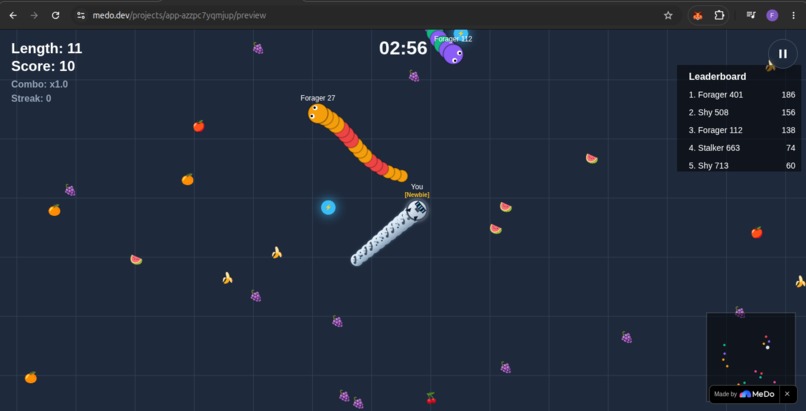
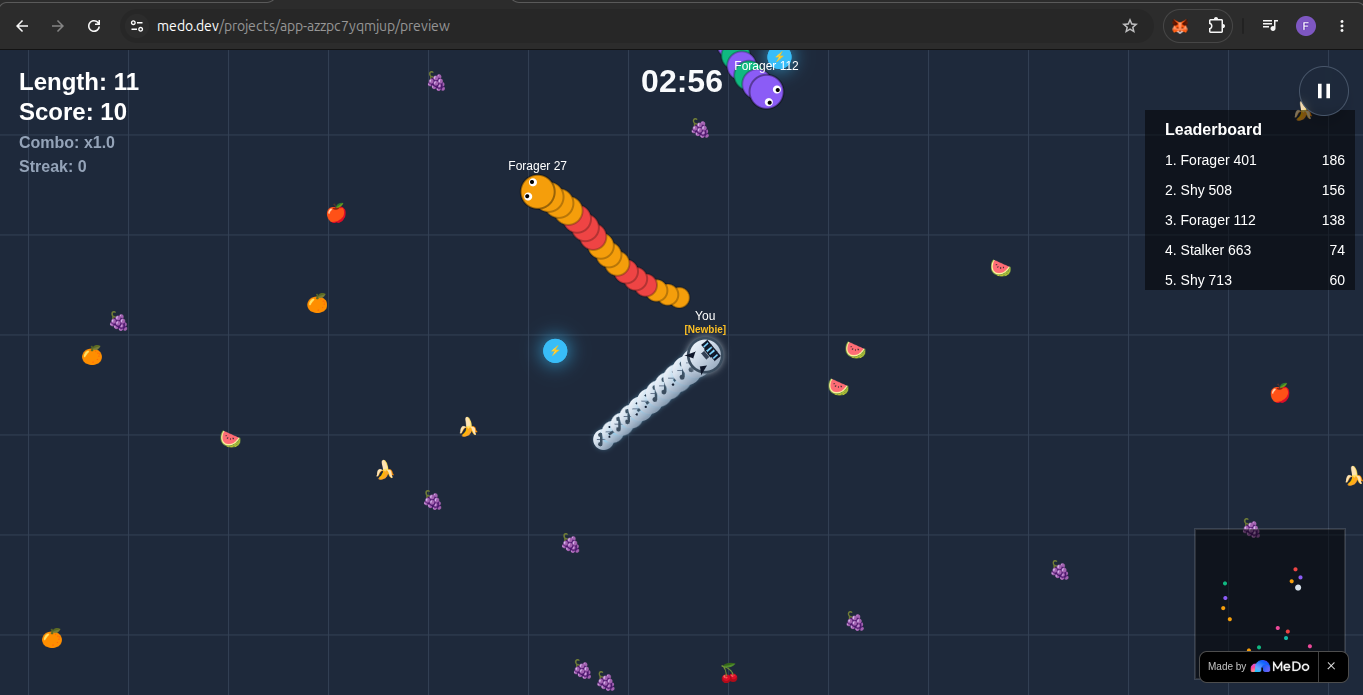
SlitheForge GamePlay
-
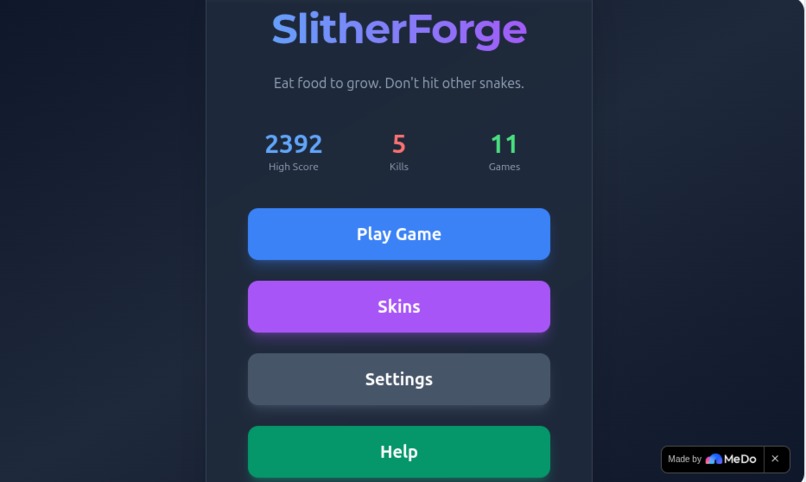
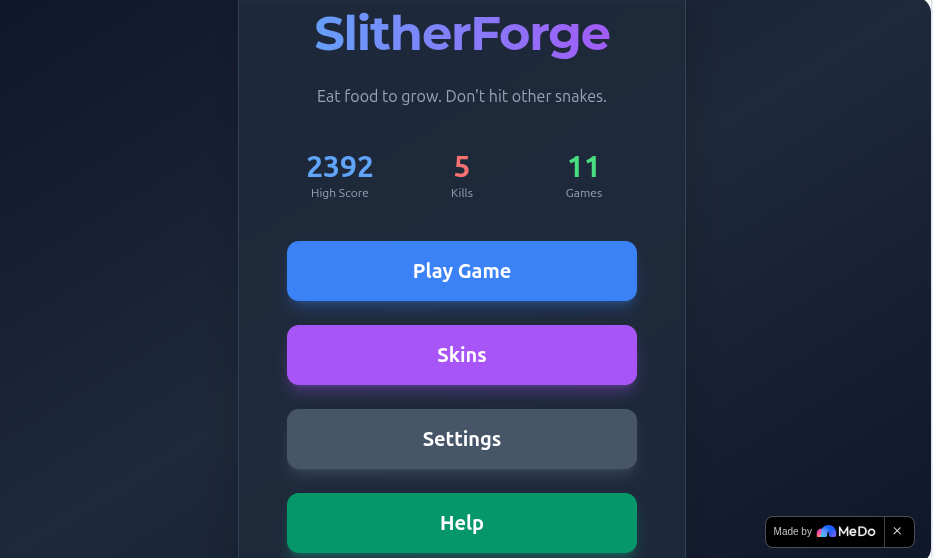
Main Menu
-
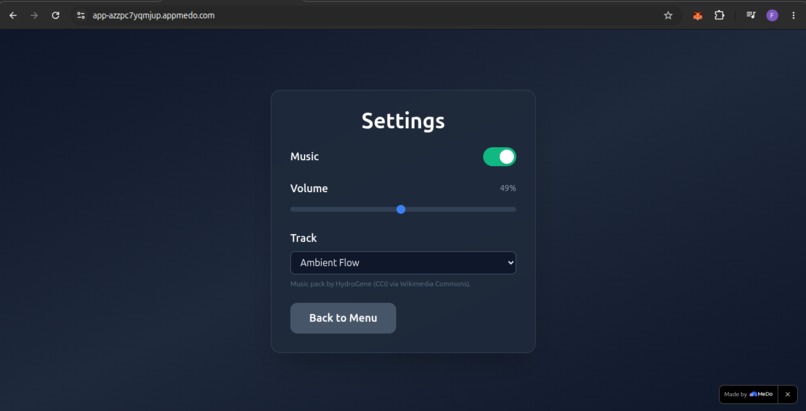
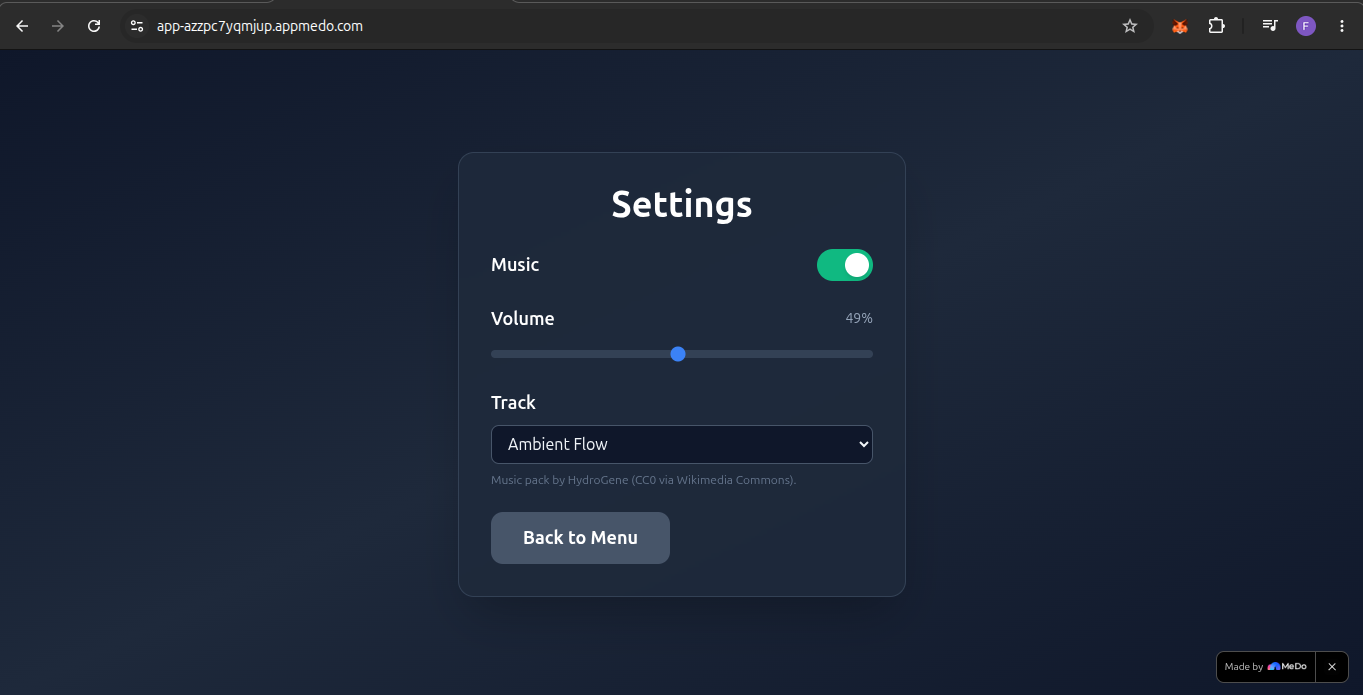
Settings
-
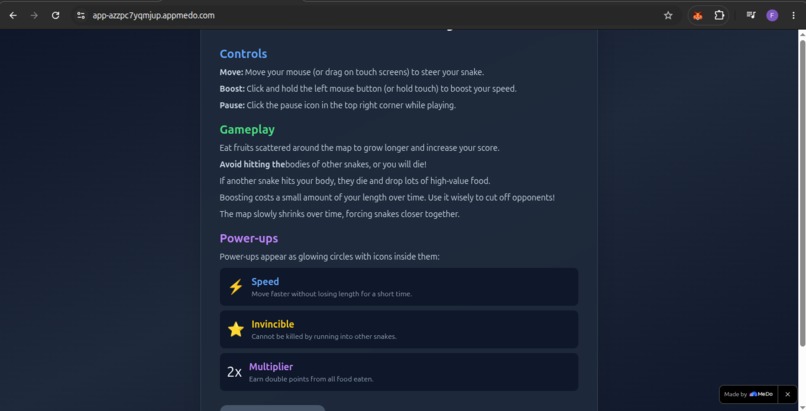
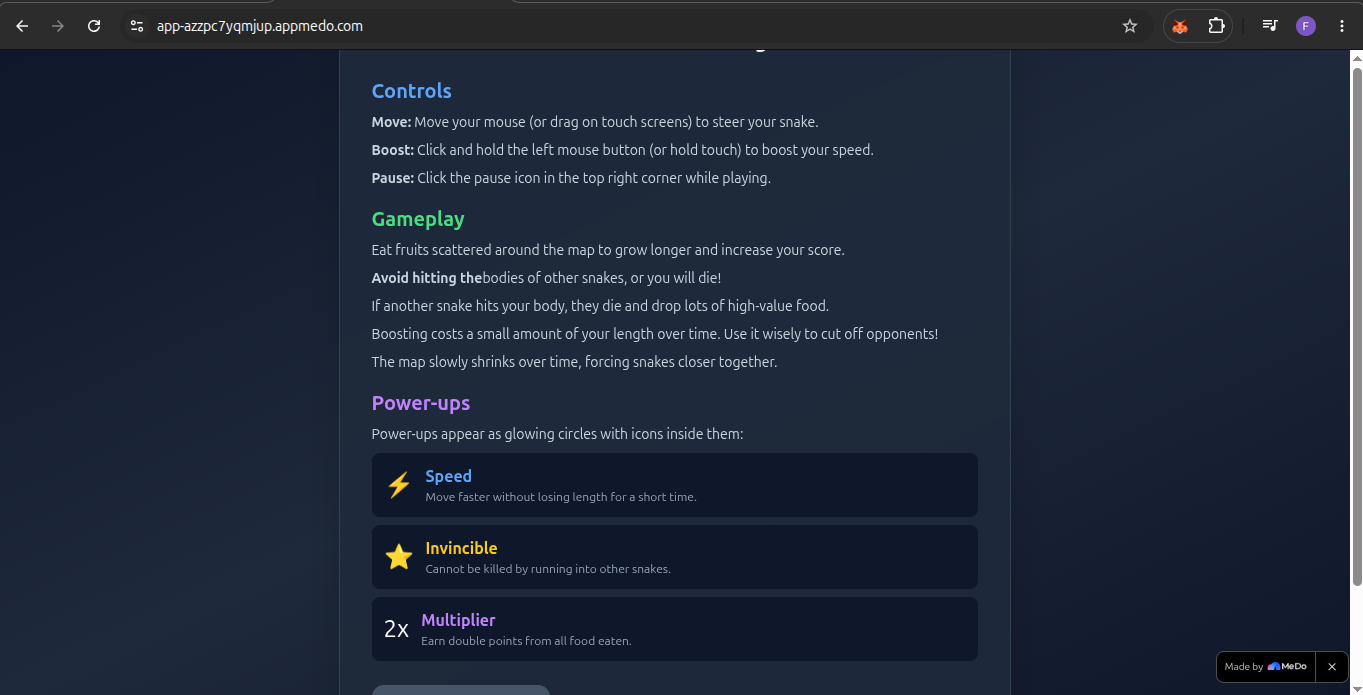
Help Menu
-
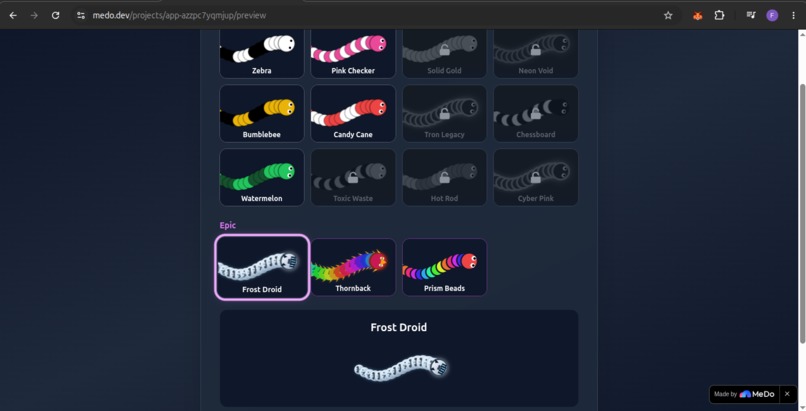
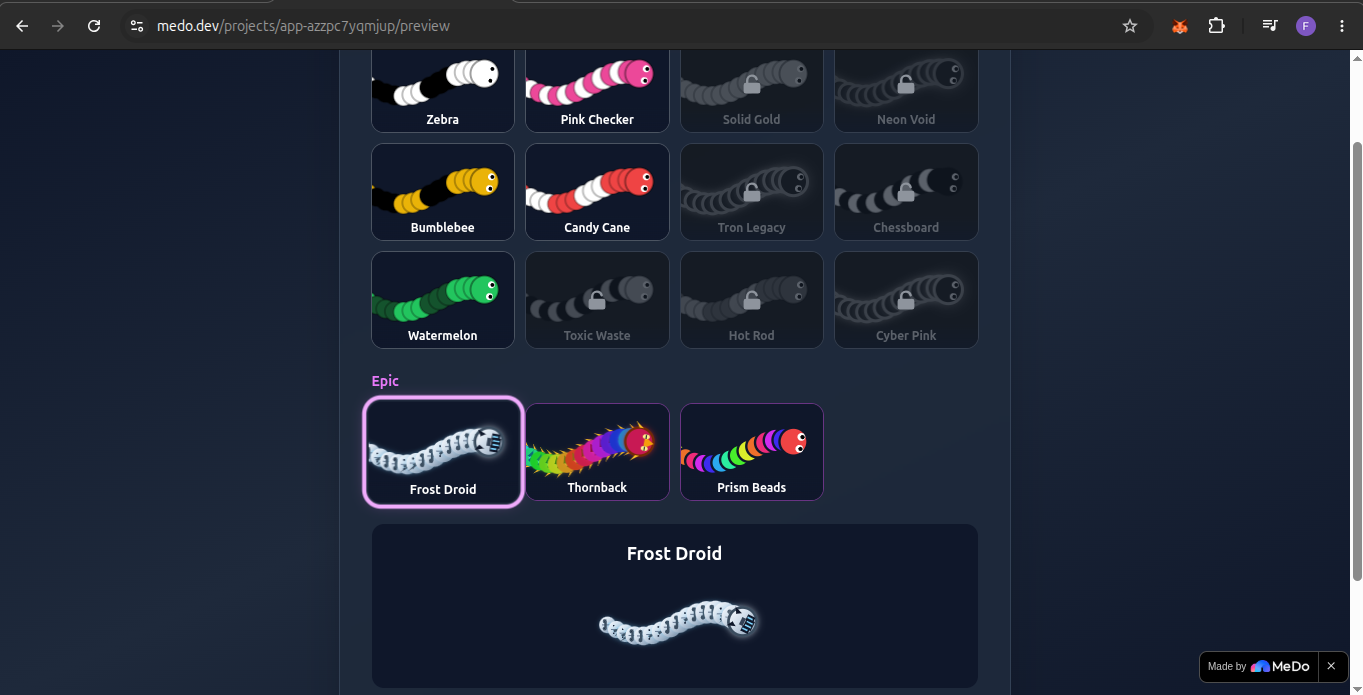
Skin Selection
SlitherForge
What problem my app solves and why i built it
SlitherForge is a fast, canvas-based arena snake game built with MeDo. I wanted to make a game that feels familiar immediately, like classic snake or slither-style arena games, but with more depth than just eating food and growing longer. The player enters a shrinking arena, collects fruit, hunts or avoids AI snakes, uses temporary power-ups, and tries to survive long enough to win the round.
How i structured conversations with MeDo to build my project
I used MeDo as my main build partner by describing the game in layers instead of asking for everything at once. I started with the core playable loop: a snake that follows the cursor, food collection, growth, collisions, and AI opponents. After that, I used follow-up prompts to add more game feel and replay value, including boost movement, a shrinking world boundary, power-ups, round timers, win/loss conditions, and a game-over summary. Once the mechanics were working, I focused on polish: menus, pause/restart flows, skin selection, unlockable titles, animated snake previews, music controls, and persistent progression.
The most impressive feature MeDo helped create
The best part MeDo helped generate was the real-time game engine and renderer working together. SlitherForge is not just a static prototype; it has 15 AI snakes with different behaviors, including aggressive, collector, coward, and ambusher personalities. The canvas renderer also gives the game a strong visual identity with animated skins, glowing power-ups, fruit pickups, a leaderboard, minimap, combo display, and active effect timers. That made the project feel like a complete playable game rather than a simple demo.
My favorite generated feature
My favorite feature is the progression and customization system. Players unlock skins and titles by reaching score milestones, getting eliminations, and playing more games. The game stores high score, total eliminations, and games played locally, so every round contributes to long-term progress. MeDo helped connect those ideas into the UI so the player can preview locked and unlocked skins, see unlock requirements, and carry their selected look into the next match.
How MeDo helped the overall build process
Overall, MeDo helped me move from a rough game idea to a structured React + TypeScript project with separate game engine, renderer, audio, and progression modules. The biggest advantage was how quickly I could iterate: I could ask for a mechanic, test it, then come back with a more specific prompt to improve balance, visuals, or the player experience.
Challenges i ran into
One of the biggest challenges was optimizing SlitherForge for mobile devices. The game has a real-time canvas, touch controls, animated skins, hundreds of food objects, AI snakes, a minimap, leaderboard, music, and menu overlays all running in the browser. On desktop, those systems had more room and performance headroom, but on mobile I had to think harder about screen space, touch input, UI readability, and keeping the game loop smooth.
Another challenge was balancing the game so it felt intense but still fair. The shrinking arena, bot behavior, power-ups, boost cost, combo scoring, and collision rules all affect each other. Small changes could make the game too easy, too chaotic, or too punishing, so I had to keep testing and refining the feel.
Accomplishments that i am proud of
I am proud that SlitherForge feels like a complete game and not just a hackathon prototype. It has a playable core loop, AI opponents, win/loss conditions, power-ups, round summaries, unlockable cosmetics, animated previews, persistent progression, music controls, and responsive menus.
The feature I am most proud of is the combination of AI snake behavior and visual polish. The bots do not all behave the same way, and the renderer gives the game a strong identity through glowing power-ups, animated skins, leaderboard information, minimap tracking, and active effect timers.
What i learned
I learned how important it is to guide AI tools with structured, specific prompts. MeDo worked best when I broke the project into clear pieces: first the engine, then rendering, then controls, then progression, then polish. That made it easier to test each feature and improve it without losing track of the whole game.
I also learned more about building browser games around performance constraints. Real-time games need careful handling of animation loops, canvas rendering, object counts, collision checks, and mobile interactions. A feature can look simple in the UI but still have a big effect on performance and game feel.
What's next for SlitherForge
Next, I want to keep improving mobile performance and polish the touch experience even more. I would also like to add online leaderboards, more arenas, more power-ups, daily challenges, better bot difficulty scaling, and maybe multiplayer support so players can compete against real opponents instead of only AI snakes.
Built With
- medo
- medo.dev

Log in or sign up for Devpost to join the conversation.