Inspiration
Accidental falls among the elderly and vulnerable populations represent one of the leading causes of critical injury, often going unnoticed without immediate assistance. Traditional surveillance requires constant manual human supervision, which is prone to fatigue and delayed responses. We set out to design Slipid—an automated, edge-capable vision system that detects falls in real time without wearable devices, empowers individuals with instant non-verbal SOS gesture signaling, and provides physical alerts on-site[cite: 10, 21].
What It Does
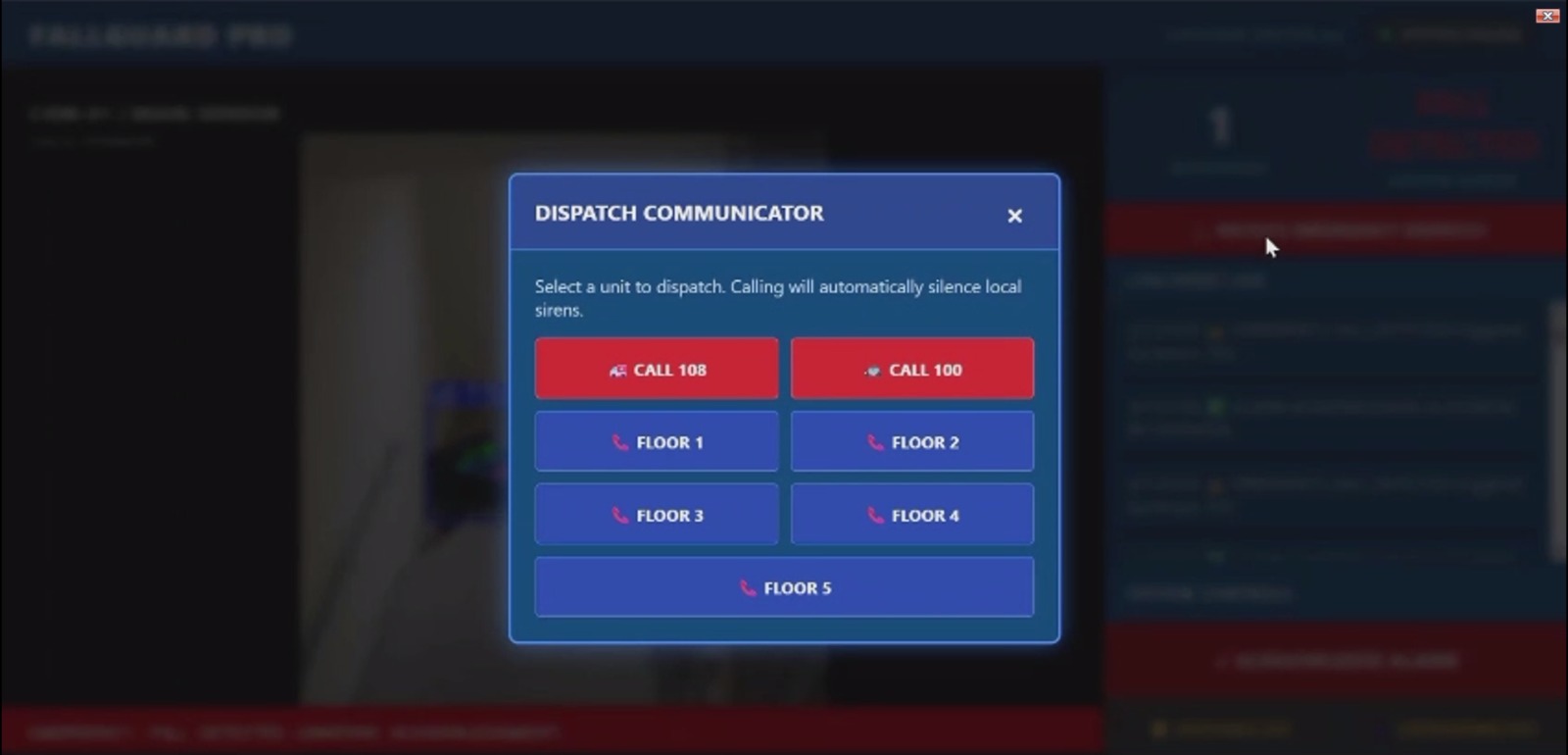
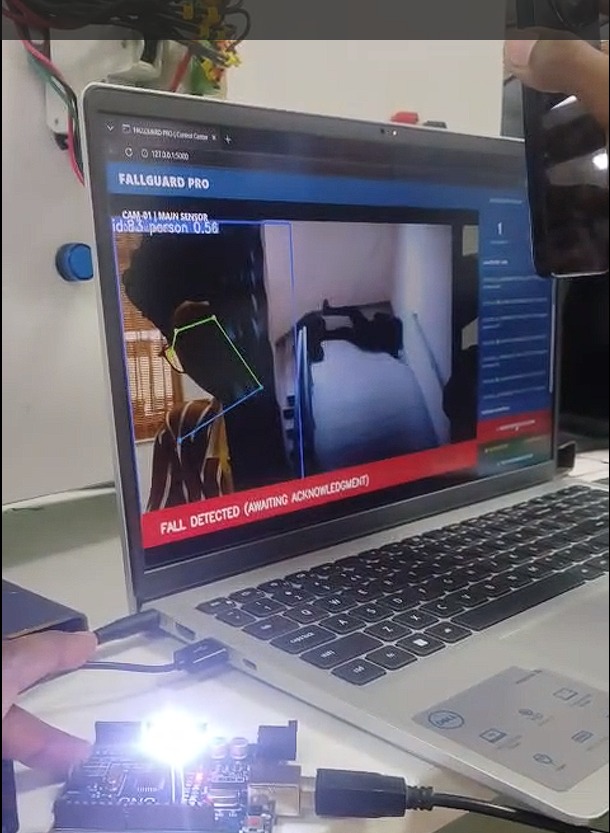
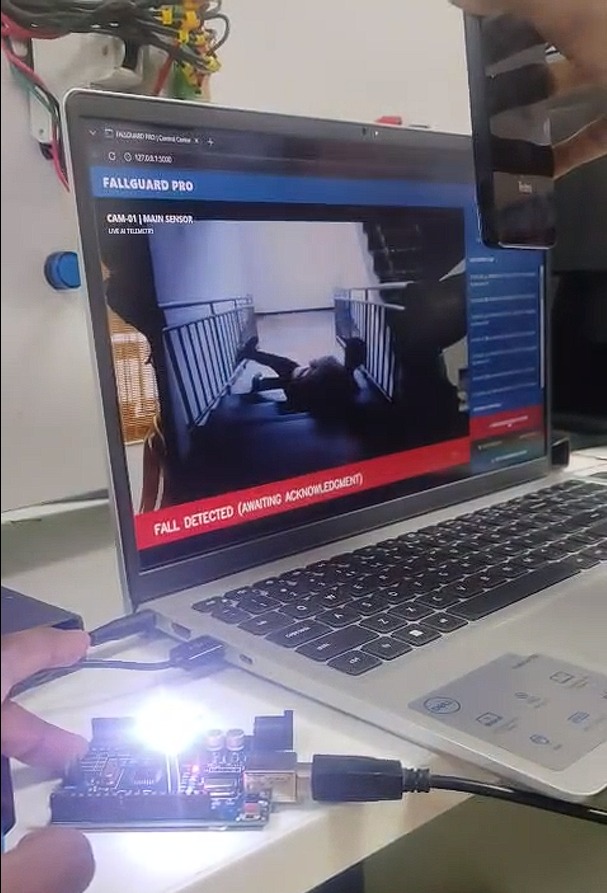
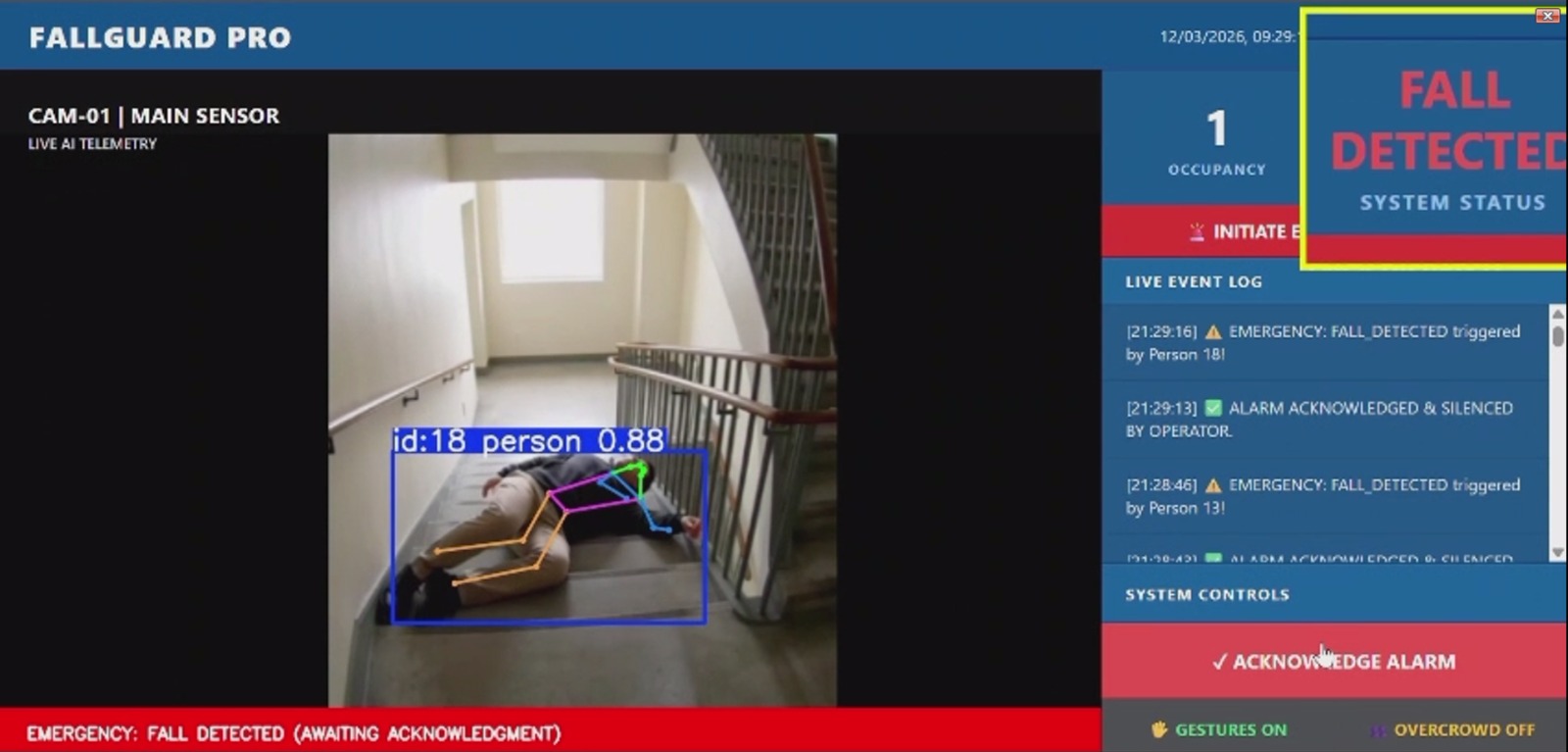
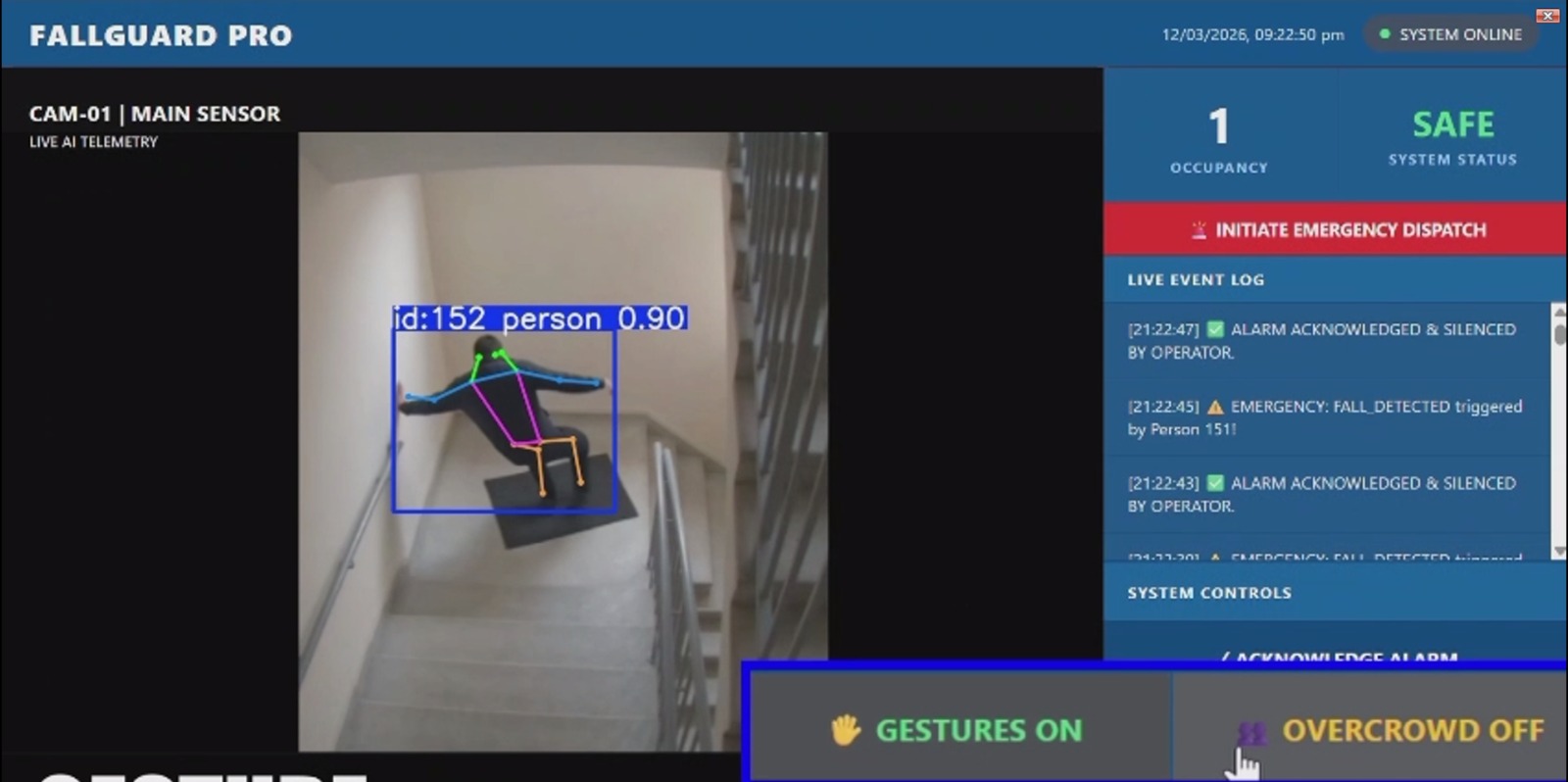
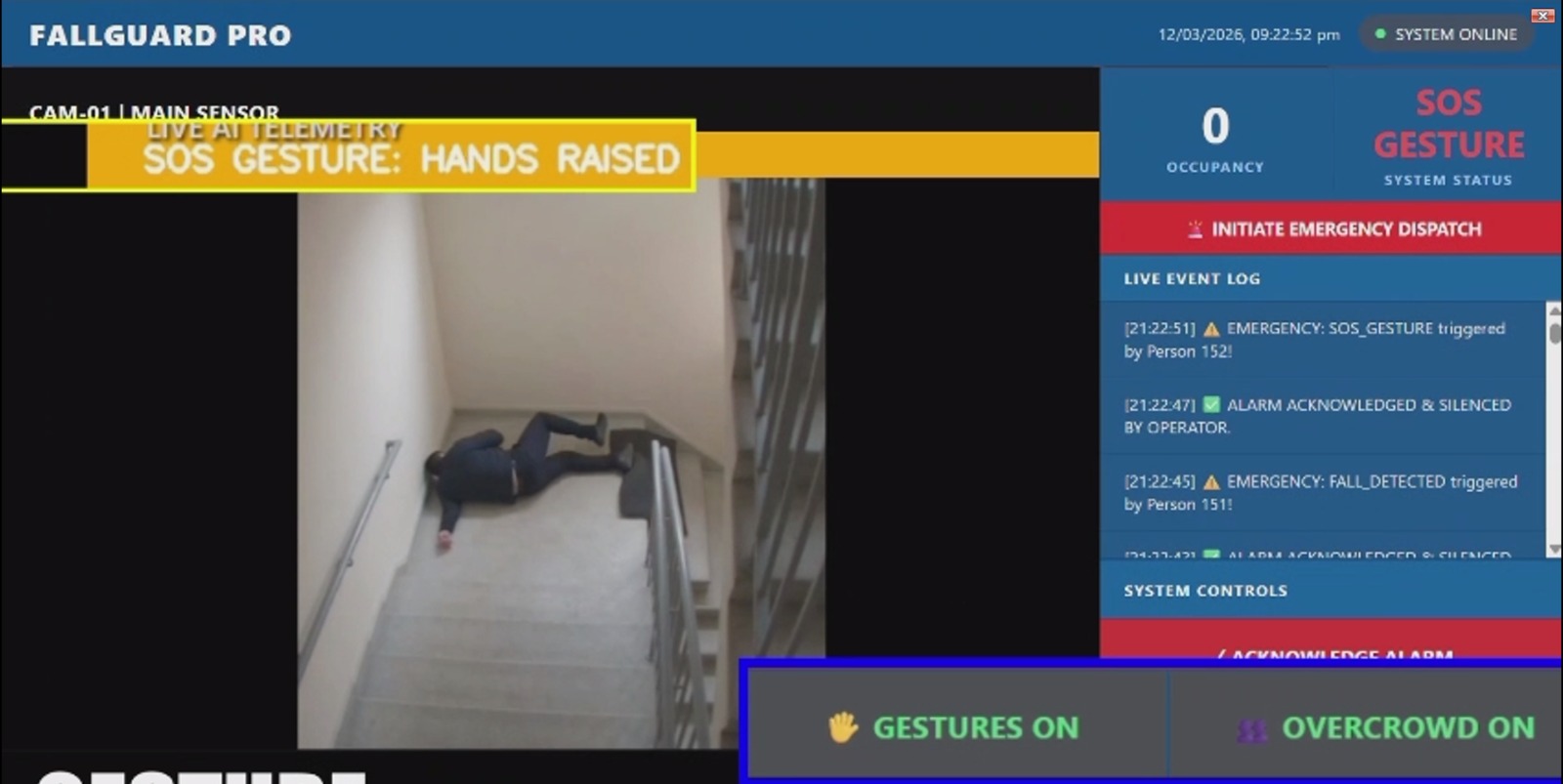
Slipid transforms standard camera feeds into an intelligent safety monitoring hub: **Multi-Factor Fall Detection: * Tracks skeletal keypoints to calculate body downward velocity, trunk inclination angles, and aspect ratios to verify falls with high confidence[cite: 21]. *SOS Gesture Recognition: * Enables a person in distress to trigger an emergency alarm simply by raising both wrists above upper-body level[cite: 21]. *Crowd & Capacity Monitoring. * Continuously tallies room occupants and triggers capacity warnings and severe overcrowding alerts when predefined safety thresholds are exceeded[cite: 10, 20]. *Hardware Alarm Triggering. * Interfaces directly via serial communication with an on-site Arduino buzzer/siren on COM3, ensuring physical alarms sound instantly alongside web-based visual alerts[cite: 10].
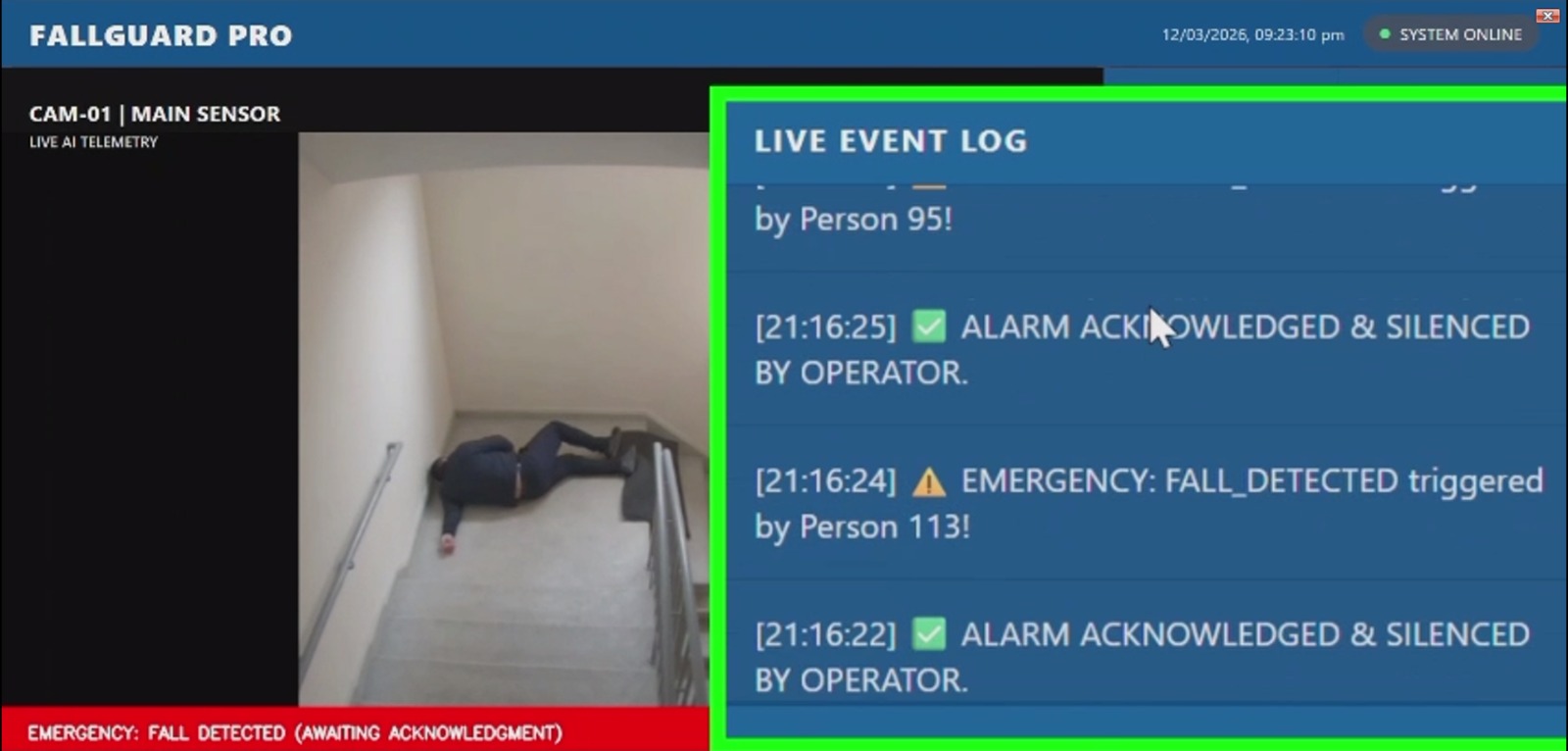
- *Incident Auditing. * Automatically logs incident events, severity levels, timestamps, and people counts to a persistent SQLite database for audit trails[cite: 18, 20].
How We Built It
We designed the architecture around real-time performance and modular processing:
- *Computer Vision & Pose Estimation:
* Powered by an ONNX-optimized YOLOv8 Pose model (
yolov8n-pose.onnx) running through ONNX Runtime with DirectML hardware acceleration for low-latency skeletal tracking[cite: 17, 20, 21]. - *Detection & Heuristic Logic:
* Fall recognition is determined geometrically using normalized keypoint coordinates. We evaluate:
- Torso angle relative to the ground: $$\theta = \arctan\left(\frac{|\Delta y|}{|\Delta x|}\right)$$
- Rapid downward displacement: $$v = y_{\text{hip}}^{(t)} - y_{\text{hip}}^{(t-1)}$$
- Bounding box aspect ratio: $$\text{Ratio} = \frac{W}{H} > 1.3$$
- Keypoint scoring combined with temporal sliding-window smoothing across 10 frames to eliminate false triggers[cite: 21, 22].
- *Backend & Web Dashboard: * Implemented with Python and Flask, providing a multi-part MJPEG stream for live video feeds, an event logger, and control endpoints to toggle gestures or silence active alarms[cite: 10, 17].
- Embedded Integration: PySerial connects the Flask backend to an Arduino on
COM3, transmitting single-byte commands (b'1'to trigger,b'0'to silence) to control the physical buzzer circuit[cite: 10, 17].
Challenges We Faced
- *False Alarm Rejection. * Natural movements like sitting down quickly or bending forward can mimic fall trajectories. We tackled this by requiring a combination of downward velocity, angle thresholding , and ground-plane lying-flat aspect ratios[cite: 20, 21].
- *Real-Time Video Latency. * Running neural network inference concurrently with video streaming created pipeline bottlenecks. We separated camera capture into a dedicated daemon thread to maintain steady frame retrieval[cite: 19].
- *Occlusion & Tracking Jitter. * Occlusions during a fall can cause keypoint dropouts. We implemented minimum confidence checks alongside person ID tracking state cleanups to keep the system resilient[cite: 10, 20, 21].
What We Learned
Building slipid deepened our understanding of applying edge computer vision to safety-critical environments. We learned how to mathematically interpret raw pose keypoints into actionable geometric heuristics, optimize ONNX models on local GPU backends, and coordinate hardware-software communication between web servers and microcontrollers[cite: 10, 17, 20, 21].
What's Next for SLIPID
- *Automated Cloud Dispatch: * Adding instant Telegram Bot and SMS webhook dispatches to notify remote caregivers immediately.
- **Region-of-Interest (ROI) Masking:
** Permitting users to exclude beds, couches, or floor mats where lying down is expected behavior.
- *Multi-Camera Coverage. * Scaling the camera manager pipeline to support multi-room RTSP IP streams simultaneously.

Log in or sign up for Devpost to join the conversation.