-
-
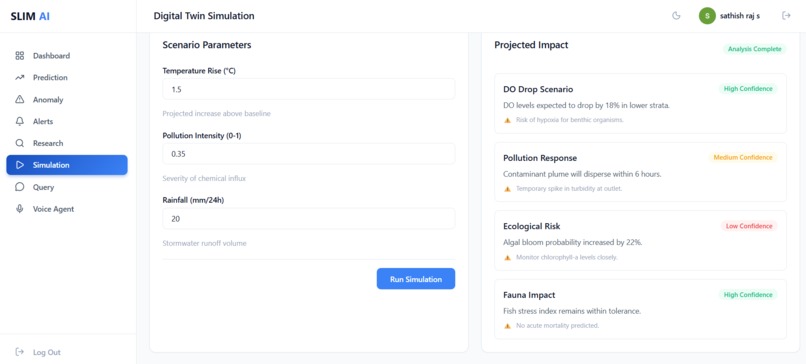
Simulation
-
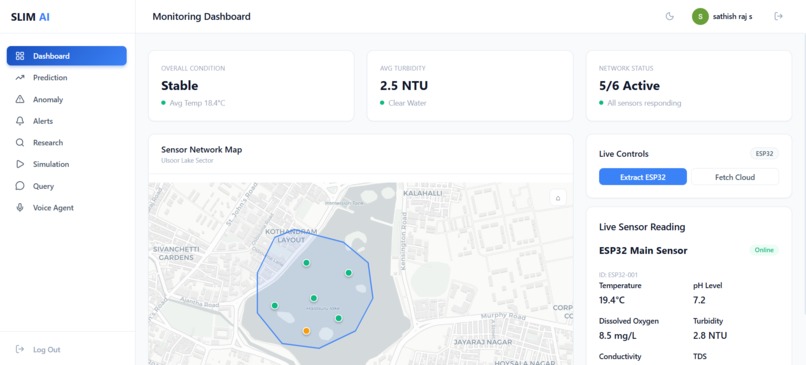
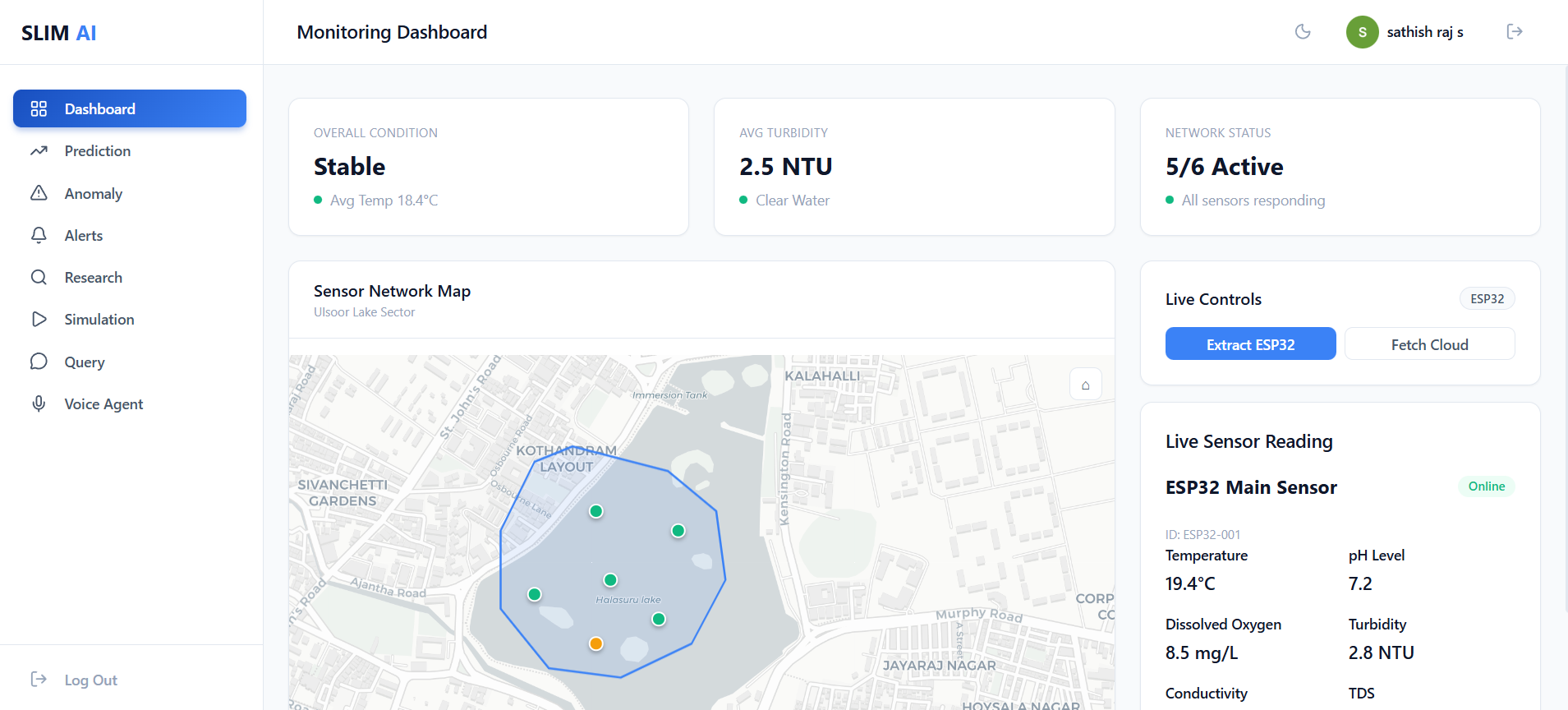
Dashboard
-
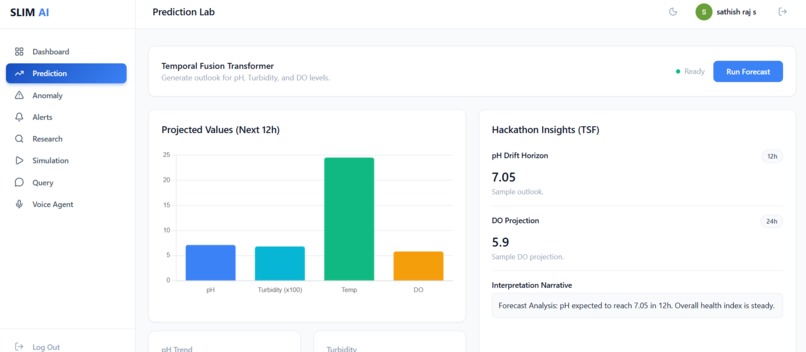
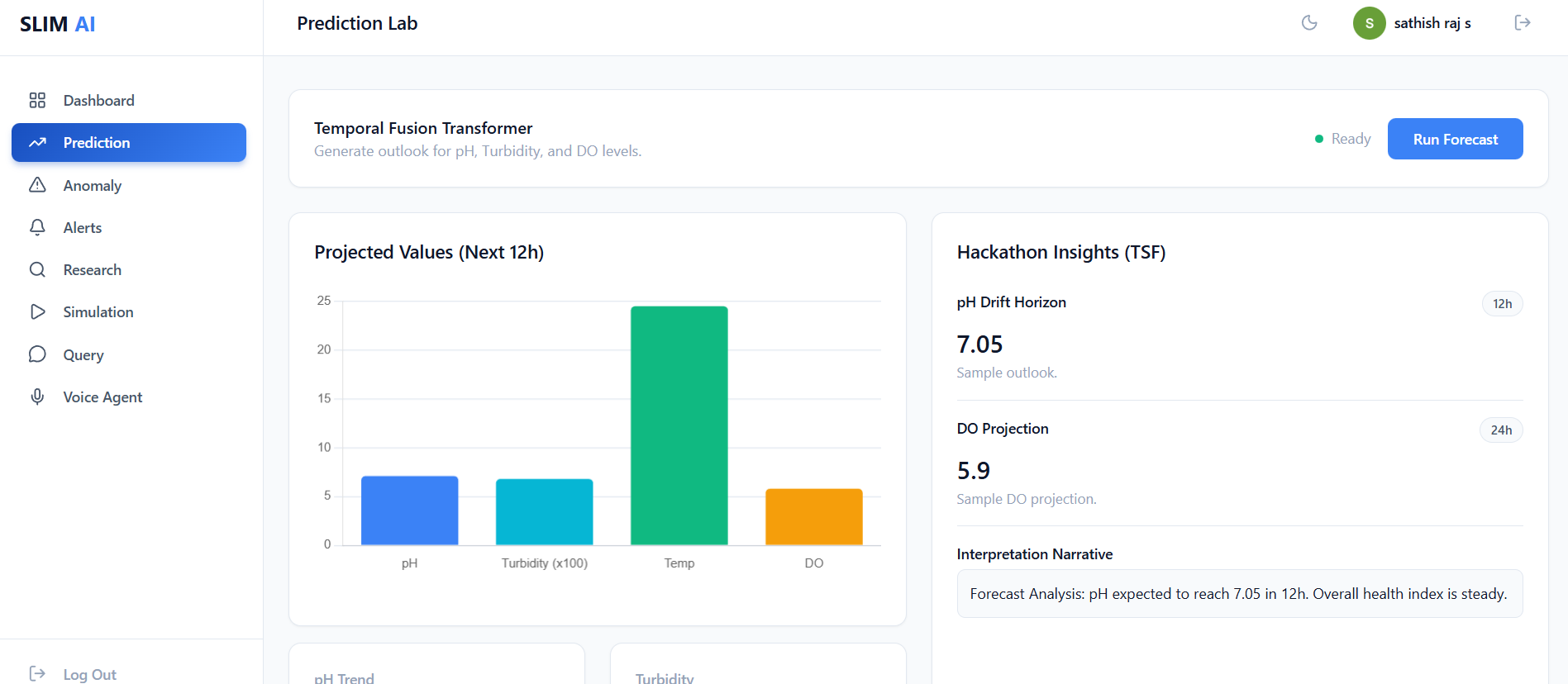
Prediction
-
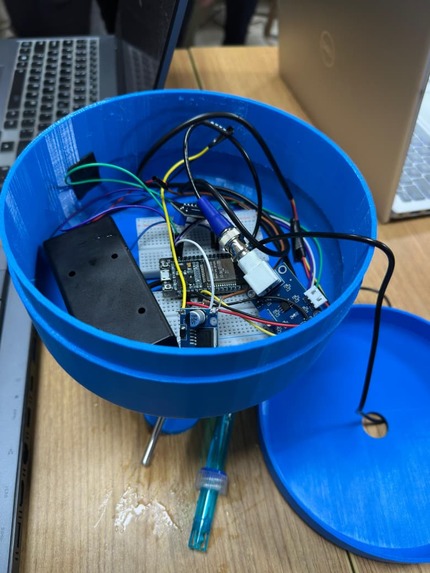
Hardware Implementation
-
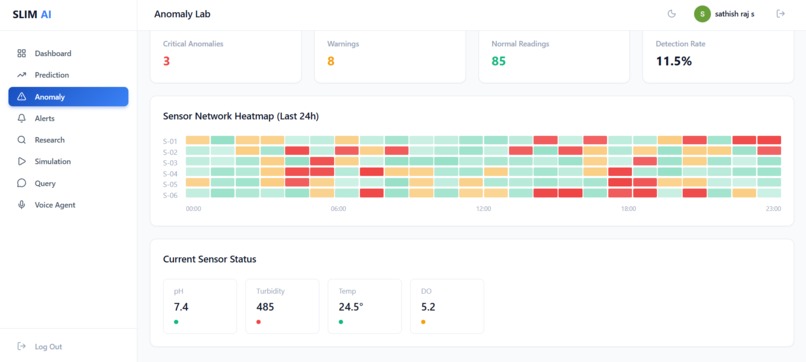
Anomaly Detection
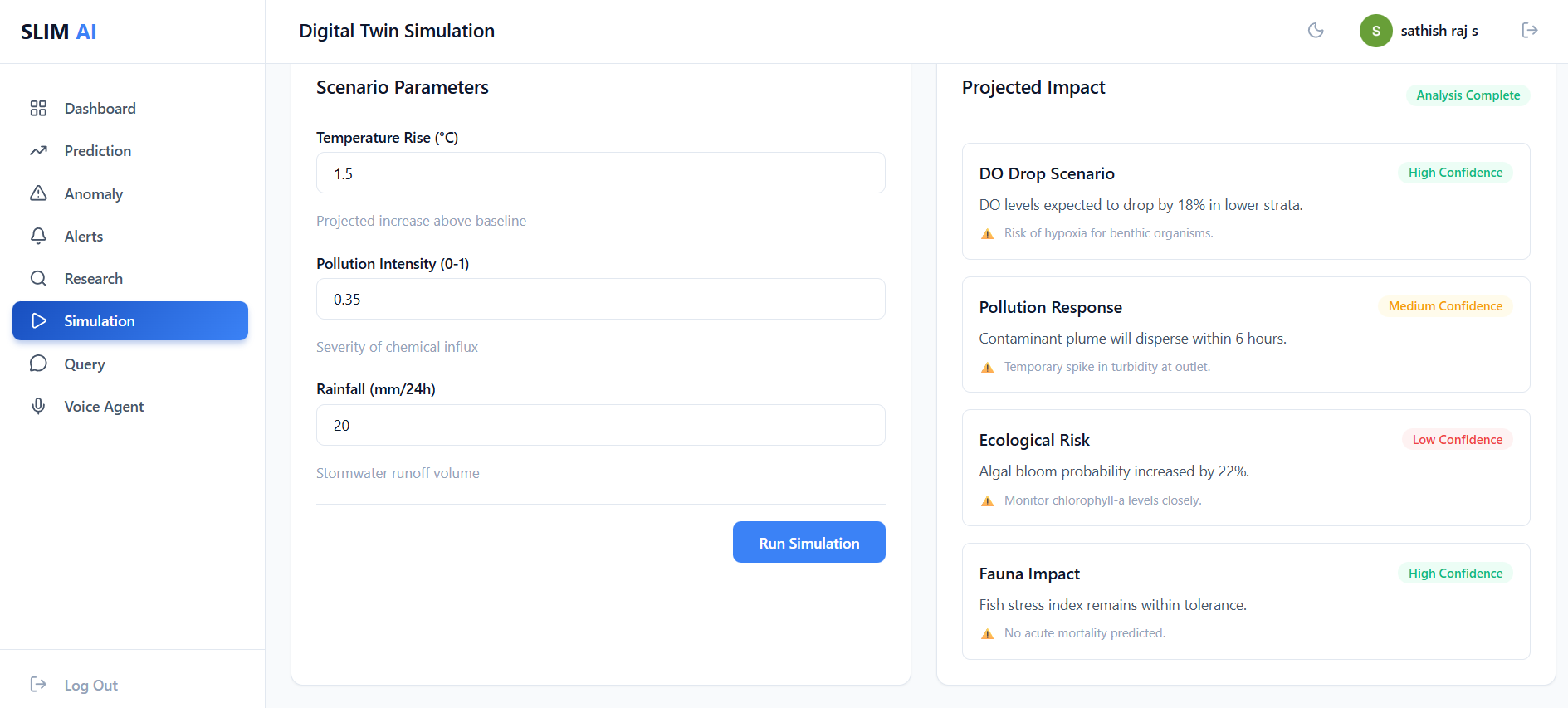
Inspiration: The idea behind this project is research comes about after noticing that there is too little monitoring of lakes in urban areas manually. The effects of the environment are not often noticed before they become visible, when they can be seen as fish killing, unpleasant smell, or a complaint. What we felt was that monitoring should be predictive and should be constant as opposed to reactive. Finally, the temporal disconnect between the delivery of the harm and the detection of the same was the main factor that inspired SLIM AI.
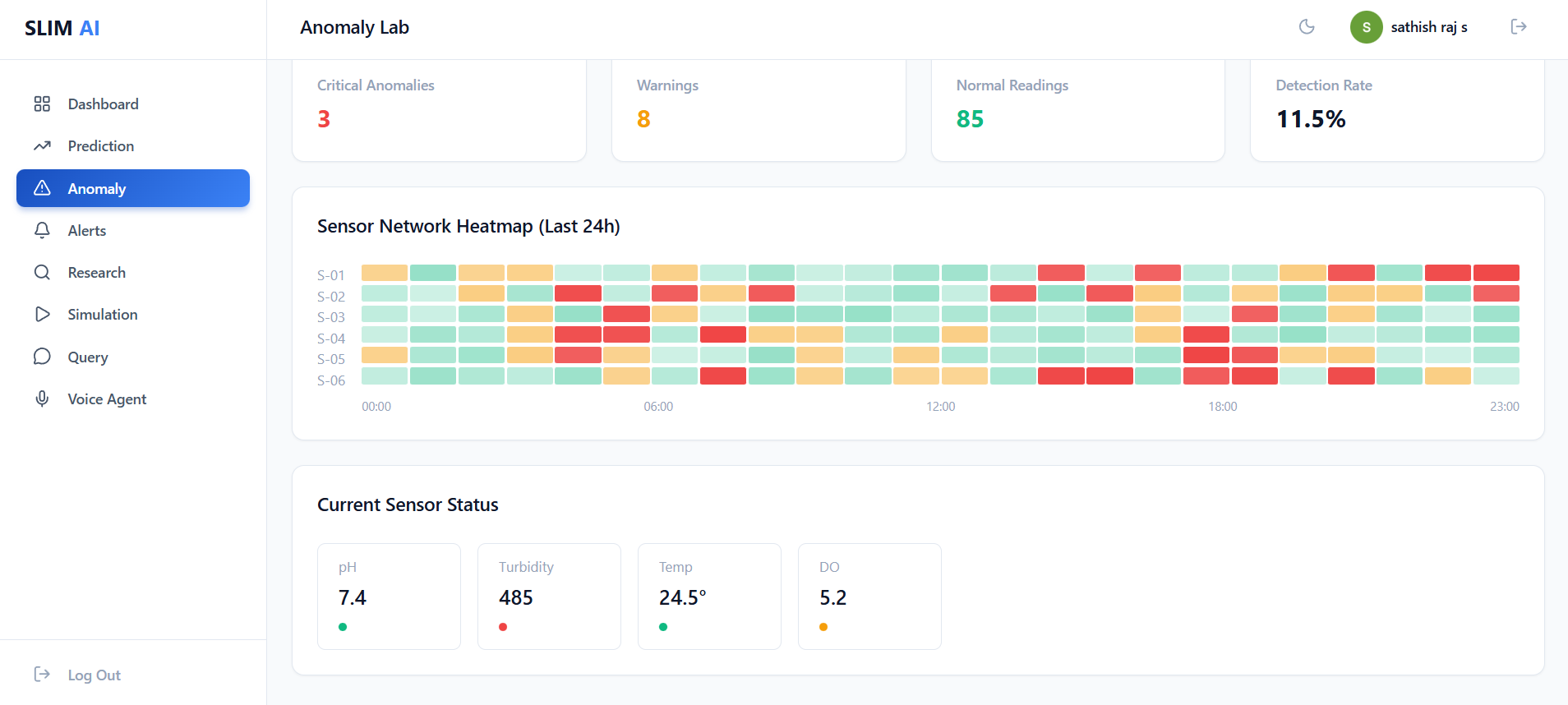
What it does: SLIM AI describes a smart lake surveillance system which determines the water quality through floating IoT buoys. It measures four essential variables pH, turbidity, temperature, and dissolved oxygen and uses AI models to identify anomalies in time and forecast risks in the future. All this information is then displayed on a simple web dashboard through the system to assist in making better decisions.
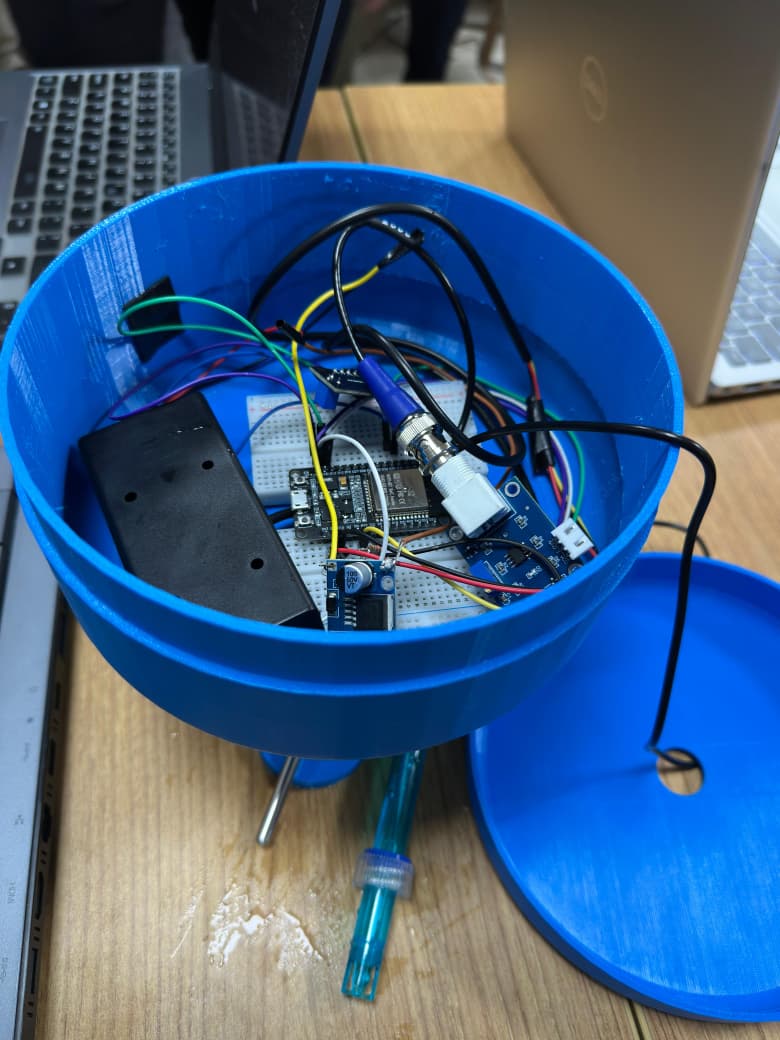
How we built it: We designed the build by combining a firmware foundation and a high-quality hardware platform. The hardware is an ESP32 microcontroller-based floating buoy 3D printed and installed with turbidity, pH, and temperature sensors. At the backend, FastAPI was used to ingest data, and machine learning models were used to detect anomalies and make predictions. The frontend has a real-time interactive dashboard that shows maps, graphs, and alerts. Lastly, there is the AI layer which carries out trend analysis, risk prediction, and natural-language insights as an MVP concept.
Challenges we ran into: This was indeed a big challenge especially when it comes to processing noisy sensor data which is encountered in the real world setting. This was difficult to create anomaly detection that will not raise false alarms but still notify of the physical threats at an early stage. We also needed to decide on how to translate technical lake information into the comprehensible to general audience to be resourceful to the authorities and researchers. In the process, we had to always strike the balance between the reliability of our hardware and the reliability of our software.
Achievements with which we are proud: We are proud to have designed both the hardware and the software together, and to concentrate on showing useful insights, and not on how to deal with raw sensor values. We have managed to design a platform that is scalable, low-cost and that can actually be applied. But most of all we managed to transform a reactive process of lake monitoring to a proactive one.
What we learned: We got to know that raw data is not always tidy and predictable, i.e. the union of AI and hardware should be thoroughly justified. We also learned that complicated analysis is not of paramount importance as well as clear pictorialization. Finally, to be a difference maker, the environmental technology should be friendly, reliable and feasible.
The future of SLIM AI: In the future, the future of SLIM AI, which is Smart Lake Intelligence and Monitoring, will consist of planting real-world buoys in real lakes and improving the forecasting capabilities based on long-term data. We will incorporate multilingual AI voice access to attract more people and we will eventually expand SLIM AI to become a city-wide lake monitoring system.
Built With
- 3dprinting
- css
- esp32
- fastapi
- gemini
- html
- javascript
- phsensor
- python
- pytorch
- restapi
- scikit-learn
- temperaturesensor
- turbiditysensor


Log in or sign up for Devpost to join the conversation.