-
-
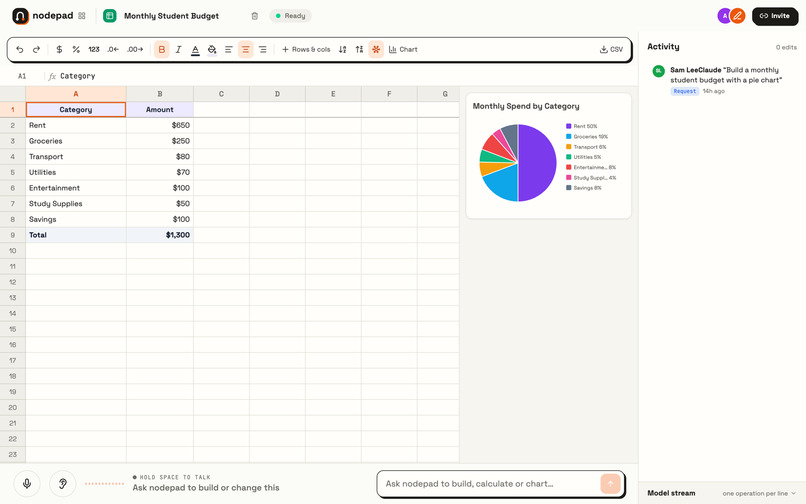
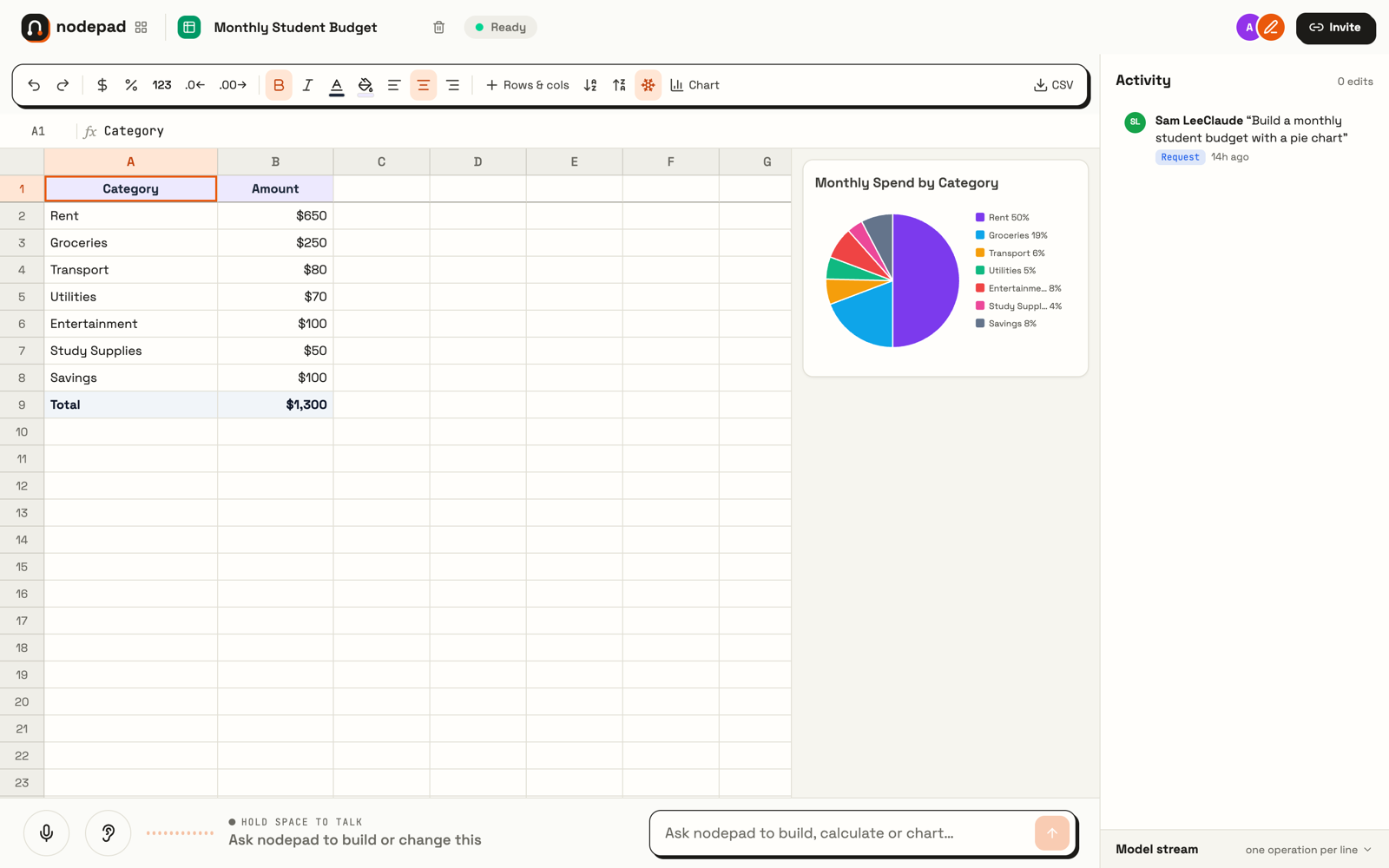
Spread Sheet
-
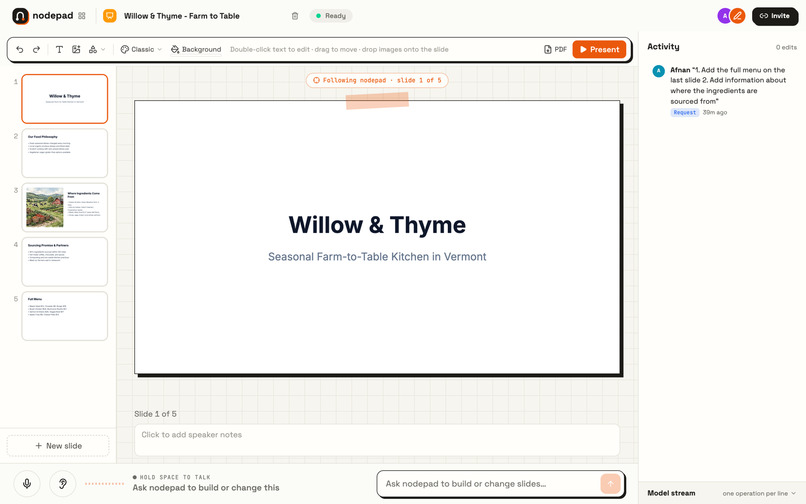
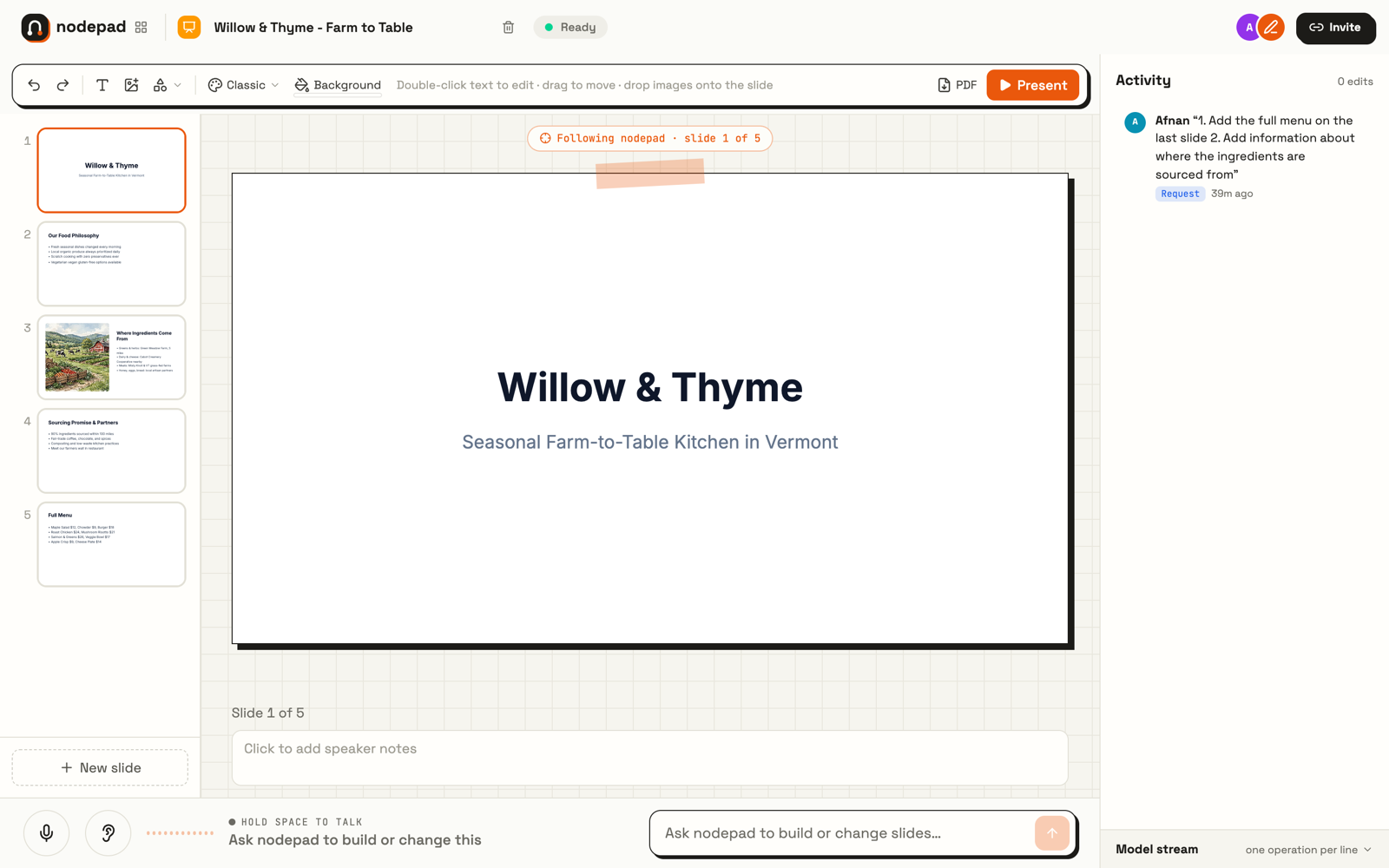
Presentation
-
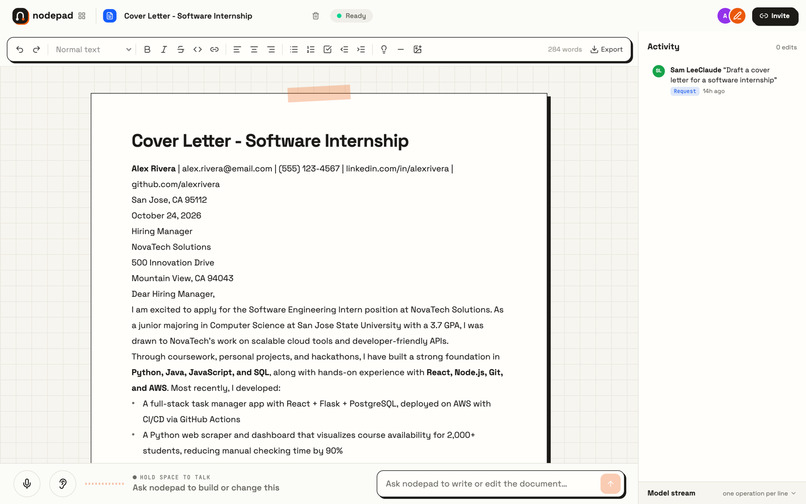
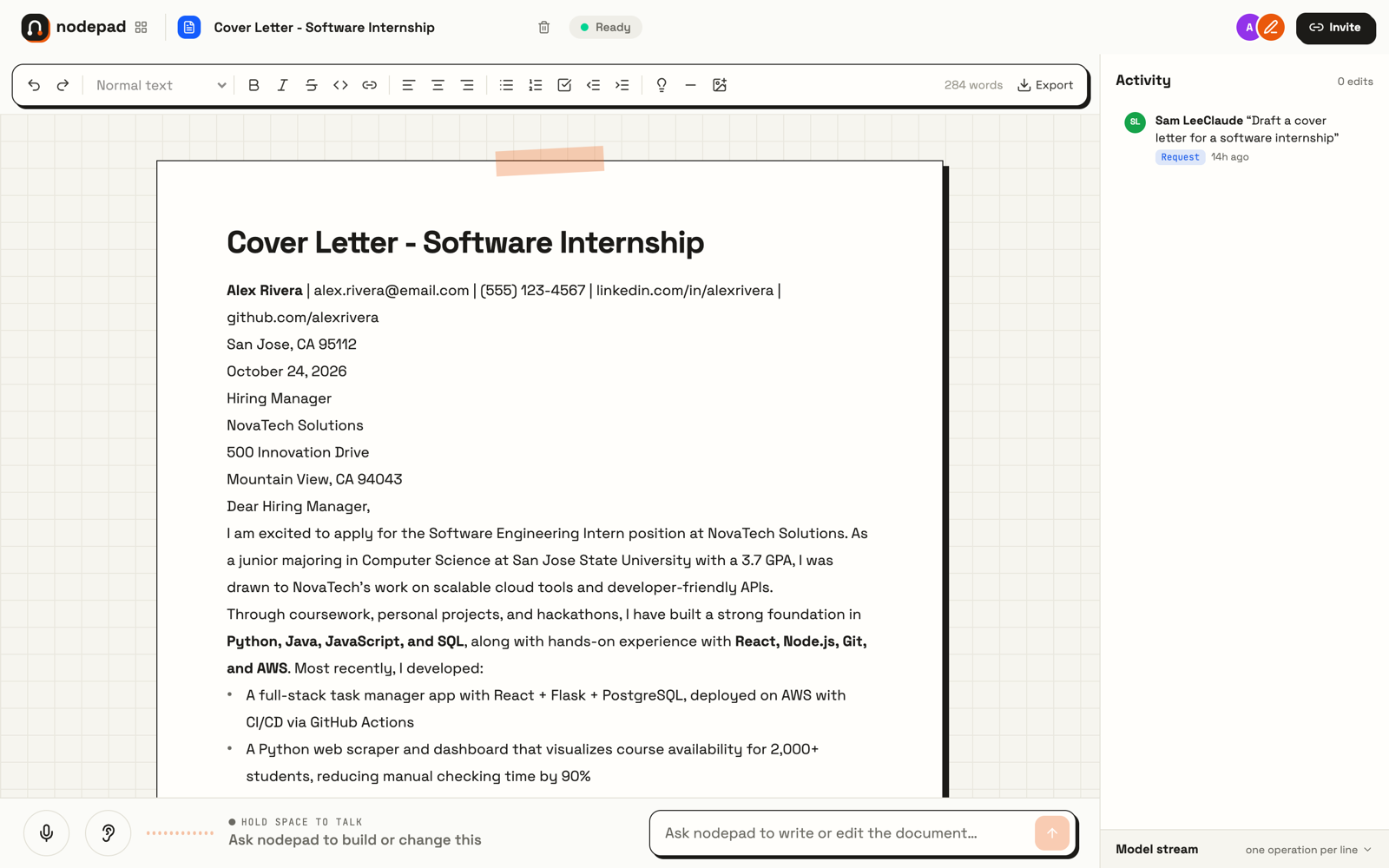
Document
-
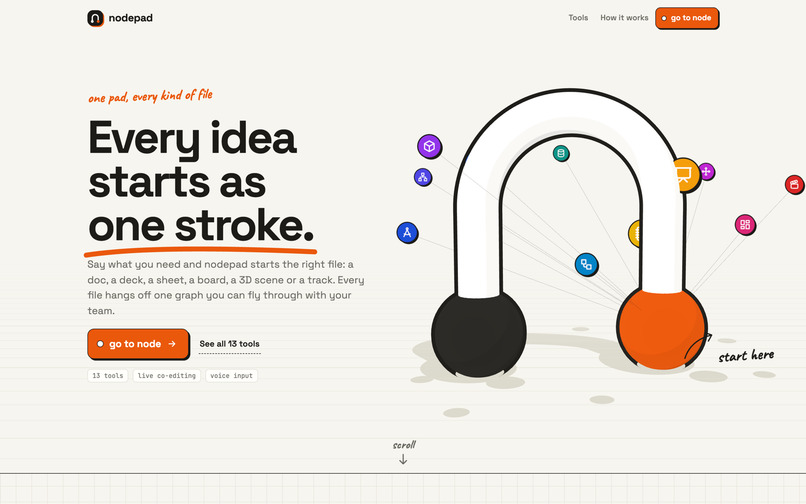
Landing Page
-
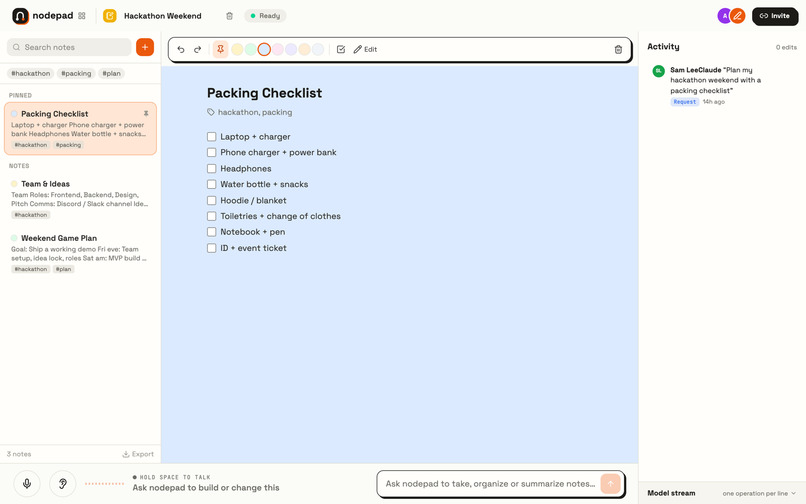
Notes
-
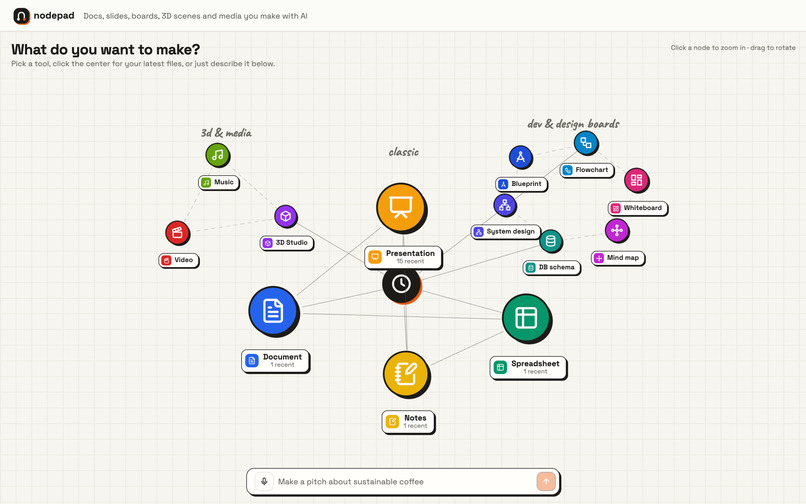
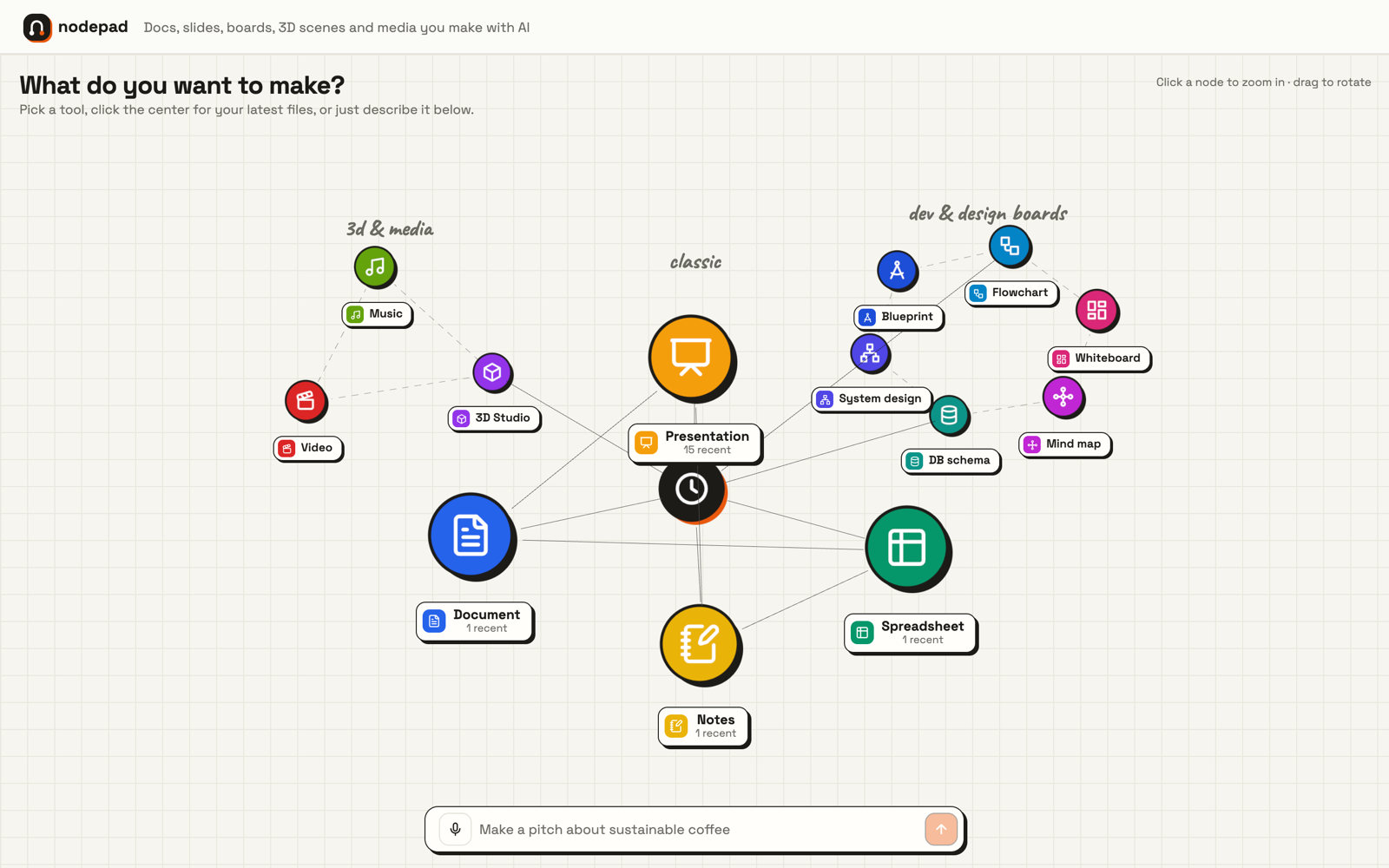
Node Hub
-
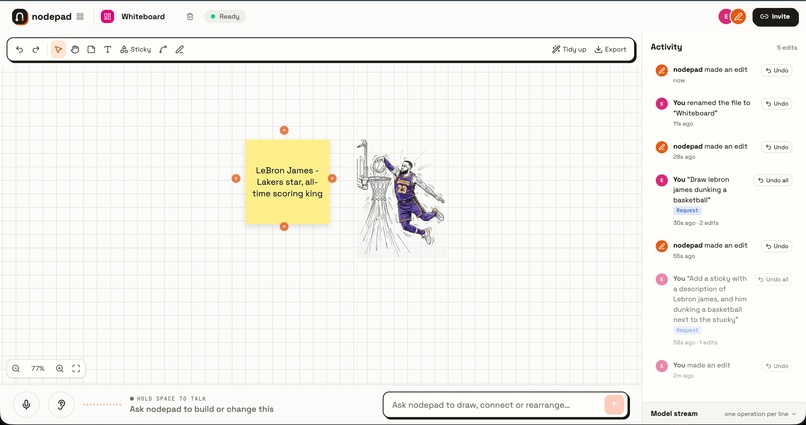
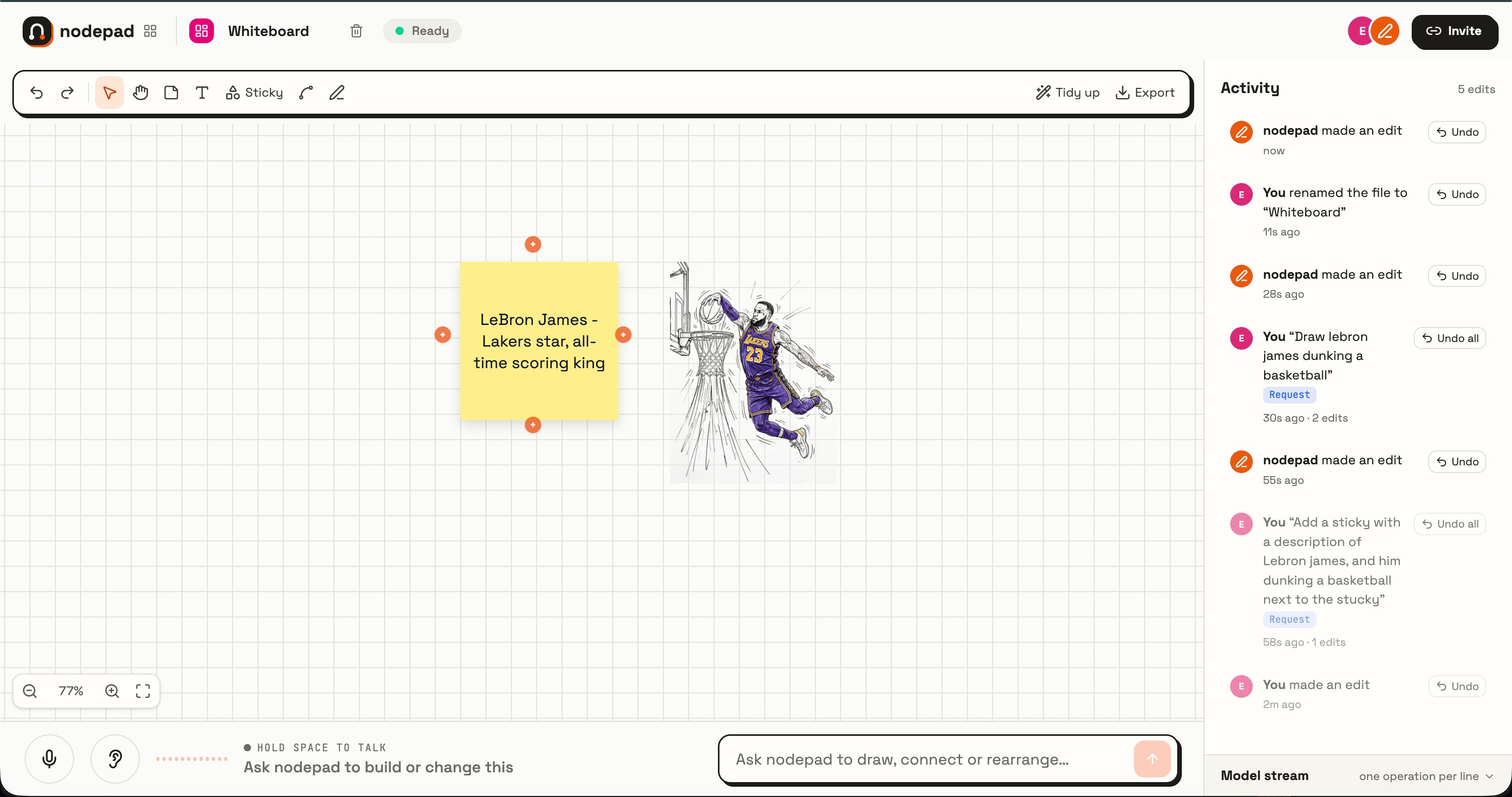
White Board
-
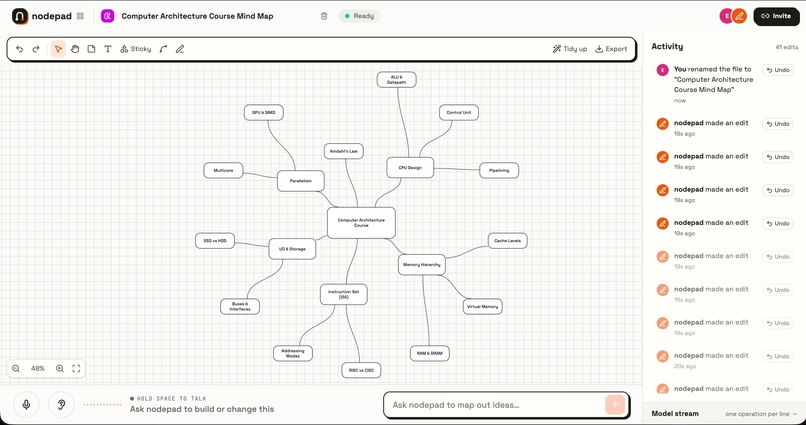
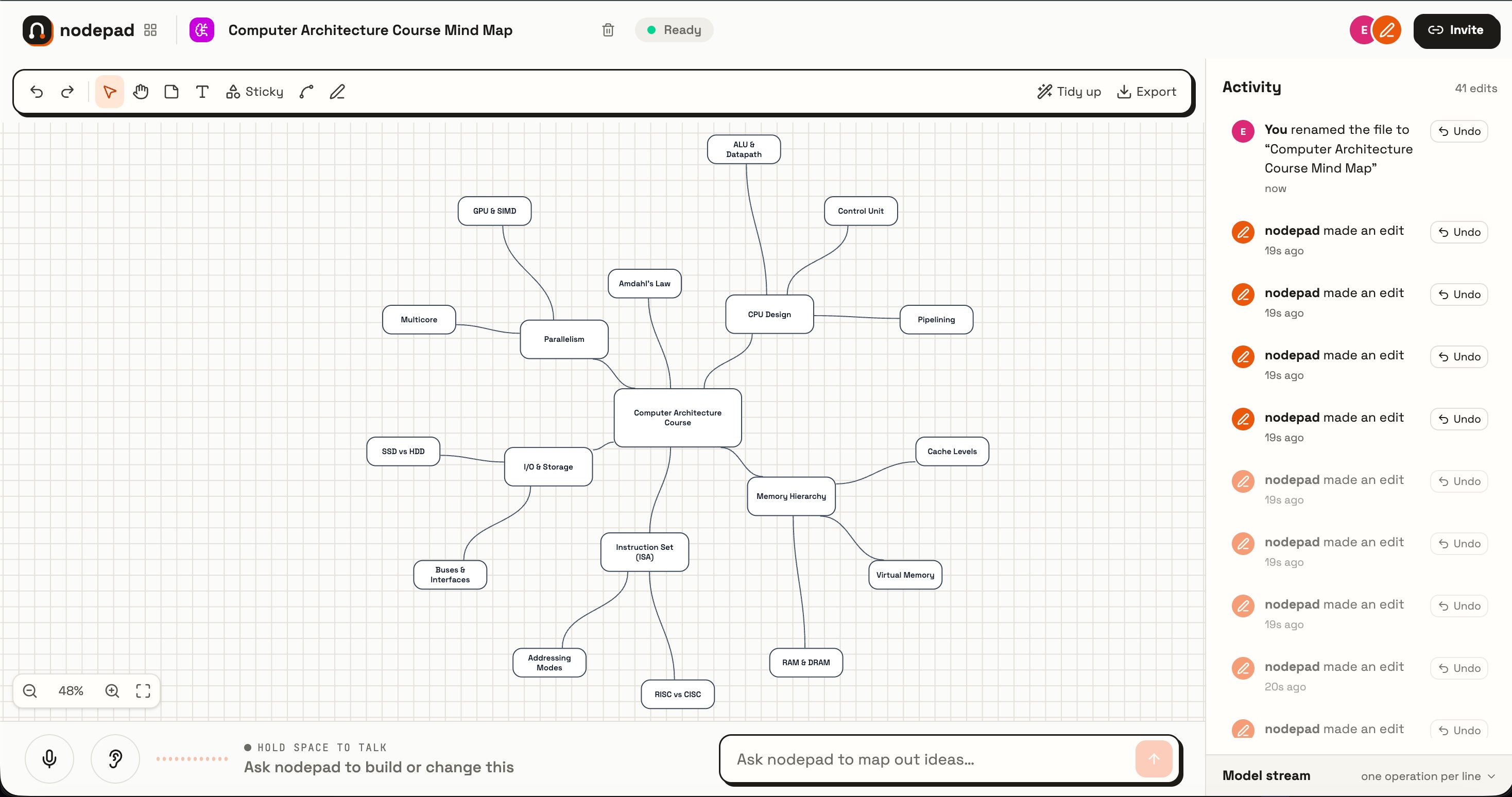
Mind Map
-
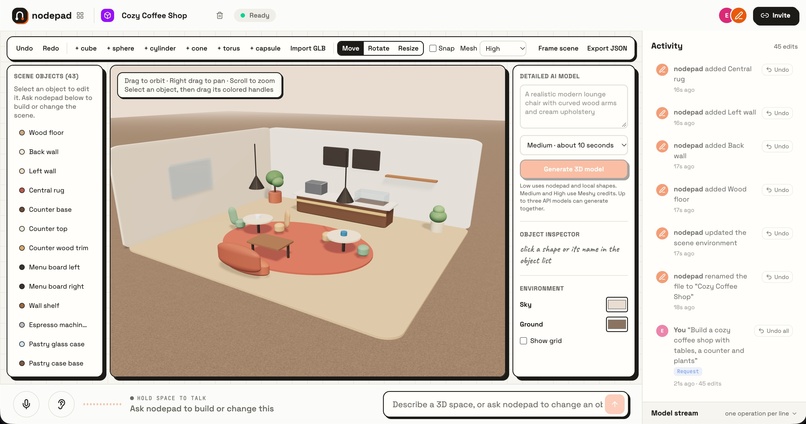
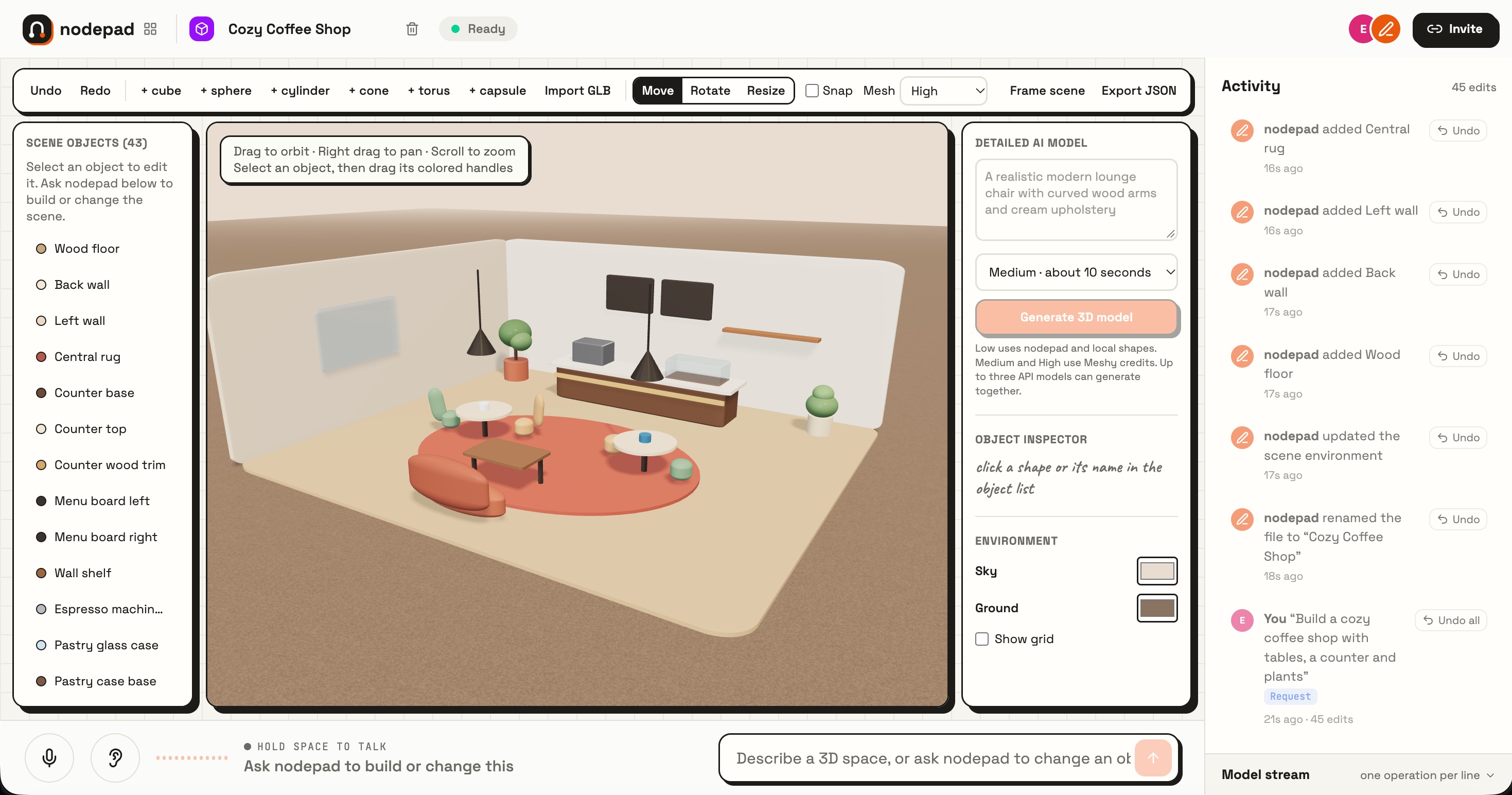
3D Environment
-
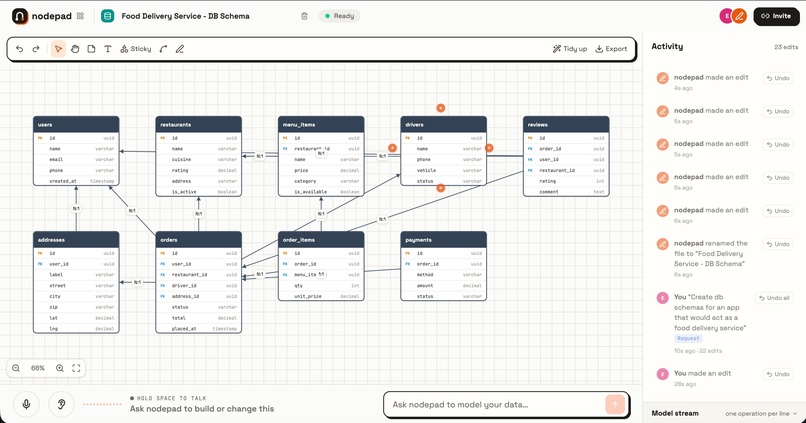
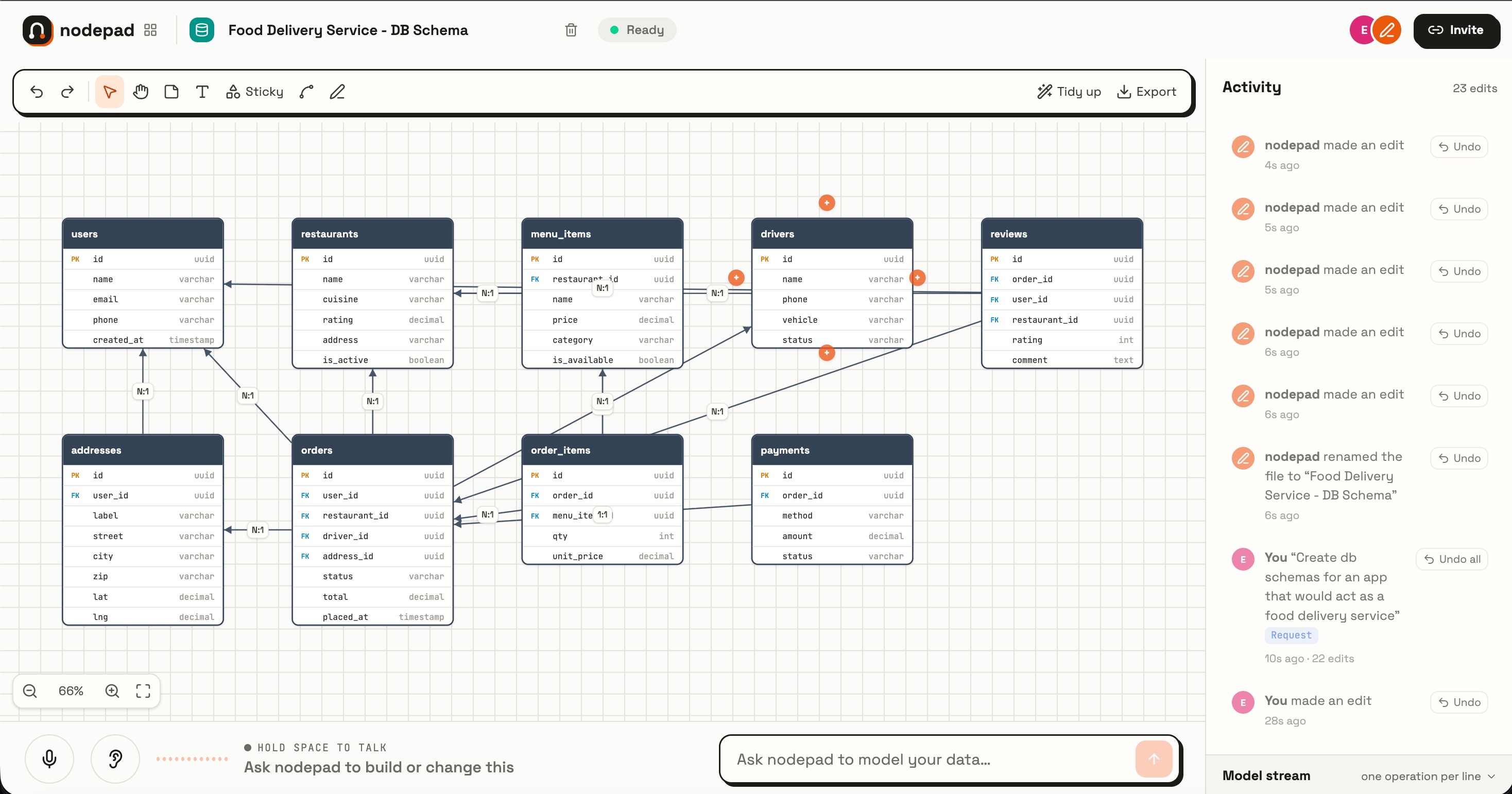
DB Schema
-
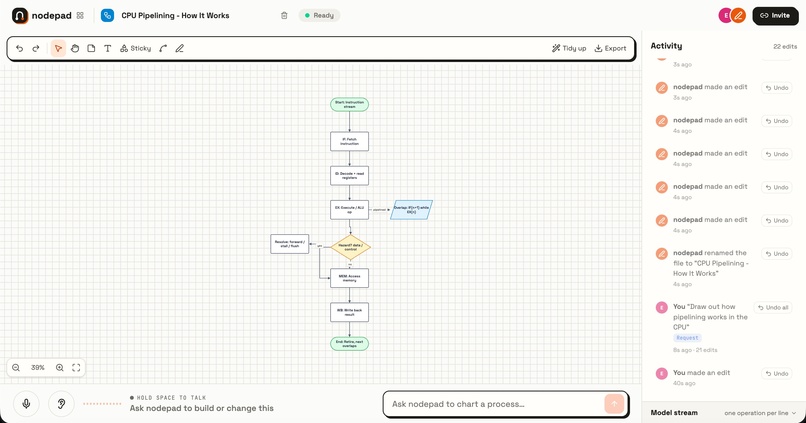
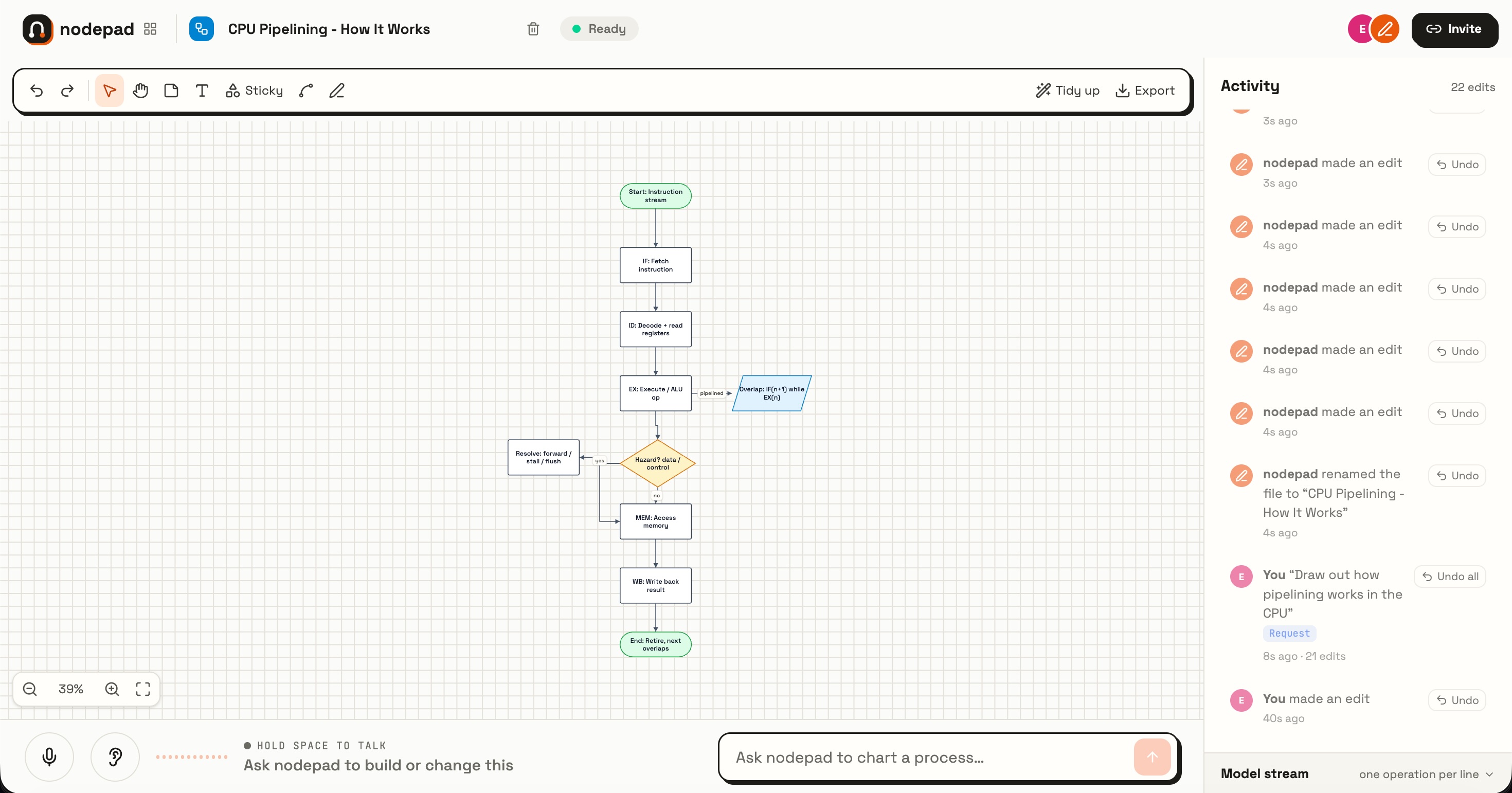
Flow Diagram
-
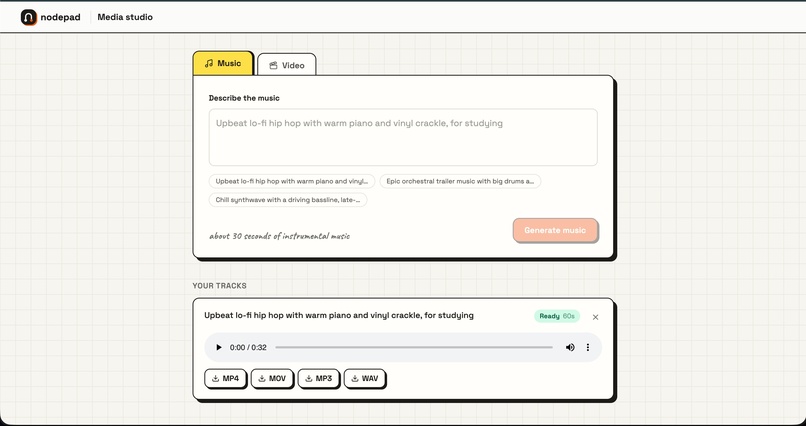
Music
-
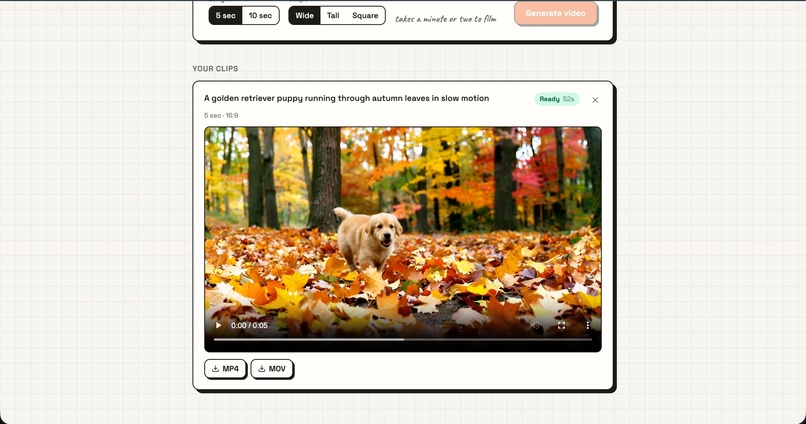
Video
Inspiration
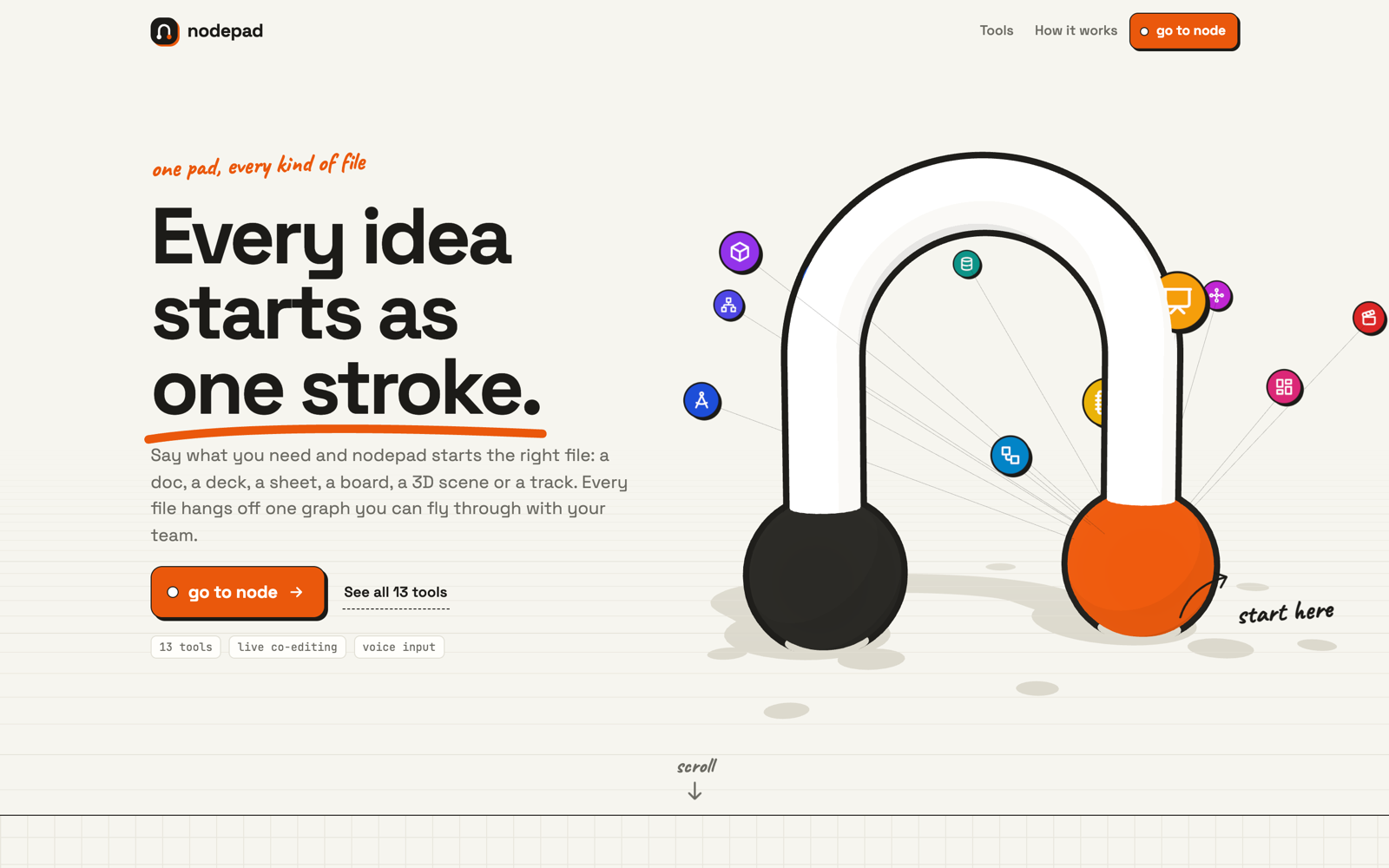
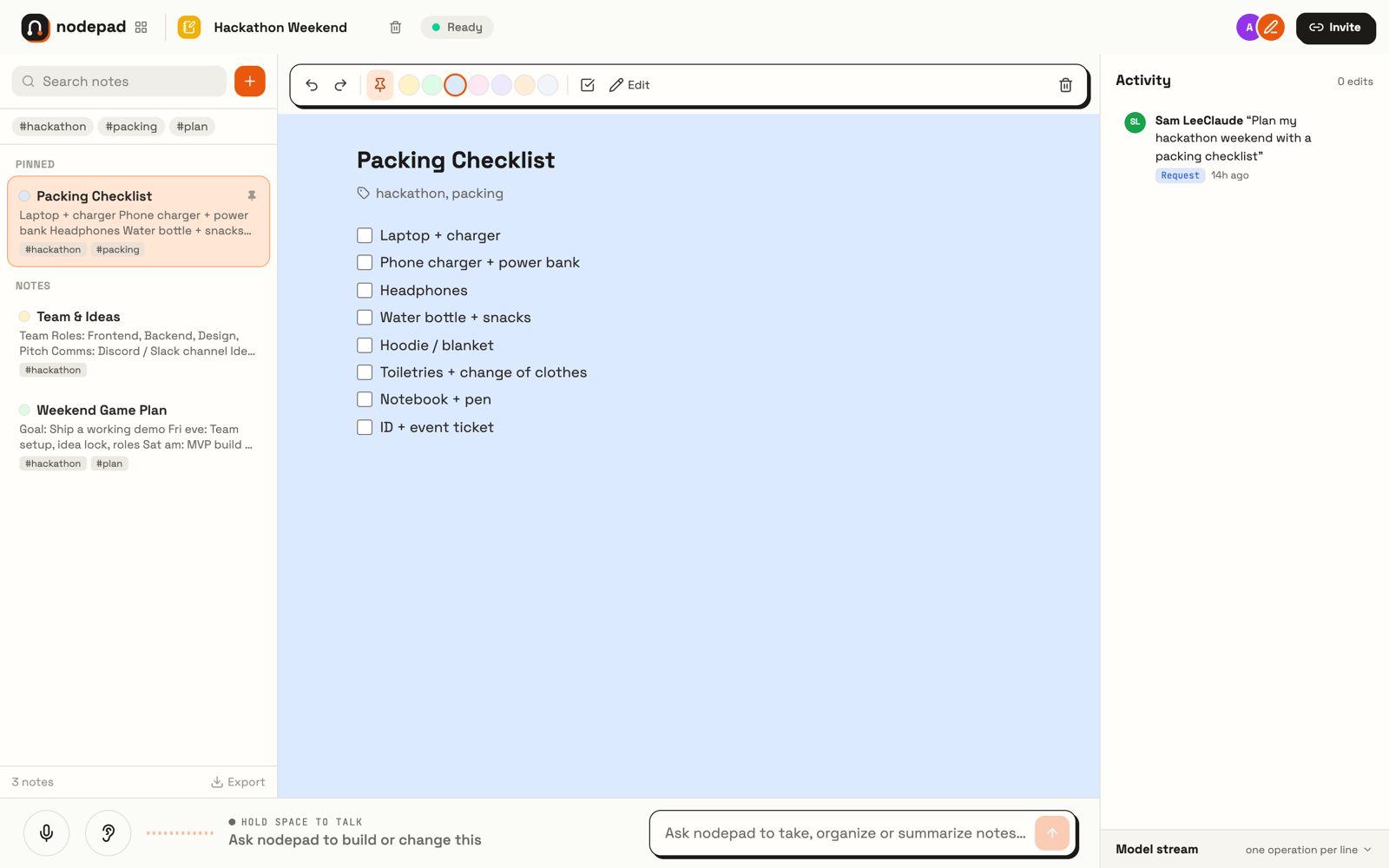
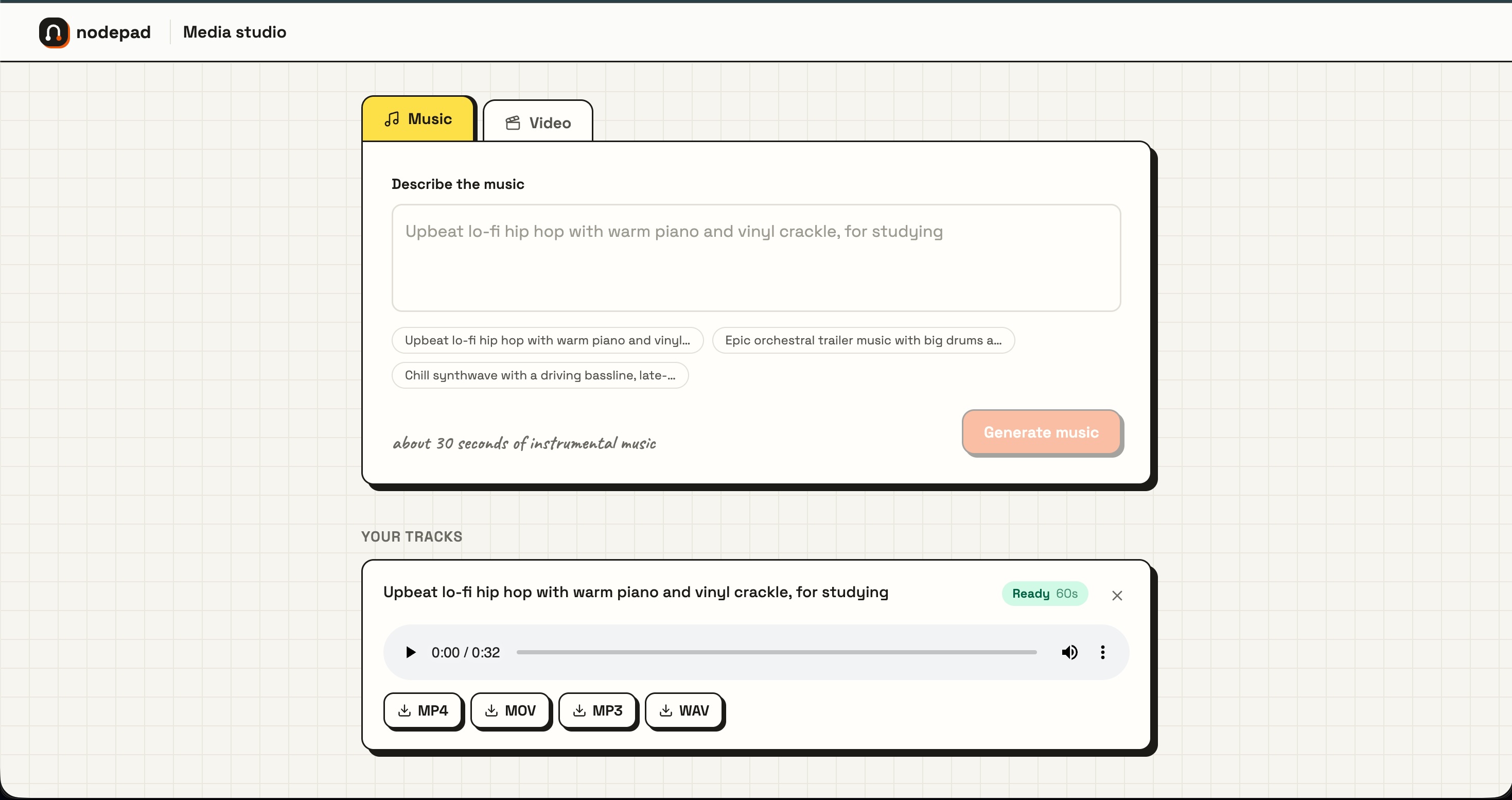
We wanted to reimagine the traditional office suite as one connected, collaborative workspace. Instead of replacing human creativity, NodePad helps turn ideas into reality across presentations, documents, whiteboards, media, and 3D design.
What it does
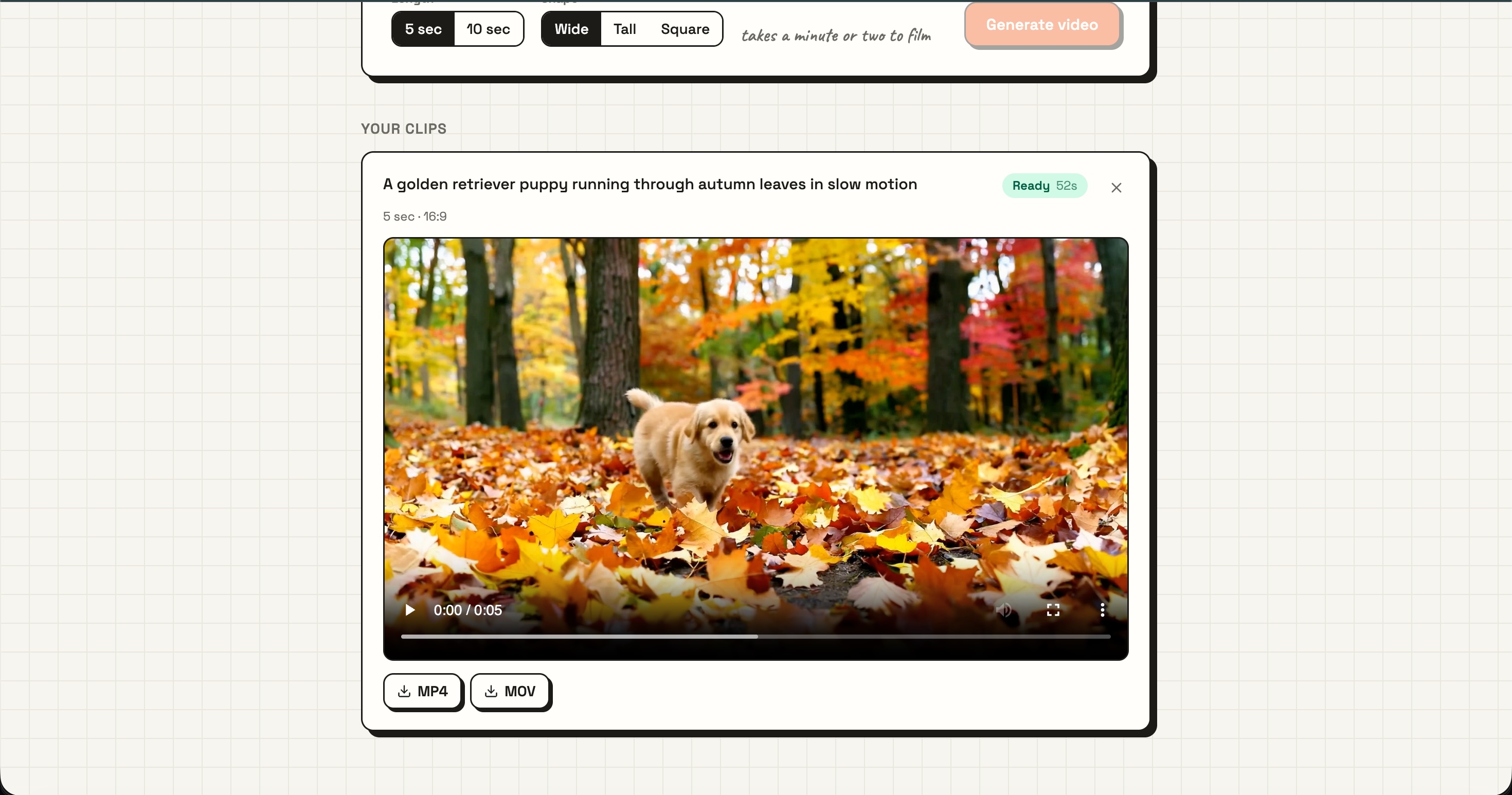
NodePad is an AI-powered office suite that helps create and edit presentations, documents, spreadsheets, diagrams, whiteboards, audio and visual components, and 3d Media. It edits and generates ideas in text, 3d modelling, video components, spreadsheets, and more through speech recognition or typed instructions. It reduces the barrier to using AI, enhancing collaboration within human interactions.
How we built it
We built NodePad with React, TypeScript, Vite, Fastify, and WebSockets to support responsive tools and real-time collaboration. Muse powers the AI collaborator, while SerpAPI, Meshy, Replicate, and Three.js support research, sourced images, generated assets, and interactive 3D workspaces.
Challenges we ran into
One of our biggest challenges was choosing an architecture that could support multiple office tools, real-time collaboration, and a live AI participant while remaining fast and expandable. Deployment required us to manage environment variables, WebSockets, frontend and backend services, and differences between local and production environments. We also had to evaluate which APIs were suitable for each feature because they varied in speed, reliability, limitations, and output formats.
Accomplishments that we're proud of
A large part of this project was dedicated to learning how Muse works and its capabilities within other applications, along with its capabilities when combined with other tooling like the SerpAPI and MeshyAPI. We noticed that Muse by itself, without provided context, is not as useful as it is with the other API’s that could provide context behind its goals. At one point, the focus of the project became how we can get Muse the most amount of information possible while keeping latency at a minimum.
What we learned
A large part of this project was dedicated to learning how Muse works and its capabilities within other applications, along with its capabilities when combined with other tooling like the SerpAPI and MeshyAPI. We noticed that Muse by itself, without provided context, is not as useful as it is with the other API’s that could provide context behind its goals. At one point, the focus of the project became how we can get Muse the most amount of information possible while keeping latency at a minimum.
What's next for NodePad
NodePad has a variety of features that could be added; unlike other suites, this suite is a generational tool where a machine can assist you with painting your ideas onto a canvas within seconds. This extends a lot farther than slides and documents; it can even go as far as making personal applications that the user might find useful, such as video games or a to-do list app. Notepad tries to capitalize on a user’s imagination, and we hope that we can try to grow it to capture one’s infinite imagination.
Built With
- fastify
- github
- meshy
- muse
- node.js
- pptxgenjs
- react
- replicate
- serpapi
- tailwindcss
- three.js
- typescript
- vercel
- vite
- websockets

Log in or sign up for Devpost to join the conversation.