-
Presentation Mode
Inspiration
It's often difficult for professors to judge if students really understand what is being taught. And even if they ask to see if everyone understands, students are shy to announce in front of the whole class that they do not understand. This problem is especially true for classes taught in large lecture halls (>100 students)
What it does
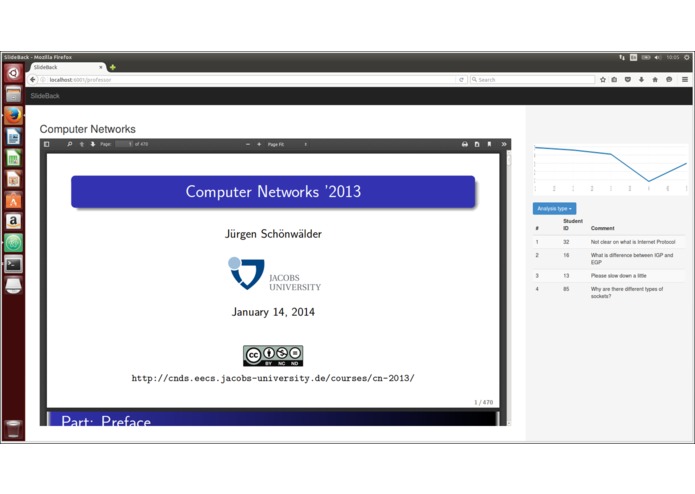
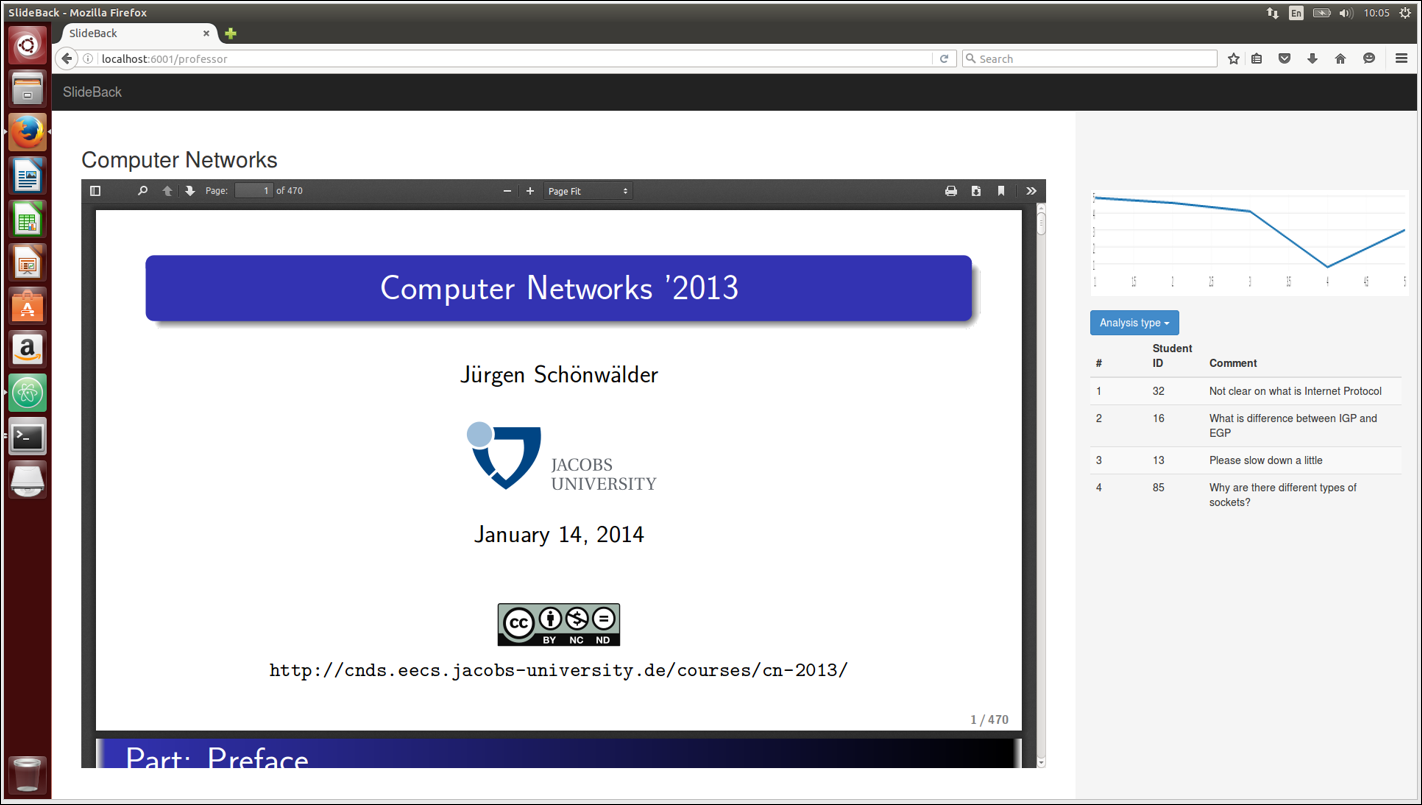
Slideback is a platform where students can provide their professor with live feedback anonymously. This way the professor can see how much students understand in real-time using a live graphic showing the average understanding level per slide. In order to prevent "spam" feedback, the professor can see a randomly assigned ID associated with each student so that he/she can tell if the same student is commenting multiple times or if many students are having the same problem
How we built it
We used node.js for the backend, with socket.io for the real time communication. In the front end we used HTML with EJS for templating, Plot.ly for generating the live graphic, and JavaScript and CSS for general development.
Challenges we ran into
Had never used these technologies, so the main challenge was to learn how to use them, and what they do.
Accomplishments that we're proud of
We actually made it work! (Well, more or less) The backend was pretty much working, but the front end requires more work.
What we learned
We learned how to use node.js and other associated technologies. We also learned some interesting tricks such as using JS for splitting pdfs.
What's next for SlideBack
- Automatically detect spammers
- Enable professors to generate reports after a session
- Enable professors to upload multiple files into a session
- Enable professors to use other file types (like .pptx)


Log in or sign up for Devpost to join the conversation.