Inspiration
Slice came from our own everyday experiences. Whenever we go out to eat, split an Uber, or pick things up for each other, we always end up manually sending payment requests, keeping mental tabs on who owes who, and awkwardly reminding each other later. It’s messy, easy to forget, and honestly takes away from just enjoying time with friends.
At the same time, we were really inspired by the idea of micro-investing. Small amounts don’t feel painful in the moment, but over time they can make a huge difference. We started wondering — what if saving and investing could just happen naturally in the background, without forcing people to constantly think about money?
We were also thinking about how money is almost always social, especially for Gen Z. When we were planning trips or shared goals, the financial side often became the biggest blocker. It felt like there was no simple way to make progress together without complicated planning or spreadsheets.
So we asked: what if spending, saving, and planning could all be social and automatic?
That question became Slice.
What it does
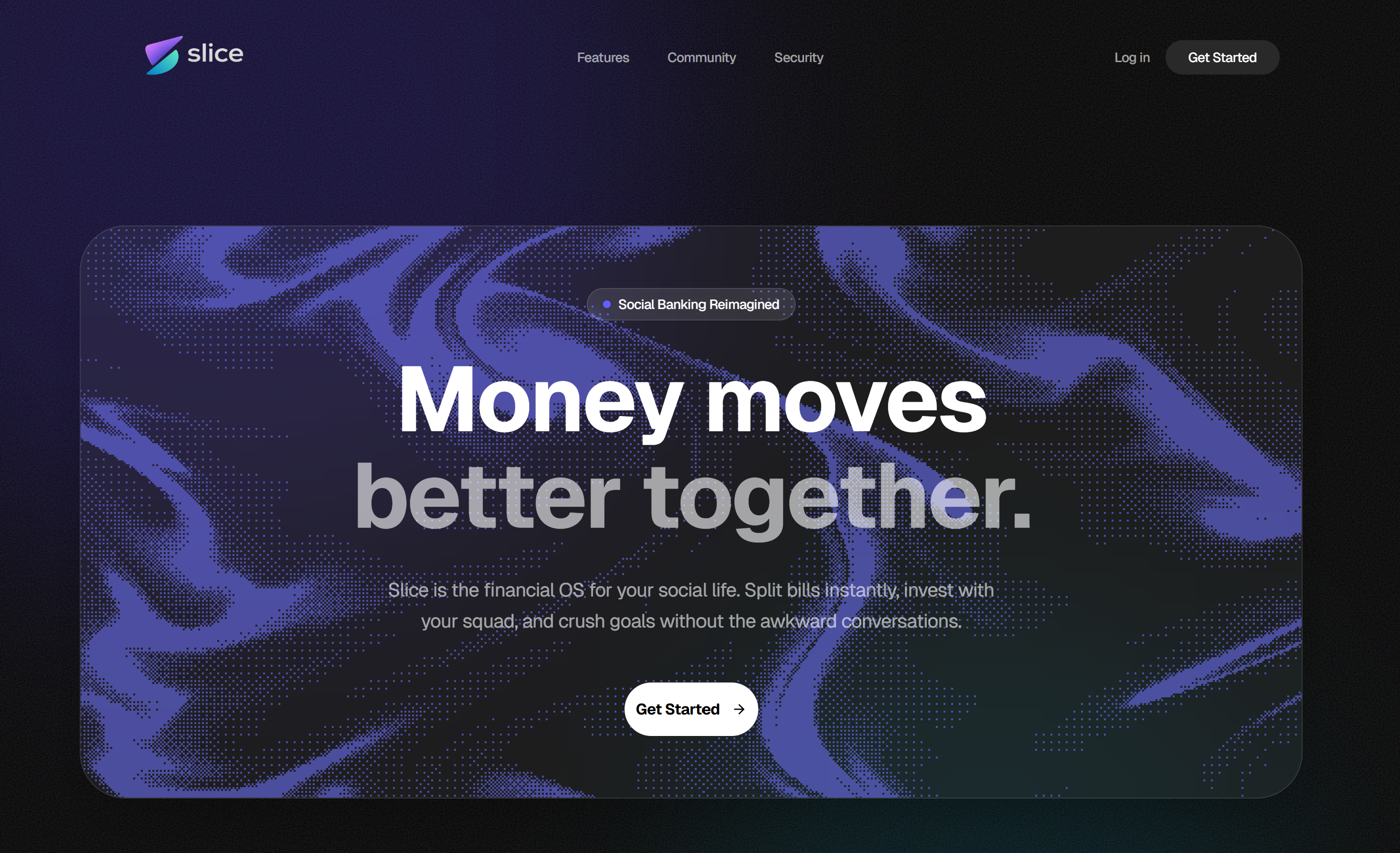
Slice is a social banking app built for how Gen Z actually spends money.
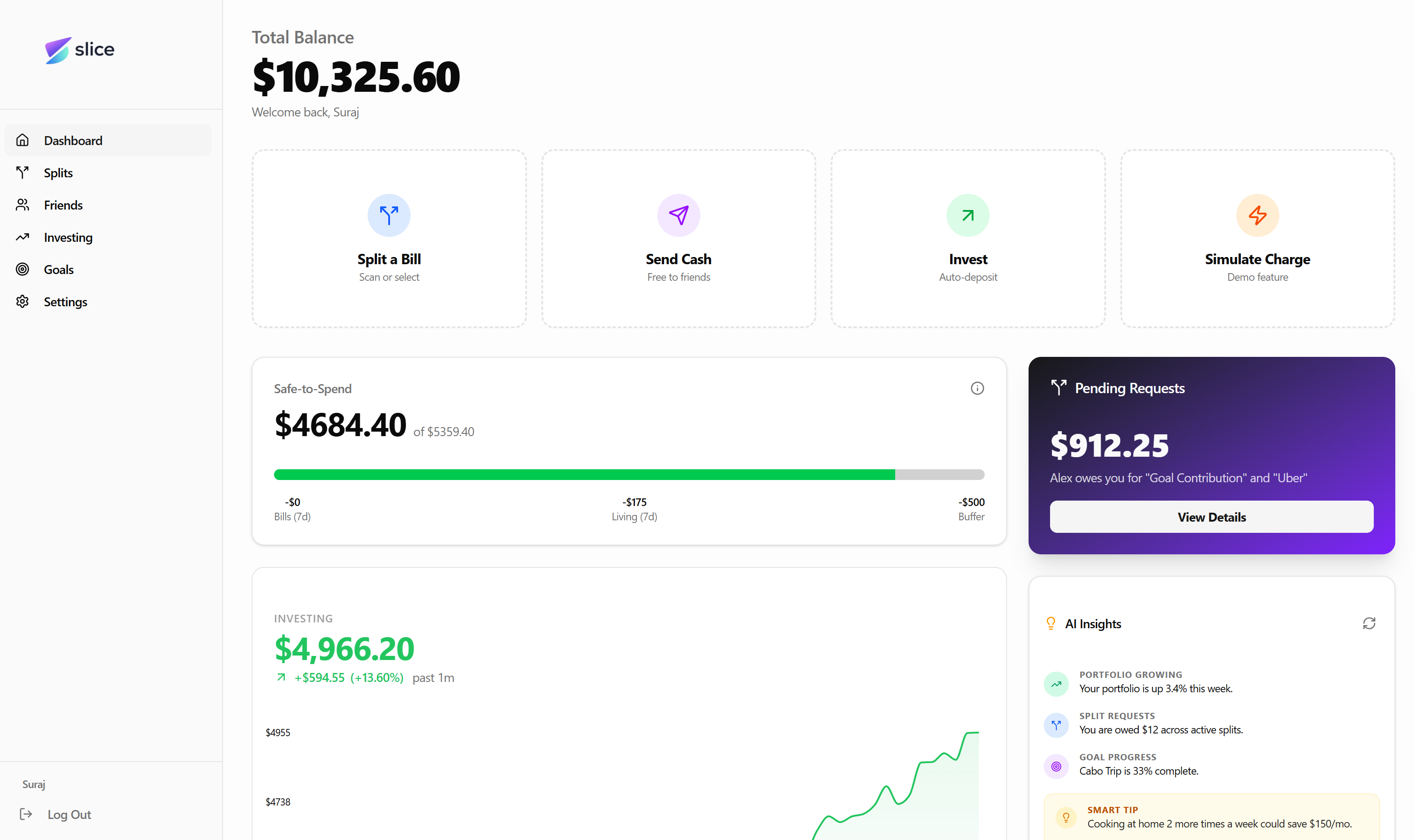
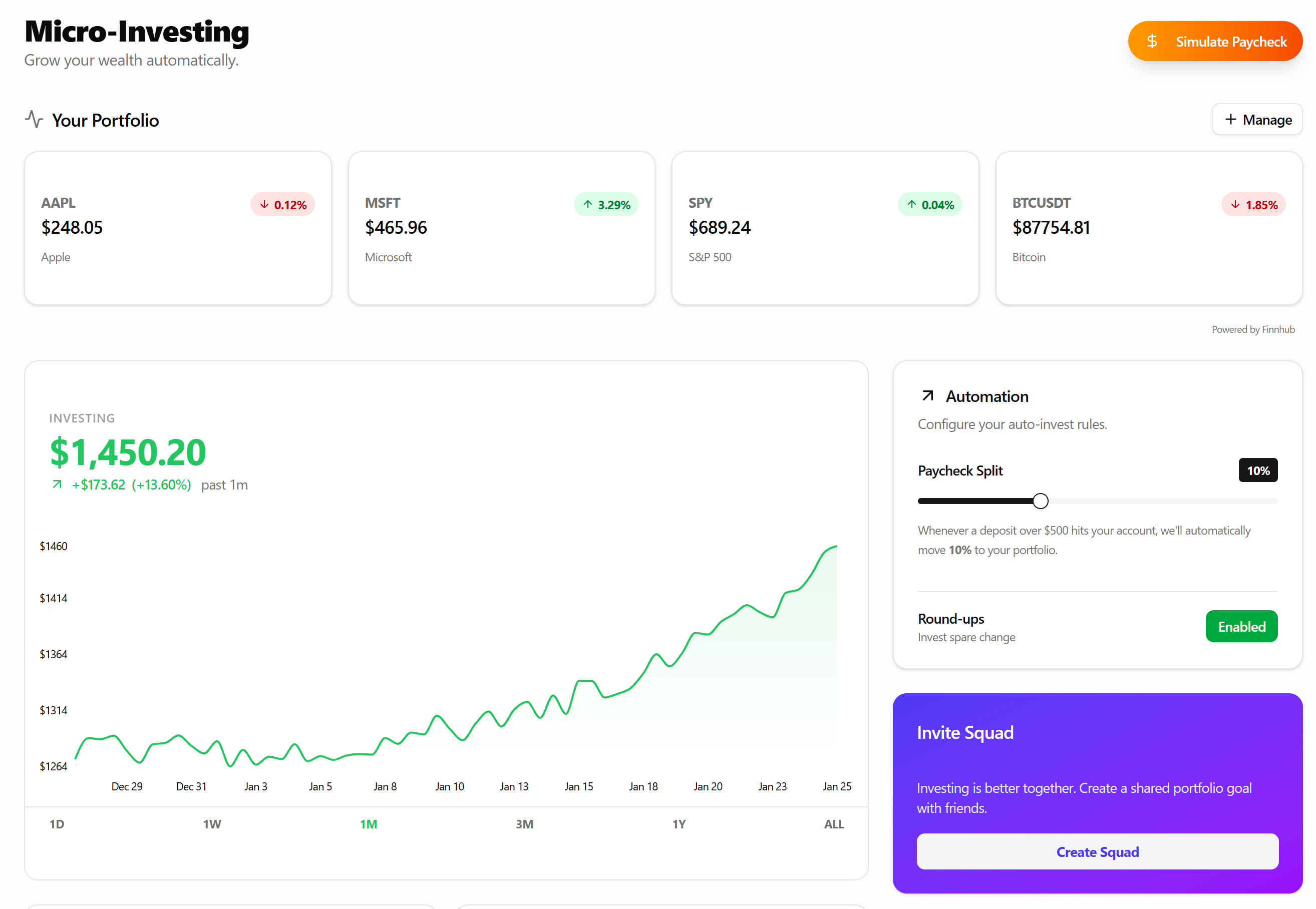
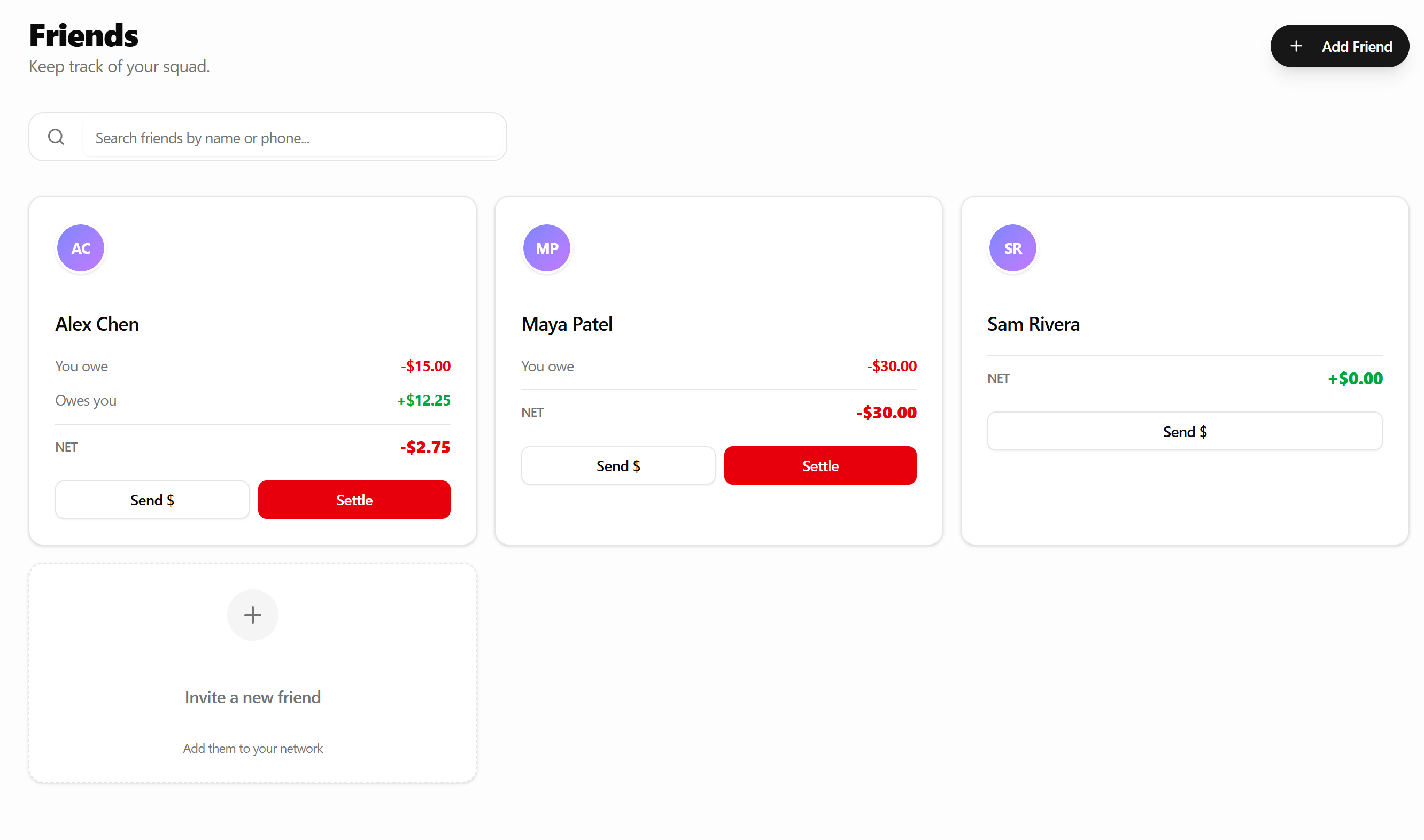
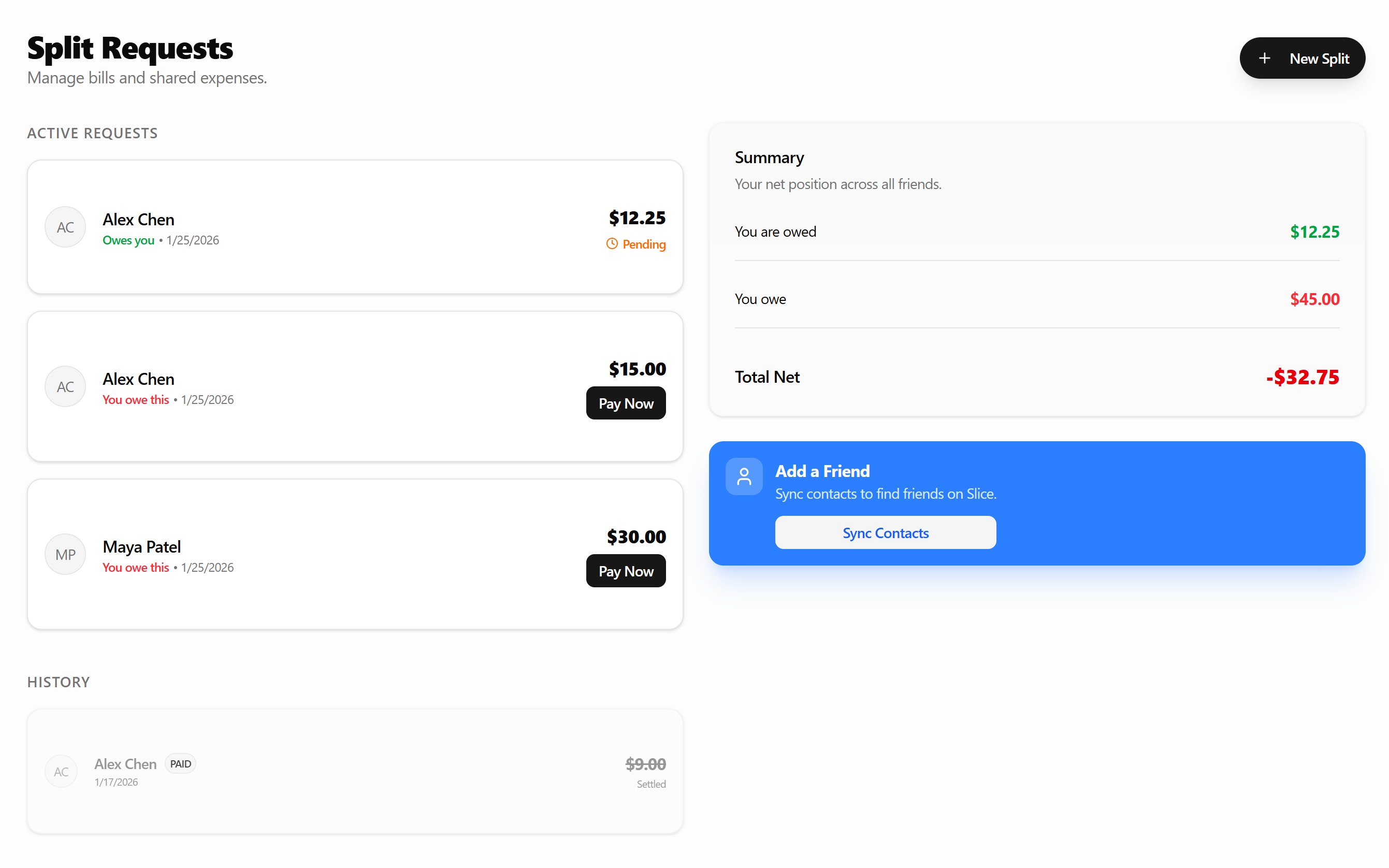
It automatically detects shared spending, helps split bills with friends, and keeps running balances so no one has to keep track manually. On top of that, Slice grows your money quietly in the background through adaptive micro-investing which is taking small percentages from paychecks and round-ups from purchases, but only when it’s financially safe to do so.
Instead of just showing a bank balance, Slice gives users a Safe-to-Spend number that factors in upcoming bills, pending splits, and saving commitments, so users know what they can realistically afford each week.
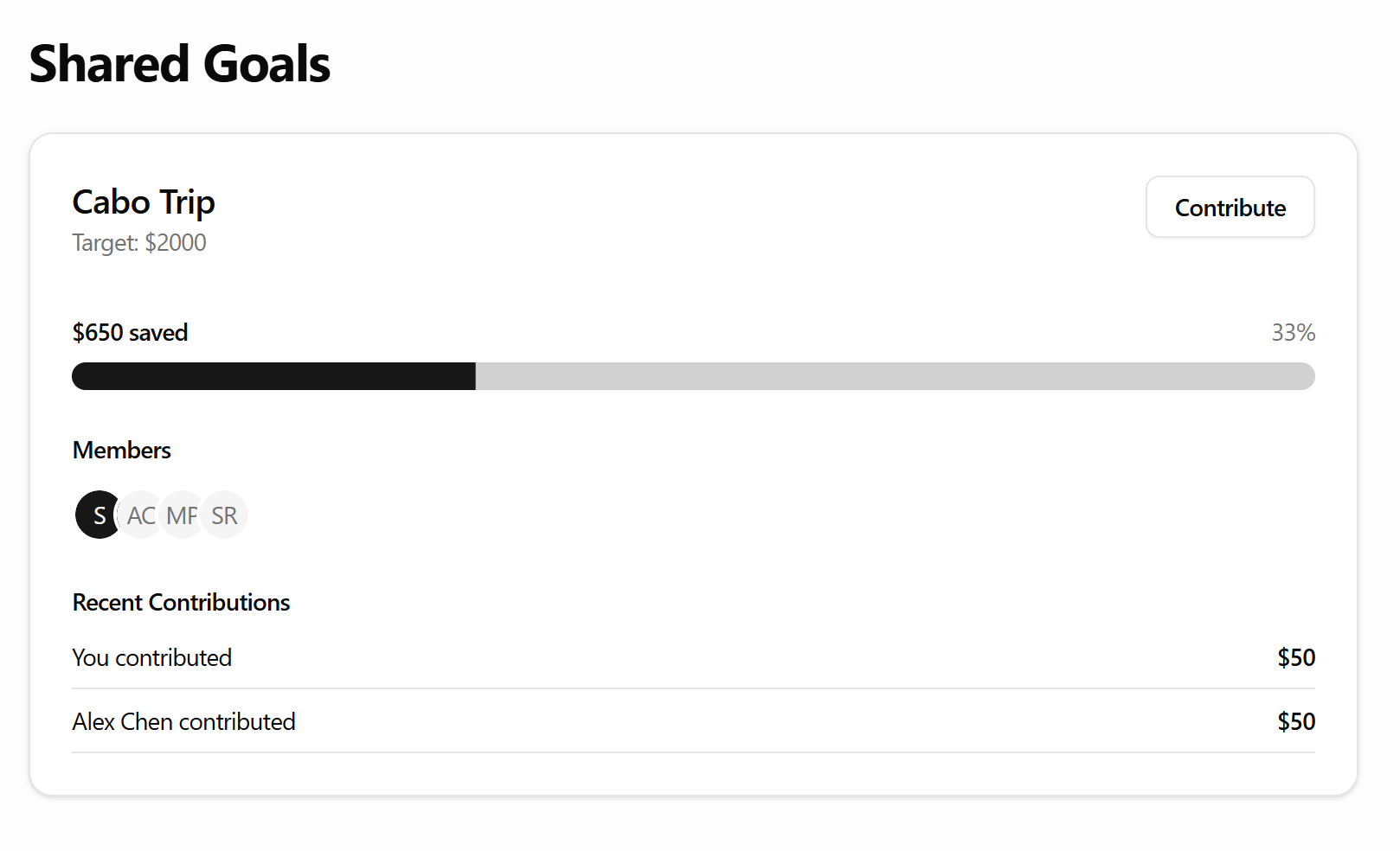
Slice also lets users create shared goals with friends, partners, or family, like saving for a trip, and automatically contribute toward them together.
The goal is to remove friction from social spending while helping people build better financial habits without extra effort.
How we built it
We built Slice as a full-stack web app using Next.js, TypeScript, Tailwind CSS, and shadcn/ui for a clean, modern dashboard experience. We used Google Antigravity to accelerate development and generate core structures, then iteratively refined each part of the app.
For banking data, we integrated Capital One’s Nessie API to pull realistic mock accounts and transactions, which we then used to power features like split detection, transaction feeds, and Safe-to-Spend calculations.
We implemented rule-based logic to: detect repeat shared spending patterns, trigger automatic split suggestions, pause micro-investing when balances are low or bills are coming up, and update financial recommendations in real time.
We built everything step by step, constantly testing how features interacted with each other to make sure the experience felt cohesive instead of like disconnected tools.
Challenges we ran into
One of the biggest challenges was collaboration. We ran into merge conflicts and repository issues when multiple people were pushing changes at the same time, which forced us to slow down and coordinate better as a team.
Another big challenge was deciding exactly what Slice should be. We had a lot of ideas at first, and it took time to narrow down what mattered most and how all the features should connect into one clear product.
Integrating Nessie also took some debugging since the API data didn’t always match what we expected, and we had to carefully normalize responses and make sure the rest of the app updated correctly when real data came in.
Finally, making sure the financial logic made sense, especially around Safe-to-Spend and auto-pausing investing, took several iterations to avoid edge cases where users might feel stressed instead of supported.
Accomplishments that we're proud of
We’re really proud of how the micro-investing system turned out, especially the idea that Slice doesn’t just invest blindly, but actively protects users by pausing when money is tight or spending spikes.
We’re also proud of the overall design and UI, especially the dashboard and investing views, which feel like something you’d expect from a real fintech product, not just a hackathon prototype. And most importantly, we’re proud that Slice feels like a cohesive idea, not just a collection of features. Social spending, investing, and shared goals all connect into one story: making money easier to manage together.
What we learned
For some of us, this was our first hackathon, and it taught us a lot about how real products get built, from idea to design to implementation to debugging under time pressure. We learned how to work with APIs, manage application state, debug data flows, and think about financial logic from a user’s perspective, not just a technical one. We also learned how important communication is in team projects, especially when multiple people are working on the same codebase at the same time.
Overall, we learned how challenging and rewarding it is to turn an idea into something people can actually interact with.
What's next for Slice
Next, we’d want to integrate real bank and brokerage connections so users could link actual checking, savings, and investment accounts, including platforms like Robinhood. We’d also improve the financial models behind Safe-to-Spend and investing projections to make recommendations even more accurate and personalized.
Another big next step would be deeper AI-powered insights, helping users plan for future decisions like buying a car, signing a lease, or preparing for big expenses. We’d also expand payment and settlement features, making it easier to actually move money between users, and explore future-looking features like crypto integration and multi-currency support.
Ultimately, we want Slice to become a true financial companion for social life helping people spend, save, and plan together with less stress and more confidence.
Built With
- capital-one
- framer
- next.js
- react
- shadcn
- tailwind
- typescript
- zustand


Log in or sign up for Devpost to join the conversation.