-
-
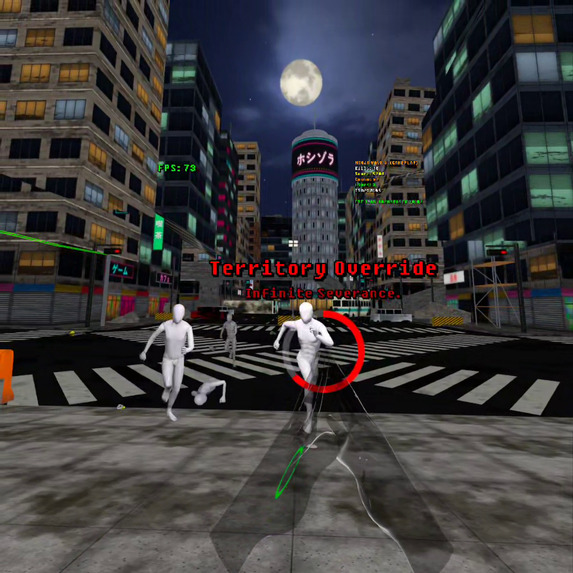
Territory Override
-
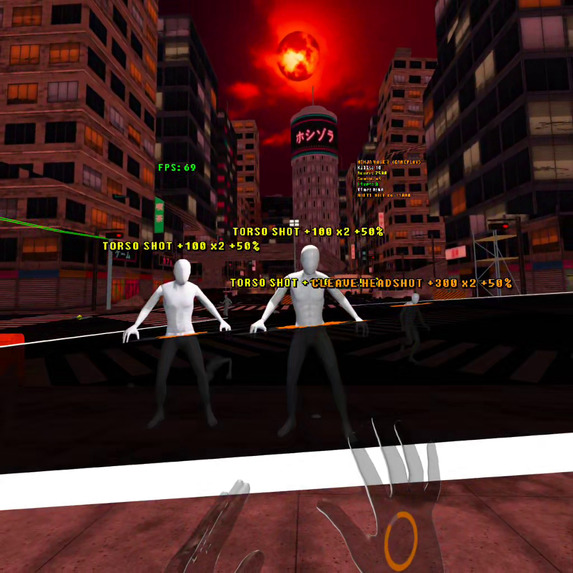
Infinite Severance
-
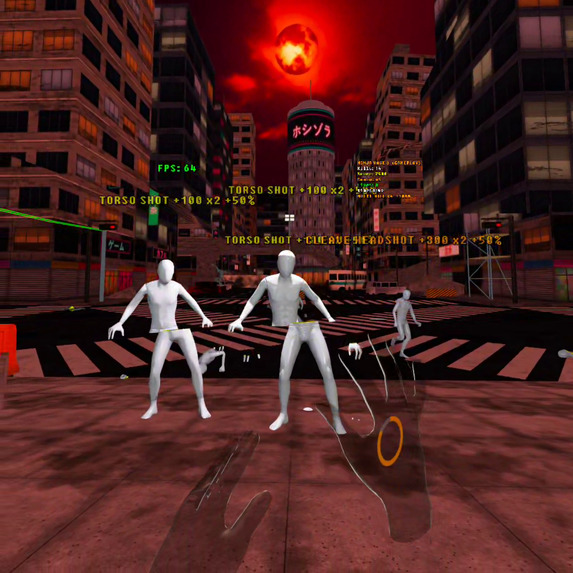
Damage Numbers
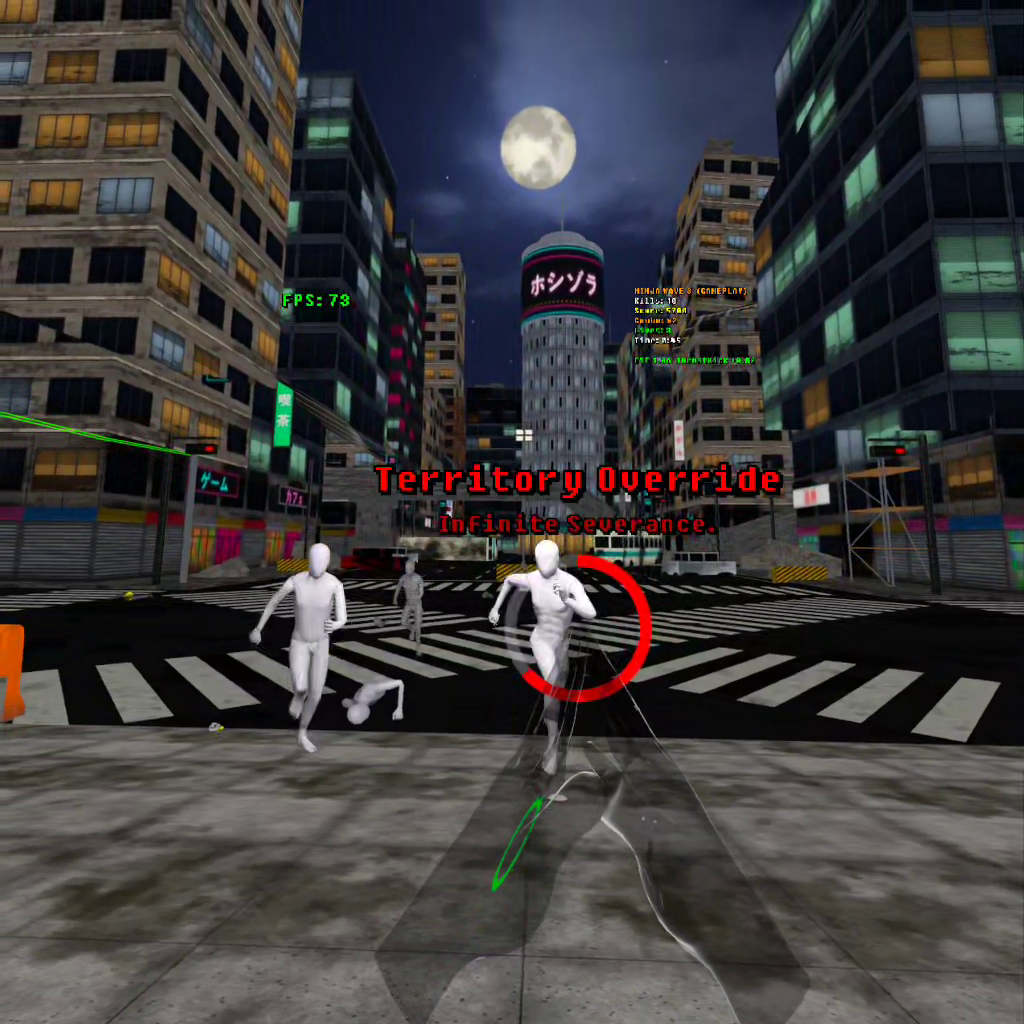
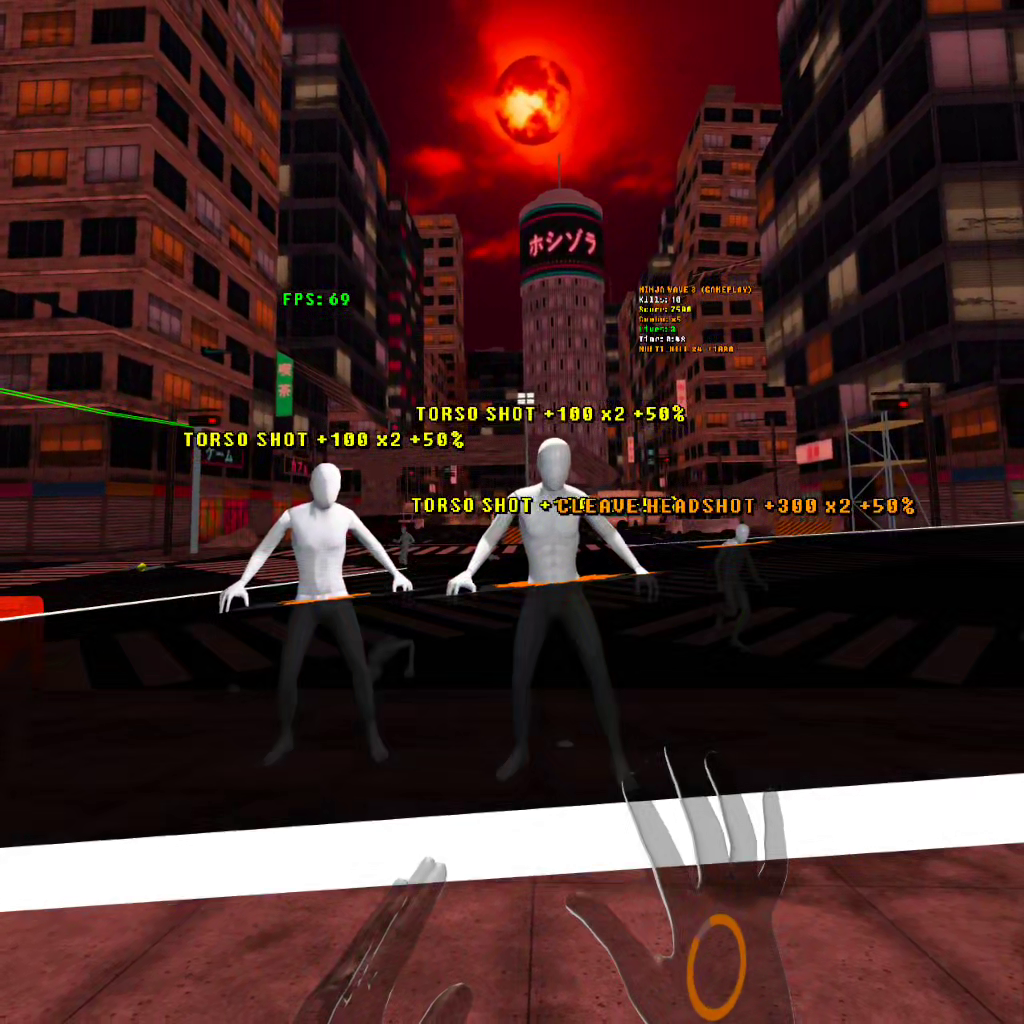
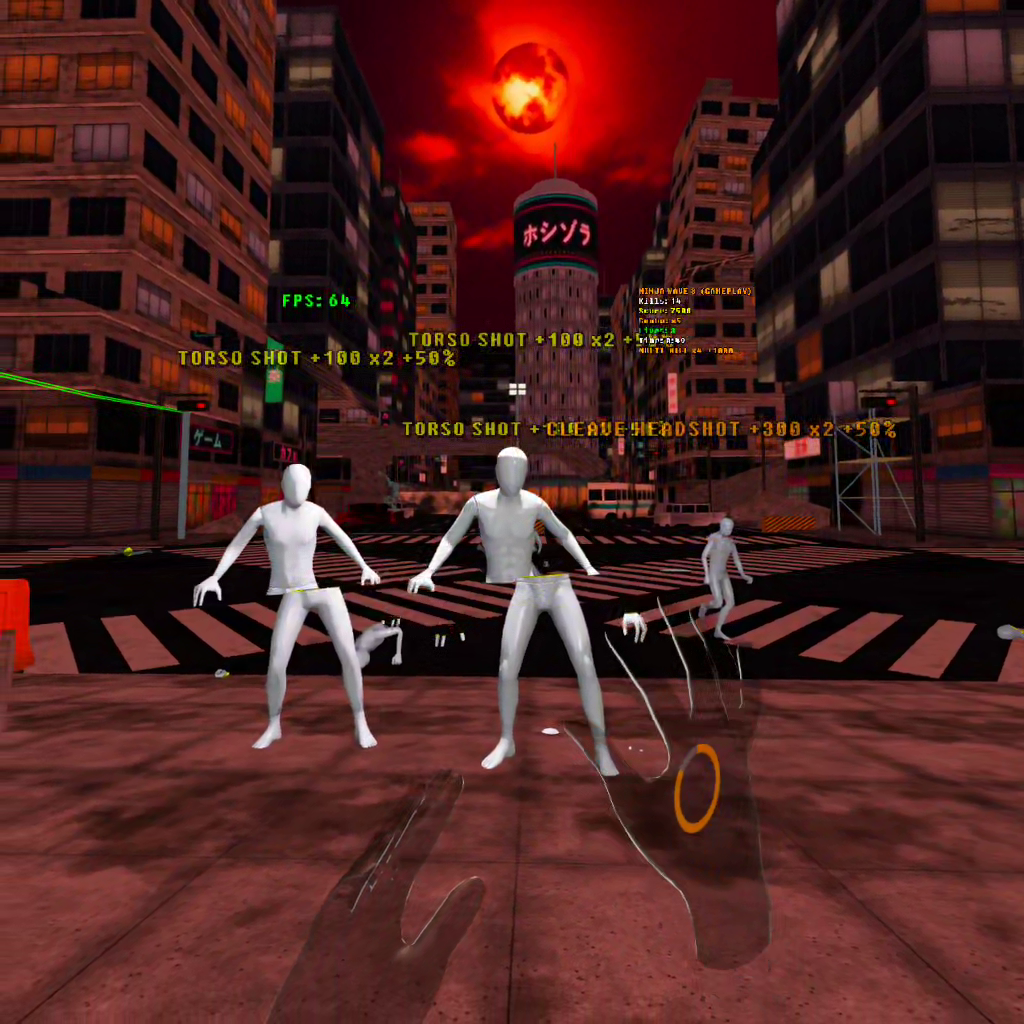
What it does
Slice Sorcerer is a seated, hand-tracked VR game for Meta Quest. You sit on a stone throne in the middle of a ruined, burning Shibuya intersection while waves of ninjas come at you from every direction: through the crosswalks, out of windows and manholes, along power lines, from behind cars and barriers, and from the roofs of buses.
Your hands are the blade. Pinch to aim (a preview plane shows exactly where the cut will go), open your fingers to strike, and the enemy is sliced along that plane in real time, at any angle. Arms, legs, heads and torsos come apart where you cut them, and the pieces fall with gravity. Kunai thrown at you can be sliced out of the air.
- Territory Override: a two-hand gesture turns your strikes into an infinite cutting plane for 20 seconds. The sky turns to a blood moon, the ninjas back off, and every kunai in the air freezes and drops.
- Scoring: torso, headshot, cleave and elite tiers, combos, and a bonus for killing several enemies with one strike.
- Tutorial: a hand-tracking check, pinch-to-aim / open-to-strike pictures, setting your forward direction, practice on three targets, the Territory Override gesture, then options (damage color, HUD, damage numbers).
How we built it
- A native C++ / OpenGL ES app on Meta Quest using OpenXR and Quest hand tracking.
- Slice Art Engine (SAE), our own real-time mesh slicing engine: it cuts skinned, animated characters along a plane, builds the cap faces over the cut, keeps the new pieces skinned to the skeleton, and hands them to gravity.
- Up to 10 sliceable enemies at once, each running its own engine instance.
- The slicing can run on the headset or on our cloud slicing server.
- Character animations from Mixamo; the map, props, tutorial pictures and gameplay prototypes made in Blender.
Challenges we ran into
- Keeping cuts correct on animated, skinned meshes: every new vertex created by a cut has to follow the skeleton, and the cap faces have to close the cut cleanly.
- Holding frame rate with many dismemberable enemies on screen at once.
- Making hand-tracked strikes reliable and easy for a seated player (an earlier gesture design was dropped for pinch-to-aim / open-to-strike).
- Keeping enemy movement believable around cover, barriers and buses.
