Inspiration
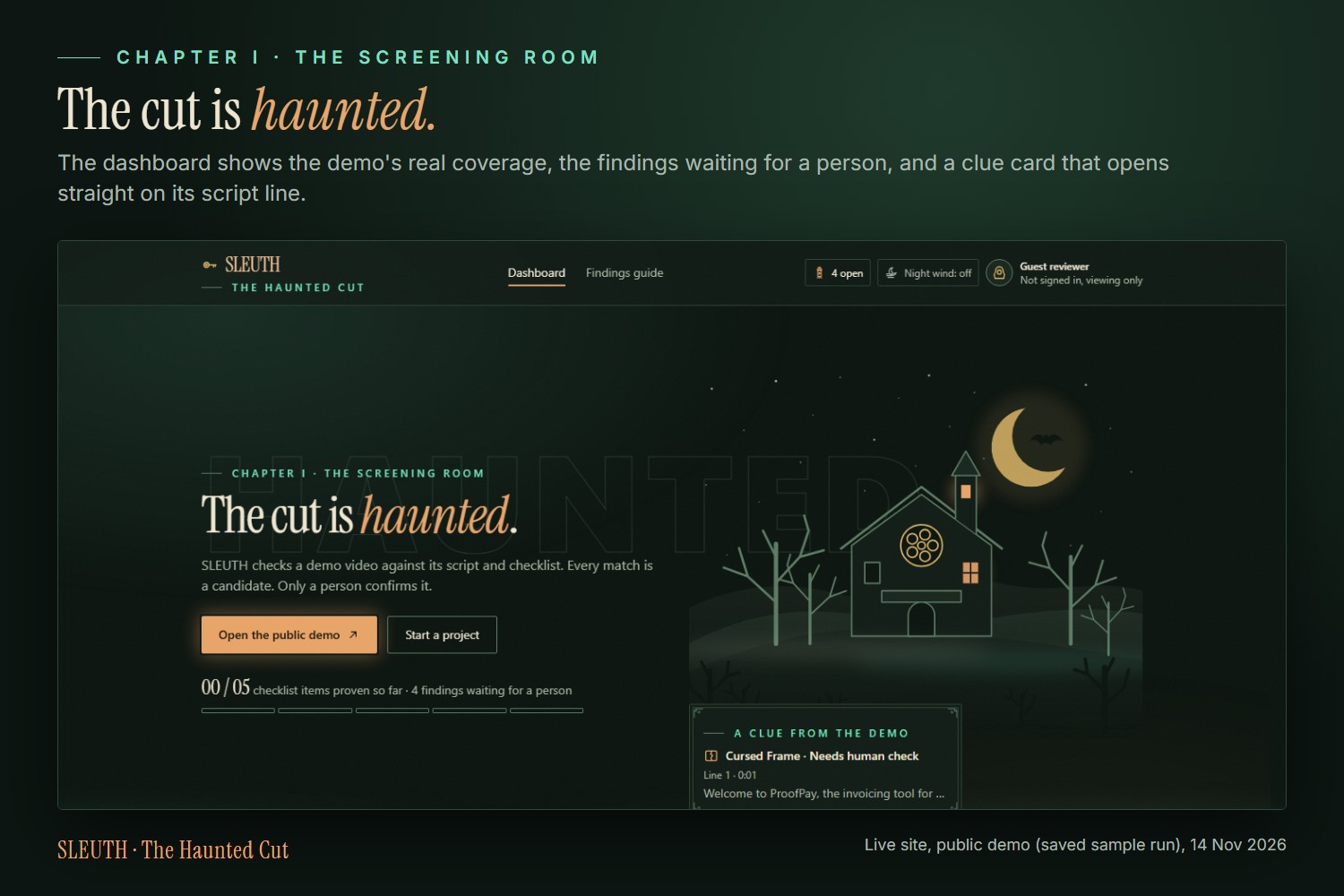
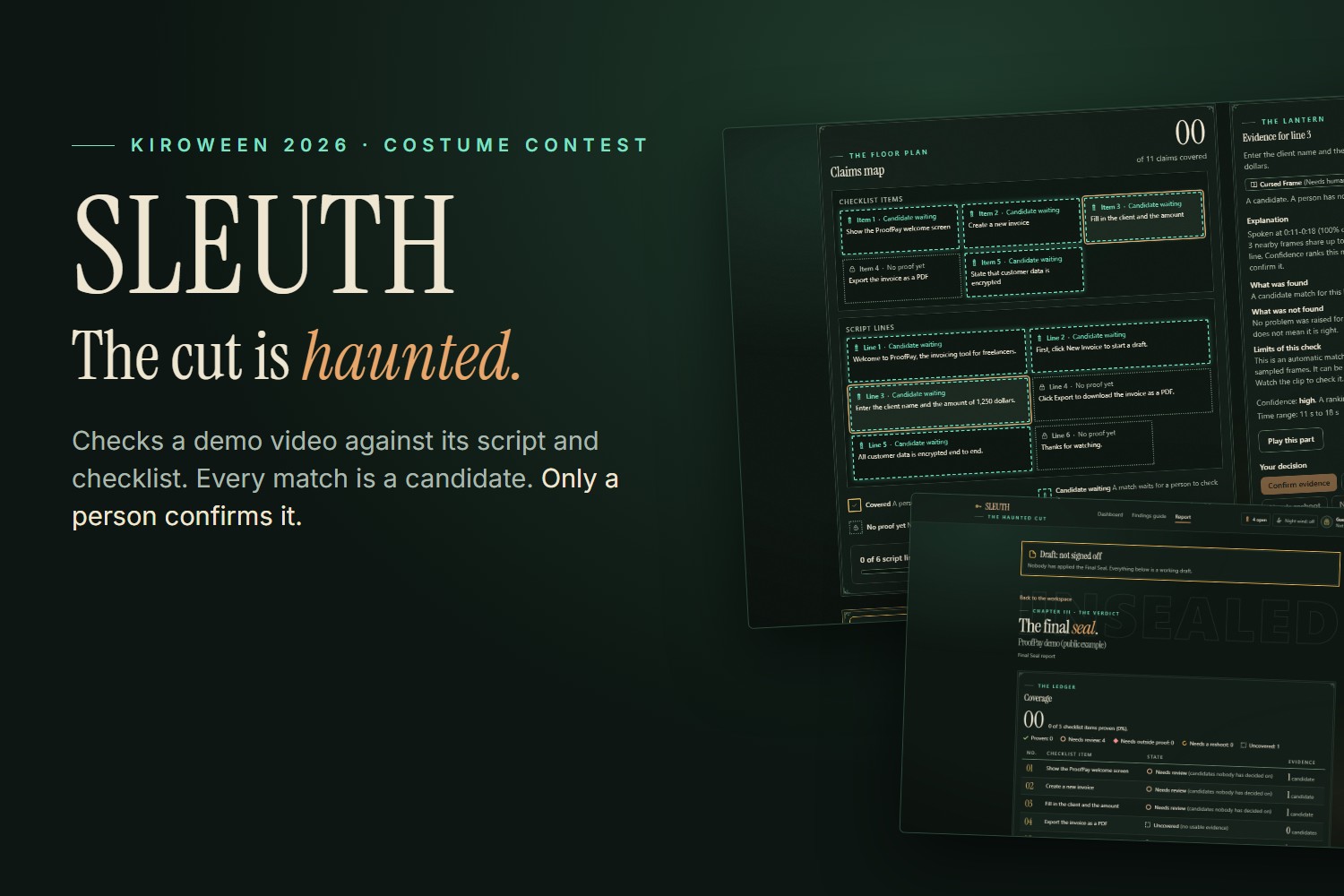
Demo videos drift from what they claim. A line gets cut, a screen changes, a sentence is edited after recording, and nobody notices until a judge or a customer does. We wanted a tool that treats every claim in a demo as something to prove, and every match it finds as a candidate that a person must confirm.
What it does
- You give SLEUTH a script (what you mean to say), a video (what happened) and a checklist (what the demo must show).
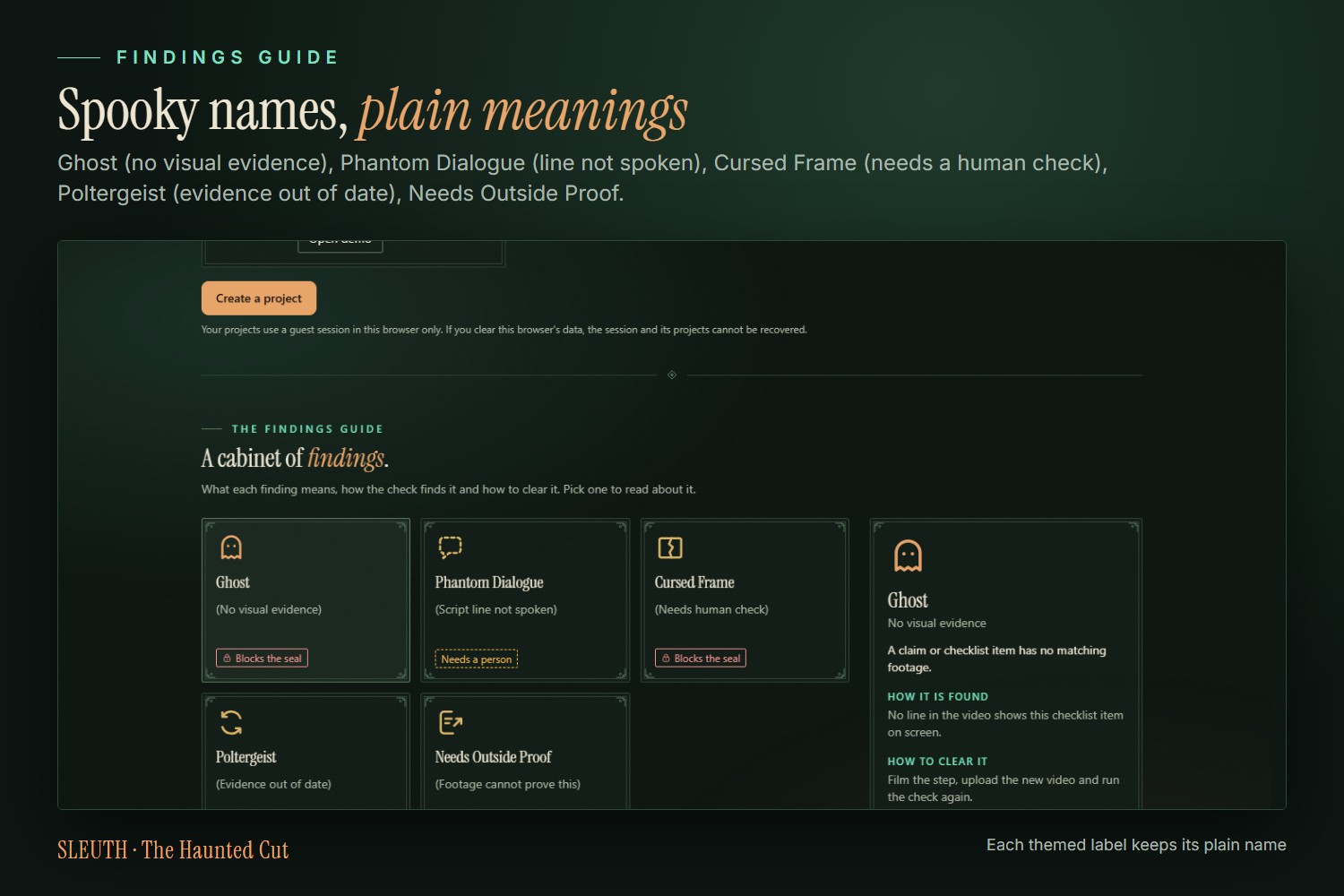
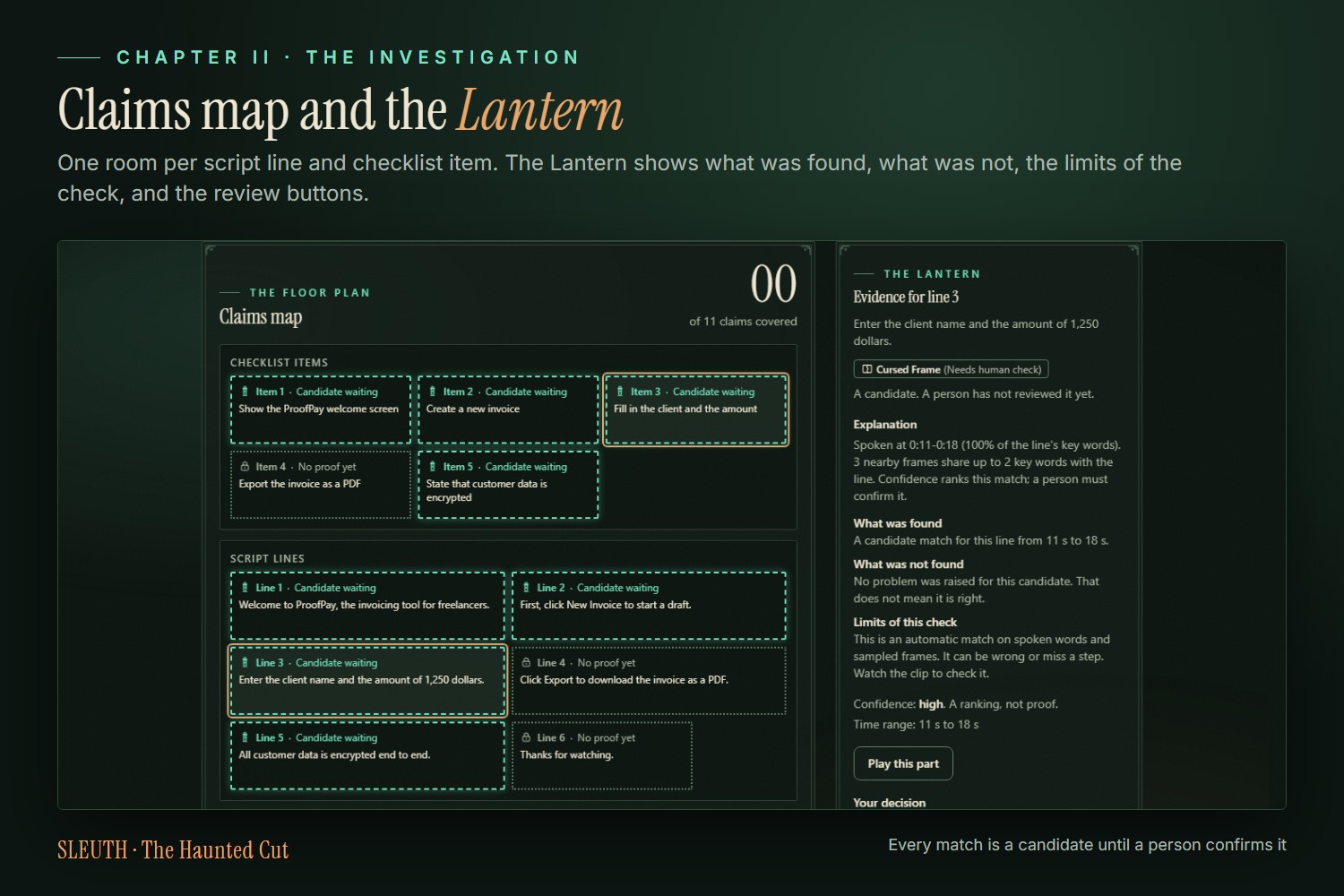
- It links each script line to moments in the video and reports problems as haunted-studio findings, each with its plain name beside it: Ghost (no visual evidence), Phantom Dialogue (script line not spoken), Cursed Frame (needs a human check), Poltergeist (evidence out of date), Needs Outside Proof (footage cannot prove this).
- Edit one sentence and only the evidence for that sentence goes stale. A cosmetic edit (case, spacing, punctuation) changes nothing.
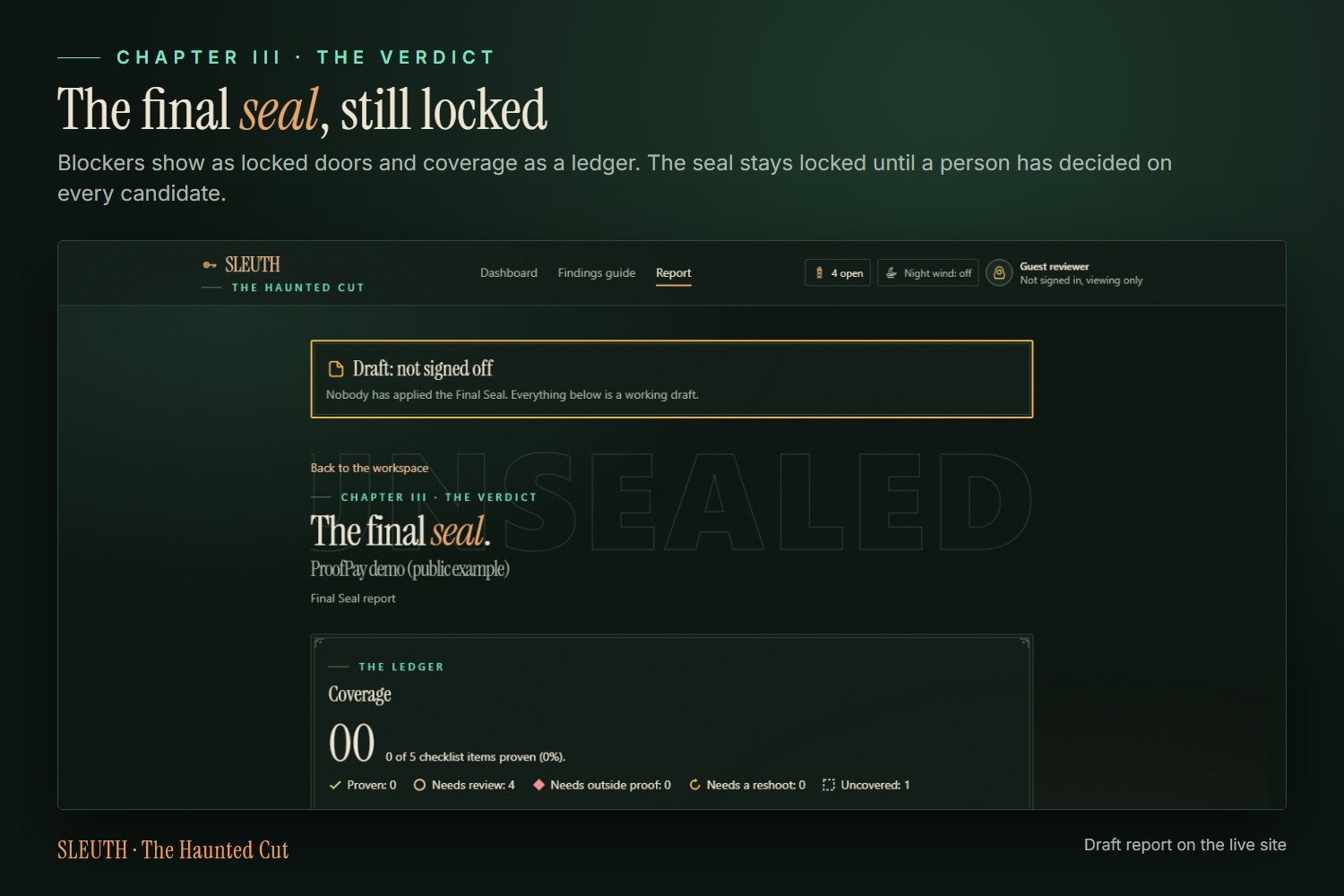
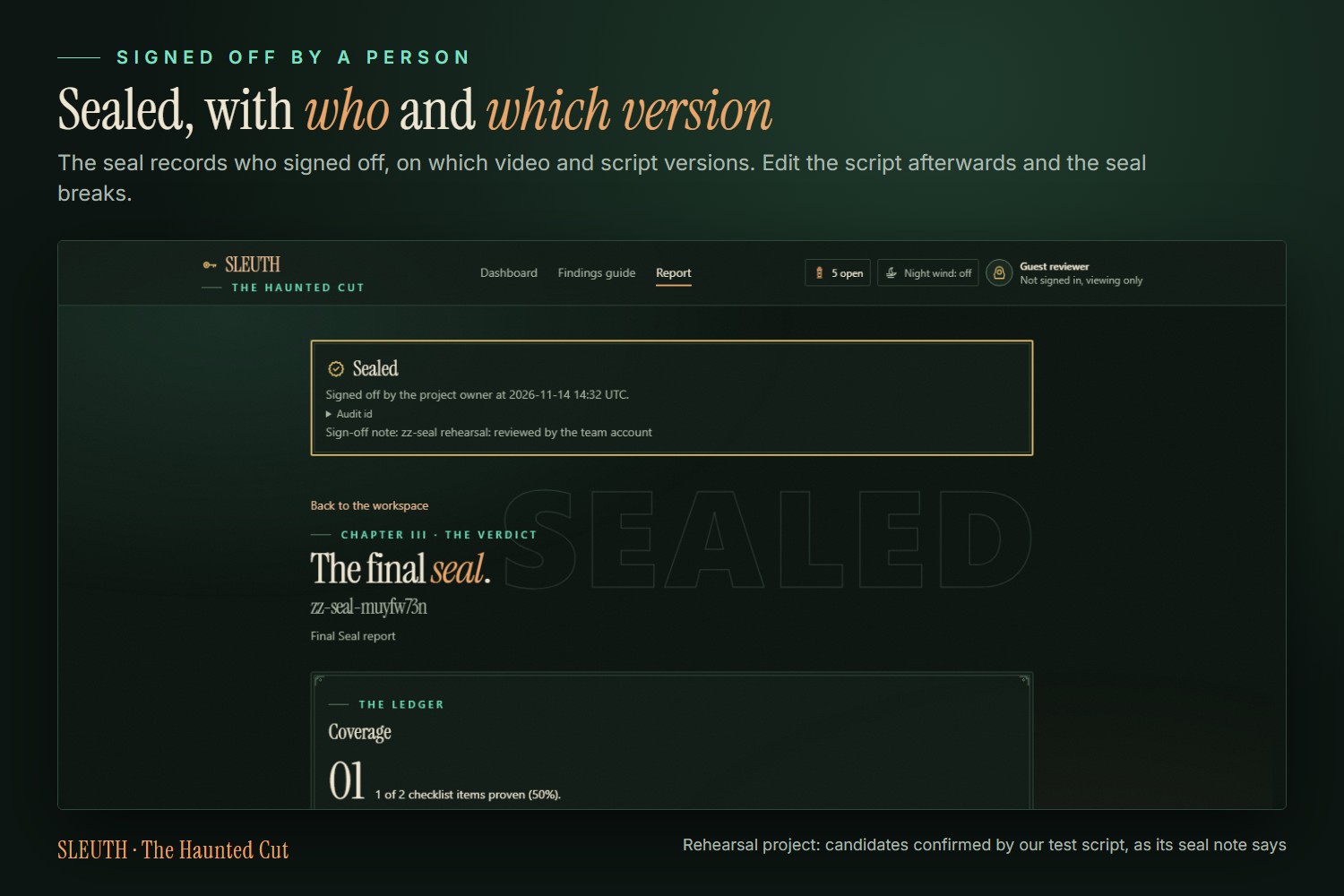
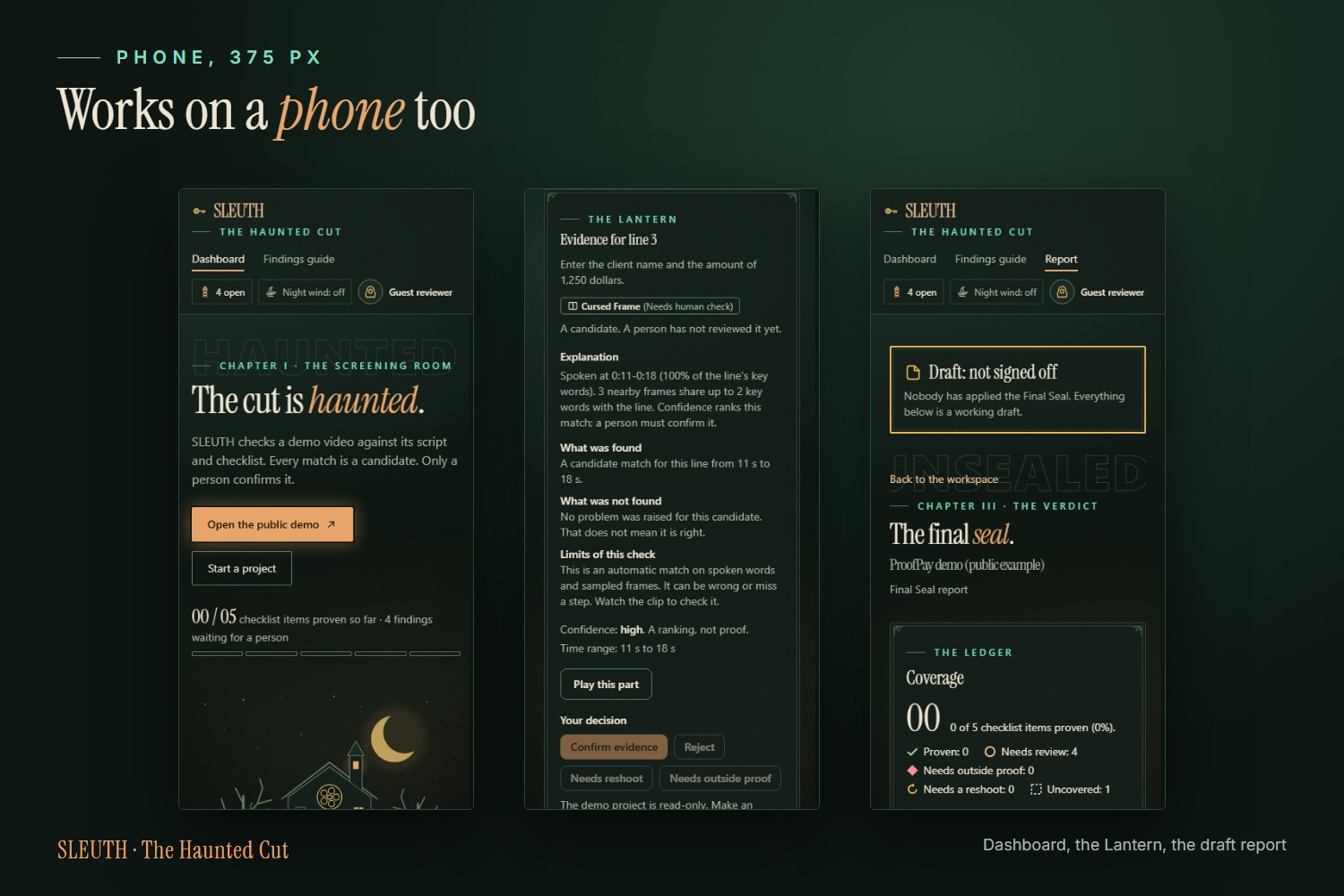
- A person reviews every candidate. Only a person's decision confirms evidence. The Final Seal records who signed off, on which video and script versions, and a later change breaks the seal.
- Try it signed out on the public demo, or as a guest with your own video. Visitors' videos get a speech-only check: only the transcript goes to the AI provider, never frames.
How we built it
- TypeScript monorepo: a Next.js web app and REST API, a worker with FFmpeg, shared Zod contracts, pure domain rules and a database layer.
- Two stores behind one interface: an in-memory fixture (no keys needed) and Supabase (Postgres, anonymous Auth, private Storage). Both pass the same contract suite.
- Row-level security on every table, tested against a real Postgres in CI.
- The worker runs from GitHub Actions. It is free, so a visitor's job can wait several minutes, and the page says so instead of faking progress.
- The haunted-house interface is original SVG and CSS. The optional "Night wind" is generated in the browser with the Web Audio API: no audio files, off by default, quiet while a video plays.
- Free tiers only: Vercel Hobby, Supabase Free, Deepgram credit, Gemini free tier.
How we used Kiro
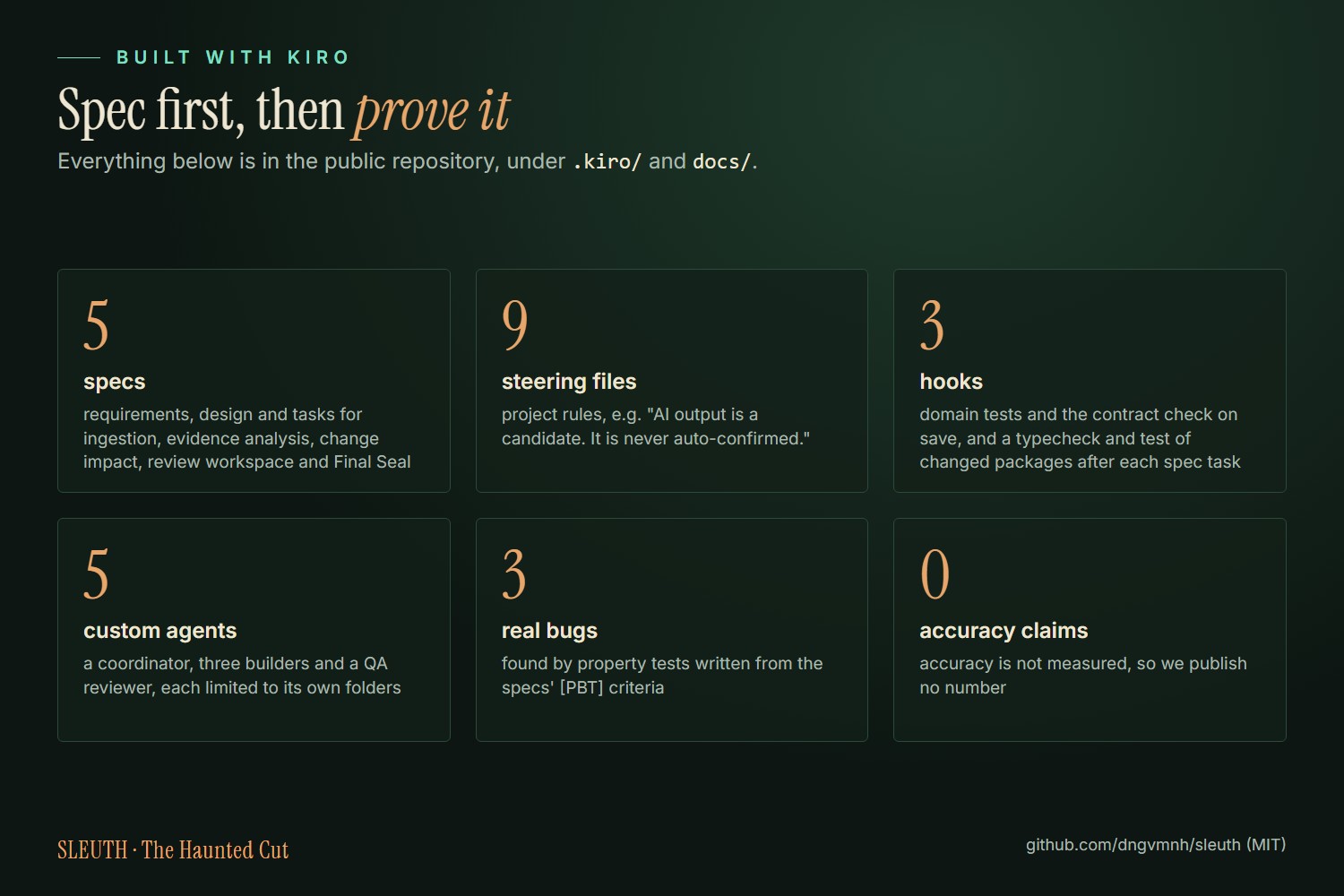
Five specs (requirements, design, tasks), nine steering files, three hooks and five custom agents, all in .kiro/. Property tests written from the specs' [PBT] criteria found three bugs in code we had written the same day. Details: docs/submission/kiro-usage.md.
Challenges
- Supabase signed upload URLs live about two hours and cannot be shortened, but our spec says five minutes, so we enforce the five-minute rule when analysis starts.
- Keeping "only a person confirms" true everywhere: a repo check blocks any new code outside the review rules that sets evidence to confirmed.
- A
.gitignorerule forcoverage/hid a route folder namedcoverage. Tests passed on a laptop and failed in CI. - A free worker means a wait. We chose to say so in the interface.
Accomplishments
- Three real bugs found by property tests in our own code.
- A public repository whose CI runs the whole database suite on a throwaway Supabase stack.
- A guest flow where anyone can try the product with no account and no keys.
What we learned
- Writing the spec first made the rule "candidates, not verdicts" testable instead of a slogan.
- Measuring beats claiming. We have not measured accuracy, so we publish no accuracy number.
What's next
Label our recorded clips, run the evaluation harness with real providers, and publish precision, recall and the false-warning rate with the clip count. Add captions to the player.
Built With
- deepgram
- drizzle-orm
- fast-check
- ffmpeg
- gemini
- github-actions
- nextjs
- node.js
- playwright
- postgresql
- react
- supabase
- typescript
- vercel
- vitest
- web-audio-api
- zod


