-
-
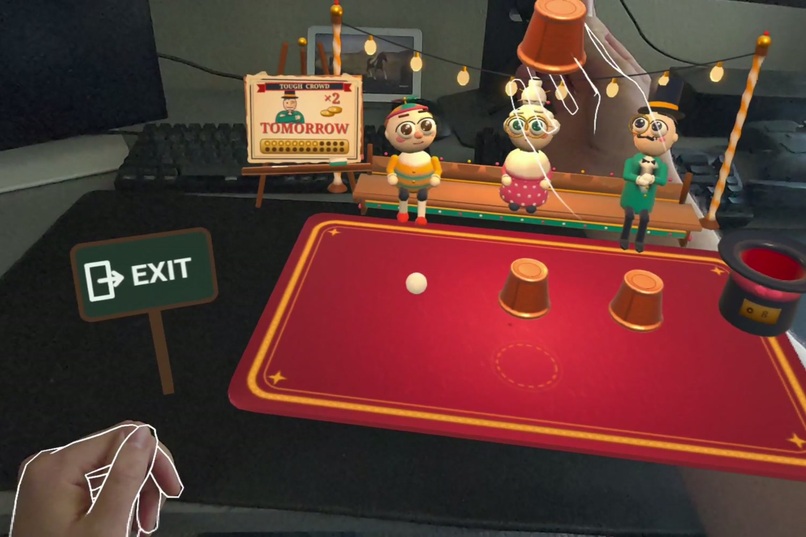
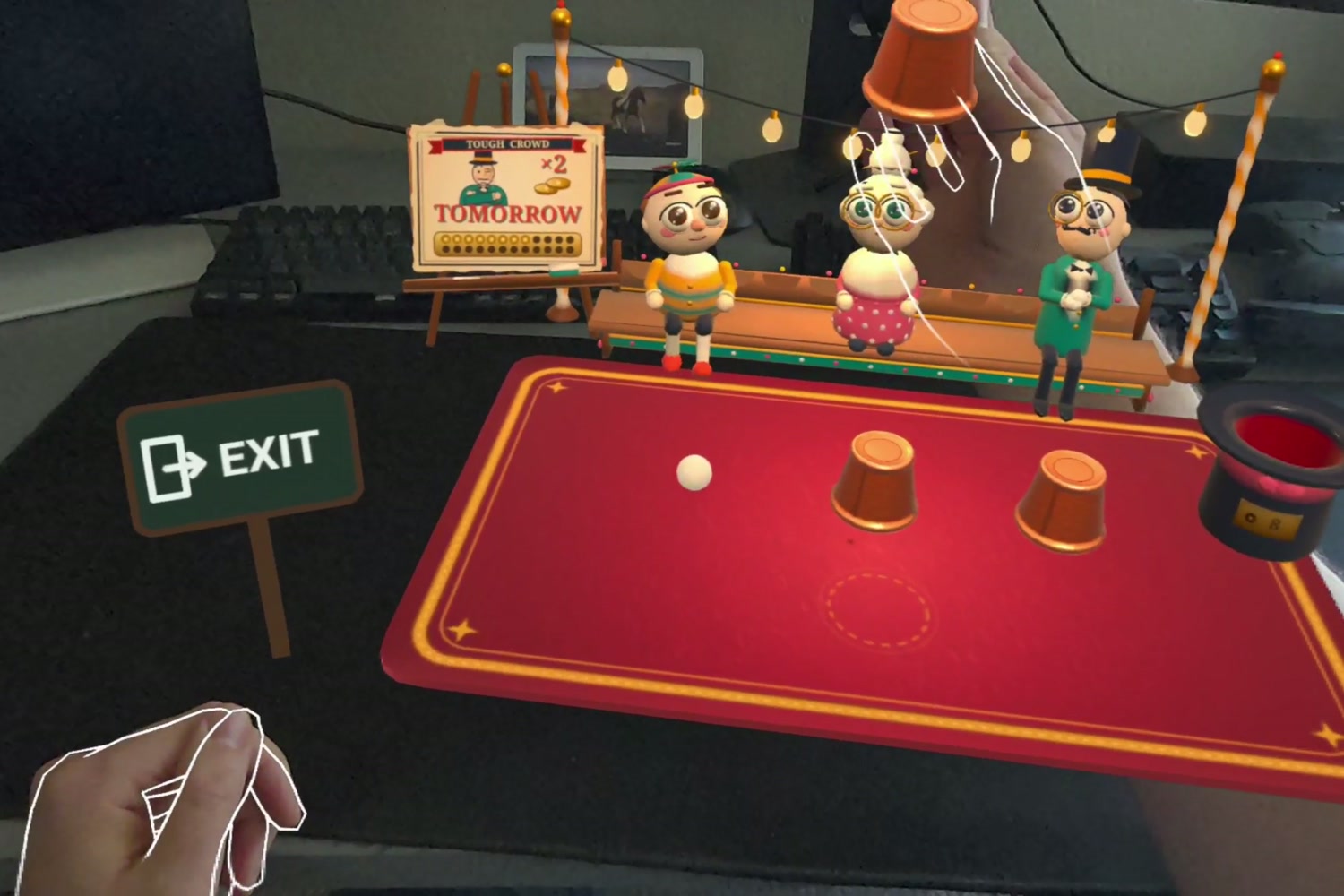
Real hands on a real desk: lift a cup and all three spectators look up at it.
-
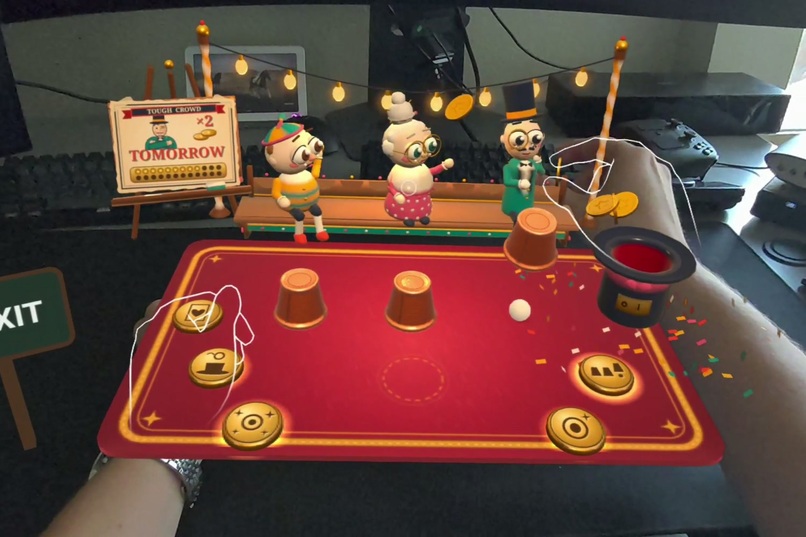
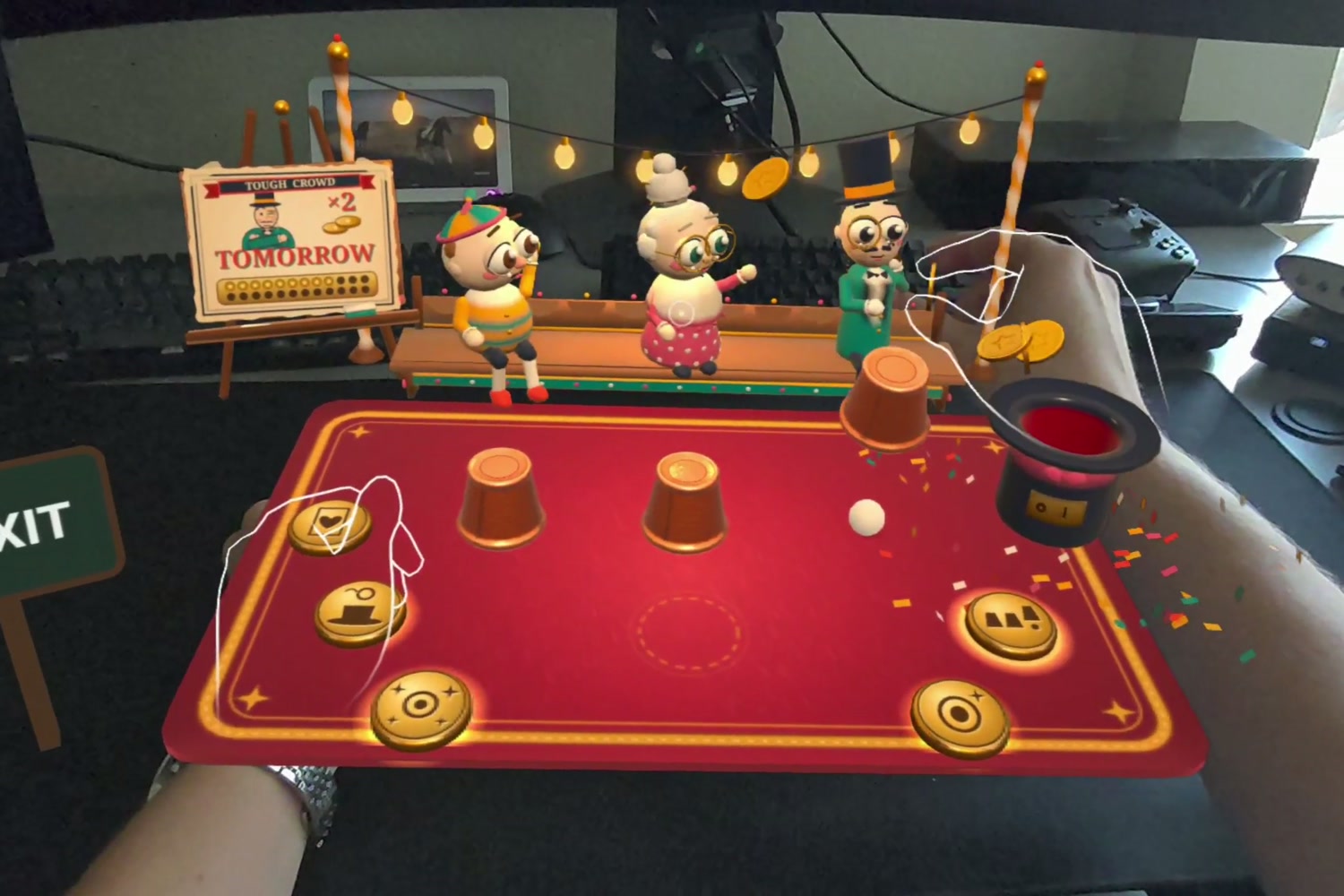
Cups & Balls: fool them and the tips fly into your top hat.
-
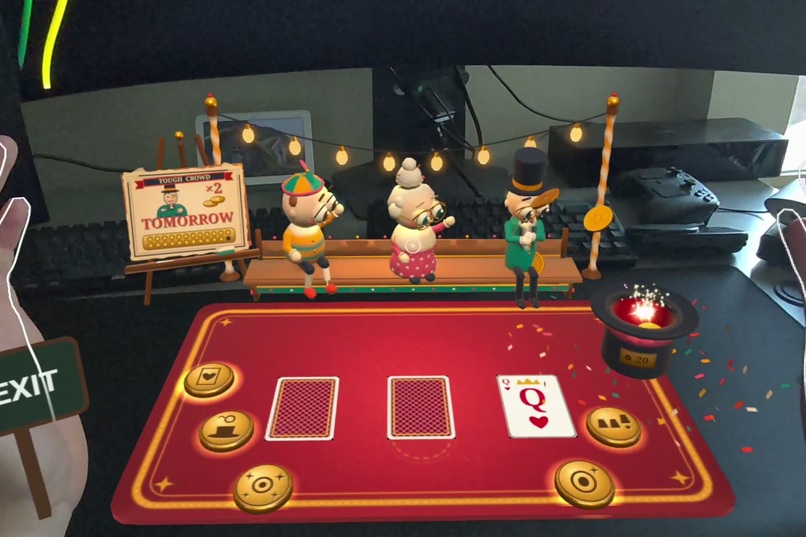
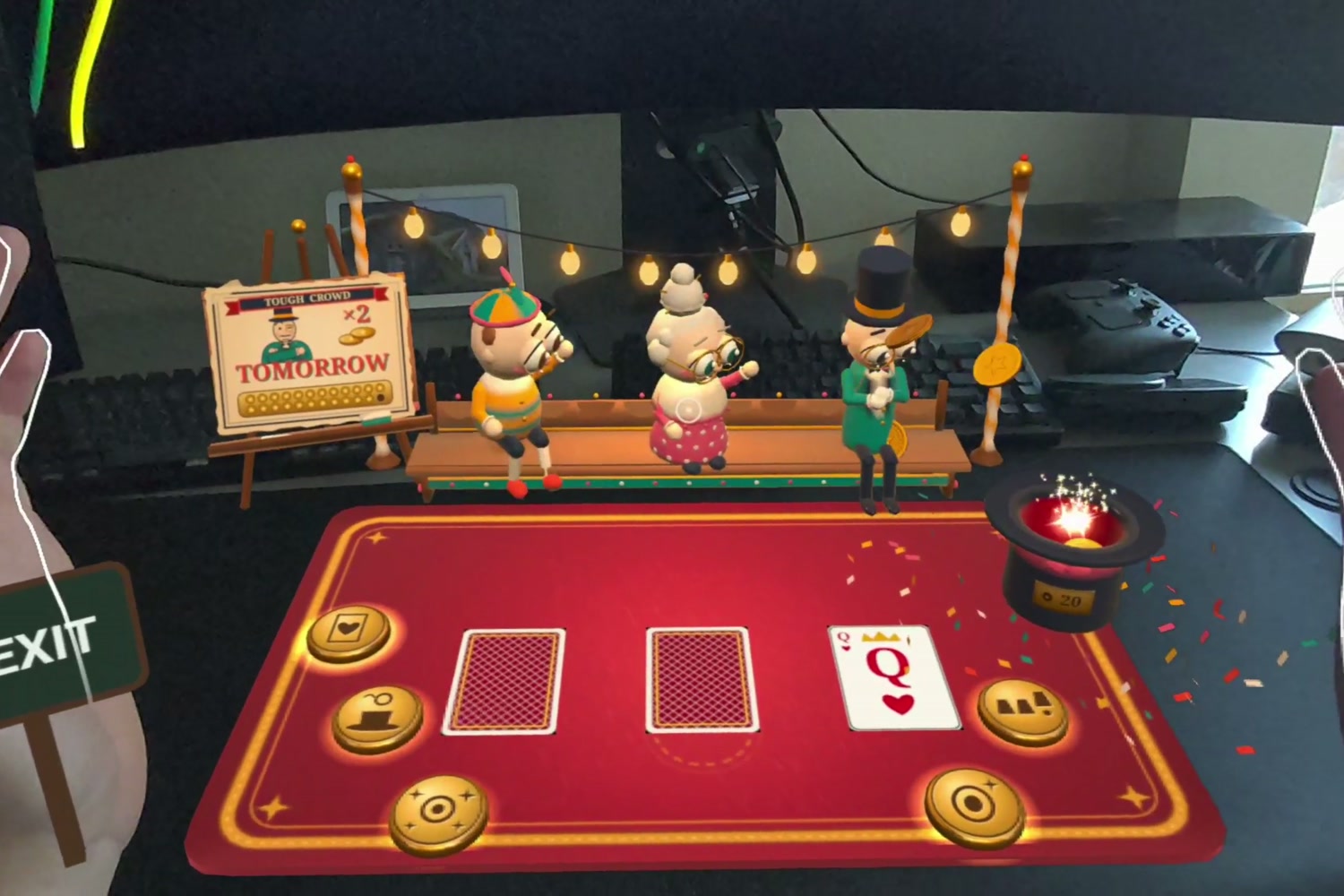
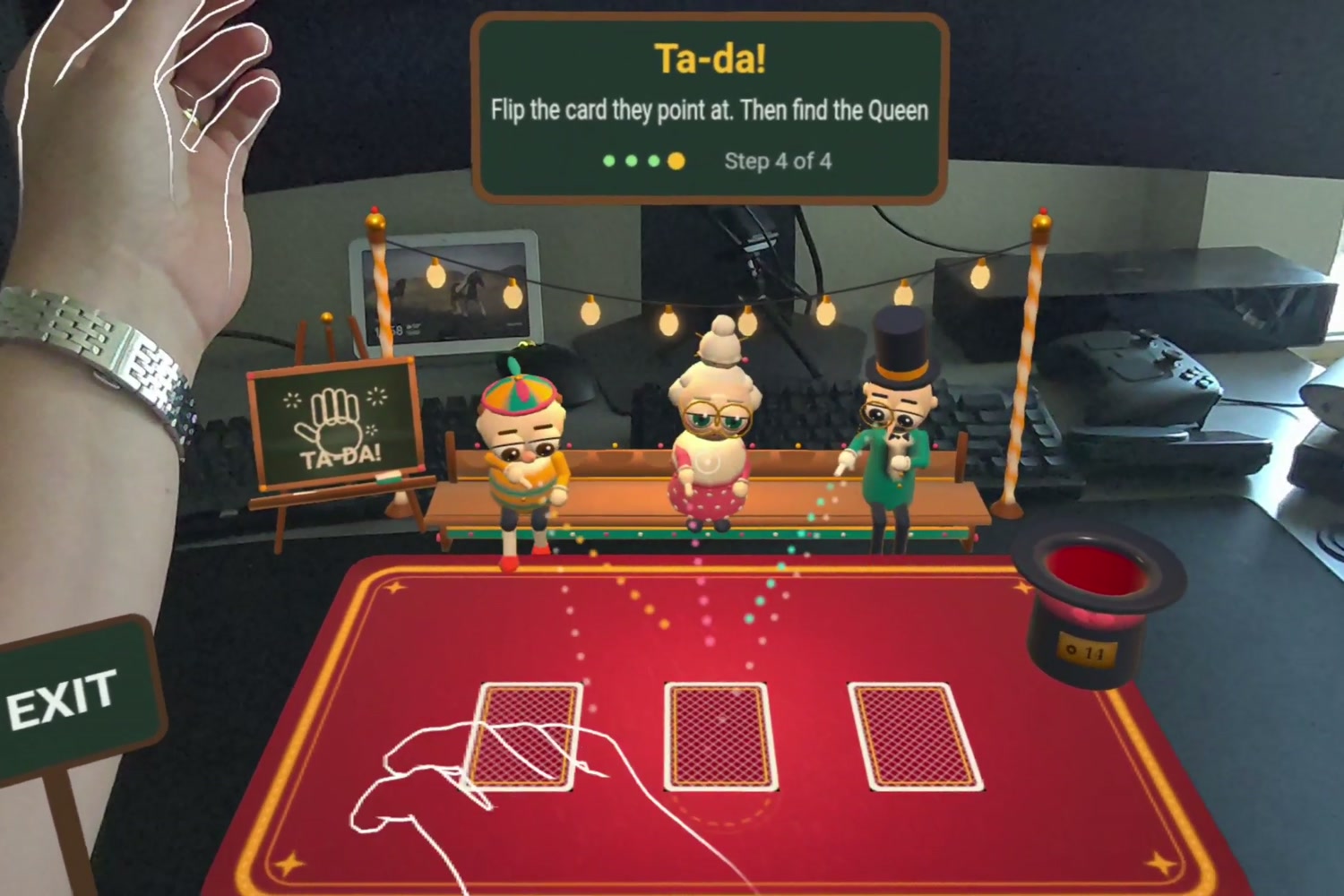
Find the Queen: swap her while they look away, then reveal her.
-
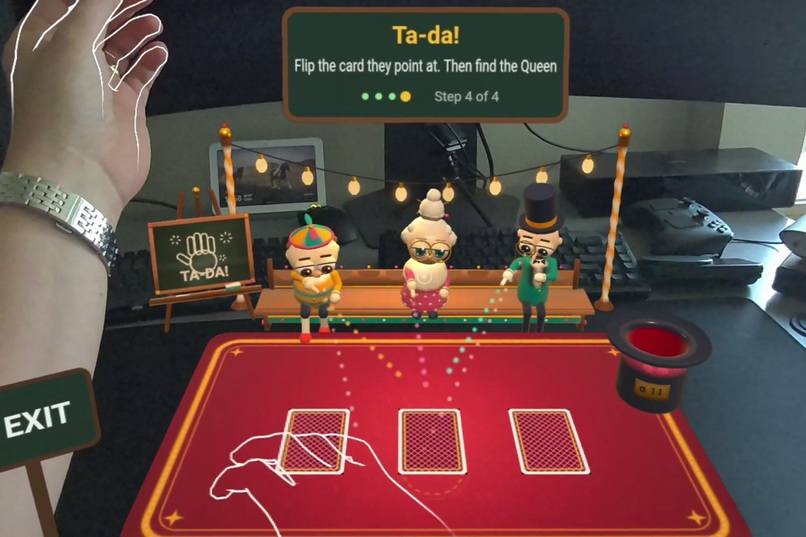
Every step is taught on a chalk slate, with a ghost hand showing the move.
-
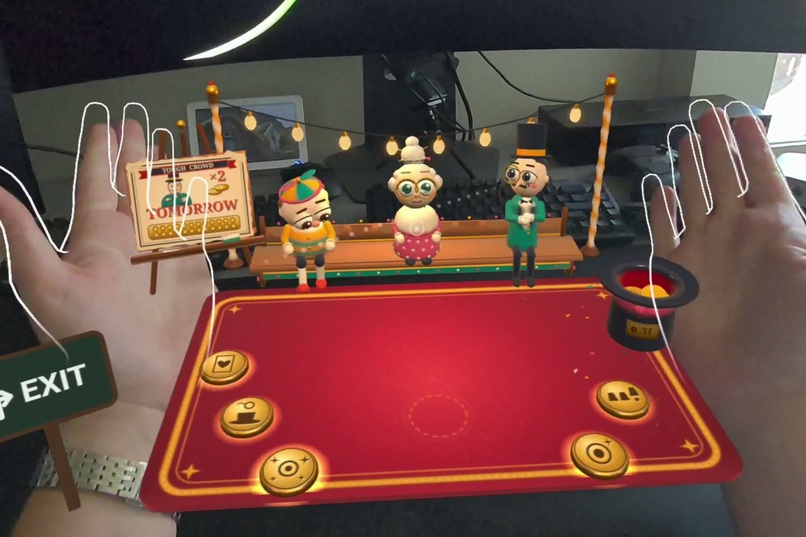
Hands only, seated at your own desk on Quest 3. No controllers.
Inspiration
Close-up magic is all about where people look. A good magician never hides the coin; they move the audience's eyes somewhere else. Mixed reality lets me put a tiny audience right on your desk, and hand tracking lets you do real sleight of hand with no controllers. I wanted a game where the skill is the same as a real magician's: misdirection.
What it does
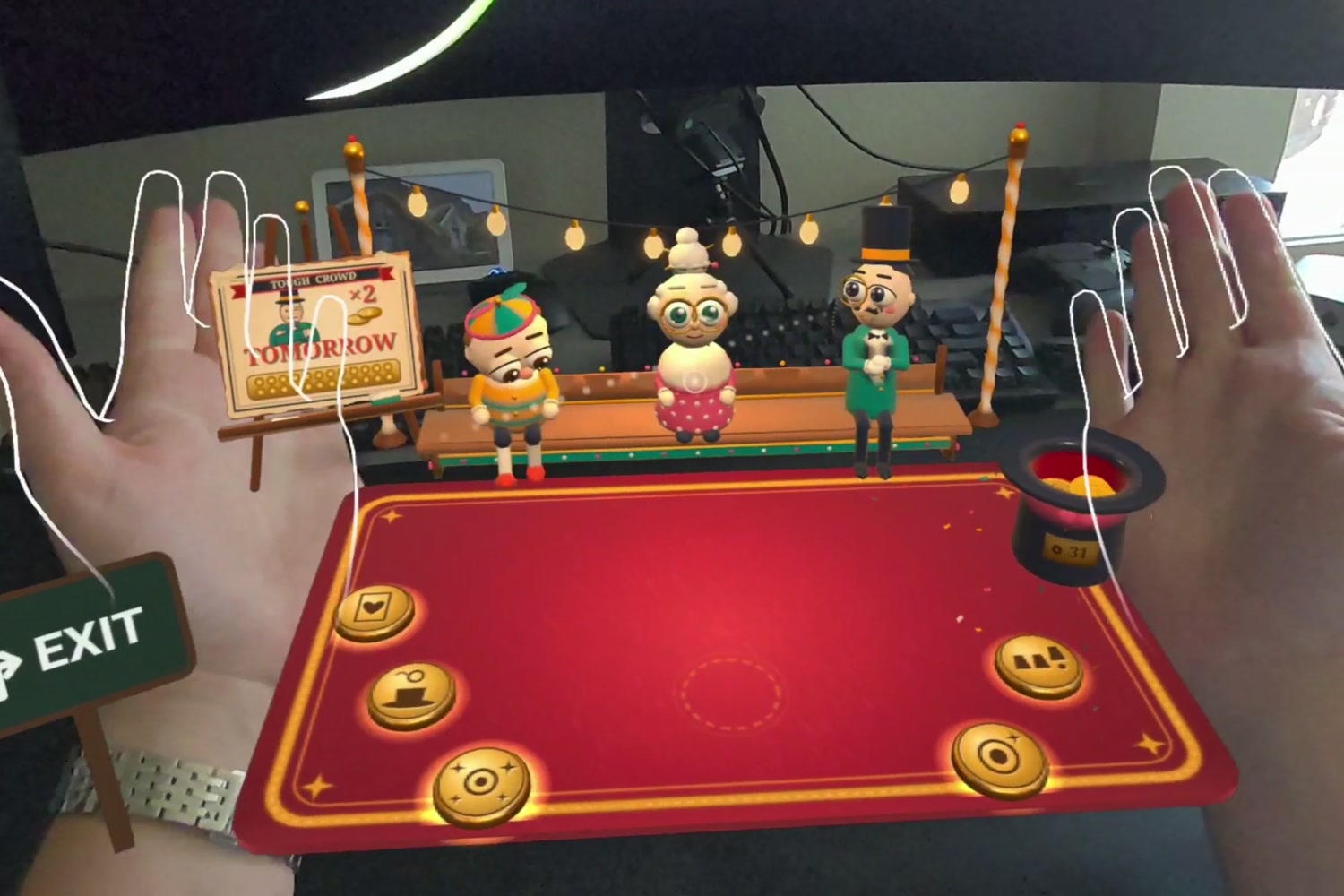
A little stage unfolds on your real desk, with three wooden spectators on a bench: Pip, Mabel and Rook. Their eyes follow your hands. Pinch the coin, close your fist, then wave or snap your other hand: their heads turn to the moving hand while you drop the coin in your lap below the desk edge. Bring the fist back up, open it, and the coin is gone. Fool them and tips fly into your top hat; get caught and they point and boo. Even where you look matters: look at your empty hand and they follow your gaze, and stare grumpy Rook down while you hide the coin.
Every trick is taught step by step on a chalk slate above the stage, and fooling the crowd unlocks the next one:
- Coin Vanish: palm the coin, distract, drop it in your lap.
- Cups & Balls: show the ball under a cup, then, while one hand waves, grab it through the cup with the other and push it into another cup. The crowd points at the cup they believe.
- Coin from Nowhere: sneak a coin up from your lap and open an empty-looking hand.
- The Hat Trick: hide the coin in your fist and slip it into the hat while they look away.
- Find the Queen: flip her card to show it, make them look away, and drag her onto another card. They point at the wrong one.
A poster on the easel tracks your tips toward the next day's goal, and some days the crowd is tougher.
How I built it
Sleight is a WebXR app on Meta's Immersive Web SDK and three.js, deployed as a static site. My own hand library turns the 25-joint hand skeleton into pinches, fists, snaps, waves and flips. Each spectator runs a small attention model: hand speed, sudden motions, the visible coin and your head direction compete for their gaze, and evidence builds while they watch your secret move. The desk comes from the room scan or from three taps on glowing rings. Art and sound are procedural, with spatial audio for gasps, boos and coin clinks.
Challenges I ran into
Real hands don't pinch like emulated ones: a held coin loosens, a relaxed fist half-opens, and a hand under the desk loses tracking. Four headset sessions in two days reshaped every trick: a coin that stays in a loose pinch, cups you can work through, a fetch from your lap that either hand can do, and lessons in plain words for every step. About 950 automated tests and 24 scripted play-throughs keep it working.
What I learned
Teach the rule, not just the gesture. Players did the moves right but didn't know why the crowd caught them, until the game said it plainly: "Wave one hand. Grab with the other."
What's next
More tricks, a crowd on your room's furniture, and performing for a friend.
How to play
Open the link in the Meta Quest Browser on a Quest 3 or 3S, sit at a desk or table, put the controllers down, and press Start. Hands only. Poke the EXIT sign left of the mat twice to leave.
Built With
- hand-tracking
- immersive-web-sdk
- mixed-reality
- passthrough
- three.js
- typescript
- vercel
- vite
- web-audio
- webxr


