-
-
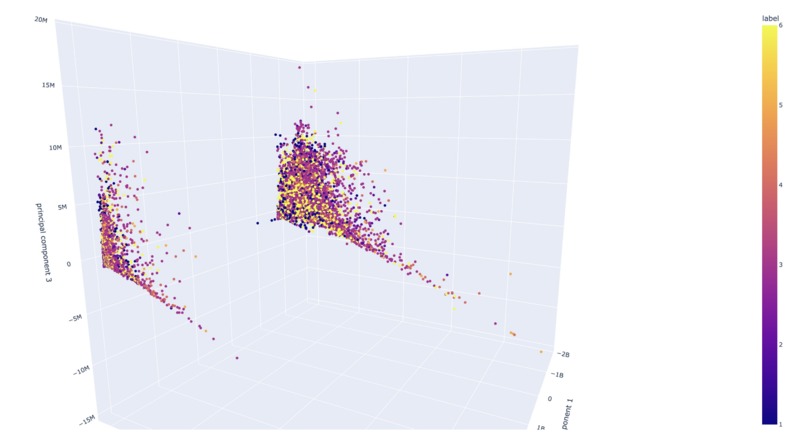
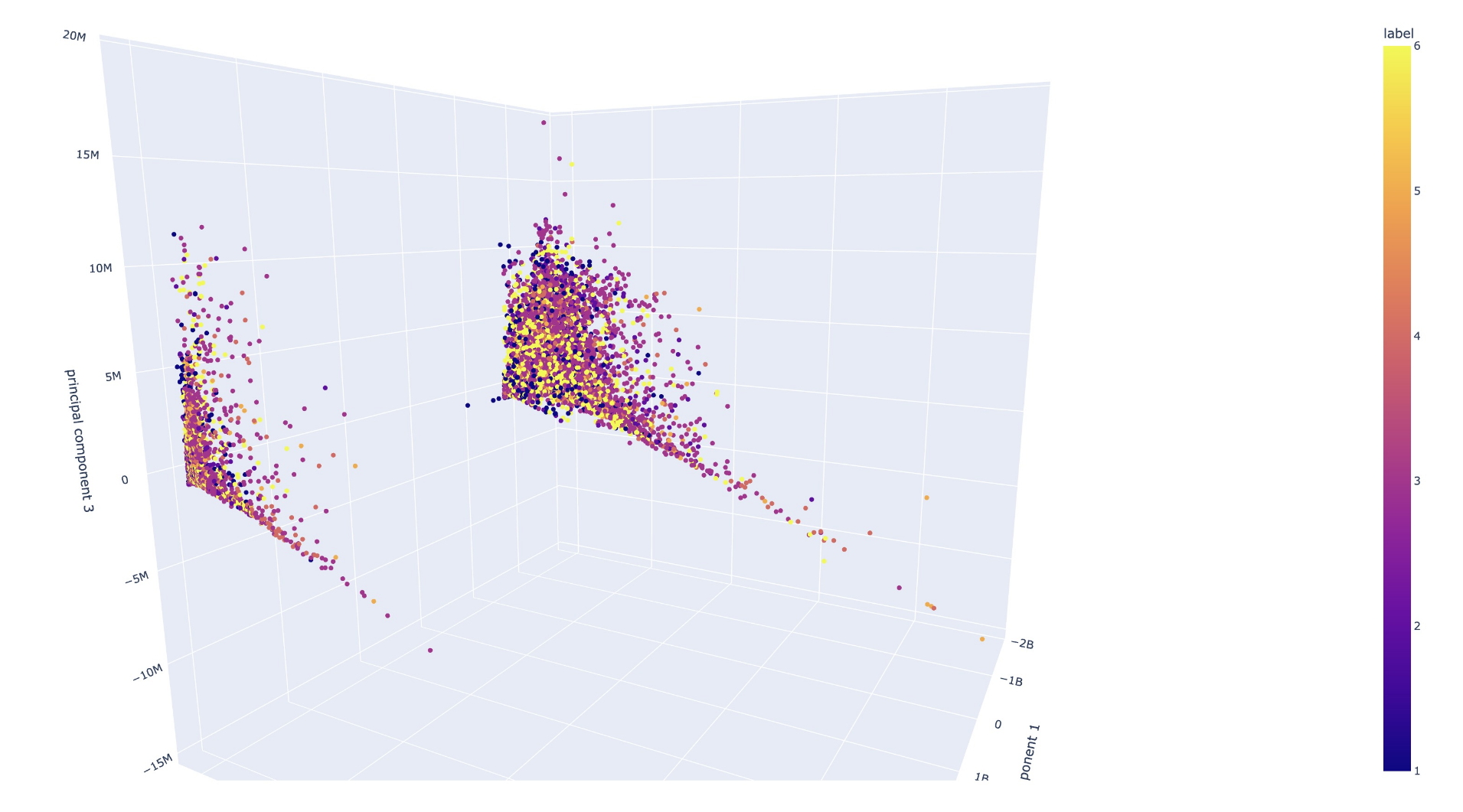
PCA Decomposition
-
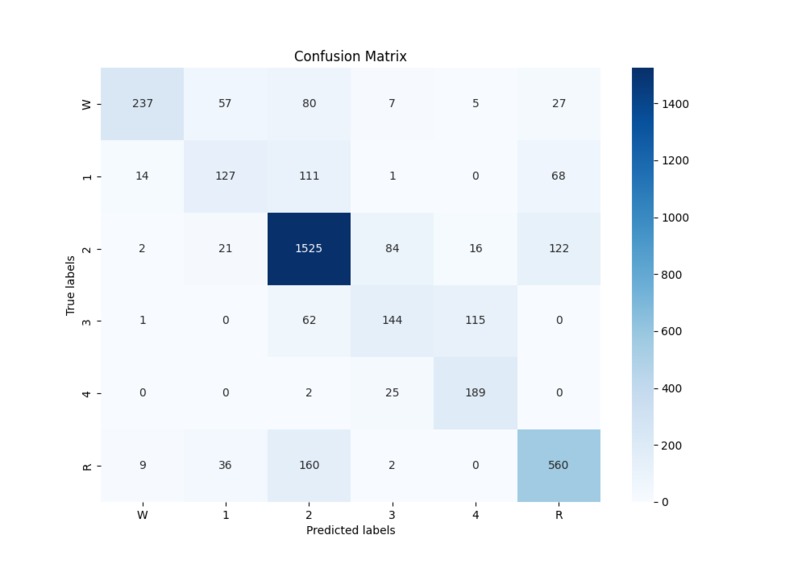
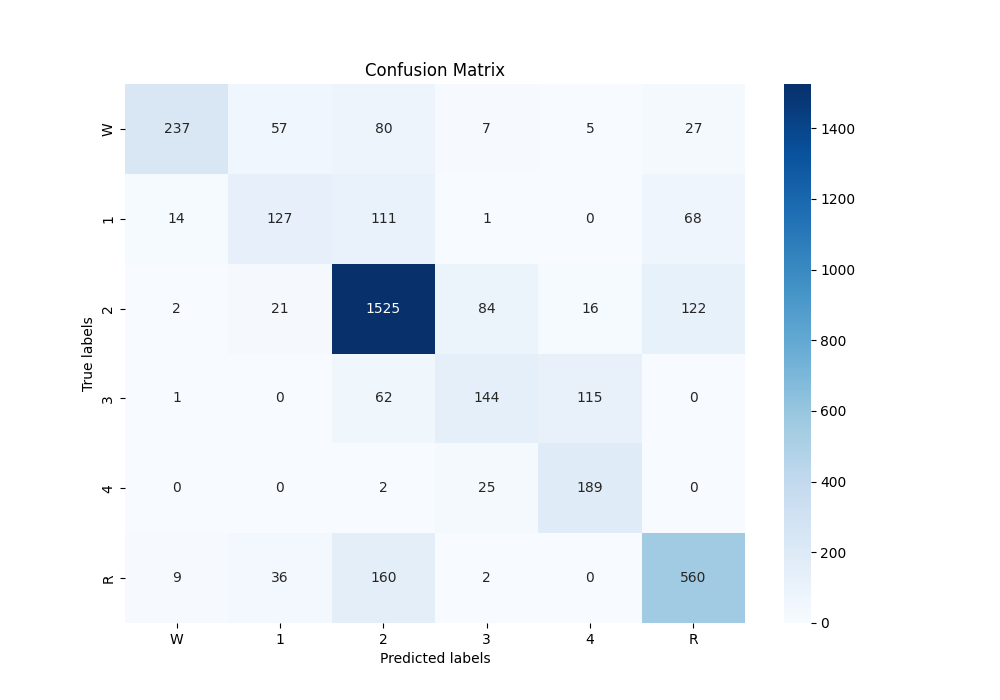
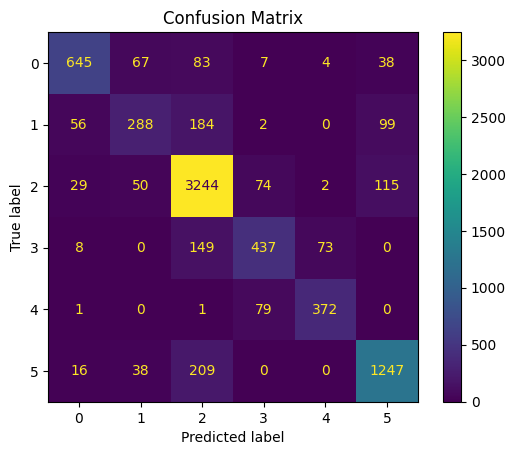
LSTM+CNN Confusion Matrix
-
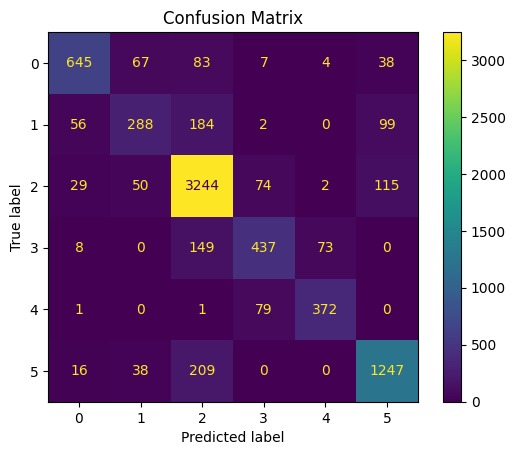
CatBoostClassifier Confusion Matrix
-
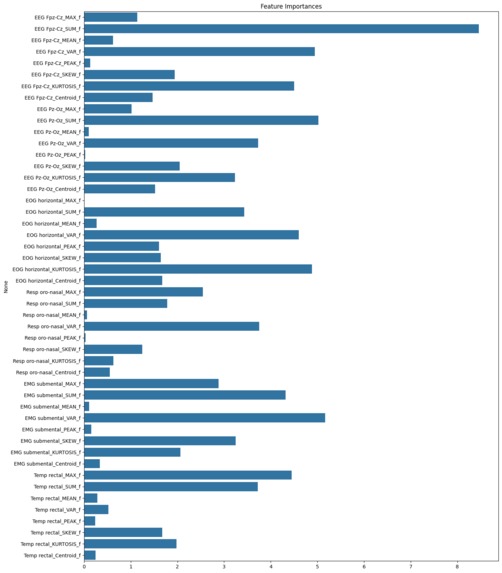
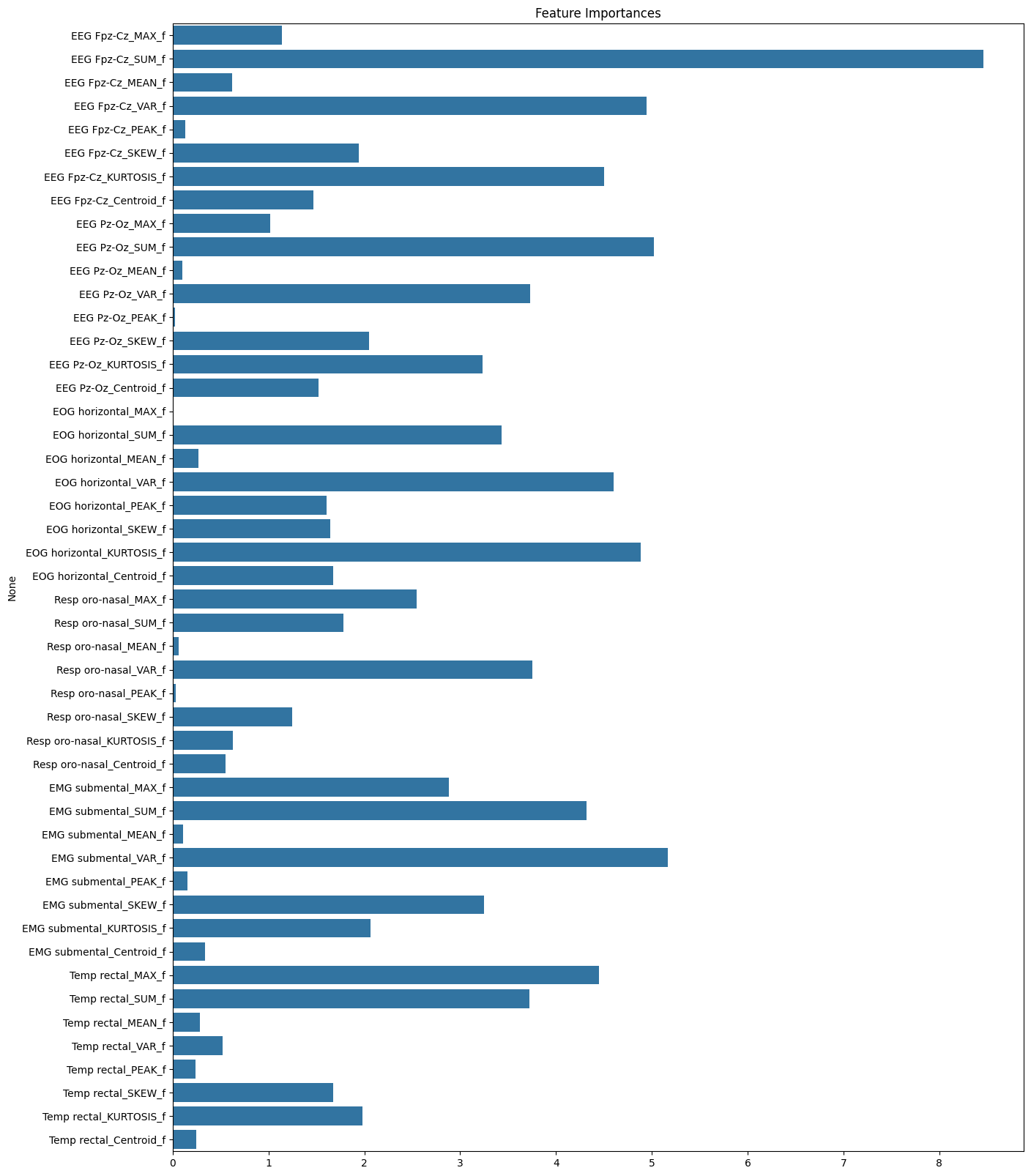
Important Features
-
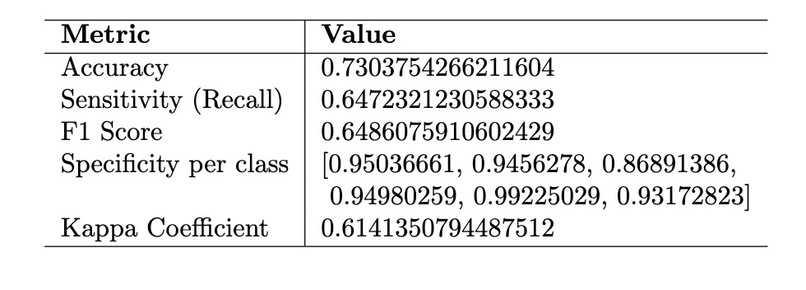
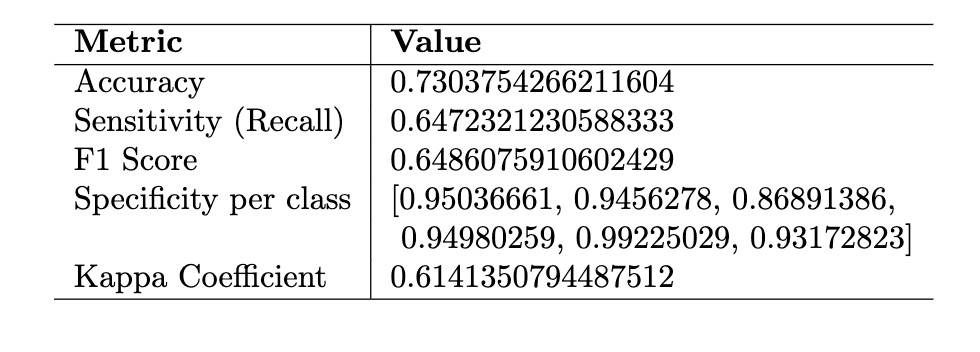
LSTM+CNN Performance
-
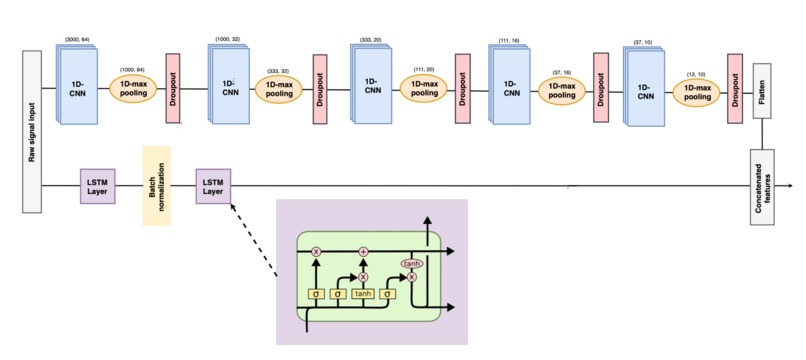
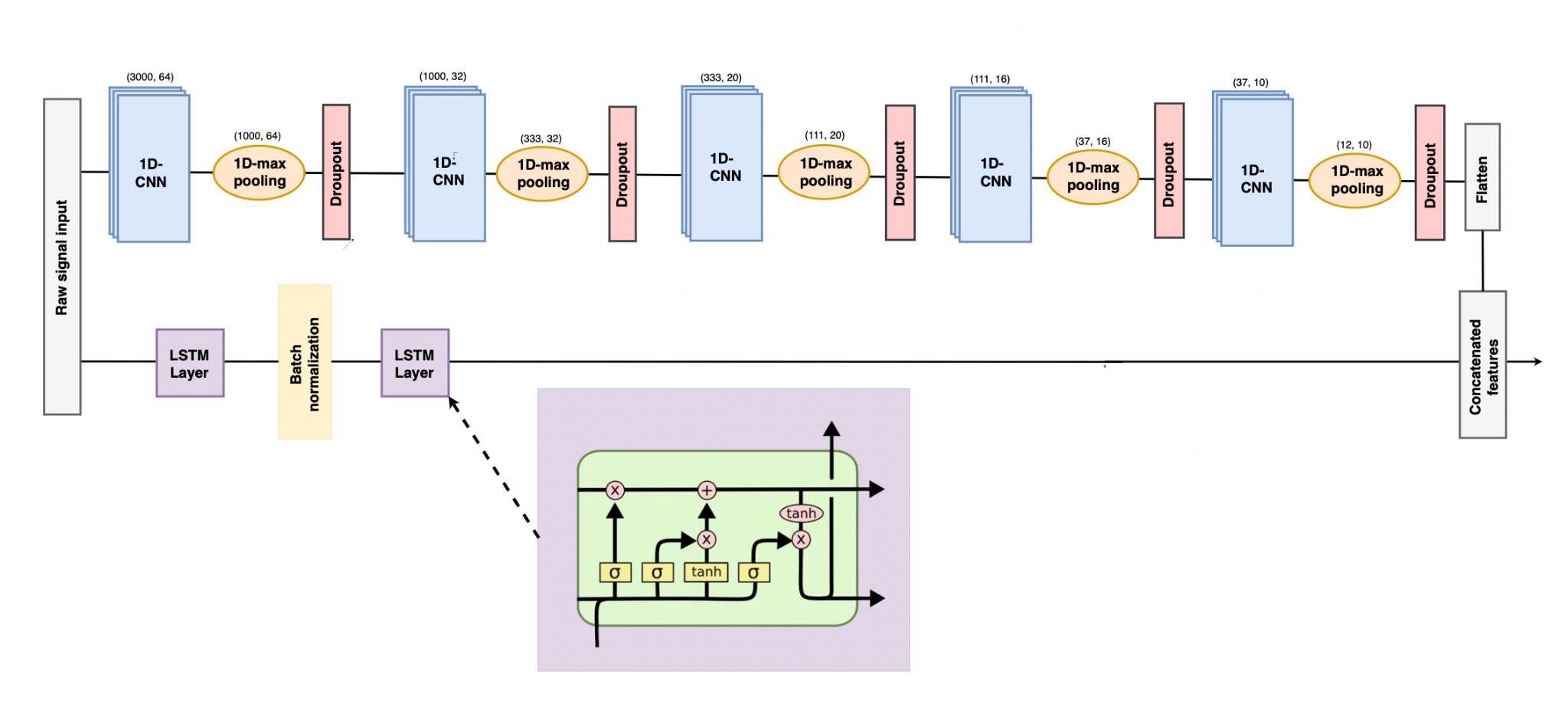
LSTM+CNN Architecture
Inspiration
Our research into predicting sleep stages is driven by both personal experiences with sleep issues and startling statistics. A study by Peppard et al. revealed that about 30% of adults in the United States suffer from insomnia, highlighting the prevalence of sleep disturbances. Furthermore, it's estimated that over 50 million Americans are diagnosed with sleep disorders, and approximately 25 million suffer from Sleep-Disordered Breathing (SDB). Motivated by these figures and our own challenges with sleep, we're focusing on the complexities of Sleep Disorders (SD). These disorders not only disrupt normal sleep patterns but also significantly impact daily productivity and long-term health. Our goal is to enhance the understanding and diagnosis of sleep stages, which is crucial for effective treatment and management of SD.
What it does
Our models can accurately diagnose sleep stages using the provided physiological datasets.
How we built it
We have developed and implemented two distinct technologies for our study. The first integrates Convolutional Neural Networks (CNN) with Long Short-Term Memory (LSTM) networks, while the second employs the CatBoost algorithm. These methodologies are tailored to analyze physiological datasets for diagnosing sleep stages. In terms of performance, our models have demonstrated accuracies of 73.04% and 80.10%, respectively.
Challenges we ran into
The dataset we received initially did not match the specified format, prompting us to notify the committee and raise the question. Our feedback led to the correction of the datasets, enabling us to successfully overcome this challenge.
Accomplishments that we're proud of
Our proudest accomplishments include the innovative methods we developed and the high accuracy rates we attained. Additionally, working with real-world data has been a remarkable experience, providing us with invaluable insights and underscoring the vast potential of our research in practical applications.
What we learned
Working with real-world data has taught us that it's a vastly different experience compared to solving theoretical problems on paper. The complexity and unpredictability of real data demand practical, adaptable solutions and a deeper understanding of the variables at play.
What's next for Sleepy NeuroCat
(i) Integrate the model with personalized sleep recommendations, which can help with sleep hygiene, lifestyle adjustments. (ii) Implement online learning method to adapt the model over time as it encounters new data, allowing continuous improvement. (iii) Investigate the potential of transfer learning from pre-trained models on related tasks, which might help improve performance with limited labeled data.
Built With
- catboost
- cnn
- jupyter
- keras
- lstm
- python
- signal-processing
- sklearn

Log in or sign up for Devpost to join the conversation.