About SleepSync
SleepSync was inspired by a problem many students and young professionals face: poor sleep, stress, and burnout often build up slowly, but people usually notice them only when the situation has already become serious. Many people do not regularly track their sleep, stress, fatigue, or energy levels, so they miss the early signals that could help them adjust their lifestyle sooner. :contentReference[oaicite:1]{index=1}
Our goal was to create a preventive wellness tool that turns simple daily records into clear, understandable health signals. SleepSync focuses on early awareness, not medical diagnosis. It helps users see patterns in their daily condition and provides AI-supported suggestions for better rest, recovery, and self-care.
The core idea of the project can be described as:
$$ Better\ Awareness = Sleep\ Data + Stress\ Signals + Daily\ Habits + AI\ Explanation $$
What we built
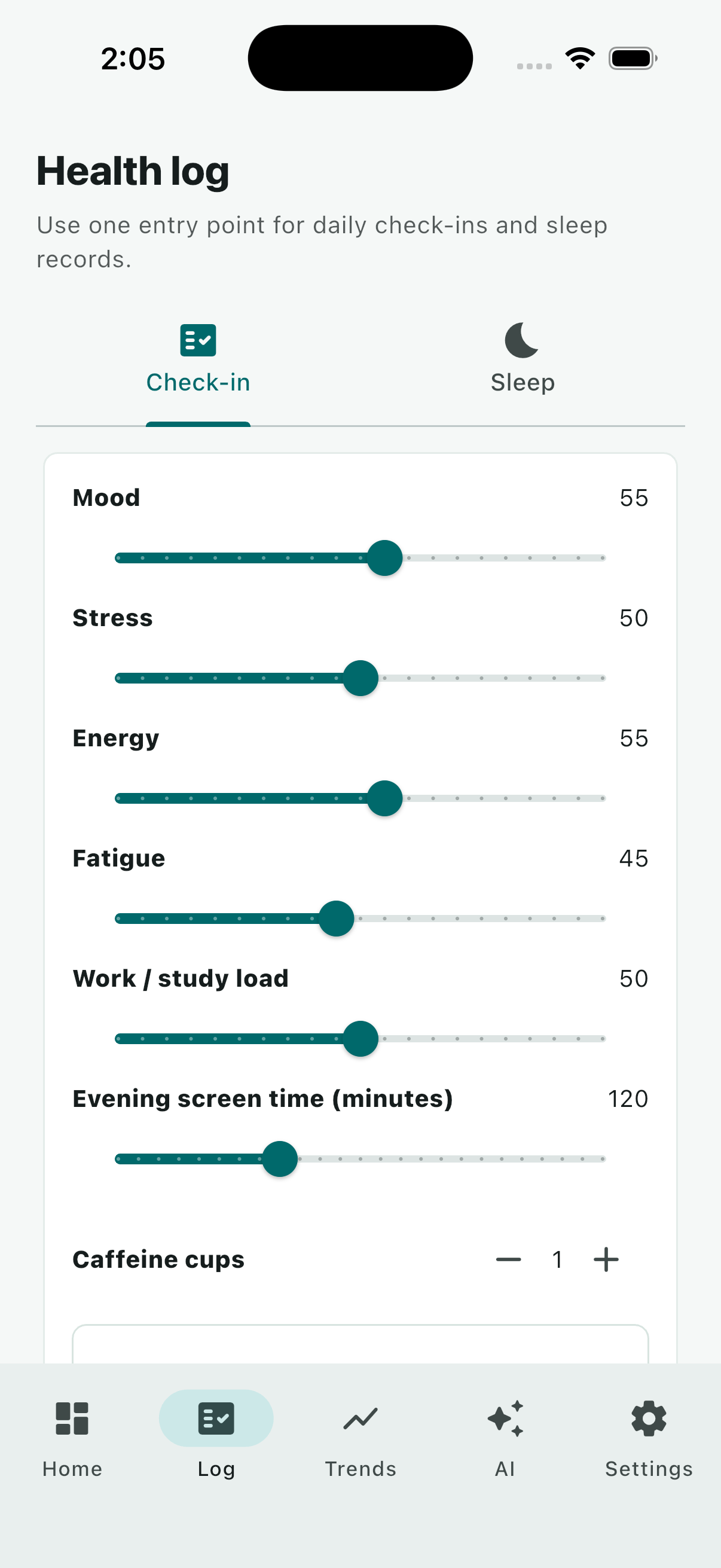
SleepSync allows users to manually record daily check-in data, including mood, stress, energy, fatigue, workload, caffeine intake, and screen use. Users can also record sleep-related information such as bedtime, wake-up time, sleep quality, night awakenings, and difficulty falling asleep. :contentReference[oaicite:2]{index=2}
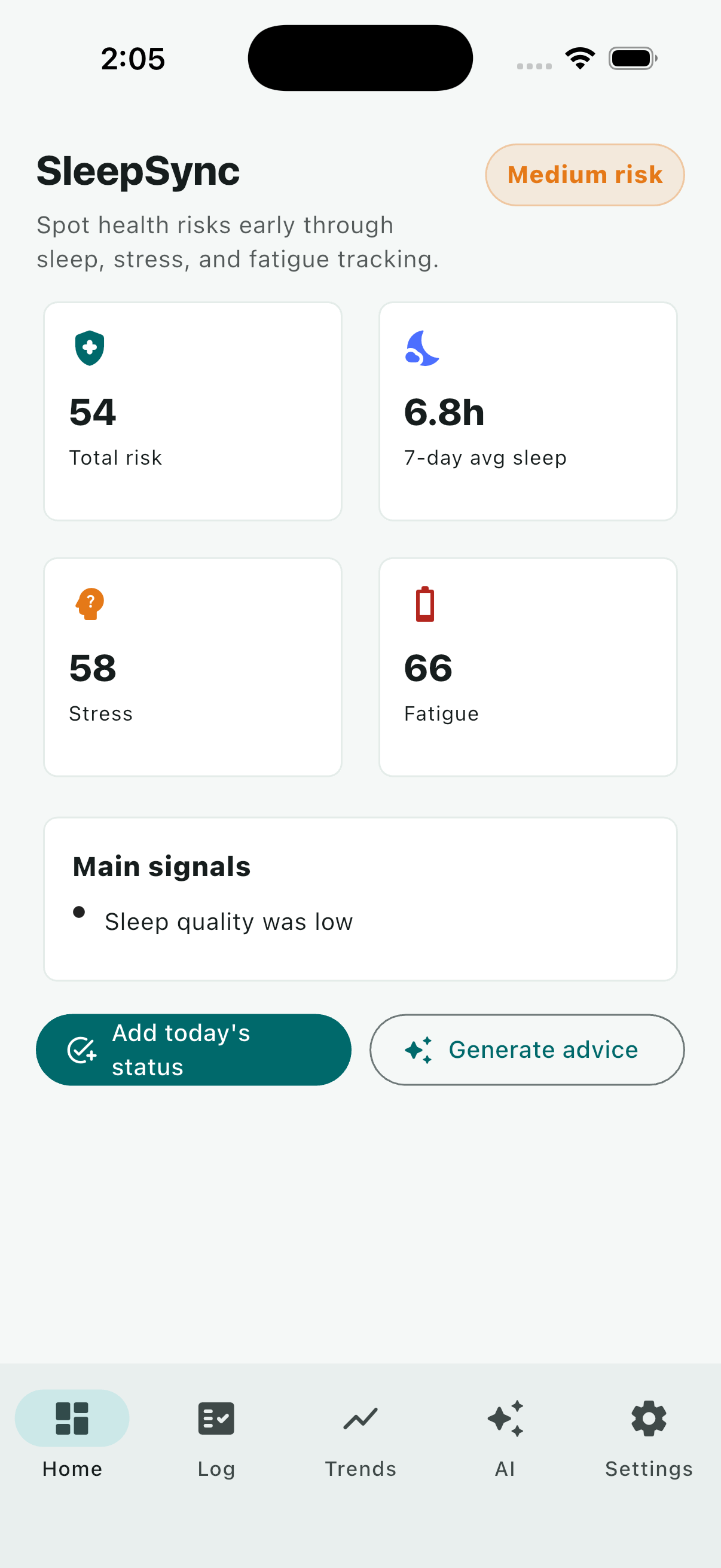
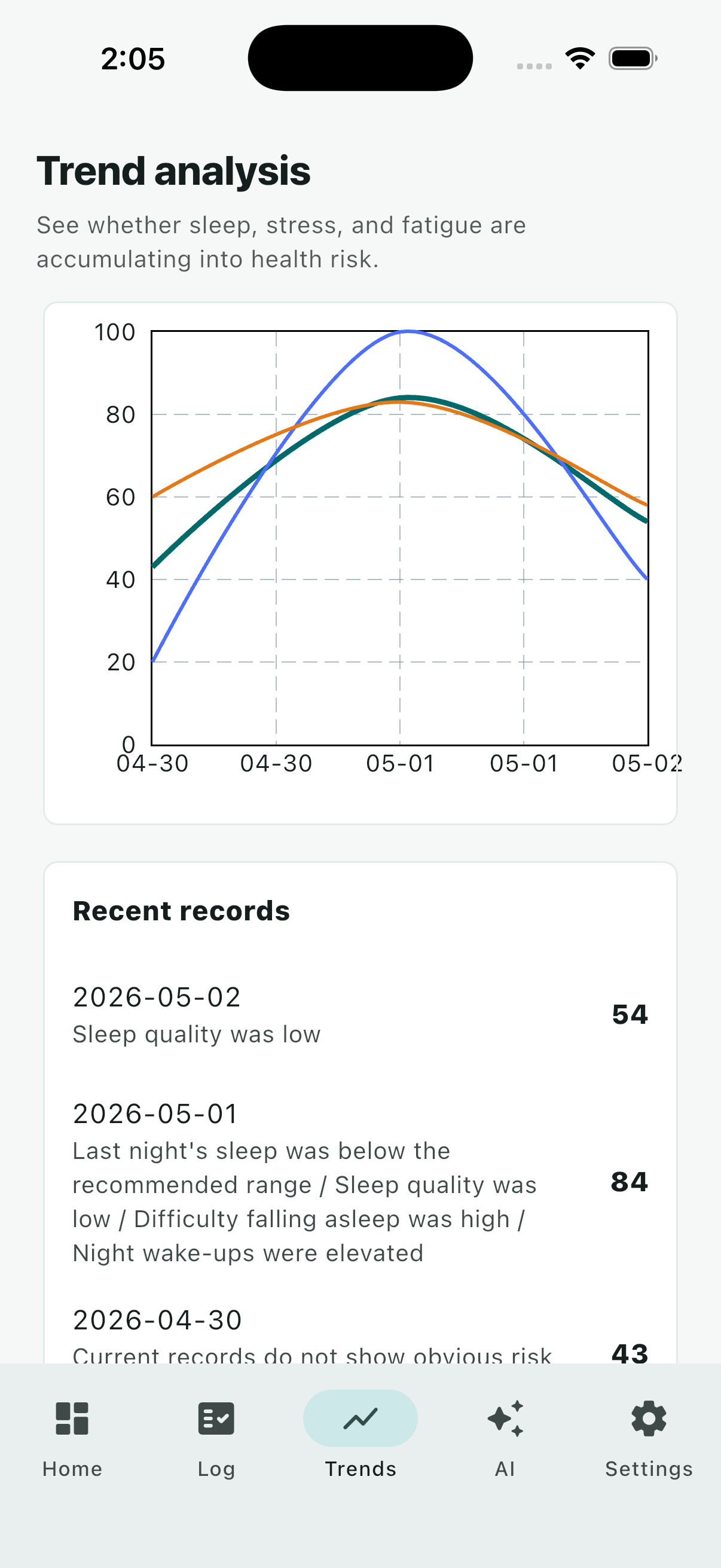
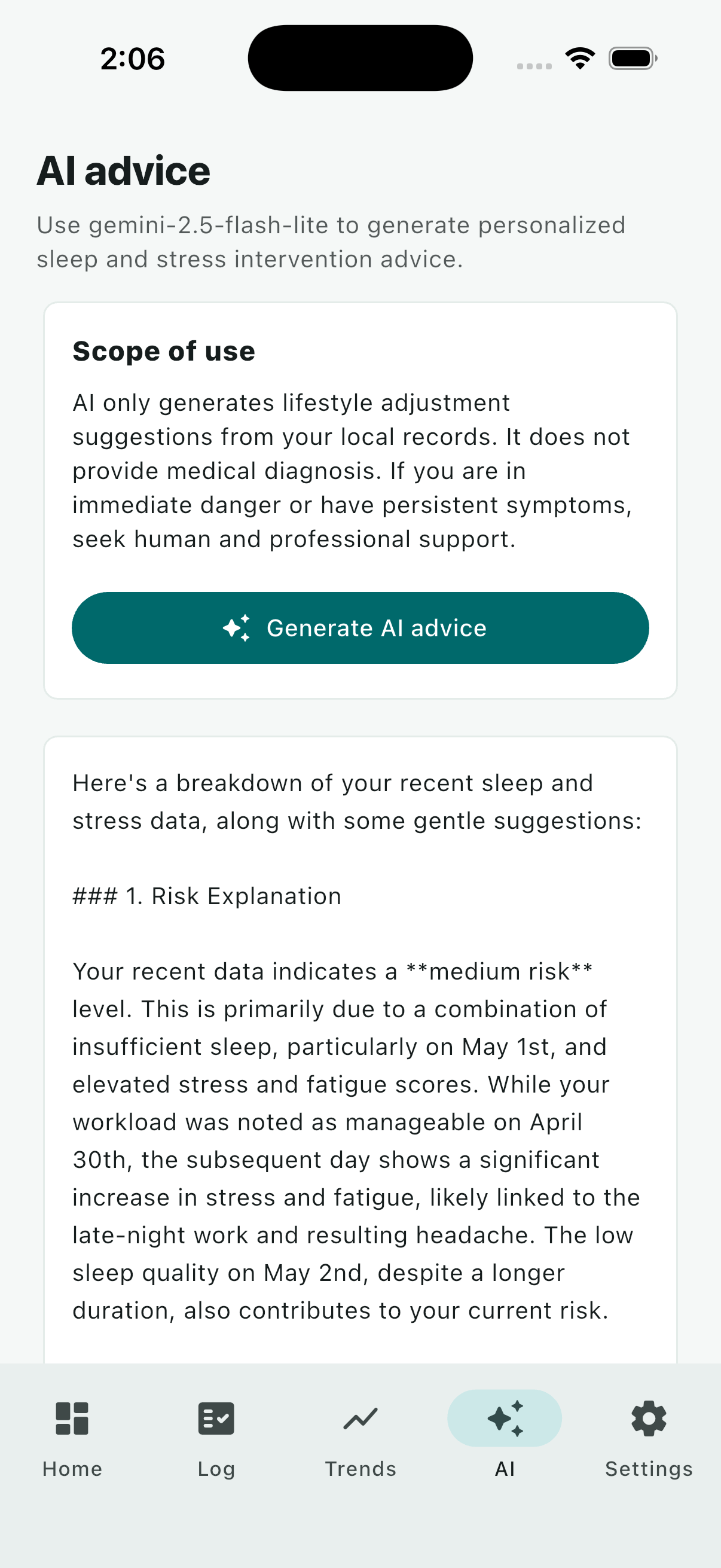
Based on these records, the app generates risk scores, trend charts, and AI-assisted explanations. Instead of only showing numbers, SleepSync helps users understand what those numbers may mean and what practical adjustments they can try, such as improving sleep routines, reducing screen time, managing caffeine intake, or seeking professional support when needed.
How we built it
We built SleepSync as a Flutter mobile app. The frontend uses Flutter with Riverpod for state management and GoRouter for navigation. Local data is stored using SharedPreferences, while sensitive API settings are handled with Flutter Secure Storage. For charts and trend visualization, we used fl_chart. :contentReference[oaicite:3]{index=3}
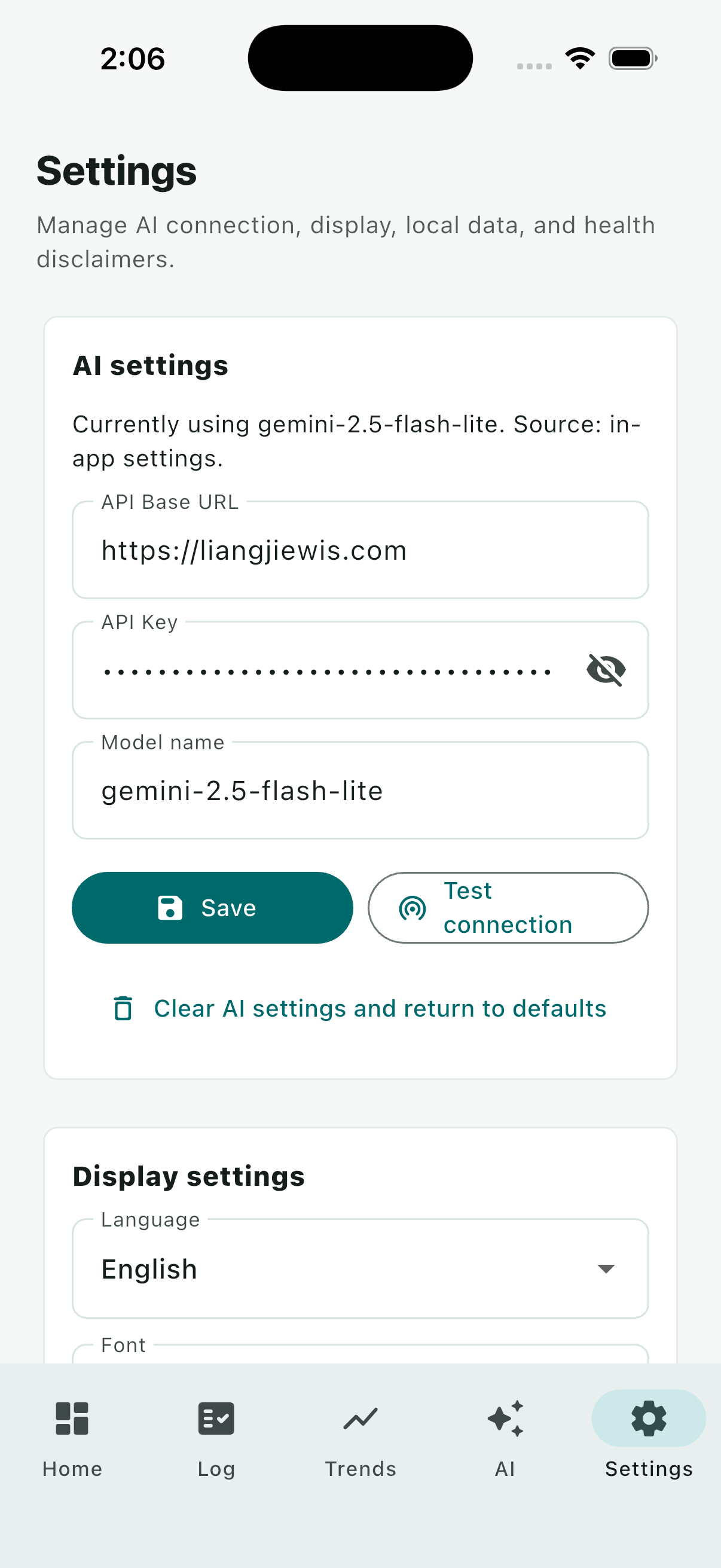
The AI feature connects to an OpenAI-compatible chat/completions API. The app can generate risk explanations, tonight's suggestions, next-day adjustments, and help-seeking guidance based on the user's recent records. The current GitHub version only includes the Flutter client and does not include a standalone backend, so a backend proxy is recommended before production use to protect API keys. :contentReference[oaicite:4]{index=4}
What we learned
Through this project, we learned how to design a health-related app with responsible boundaries. Since SleepSync deals with sleep, stress, and health risk awareness, we had to make sure the app does not claim to diagnose or treat medical conditions.
We also learned how to connect local user records, chart visualization, risk scoring, and AI explanations into one complete user experience. Another important lesson was that health apps should not only collect data; they should help users understand their own patterns in a clear and practical way.
Challenges we faced
One major challenge was designing risk scores that are understandable without making the app feel like a medical diagnosis system. We needed to present sleep and stress trends in a way that supports awareness while still encouraging users to seek professional help when necessary.
Another challenge was AI safety. The AI suggestions needed to be helpful, but not too clinical or overconfident. We had to keep the app focused on wellness guidance, recovery suggestions, and early awareness.
We also faced technical challenges in managing local records, generating trend charts, supporting language settings, storing API settings securely, and keeping the overall app structure clean enough for future expansion.
Built With
- api
- chat/completions
- dart
- data
- dio
- fl-chart
- flutter
- flutter-dotenv
- gorouter
- local
- openai-compatible
- persistence
- riverpod
- secure
- sharedpreferences
- storage


Log in or sign up for Devpost to join the conversation.