Inspiration
Driver fatigue is a major cause of road accidents worldwide, and many incidents can be prevented by detecting signs of drowsiness early. The idea of developing a drowsiness detection model was inspired by the potential to improve road safety through real-time monitoring and to help save lives by reducing fatigue-related accidents.
What it does
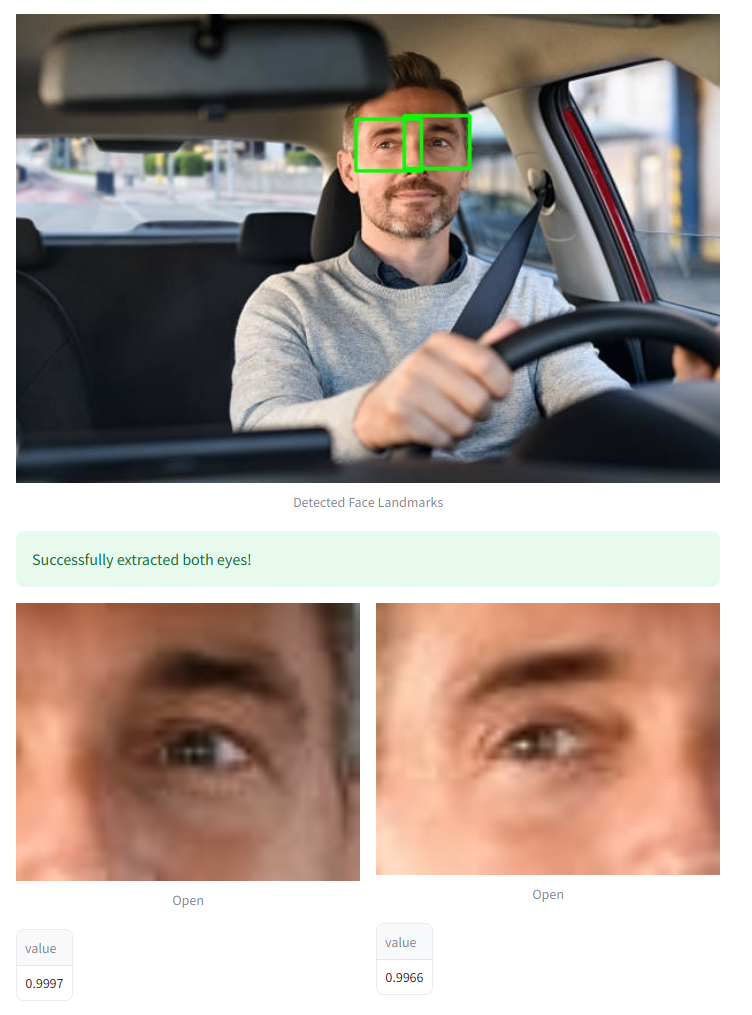
The Drowsiness Detection Model monitors drivers’ eye movements and alerts them if signs of drowsiness are detected. The system uses computer vision to track eye blink rates, eye closure duration, and yawning to determine when the driver may be falling asleep. If signs of fatigue are detected, an alarm is triggered to alert the driver and help them regain alertness.
How we built it
We built the model using a combination of computer vision, machine learning, and deep learning. Specifically:
OpenCV was used for real-time video processing and face detection. Dlib was employed to identify facial landmarks and track eye and mouth movements. A convolutional neural network (CNN) was trained to analyze eye states (open vs. closed) and yawning patterns. Python was the primary programming language, and libraries like TensorFlow and Keras helped to build and train the model. The system was trained on a dataset of facial images with labeled drowsiness states to improve accuracy and make real-time predictions.
Challenges we ran into
Some challenges included:
Data Collection: Finding an extensive, high-quality dataset of drowsy and non-drowsy eye states was a challenge, as specific labeled data is crucial for accurate predictions. Lighting Conditions: Variations in lighting affected model performance, requiring additional image preprocessing to ensure reliable detection under different conditions. Real-Time Processing: Ensuring the model could process video feeds in real-time while running efficiently on low-powered devices was challenging.
Accomplishments that we're proud of
High Accuracy: We were able to achieve a high level of accuracy in detecting drowsy eye states and yawns, even in varying lighting conditions. Real-Time Processing: Optimizing the model to work effectively in real-time was a significant accomplishment, allowing it to alert drivers instantly when drowsiness is detected. Impact Potential: We are proud of the potential this project has to save lives by addressing a real-world problem and improving driver safety.
What we learned
Through this project, we learned:
Computer Vision Techniques: The project deepened our understanding of facial recognition and tracking with landmarks. Model Optimization: We gained experience in optimizing machine learning models for real-time processing, crucial for creating practical application. Heavy use of Mediapipe! Importance of Data: We learned the importance of quality datasets and how preprocessing can help handle challenges like lighting and environmental variability.
What's next for Drowsiness-Detection-Model
The next steps include:
Integration with Vehicle Systems: Working towards integrating the model directly with in-car systems for seamless driver alerts. Improved Robustness: Enhancing the model to handle more challenging lighting conditions, such as nighttime driving. Driver State Monitoring Expansion: Expanding the model to track other fatigue indicators, like head tilts or prolonged eye closure, for even more comprehensive monitoring.


Log in or sign up for Devpost to join the conversation.