Inspiration
SleepSmooth was inspired by a close friend who struggled with sleep apnea. When he shared his experience, we realized just how difficult obtaining an accurate diagnosis could be. He described how uncomfortable traditional sleep studies were, especially having to sleep while connected to numerous monitoring devices that made it difficult to fall asleep naturally. Despite experiencing symptoms, he received negative results twice before finally being diagnosed with sleep apnea during his third study. Hearing his story made us recognize the challenges and frustrations patients can face throughout the diagnostic process. This inspired us to develop a more convenient and accessible way for people to monitor their sleep from the comfort of their own homes. Rather than replacing professional sleep studies, we wanted to create a tool that could help individuals better understand their sleep health and recognize potential problems earlier.
What it does
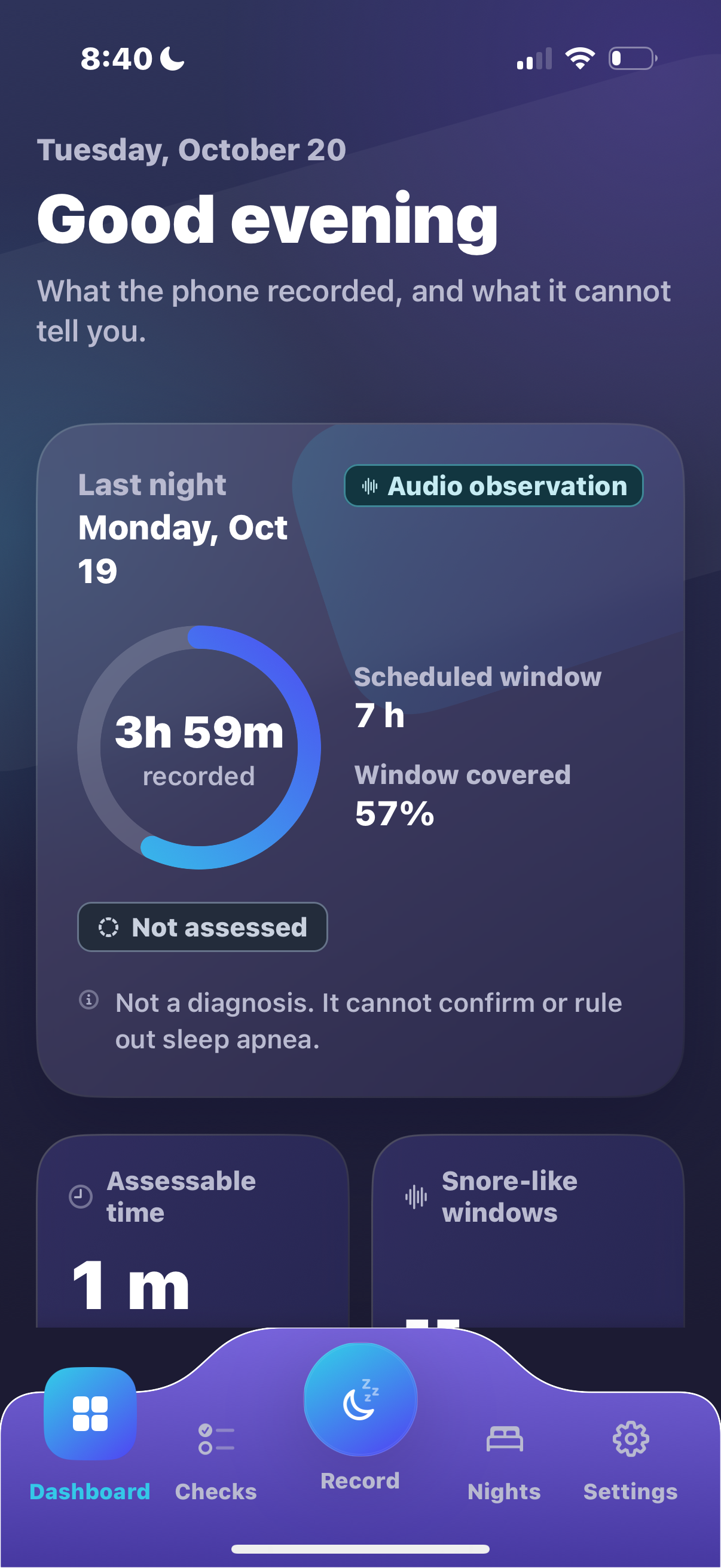
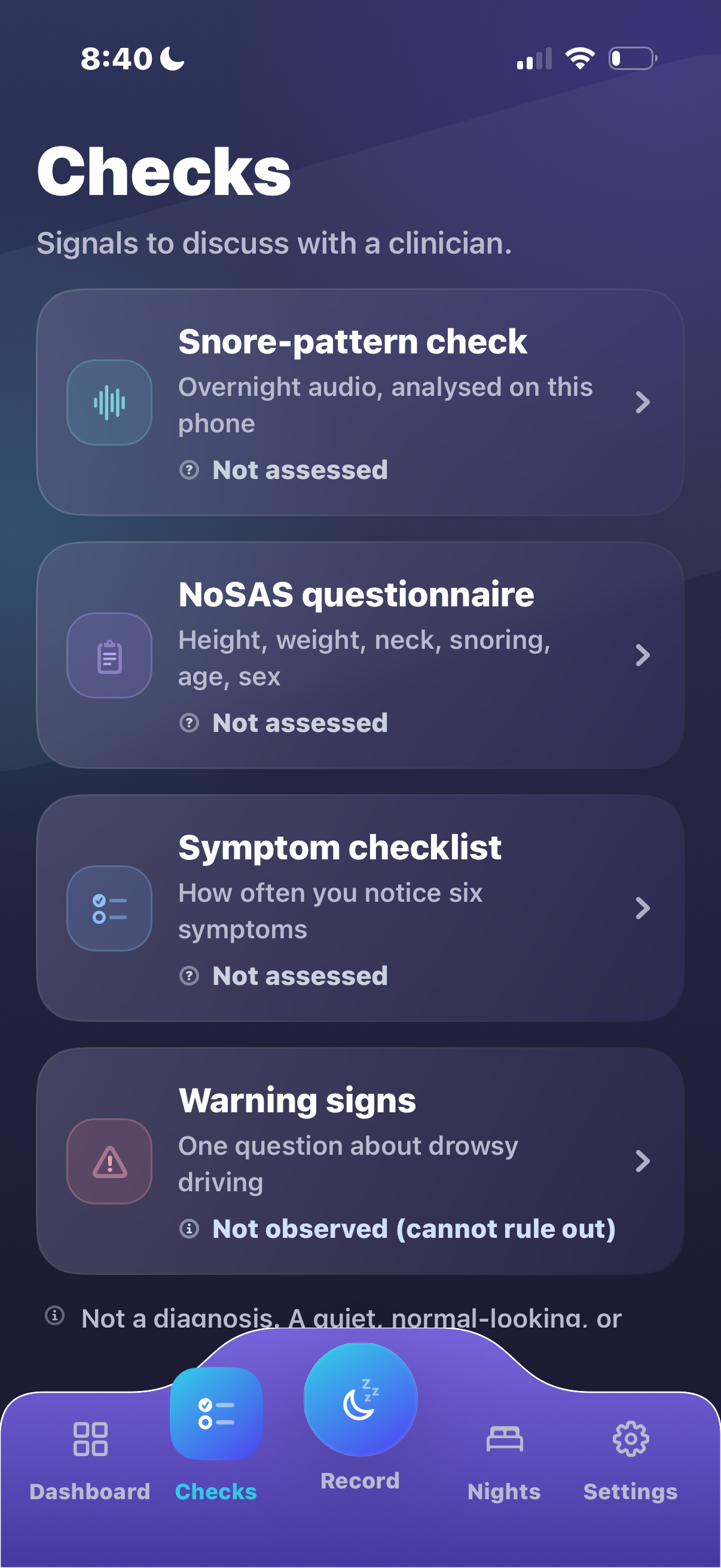
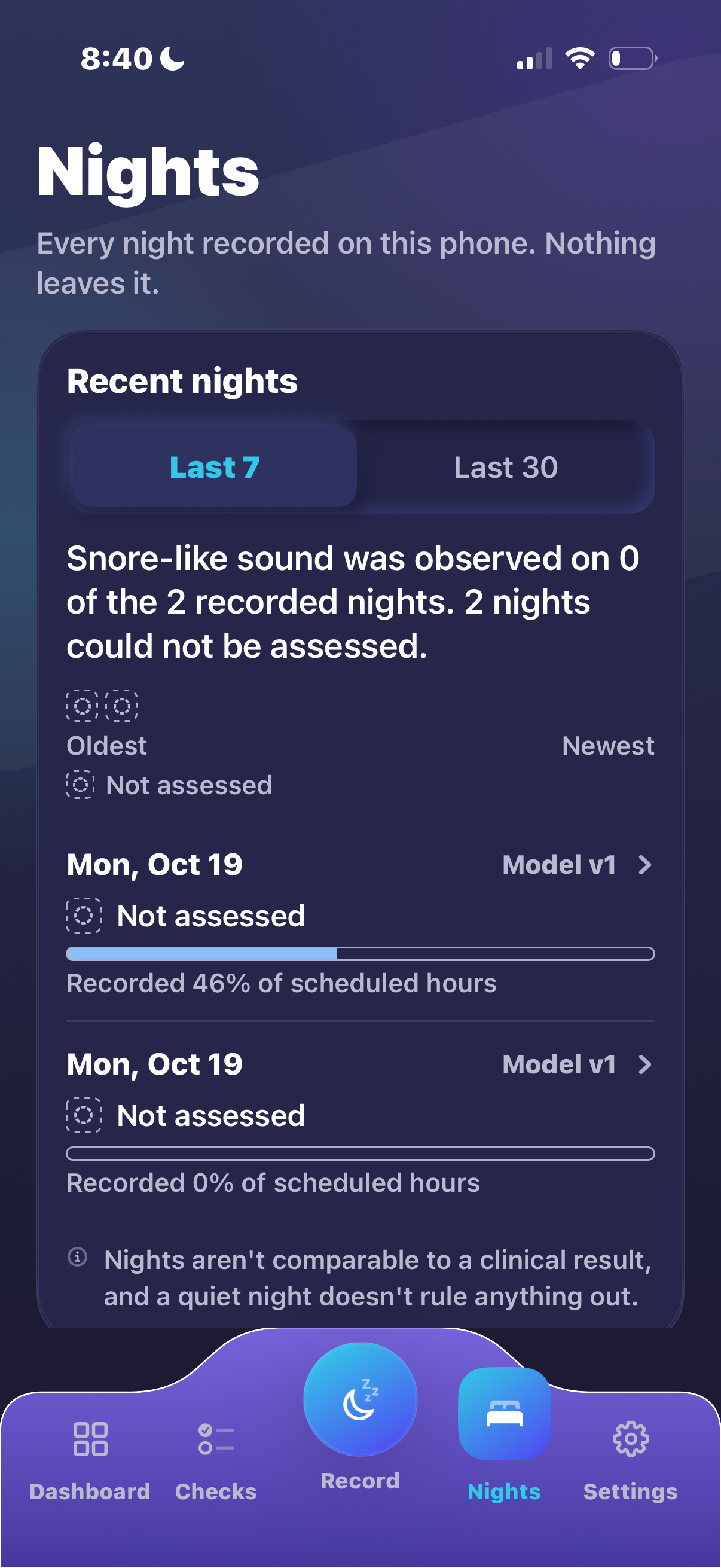
SleepSmooth is an AI-powered sleep-monitoring application designed to help users better understand their sleep health. By combining user-reported sleep experiences with machine learning models trained to analyze overnight audio recordings, our app provides personalized insights into sleeping patterns and potential concerns. SleepSmooth allows users to monitor snoring, track their sleep habits, and identify patterns that may warrant further medical attention, including possible signs associated with sleep apnea. Our goal is to make sleep monitoring more accessible, convenient, and affordable, while encouraging users to seek professional evaluation when necessary.
How we built it
We built SleepSmooth using React, TypeScript, and Vite for our web application, alongside React Native and Expo for mobile functionality and overnight audio recording. For our machine learning component, we developed audio classification models, including a lightweight neural network and a YAMNet-based model, trained to recognize snoring and other relevant acoustic patterns. We implemented an audio-processing pipeline to segment recordings, extract useful features, evaluate recording quality, and identify potential irregularities. These results are combined with user-provided sleep information to generate personalized summaries, interactive visualizations, and sleep-health insights. We also incorporated privacy-focused processing, allowing audio analysis to run locally where supported, and developed automated tests to improve the reliability of our application. Our long-term goal is to expand these capabilities through additional clinically annotated datasets to support more accurate detection of sleep-related breathing disorders.
Challenges we ran into
One of the biggest challenges we faced while developing SleepSmooth was training a machine learning model that could accurately recognize sleep-related sounds. Finding reliable datasets was difficult because many recordings were collected using different microphones, environments, and equipment, making it harder for our model to generalize to everyday smartphone recordings. We also struggled with distinguishing snoring from other background noises, while balancing accurate detection with minimizing false positives. Another major challenge was processing long audio recordings efficiently, especially on mobile devices, while ensuring that users' sensitive sleep recordings remained private. Additionally, integrating our machine learning models into both our web and mobile applications required us to consider differences in performance and compatibility. These challenges encouraged us to continuously test and refine our system, while recognizing the need for more clinically labeled data before we could reliably detect conditions such as sleep apnea.
Accomplishments that we're proud of
This was an incredibly challenging project for us, and one of our proudest accomplishments was successfully developing and integrating a machine learning model for the first time. Before this project, we had very limited experience with training AI models, so being able to build a working system that analyzes sleep-related sounds was a major achievement. What makes this project especially meaningful is that we were inspired by a real problem affecting someone in our own community. Knowing that sleep apnea is a widespread condition that can be difficult to identify motivated us to create something that could potentially help others facing similar struggles. We're also proud that we were able to combine machine learning, audio processing, and an accessible user interface into a functional application. Although there's still much more we want to improve, seeing our ideas come together into a working prototype was incredibly rewarding, especially considering the limited time we had to develop it.
What we learned
Throughout the development of SleepSmooth, we learned a tremendous amount about machine learning, software development, and the challenges of building a real-world application. One of our biggest learning experiences was understanding how to train a machine learning model, from finding suitable datasets and preprocessing audio recordings to training the model and evaluating its predictions. We also learned that developing an accurate model involves much more than simply providing it with data, as we had to consider issues such as background noise, false positives, and differences between recording devices. On the development side, we gained valuable experience working with React, TypeScript, and React Native to create an intuitive and responsive interface. Integrating our machine learning system with the application also helped us better understand how different parts of a software project work together. Most importantly, we learned how to approach unfamiliar technical challenges, troubleshoot problems, and continuously improve our solution through experimentation and testing.
What's next for SleepSmooth
Moving forward, we hope to continue developing SleepSmooth into a more reliable and comprehensive sleep-health monitoring platform. Our biggest priority is improving our machine learning capabilities by training on larger and more diverse datasets, particularly recordings containing clinically annotated sleep apnea events. We also want to test our models across different microphones, smartphones, and sleeping environments to better understand their accuracy and limitations in real-world situations. Beyond improving the model, we plan to expand the application's features by introducing more detailed sleep analytics, long-term sleep trend tracking, and potentially integrating wearable devices to collect additional health information. We also hope to improve the overall user experience and make overnight monitoring as convenient and accessible as possible. Ultimately, our long-term goal is to turn SleepSmooth from a prototype into a publicly available application that helps people better understand their sleep health and recognize when professional medical evaluation may be necessary.

Log in or sign up for Devpost to join the conversation.