Inspiration
One late night, I had trouble falling asleep. Usually, I always play white noise while sleeping. But what if I could automate that for myself, and others? Well, I wanted to blend technology and wellbeing to address one of the most universal challenges: getting better sleep. As college students juggling academics, late-night coding, and creative projects, we realized how many of us struggle with healthy sleep routines. The idea of retro aesthetics powered by AI felt uniquely fun, so I set out to build a virtual sleep assistant that feels both approachable and smart.
What it does
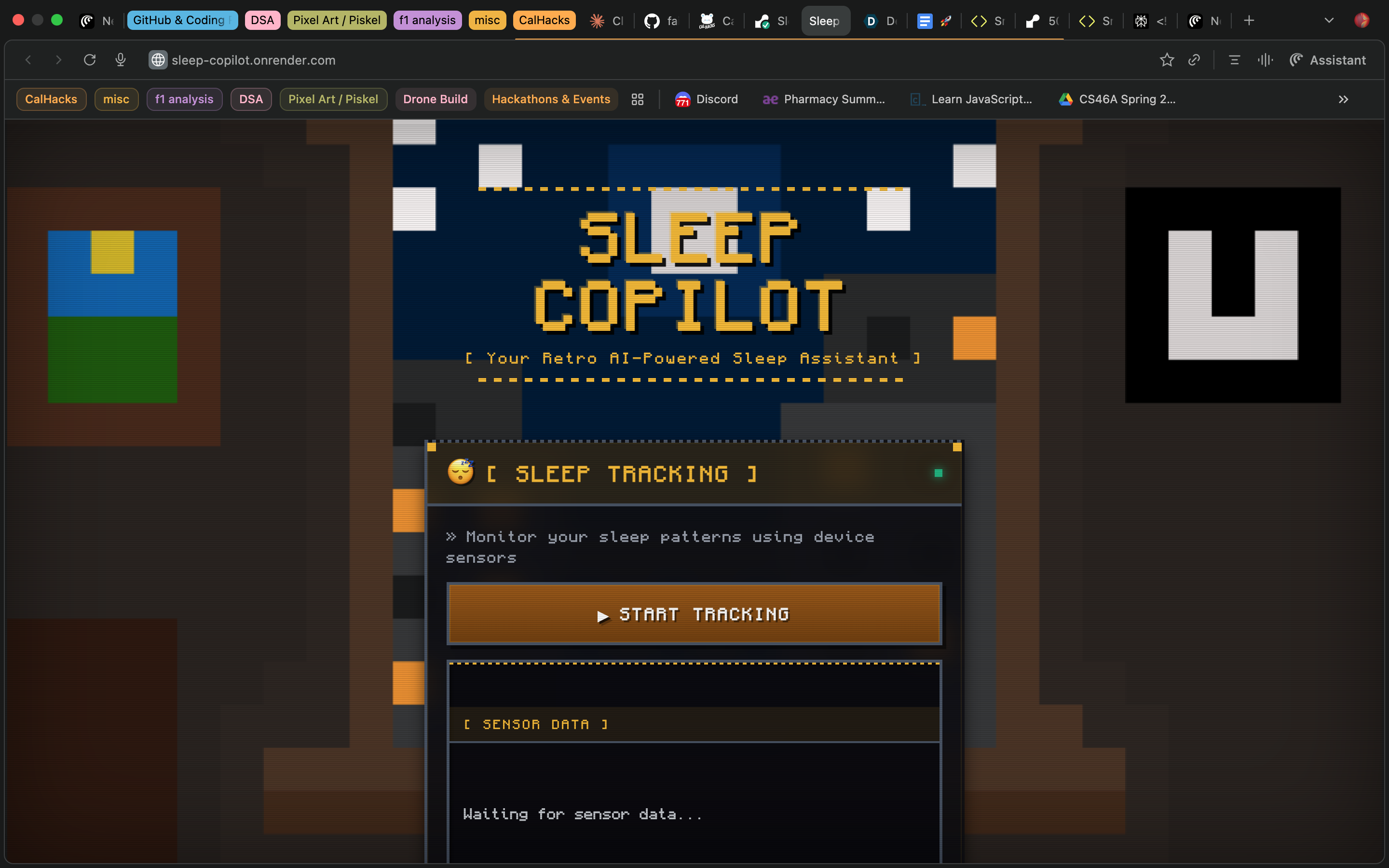
Sleep Copilot tracks your sleeping patterns and plays white noise for you if you aren't asleep yet, analyzes dreams with AI, delivers personalized sleep tips, and even narrates custom bedtime stories—all in a nostalgic pixel-art interface. Users can monitor their sleep using built-in device sensors, submit dreams for instant interpretation, receive actionable sleep advice, and enjoy calming, AI-generated bedtime stories with voice synthesis.
How we built it
I built Sleep Copilot as a Flask web application using Python for the backend and JavaScript for interactive features on the frontend. The retro UI combines custom CSS with the Monocraft font for maximum nostalgia, as well as one of my own pixel arts. Then I integrated Anthropic Claude’s API for all AI functionality (dream analysis, tips, and story generation) and Fish Audio’s API for text-to-speech narration. The app leverages device motion and audio sensors using browser APIs for real-time sleep tracking. It's deployed on Render through Cofoundry.ai/SnapDev.
Challenges we ran into
Connecting to external APIs reliably was tricky, especially handling SSL issues and inconsistent audio formats. Designing an interface that felt both retro and modern required several iterations. Real-time sensor access on different devices also threw up compatibility challenges. And in the end, the main purpose of the app (white noise) stopped working. So I worked hard to ensure privacy, performance, and simplicity for users everywhere and fix it.
Accomplishments that we're proud of
I'm proud of crafting an app that makes sleep science approachable with a truly distinctive style. We managed to integrate advanced AI features with practical monitoring tools in a simple, fun, and cohesive experience. Our project delivers meaningful insights and comfort whether for quick sleep tips or immersive bedtime stories—all without sacrificing privacy or usability.
What we learned
I deepened my understanding of combining real-time browser APIs with cloud-based AI. I also learned a lot about API integration, error handling, and accessibility on both desktop and mobile. Retro design requires deliberate decisions in fonts, spacing, and layouts to balance nostalgia and user experience. Most importantly, I learned how technology can encourage healthier habits when aligned with empathy and creativity and have a good social impact.
What's next for Sleep Copilot
I plan to expand Sleep Copilot with adaptive advice based on sleep history over time and add gamified features like sleep streaks and milestones. Future versions will support multi-language dreams/tips, mobile app releases, and more natural voice options. We’re excited to collaborate with sleep experts and bring personalized wellbeing to even more people.
Built With
- claude
- css
- fish
- flask
- html
- javascript
- python
- render
- webapi


Log in or sign up for Devpost to join the conversation.