-
-
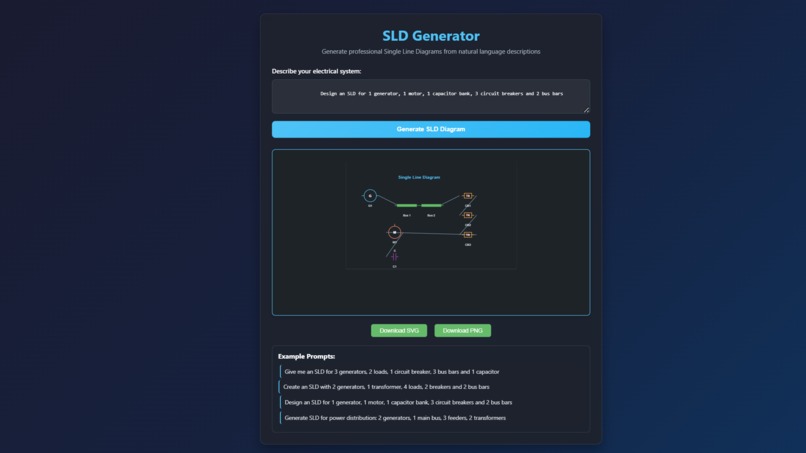
SLD Generator transforms plain text into professional Single Line Diagrams instantly saving time, reducing errors, and redefining design.
Inspiration
While working on electrical engineering projects, we noticed how much time is spent manually creating Single Line Diagrams. Students face the same issue when trying to visualize textbook problems, and even professionals repeat similar diagrams again and again. We wanted to remove this repetitive work and build something that could instantly translate descriptions into diagrams. That idea became the foundation of our project.
What it does
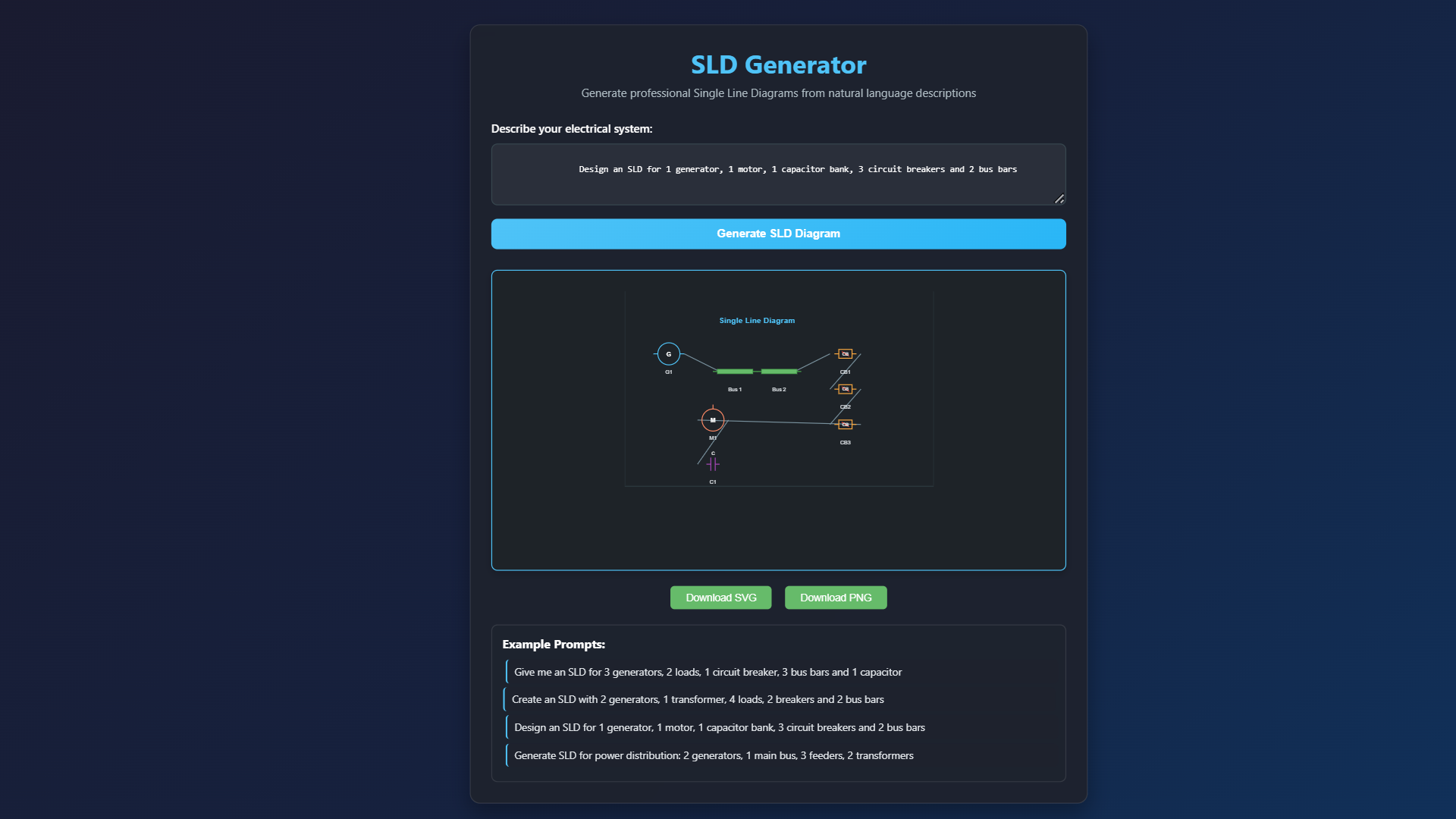
The SLD Generator takes a simple description of an electrical system in plain English and produces a professional-quality Single Line Diagram. For example, typing “Design an SLD for 1 generator, 1 motor, 1 capacitor bank, 3 circuit breakers and 2 bus bars” instantly creates a clear diagram that can be downloaded in SVG or PNG format.
How we built it
We started by designing a parser that can interpret system descriptions and recognize components such as generators, motors, bus bars, and circuit breakers. Each recognized element is mapped to a standard symbol. Using graph-based rendering techniques, the tool arranges these components logically and generates a neat diagram. The entire process is packaged into a web interface, built with React for the front end and a Node.js backend to handle processing and rendering.
Challenges we ran into
The first challenge was handling ambiguity in user input since people describe electrical systems in different ways. Another major challenge was keeping diagrams clear and uncluttered, especially when the input included many components. Finally, building both a working backend and a smooth user interface within limited time required careful prioritization.
Accomplishments that we're proud of
We’re proud that the tool works end-to-end: users can type a description, generate a diagram, and immediately download it. It not only saves time but also lowers the barrier for students and engineers who want quick, accurate visuals. We also managed to create a clean interface that makes the tool approachable even for first-time users.
What we learned
This project taught us how to bring together two very different areas: natural language processing and electrical engineering. We learned how important it is to design for usability, not just functionality. Small additions, such as providing example prompts, made a big difference. We also gained experience in balancing automated layout generation with diagram readability.
What's next for Sld generation
We see room for growth in several directions. Adding support for more components like transformers, feeders, and relays will make the tool more comprehensive. Integrating validation rules could help users check if their system design follows standard practices. In the future, we’d also like to explore exporting directly to CAD software and suggesting optimized layouts automatically.
Built With
- amazon-web-services
- built-with-react
- d3.js
- mongodb
- node.js
- tailwind-css
- vercel

Log in or sign up for Devpost to join the conversation.